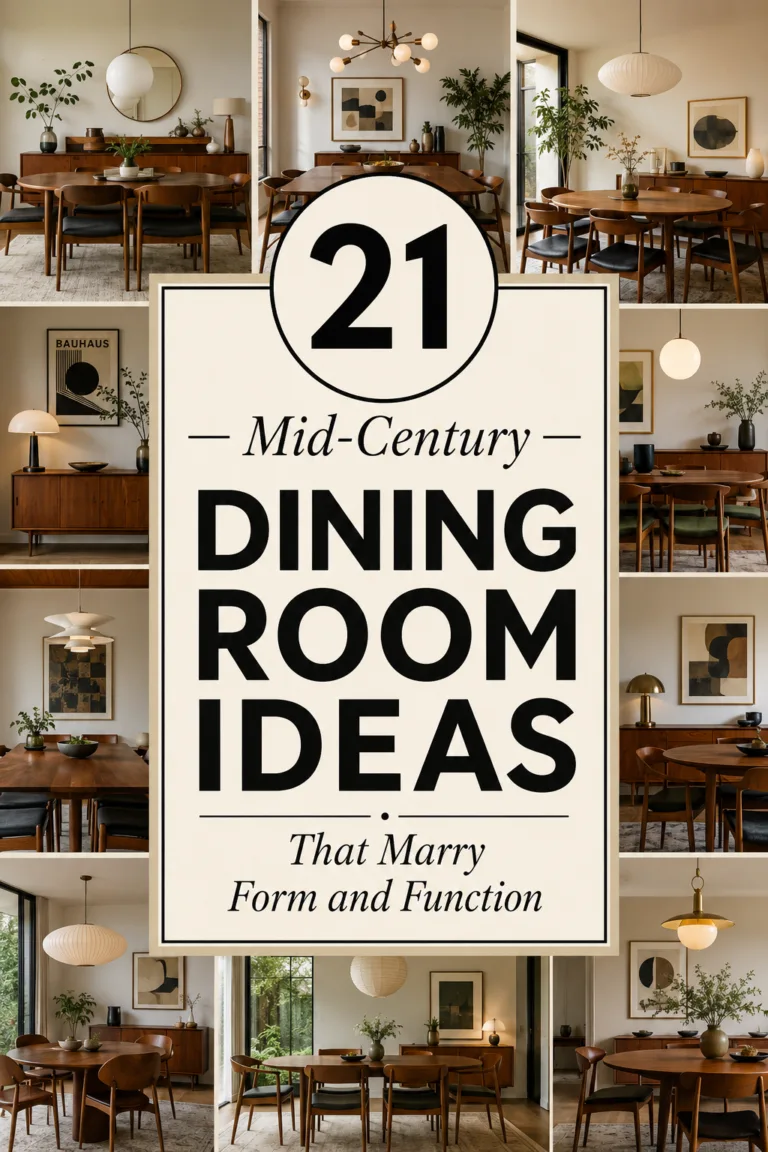
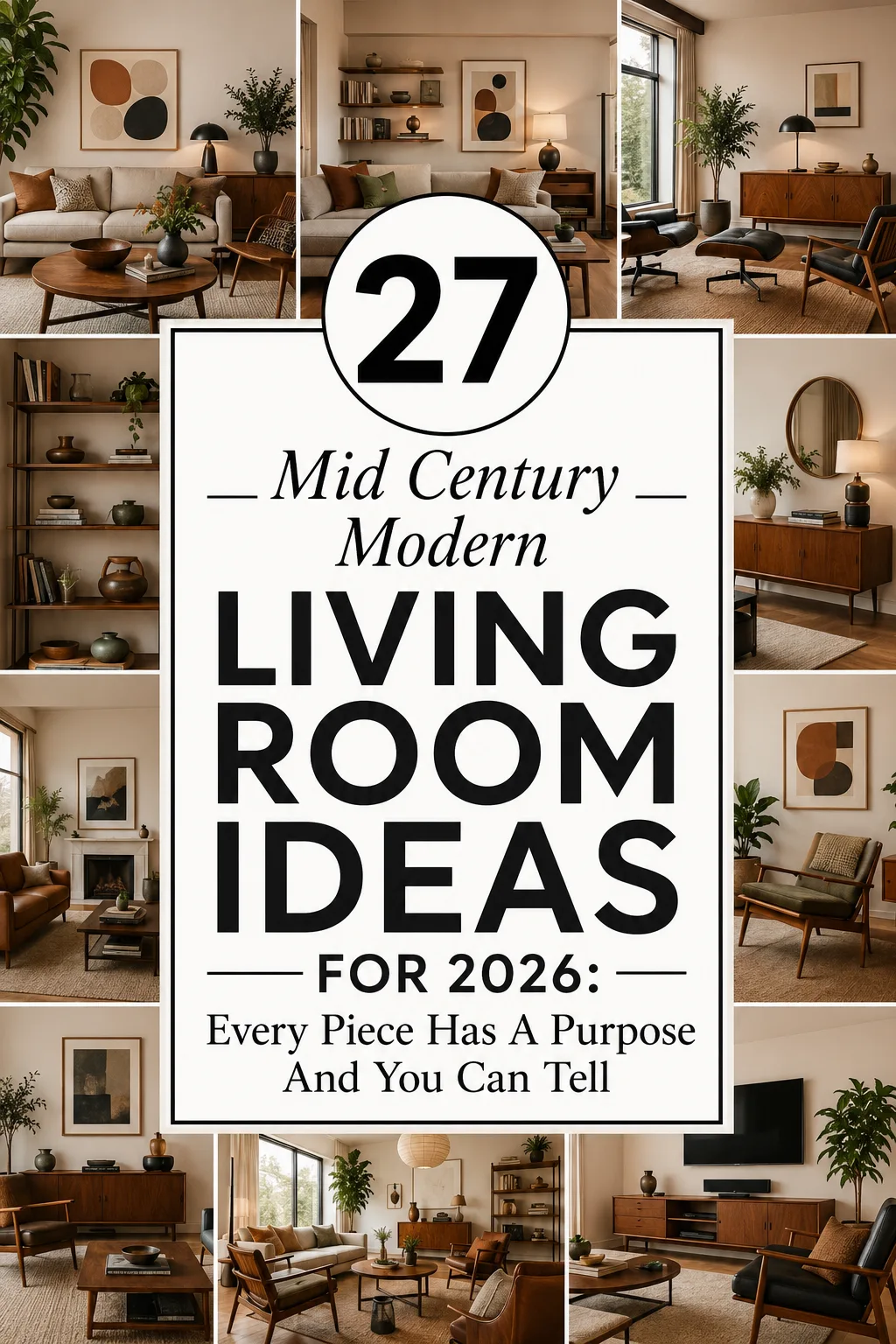
Mid-century modern design has remained popular for decades because it focuses on something many trends forget: purpose. Every chair, table, lamp, and decorative item is chosen for a reason. Nothing feels excessive, yet the room still looks warm, stylish, and inviting. After experimenting with different living room styles over the years, I always find myself returning to mid-century modern interiors because they feel timeless rather than trendy. The clean lines, natural materials, and thoughtful furniture arrangements create spaces that look beautiful while staying practical for daily life. These ideas can help you build a living room that feels intentional, comfortable, and effortlessly sophisticated in 2026.
1. Start With A Low-Profile Sofa
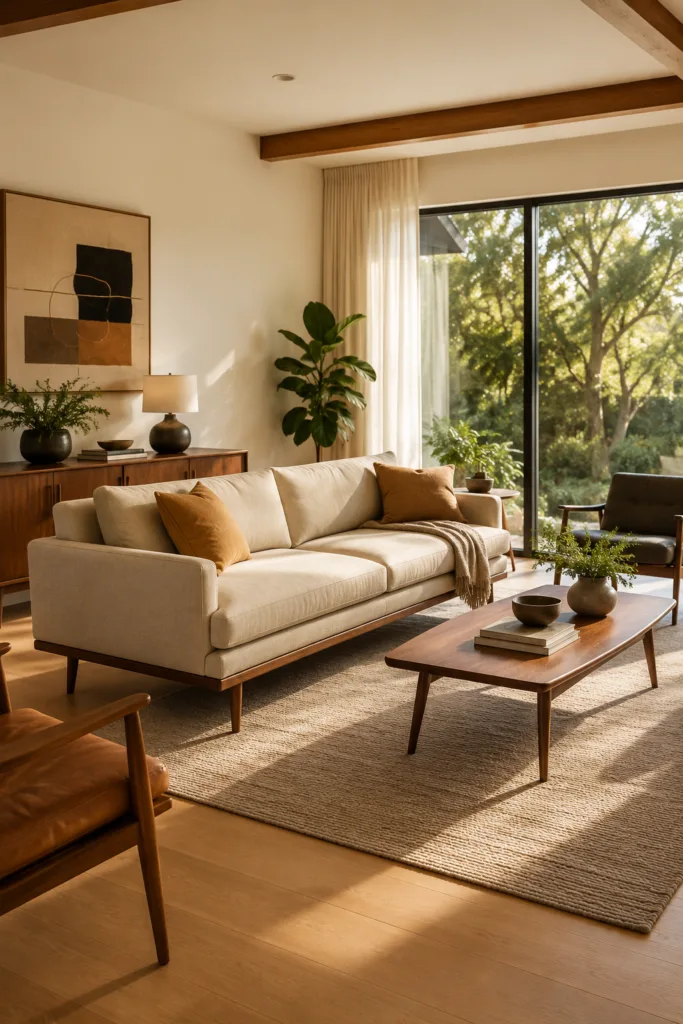
The first change I made when creating a mid-century modern living room was replacing an oversized sofa with a low-profile design. Instantly, the room felt more open and visually balanced. Low-profile sofas are one of the defining features of mid-century design because they emphasize horizontal lines and create a relaxed atmosphere. I prefer sofas with clean arms, tapered wooden legs, and neutral upholstery. They provide comfort without dominating the room. In 2026, many homeowners are choosing warm beige, camel, and olive tones for these sofas. The simplicity allows other carefully selected furniture pieces to stand out while maintaining a cohesive and organized appearance.
2. Choose Furniture With Tapered Wooden Legs
One detail that immediately signals mid-century modern style is furniture with tapered wooden legs. I noticed that even basic furniture pieces look more refined when elevated off the floor. Tapered legs create a lighter visual appearance and help rooms feel less crowded. Whether it’s a coffee table, media console, accent chair, or sideboard, this design feature adds authenticity to the space. I personally love walnut finishes because they bring warmth and character. These elevated pieces also make cleaning easier, which is a practical bonus. Small design details like this often have a surprisingly large impact on the overall atmosphere of a room.
3. Use Warm Walnut Wood Tones
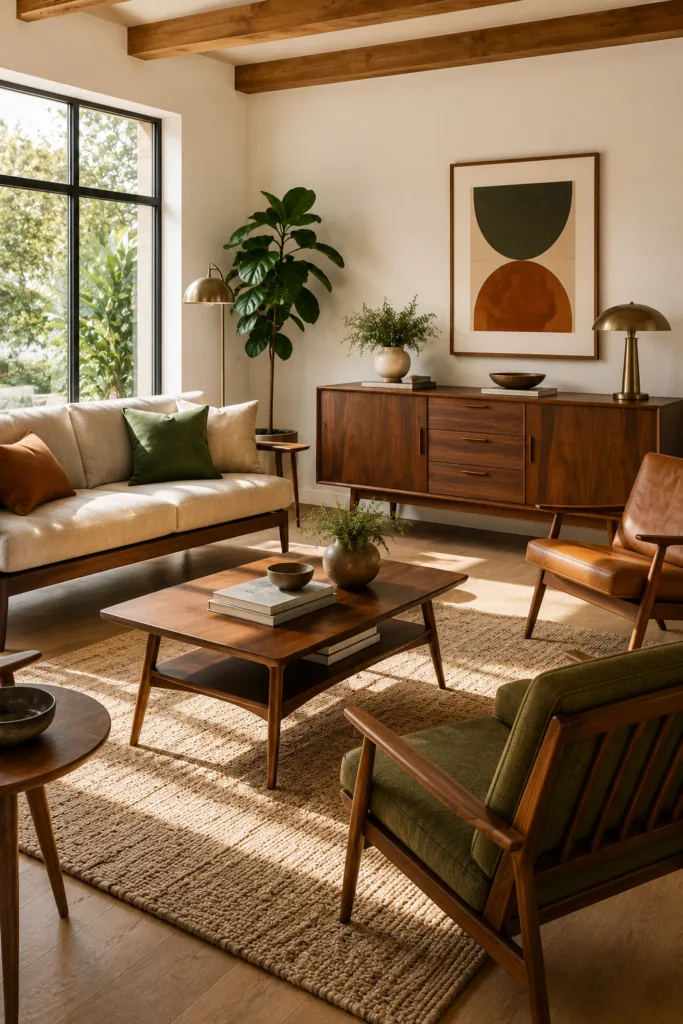
Whenever I think about mid-century interiors, walnut wood immediately comes to mind. Its rich color creates warmth without making a room feel dark. I introduced walnut through a media console and coffee table, and the room instantly felt more sophisticated. Unlike heavily distressed woods, walnut has a smooth, refined appearance that complements modern architecture. In 2026, designers continue using walnut because it works beautifully with neutral walls, textured fabrics, and black accents. Whether you choose furniture, shelving, or decorative accessories, incorporating walnut helps establish the timeless foundation that makes mid-century modern living rooms feel authentic and welcoming.
4. Incorporate A Statement Lounge Chair
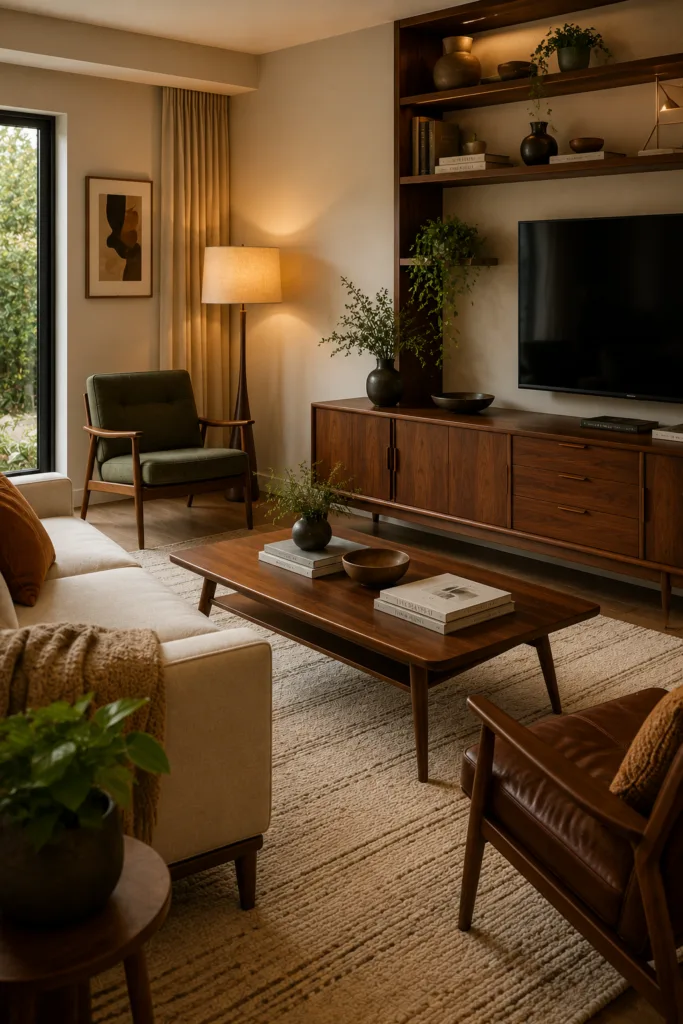
One of my favorite additions to any living room is a carefully chosen lounge chair. Mid-century modern spaces often feature a chair that acts as both seating and sculpture. I found that a single well-designed chair can dramatically improve the room’s personality. Look for curved wood frames, leather upholstery, or textured fabrics that complement your overall palette. Rather than filling every corner with furniture, focus on quality and design. The right lounge chair becomes a focal point while providing functional seating. This approach perfectly reflects the mid-century philosophy that every piece should contribute both beauty and purpose to the room.
5. Keep The Color Palette Controlled
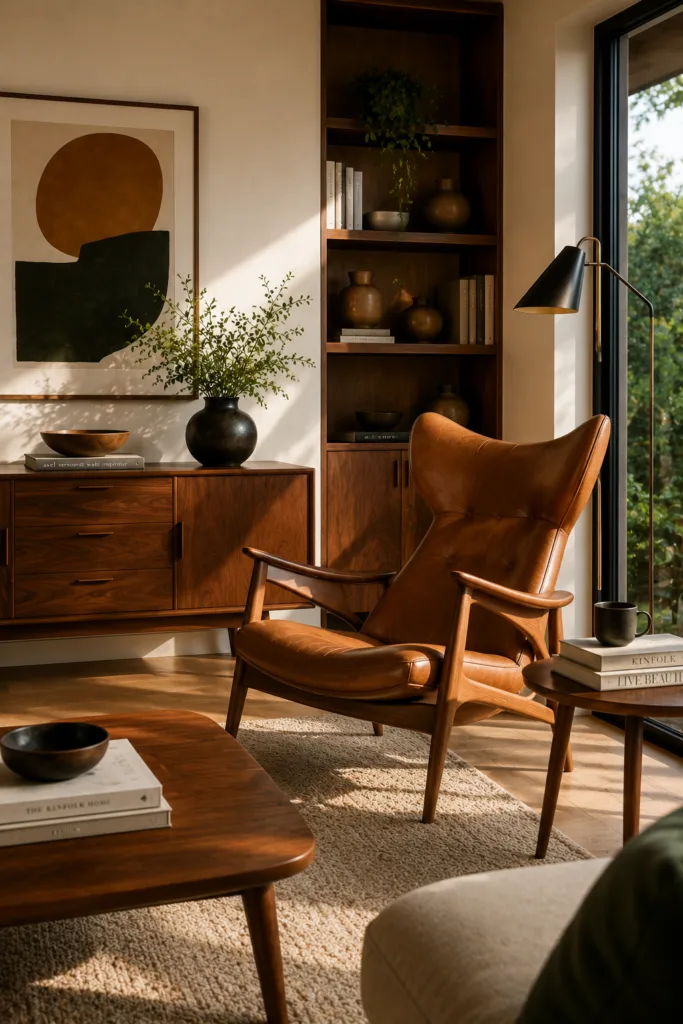
A lesson I learned from successful mid-century interiors is the importance of restraint. Instead of introducing many unrelated colors, I limit the palette to a few coordinated shades. Warm wood tones, soft neutrals, muted greens, and subtle terracotta accents often work beautifully together. This creates visual harmony and allows furniture shapes to become the focus. In 2026, homeowners are increasingly moving away from chaotic color combinations and embracing calmer, more intentional spaces. A controlled palette does not mean boring; it simply means every color serves a purpose. The result is a room that feels balanced, relaxing, and visually sophisticated.
6. Add A Sleek Wooden Media Console
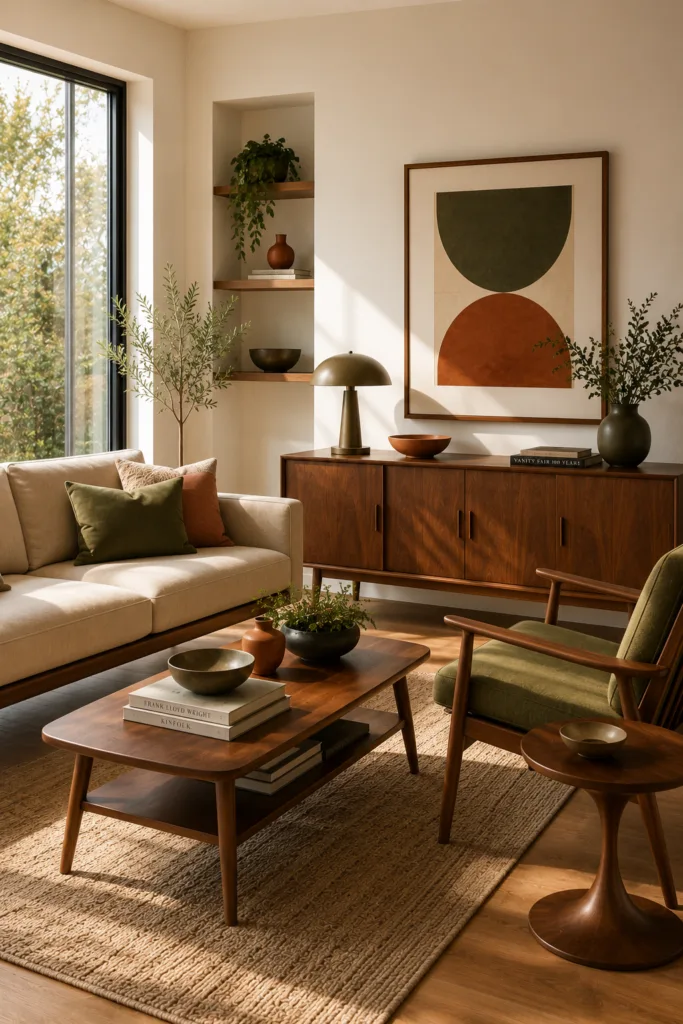
The television area often becomes the largest visual element in a living room, so I always pay attention to the media console. A sleek wooden console with clean lines instantly supports the mid-century aesthetic. I prefer designs with simple cabinet fronts, integrated storage, and minimal hardware. These pieces help hide clutter while maintaining a clean appearance. Walnut or teak finishes work especially well. Beyond storing electronics, the console becomes a design statement itself. When paired with thoughtful styling and balanced proportions, it helps the room feel organized and intentional rather than dominated by technology.
7. Mix Natural Materials
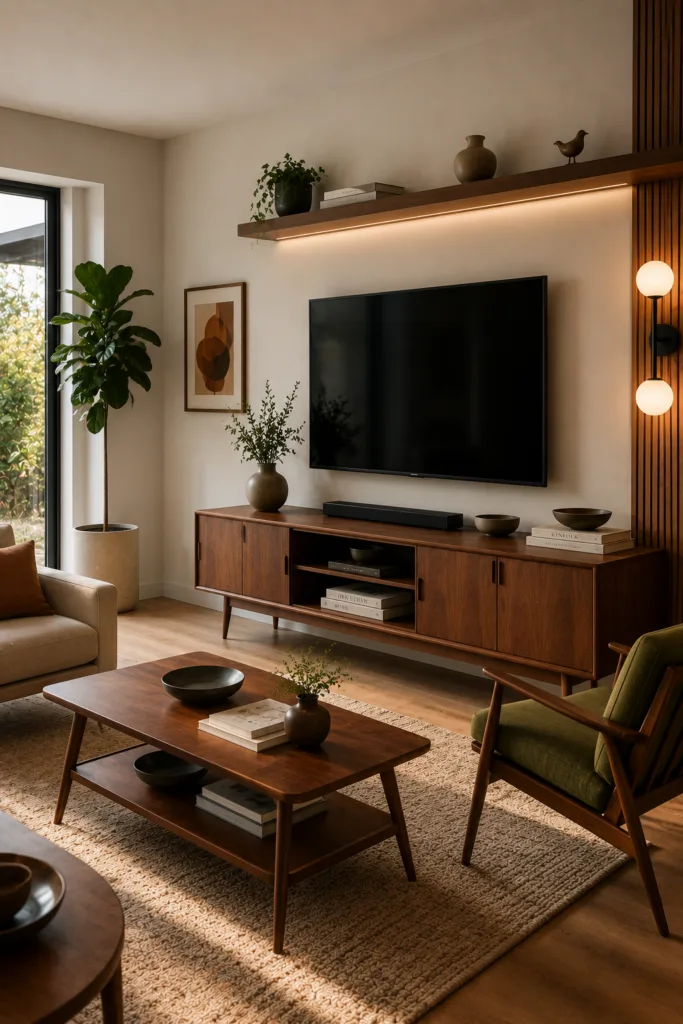
One thing I appreciate most about mid-century design is its connection to natural materials. Instead of relying solely on manufactured finishes, I combine wood, leather, wool, linen, and stone throughout the room. This creates depth and warmth without needing excessive decoration. I noticed that spaces with varied textures feel more inviting and comfortable. In 2026, homeowners continue prioritizing authentic materials because they age beautifully and add lasting character. Even small additions such as a stone vase, leather accent chair, or woven basket can enhance the overall design. The combination of textures makes the room feel layered and thoughtfully curated.
8. Embrace Open Space
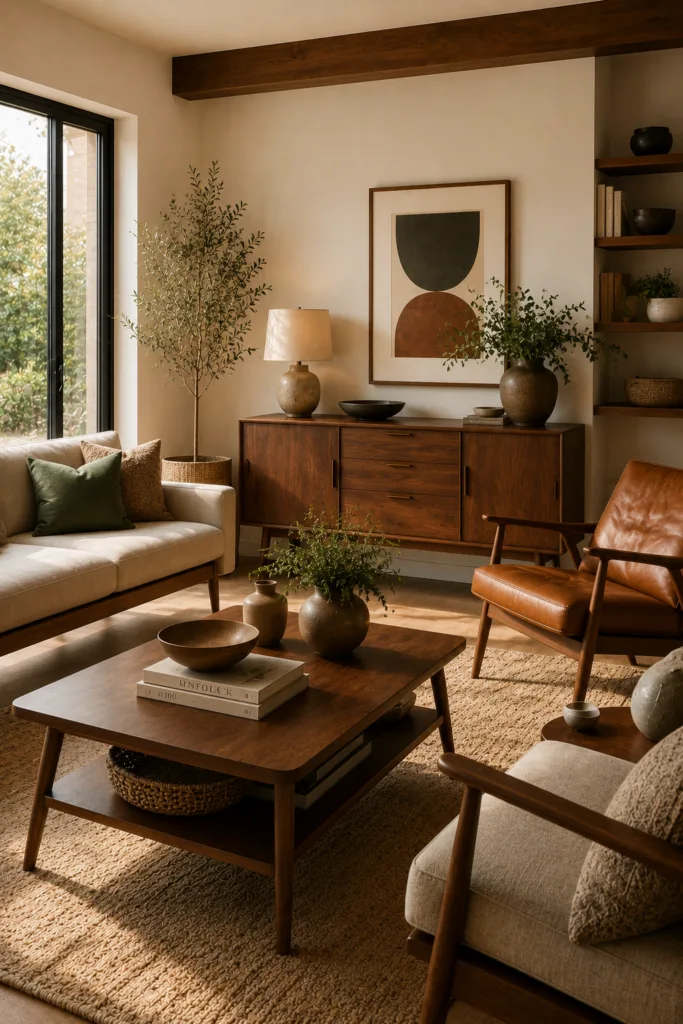
Mid-century modern rooms are rarely overcrowded. One mistake I made in earlier decorating attempts was adding too much furniture. Once I removed unnecessary pieces, the room felt significantly better. Open space allows furniture designs to stand out and creates easier movement throughout the room. Rather than filling every wall and corner, focus on a few meaningful items. This approach makes the room feel larger and more comfortable. It also reinforces the philosophy that every object should have a purpose. The empty areas are just as important as the furniture itself because they provide visual balance and breathing room.
9. Choose Geometric Area Rugs
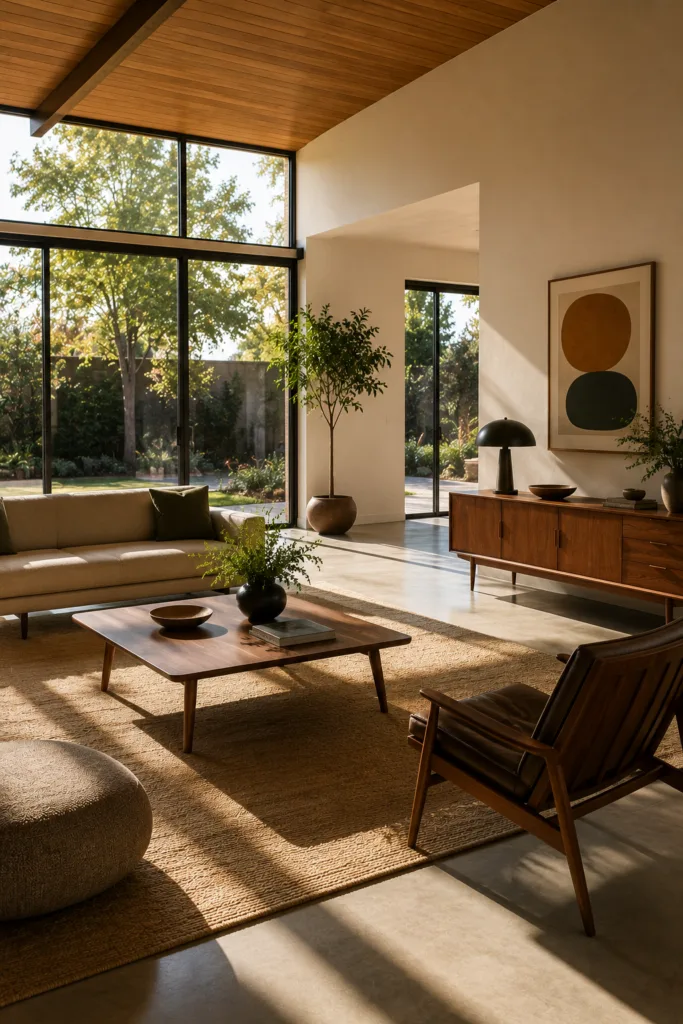
A well-selected area rug can tie an entire room together. For my mid-century living room, I chose a rug with subtle geometric patterns that complemented the furniture without overwhelming it. Geometric designs reflect the era while adding visual interest to the floor. I prefer patterns that use neutral colors mixed with a few accent tones. This keeps the look sophisticated and timeless. In 2026, many designers are favoring understated geometric rugs rather than highly detailed patterns. The right rug helps define the seating area, adds comfort underfoot, and reinforces the architectural feel that makes mid-century spaces so distinctive.
10. Use Functional Decorative Objects
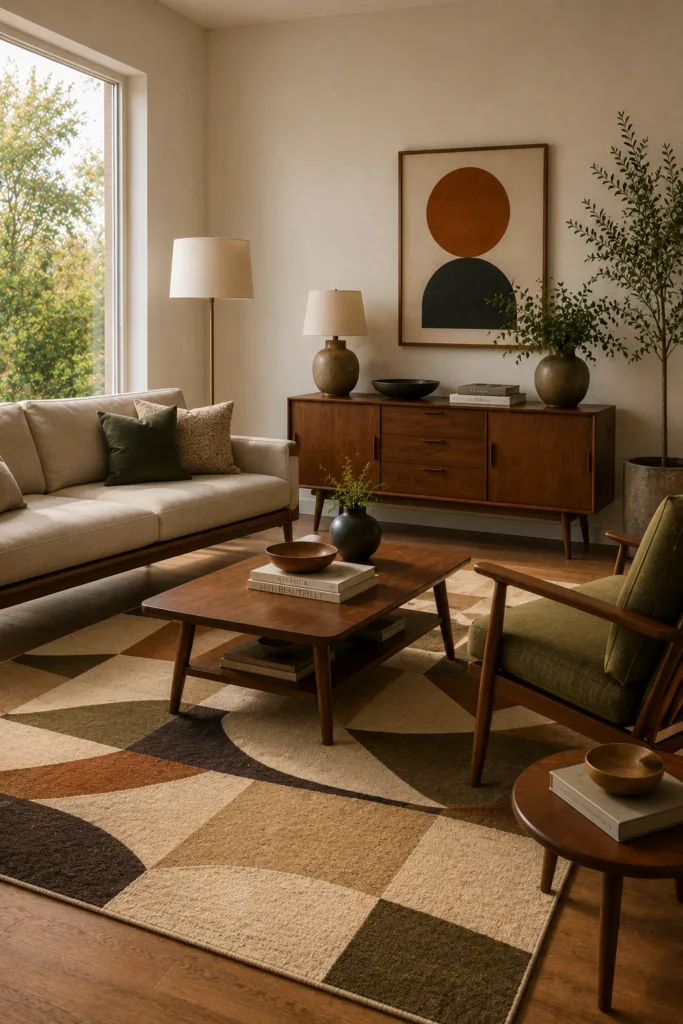
One principle I consistently follow is decorating with items that serve a purpose. Mid-century modern design celebrates functionality, so I avoid filling shelves with random decorations. Instead, I display beautiful bowls, books, ceramic vessels, and practical accessories that contribute to daily life. This approach keeps the room from feeling cluttered. Each object earns its place while still adding personality and visual appeal. Guests often notice that the room feels thoughtfully organized rather than overly styled. Functional decor creates a sense of authenticity because the space reflects real living instead of simply trying to impress visitors.
11. Install Simple Open Shelving
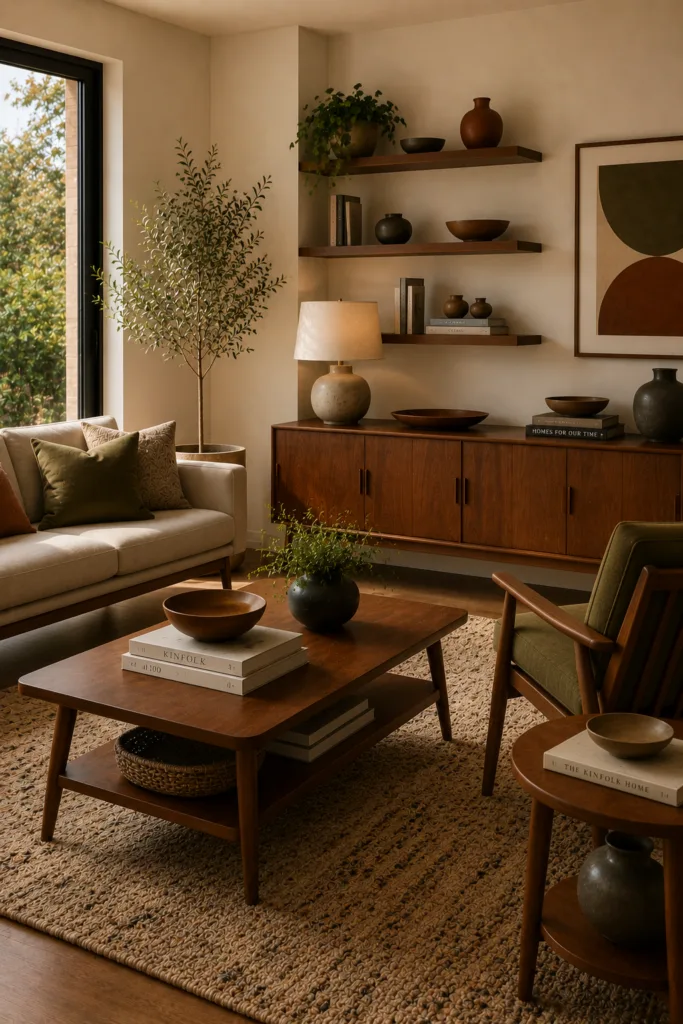
Open shelving can be extremely effective when used thoughtfully. I added a few floating shelves and used them to display books, ceramics, and small plants. The key is avoiding overcrowding. Mid-century modern interiors favor curated collections rather than packed displays. Leaving empty space between objects allows each piece to be appreciated. I also prefer wooden shelves that match other furniture in the room. This consistency strengthens the overall design. Open shelving provides storage while adding visual interest, making it a practical solution that aligns perfectly with the idea that every design element should have both form and function.
12. Incorporate Indoor Plants
Plants bring life into a mid-century modern living room in a way few accessories can. I noticed that even a simple corner plant instantly made the room feel fresher and more inviting. Large leafy varieties work particularly well because they introduce organic shapes that contrast with clean furniture lines. Plants also strengthen the connection between indoor and outdoor environments, a core aspect of mid-century design. In 2026, homeowners continue embracing greenery as an affordable way to improve interiors. Whether placed beside a lounge chair or near a window, plants add color, texture, and natural energy without disrupting the overall simplicity.
13. Let Lighting Become Art
Lighting is often overlooked, but it can completely transform a living room. One of my favorite upgrades was replacing ordinary fixtures with sculptural lighting pieces. Mid-century modern lighting often features geometric forms, brass finishes, and unique silhouettes. These fixtures provide illumination while acting as decorative focal points. A floor lamp beside a reading chair or a statement pendant above the seating area can dramatically elevate the room. Rather than treating lighting as an afterthought, I consider it part of the furniture composition. Thoughtfully selected lighting enhances both functionality and visual interest, perfectly supporting the mid-century philosophy.
14. Create Balance Through Symmetry
Although mid-century interiors are relaxed, they often feel balanced and organized. I achieve this by using subtle symmetry within seating arrangements and furniture placement. Matching side tables, coordinated lamps, or evenly spaced accessories create visual stability without feeling formal. This balance helps the room feel calm and intentional. It also allows statement furniture pieces to shine without creating chaos. Symmetry does not require identical layouts; it simply means distributing visual weight evenly throughout the room. The result is a living room that feels comfortable, welcoming, and carefully considered from every angle.
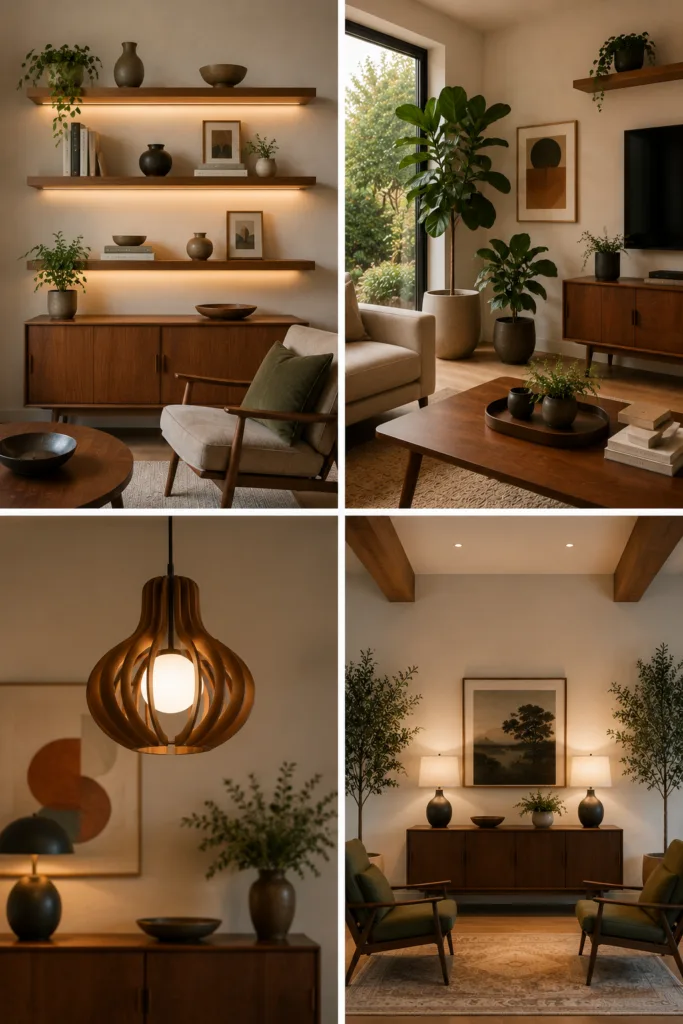
15. Choose A Coffee Table With Clean Lines
A coffee table sits at the center of most living rooms, so its design matters more than people often realize. When I switched from a bulky traditional table to a streamlined mid-century design, the entire room felt lighter and more cohesive. I prefer rectangular or oval tables with simple silhouettes and wooden finishes that complement surrounding furniture. Avoiding excessive ornamentation helps maintain the clean aesthetic that defines this style. In 2026, many homeowners are choosing tables with hidden storage or subtle functional features. The best coffee tables support daily life while quietly contributing to the overall design story without demanding constant attention.
16. Display A Curated Collection Of Books
Books have always been one of my favorite decorating tools because they add personality and authenticity. In a mid-century modern living room, books should feel intentional rather than random. I organize a small collection on shelves and coffee tables, mixing them with ceramics and natural objects. This creates visual interest without overwhelming the room. Books also encourage conversation and make the space feel lived-in. Instead of filling every shelf, I leave breathing room between items. The result feels thoughtful and balanced. A carefully curated book display reflects personal interests while supporting the clean and purposeful atmosphere of mid-century design.
17. Introduce Leather Accents
Leather is one material that consistently improves a mid-century modern living room. I added a caramel leather accent chair several years ago, and it remains one of my favorite pieces. Leather brings warmth, texture, and durability while aging beautifully over time. It pairs naturally with walnut wood, neutral fabrics, and black metal details. In 2026, warm cognac and camel leather tones remain especially popular because they create depth without feeling heavy. Whether used on a chair, ottoman, or decorative cushion, leather introduces richness and sophistication. Its timeless appeal perfectly aligns with the enduring nature of mid-century modern interiors.
18. Keep Window Treatments Simple
One mistake I made early on was using heavy curtains that blocked natural light and distracted from the room’s architecture. Mid-century modern spaces thrive when window treatments remain simple and functional. I now prefer light linen curtains or streamlined roller shades that allow sunlight to fill the room. Natural light highlights wood tones, textures, and furniture shapes while creating a warm atmosphere. Simple window coverings also make rooms appear larger and cleaner. The goal is not to eliminate softness but to avoid unnecessary visual weight. Minimal treatments help maintain the openness and clarity that define great mid-century interiors.
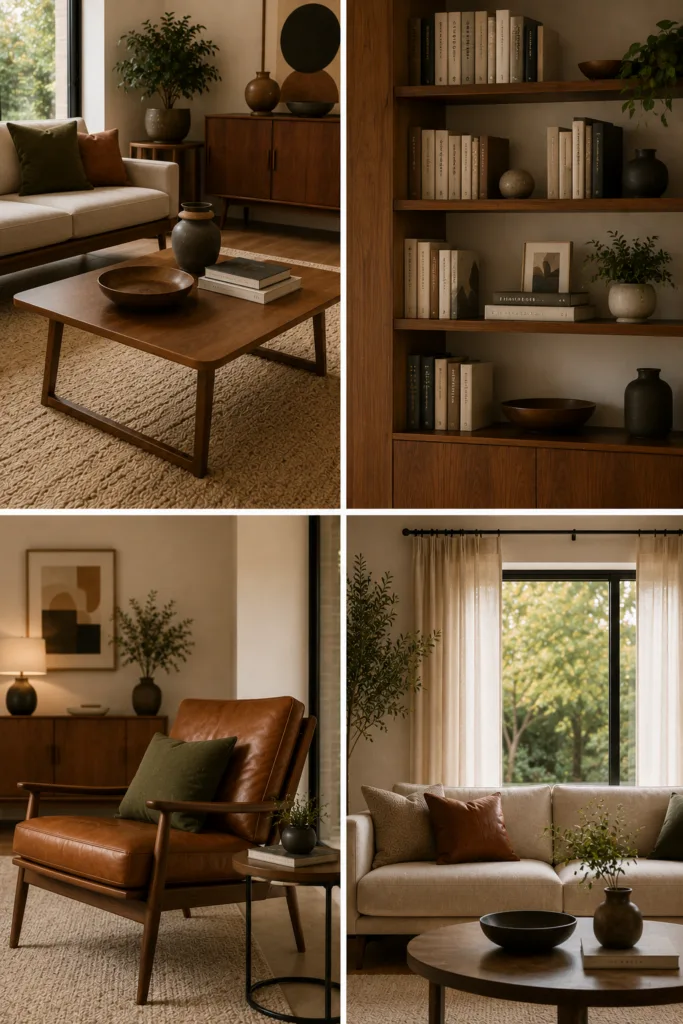
19. Add A Sideboard For Stylish Storage
Storage is essential, but it should never feel like an afterthought. One of the most practical additions I made was a mid-century style sideboard. It provides hidden storage for everyday items while contributing to the room’s design. I use mine to store games, electronics, documents, and seasonal decor. The clean lines and warm wood finish blend seamlessly with the rest of the furniture. In 2026, multifunctional storage pieces continue gaining popularity because they reduce clutter without sacrificing aesthetics. A sideboard proves that practical furniture can still be beautiful and reinforces the principle that every piece should serve a meaningful purpose.
20. Use Abstract Artwork Thoughtfully
Artwork plays an important role in creating personality, but I have learned that less is often more. Instead of covering every wall, I focus on one or two impactful pieces. Abstract artwork works especially well in mid-century modern interiors because it complements clean architectural lines without competing with them. I prefer pieces featuring earthy tones, geometric forms, or subtle color contrasts. Large-scale artwork often creates more impact than multiple smaller pieces. Thoughtful art selection helps tell a story while maintaining simplicity. The goal is to enhance the room’s character without introducing visual clutter that distracts from the furniture and layout.
21. Incorporate Black Accents For Contrast
While warm woods dominate many mid-century interiors, I find that black accents provide necessary contrast. Small touches such as lamp frames, picture frames, furniture legs, or hardware create visual definition throughout the room. These darker elements help highlight lighter surfaces and prevent the space from feeling overly soft. In my experience, black works best when used sparingly and strategically. It acts like punctuation within the design, drawing attention to important features without overwhelming the overall palette. This balance between warmth and contrast gives the room a polished appearance while preserving the approachable and welcoming atmosphere mid-century design is known for.
22. Prioritize Comfortable Seating
Beautiful furniture means little if people do not enjoy using it. One lesson I learned is that comfort should always remain a priority. Mid-century modern seating often looks elegant, but the best pieces also provide excellent support. I choose sofas and chairs that encourage conversation, relaxation, and everyday use. Comfortable cushions, supportive backs, and quality materials make a noticeable difference over time. In 2026, homeowners increasingly seek furniture that balances aesthetics and functionality. This perfectly aligns with mid-century principles. A living room should not feel like a showroom; it should invite people to sit down, stay awhile, and genuinely enjoy the space.
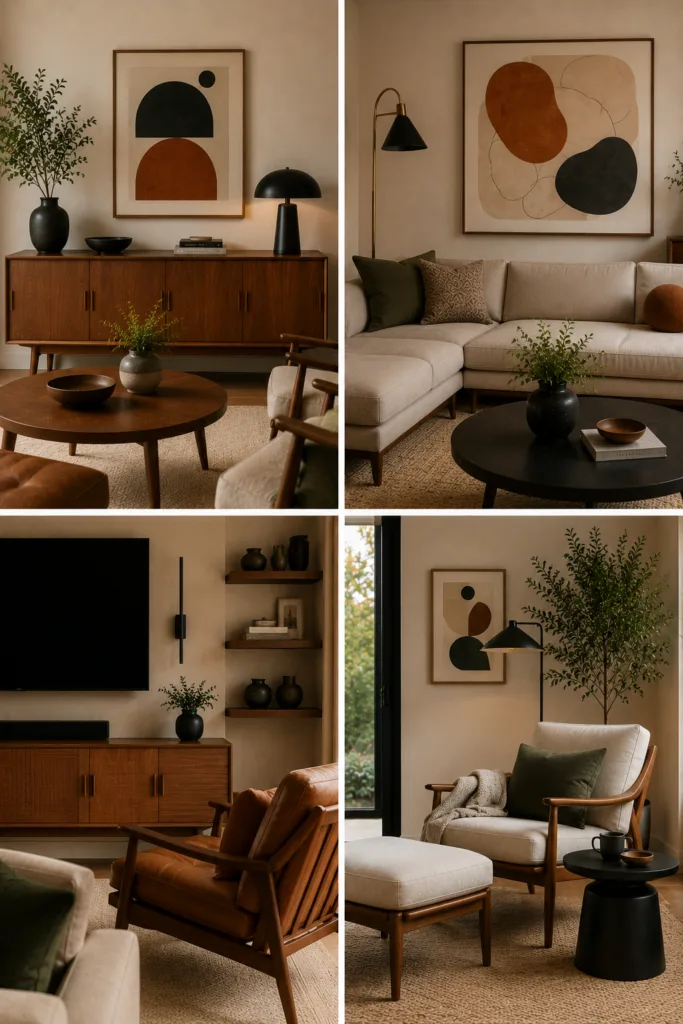
23. Let Negative Space Do The Work
Negative space is one of the most powerful design tools available, yet many people overlook it. I used to think every surface needed decoration until I realized how much calmer rooms feel when some areas remain empty. In mid-century modern interiors, negative space helps highlight furniture, artwork, and architectural features. It creates visual balance and prevents the room from feeling crowded. Leaving space around important pieces allows them to stand out naturally. This approach requires confidence because it means resisting the urge to keep adding things. The reward is a room that feels sophisticated, intentional, and surprisingly relaxing to spend time in.
24. Mix Vintage And Modern Pieces
One approach I particularly enjoy is combining authentic vintage finds with contemporary furniture. This mixture creates character while preventing the room from feeling like a museum. I often pair a vintage walnut side table with a newer sofa or modern lighting fixture. The contrast adds depth and personality while maintaining the overall mid-century aesthetic. In 2026, this blend of old and new continues gaining popularity because it feels collected rather than purchased all at once. Vintage pieces bring history and uniqueness, while modern items provide comfort and convenience. Together they create a living room that feels timeless and genuinely personal.
25. Highlight Architectural Features
Mid-century modern design works best when it respects the architecture of the space. Instead of covering interesting details, I try to emphasize them. Large windows, exposed beams, brick fireplaces, and unique ceiling lines can become focal points when allowed to shine. I arrange furniture to support these features rather than compete with them. Even in newer homes, architectural elements can be highlighted through lighting, paint choices, or thoughtful furniture placement. Drawing attention to the room’s structure creates authenticity and strengthens the connection between design and architecture. It reminds us that good interiors begin with understanding the space itself.
26. Focus On Quality Rather Than Quantity
One of the biggest lessons I learned from mid-century design is that fewer high-quality pieces usually outperform many average ones. Instead of constantly buying new decor, I invest in furniture and accessories that are built to last. Quality materials, thoughtful craftsmanship, and timeless designs provide value for years. This philosophy also prevents clutter because every item has a purpose. In 2026, more homeowners are embracing intentional purchasing habits and moving away from disposable trends. Choosing quality over quantity creates a living room that feels refined, durable, and meaningful. It is a practical approach that benefits both design and daily living.
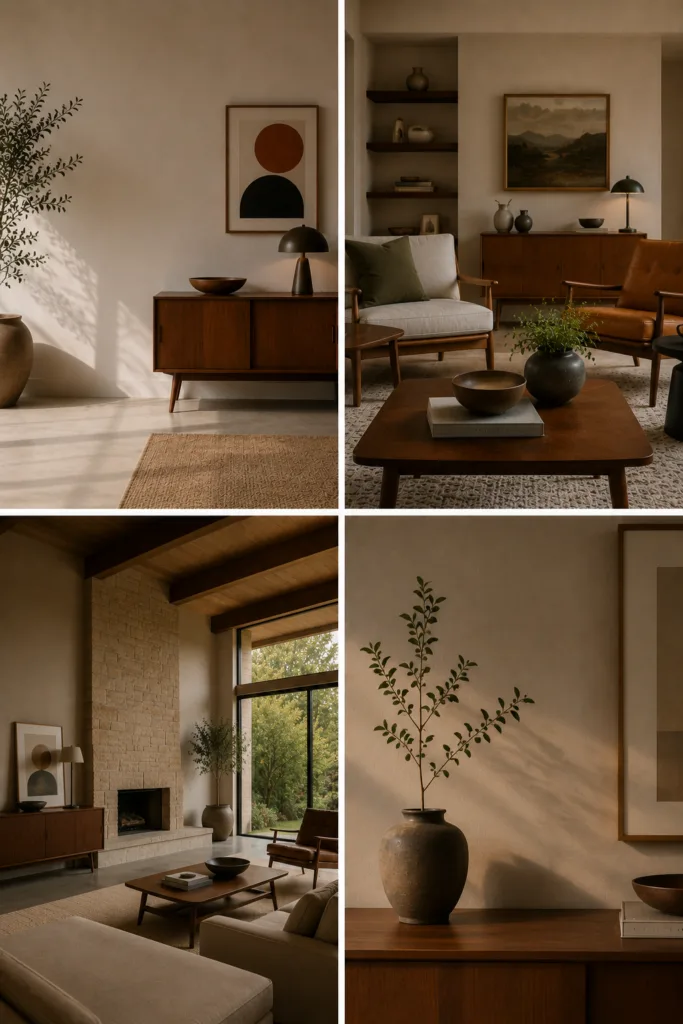
27. Make Every Piece Earn Its Place
The most important principle in any mid-century modern living room is simple: every piece should earn its place. Before adding something new, I ask whether it improves functionality, beauty, or both. This mindset has completely changed the way I decorate. Instead of accumulating unnecessary objects, I focus on selecting meaningful furniture and accessories that contribute to the room. The result is a space that feels calm, organized, and intentional. In 2026, this philosophy resonates more than ever because people increasingly value quality, simplicity, and purpose. When every piece serves a reason, the entire room feels effortlessly balanced and timeless.
Conclusion
The beauty of mid-century modern design is not found in trends or expensive furniture. It comes from thoughtful decisions and purposeful living. Every chair, table, lamp, and decorative object contributes something meaningful to the room. After experimenting with many styles, I still believe mid-century modern interiors offer one of the best balances between beauty and practicality. By focusing on quality materials, clean lines, functional furniture, and intentional decorating, you can create a living room that feels timeless in 2026 and beyond. When every piece has a purpose, people can immediately feel the difference the moment they walk into the room.
SEO Meta Description:
Discover 27 Mid Century Modern Living Room Ideas for 2026 that combine timeless style, functional furniture, warm wood tones, and purposeful design to create a beautiful, clutter-free living space.