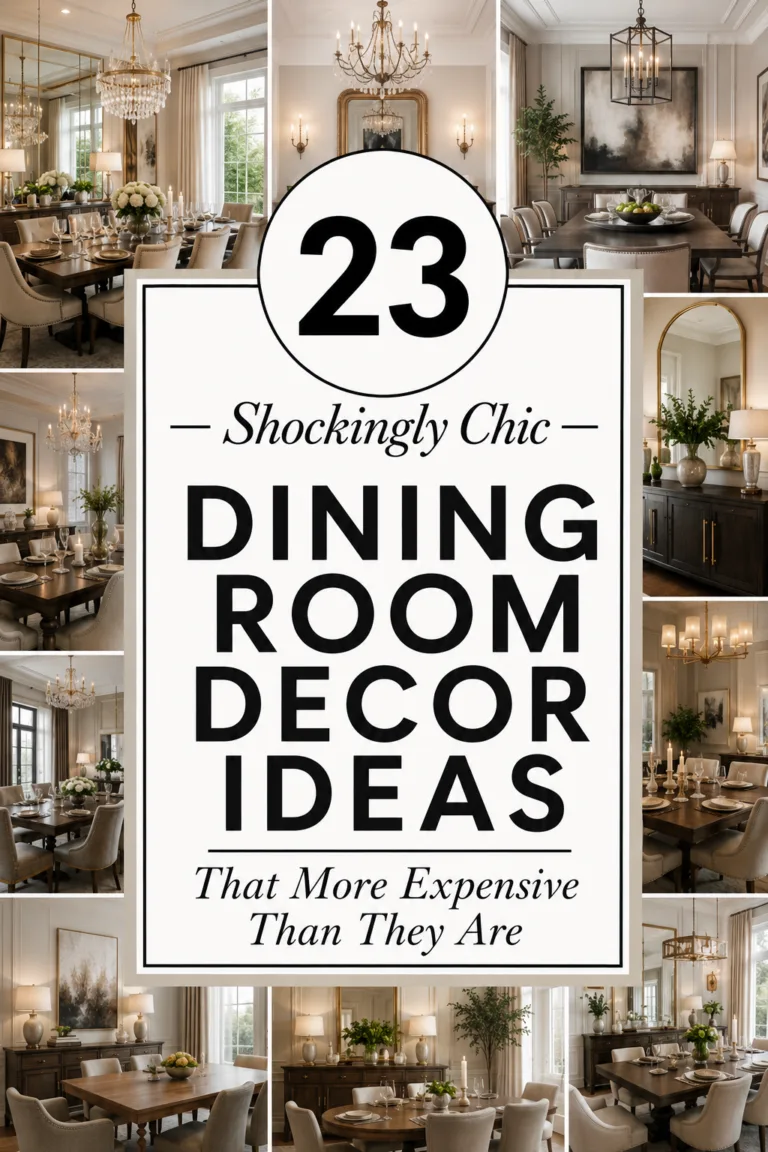
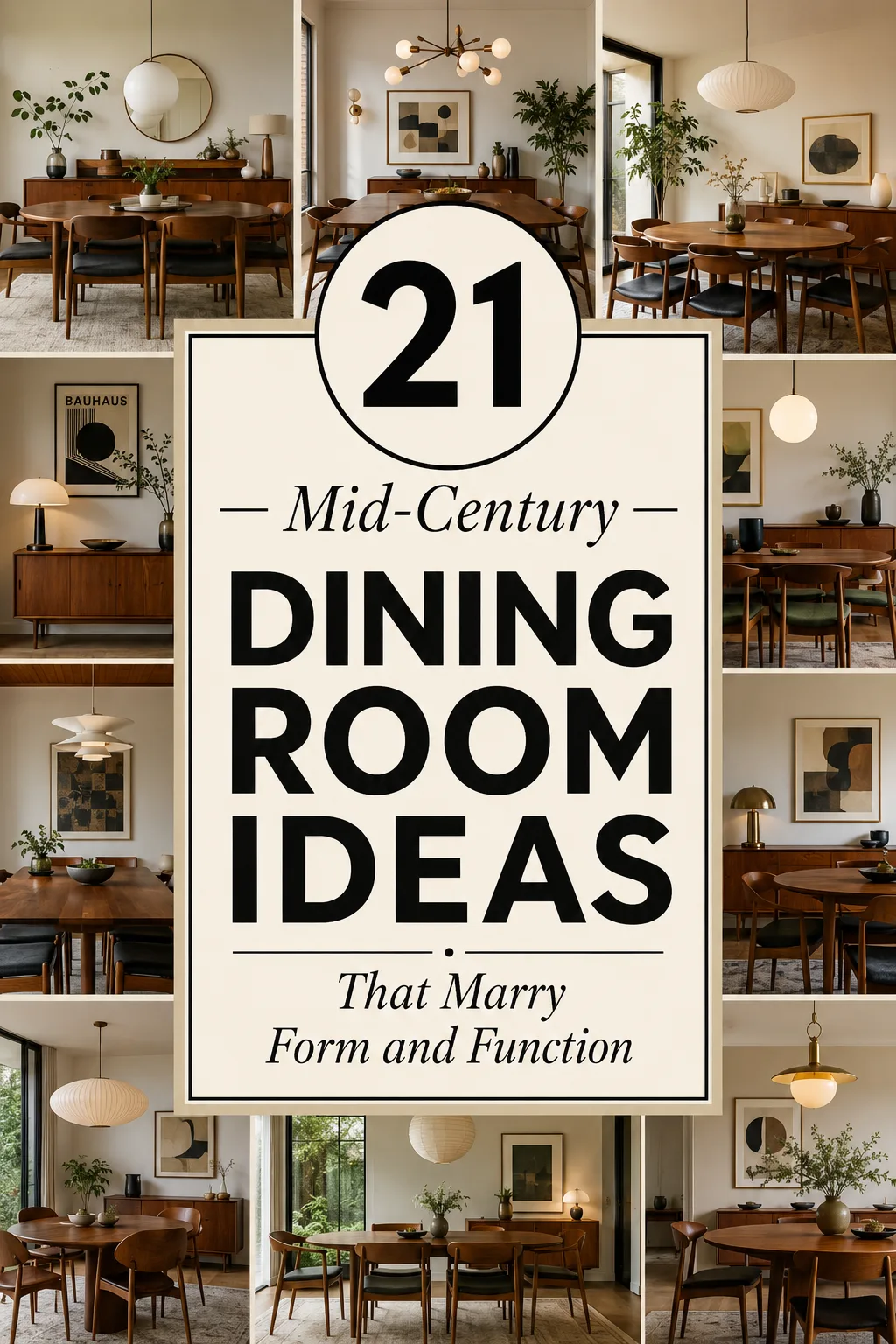
A mid-century dining room is one of those styles that feels stylish without trying too hard. I like this design because it does not depend on heavy decoration or expensive details. It is more about clean furniture, warm wood, simple shapes, and a room that works well every day. From my experience, the best dining room is not only beautiful in photos. It should also feel comfortable when you sit, eat, talk, and spend time with family. These mid-century dining room ideas can help you create a space that feels classic, practical, and fresh for modern homes.
1. Start With A Clean Wooden Dining Table
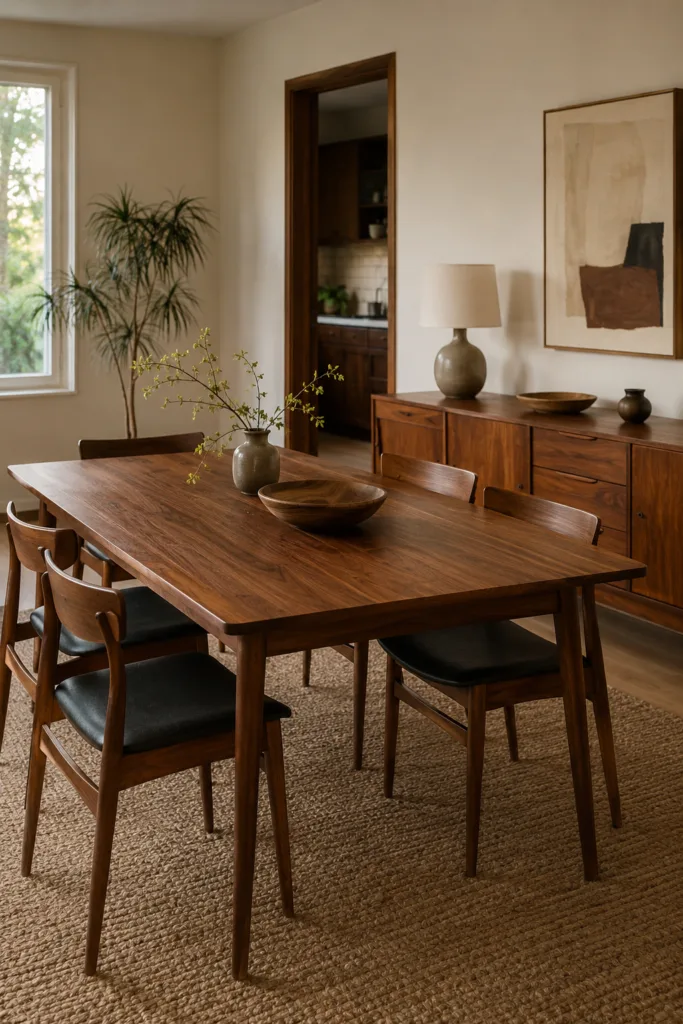
From my experience, the dining table is the heart of a mid-century dining room. A clean wooden table instantly gives the space warmth and structure. I prefer simple shapes with slim legs because they feel lighter and more elegant than bulky designs. Walnut, teak, oak, and warm brown wood tones work beautifully in this style. The table does not need too much carving or decoration. Its beauty should come from the natural wood grain and balanced proportions. In a mid-century room, a simple wooden table can make the whole space feel calm, useful, and timeless.
2. Choose Chairs With Tapered Legs
Mid-century chairs usually have one detail that makes them special: tapered legs. I like this feature because it gives the furniture a lighter look, even when the chair is strong and comfortable. These angled legs make the dining area feel less heavy and more open. You can choose wood chairs, upholstered chairs, or a mix of both. The important thing is to keep the shape clean and simple. From my experience, dining chairs should not only look good. They should also be comfortable enough for long dinners, family conversations, and everyday meals.
3. Use Warm Wood Tones
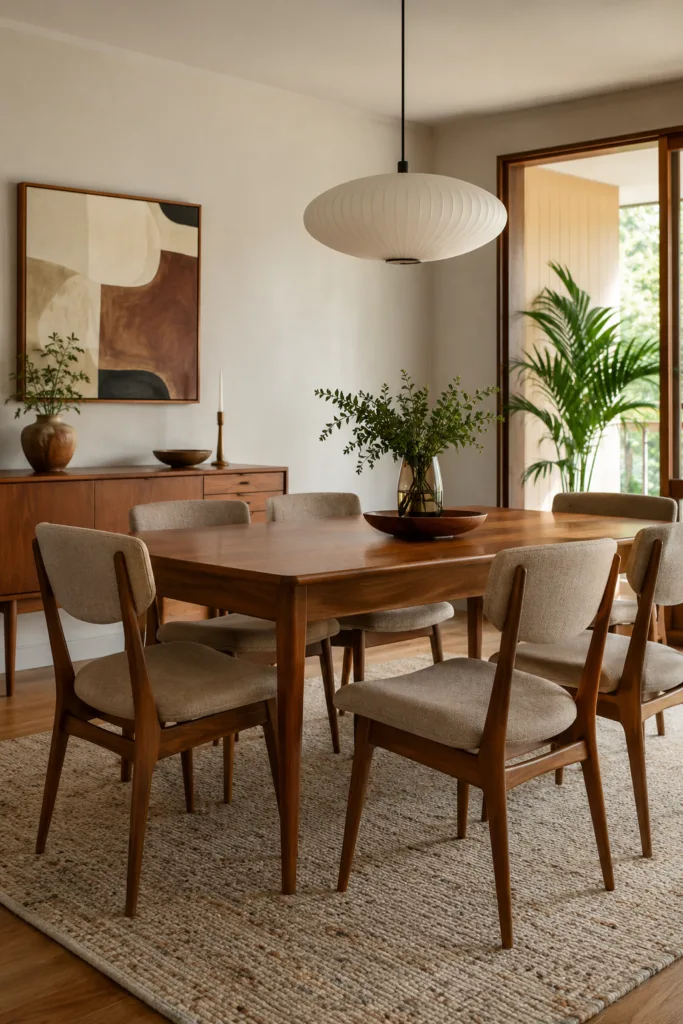
Warm wood tones are one of the easiest ways to create a mid-century dining room. I have noticed that when the room has too many cold surfaces, it can feel empty or formal. Wood solves that problem quickly. A walnut dining table, wooden chairs, sideboard, or even a wood-framed mirror can make the room feel welcoming. The best part is that warm wood works with many colors, including white, beige, olive, mustard, black, and cream. In my opinion, wood should feel natural, not overly polished. That slightly organic look makes the space feel more real.
4. Add A Statement Pendant Light
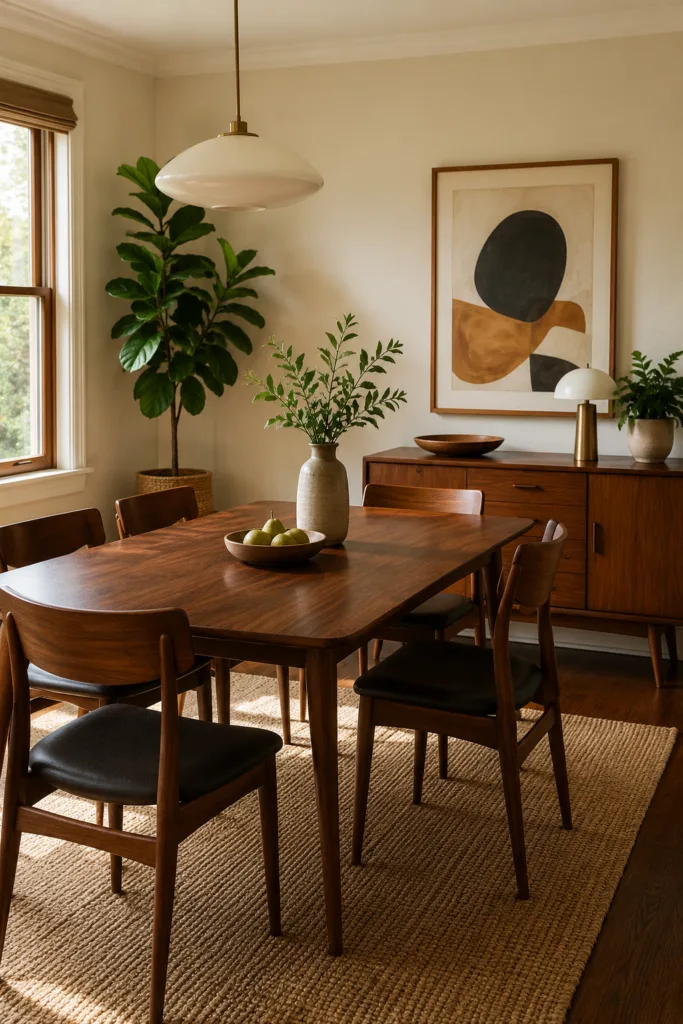
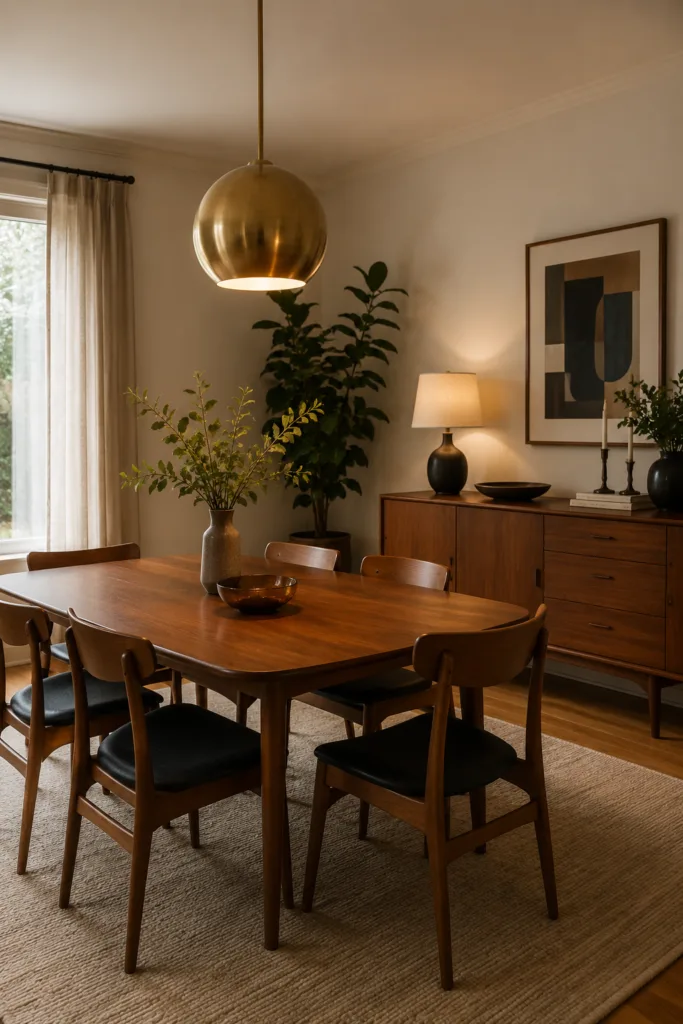
A good pendant light can completely change a dining room. I always think of lighting as both practical and decorative. In a mid-century dining room, a globe pendant, brass fixture, cone light, or sculptural chandelier can add character without making the room too busy. The light should hang above the table and help define the dining area. From my experience, the size matters a lot. If the light is too small, it disappears. If it is too large, it overwhelms the room. A balanced pendant creates focus, warmth, and a stylish mid-century mood.
5. Keep The Color Palette Simple
Mid-century style looks best when the color palette is controlled. I like using a simple base, such as white, cream, beige, or light gray, then adding warm wood and a few accent colors. This keeps the dining room clean and easy to understand. Too many colors can make the room feel confused. From my experience, a simple palette also makes furniture look more expensive. You can add interest through a rug, artwork, chair fabric, or pendant light. The goal is not to make the room plain. The goal is to make everything feel connected.
6. Add A Sideboard For Storage
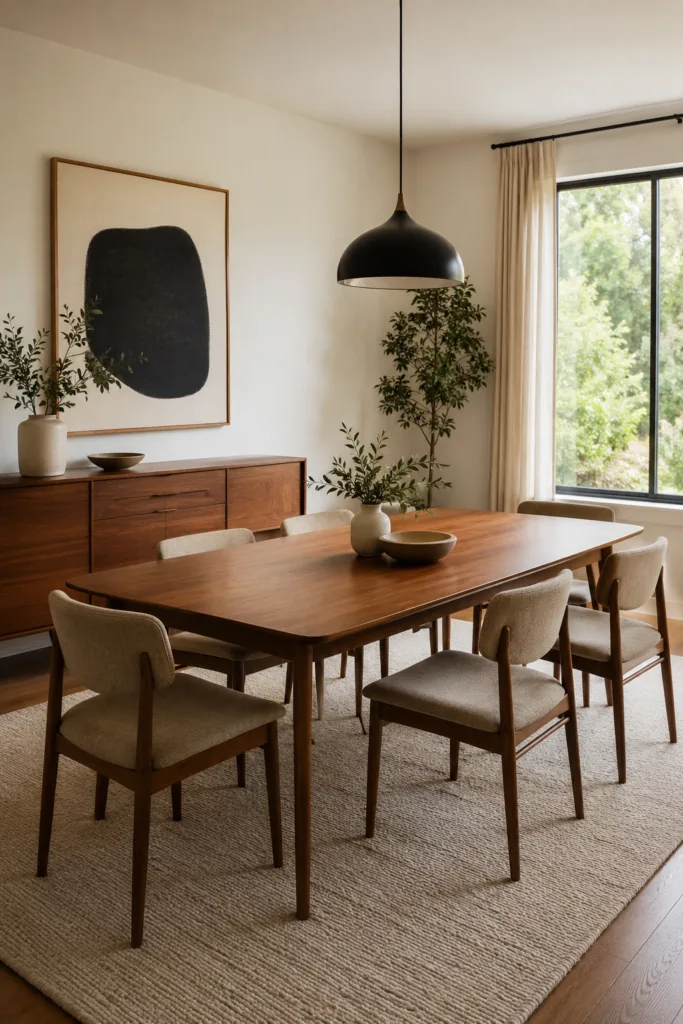
A sideboard is one of the most useful pieces in a dining room. I like it because it adds storage while also improving the design. In a mid-century room, a low wooden sideboard with slim legs looks perfect. It can hold dinnerware, serving items, table linens, and extra pieces that usually create clutter. The top can also be styled with a lamp, vase, artwork, or small tray. From my experience, a dining room feels more finished when it has a sideboard. It gives the room balance and makes the space more practical.
7. Use A Round Dining Table In Small Rooms
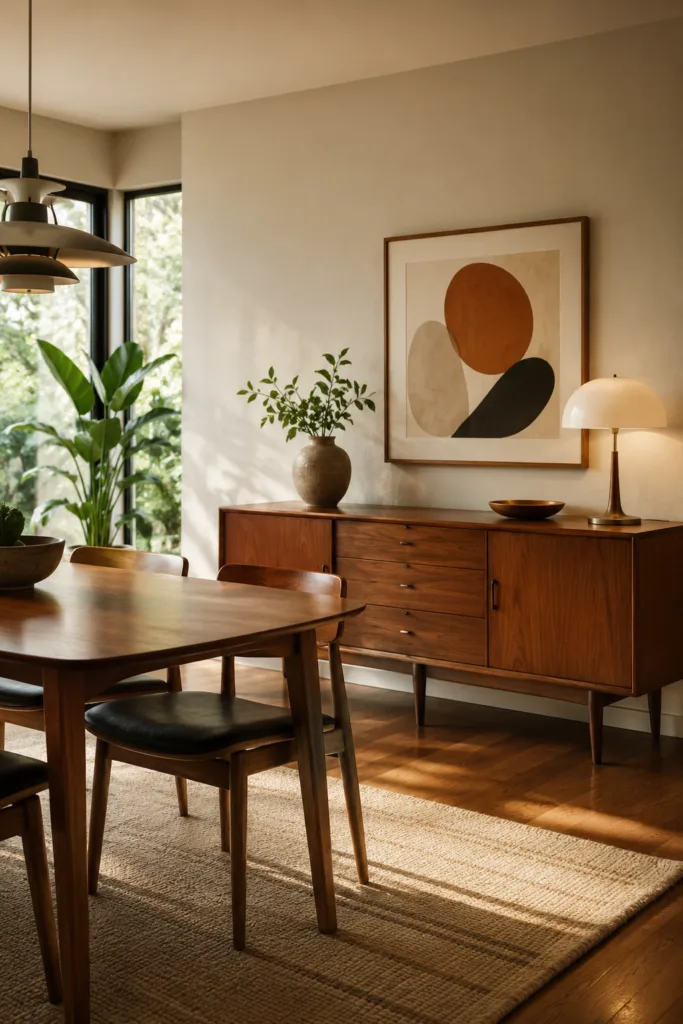
If the dining room is small, a round table can be a smart choice. I have seen round tables make tight spaces feel easier to move around. They also create a more friendly atmosphere because everyone can see each other clearly. In mid-century style, a round wooden table with a simple base looks very elegant. It works well in apartments, breakfast corners, and compact dining spaces. From my experience, sharp corners can sometimes make a small room feel crowded. A round table softens the layout and makes the dining area feel more open and comfortable.
8. Try A Rectangular Table For A Classic Look
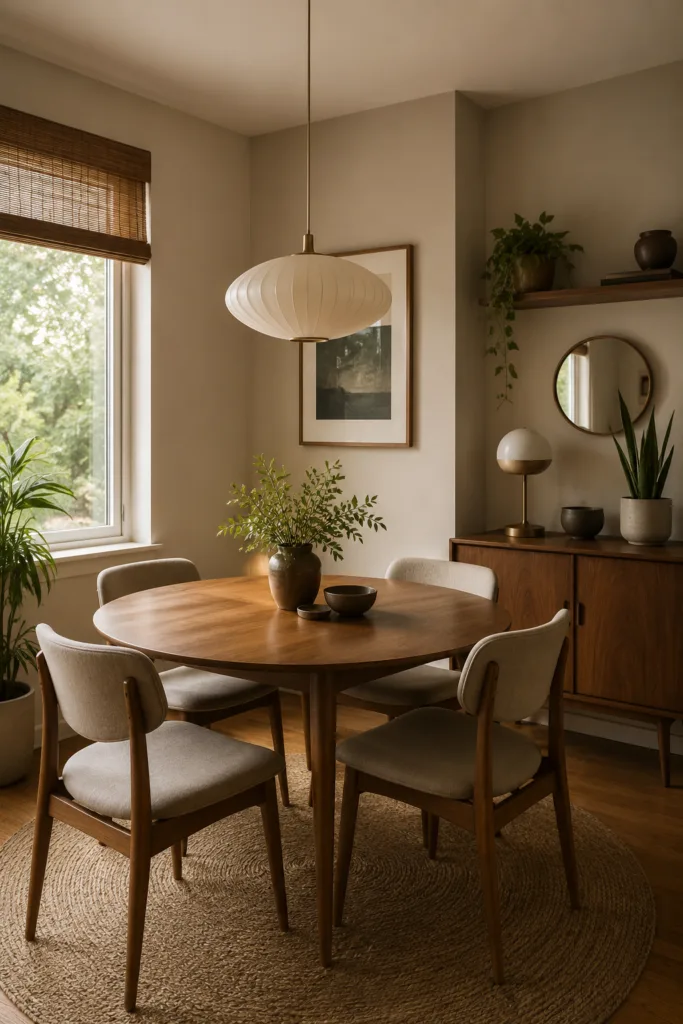
A rectangular dining table is still the most classic choice for a mid-century dining room. I like it because it gives the space a strong shape and works well for families or larger gatherings. A long wooden table with slim legs can feel elegant without looking heavy. From my experience, rectangular tables are best when you have enough walking space around them. They also look beautiful under a linear pendant or a row of globe lights. This idea works especially well in open-plan homes where the dining table needs to define the area clearly.
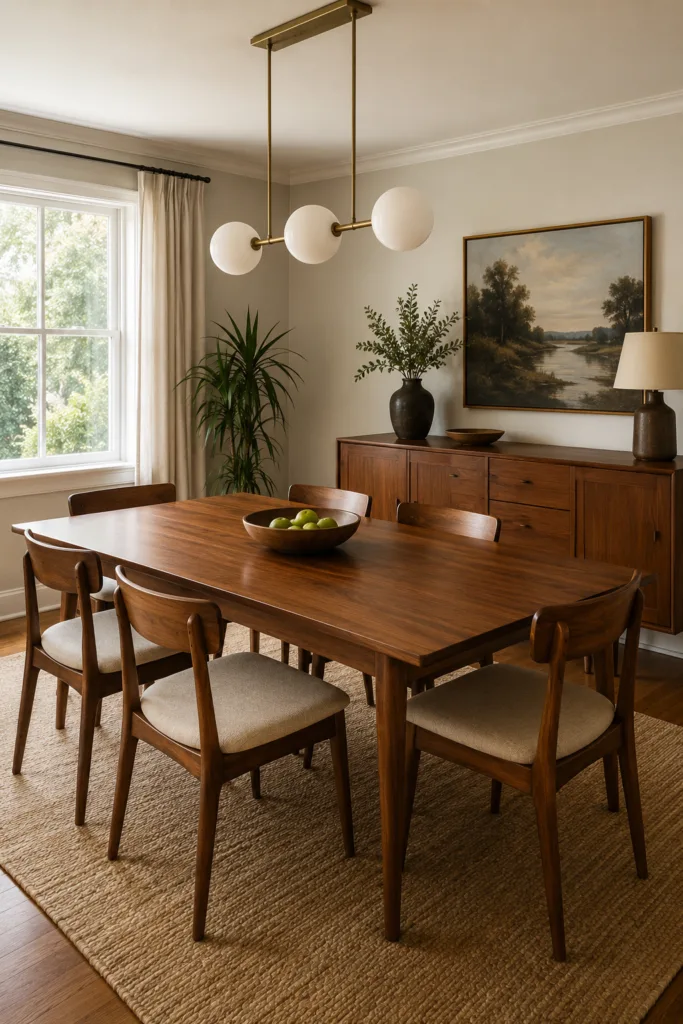
9. Mix Wood With Upholstered Seating
Wooden chairs look beautiful, but upholstered seating adds comfort. I personally like mixing wood frames with padded seats or soft fabric backs. This keeps the mid-century look while making the dining room more comfortable for daily use. A cream, tan, olive, or gray fabric seat can soften the wood and make the space feel warmer. From my experience, comfort should never be ignored in a dining room. If chairs look stylish but feel hard, people will not enjoy sitting there. A small amount of upholstery can make the room both beautiful and practical.
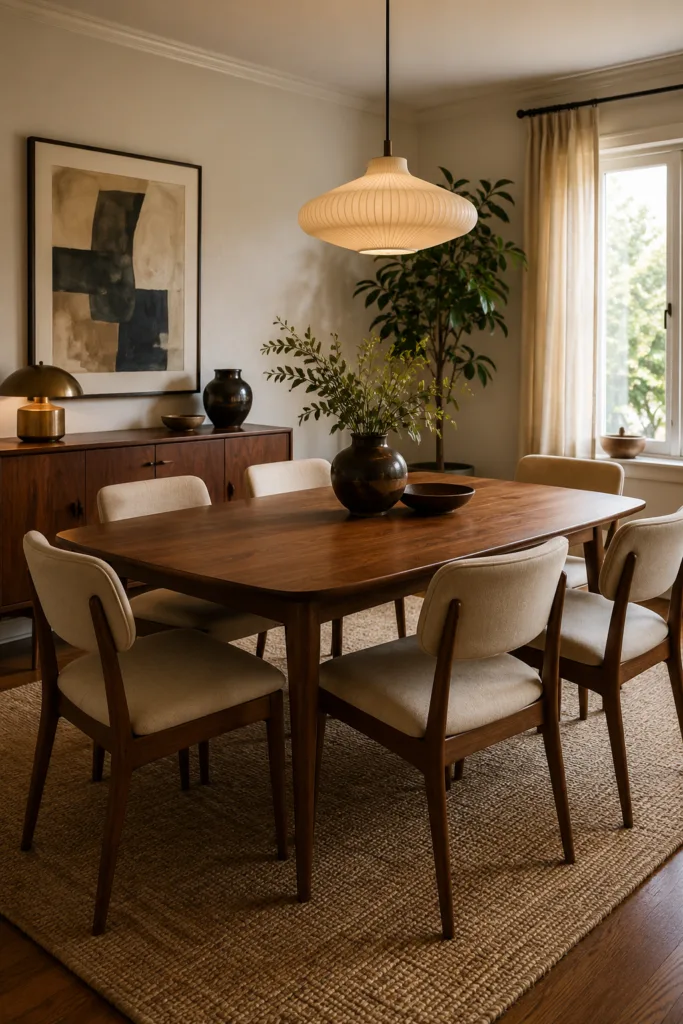
10. Add A Geometric Rug Under The Table
A rug can help define the dining area, especially in open spaces. I like geometric rugs because they match the mid-century style without feeling too decorative. Simple lines, diamonds, abstract shapes, or soft patterns can work well. From my experience, the rug should be large enough so chairs remain on it even when pulled back. This makes the dining room feel more planned and comfortable. Neutral rugs are safe, but a muted mustard, rust, olive, or charcoal pattern can add personality. A good rug brings warmth, texture, and structure to the room.
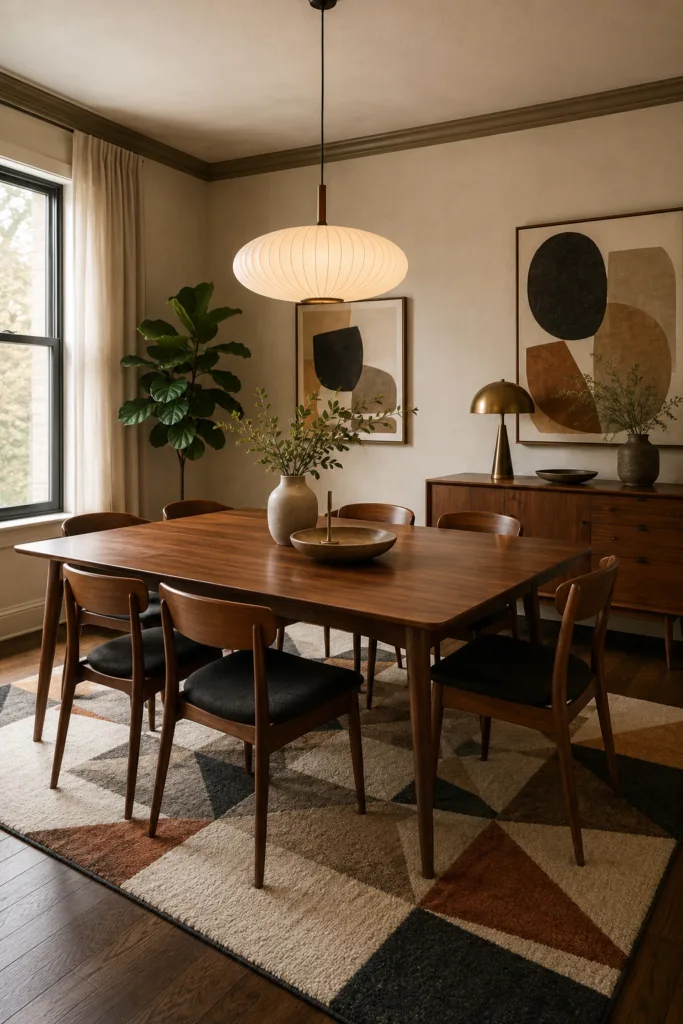
11. Use Brass Or Gold Accents Carefully
Brass accents can make a mid-century dining room feel warmer and more elegant. I like using brass in lighting, cabinet handles, mirror frames, or small decor pieces. The key is to use it carefully. Too much gold can make the space feel flashy instead of classic. From my experience, brass looks best when paired with warm wood and simple walls. It adds a little shine without taking over the room. A brass pendant over a wooden dining table can be enough. Small details often create the best effect when the rest of the room stays calm.
12. Add Mid-Century Artwork
Artwork can bring personality to a dining room without adding clutter. I like abstract prints, simple line art, retro shapes, and muted color blocks for mid-century spaces. The artwork should feel connected to the room’s color palette. From my experience, one large piece usually looks better than many small random frames. A framed print above a sideboard or on the main dining wall can create a strong focal point. It also helps the room feel less empty. Mid-century artwork does not need to be loud. It should add interest while keeping the overall room balanced.
13. Try Curved Furniture Shapes
Mid-century design is not only about straight lines. Curved shapes also work beautifully. I like round tables, curved chair backs, oval mirrors, and softly shaped pendant lights. These details make the dining room feel more relaxed and comfortable. From my experience, too many straight lines can sometimes make a room feel stiff. A few curves add softness without changing the style. Curved furniture also feels very modern for today’s homes. When used with warm wood and simple colors, it creates a dining room that feels stylish, friendly, and easy to live with.
14. Keep The Room Open And Uncluttered
One thing I like most about mid-century dining rooms is the open feeling. The furniture usually has slim legs, simple shapes, and enough breathing space. From my experience, this style does not work well when the room is overcrowded. It needs clean surfaces and smart storage. Keep only useful or meaningful items in the dining area. A table, chairs, sideboard, rug, light, and one or two decor pieces are often enough. This makes the room easier to clean and more comfortable to use. A calm dining room always feels more expensive than a crowded one.
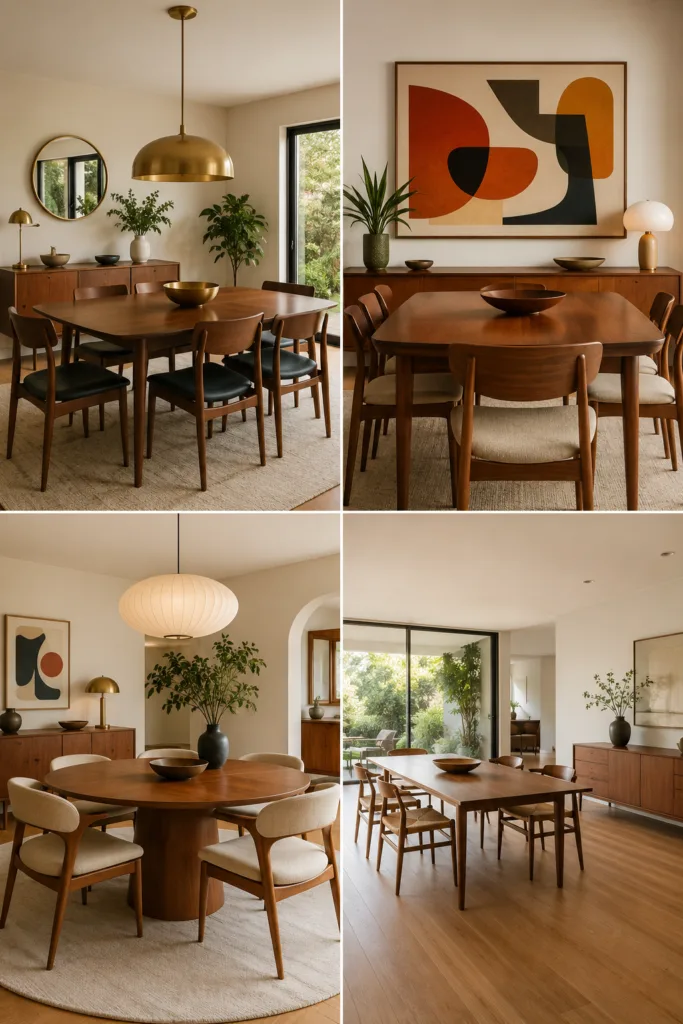
15. Use Black Details For Contrast
Black details can make a mid-century dining room feel sharper and more modern. I like using black in chair legs, pendant lights, picture frames, cabinet pulls, or a simple vase. It creates contrast against wood and light walls. From my experience, black should be used as an accent, not as the main color. Too much black can make the room feel heavy. But small black details help define the space and make everything look more intentional. This is a simple way to make a warm wooden dining room feel clean, mature, and stylish.
16. Add Plants For A Natural Feel
Plants work very well with mid-century dining rooms. I like them because they bring life to the clean furniture and warm wood tones. A tall plant in the corner, a small plant on the sideboard, or a simple vase with greenery on the table can make the room feel fresh. From my experience, plants also soften the hard lines of tables, chairs, and cabinets. You do not need too many. One large plant can make a strong difference. Greenery adds color naturally and makes the dining room feel more comfortable and lived-in.
17. Choose Simple Window Treatments
Window treatments should support the dining room, not overpower it. I prefer simple curtains, wood blinds, or soft Roman shades in a mid-century space. The fabric should be clean and natural, such as linen or cotton blend. From my experience, heavy shiny curtains can make the room feel dated. A light neutral curtain can soften the space and control daylight without looking too formal. If the room already has strong furniture, keep the window treatment simple. This helps the dining table, chairs, and lighting remain the main focus of the room.
18. Use A Mirror To Reflect Light
A mirror can make a dining room feel brighter and larger. I like placing a mirror above a sideboard or on a wall opposite a window. In mid-century design, a round, oval, or wood-framed mirror works especially well. From my experience, mirrors are useful when the dining room feels narrow or dark. They reflect light and make the space feel more open. The mirror should not be too decorative. A simple shape with a warm frame is usually enough. This idea adds function and beauty at the same time, which is perfect for mid-century style.
19. Mix Vintage And Modern Pieces
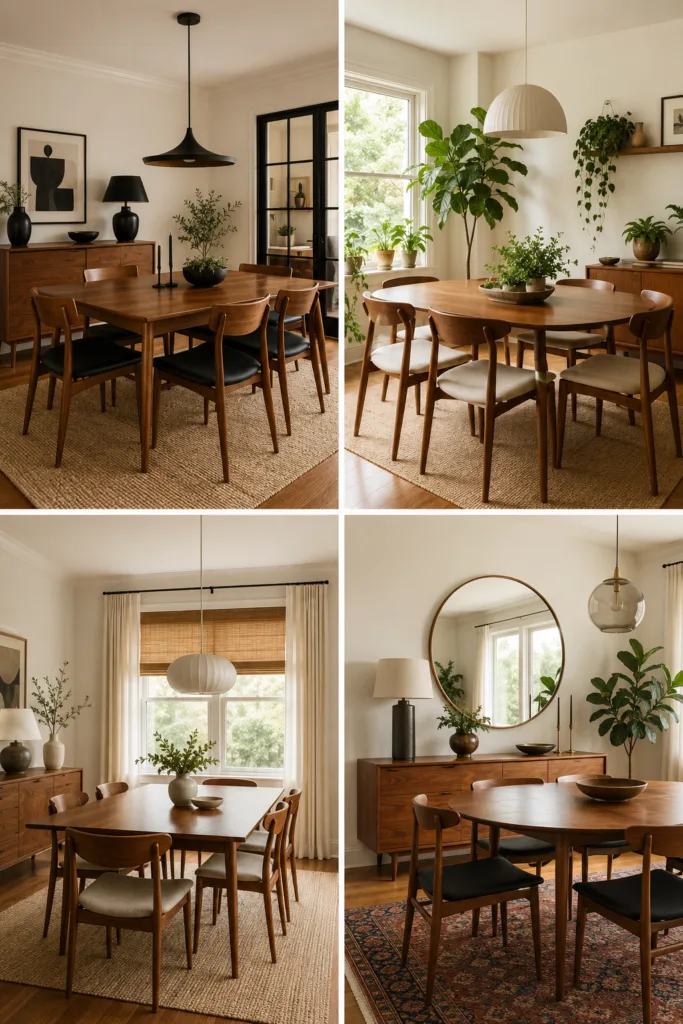
A mid-century dining room does not need to look like a museum. I like mixing vintage-inspired furniture with modern pieces because it feels more natural. For example, a classic wooden dining table can work with modern upholstered chairs. A vintage sideboard can pair with a clean contemporary pendant light. From my experience, this mix makes the room feel collected instead of copied. The key is keeping the colors and shapes connected. When everything shares a similar tone or mood, old and new pieces can work together beautifully. This creates a dining room with personality and function.
20. Focus On Comfortable Dining Flow
A beautiful dining room is useless if it is difficult to move around. I always check the walking space around the table before focusing on decor. Chairs should pull out easily, and people should move around without bumping into furniture. From my experience, function is what makes a dining room enjoyable every day. Mid-century design helps because the furniture usually has slim legs and lighter shapes. Still, the layout matters. Keep enough space between the table, walls, and sideboard. A dining room with good flow feels relaxed, practical, and ready for real family use.
21. Let Form And Function Work Together
The best mid-century dining room is not only about appearance. It should look good and work well at the same time. I like this style because it naturally combines form and function. The furniture is beautiful, but it is also practical. The lighting is stylish, but it also helps during meals. The sideboard adds design, but it also gives storage. From my experience, this balance is what makes mid-century design last for years. When every item has a purpose and a clean shape, the dining room feels complete, comfortable, and timeless.
Conclusion
Mid-century dining rooms are popular because they feel warm, simple, and useful. From my experience, this style works best when you focus on good furniture shapes, natural wood, smart lighting, comfortable seating, and a clean layout. You do not need to fill the room with too many decorative items. A strong dining table, balanced chairs, a useful sideboard, and thoughtful lighting can create a complete look. The real beauty of mid-century design is that it respects both style and daily life. That is why it continues to feel fresh, even in modern homes.
Seo meta description
Explore 21 mid-century dining room ideas that blend form and function with warm wood, clean furniture, smart lighting, and practical stylish design.