
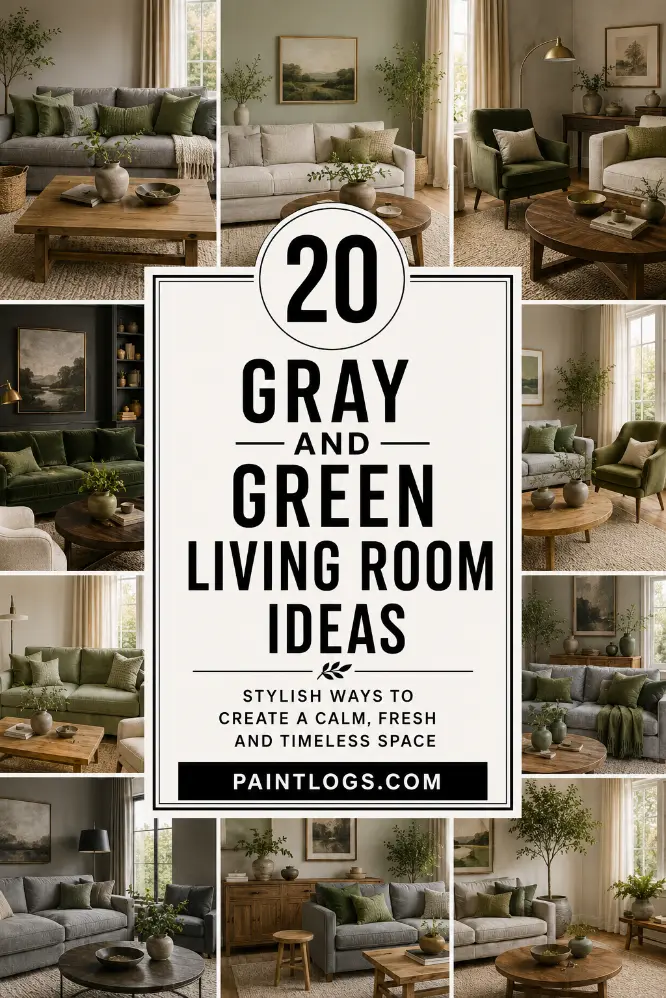
Gray and green living room ideas are one of those color combinations I keep coming back to because they are so easy to live with.
Gray gives the room a calm base.
Green brings it back to life.
And when you get the balance right, the room can feel warm, fresh, cozy, and grown-up at the same time.
What I especially like is that you can take this combination in completely different directions. Pale gray with sage green feels soft and relaxed. Charcoal with forest green feels rich and dramatic. Warm gray with olive green gives you that natural, earthy look that works beautifully with wood.
You also don’t need to repaint the whole room.
Sometimes one green chair, a gray sofa, a few cushions, and some plants are enough.
If you want to try this color pairing without making your living room feel too themed, here are 20 gray and green living room ideas I would actually use.
1. Start With a Gray Sofa and Green Cushions
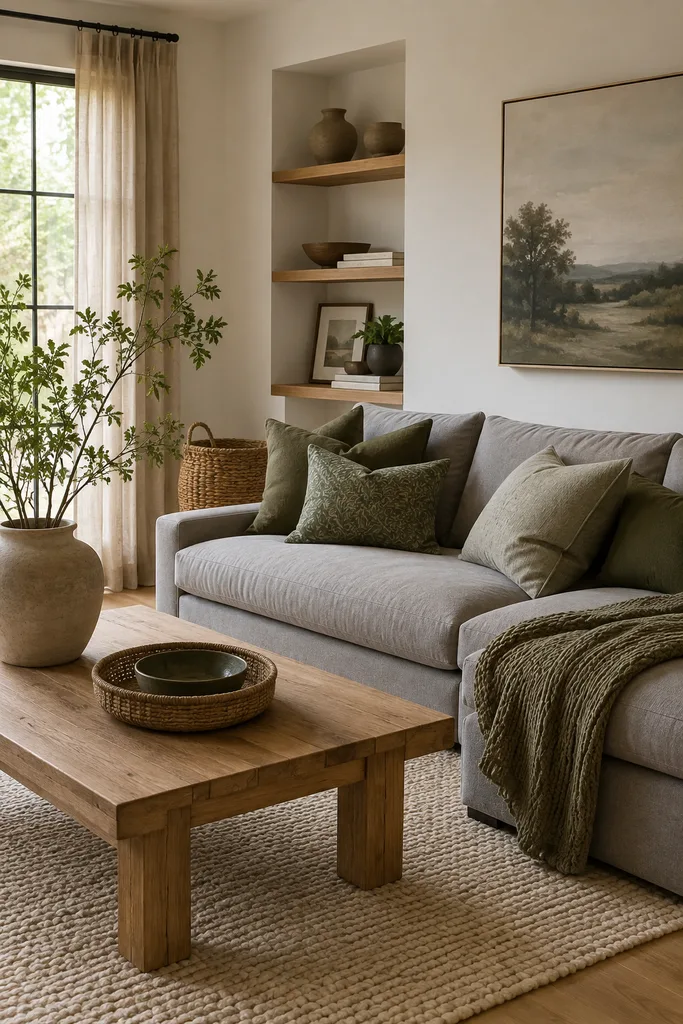
If you already have a gray sofa, you have probably done half the work.
I would start with a few green cushions rather than changing anything major.
Sage, olive, moss, or forest green can all work depending on how dark your gray sofa is.
For a pale gray sofa, I like slightly deeper green cushions.
For charcoal gray, I would use softer sage or muted olive so everything does not become too dark.
Then bring in one or two warm materials like wood or woven baskets.
That keeps the room from feeling cold.
2. Try Sage Green Walls With a Light Gray Sofa
This is probably one of my favorite combinations.
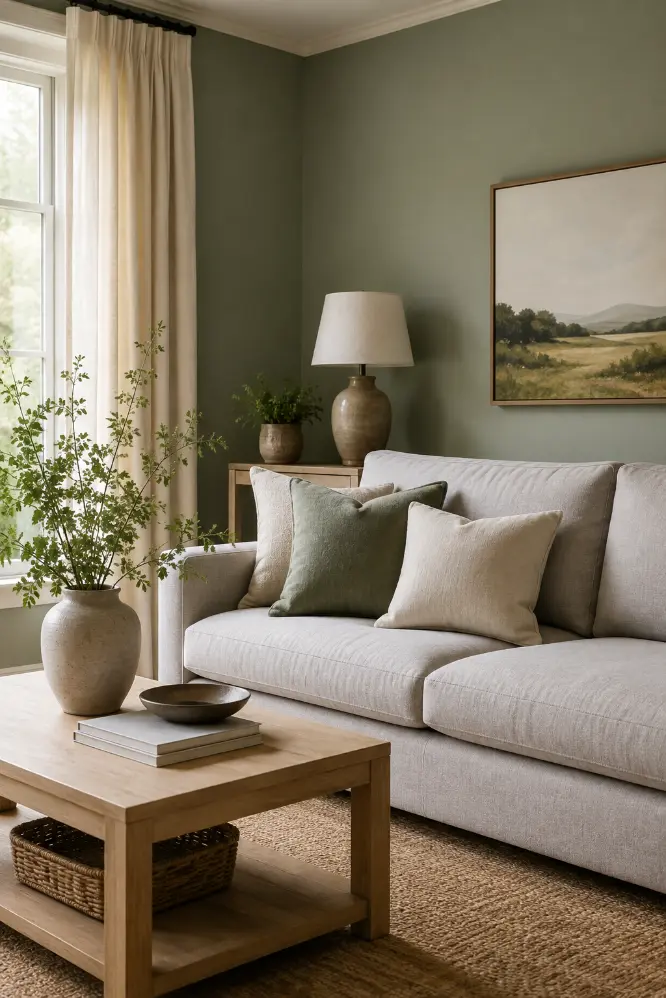
Sage green walls feel soft enough to use around the whole room, but they still give you more personality than plain beige or white.
Then place a light gray sofa against them.
The contrast is gentle.
Nothing fights for attention.
I would finish the room with cream curtains, pale oak furniture, and maybe a natural beige rug.
If you like calm interiors, this is a very easy combination to live with.
3. Pair Olive Green With Warm Gray
Olive green and warm gray feel a little richer.
I especially like this combination if you have a lot of wood in the room.
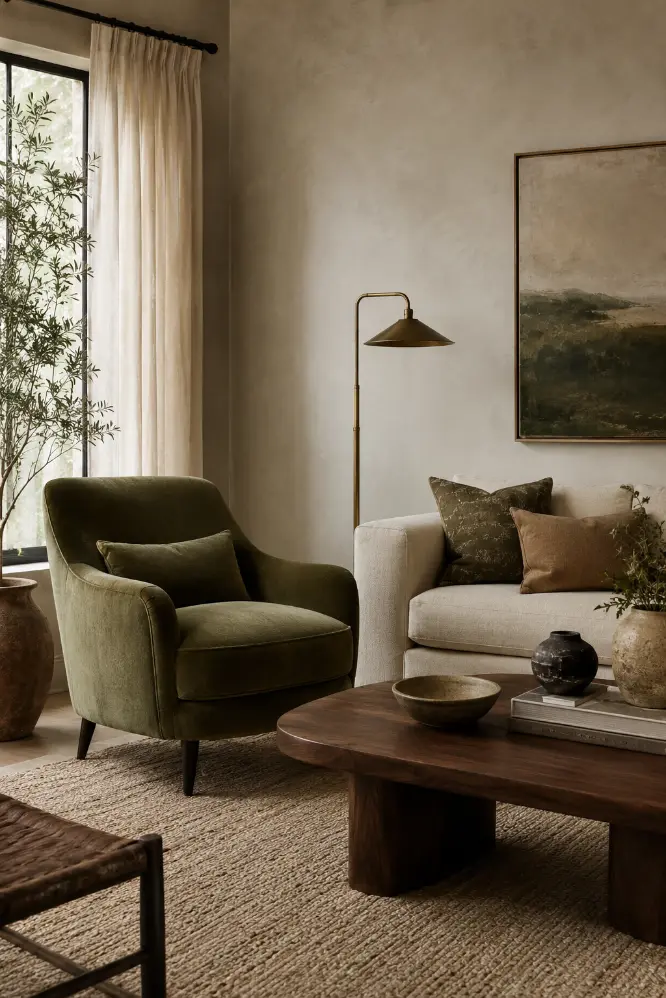
Try warm gray walls with an olive green chair.
Or an olive sofa against soft gray plaster walls.
Then add walnut or medium oak furniture.
A little aged brass can look really good here too.
I think this works best when the gray has a slight beige undertone rather than a cool blue one.
4. Use Forest Green for More Drama
If you want the room to feel deeper and more elegant, go darker.
Forest green works beautifully with charcoal, medium gray, and dark wood.
I would not necessarily paint every wall dark green.
You could use it on one feature wall.
Or through a velvet chair.
A cabinet.
Built-ins.
Maybe even the sofa.
Then keep the larger rug and curtains lighter so the room still has some breathing space.
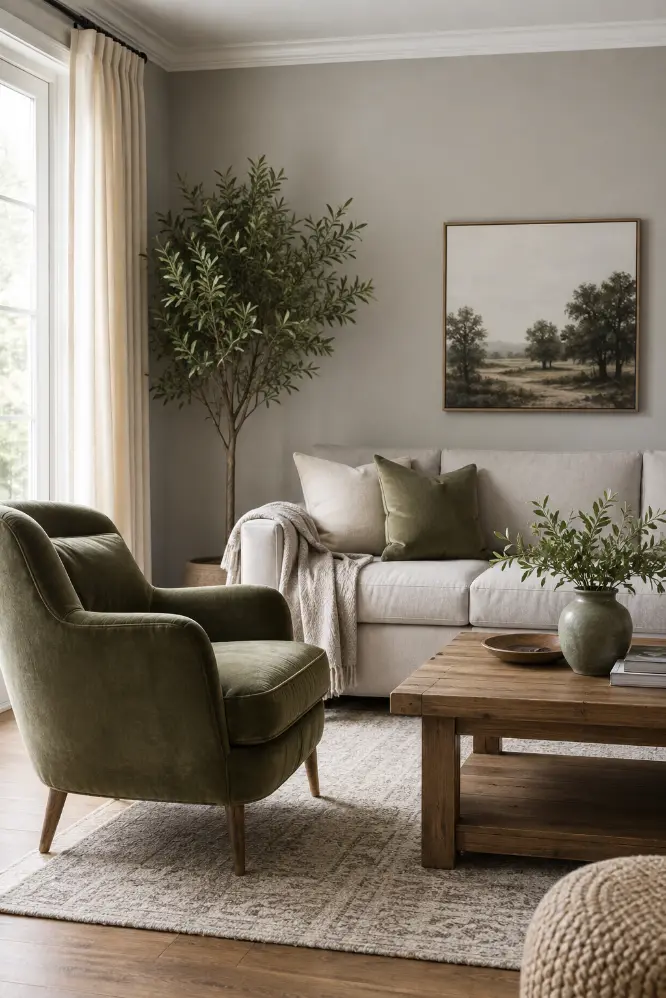
5. Add a Green Accent Chair to a Gray Room
This is one of the easiest updates on the whole list.
If your living room is mostly gray, add one green accent chair.
That one piece can stop the room from feeling flat.
I like olive, muted moss, or deep green upholstery.
Then repeat the green once or twice elsewhere.
Maybe one cushion.
A ceramic vase.
A little green in the artwork.
You don’t need to match everything exactly.
Actually, I think it looks better when the shades are slightly different.
6. Use Gray Walls and a Green Sofa
If you are ready for a bigger statement, flip the combination.
Keep the walls gray and make the sofa green.
A muted sage sofa can look beautiful against pale gray walls.
A darker olive sofa works well with warmer gray.
And a deep forest green sofa can look amazing against soft charcoal or stone gray.
I would keep the rest of the furniture fairly simple.
Let the sofa be the main color moment.
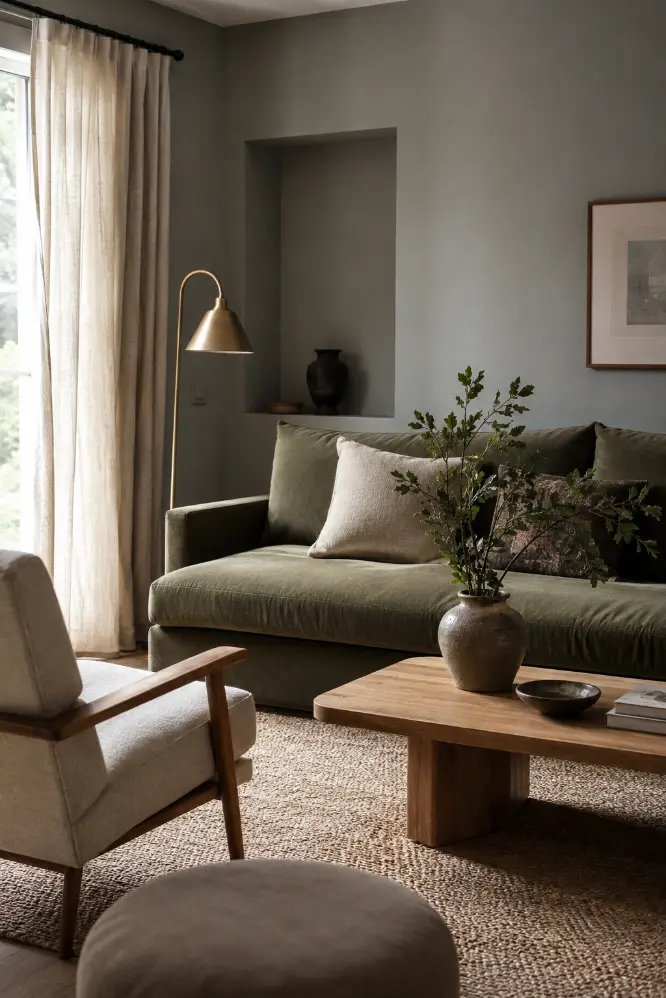
7. Mix Different Shades of Green
You do not have to pick one exact green and repeat it everywhere.
I actually prefer mixing them.
Sage cushions.
Olive pottery.
A deep green chair.
Real leafy plants.
As long as the greens have a similar natural feeling, they usually work together.
The room starts to feel more layered and less like you bought everything as one set.
Gray is useful here because it gives all those greens a calm background.
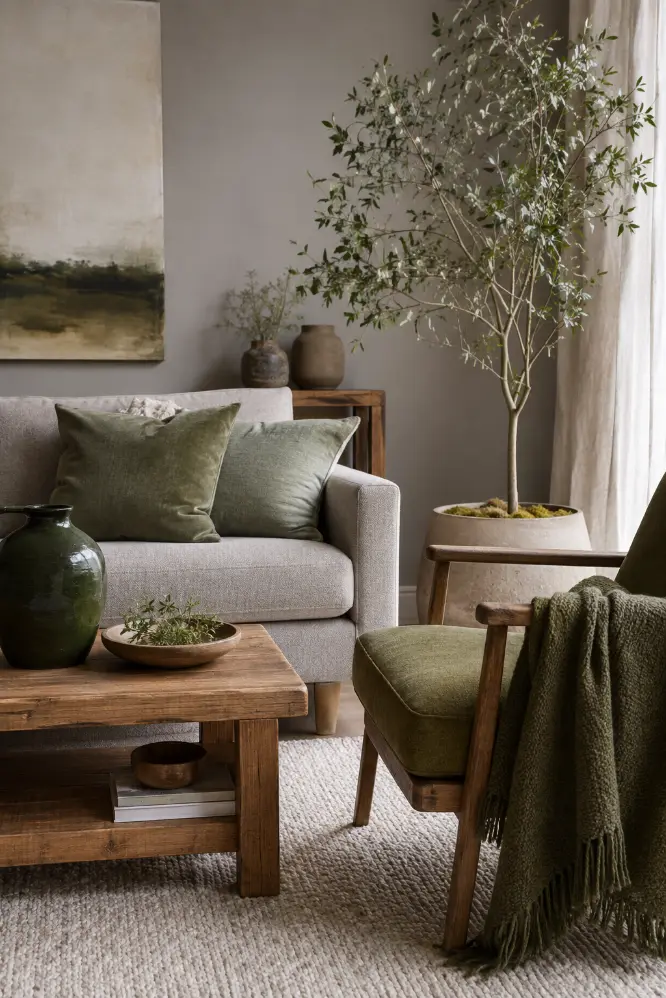
8. Mix Light and Dark Gray
The same goes for gray.
One flat gray shade can make a room feel a little dull.
I like mixing light gray, charcoal, soft stone, and warm gray.
For example:
A pale gray sofa.
A charcoal floor lamp.
Warm gray walls.
A darker gray patterned rug.
Then bring green through cushions, plants, or a chair.
The difference in tone gives the room much more depth.
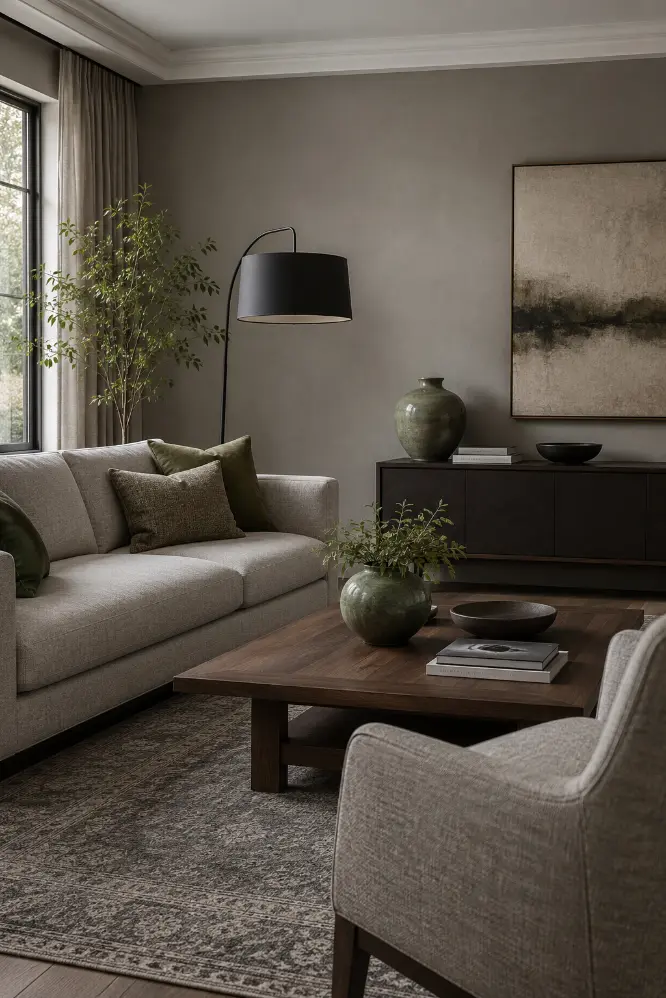
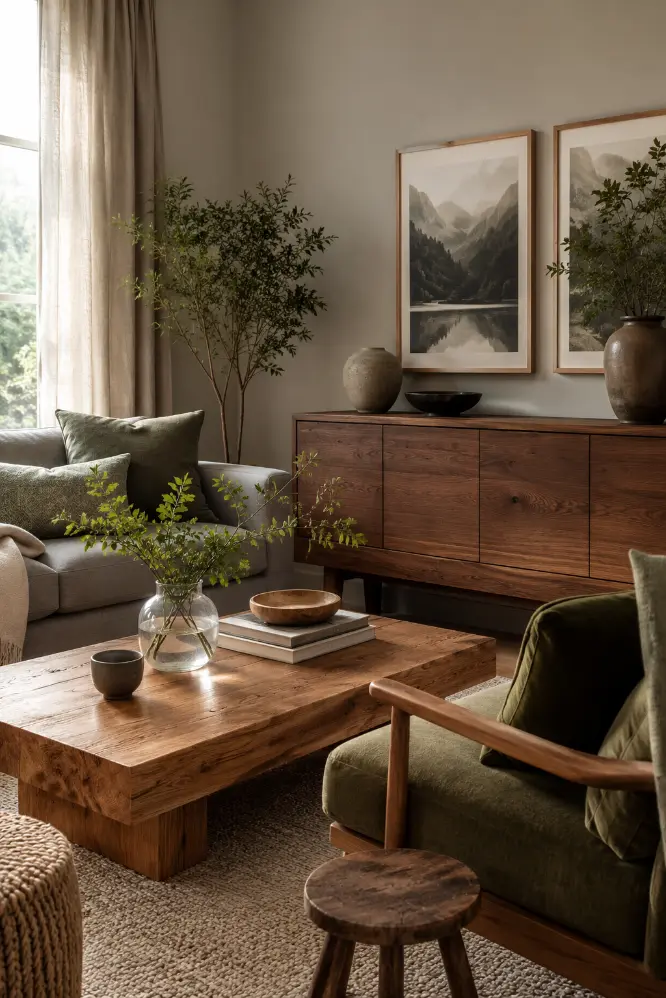
9. Bring in Natural Wood
Gray and green both look better with wood.
At least, that is how I see it.
Wood warms up gray and makes green feel even more natural.
Try an oak coffee table.
A walnut sideboard.
Wooden picture frames.
A little stool.
Even a simple wooden bowl.
You do not have to make every wood tone match.
I actually like a small mix because it makes the room feel more relaxed.
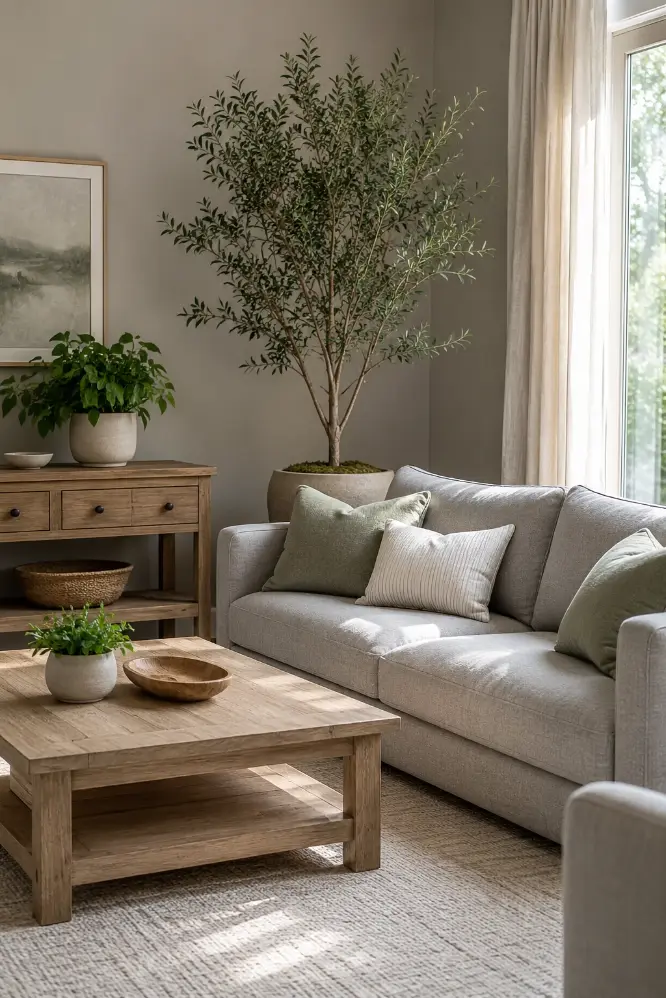
10. Add Plenty of Plants
This is probably the easiest way to bring green into a gray living room.
And you do not even need to buy green decor.
A large olive tree or ficus can fill an empty corner beautifully.
Then add one smaller plant on a console or shelf.
I would rather use two or three larger plants than ten tiny pots everywhere.
The room feels fresher without getting cluttered.
Plants also bring texture, which gray rooms sometimes need.
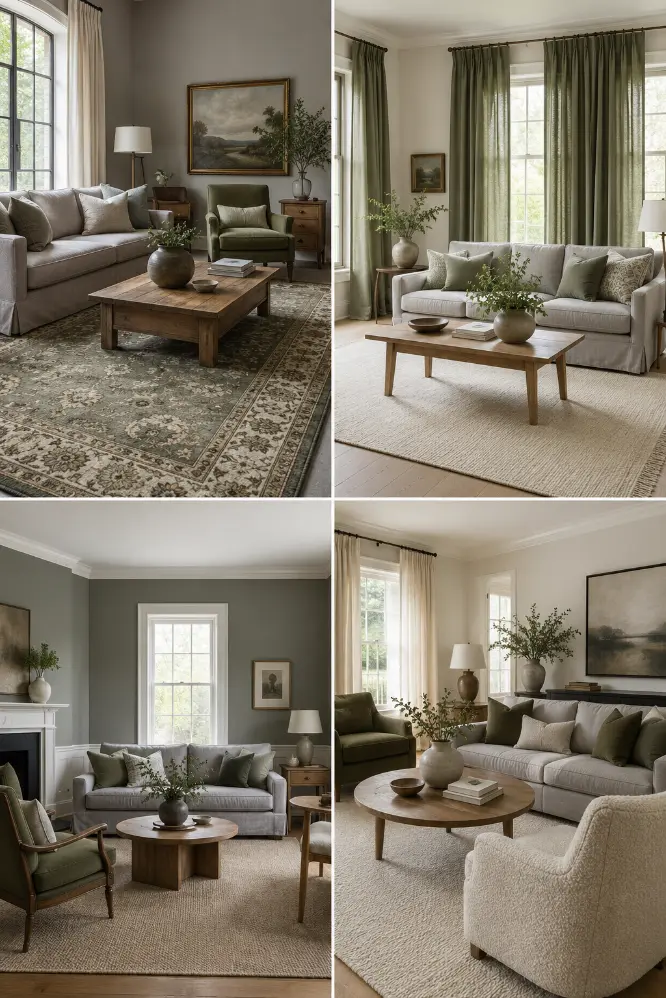
11. Use a Gray and Green Patterned Rug
A rug can tie the whole color palette together.
Look for something with muted gray, green, cream, and maybe a little brown.
Vintage-style rugs work especially well because the colors are usually softer.
I would choose a rug large enough to connect the sofa and chairs.
A tiny patterned rug can make the room feel busier.
One larger rug usually looks calmer and more finished.
12. Add Green Through Curtains
Curtains are another nice way to use green without buying a green sofa.
I like soft sage linen curtains with pale gray walls.
Or deeper olive curtains in a room with charcoal furniture.
If solid green feels too strong, try a subtle stripe or small botanical pattern.
I would keep the fabric soft and full-length.
That makes the whole room feel more polished.
13. Keep the Ceiling and Trim Warm White
When you are mixing gray and green, I usually like keeping the trim simple.
Warm white works really well.
It gives the room a clean edge and stops the colors from becoming too heavy.
This is especially useful if your walls are medium gray or green.
White around the windows, doors, and ceiling helps break everything up.
I would just avoid a very cold blue-white if the rest of the room is warm.
14. Add Cream to Soften the Combination
Sometimes gray and green need a third color.
For me, cream is one of the easiest.
Add a cream rug.
Cream cushions.
Linen curtains.
A boucle chair.
Or warm ivory lampshades.
It softens the contrast between gray and green and makes the room feel much more comfortable.
If your room starts feeling too cool, this is the first thing I would try.
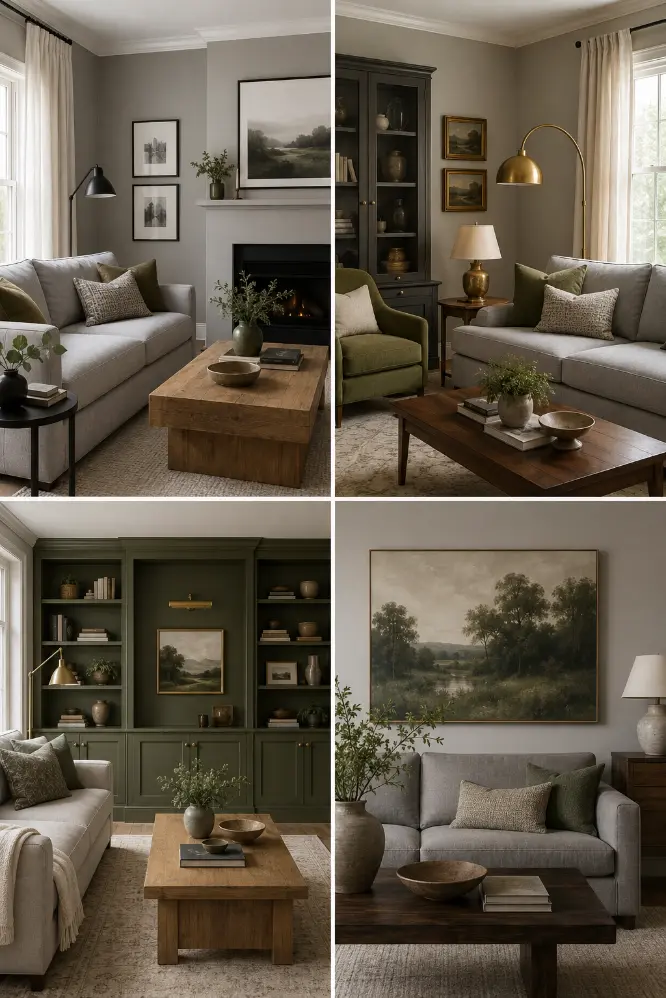
15. Use Black in Small Amounts
Black can help ground a gray and green room.
But I would keep it controlled.
A black floor lamp.
Thin black picture frames.
A small black side table.
Maybe a dark fireplace insert.
That is usually enough.
You don’t need every metal detail to be black.
A little contrast can make the green look richer and the gray look more intentional.
16. Add Brass for Warmth
If black feels too sharp, brass is another good option.
I especially like aged brass with olive green.
You could use it through lamps, frames, candleholders, or cabinet handles.
Gray keeps brass from feeling too flashy.
Green keeps it feeling earthy.
Together, the combination can look really elegant without trying too hard.
17. Try Green Built-Ins Against Gray Walls
If you have shelving or built-in cabinets, this is a great place to use deeper green.
Keep the surrounding walls gray.
Then paint the built-ins olive, moss, or forest green.
Add books, pottery, framed artwork, and a little wood.
The green becomes part of the architecture instead of just another accessory.
I really like this in rooms where you want more color but still want everything to feel calm.
18. Use Green Artwork in a Mostly Gray Room
Artwork can bring the colors together without changing furniture.
Look for landscapes, botanicals, abstract pieces, or vintage-style prints with green in them.
You do not need bright emerald green.
Muted olive, moss, sage, and forest tones are easier to live with.
Hang one larger piece above the sofa or fireplace.
Then let the same green appear somewhere else in the room.
It can be as small as one cushion or vase.
19. Make Charcoal and Green Feel Cozy
Dark gray and green can look beautiful, but you need warmth.
If I used charcoal walls or a charcoal sofa, I would add warm wood immediately.
Then I would bring in cream or beige textiles.
Add brass or warm lamps.
Use a soft rug.
And make sure the room gets enough layered lighting.
The goal is moody, not gloomy.
Those warm details make all the difference.
20. Keep the Whole Room Natural and Relaxed
This is probably the version I like most.
Use a warm gray sofa.
Soft olive cushions.
Natural oak furniture.
Cream curtains.
A beige wool rug.
Green plants.
Maybe one dark green chair.
Nothing has to match perfectly.
The colors just repeat gently around the room.
For me, that is when gray and green feel the most timeless.
The room looks put together, but it does not look overly designed.
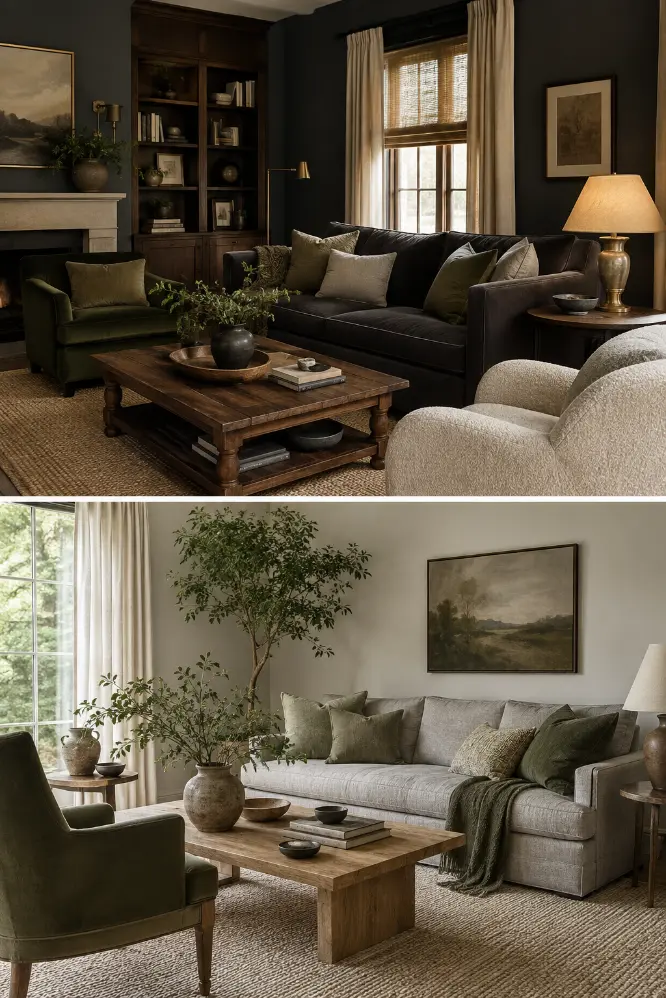
My Favorite Gray and Green Living Room Color Combinations
If you are not sure which direction to take, these are combinations I would start with:
- Light gray + sage green + cream
- Warm gray + olive green + oak
- Charcoal + forest green + beige
- Soft gray + moss green + walnut
- Stone gray + muted green + brass
- Pale gray + eucalyptus green + white
- Medium gray + deep green + natural wood
- Warm greige + olive + black accents
You do not need to use every color equally.
I usually choose one main neutral, one green, and one warm material.
Then I build from there.
How I Would Use Gray and Green in a Small Living Room
In a smaller room, I would keep the larger surfaces lighter.
Maybe light gray walls.
A cream or pale gray sofa.
Then bring green into one chair, cushions, plants, and artwork.
You still get the color combination without making the room feel closed in.
I would also use a mirror, pale wood, and floor-length curtains to keep things airy.
And I would not add too many small green accessories.
A few stronger pieces usually look better.
How I Would Make Gray and Green Feel Warmer
If your room starts feeling cold, I would not remove the gray or green.
I would add warmth around them.
Bring in:
- Natural wood
- Cream fabric
- Warm lamps
- Woven baskets
- Aged brass
- Brown leather
- Beige rugs
- Soft linen
Even one wood coffee table can change the whole mood.
That is why I almost never use gray and green without some kind of warm natural material.
What I Would Avoid
The biggest problem with this color combination is using shades that all feel too cold.
Cool gray walls.
Blue-green cushions.
Bright white furniture.
Silver metal.
Very cool lighting.
All together, the room can start feeling flat.
I would also avoid buying every accessory in the exact same green.
That usually looks too coordinated.
Let the shades move a little.
And don’t forget neutral space.
Not every wall, cushion, vase, and chair needs to carry the color scheme.
How to Make a Gray and Green Living Room Look More Expensive
I would focus on materials before adding more decor.
Use proper curtains.
Choose a larger rug.
Bring in real-looking wood.
Use fewer but bigger pieces of art.
Add one good lamp.
Keep the coffee table styling simple.
Use pottery instead of lots of small shiny accessories.
And leave a little empty space.
For me, a room starts looking more expensive when it feels calm and intentional rather than full.
Final Thoughts
The reason I like gray and green living room ideas so much is that the combination can be changed to suit almost any home.
You can make it light.
Dark.
Traditional.
Modern.
Natural.
Minimal.
Cozy.
Gray gives you a calm foundation, while green gives the room enough life to stop it feeling plain.
If I were starting from scratch, I would probably choose a warm gray base, add olive or sage green, then bring in natural wood, cream fabric, and real plants.
That gives you a room that feels fresh without chasing a trend.
And that is usually the kind of color combination I want in a living room — something I can enjoy now without wanting to completely redo it a year later.