
Choosing between acrylic and latex paint can be confusing — they look almost identical on the shelf, both are water-based, and both clean up easily with soap and water. But once you start painting, the differences start to show.
The secret lies in the resin that holds everything together. Acrylic paint uses a pure acrylic resin, giving it strength and flexibility that withstands weather, moisture, and sunlight. Latex paint uses a vinyl-acrylic blend, which makes it smoother, easier to apply, and perfect for large indoor walls.
So how do you know which one to use?
It depends on where you’re painting, how long you want the finish to last, and the conditions your surface will face.
In this guide, we’ll break down the acrylic vs. latex paint, where each one works best, and how to choose the right type for your project.
What Is Acrylic Paint?
When you see “100% acrylic” on a paint can, you’re looking at one of the toughest and most flexible coatings available. Acrylic paint is water-based but uses pure acrylic resin as its binder — the ingredient that gives it lasting strength and superior adhesion, similar to how water-based bonding materials rely on compatible binders to help coatings and surfaces hold together.
If you’re wondering is acrylic paint waterproof, the short answer is yes — it holds up well against moisture once cured
That’s what sets it apart from ordinary latex paint. Once applied, the water evaporates, and the acrylic resin forms a durable plastic film that clings tightly to wood, metal, or masonry. The result is a finish that expands and contracts with the surface instead of cracking or peeling.
Because of its flexibility and UV resistance, acrylic paint is a favorite among professionals for outdoor and high-moisture projects. It handles sunlight, humidity, and temperature changes with ease — something regular latex can’t always do.
How Acrylic Paint Works
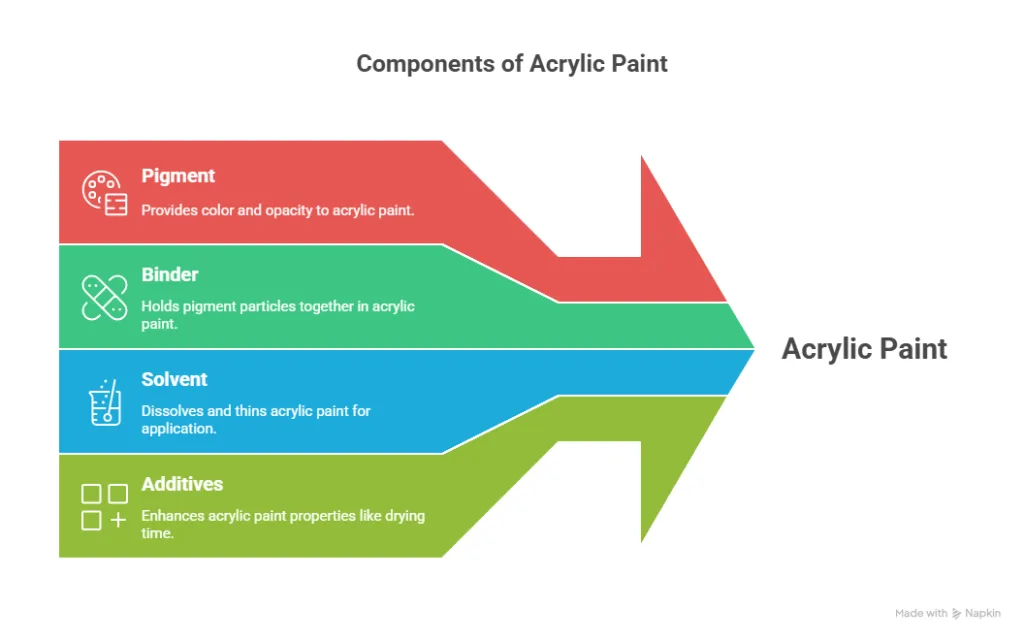
Every paint contains four basic ingredients: pigment, binder, solvent, and additives.
In acrylic paint, the binder is pure acrylic resin — a synthetic polymer that turns into a flexible film when the water evaporates. This plastic-like layer gives the coating strength, weather resistance, and long-term color stability.
That’s why acrylic paint lasts longer outdoors and doesn’t fade as quickly in direct sunlight.
Where to Use Acrylic Paint
Acrylic paint excels in places that face moisture, heat, or outdoor exposure, such as:
- Exterior siding, trim, or fences
- Wood furniture and cabinets
- Metal doors or railings
- Masonry, concrete, or stucco
- Bathrooms and kitchens (high humidity zones), see cost to repaint a bathroom for project estimates
It’s also ideal for repainting previously coated surfaces — just make sure they’re clean and lightly sanded.
Why Professionals Love It
Painters often call acrylic their “weatherproof paint.” It holds color longer, resists mildew, and stretches with changing temperatures.
Although it costs more than latex, its longevity and durability make it a smart investment — especially for exteriors or surfaces that see daily wear.
If you want a single product that performs well almost anywhere, go for 100% acrylic latex paint — a hybrid that combines acrylic’s strength with latex’s easy application.
What Is Latex Paint?
Despite the name, latex paint contains no real rubber latex. The term comes from older paint formulas, but today’s latex paints are water-based coatings made with vinyl-acrylic or synthetic resins.
It’s the paint most homeowners reach for — and for good reason. Latex paint spreads smoothly, dries quickly, and cleans up with plain water. It’s ideal for large interior walls and ceilings where you want an even, low-odor finish.
While it’s not as flexible or weather-resistant as acrylic, latex shines in stable, indoor environments where conditions stay consistent year-round.
How Latex Paint Works
Latex paint uses vinyl-acrylic resin as its binder. When applied, the water in the formula keeps it spreadable until it evaporates. Once dry, the resin forms a solid film that protects the wall and gives it color.
It’s strong enough for everyday interior use but not built for the constant expansion, contraction, or UV exposure of outdoor surfaces.
Best Uses for Latex Paint
Latex paint performs beautifully on:
- Drywall and plaster
- Ceilings, hallways, and living rooms
- Bedrooms and offices
- Interior brick or masonry
It’s especially popular for quick makeovers and large indoor projects where ease of use and fast drying are top priorities.
If you’re refreshing these spaces, choosing a quality interior paint can make a noticeable difference in coverage, durability, and the overall finish of your project.
Pros and Cons of Latex Paint
Pros:
- Low odor and low VOCs
- Fast drying — two coats in a day
- Easy cleanup with soap and water
- Smooth, even finish
- Budget-friendly for big areas
Cons:
- Less flexible outdoors — may crack or peel
- Fades faster in direct sunlight
- Needs primer on metal or glossy surfaces
Acrylic vs. Latex Paint: The Real Differences and Benefits
Now that you know what each paint type is, let’s compare acrylic vs latex paint head-to-head.
They may look similar in the can, but once applied, their differences become clear — in performance, flexibility, and longevity.

1. Appearance
Both paints can deliver beautiful finishes, but they behave differently as they age.
Acrylic paint holds its color longer because the acrylic resin resists UV fading.
It keeps exterior surfaces looking fresh even under direct sunlight.
Latex paint, while smooth and easy to roll, can fade faster in bright or outdoor conditions.
If you’re painting indoor walls, latex gives a softer, even finish that hides small surface flaws.
For exterior trim or areas that take sunlight all day, acrylic is the better pick.
2. Durability
This is where acrylic paint shines.
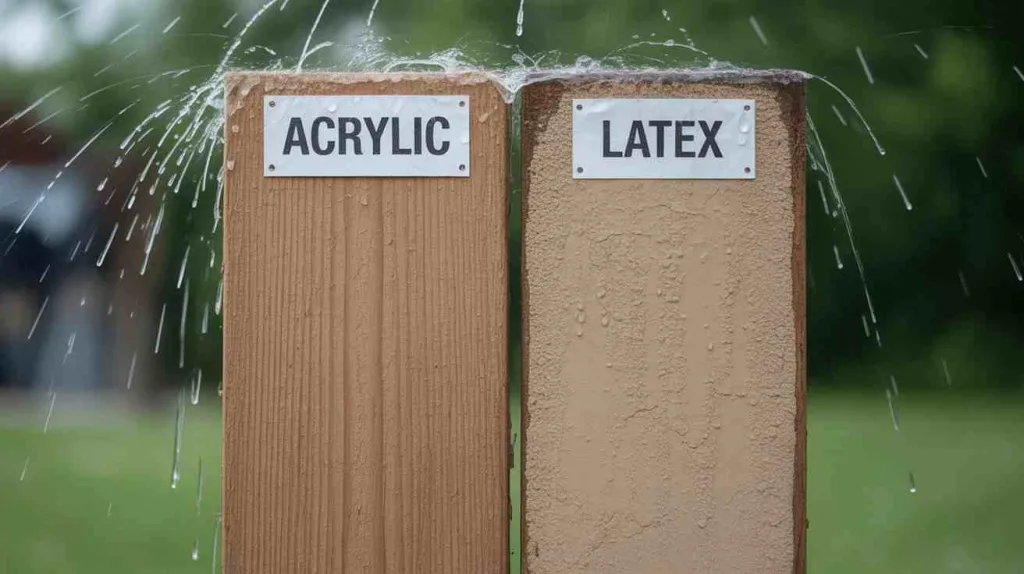
Acrylic resin forms a tight, flexible film that expands and contracts with temperature changes.
That flexibility helps prevent cracking, peeling, or bubbling over time.
Latex paint is durable indoors but less resistant to extreme heat or cold.
If you live in a climate with big swings between summer and winter, acrylic will hold up better.
It also bonds strongly to tough surfaces like wood, concrete, and metal.
3. Ease of Use
For beginners or quick jobs, latex paint wins.
It spreads smoothly, dries fast, and cleans up with water.
You can often finish two coats in a day.
It’s perfect for repainting bedrooms or hallways without heavy prep.
Acrylic paint, on the other hand, can dry a bit slower and is slightly thicker to work with.
It requires more care to get smooth results — especially on detailed surfaces or trim.
But the payoff is worth it: once dry, acrylic provides a tough, long-lasting coat that resists wear.
4. Eco-Friendliness
Both paints are water-based and far safer than old oil-based options.
However, latex paint usually contains lower VOC levels, making it gentler for indoor air quality. still, it’s smart to know are paint fumes dangerous before starting.
Acrylic can contain slightly more additives, but modern formulas now meet EPA and Green Seal low-VOC standards (epa.gov).
If you’re sensitive to odors or painting in enclosed spaces, latex is more comfortable to work with.
For outdoor work, acrylic’s minor VOC difference won’t matter once the paint cures.
5. Lifespan
Acrylic paint lasts longer, especially outdoors.
A good-quality acrylic coating can protect a surface for 7–10 years or more.
Latex paint lasts around 5–7 years indoors, depending on the surface and wear level.
If you’re planning to paint once and forget about it for a decade, acrylic’s higher upfront cost pays off.
6. Maintenance
Latex is easier to retouch.
You can blend patches without obvious marks.
Acrylic’s film is tougher and may need sanding for smooth touch-ups — but it’s also less likely to peel or chip in the first place.
Both paints can be washed gently with soap and water once cured.
Quick Comparison Table
| Feature | Acrylic Paint | Latex Paint |
|---|---|---|
| Base | 100% Acrylic Resin | Vinyl-Acrylic Blend |
| Durability | Excellent Outdoors | Good Indoors |
| Flexibility | High | Moderate |
| UV Resistance | Strong | Fair |
| VOC Levels | Moderate | Low |
| Ease of Use | Medium | High |
| Dry Time | Slightly Longer | Quick |
| Lifespan | 7–10 Years | 5–7 Years |
| Best Use | Exteriors, Trim, Wood | Interior Walls, Ceilings |
Benefits of Each Type
Acrylic Paint Benefits
- Lasts longer under harsh weather.
- Adheres well to wood, metal, and masonry.
- Expands and contracts with surface changes.
- Keeps color bright and resists UV fading.
- Great for exterior trim and siding.
Latex Paint Benefits
- Cheaper and easier to apply.
- Dries quickly for fast projects.
- Lower odor and low-VOC.
- Easy to clean up with water.
- Perfect for large interior walls and ceilings.
Which One Is More Durable?
If durability is your top concern, choose acrylic paint.
Its resin-based flexibility prevents cracking, even when temperatures swing or moisture seeps in.
For areas that face sun, rain, or movement — acrylic wins every time.
But if you’re painting indoors, latex paint is cost-effective and safer for air quality.
It’s durable enough for normal household wear without overpaying for outdoor-grade performance.
Curious how acrylic compares to oil-based paint? Read our detailed acrylic vs oil paint guide.

Choosing the Right Paint: Cost, Use, and Final Takeaway
By now, you understand how acrylic vs latex paint differ in materials, flexibility, and performance.
But one last factor often decides what you’ll actually buy — cost.
Let’s look at what each type really costs, how long it lasts, and which one gives the most value for your money.
1. Cost Comparison
On average, latex paint is the more affordable option.
A good-quality latex costs between $20 and $45 per gallon, depending on brand and finish.
You can easily paint an entire room or two with a single can.
Acrylic paint, being more advanced, usually costs $35 to $70 per gallon.
That higher price comes from its pure acrylic resin formula, which lasts longer outdoors and provides stronger adhesion.
In short:
| Paint Type | Average Cost per Gallon | Expected Lifespan |
|---|---|---|
| Latex | $20–$45 | 5–7 years |
| Acrylic | $35–$70 | 7–10 years |
| 100% Acrylic Latex | $40–$80 | Up to 12 years (exterior use) |
So yes, acrylic paint costs more upfront — but because it lasts longer, you may save on repainting costs later.
If you’re painting an outdoor surface, that extra $20–$30 per gallon can prevent blistering and peeling, saving you hundreds over time.
2. Coverage and Efficiency
A gallon of either paint typically covers 300 to 400 square feet, depending on surface texture and color depth.
Latex paint often gives smoother coverage on drywall and ceilings.
Acrylic offers thicker, more resilient coverage on rough or uneven materials but if you prefer a smoother flow, see how to thin acrylic paint properly.
For big interior jobs — bedrooms, hallways, living rooms — latex gives better value.
For exteriors, decks, wood, and trim — acrylic is worth the upgrade.
You’ll also find acrylic paints labeled “self-priming” or “paint + primer”, which can save you a step if you’re covering similar colors.
3. Quick Decision Guide
Here’s a simple way to choose the right paint for your next project:
| Surface / Condition | Recommended Paint |
|---|---|
| Interior drywall, plaster, or ceilings | Latex Paint |
| Outdoor walls, siding, or trim | Acrylic Paint |
| Bathrooms, kitchens (high humidity) | Acrylic Paint |
| Furniture, cabinets, or metal | Acrylic Paint |
| Low-budget, quick DIY jobs | Latex Paint |
| Mixed projects (inside + outside) | 100% Acrylic Latex Paint |
If you’re unsure, check the paint label — “100% Acrylic” indicates higher durability and flexibility.
Anything labeled “Vinyl-Acrylic” or “Latex” is better for standard indoor walls.
4. Safety and Cleanup Tips
Both acrylic and latex paints are safer and more eco-friendly than oil-based ones.
They’re low-VOC, which means fewer fumes and less impact on indoor air.
Still, always:
- Keep windows open while painting.
- Wear a basic mask if the space isn’t ventilated.
- Store leftover paint in a cool, dry area.
- Never pour leftover paint down the drain.
Most local recycling centers accept dried water-based paints (including latex and acrylic).
If you’re in the U.S., you can check state rules through the EPA household hazardous waste directory.
Cleanup is simple: warm water, mild soap, and patience.
Avoid harsh chemicals that can thin or damage the coating.
5. Professional Insight
Professional painters often use both types on the same home:
- Acrylic paint for the exterior, trim, and high-wear areas.
- Latex paint for the interior walls and ceilings.
That combo gives the best of both worlds — durability outside and comfort inside.
When applied correctly with the right primer, both can last for years with minimal maintenance.
6. Final Thoughts
So, which is better — acrylic or latex paint?
It depends on where and how you’re painting.
- Use acrylic paint for outdoor or moisture-prone areas.
It’s stronger, more flexible, and lasts nearly twice as long. - Use latex paint for large interior surfaces.
It’s cheaper, easier to apply, and kinder to your lungs.
If you want a universal option, go with 100% acrylic latex paint.
It combines acrylic’s durability with latex’s ease of use — a true middle ground for most homes
Conclusion
Acrylic paint lasts longer, protects better, and handles weather like a pro.
Latex paint saves time and money for indoor projects.
Whichever you choose, focus on surface prep, proper primer, and ventilation — those three steps matter more than brand or price.
Choose wisely, paint confidently, and enjoy a finish that looks good for years.
FAQs
What is the difference between acrylic and latex paint?
The main difference is in the resin. Acrylic paint uses 100% acrylic resin, which makes it stronger and more flexible. Latex paint uses vinyl-acrylic resin, which is cheaper and better for indoor walls. Both are water-based paints, but acrylic lasts longer outdoors, while latex is easier for large indoor projects.
Is acrylic paint water-based?
Yes. Acrylic paint is water-based, meaning it cleans up easily with soap and water. It contains acrylic resin, pigments, and water instead of harsh solvents. This makes it low-odor, safer, and better for both indoor and outdoor use.
Which paint lasts longer — acrylic or latex?
Acrylic paint lasts longer, especially on exterior surfaces. It can protect for 7–10 years or more, thanks to its flexible film and UV resistance. Latex paint typically lasts 5–7 years indoors, depending on wear and exposure.
Can you mix acrylic and latex paint?
Yes, you can — both are water-based, so they blend. However, the result depends on the brand and ratio. Mixing may slightly change texture or gloss. For best results, use paints from the same manufacturer and test a small patch first.
Can I paint acrylic over latex?
Yes. You can apply acrylic paint over latex as long as the surface is clean, dry, and lightly sanded. Acrylic bonds well to existing latex layers and improves durability, especially for exterior trim or wood.
Which paint is better for walls acrylic or latex?
For indoor walls and ceilings, latex paint is better. It’s easier to roll, dries fast, and has very low odor. For exterior walls, or high-moisture rooms like bathrooms and kitchens, acrylic paint gives better protection.
Which paint is more eco-friendly?
Both are eco-friendly compared to oil paints, but latex paint usually has lower VOC levels and almost no odor. For indoor spaces or people sensitive to smells, latex is the greener choice. Many low-VOC acrylic paints are also available that meet EPA and Green Seal standards for air quality.
What is 100% acrylic latex paint?
It’s a hybrid paint that combines the best features of both. It’s water-based like latex but uses 100% acrylic resin for strength. That means better flexibility, adhesion, and weather resistance — ideal for outdoor projects and professional-grade finishes.
What’s the best paint for exterior walls?
100% acrylic paint or acrylic latex paint is best for exterior walls. It resists UV rays, rain, and temperature swings. Latex alone won’t hold up as long outside unless it’s fortified with acrylic resin.
What’s the best paint for trim and furniture?
Use acrylic paint or acrylic latex paint. These stick well to wood and resist scratches. They also handle cleaning and moisture better than standard latex.
Is latex paint cheaper than acrylic paint?
Yes. Latex paint costs $20–$45 per gallon, while acrylic runs $35–$70 per gallon. The price difference reflects performance — acrylic lasts longer and resists fading better, especially outdoors.
Can you use latex paint outside?
Yes, but with limits. Exterior latex paint works in mild climates and shaded areas. If you live where temperatures swing or moisture is constant, acrylic paint is more reliable.
Does acrylic paint need primer?
Usually yes, especially on bare wood, metal, or concrete. Primer helps the paint bond evenly and prevents peeling. For small indoor touch-ups, you can sometimes skip primer if the surface is clean and already painted.
Next Steps and Related Reading
Ready to paint smarter?
Check out these helpful guides before your next project: