
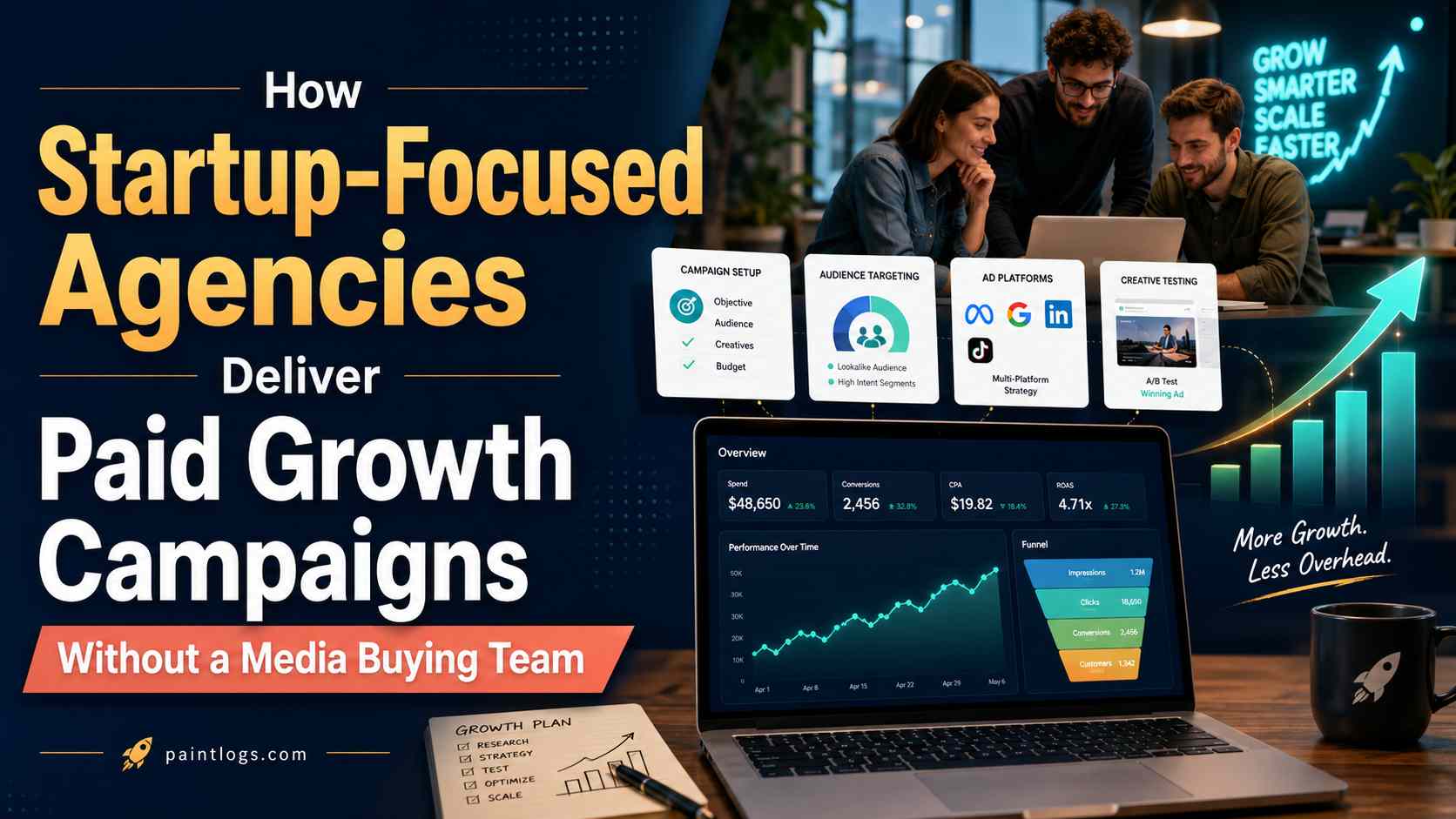
How Startup-Focused Agencies Deliver Paid Growth Campaigns Without a Media Buying Team
A startup-focused agency that just landed its third client in a month rarely needs to hire a media buyer that same week. What it actually needs is someone who already knows how to spend a modest ad budget without burning a third of it during a platform’s learning phase.
That’s a narrower problem than it looks, and agencies that solve it by rushing a full-time hire tend to regret the decision within two quarters, once the salary, the ramp-up time, and the inevitable early mistakes on a client’s live account have all landed on the same balance sheet.
The workaround more founders are quietly adopting is routing paid campaigns through a partner built specifically for this handoff. Firms like Agency Elevation sell white label ppc services that let a five-person shop run Google, Microsoft, and video campaigns under its own name without anyone in-house ever touching a bid strategy manually.
The arrangement works because the buyer on the other end isn’t learning on the client’s dime; they’ve already made those mistakes on someone else’s account, months or years ago.
Hiring Your First Media Buyer Is a Bet You Don’t Need to Make Yet
Founders tend to treat an in-house hire as the real version of scaling and outsourcing as the placeholder. That’s backward for paid media specifically, because the skill decays fast. Google Ads has rewritten its bidding architecture, its keyword-matching logic, and its automation defaults enough times in the last five years that a media buyer who trained two years ago is already running partly outdated playbooks unless they’re doing this full-time, across dozens of accounts, every week.
A generalist marketing hire who picks up paid media as a side responsibility rarely keeps pace with that, and neither does a founder squeezing in campaign tweaks between client calls. The agencies that get burned here usually aren’t bad at marketing in general; they just asked one person to be excellent at a discipline that requires constant, narrow repetition to stay sharp.
There’s also a volume problem that founders underestimate. A single media buyer needs a meaningful number of live accounts to stay proficient across ad formats, industries, and platform quirks, and a young agency with three or four clients simply can’t generate that volume.
Paying a full salary to someone who’s underutilized four days a week is expensive in a way that doesn’t show up in a job posting. It shows up 18 months later, when the agency realizes it paid for headcount rather than capability.
What Actually Gets Handed Off When the Work Is White-Labeled
The specific appeal of a white-label arrangement is that it removes the agency from the operational loop entirely while keeping it in the client-facing one. The partner runs the full campaign lifecycle: strategy, account setup, keyword research, ad copy, bid management, audience targeting, and ongoing optimization to keep cost-per-lead from drifting upward as a campaign matures.
Reporting comes back branded as the agency’s own work, built for the agency to hand to its client without a disclaimer or a caveat. Contact details on the account are generic rather than tied to an outside company, so nothing in the client relationship signals that a third party is involved.
That invisibility is the actual product, more than the media buying itself. Plenty of freelance PPC contractors can run a decent campaign. Far fewer of them can do it in a way that lets the hiring agency present the results, the strategy calls, and the monthly reporting deck as though its own team built them from scratch.
That distinction is what separates a subcontractor relationship from a genuine white-label PPC services arrangement, and it’s the part smaller agencies underweight when they’re comparison shopping on price alone.
Launch Speed and No-Contract Terms Are What Make the Math Work at Small Budgets
None of this holds up if onboarding takes six weeks or if the agency gets locked into a retainer sized for accounts twice its current volume. Agency Elevation, for instance, advertises a launch window of roughly two business days, no minimum number of accounts, no setup fees, and no long-term contract.
That structure matters more than it looks on paper because it lets an agency test the arrangement with one client before betting its reputation on it across ten clients. A founder who signs a twelve-month commitment for outsourced media buying before running a single live campaign through the partner is taking on exactly the kind of risk this approach is supposed to eliminate.
The team doing the actual buying should also be reachable in something close to real time, not routed through a ticket queue with a 48-hour SLA. Paid campaigns move fast enough that a bid strategy sitting unattended for two days can quietly overspend a week’s budget on the wrong audience segment.
Agencies vetting a white-label partner should ask directly how account managers communicate day-to-day, because that answer tells you more about reliability than any case study on the partner’s website.
The Real Shift Isn’t Outsourcing, It’s Sequencing
None of that vetting matters if an agency mistakes the arrangement for a permanent workaround instead of a phase. Every growing agency eventually builds an in-house media buying team; the question worth asking isn’t whether that happens, but when.
Building it before the agency has enough steady paid-media volume to keep a specialist busy and current is how good money turns into a line item nobody wants to explain at the next board meeting. Building it after the volume is already proven, using a white-label partner as the bridge, turns the eventual hire into an obvious decision instead of a hopeful one.