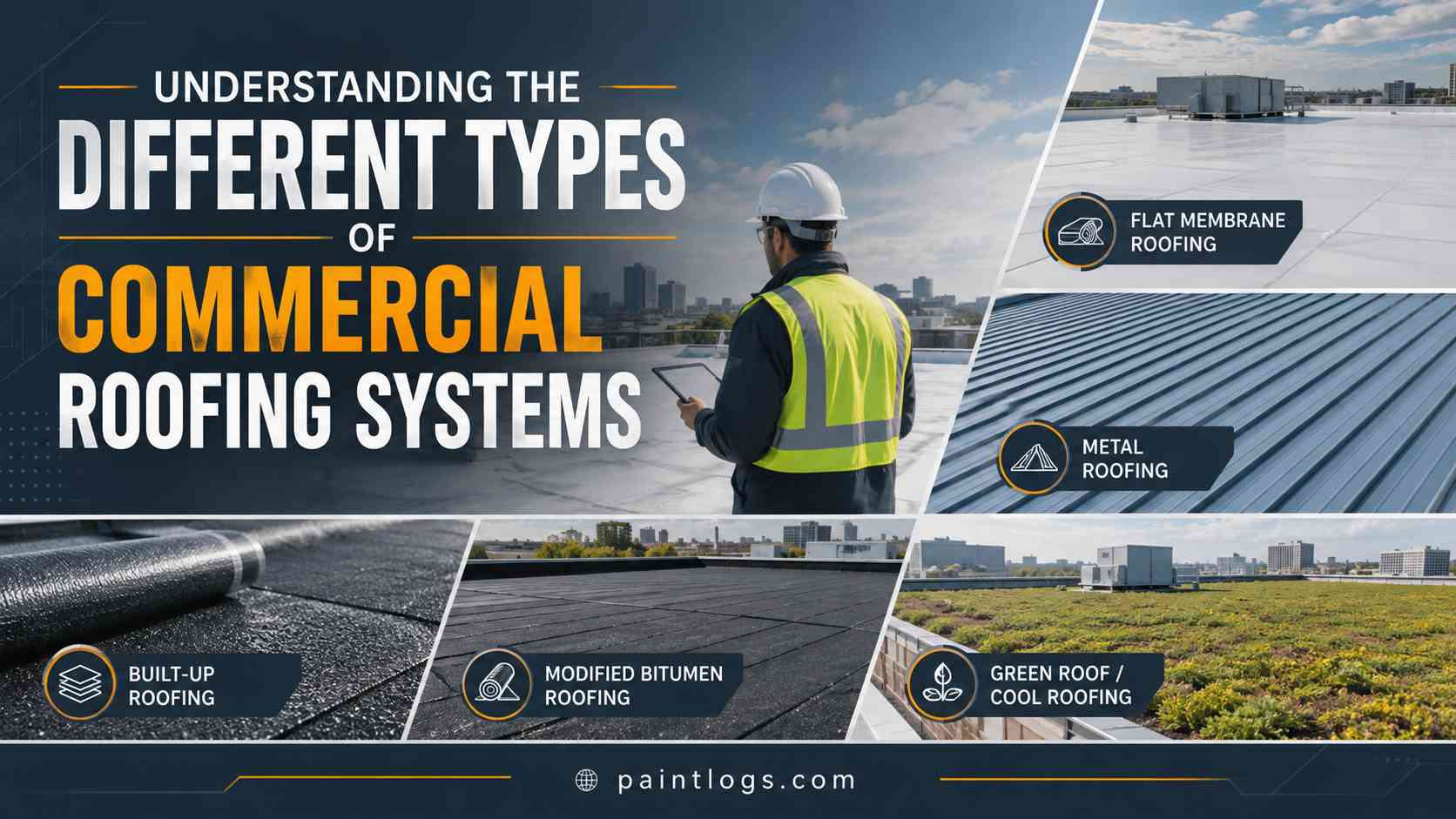
Understanding the Different Types of Commercial Roofing Systems
Commercial roofing has a major effect on the safety, efficiency, and long-term performance of a building. Unlike residential roofs, commercial roofs often cover large areas and may support HVAC equipment, vents, walkways, and other systems. Choosing the right material therefore requires careful consideration.
A company such as roofer manchester nh Sentry Roofing provides an example of the specialized knowledge needed to evaluate, repair, replace, and maintain different roof types. Its experience includes TPO, PVC, EPDM, metal, and built-up roofing, along with leak repairs, metal retrofits, and customized maintenance plans.
Why Roofing Material Matters
Not every roof performs the same way. Different materials respond differently to sunlight, temperature changes, moisture, foot traffic, and mechanical equipment.
The purpose of the building also matters. A warehouse may have different roofing requirements than an office, retail property, or manufacturing facility. Climate is another important factor. A roof in an area with frequent storms may need different considerations than one exposed mainly to intense sunlight.
Budget should also be viewed beyond the initial installation cost. A cheaper material may require more frequent maintenance. A more expensive option may provide a longer service life or lower maintenance requirements.
Understanding these differences makes it easier for property owners and facility managers to make informed decisions.
TPO Roofing
Thermoplastic polyolefin, commonly called TPO, is one of the widely used single-ply roofing materials. It is usually installed in large sheets that are mechanically attached, adhered, or otherwise secured to the roof assembly.
TPO is popular because it combines durability with relatively straightforward installation. Its light-colored surface can also reflect a significant amount of sunlight. This can be useful for buildings where reducing heat absorption is a priority.
The seams are typically heat-welded. This creates a continuous membrane when installed correctly. However, poor installation or neglected damage can eventually lead to leaks.
TPO can work well for many commercial buildings. Regular inspections remain important, especially around seams, penetrations, edges, and rooftop equipment.
PVC Roofing
PVC is another single-ply membrane commonly found on commercial properties. It has strong resistance to moisture and many chemicals. This can make it particularly useful for certain industrial environments.
PVC membranes are also heat-welded at the seams. A properly installed roof can create a strong barrier against water intrusion.
One advantage of PVC is its resistance to grease and some chemical exposures. This can be valuable for buildings where rooftop systems may be exposed to pollutants or other substances.
Like other membrane roofs, PVC still requires inspection. Small punctures or damaged seams should not be ignored simply because the material itself is durable.
EPDM Roofing
EPDM is a synthetic rubber membrane that has been used in commercial construction for decades. It is commonly recognized for its flexibility and resistance to weathering.
The material can perform well across changing temperatures. It is also relatively adaptable to different roof configurations.
EPDM is often black, although reflective versions and coatings can provide different performance characteristics. Its long history in commercial construction means there is extensive experience with installation and maintenance.
Property owners should pay particular attention to seams, flashing, penetrations, and areas where equipment connects to the roof. Regular inspections can help identify deterioration before it becomes a larger problem.
Metal Roofing
Metal roofing is another important option for commercial and industrial buildings. Common materials include steel, aluminum, and other metal products.
Metal roofs can provide excellent durability when properly designed and maintained. They can also support the needs of many large commercial structures.
However, metal roofing has its own challenges. Fasteners can loosen over time. Seams can deteriorate. Corrosion can develop in vulnerable areas. Expansion and contraction can also affect connections as temperatures change.
Metal retrofits can sometimes provide an alternative to complete replacement. The right approach depends on the existing roof condition, structural requirements, and goals of the property owner.
Built-Up Roofing
Built-up roofing, often called BUR, is one of the traditional types of commercial roofing systems. It generally uses multiple layers of roofing materials combined with reinforcing components and a protective surface.
The multi-layer construction provides redundancy. If one layer develops a problem, additional layers can provide some protection.
Built-up roofs have a long history of use on commercial buildings. They can be particularly suitable for properties where durability and established construction methods are priorities.
However, their performance depends heavily on proper installation and ongoing maintenance. Drainage is especially important because standing water can create problems for many roofing assemblies.
Comparing the Major Options
The best choice depends on the building and its environment. There is no universal material that works perfectly for every property.
TPO may appeal to owners looking for a reflective membrane with welded seams. PVC can be useful where chemical resistance is important. EPDM offers flexibility and a long history of commercial use. Metal can provide durability and strength. Built-up roofing offers a layered construction that has been used successfully for generations.
When comparing types of commercial roofing systems, property owners should consider more than material price. Expected lifespan, maintenance requirements, energy performance, installation conditions, and local weather should all be part of the decision.
The Importance of Professional Evaluation
A roof can look acceptable from the ground while having problems that are not immediately visible. Moisture may be entering around a penetration. Insulation may be deteriorating. Seams may be separating. Metal components may be developing corrosion.
Professional inspections can uncover these issues earlier.
Experienced roofing professionals can also determine whether a roof needs a repair, restoration, retrofit, or complete replacement. This distinction matters because replacing a roof that could have been repaired wastes money. At the same time, repeatedly repairing an aging roof may cost more over time than replacing it.
The decision should be based on the roof’s condition, age, repair history, and expected future performance.
Maintenance Makes a Major Difference
Even the strongest types of commercial roofing systems need maintenance. Regular inspections can identify small problems before they develop into major leaks.
A useful maintenance program should include checking seams, flashing, drains, penetrations, rooftop equipment areas, and visible signs of damage. Drainage systems should also remain clear so water can move away from the roof efficiently.
Documentation is helpful as well. Keeping records of inspections and repairs allows property managers to track changes over time. It can also help identify recurring problem areas.
When Replacement Becomes the Better Option
Repair is not always the best long-term solution. An aging roof with repeated leaks may continue creating problems even after individual defects are fixed.
Replacement may make more sense when damage is widespread, the roof has reached the end of its expected service life, or repair costs continue increasing. Property owners should compare the expected cost of ongoing repairs with the long-term benefits of a new roof.
A professional assessment can help determine whether replacement is justified. For properties that do require a new roof, roof replacement new hampshire can be part of the research process when evaluating replacement considerations and options.
Final Thoughts
Understanding different roofing materials helps commercial property owners make better decisions. TPO, PVC, EPDM, metal, and built-up roofing each have different strengths and limitations.
The right choice depends on the building, climate, budget, maintenance expectations, and long-term goals. Professional evaluation is equally important because the best material on paper may not be the best solution for a particular property.
Ultimately, successful commercial roofing depends on choosing an appropriate system, installing it correctly, and maintaining it consistently. A thoughtful approach can protect the building, reduce unexpected costs, and improve long-term roof performance.