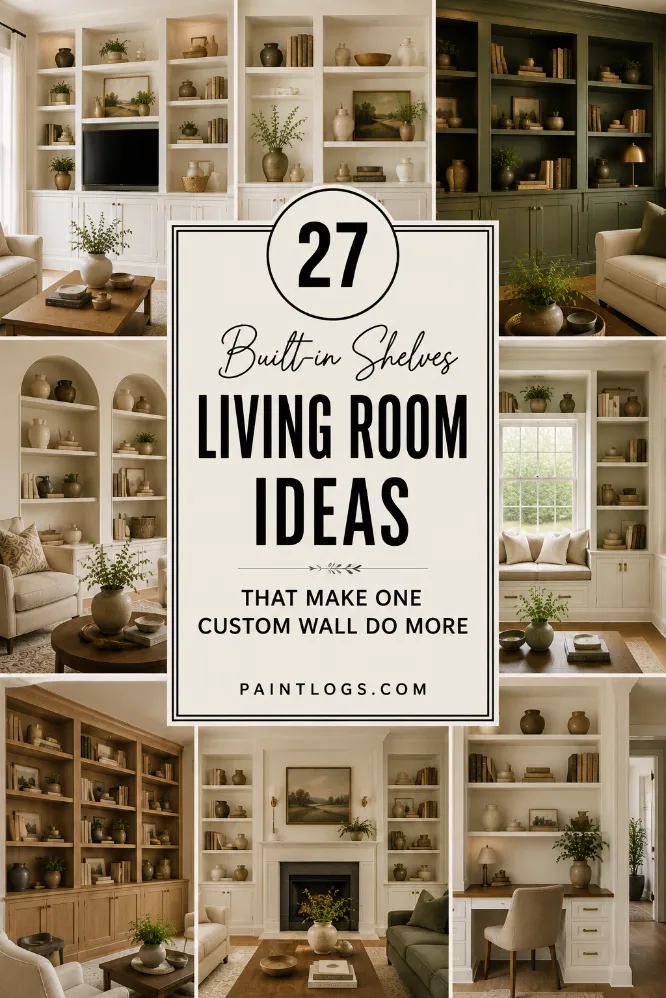
I’ve always liked built-in shelves because they can make a living room feel finished without adding a lot of separate furniture.
A good built-in can give you a place for books, hide everyday clutter, frame your TV, surround a fireplace, and add character to an otherwise plain wall. And when the shelves are designed properly, they can look like they were always part of the house.
The part I pay the most attention to is balance.
I don’t want every shelf filled from end to end. I also don’t want a huge wall of cabinets that makes the living room feel heavy. The best built-ins usually combine open shelves, closed storage, a few larger decorative pieces, and plenty of breathing room.
If you’re thinking about adding built-ins to your living room, these are some ideas I would consider first.
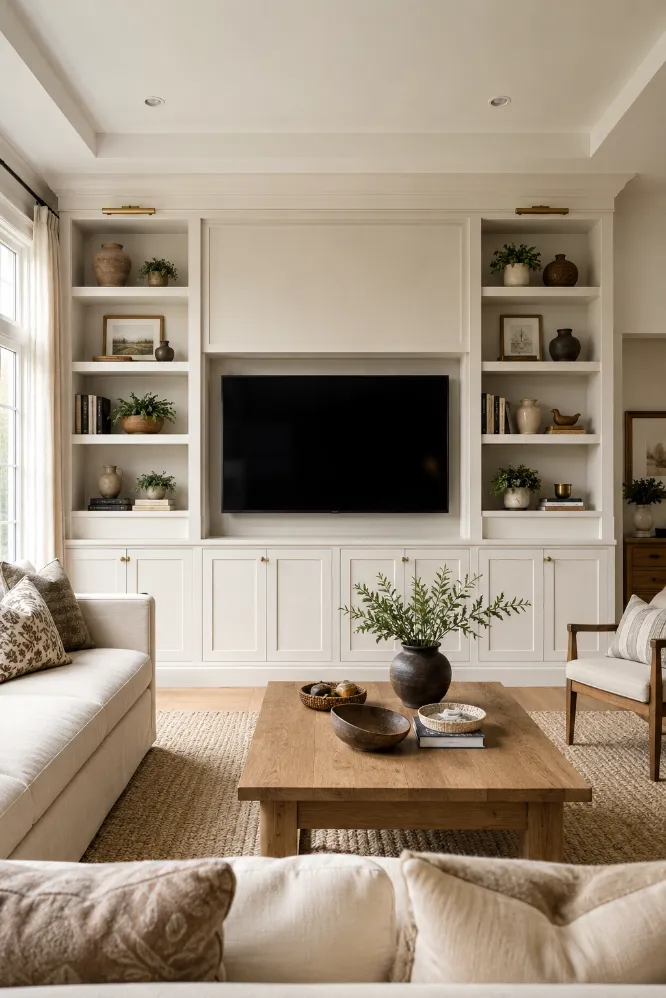
1. Build Shelves Around the TV
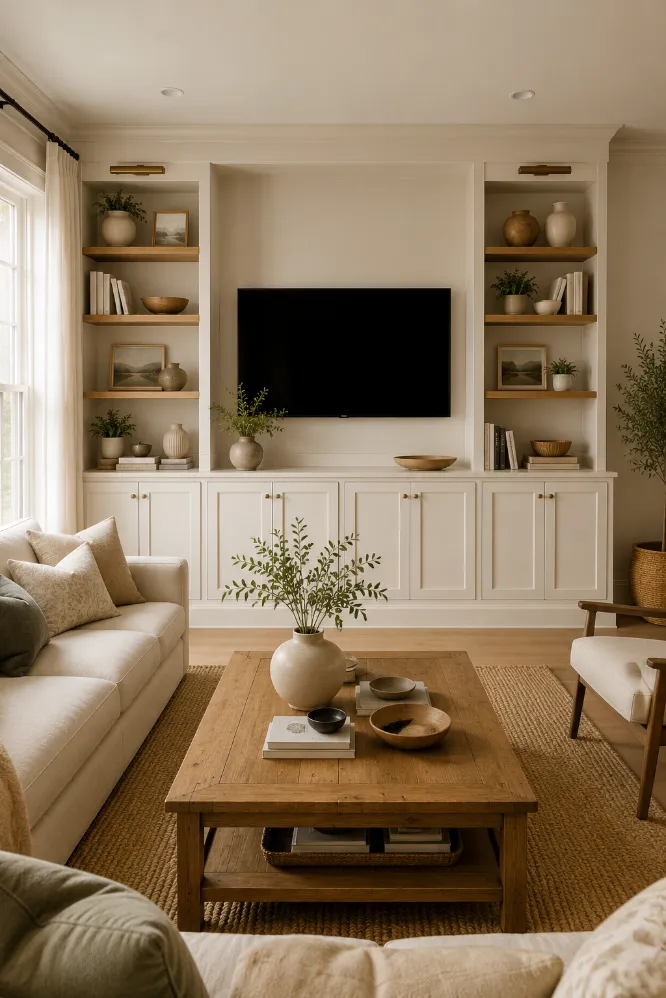
One of the easiest ways to make a TV wall look intentional is to build shelves around it.
Instead of putting the television on a random console, you can center it between two tall sections of shelving. Add closed cabinets underneath for electronics, games, remotes, and other things you don’t want sitting out.
I like keeping the shelves around the TV fairly simple. A few books, ceramics, plants, and framed pieces are usually enough.
This approach works particularly well when the TV is already the main focal point of the room.
2. Add Closed Cabinets Below the Shelves
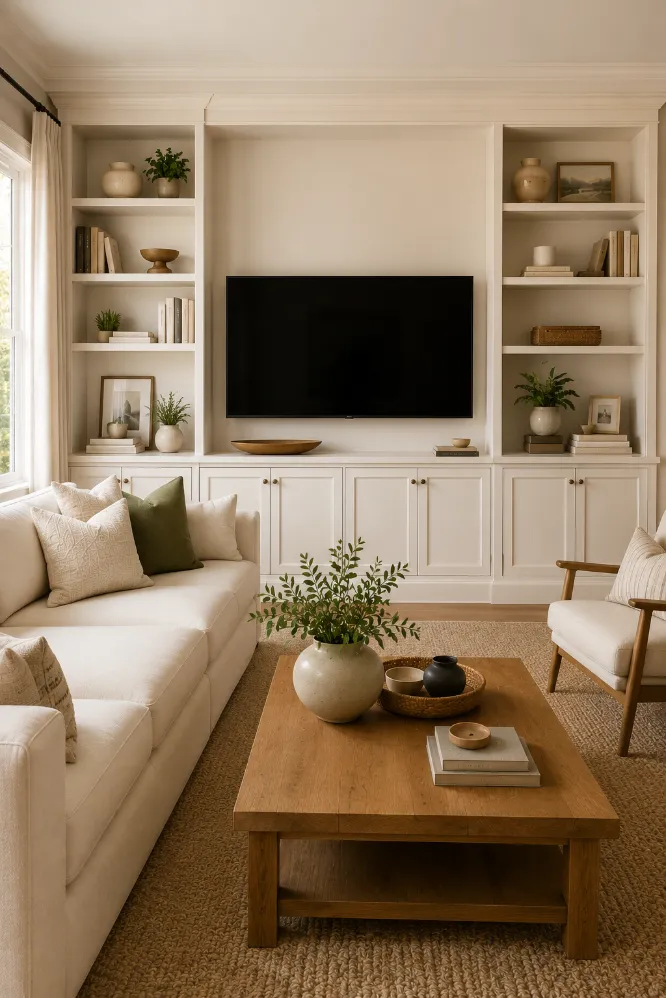
Open shelving looks beautiful, but I would never want every item in my living room sitting out in the open.
That’s why I like putting closed cabinets underneath.
You can hide:
- Blankets
- Board games
- Toys
- Cables
- Remote controls
- Electronics
- Extra cushions
Then the shelves above can be used for the things you actually enjoy looking at.
It also makes cleaning up much easier.
3. Go Floor to Ceiling
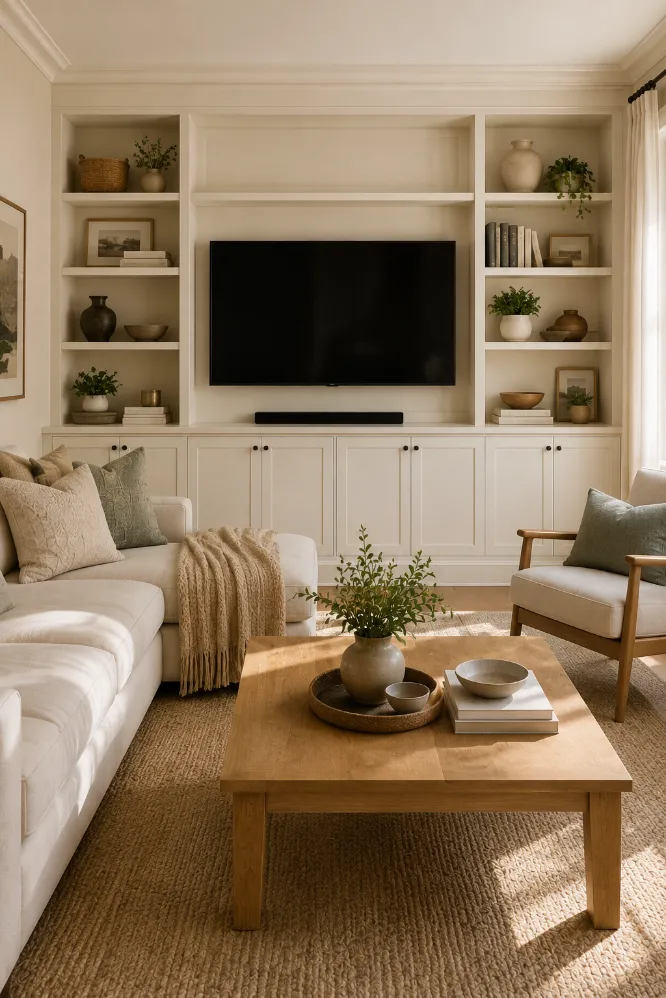
If you’re having shelves custom-built, don’t automatically stop them at the height of a regular bookcase.
Taking them all the way to the ceiling can make the wall feel taller and more substantial.
I especially like this in rooms with high ceilings because it takes advantage of vertical space that would otherwise be wasted.
You don’t have to fill the very top shelves with everyday items. Use them for occasional decor, baskets, books, or pieces you don’t need to reach regularly.
4. Frame a Fireplace
Built-in shelves on either side of a fireplace can create one of the most beautiful focal points in a living room.
The fireplace naturally becomes the center, while the shelving gives the wall symmetry.
For a traditional room, I would consider warm white cabinetry, dark wood shelves, or subtle brass hardware.
For something more modern, simple flat-front cabinets and clean shelves can keep the whole wall looking streamlined.
5. Create a Full Media Wall
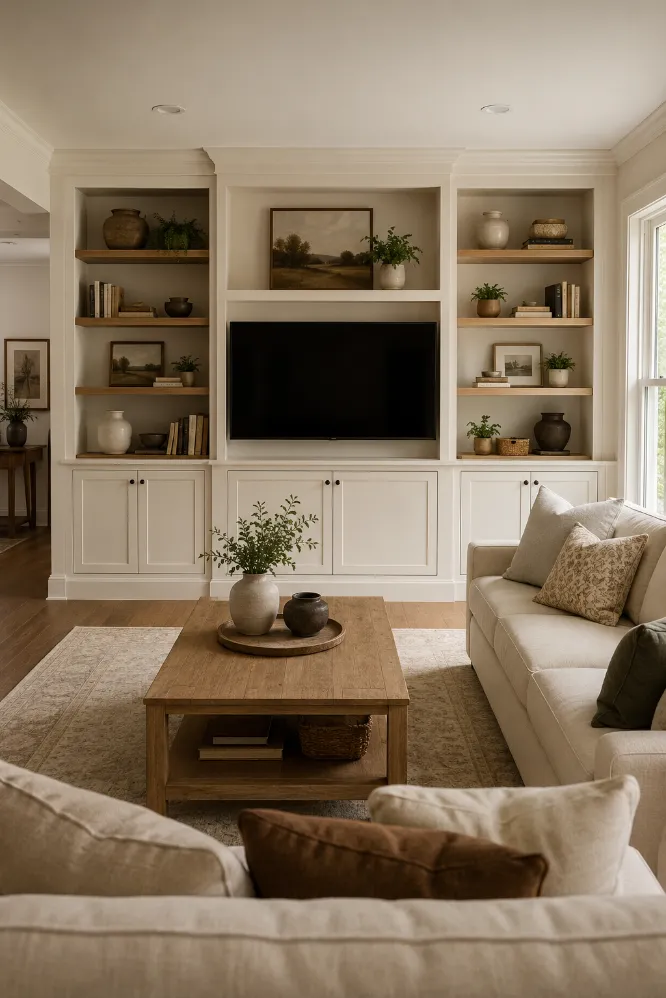
If your living room is centered around watching TV, you can make the entire wall work harder.
A custom media wall might include:
- Television
- Fireplace
- Open shelving
- Closed cabinets
- Speakers
- Decorative niches
I like this better than having a separate TV stand, bookcase, and storage cabinet because everything feels connected.
It also gives you a chance to hide wires and electronics properly.
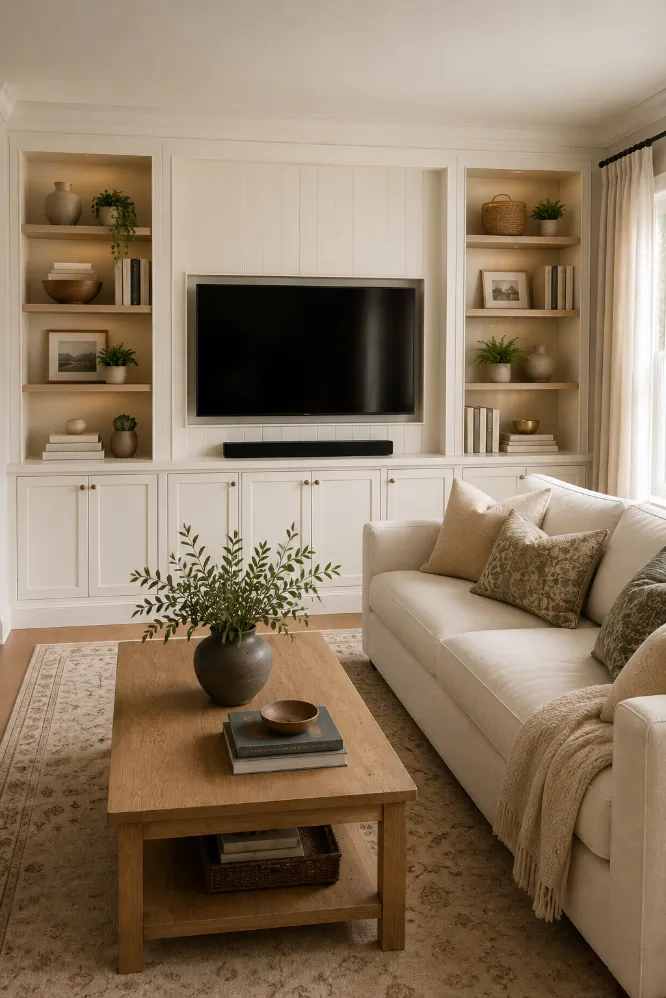
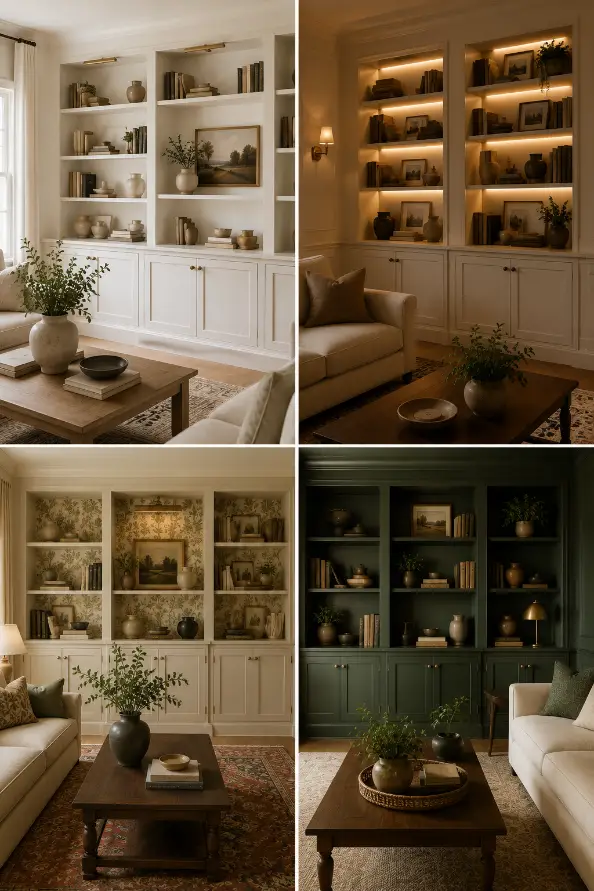
6. Paint the Built-Ins the Same Color as the Walls
This is one of my favorite tricks when I want built-ins to feel architectural.
Paint the shelving and the surrounding wall in the same color.
Warm white creates a clean classic look, while olive green, navy, charcoal, or deep blue can make the entire wall feel much more dramatic.
The benefit is that your books, artwork, ceramics, and other objects become the visual highlights.
The cabinetry almost disappears into the background.
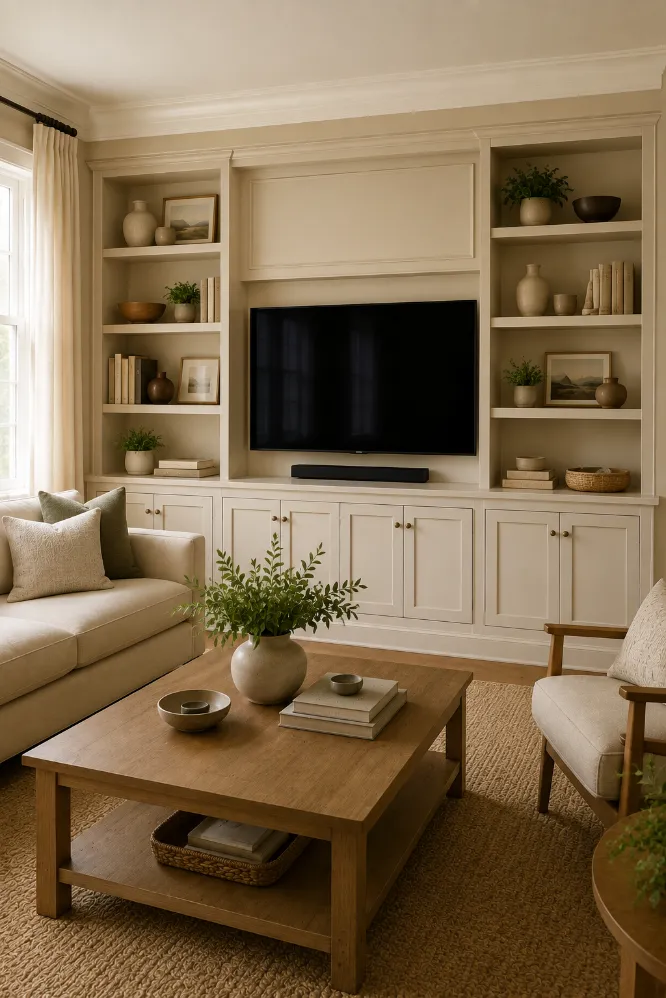
7. Use Natural Wood Shelves
If painted built-ins feel too formal, natural wood can completely change the mood.
Oak gives you a lighter, more relaxed appearance, while walnut creates a richer and more traditional feeling.
I particularly like natural wood shelves with:
- Cream sofas
- Beige rugs
- Linen curtains
- Warm white walls
- Green plants
The wood brings enough warmth that the room doesn’t need lots of extra decoration.
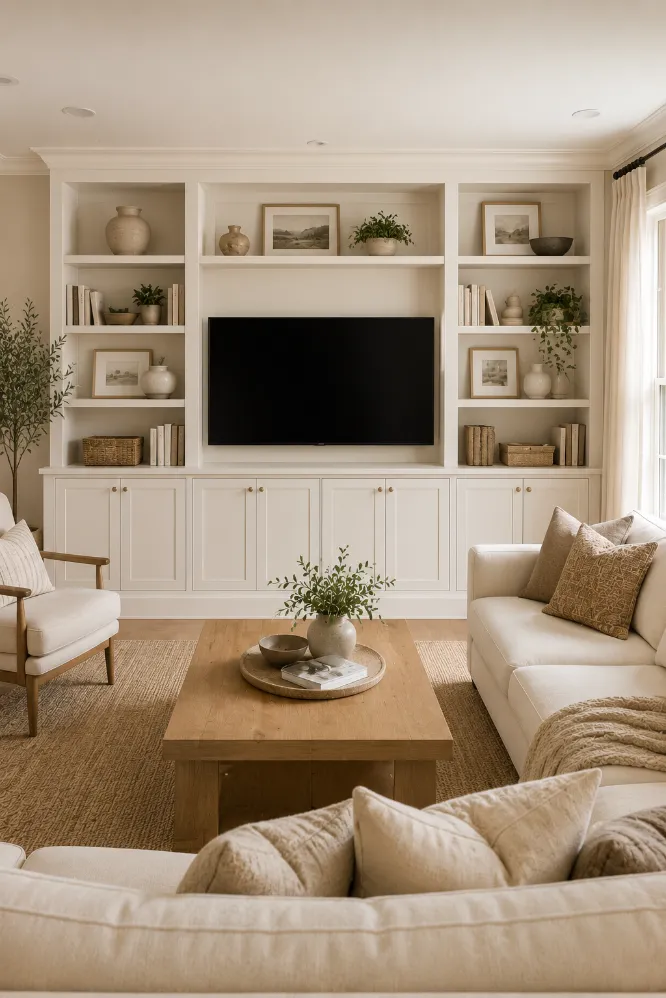
8. Add a Small Desk
A built-in wall can do more than store books.
If you have enough width, include a small desk between two shelving sections.
This can become a simple home office without taking over your living room.
A narrow wood worktop, comfortable chair, small lamp, and a few shelves above are often all you need.
I would keep the desk area visually similar to the rest of the built-in so it feels like part of the furniture rather than an office suddenly placed in the living room.
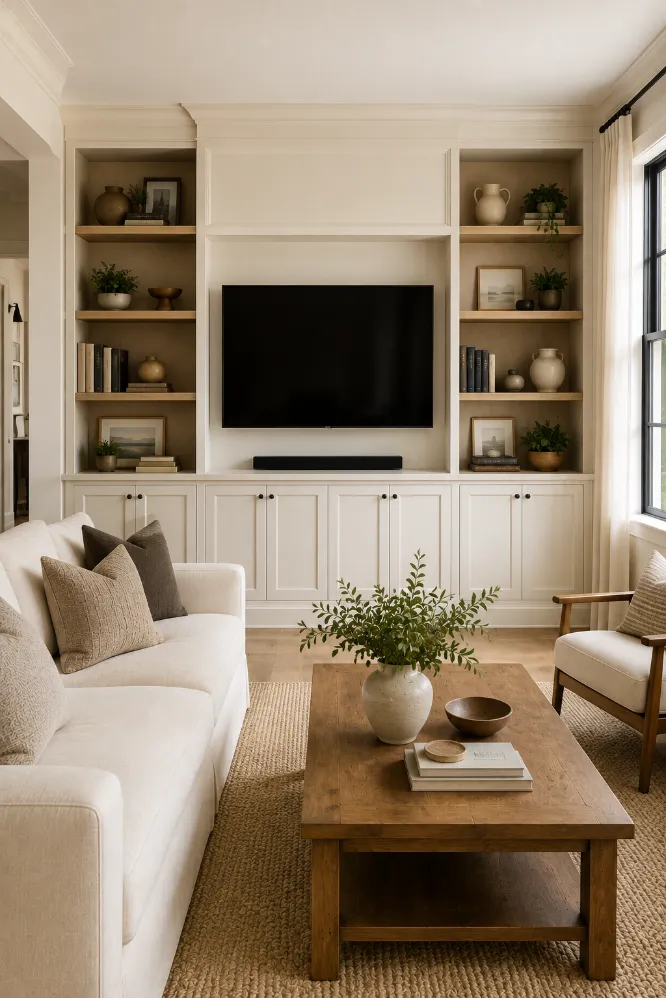
9. Create a Reading Corner
If your built-in wall has a little extra space beside it, make that space useful.
A comfortable armchair, small side table, and floor lamp can create a very simple reading corner.
Keep your favorite books on the nearby shelves so everything is within reach.
This is one of those small additions that can make the entire wall feel more personal.
10. Try Arched Shelves
If you want something softer than a traditional rectangular bookcase, consider arches.
An arched opening can make built-ins feel more architectural and less boxy.
I like this idea with warm plaster walls, cream cabinetry, natural wood, and soft curves throughout the furniture.
You don’t need arches everywhere. Even one large arched niche can become the main feature.
11. Use Drawers for Small Items
Shelves are excellent for displaying things, but drawers are better for small everyday items.
If you’re designing the built-in from scratch, think about what you actually need to store.
Drawers can hold:
- Chargers
- Batteries
- Stationery
- Remote controls
- Small toys
- Keys
- Household items
This makes the living room easier to keep tidy without sacrificing the open shelving you wanted.
12. Add Integrated Lighting
Built-in shelves look completely different in the evening when they’re properly lit.
You can add warm LED strips underneath shelves or small recessed lights inside selected sections.
Picture lights can also work beautifully above artwork.
I prefer warm lighting rather than bright white light here. It makes wood, books, ceramics, and artwork look much richer and makes the living room feel cozy at night.
13. Wallpaper the Back Panels
You don’t have to use paint for every part of the built-in.
Wallpapering the back of the shelves can add another layer of interest.
A small botanical print, traditional pattern, or subtle textured wallpaper can look beautiful behind books and ceramics.
If you choose a strong pattern, I would keep the shelves and furniture relatively simple.
14. Try Deep Green Built-Ins
Deep green cabinetry can turn an ordinary wall into a beautiful focal point.
I like pairing it with warm materials rather than cool gray.
Think:
- Cream sofa
- Walnut coffee table
- Brass lamps
- Beige rug
- Natural ceramics
The darker shelves also create a beautiful background for lighter books and decorative objects.
15. Keep It Warm White
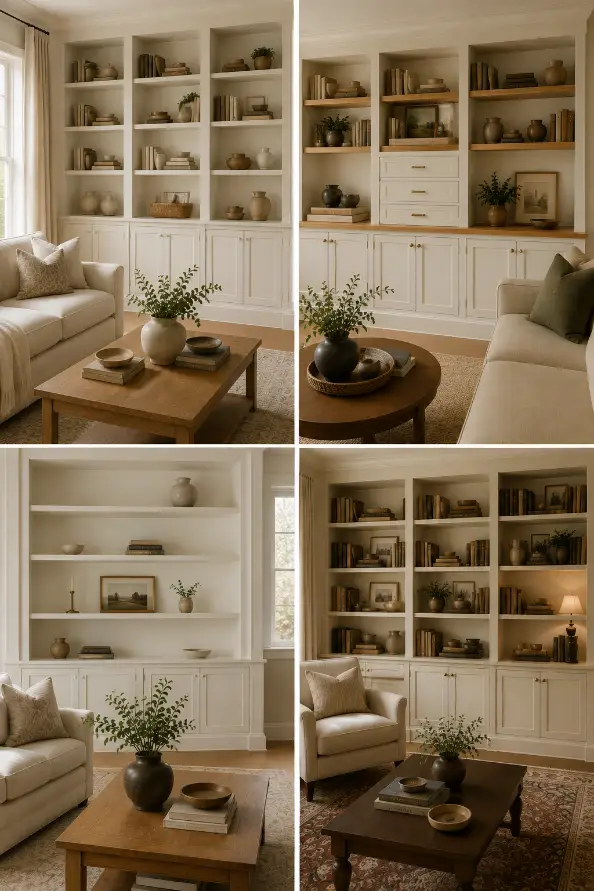
If you’re worried about getting tired of a bold color, warm white is a safe choice.
But I would choose a warm ivory or creamy white rather than a very stark white.
It feels softer and works with both traditional and modern furniture.
Add wood, greenery, woven baskets, and textured fabrics to keep the shelves from looking too plain.
16. Mix Shelves, Drawers, and Cabinets
There is no rule saying every section of a built-in needs to look identical.
In fact, I usually prefer some variation.
You might have:
- Open shelves at the top
- Drawers in the middle
- Closed cabinets at the bottom
- One larger display niche
This makes the wall more useful and gives your eye different things to look at.
17. Don’t Fill Every Shelf
This is probably the most important styling advice I can give.
You don’t need to decorate every shelf.
Leaving some empty space makes the whole built-in feel more expensive and intentional.
Instead of putting five small objects on one shelf, try one larger vase or a small stack of books.
The empty space around it allows the object to stand out.
18. Mix Vertical and Horizontal Books
If you’re displaying books, don’t line every single one up vertically.
I like mixing upright books with a few horizontal stacks.
You can place a small ceramic bowl or framed photograph on top of a horizontal stack.
This creates variation and makes the shelves feel like a real part of the home rather than a showroom display.
19. Use a Few Oversized Objects
Small decorations are easy to overuse.
Instead, add a few larger pieces that can be seen from across the room.
A large ceramic vase, sculptural bowl, framed artwork, or stone object can give a shelf much more presence.
I would rather see three well-chosen large pieces than fifteen tiny decorations scattered everywhere.
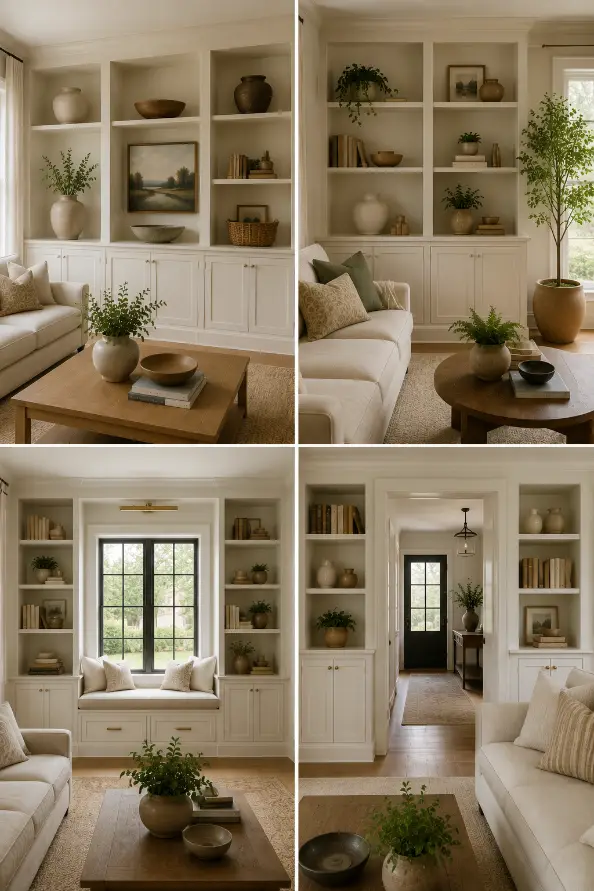
20. Add Greenery
Plants are an easy way to soften a large wall of cabinetry.
You can put a small plant on a lower shelf, let a trailing plant fall from an upper shelf, or place a larger tree beside the built-in.
I wouldn’t put plants on every shelf.
A few strategically placed pieces are enough to bring life and color into the wall.
21. Build Around a Window
Don’t assume a window means you can’t have a built-in wall.
In some rooms, shelves can be built on both sides of a window while the area underneath becomes a comfortable window seat.
Add a thick cushion, a couple of pillows, and drawers underneath.
Now the same wall gives you storage, display space, and another place to sit.
22. Use the Space Around a Door
Awkward walls beside doorways are often difficult to furnish with regular bookcases.
Custom shelving can solve that problem.
Narrow built-in sections can use those otherwise wasted inches without interfering with the walkway.
Just make sure the shelves don’t project too far into the room.
23. Create a Full Library Wall
If you genuinely love books, let them be the decoration.
A full wall of bookshelves can make a living room feel warm and personal.
Add a comfortable sofa, reading chair, traditional rug, and warm lamps, and the room starts to feel like a small home library.
I wouldn’t worry about arranging every book perfectly.
A little variation makes the room feel lived in.
24. Combine Painted Cabinets With Wood Shelves
You don’t have to choose between painted cabinetry and natural wood.
One combination I really like is warm white lower cabinets with natural oak shelves above.
The painted cabinets keep the wall clean while the wood introduces warmth and texture.
You could also reverse it with darker cabinetry and lighter wood shelving.
25. Make One Central Shelf Wider
If every shelf has exactly the same width and depth, the built-in can sometimes feel too repetitive.
A wider central section can break that up.
Use it for a larger piece of artwork, television, oversized vase, or another focal object.
The surrounding shelves can remain narrower for books and smaller decor.
This is one of the details that makes custom cabinetry feel truly custom.
26. Match the Built-In to the House
This is something I would think about before choosing a Pinterest-inspired design.
The built-in should make sense with the architecture already there.
If your home has traditional crown molding, carry that detail into the shelving.
If you have a modern home, clean lines and simple cabinet fronts will probably look more natural.
The best built-ins don’t look like a bookcase was pushed against the wall.
They look like they belong to the house.
27. Let the Built-In Be the Main Feature
You don’t always need to decorate every other wall once you have a beautiful built-in.
If the shelving has good proportions, interesting materials, thoughtful lighting, and a mix of storage and display, it can become the main feature of the room.
I would keep the furniture around it relatively simple.
A comfortable sofa, a good coffee table, a rug, and a few carefully chosen accessories may be all you need.
Let the custom wall do the work.
How I Like to Style Built-In Shelves
Once the actual shelves are finished, styling them is where things can easily go wrong.
I usually start with the biggest pieces first.
Place the large vase, artwork, basket, or sculpture first. Then add books and smaller objects around those pieces.
Try not to create a perfect pattern.
For example, if you have a large vase on the left side of one shelf, don’t automatically put another vase in exactly the same position on the shelf below.
Move things around until the wall feels balanced.
And most importantly, leave some shelves alone.
Empty space is not wasted space when you’re decorating.
What Should You Put on Built-In Living Room Shelves?
You can make the shelves personal instead of filling them with generic decor.
I like mixing:
- Books
- Family photographs
- Ceramic vases
- Small plants
- Handmade pottery
- Baskets
- Candlesticks
- Artwork
- Travel finds
- Decorative boxes
- Small sculptures
The best combination is usually a mixture of things you actually like.
That is what keeps a built-in from looking like a furniture-store display.
Final Thoughts
A built-in shelf wall can completely change the way a living room looks and functions.
But I don’t think the goal should simply be to build the biggest wall possible.
Think about what you actually need.
Maybe you need closed storage because the room constantly collects clutter. Maybe you want a TV wall. Maybe you need a small home office. Or perhaps you simply want somewhere to display books, artwork, and pieces you’ve collected over the years.
Once you know that, the design becomes much easier.
For me, the best built-ins are the ones that look beautiful but also make everyday life easier. They hide the things you don’t want to see, display the things you love, and make an ordinary wall feel like a real part of the architecture.
And if you’re going to invest in custom work, I would always spend more time thinking about proportion, storage, lighting, and how you’ll actually use the shelves than simply choosing the prettiest design you saw online.