
A reading nook is one of those home features that looks luxurious but doesn’t actually require much space or money.
You don’t need a separate library, custom floor-to-ceiling shelves, or a huge window seat. Some of my favorite reading corners are simply an unused spot beside a window with a comfortable chair, a good lamp, and somewhere to put a cup of coffee.
What makes a reading nook successful isn’t how much decor you add. It’s whether the space actually makes you want to sit down and stay there.
Comfort matters. Good lighting matters. Having your books nearby helps. And I think a reading nook works particularly well when it feels slightly separated from the busier parts of the room.
Before buying anything, look around your home for spaces you aren’t really using. An empty bedroom corner, awkward landing, space beneath the stairs, or sunny living-room window may already have everything you need to get started.
Here are 23 cozy reading nook ideas that can help you turn those forgotten spaces into some of the most inviting corners of your home.
1. Create a Reading Nook Beside a Window
If I had to choose one location for a reading nook, I would start beside a window.
Natural light makes reading more comfortable during the day, while the view gives the corner something interesting without requiring extra decoration.
Place a comfortable armchair close enough to benefit from the daylight without blocking the window. Add a small side table for your book, glasses, phone, or drink.
Pay attention to the direction of the sunlight as well. If strong afternoon sun hits the chair directly, lightweight curtains can soften it without making the corner dark.
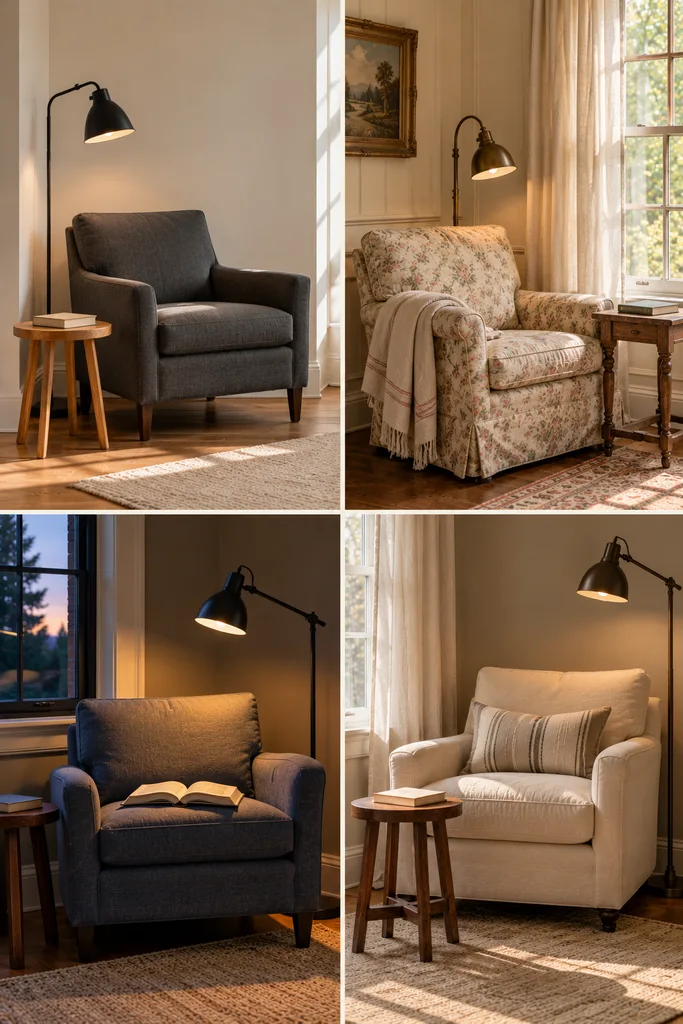
Keep everything else simple. The window itself does most of the decorating.
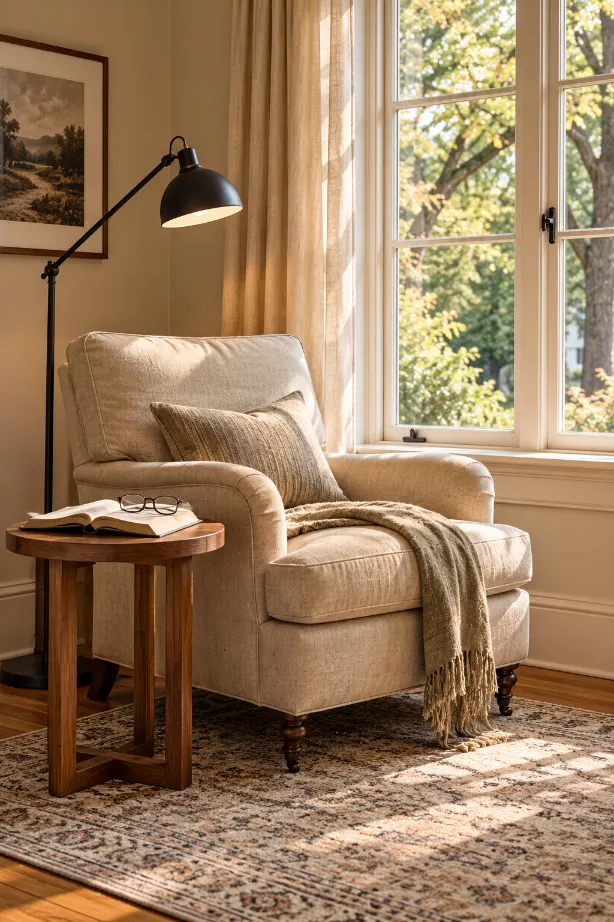
2. Turn a Tiny Empty Corner Into a Reading Spot
That awkward corner you’ve never known what to do with might be exactly where your reading nook belongs.
You really don’t need much.
A compact upholstered chair, slim floor lamp, and tiny round table can transform forgotten floor space without making the room feel crowded.
I especially like this approach in apartments because you’re giving an unused area a specific purpose without adding lots of furniture.
Measure the corner before buying the chair. A smaller chair that leaves a little breathing room around it will usually look more comfortable than an oversized lounge chair squeezed tightly between two walls.
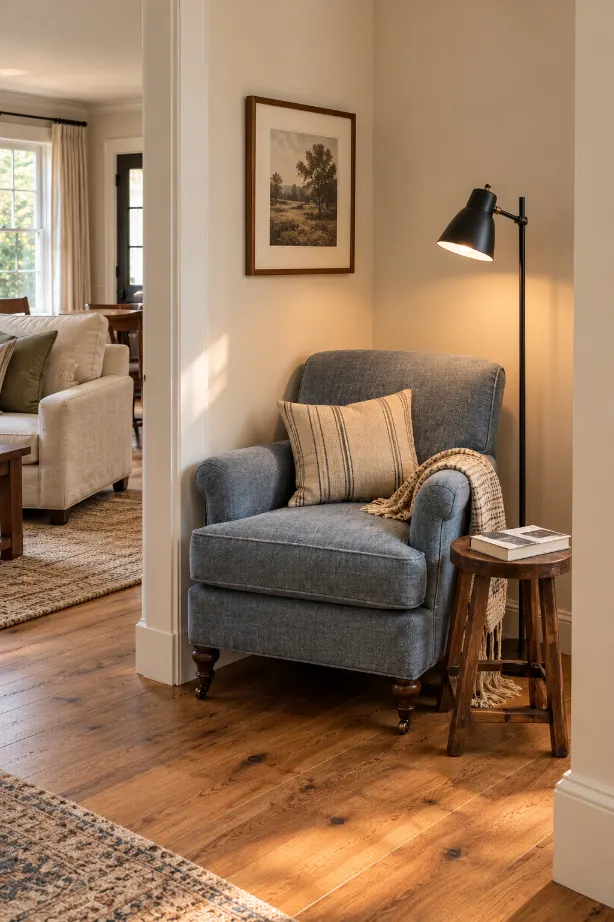
3. Build a Window Seat Reading Nook
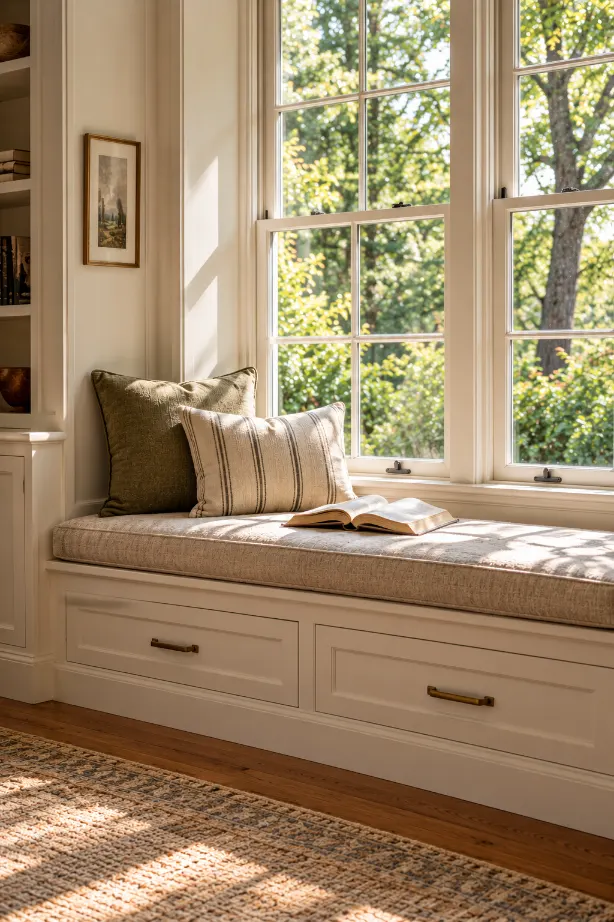
A built-in window seat can make a reading nook feel like part of the architecture rather than furniture added afterward.
Use a thick seat cushion for comfort and two or three supportive back cushions instead of covering the entire bench with pillows.
If you’re building the seat from scratch, storage underneath is worth considering. Drawers can hold books, blankets, board games, or other things you don’t want sitting around the room.
You can also create a similar effect without custom carpentry by placing a low bench beneath a suitable window.
If there’s a beautiful view outside, keep the surrounding decor restrained and let the window become the focal point.
4. Create a Moody Reading Corner
Reading nooks don’t always have to be bright, white, and airy.
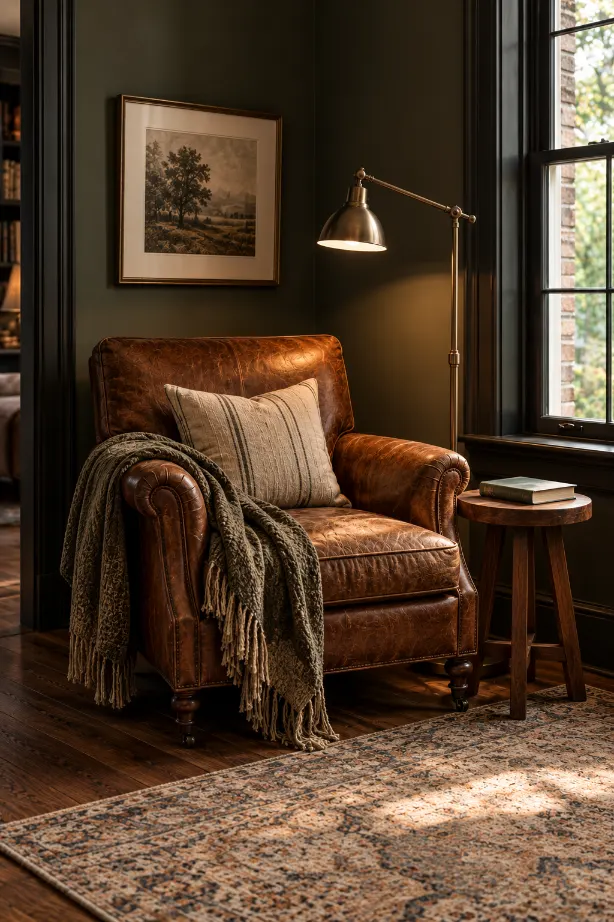
Deep olive, chocolate brown, smoky blue, charcoal, or muted burgundy can make a reading corner feel intimate and especially inviting in the evening.
Try painting the wall behind the chair a darker shade while leaving the rest of the room lighter. Add a warm reading lamp and a small natural-wood table to soften the deeper color.
The key is proper lighting.
A dark corner without enough light can simply feel gloomy. The same corner with a well-positioned floor or wall lamp feels intentional, warm, and cozy.
5. Add a Reading Nook to the Bedroom
Bedrooms often have one corner that isn’t doing much.
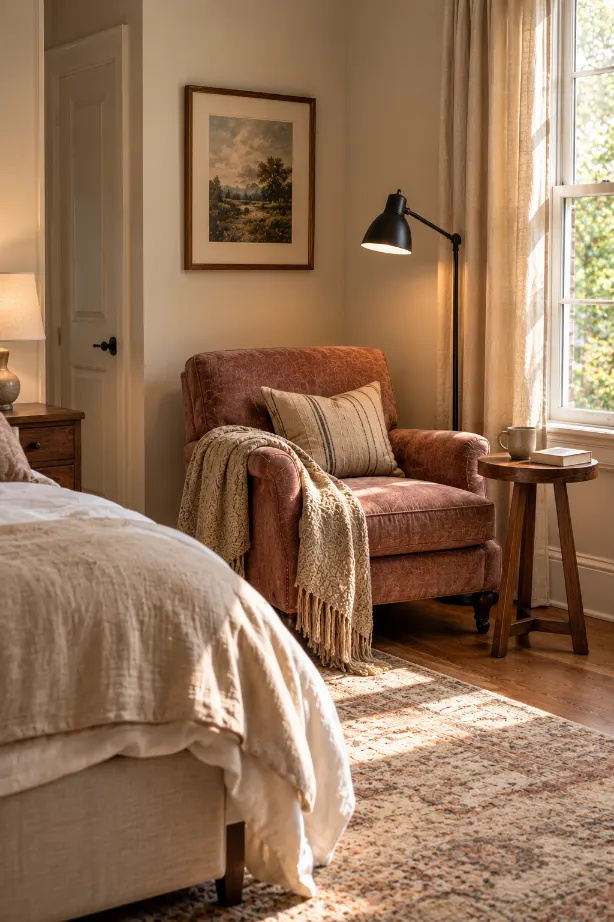
Instead of automatically filling it with another dresser, try creating a small seating area.
Choose a comfortable chair that looks different enough from the bed to define the space. Add a small table and reading lamp, but don’t feel obligated to decorate every inch around it.
I like this idea because the chair becomes useful even when you’re not reading. It gives you somewhere to sit while getting ready, putting on shoes, or having your morning coffee.
Keep enough space between the chair and bed so the room remains easy to walk through.
6. Use the Space Under the Stairs
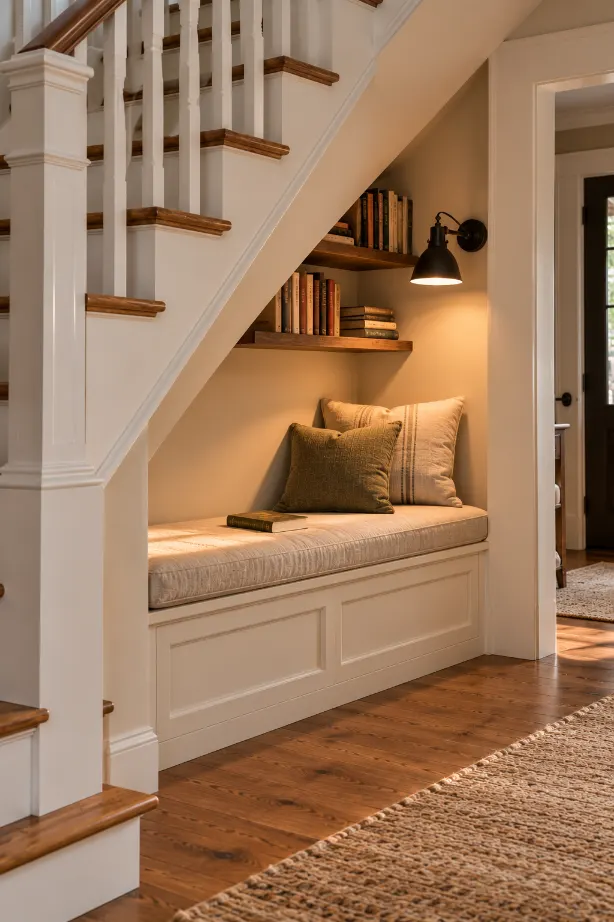
The area underneath a staircase is frequently overlooked, yet it can be perfect for a cozy reading nook.
If you have enough headroom, add a small upholstered bench or low lounge chair.
A built-in bench looks beautiful, but it isn’t essential.
Wall-mounted lighting can be especially useful here because floor space is often limited. You could also add a few shallow shelves for books without making the nook feel cramped.
Because the staircase naturally creates a ceiling and side boundary, the space already feels tucked away. You don’t need lots of additional decor to make it cozy.
7. Make a Small Apartment Reading Corner
Small apartments need furniture to work harder.
Rather than trying to create a completely separate reading area, use one corner of the living room.
A comfortable armchair beside the sofa can function as extra seating when guests visit and become your reading chair the rest of the time.
Instead of a bulky side table, try a small stool or compact C-shaped table that can slide closer to the chair when needed.
A floor lamp with a narrow base also takes up less room.
For me, this works much better than forcing too many separate zones into a small apartment.
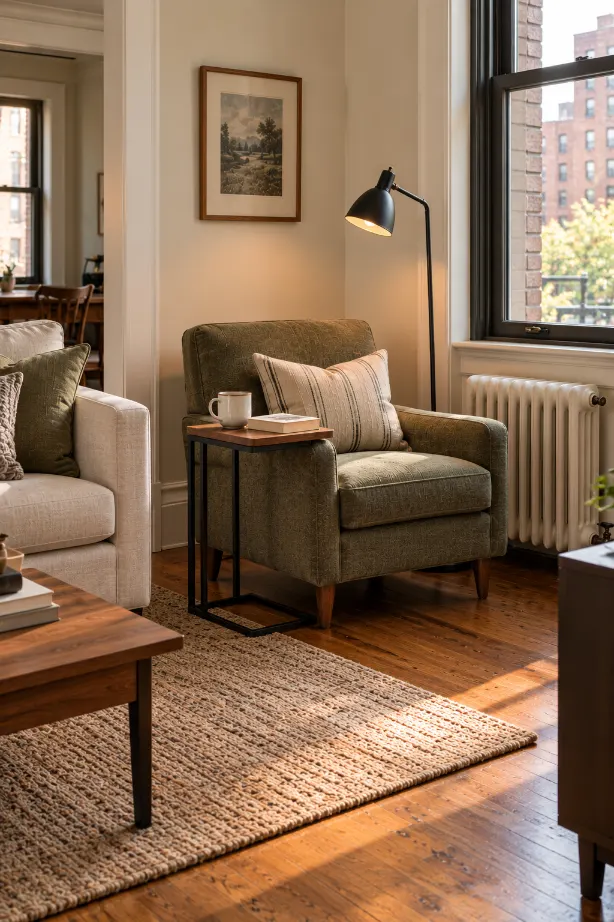
8. Put the Reading Chair Beside a Bookcase
This may be the simplest reading-nook formula of all.
Chair. Bookcase. Lamp.
Your books are already within reach, so the corner immediately feels purposeful.
Place the chair slightly in front of or beside the shelves rather than directly against them. This gives you enough room to reach the books comfortably.
I would also resist turning every shelf into a styled display. Let most of the shelves hold actual books. Mix upright books with a few horizontal stacks and leave occasional gaps.
A home library should look like somebody actually reads there.
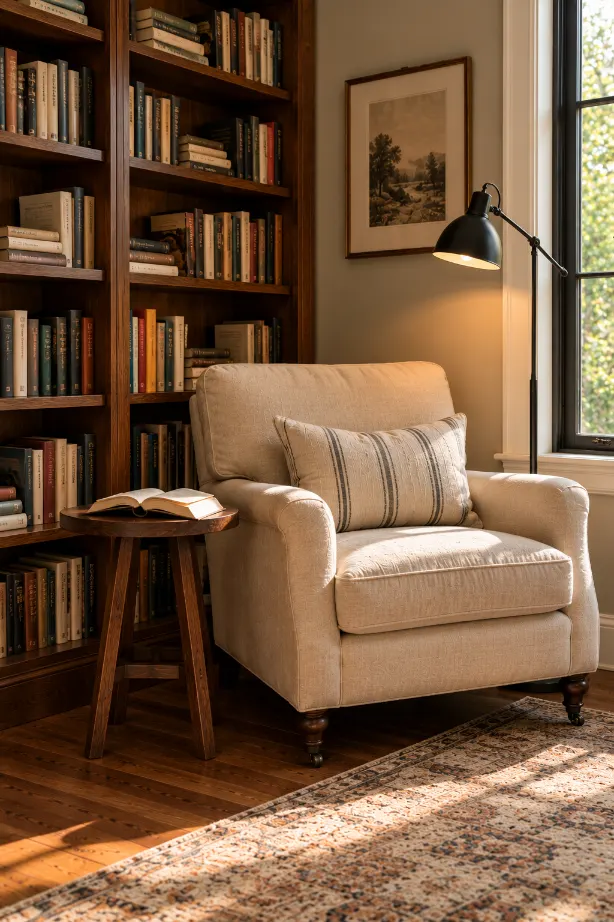
9. Use a Worn Leather Chair
A leather chair can give your reading nook a completely different personality.
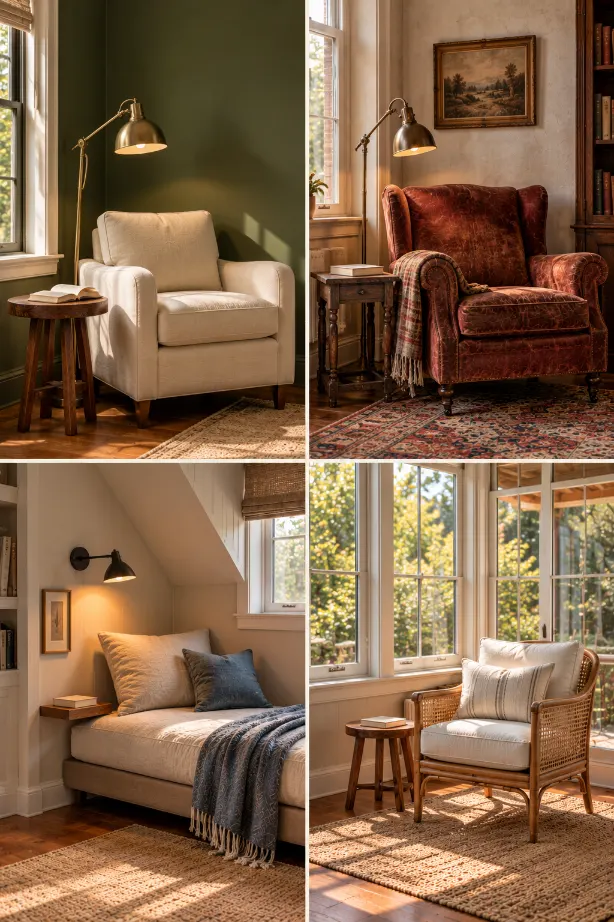
Cognac, tobacco brown, or aged dark leather looks especially good beside wood furniture, neutral walls, and a simple woven rug.
I prefer leather that develops creases, scratches, and color variation rather than something extremely glossy and perfect.
Add a small wooden side table and an adjustable floor lamp and you really don’t need much else.
Leather can feel visually heavy, so I would keep the surrounding wall and textiles lighter unless you’re intentionally creating a very moody room.
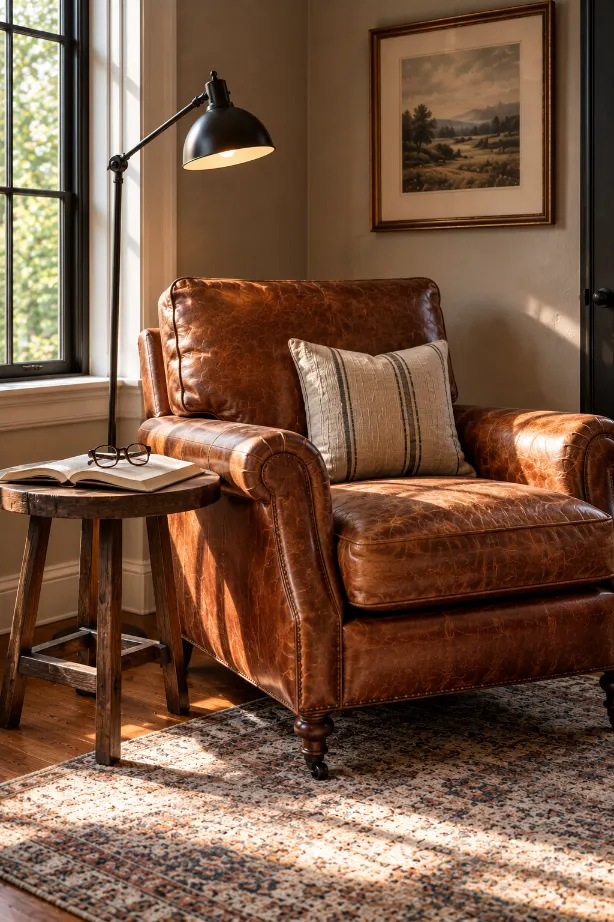
10. Create an Attic Reading Nook
Sloped ceilings can be difficult to furnish, but they’re excellent for cozy spaces.
Instead of fighting the lower ceiling, work with it.
Place a low chair, floor cushion setup, bench, or daybed beneath the slope and keep taller furniture closer to the center of the room where ceiling height increases.
If there’s an attic window nearby, use it.
The unusual architecture already gives the space character, which means you don’t need to compensate with lots of decorations.
A small lamp, soft rug, and nearby stack of books may be enough to finish the nook.
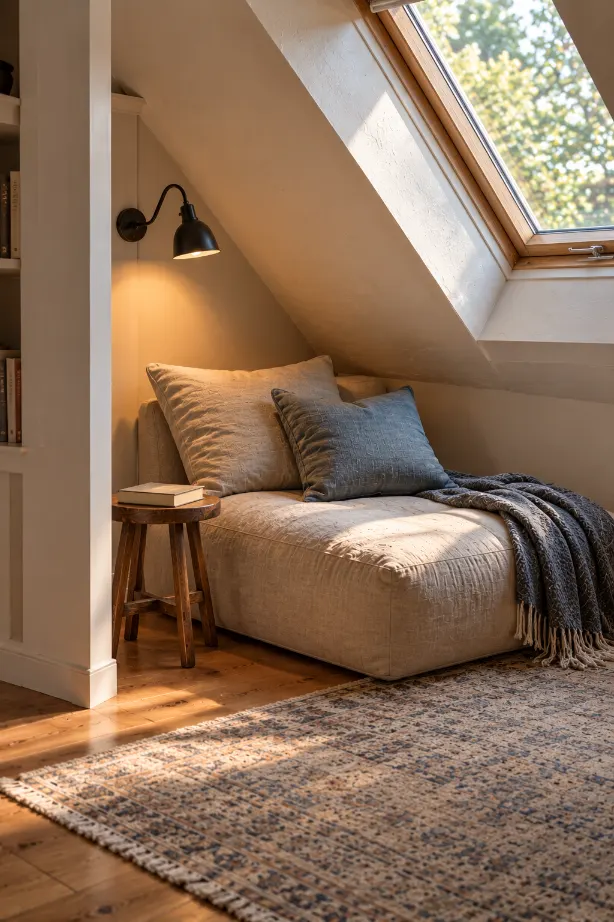
11. Keep the Reading Corner Minimal
Not every cozy corner needs blankets, candles, pillows, plants, baskets, and piles of books.
Sometimes one excellent chair and one lamp are enough.
Try placing a comfortable upholstered chair against a quiet neutral wall with a tiny table beside it.
Then stop.
Leave some empty floor and wall space around the furniture.
That breathing room can actually make the nook feel calmer and more intentional than a heavily decorated setup. It’s also much easier to keep clean and organized.
If the chair is comfortable and the lighting works, you’ve already solved the most important parts of the space.
12. Create a Cottage-Style Reading Nook
For something softer and more traditional, bring a few cottage elements into the corner.
A small upholstered chair in a subtle floral, faded stripe, or check pattern can work beautifully with an old wooden side table and simple linen curtains.
Add a lightweight throw if you actually use one while reading.
The important thing is restraint.
You don’t need a collection of vintage signs, baskets, flowers, and decorative objects surrounding the chair.
One patterned fabric combined with worn wood and natural linen can establish the cottage feeling without making the nook look themed.
13. Choose the Right Reading Lamp
Lighting deserves its own idea because it can make or break a reading nook.
A beautiful chair isn’t particularly useful if you can’t comfortably read there after sunset.
Position a floor lamp slightly behind or beside the chair so light falls across the page rather than shining directly into your eyes.
Adjustable lamps are especially useful because you can change the direction depending on how you’re sitting.
If floor space is tight, consider a wall-mounted swing-arm lamp.
And while very warm bulbs can look cozy in photographs, don’t make the light so dim or amber that reading becomes uncomfortable.
14. Use Warm Neutrals for a Calm Reading Corner
Warm neutrals are perfect when you want a quiet, relaxed reading space.
Think oatmeal upholstery, mushroom-colored walls, walnut or oak furniture, cream linen, and a soft taupe rug.
The trick is mixing textures so everything doesn’t blend into one flat beige surface.
A woven chair fabric, visible wood grain, wrinkled linen curtain, and slightly textured rug can all sit within a similar color palette while still creating visual depth.
Black or dark bronze lighting can add a little definition if the space begins to feel too soft.
15. Paint the Reading Nook Dark Green
Dark green can turn an ordinary corner into a clearly defined little retreat.
Try a muted olive, moss, or forest-green wall behind the chair while keeping the surrounding room lighter.
Pair it with warm wood, cream upholstery, aged brass, or simple black lighting.
I wouldn’t repeat green across every object.
Let the wall establish the nook and keep the chair, rug, and table relatively neutral.
Natural daylight is also important with deeper greens. During the day, it reveals the complexity of the color rather than allowing it to appear almost black.
16. Create a Vintage Reading Corner
A reading nook is a great place to use furniture that doesn’t perfectly match everything else in your home.
An old armchair, small vintage table, brass reading lamp, and faded rug can create a corner with genuine personality.
The pieces don’t need to come from the same decade.
In fact, I think vintage spaces often look more convincing when they appear to have been collected gradually rather than bought together.
Don’t worry about every scratch on the wood or a little wear on the chair fabric. Those imperfections can make the nook feel more authentic.
Just make sure older seating is still structurally comfortable enough to use.
17. Use a Daybed Instead of a Chair
If you have enough space, a daybed creates a reading nook where you can properly stretch out.
This works particularly well in a guest room, home office, sunroom, wide hallway, or large landing.
Keep the styling straightforward.
Use a comfortable fitted cushion or simple cover, two or three supportive pillows, and one lightweight throw.
Avoid burying the daybed beneath decorative cushions that need to be removed every time you want to use it.
You can also add drawers or baskets underneath if you need extra storage, making the nook work even harder.
18. Turn a Sunroom Corner Into a Reading Space
Sunrooms naturally lend themselves to reading.
Position a comfortable chair where you can enjoy the windows without sitting directly in harsh afternoon sunlight.
Natural materials work especially well here: linen, cotton, cane, wood, wool, and woven fibers.
Because trees and greenery outside already provide so much visual interest, the interior can stay relatively simple.
A chair, side table, reading lamp, and small rug may be all you need.
If the sunroom becomes very bright, lightweight curtains or woven shades can reduce glare while still allowing the space to feel connected to outdoors.
19. Add Floating Bookshelves to a Small Corner
When you don’t have enough floor space for a full bookcase, use the wall instead.
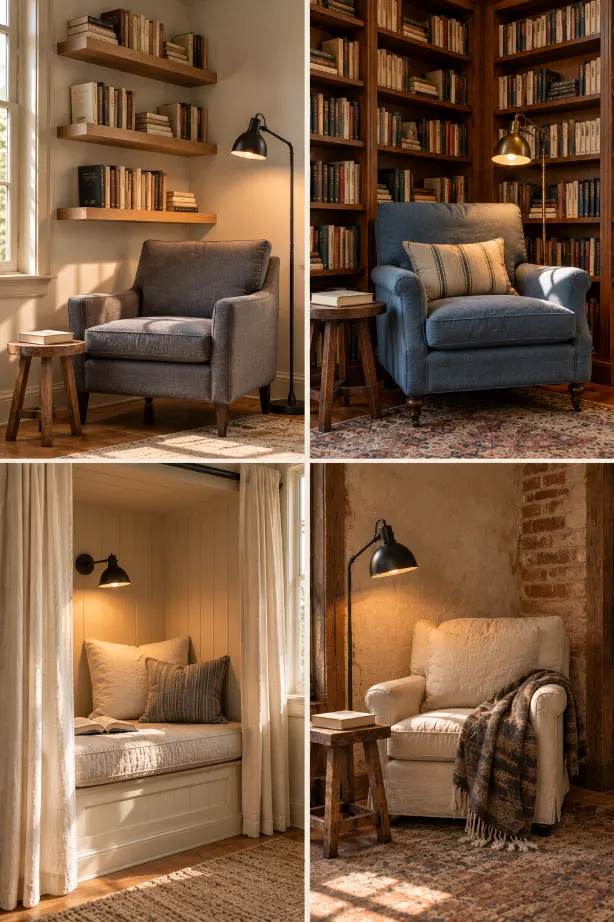
Two or three floating shelves above or beside your reading chair can hold a small book collection without making the corner crowded.
Install them where the books are reasonably easy to reach.
I would avoid placing shelves directly above your head if the arrangement feels heavy or uncomfortable.
Keep the styling natural.
Let books stand upright, place a few horizontally, and leave some empty space. You don’t need a decorative object between every group of books.
The books themselves provide plenty of visual interest.
20. Create a Tiny Home Library
If you own more books than a couple of shelves can handle, turn an entire corner into a miniature home library.
Use one tall bookcase or place two standard bookcases along adjacent walls.
Then add a comfortable chair nearby.
You don’t need expensive floor-to-ceiling custom cabinetry to create the effect.
Standard shelves can look surprisingly substantial once they’re filled with books you actually own.
Add one strong reading lamp and perhaps a rug beneath the chair to visually define the area.
Suddenly, an ordinary corner begins to feel like a separate little room without requiring any structural changes.
21. Use Curtains to Make the Nook Feel Enclosed
Curtains can create a feeling of privacy without building a wall.
This works especially well around window seats, alcoves, daybeds, and wider built-in benches.
Simple linen curtains can soften the edges of the nook and allow you to partially close it when you want the space to feel more secluded.
Choose fabric that still allows some daylight through.
Heavy blackout curtains can make a small nook feel unnecessarily dark unless you’re intentionally creating a nighttime retreat.
Even when the curtains remain open most of the time, their fabric adds softness and helps visually separate the reading area.
22. Create a Rustic Reading Corner
Rustic doesn’t have to mean farmhouse signs, distressed decorations, and lots of themed accessories.
Start with honest materials instead.
An old wooden side table, linen or wool upholstery, a simple throw, worn floorboards, and a woven rug can create plenty of warmth.
If the room already has architectural character—exposed beams, brick, old plaster, stone, or wood paneling—let those features remain visible.
I would actually add fewer decorative objects in a room like this.
Natural materials already contain color, texture, and variation. Covering them with accessories can take attention away from what makes the room special.
23. Make a Reading Nook on a Small Budget
You don’t need custom cabinetry or expensive furniture to create a good reading nook.
Start with a chair you already own.
Move it beside a window or into an unused corner and live with the new arrangement for a few days.
Borrow a small table from another room and add a lamp that provides enough light for reading.
Then decide what’s actually missing.
Maybe you need a more comfortable cushion. Perhaps a small rug would define the area. Maybe the blank wall would benefit from one framed print.
Make those changes gradually instead of buying everything at once.
Secondhand stores and online marketplaces can also be excellent places to find reading chairs, side tables, lamps, and bookcases with more character than inexpensive matching furniture sets.
A reading nook becomes inviting because of comfort, light, placement, and atmosphere, not because you filled a shopping cart with decorations.
Final Thoughts
The best reading nook is usually much simpler than it looks on Pinterest.
At the most basic level, you need somewhere comfortable to sit, enough light to read without straining your eyes, somewhere to put your book or drink, and a little sense of separation from the rest of the room.
Everything else is optional.
If you have a larger home, you can experiment with built-in window seats, miniature libraries, daybeds, attic corners, or under-stair nooks. If you’re working with a small apartment, a single comfortable chair beside a window can be just as effective.
I would start by walking through your home and paying attention to the spaces you’re currently ignoring.
Look beside windows. Check bedroom corners. Consider the landing at the top of the stairs. Look at the empty section beside your bookcase or the awkward space underneath the staircase.
Then ask yourself what that area actually needs before adding anything.
Often, the answer is surprisingly little.
A chair moved from somewhere else, a properly positioned lamp, a small table, and a few books can turn an unused corner into a place you begin using every day.
And that’s what I think makes a reading nook successful.
It shouldn’t simply photograph well.
It should make you want to sit down, open a book, and stay for a while.