When I look at a living room, the floor is usually one of the first things I notice—even when I cannot immediately explain why.
A beautiful sofa helps. Good lighting matters. Wall color can completely change the mood. But the floor sits underneath all of it, quietly deciding whether the room feels warm, formal, rustic, modern, relaxed, or luxurious.
That is why I think flooring deserves much more attention than it usually gets.
The good news is that an interesting living room floor does not always mean choosing the most expensive material. Sometimes the difference comes from the direction of the boards, the width of the planks, an unexpected border, or the way two materials meet.
I would rather choose a floor with personality than one that simply disappears.
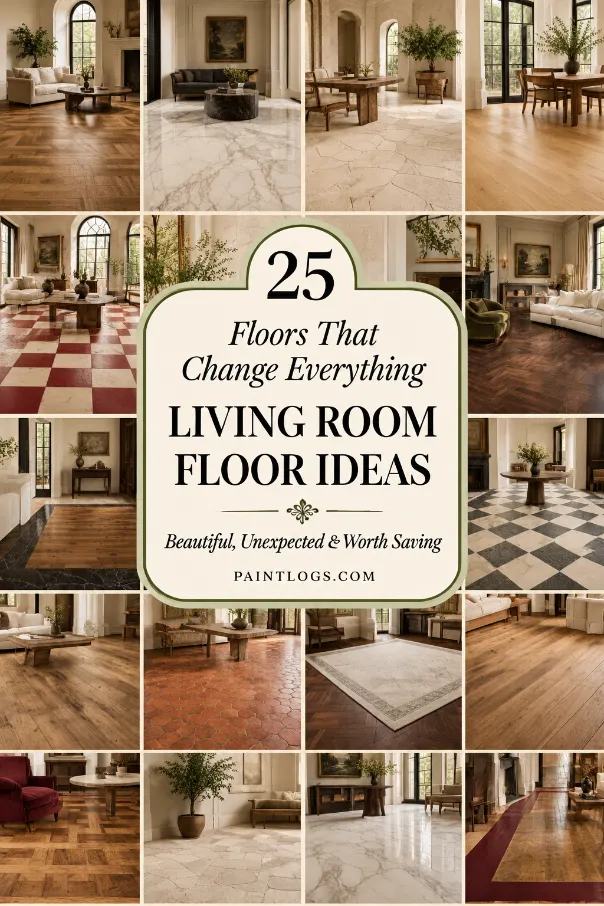
Here are 25 living room flooring ideas I would consider when I want the entire room to feel more intentional.
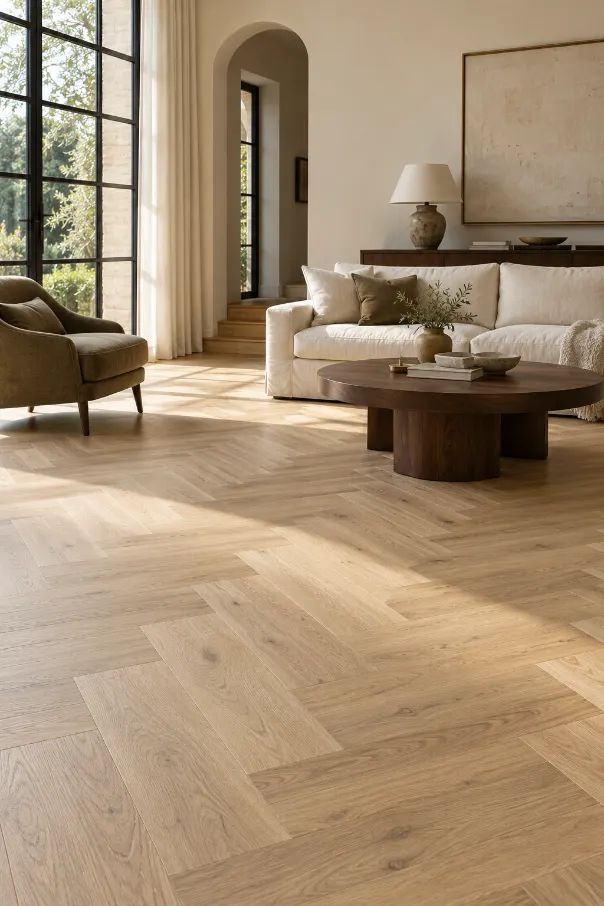
1. Use Pale Oak in a Herringbone Pattern
Light oak can make a living room feel calm, but laying it in herringbone gives it much more personality.
I like the combination because the color stays quiet while the pattern adds movement.
It works especially well with cream upholstery, warm white walls, and darker wood furniture.
I would let some of the floor remain visible rather than covering everything with a large rug. The angled pattern deserves to be seen.
2. Choose Extra-Wide European Oak Planks
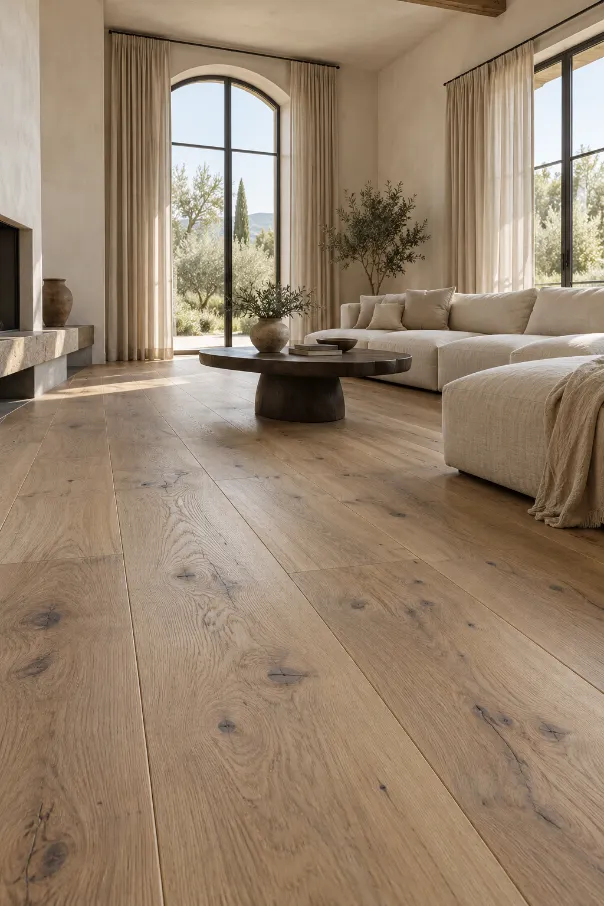
Wide floorboards instantly change the scale of a room.
Instead of seeing lots of narrow lines across the floor, you get broader stretches of natural wood grain.
For me, this works beautifully in larger living rooms where narrow boards can sometimes feel busy.
Choose a warm medium oak rather than something overly orange. Knots and natural variation make the floor feel more authentic and less manufactured.
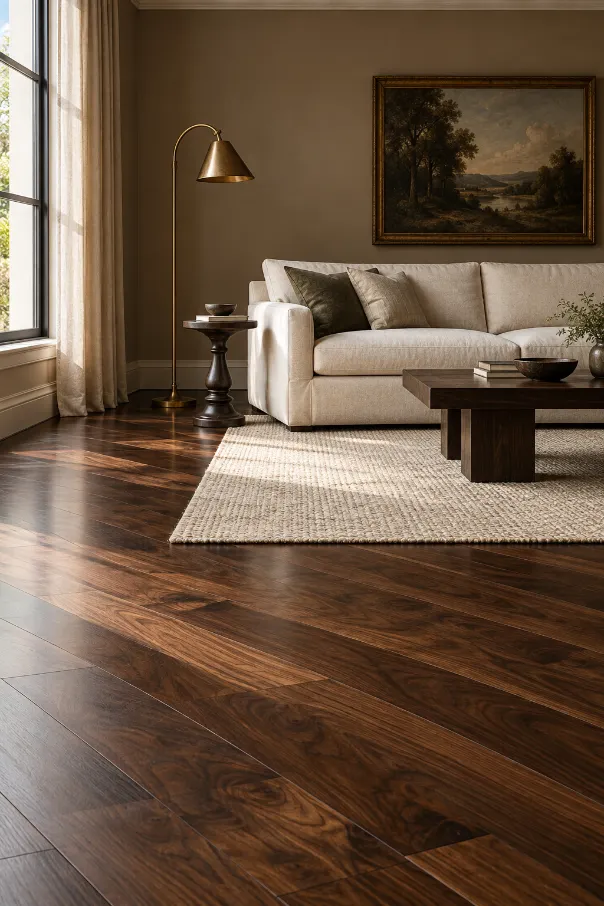
3. Go Dark With Walnut Flooring
Dark floors can be dramatic without feeling cold.
Rich walnut underneath cream or oatmeal furniture creates one of my favorite combinations because there is strong contrast without needing bright color.
I would keep the finish more satin than glossy so the wood grain remains visible.
A faded neutral rug can soften the room while still leaving enough walnut exposed around the edges.
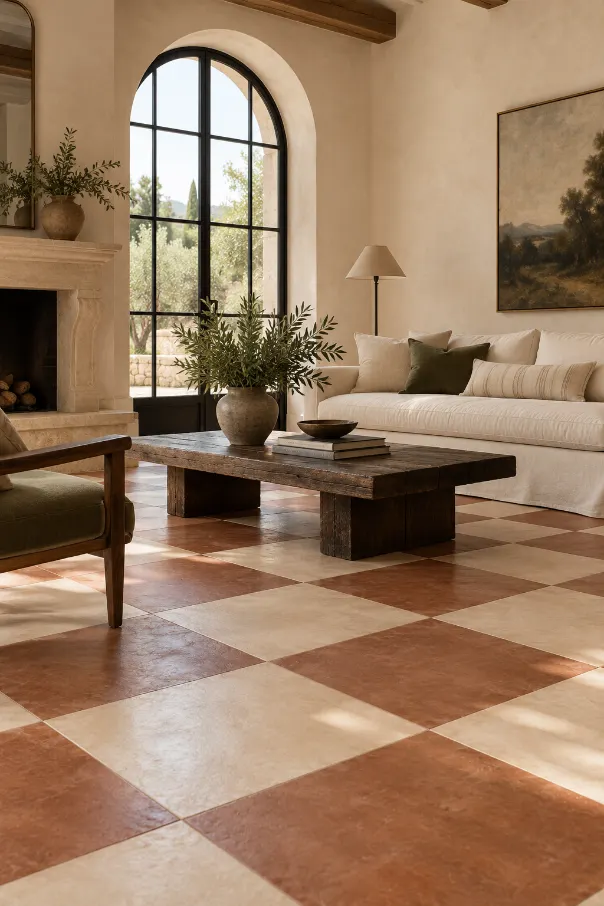
4. Try a Terracotta and Cream Checkerboard
Checkerboard floors are not limited to black and white.
Terracotta paired with warm cream feels softer, earthier, and much easier to use in a cozy living room.
I especially like it in Mediterranean, Spanish-inspired, cottage, or collected interiors.
Keep the squares relatively large. Tiny checkerboards can become visually busy, while oversized ones feel much more architectural.
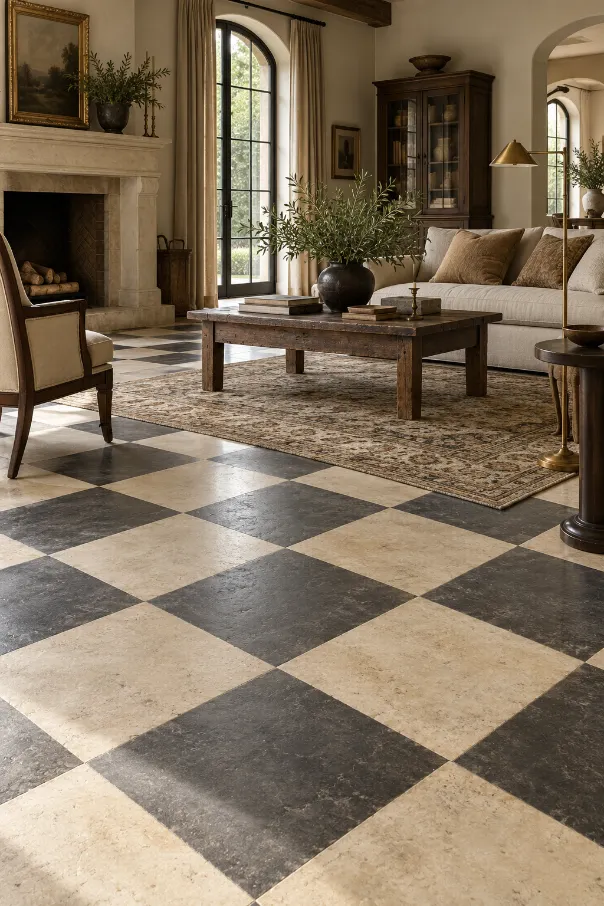
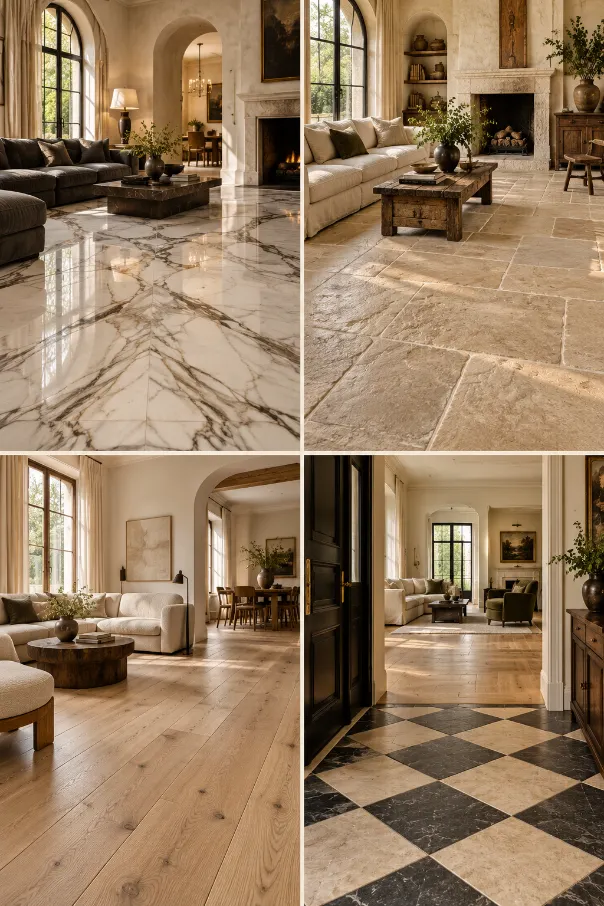
5. Use Classic Black and Ivory Checks
There is a reason black-and-white checkerboard flooring keeps returning.
It immediately creates structure.
If pure black and white feels too harsh, I would use charcoal and warm ivory instead.
Pair it with wood furniture, linen upholstery, and aged finishes to keep the room from looking too formal.
It can also work beautifully when it begins in an entryway and continues toward the living room.
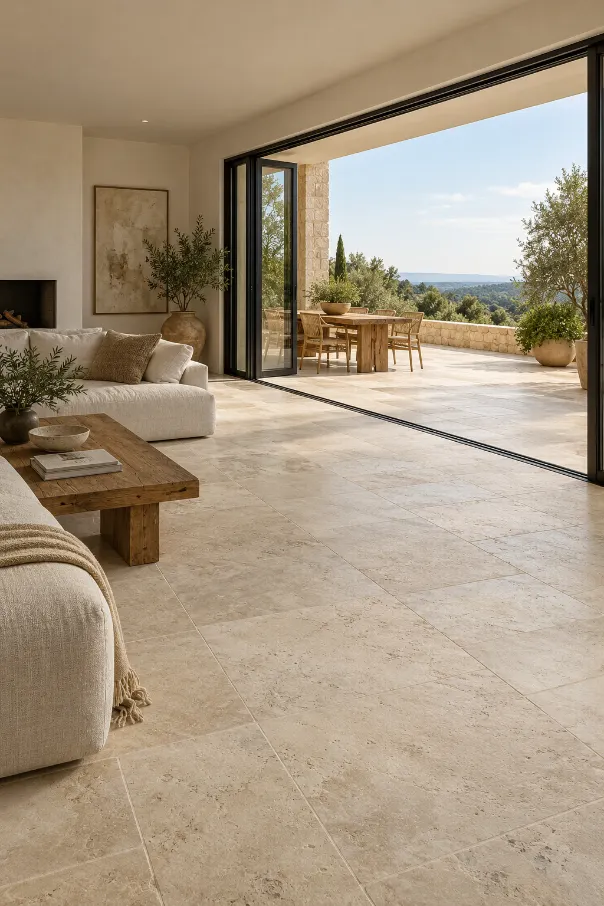
6. Let Stone Flow Straight Onto the Patio
If your living room opens directly onto a terrace, using the same or similar flooring inside and outside can make both spaces feel much larger.
Large limestone or stone-look tiles work especially well.
The trick is minimizing the visual break at the doors.
When the glass opens, the eye should almost read the living room and patio as one continuous surface.
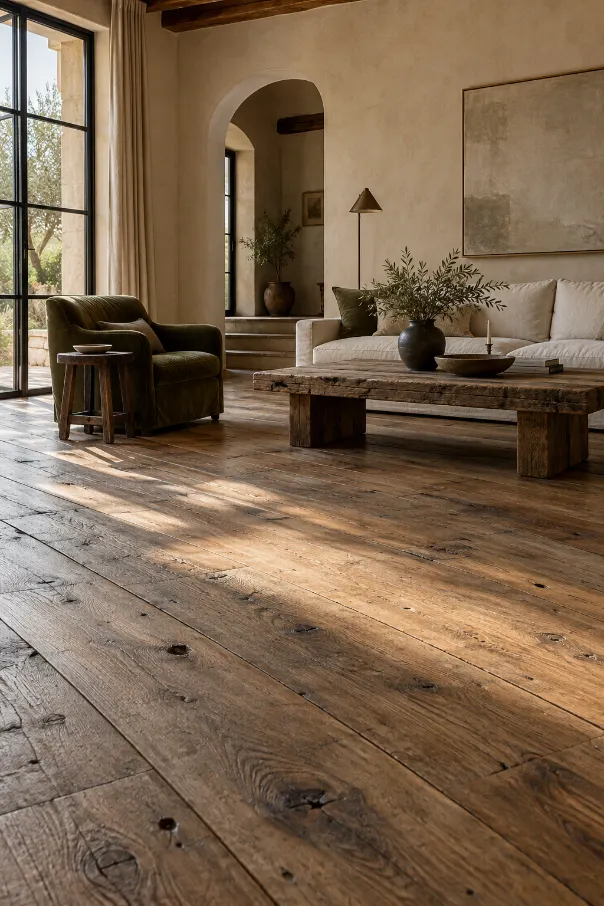
7. Use Rustic Wide-Plank Wood
Not every hardwood floor needs to look perfectly smooth.
Wide boards with visible knots, grain changes, and small imperfections can make a living room feel instantly warmer.
I like them in rooms that have simple plaster walls and understated furniture.
The floor adds enough character that the rest of the room does not need to be heavily decorated.
8. Mix Brick With Wood
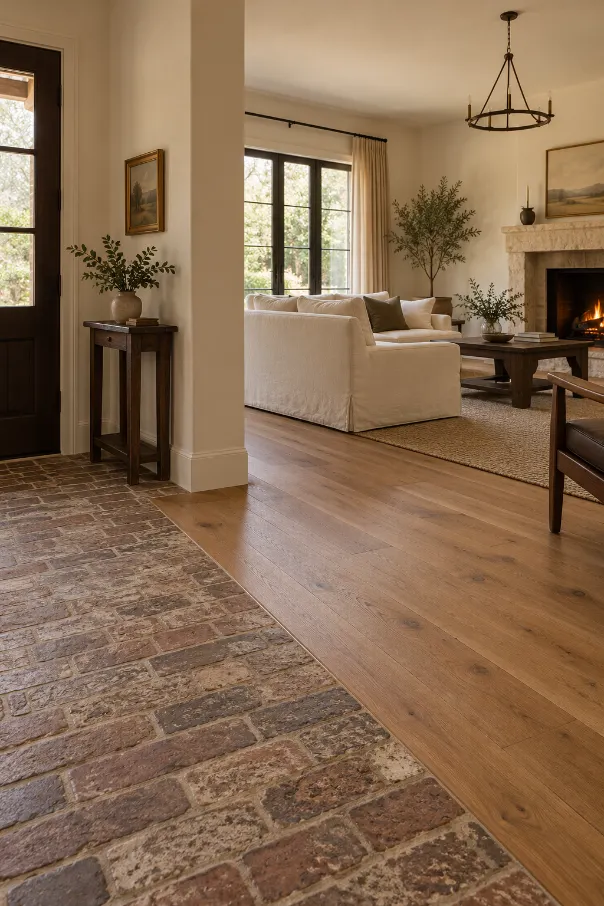
Using two floor materials can make an open-plan room more interesting.
For example, reclaimed brick could define an entry or fireplace zone while wood covers the main seating area.
I would avoid complicated boundaries.
A straight transition usually looks more intentional than an overly decorative one.
The contrast between hard brick and warm wood can make the space feel as though it evolved naturally over time.
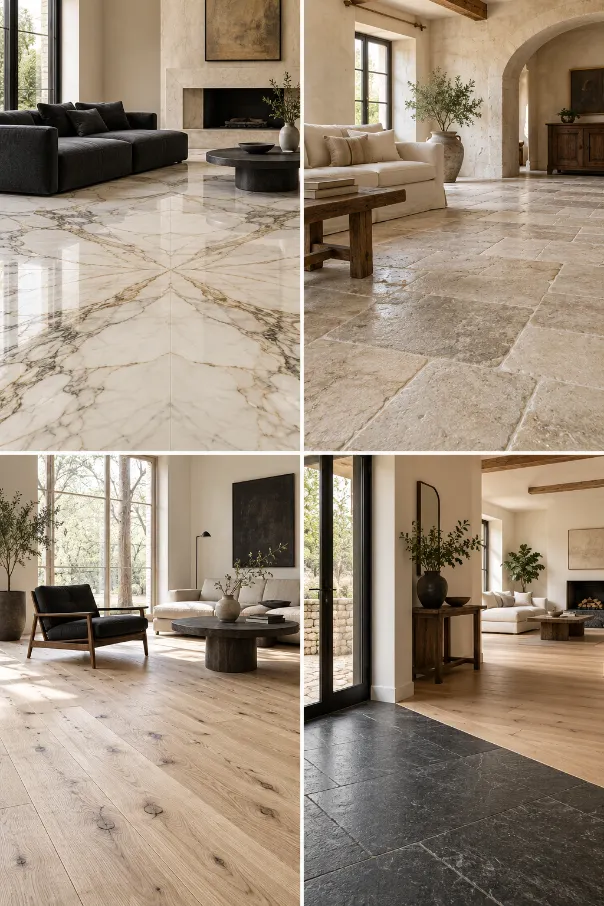
9. Use Large Limestone-Style Tiles
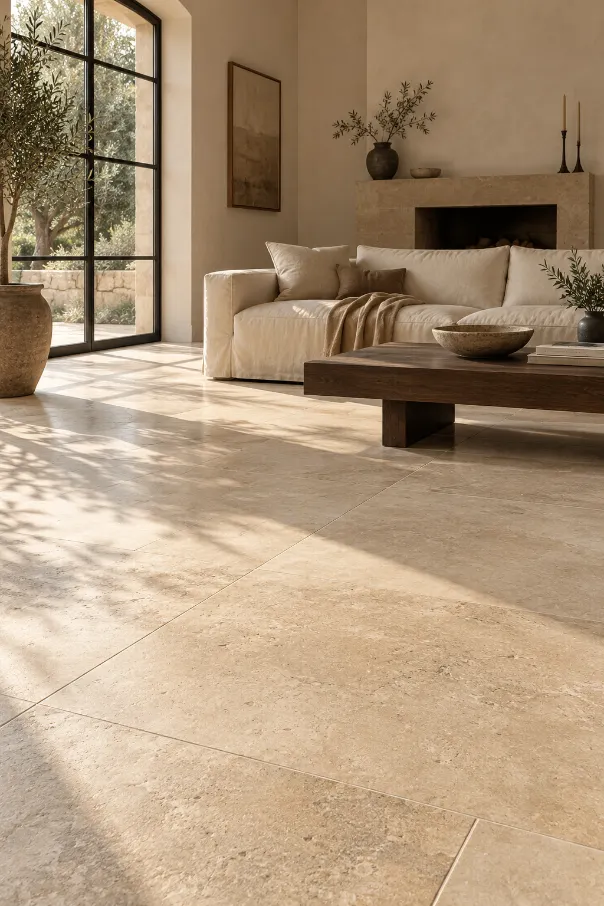
Large pale stone tiles can make a living room feel calm and substantial.
I prefer slightly irregular beige or warm gray stone rather than perfectly uniform tiles.
Minimal grout lines help the room feel larger.
This floor works particularly well with wood beams, linen sofas, plaster walls, and chunky furniture because the stone creates a quiet foundation underneath everything.
10. Choose Soft Gray Porcelain for a Modern Room
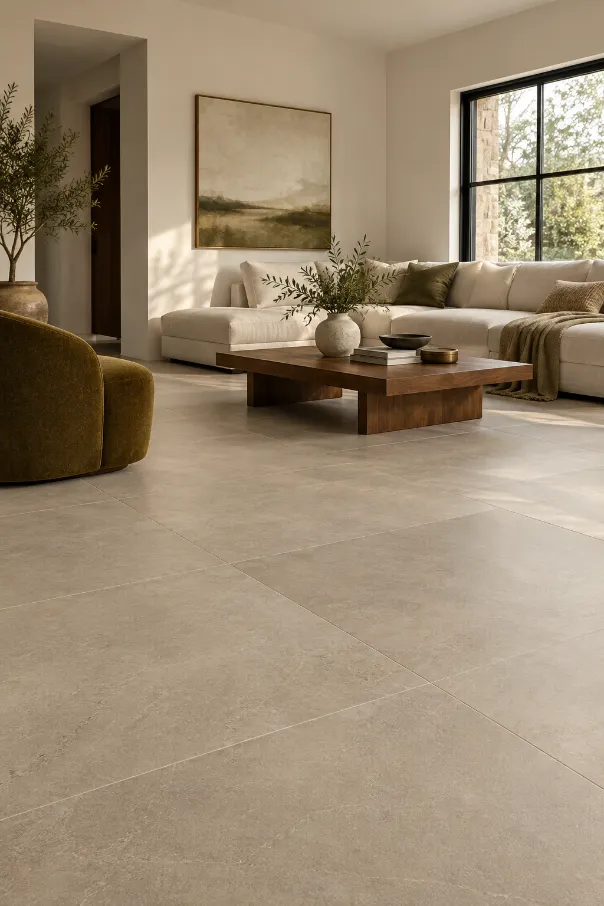
Gray flooring can easily feel cold, but the right gray can be very sophisticated.
I would choose a warm gray porcelain tile with subtle texture rather than something blue-toned.
Large-format tiles keep the surface clean and simple.
Add warm wood furniture, cream fabrics, and good daylight to stop the room from feeling sterile.
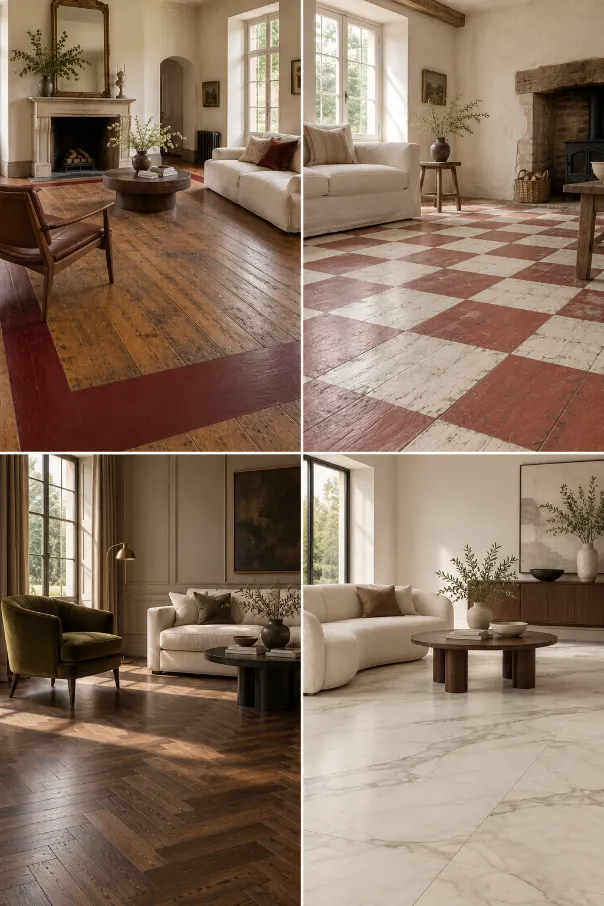
11. Create a Painted Border Around Wood Floors
One of the more interesting ways to update existing floorboards is to paint only the perimeter.
Imagine natural wood in the center with a deep olive, oxblood, or charcoal border running around the room.
It gives the floor the effect of a built-in frame.
I especially like this when the existing wood is worn but still worth keeping.
12. Paint a Checkerboard Directly Onto Old Wood
Old wood floors can be perfect for paint because a little imperfection makes the result better.
Use muted clay and cream, olive and ivory, or soft brown and beige.
I would not aim for perfectly crisp new-looking squares.
A little visible grain and wear makes the pattern feel established rather than freshly installed.
13. Try Dark Herringbone for a Moodier Room
Herringbone does not have to be pale.
A deep smoked oak or walnut herringbone floor can make a living room feel incredibly rich.
Pair it with lighter walls and upholstery so the room does not become too dark.
The pattern becomes especially noticeable when sunlight moves across it during the day.
14. Use Marble-Look Porcelain Instead of Real Marble
If I loved the appearance of marble but wanted something easier to maintain, I would consider large porcelain tiles with subtle stone veining.
The important word is subtle.
Too much dramatic printed veining can make the floor look artificial.
A softer pattern with fewer grout joints can create a very polished look without turning the living room into a hotel lobby.
15. Make Real Marble the Main Feature
In the right home, real stone flooring can be stunning.
I would use it in a room with plenty of natural light and keep the furniture relatively simple.
The floor already has movement and variation.
Soft sofas, warm wood, and textured fabrics help prevent polished marble from feeling too formal.
16. Use Cream Stone for Quiet Luxury
Cream-colored stone is one of those materials that does not need to shout.
It works because it reflects light gently and creates a calm base.
I like it with walnut, olive, burgundy, and warm white.
Instead of choosing perfectly white marble, a warm limestone or creamy marble with soft natural veining often feels more relaxed and livable.
17. Keep Natural Oak Almost Untreated
Sometimes the simplest floor is the best one.
Natural oak with a matte finish can make a living room feel light and easy without becoming bland.
I would look for visible grain and slight tonal variation rather than boards that all look identical.
It is a great option if you like changing furniture and wall colors because the floor works with almost everything.
18. Transition From Tile at the Entry to Wood in the Living Room
A practical entry floor does not have to continue through the whole space.
Tile near the front door can handle dirt and moisture, while wood begins once you reach the living room.
The transition itself can become a design detail.
I like a clean straight line or a stone threshold between the two materials.
It subtly tells you that you are moving from one zone into another.
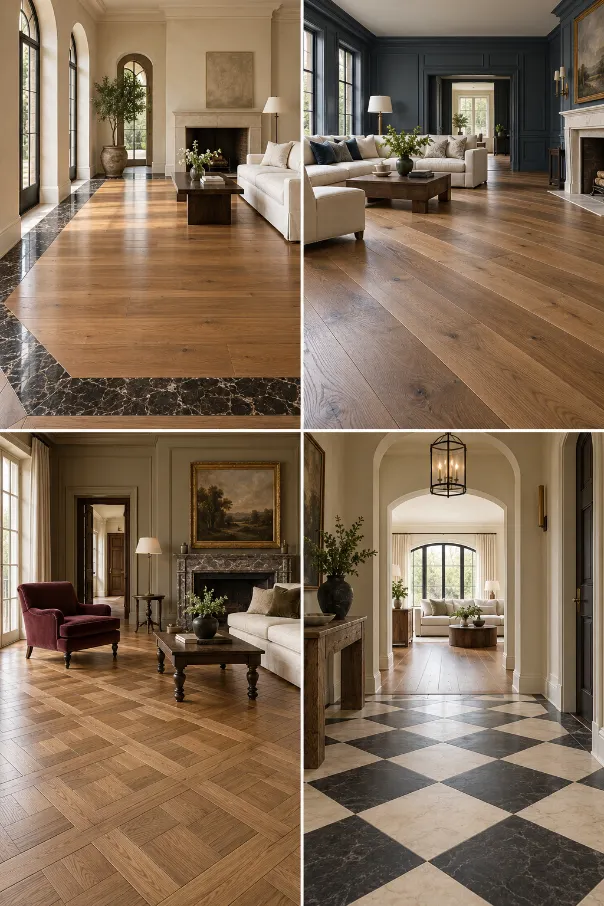
19. Add a Stone Border Around a Wood Floor
Instead of using one material everywhere, frame the wood with a narrow band of stone.
This works particularly well in formal living rooms or rooms connected to stone hallways.
The detail can be very subtle.
A slim limestone or dark marble border is enough to make ordinary floorboards feel custom.
20. Lay Wood Boards on the Diagonal
We tend to install wood parallel to the walls, which is why diagonal flooring catches the eye immediately.
It creates movement without introducing another material or color.
I would use this in a room with fairly simple architecture so the floor pattern has room to breathe.
Wide boards keep the diagonal layout from looking too busy.
21. Try a Basketweave Wood Pattern
Herringbone gets most of the attention, but basketweave flooring can be even more interesting.
Small groups of wood pieces create a subtle woven effect.
I would use a medium oak tone so the pattern is visible but not overwhelming.
This is especially beautiful in traditional rooms with cleaner modern furniture because the old and new elements balance each other.
22. Use a Diamond Pattern in a Hallway That Leads Into the Living Room
Sometimes the strongest living room flooring idea begins just outside the room.
A bold diamond tile pattern in the hallway can create a dramatic approach before transitioning into calmer wood flooring.
I love this because the living room does not need to carry all the pattern itself.
You get the visual impact on arrival, then a softer surface once you enter the seating area.
23. Use One Continuous Wood Floor Through an Open Plan
If the living room connects directly to the dining room or kitchen, changing flooring in every zone can make the space feel chopped up.
Using one continuous wood floor can visually connect everything.
I would vary the zones through rugs and furniture instead.
This works particularly well with warm oak because it brings consistency without dominating the design.
24. Choose Smaller Terracotta Tiles for Old-World Character
Terracotta does not always need a checkerboard pattern.
Small square or rectangular terracotta tiles have a relaxed European feeling that works beautifully with plaster walls, old wood furniture, and linen upholstery.
I would embrace variations in tone.
Some tiles can be darker, some lighter, and the surface does not need to look perfectly new.
That irregularity is part of the charm.
25. Let a Large Rug Frame the Floor Instead of Hide It
Sometimes the floor itself is beautiful, but the room still needs softness.
Instead of covering almost everything with carpet, choose a rug that anchors the furniture while leaving a generous border of flooring visible.
This works particularly well with herringbone, walnut, terracotta, and wide oak planks.
For me, that balance is ideal: the rug makes the living area comfortable, while the flooring still remains part of the room’s design.
Final Thoughts
Living room floors are easy to overlook because we tend to think about sofas, curtains, paint, and artwork first.
But changing the floor—or simply treating an existing floor differently—can alter the entire personality of a room.
I would not choose flooring only because it is currently popular.
I would think about what I want the room to feel like.
For calm and airy spaces, I love pale oak and limestone.
For warmth, wide wood planks, walnut, and terracotta are difficult to beat.
For something more memorable, I would consider herringbone, checkerboard, diagonal boards, mixed materials, or a painted floor.
The best floor does not necessarily demand attention.
Sometimes it is simply the detail that makes everything else in the living room suddenly look right.