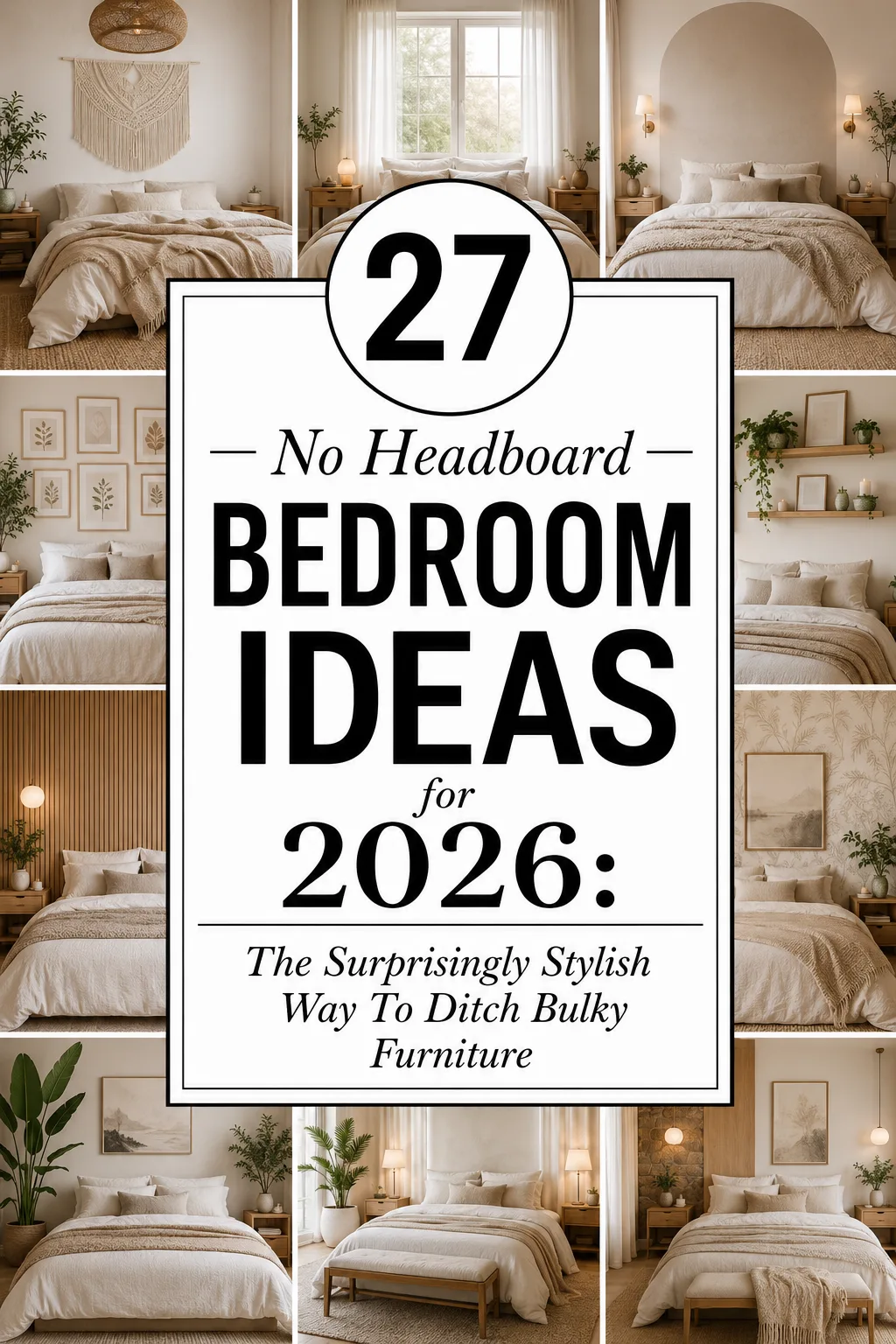
For years, headboards have been considered a bedroom essential. They were seen as the piece that completed the bed and gave the room a polished look. But in 2026, more homeowners and designers are proving that a stylish bedroom doesn’t need a bulky headboard at all. In fact, removing it can make a space feel larger, lighter, and surprisingly more modern.
No-headboard bedrooms offer endless design possibilities. Instead of relying on a large furniture piece, you can create visual interest through artwork, wall treatments, lighting, textiles, and thoughtful styling. The result is often a bedroom that feels cleaner, calmer, and more personalized.
Whether you’re working with a small room, decorating on a budget, embracing minimalism, or simply looking for a fresh update, ditching the headboard can be a smart design move. From cozy layered bedding and statement walls to architectural details and natural materials, there are countless ways to make your bed look intentional without adding extra bulk.
These 27 no headboard bedroom ideas for 2026 will show you how to create a beautiful, inviting space that feels every bit as stylish—and often even more modern—than a traditional bedroom setup.
1. Let the Wall Become the Focal Point
One of the first things I learned when removing a headboard was that the wall behind the bed suddenly became much more important. Instead of spending money on a large piece of furniture, I focused on making the wall look attractive. A fresh paint color, simple wall molding, or even textured wallpaper can completely transform the space. The room instantly felt cleaner and more modern. Without a bulky headboard taking attention, the bedroom looked larger and less crowded. This approach works especially well in small bedrooms where every inch matters and visual clutter can make the room feel cramped.
2. Create a Soft Look with Oversized Pillows
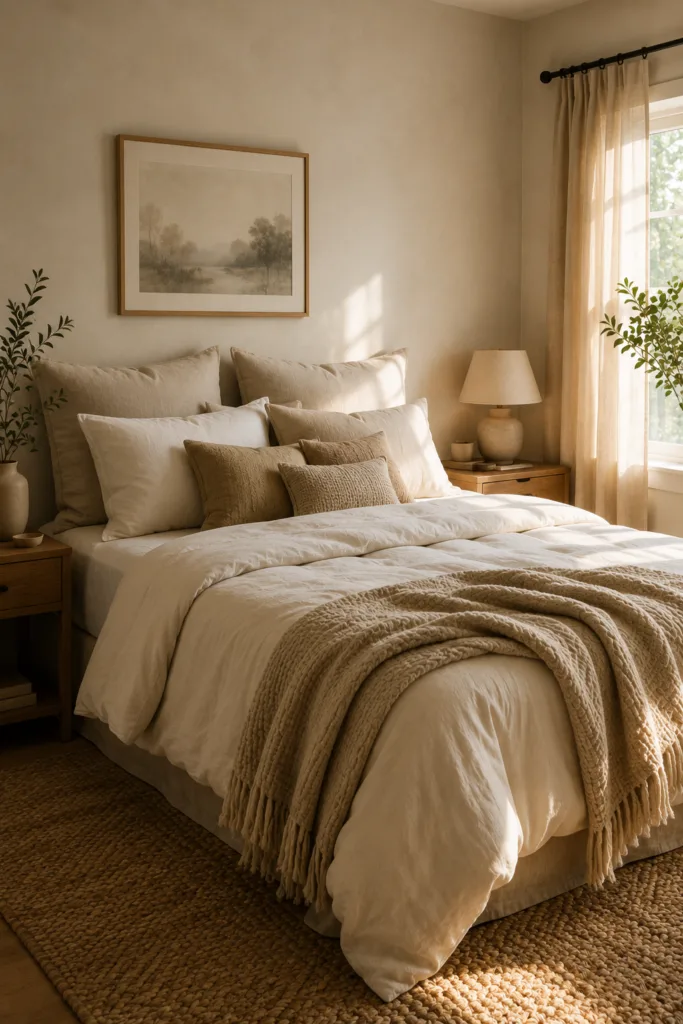
When I first tried a no-headboard setup, I worried that the bed would look unfinished. The easiest solution was using oversized pillows. Large European pillows stacked behind regular sleeping pillows created a cozy and luxurious appearance. They also provided comfortable back support while reading or watching videos in bed. The layered pillow arrangement added softness and depth without requiring any extra furniture. I found that neutral-colored pillows worked best because they created a calm atmosphere. This simple change made the bed feel intentionally styled rather than looking like something was missing.
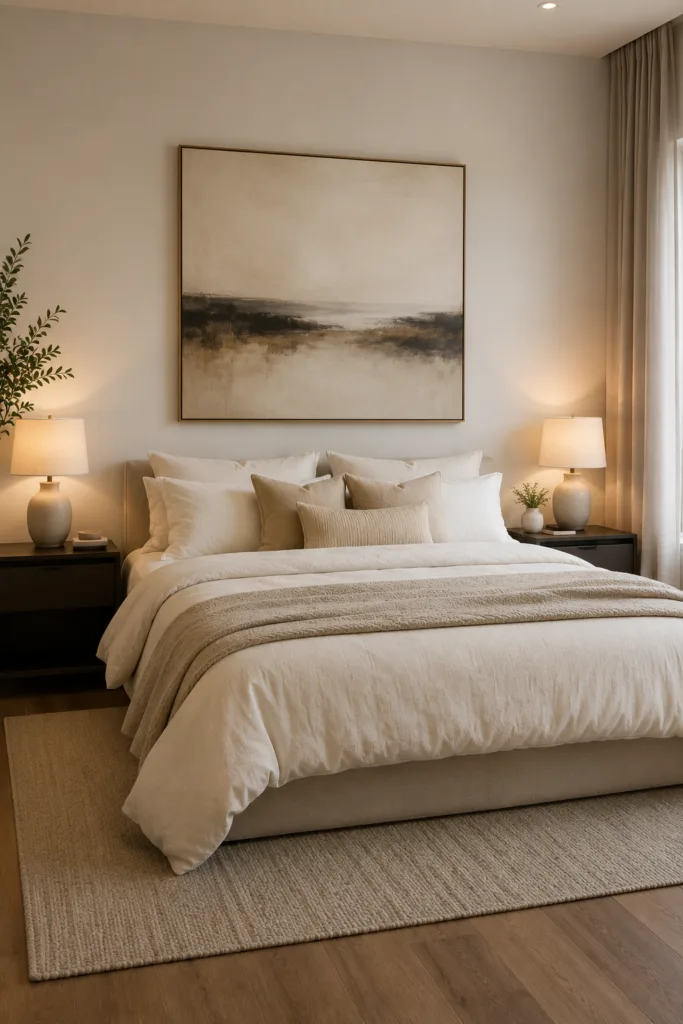
3. Install a Statement Piece of Artwork
A large artwork above the bed can easily replace the visual impact of a traditional headboard. I tried this in a guest bedroom and was surprised by how sophisticated it looked. A single oversized painting or framed print draws attention upward and creates a strong focal point. It also allows you to express your personality more easily than a standard headboard. Whether you prefer abstract art, landscapes, or black-and-white photography, the artwork becomes the star of the room. The bedroom feels more curated and less dependent on bulky furniture for style.
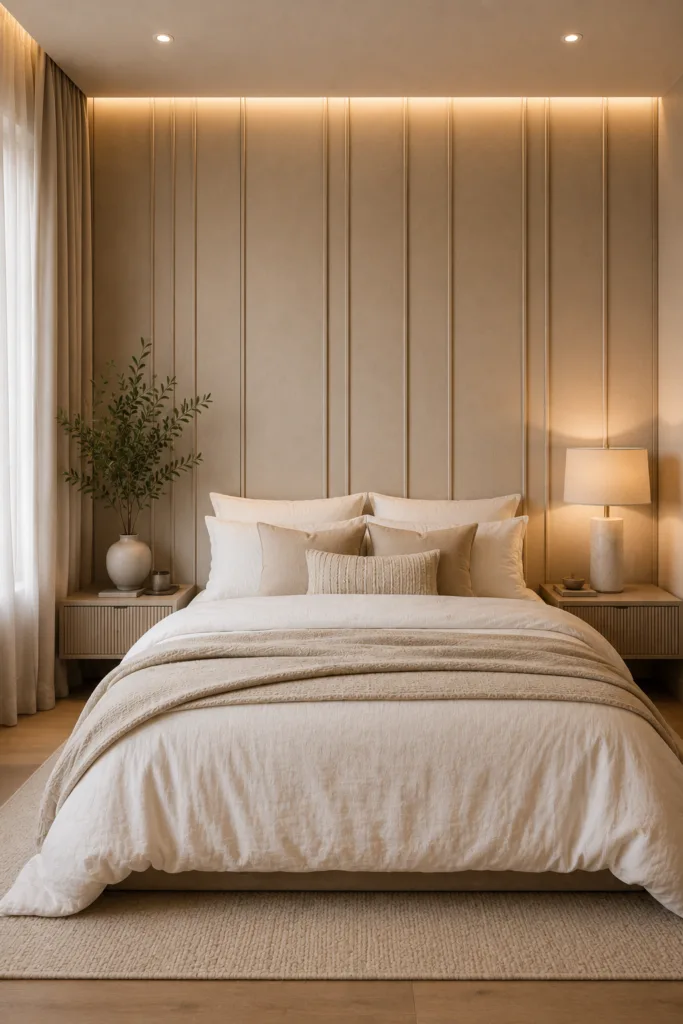
4. Use Wall Panels Instead
If you still want some architectural detail behind the bed, decorative wall panels are a great alternative. I installed simple vertical panels in one project and the result looked much more expensive than it actually was. Unlike a traditional headboard, wall panels stretch across the wall and create a custom-built appearance. They add texture, depth, and elegance while keeping the room visually open. Painted in the same color as the wall, they create a subtle designer look. This idea works beautifully in modern, farmhouse, and even classic bedroom styles.
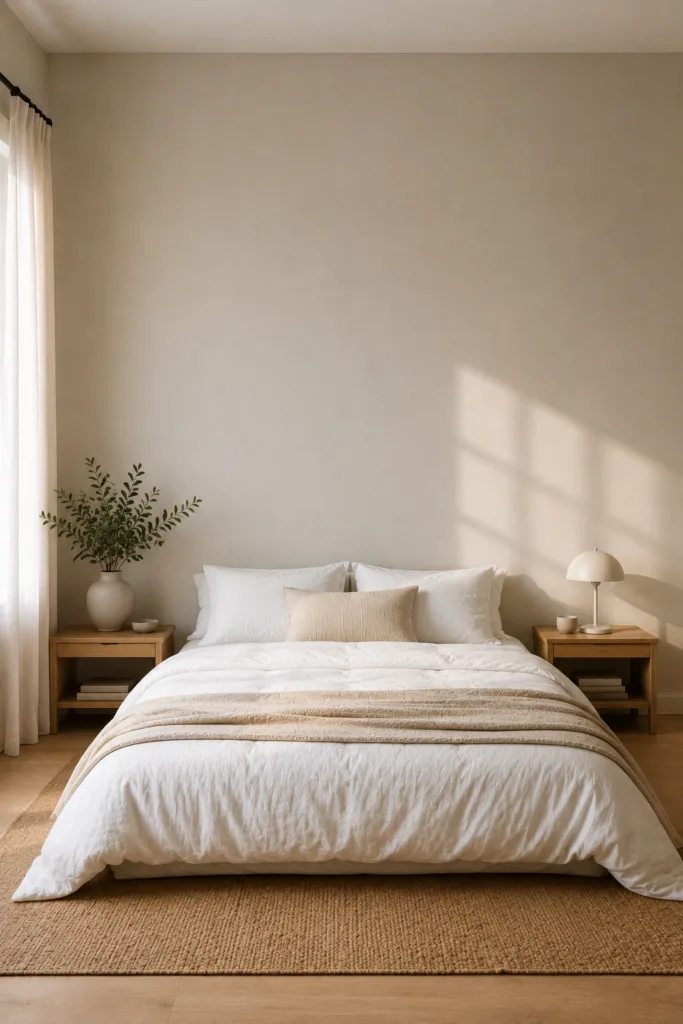
5. Keep Everything Minimal
One unexpected benefit of removing the headboard was how much more minimalist the room became. The bedroom instantly felt calmer and less cluttered. I noticed that the absence of large furniture encouraged me to keep other decorative elements simple as well. Clean bedding, streamlined nightstands, and a limited color palette helped create a peaceful environment. This approach is ideal for people who enjoy modern interiors and want their bedroom to feel relaxing. Sometimes removing an item rather than adding one is the best way to improve a space.
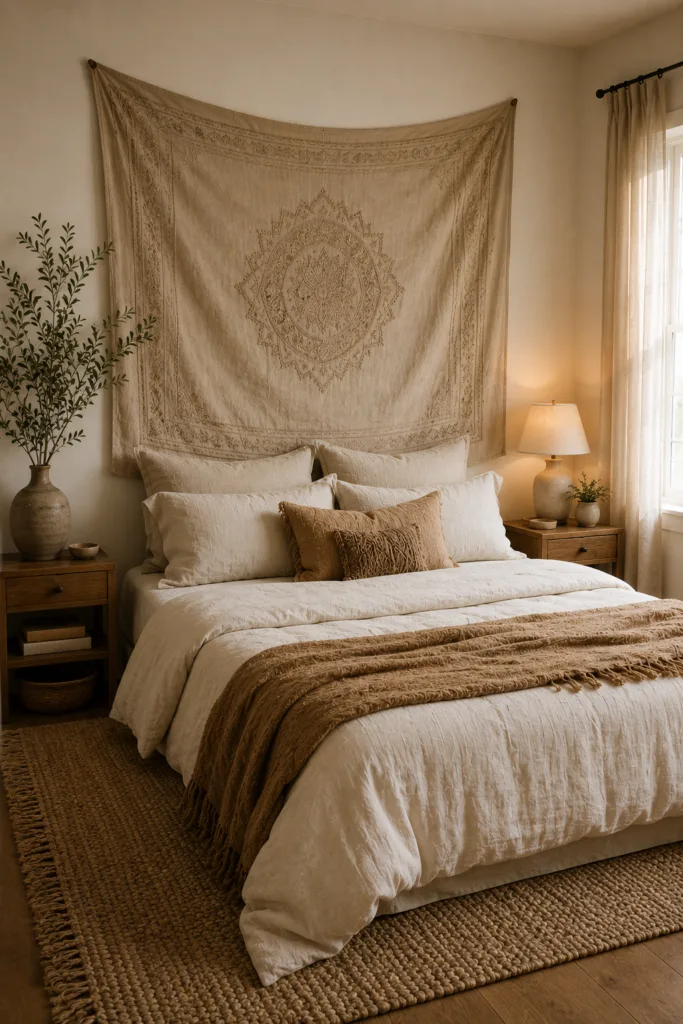
6. Add a Large Tapestry Behind the Bed
A tapestry can create warmth and visual interest without the weight of a traditional headboard. I experimented with this idea in a rental apartment where permanent changes were not allowed. The fabric instantly softened the room and added texture to an otherwise plain wall. Tapestries come in countless patterns and colors, making them easy to customize for different styles. They are also affordable compared to furniture. The lightweight material creates a relaxed and inviting atmosphere while still giving the bed area a defined and intentional appearance.
7. Position the Bed Under a Window
Placing the bed beneath a window can be surprisingly effective when there is no headboard. I was hesitant at first, but the natural light became the main feature of the room. The window frame acted as a visual backdrop while allowing the space to feel open and airy. Sheer curtains helped soften the look and made the bedroom feel brighter throughout the day. This layout works especially well in smaller rooms where furniture placement options are limited. Instead of blocking the window with a large headboard, the natural view becomes part of the design.
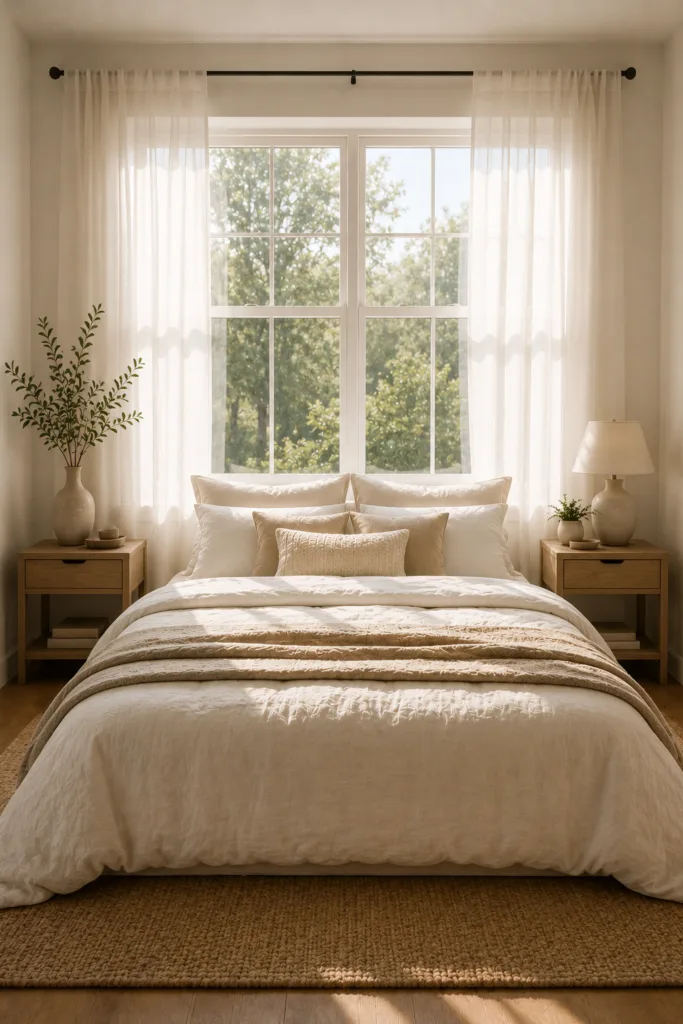
8. Create Symmetry with Matching Nightstands
Without a headboard, balance becomes more important. One trick I frequently use is placing matching nightstands and lamps on both sides of the bed. This creates structure and symmetry that keeps the room feeling intentional. The eye naturally focuses on the balanced arrangement rather than noticing the absence of a headboard. I found that even simple nightstands can create a polished designer look when paired with matching lighting. This idea works in almost every bedroom style and helps make the bed feel grounded within the overall room design.
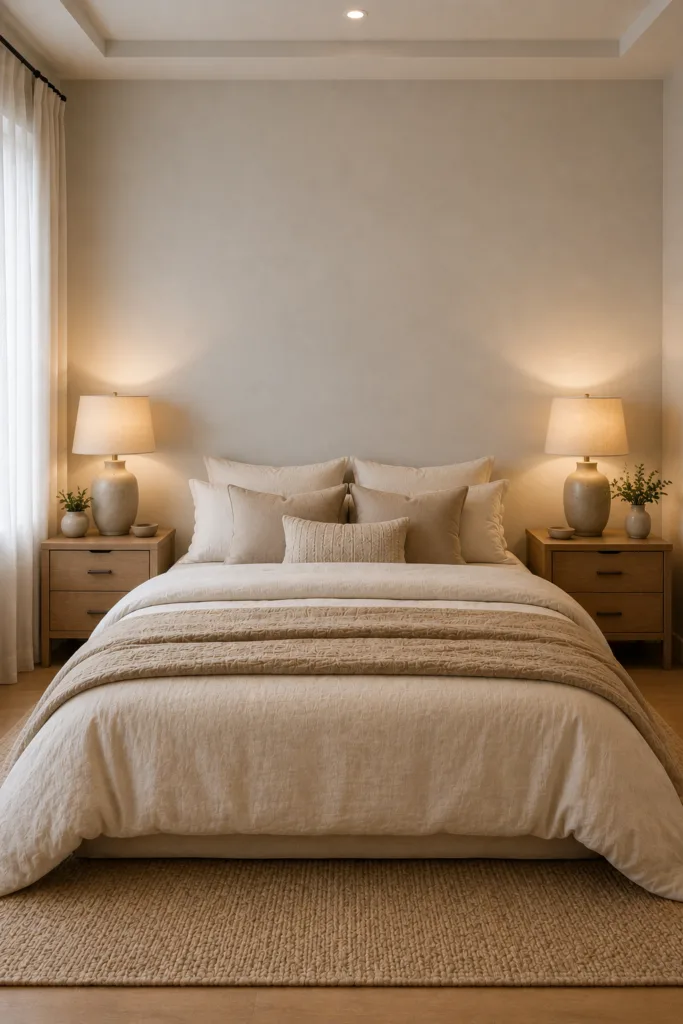
9. Use a Large Area Rug for Definition
A large area rug can help anchor a bed when there is no headboard present. I noticed that adding a generously sized rug made the entire sleeping area feel more complete. The rug visually defines the bed zone and adds softness underfoot, making the room more comfortable. Choosing a rug with subtle texture or pattern can introduce extra interest without overwhelming the space. It also helps tie together bedding, furniture, and wall colors. This simple addition can make a no-headboard bedroom look thoughtfully designed and professionally styled.
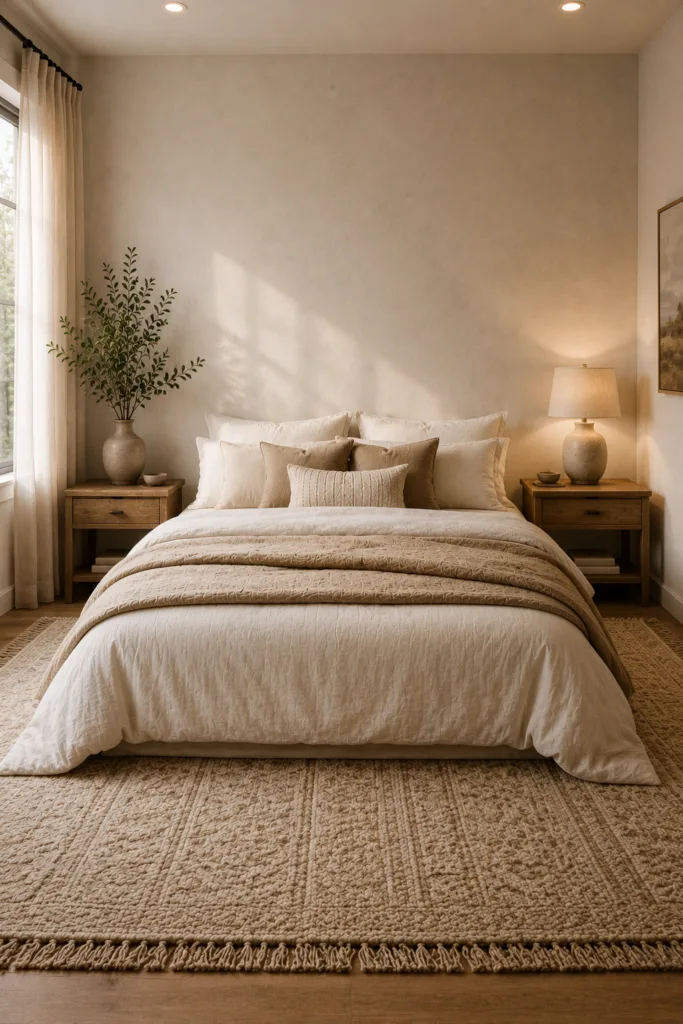
10. Hang Floating Shelves Above the Bed
One idea that completely changed the look of my no-headboard bedroom was adding floating shelves above the bed. Instead of a bulky furniture piece, the shelves provided both style and function. I used them to display small plants, framed photos, candles, and a few favorite books. The arrangement made the room feel personal without creating clutter. Because the shelves were mounted on the wall, the floor space remained open and airy. This setup is especially useful in smaller bedrooms where maximizing storage matters. The finished look felt modern, organized, and much more customized than a traditional headboard.
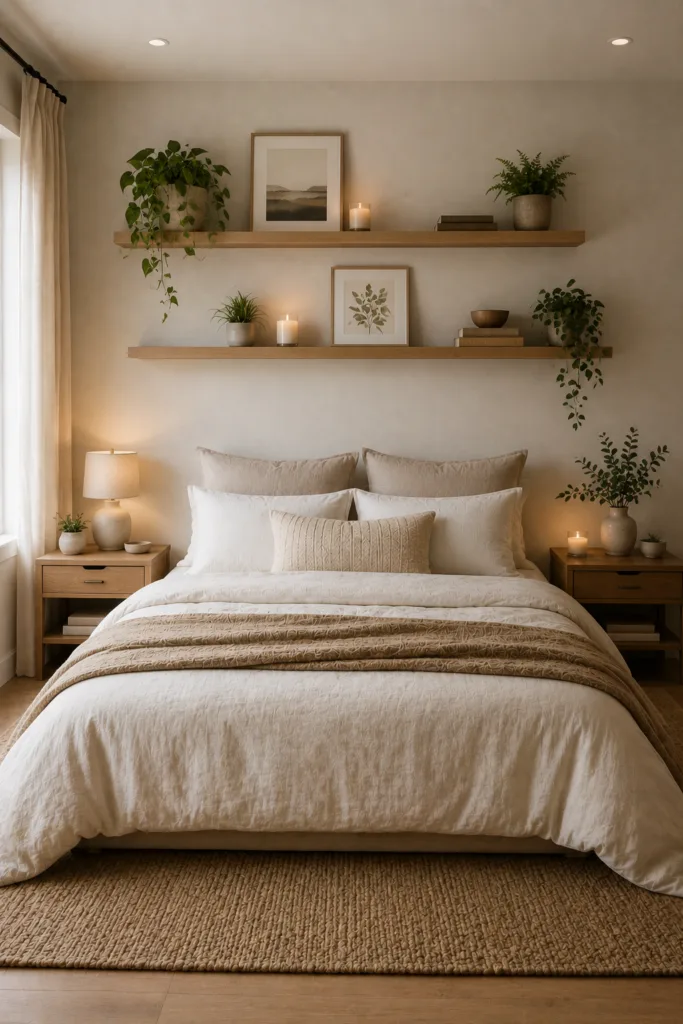
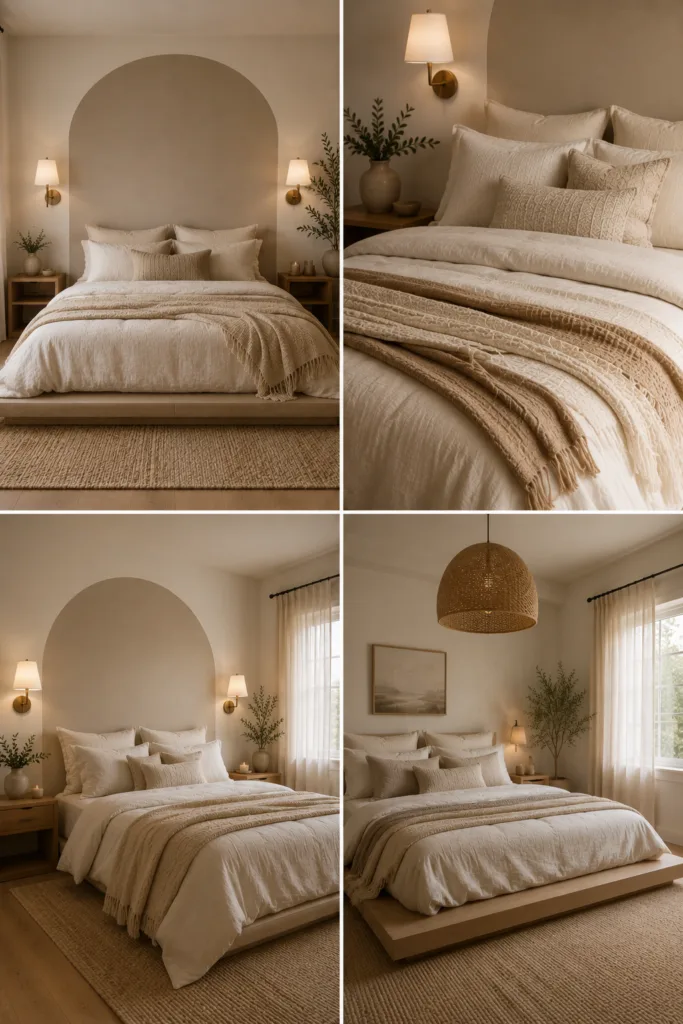
11. Try a Painted Arch Behind the Bed
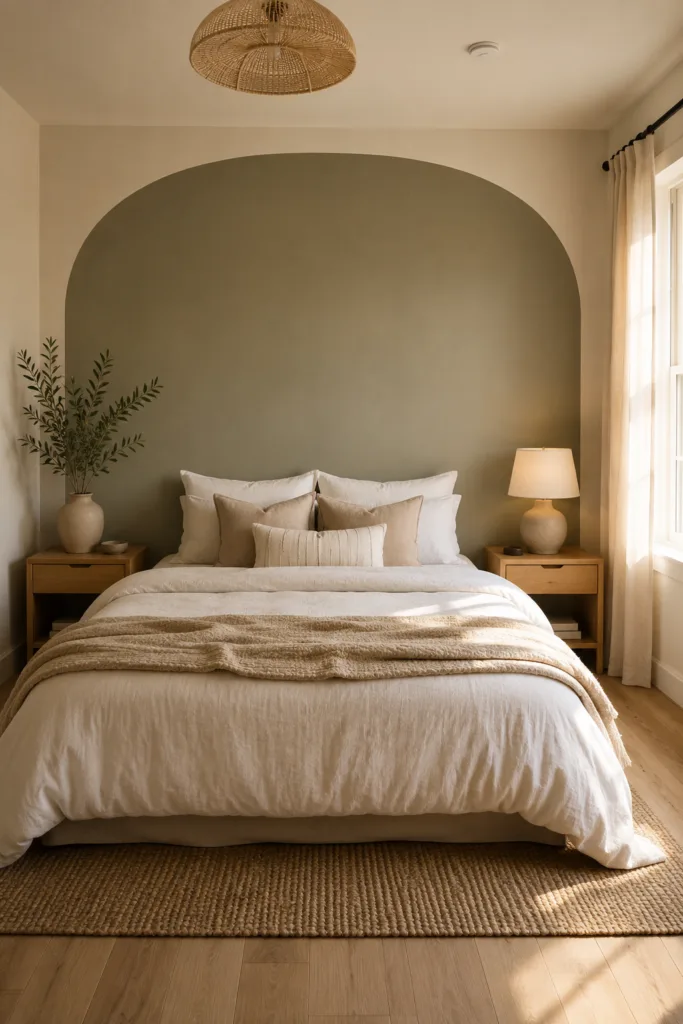
A painted arch is one of the easiest DIY alternatives to a headboard that I have tried. By painting a large arch shape behind the bed, I created a focal point that instantly made the room look more designed. The best part is that it costs very little compared to buying furniture. Soft earth tones, muted greens, and warm beige shades work particularly well. The painted shape visually frames the bed and gives it presence. Even guests often assume it was professionally designed. This simple trick adds character while keeping the room clean and uncluttered.
12. Layer Different Bedding Textures
When there is no headboard, the bed itself becomes the star of the room. I found that layering different bedding textures made a huge difference. Linen sheets, chunky knit throws, quilted blankets, and textured cushions all add visual depth. Instead of relying on furniture for style, the fabrics create warmth and interest. This approach also makes the room feel more inviting and comfortable. During colder months, the extra layers add coziness, while lighter fabrics work beautifully in summer. The result is a bedroom that feels luxurious and thoughtfully styled without needing a traditional headboard.
13. Add Wall Sconces for a Hotel-Like Feel
Wall-mounted sconces became one of my favorite additions after removing a headboard. They create a sophisticated hotel-inspired look while freeing up space on bedside tables. I installed matching sconces on both sides of the bed, and the room immediately felt more polished. The lighting highlighted the bed area and made it feel intentional. Adjustable sconces are especially practical because they provide focused reading light. Since they are mounted directly on the wall, they help create visual structure around the bed. This small upgrade delivers a surprisingly high-end appearance without taking up valuable space.
14. Embrace a Low Platform Bed
A low platform bed naturally complements a no-headboard design. I noticed that lowering the visual height of the bed made the room feel larger and more contemporary. The simple profile creates a relaxed atmosphere that works beautifully in modern and minimalist interiors. Without a headboard extending upward, the room feels more open and less crowded. Pairing the platform bed with soft bedding and simple decor keeps the design balanced. This setup is particularly effective in rooms with lower ceilings because it creates the illusion of additional height and openness throughout the space.
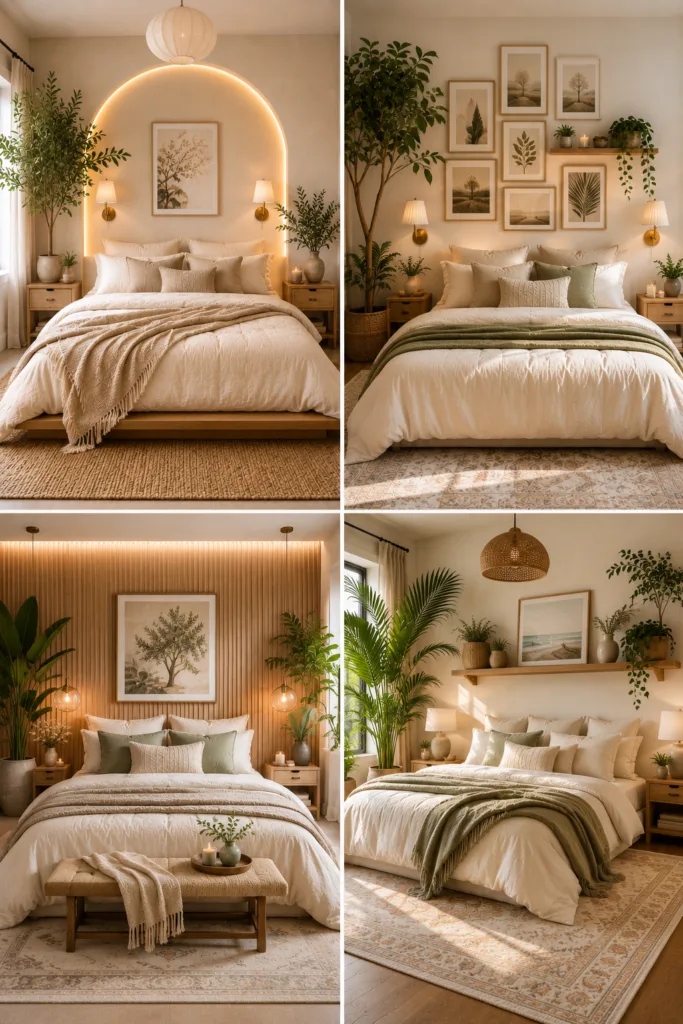
15. Decorate with Large Indoor Plants
Adding large indoor plants near the bed helped fill visual space without needing a headboard. I placed a tall plant in one corner and immediately noticed how much life it brought to the room. Plants introduce natural texture, color, and freshness while making the bedroom feel more welcoming. Species like fiddle leaf figs, olive trees, or rubber plants work especially well. The greenery softens hard lines and creates a calming atmosphere. Even a single oversized plant can become a focal point. This idea is perfect for anyone wanting a more organic and relaxing bedroom environment.
16. Use a Gallery Wall as the Backdrop
Instead of one large piece of artwork, I once created a gallery wall behind the bed. The collection of frames added personality and visual interest while completely replacing the need for a headboard. I mixed photographs, artwork, and meaningful prints to create a unique display. The arrangement became a conversation piece whenever visitors saw the room. Because the gallery wall stretched wider than the bed, it made the entire space feel larger. This approach allows endless customization and can easily evolve over time as new pieces are added to the collection.
17. Add Vertical Wood Slats
Vertical wood slats create a stunning architectural feature without requiring a traditional headboard. I used this idea in a modern bedroom and was amazed by the transformation. The slats extended from floor to ceiling, creating height and texture behind the bed. Natural wood tones added warmth while maintaining a clean contemporary appearance. The vertical lines also made the ceiling appear taller. Unlike a standard headboard, the design felt custom and high-end. This solution works especially well in modern and Scandinavian-inspired bedrooms where simple materials and clean lines play an important role.
18. Keep the Color Palette Soft and Cohesive
One lesson I learned from designing no-headboard bedrooms is that color becomes even more important. A soft, cohesive palette helps the room feel intentional rather than unfinished. I prefer using shades of beige, cream, warm gray, and soft green because they create a peaceful atmosphere. When the bedding, walls, curtains, and accessories share similar tones, the room feels harmonious and balanced. Without a headboard acting as a focal point, the overall color scheme takes center stage. This creates a calming environment that feels elegant, timeless, and incredibly relaxing.
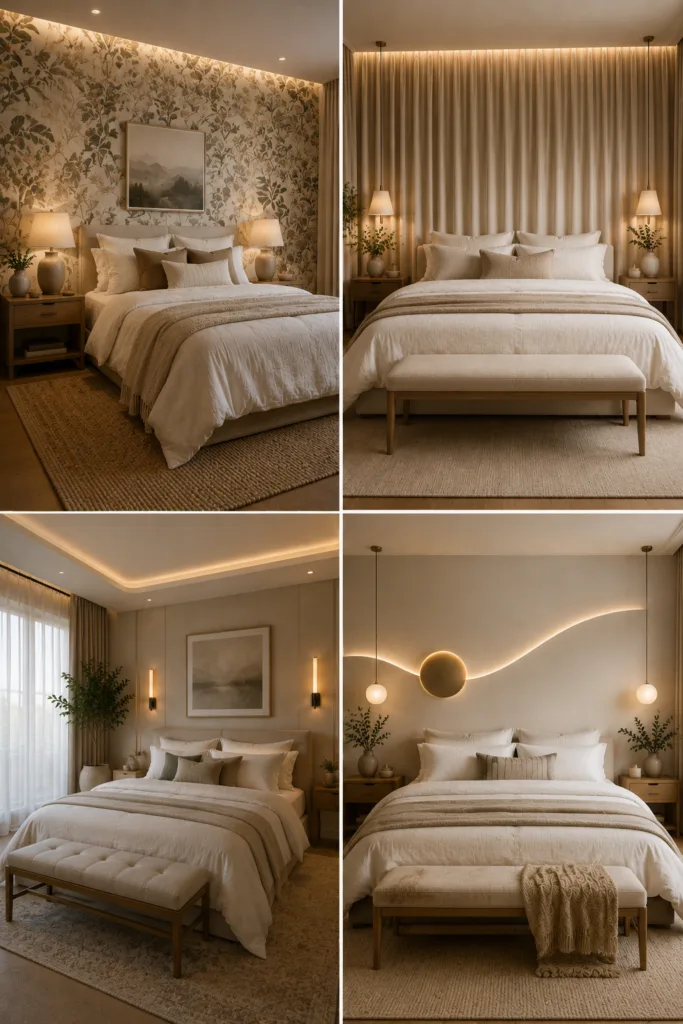
19. Create a Feature Wall with Wallpaper
Wallpaper can easily replace a headboard while adding personality to the bedroom. I tried this in a spare room and was impressed by how much impact it created. A patterned, textured, or subtly printed wallpaper behind the bed naturally draws attention and makes the space feel complete. Since the wall becomes the focal point, there is no need for additional bulky furniture. I especially like botanical prints and soft textured designs because they add character without overwhelming the room. This solution is ideal for anyone wanting a stylish bedroom update that feels both modern and unique.
20. Use Floor-Length Curtains as a Backdrop
One creative idea I experimented with was hanging floor-length curtains behind the bed. The soft fabric created a cozy and luxurious feeling that reminded me of boutique hotels. The curtains added texture and warmth while visually framing the bed area. Light linen fabrics created an airy atmosphere, while velvet curtains delivered a richer, more dramatic look. This approach also helped soften the room acoustically, making the space feel quieter and more relaxing. The layered fabric effect transformed an ordinary wall into a beautiful feature without requiring any permanent structural changes.
21. Add a Bench at the Foot of the Bed
Although it doesn’t replace a headboard directly, a bench at the foot of the bed helps balance the room when no headboard is present. I noticed that the bed looked more intentional and complete after adding a simple upholstered bench. It also provided a convenient place for sitting, dressing, or placing extra blankets. The additional furniture anchored the bed within the room without making the space feel crowded. Choosing a bench that complements the bedding and overall color palette creates a cohesive look that feels thoughtfully designed and visually balanced.
22. Incorporate Decorative Wall Lighting
Decorative wall lighting can transform a plain wall into a striking design feature. I installed modern wall fixtures above the bed and found that they immediately added depth and character. During the evening, the lighting created beautiful shadows and a warm atmosphere that made the room feel inviting. Since there was no headboard competing for attention, the lights became a natural focal point. Whether you choose sleek modern fixtures or vintage-inspired designs, decorative lighting can add both function and style. It is one of the easiest ways to elevate a no-headboard bedroom.
23. Lean Large Artwork Against the Wall
Not every decorative element has to be mounted permanently. One of my favorite relaxed styling tricks is leaning oversized artwork directly against the wall behind the bed. The casual arrangement creates a modern and creative feel while adding visual interest. It is also perfect for renters because it avoids drilling holes into walls. Large framed prints, abstract canvases, or photography pieces work particularly well. The artwork adds scale and personality while keeping the room flexible. If you enjoy changing decor frequently, this approach allows easy updates whenever you want a fresh look.
24. Focus on Beautiful Bedding
Without a headboard, the bedding naturally becomes one of the most noticeable features in the room. I found that investing in quality bedding had a bigger impact than purchasing additional furniture. Crisp sheets, soft duvets, textured blankets, and coordinated pillows create an inviting focal point. Rich fabrics instantly elevate the overall appearance of the bedroom. Even a simple room can feel luxurious when the bed is beautifully styled. By treating the bedding as part of the decor rather than just a necessity, the entire space feels more polished and welcoming.
25. Keep the Space Open and Airy
One reason I continue to love no-headboard bedrooms is how open they feel. Removing a large furniture piece instantly creates a lighter and less crowded atmosphere. The room feels easier to move around in, and the visual simplicity promotes relaxation. I noticed that natural light flowed more freely throughout the space, making the bedroom appear larger than it actually was. This approach works especially well in apartments, guest rooms, and smaller homes. Sometimes the most effective design choice is simply removing unnecessary elements and allowing the room to breathe.
26. Mix Modern and Natural Materials
Combining natural textures with modern elements creates a balanced no-headboard bedroom design. I like pairing clean-lined furniture with woven baskets, wood accents, linen bedding, and ceramic decor. The contrast between sleek and organic materials adds warmth without requiring a traditional headboard. Natural materials make the room feel comfortable and welcoming, while modern pieces keep it looking fresh and current. This combination prevents the space from feeling too plain or overly decorated. The result is a timeless bedroom that feels both stylish and relaxed, making it easy to enjoy for years.
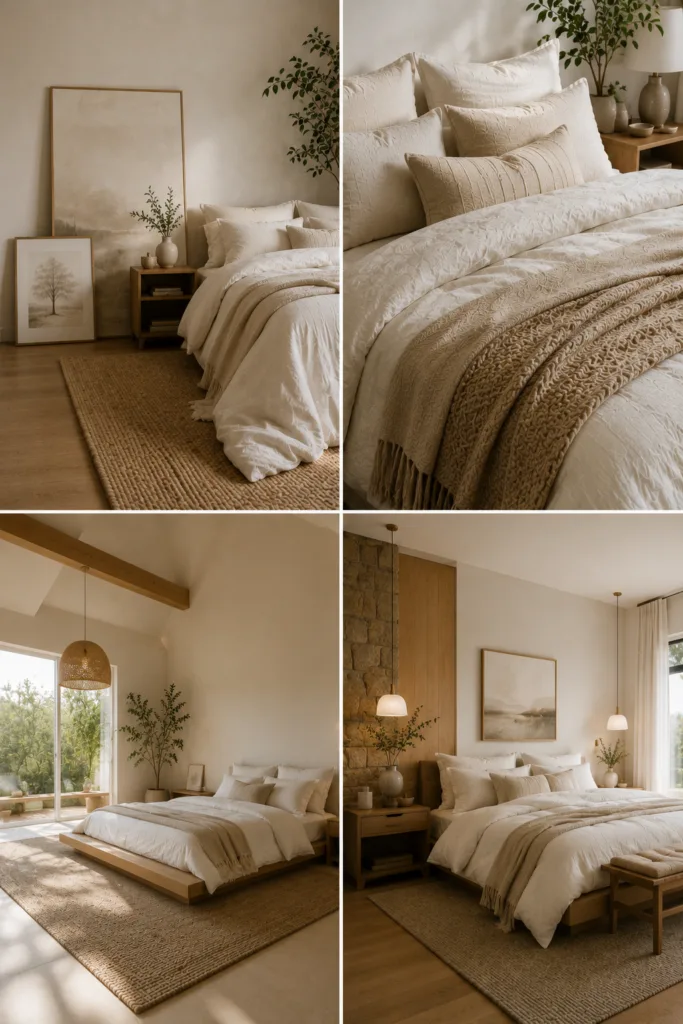
27. Let Simplicity Be the Statement
The biggest lesson I learned from no-headboard bedrooms is that simplicity can be incredibly powerful. At first, I thought removing the headboard would make the room feel incomplete. Instead, it allowed other design elements to shine. The space felt cleaner, calmer, and more intentional. By focusing on thoughtful details like lighting, bedding, color, and wall treatments, the room developed its own personality without relying on bulky furniture. Sometimes less truly is more. A simple, well-designed bedroom can feel far more elegant and inviting than one filled with unnecessary pieces.
Conclusion
No-headboard bedrooms are proving in 2026 that stylish design does not always require more furniture. From statement walls and oversized artwork to layered bedding and architectural details, there are countless ways to create a beautiful focal point without a traditional headboard. In my experience, removing the headboard often makes a bedroom feel larger, calmer, and more modern. Whether you prefer minimalist spaces, cozy retreats, or luxurious interiors, these ideas show that simplicity can be surprisingly sophisticated. Sometimes the best design decision is not adding something new—but confidently leaving something out.
SEO Meta Description:
Discover 27 no headboard bedroom ideas for 2026 that prove you don’t need bulky furniture for a stylish space. From statement walls and cozy bedding to modern decor tricks, these creative ideas make any bedroom feel larger, calmer, and beautifully designed.