

Sage green has a way of making a living room feel different without completely taking over the room.
It isn’t as bold as emerald, as dark as forest green, or as predictable as beige. There is something softer about it. Depending on the shade and what you put around it, sage green can feel earthy, traditional, modern, cozy, or even a little vintage.
I’ve also found that sage is one of those colors that looks very different depending on the light. A shade that looks almost gray in the morning can look warmer and greener in the afternoon. That’s why I always recommend testing a paint sample in your actual room before committing to all four walls.
If you’re thinking about using sage green in your living room, you don’t necessarily have to repaint the entire space. A sofa, chair, curtains, artwork, or even a few cushions can introduce the color beautifully.
Here are 27 sage green living room ideas I’d consider.
1. Paint the Walls Soft Sage Green
If you want sage green to make a noticeable difference, start with the walls.
A soft, muted sage can create a beautiful background for cream furniture, natural wood, beige rugs, and warm lighting. I prefer slightly dusty versions because they tend to be easier to live with than very bright greens.
If the room gets plenty of daylight, you can usually go a little deeper. In a darker room, a lighter sage may work better.
Before painting everything, put large samples on different walls and watch them throughout the day.
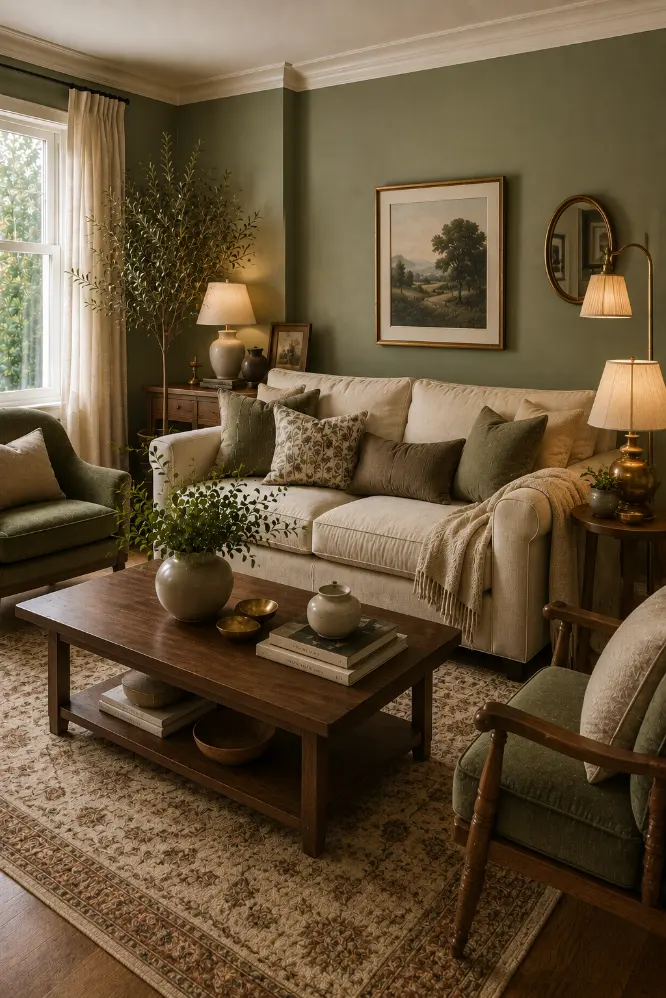
2. Pair Sage Walls With a Cream Sofa
One of the easiest combinations is sage green walls with a cream or ivory sofa.
The green provides enough color to make the room interesting, while the cream keeps everything feeling light.
Add a natural oak coffee table, beige rug, linen curtains, and a few warm ceramic pieces. You don’t need many additional colors because the sage and cream already give you a strong foundation.
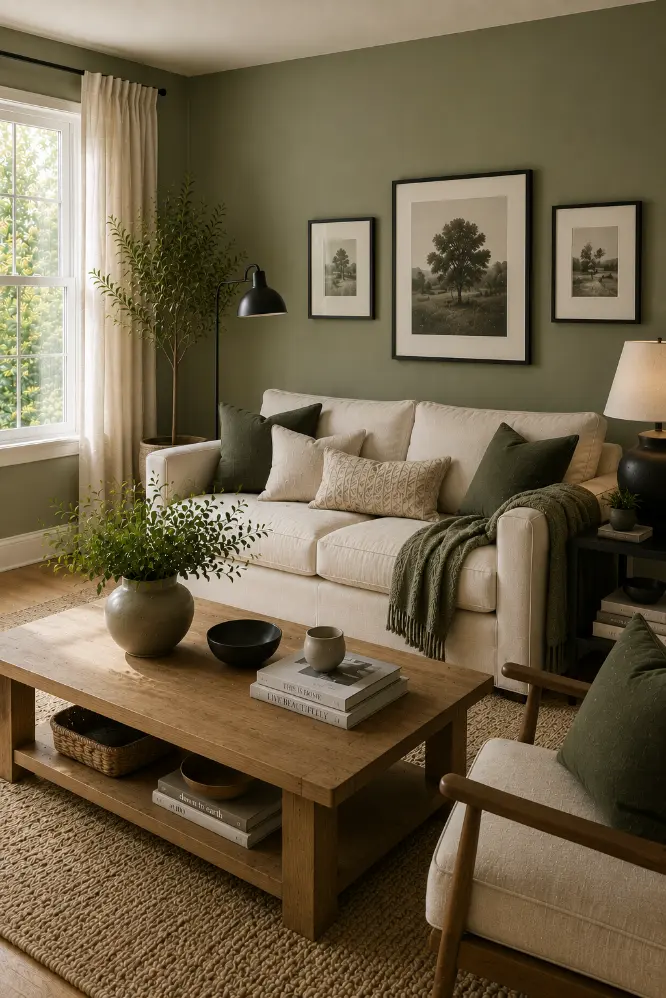
3. Try a Sage Green Sofa
You can also reverse the combination.
Keep your walls warm white or cream and let a sage green sofa become the focal point.
This works particularly well if you don’t want to commit to painting. A muted sage sofa looks beautiful with natural wood, oatmeal textiles, cream cushions, and black or brass accents.
I’d avoid matching every accessory to the sofa. Let the green appear in one main place and keep everything else relaxed.
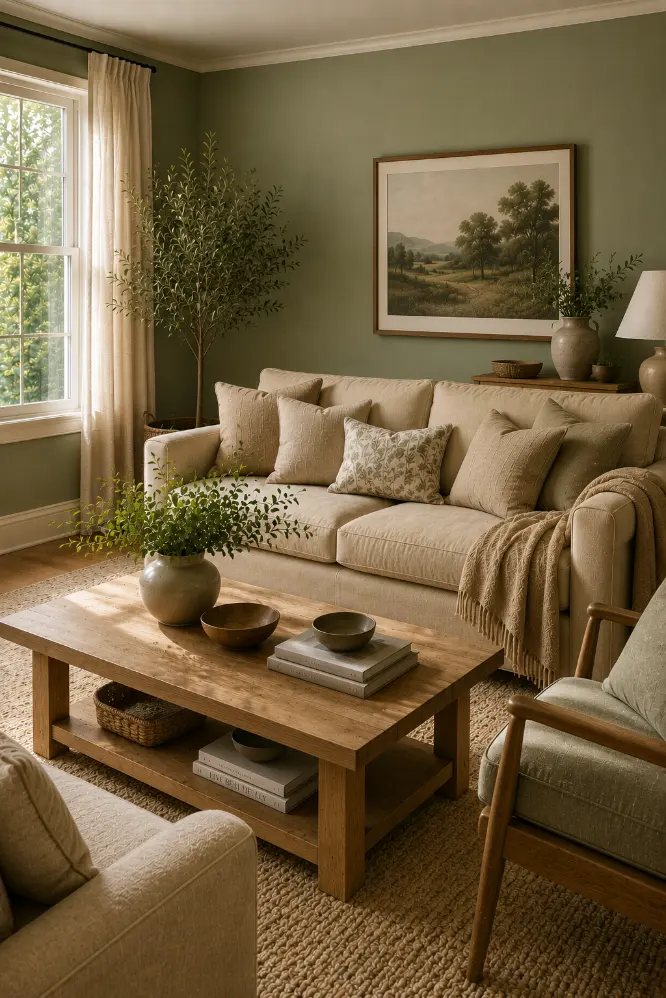
4. Add a Sage Accent Chair
A sage accent chair is an easy way to experiment with the color.
Place one beside a neutral sofa or near a window. Linen, cotton, or textured upholstery can make the color feel more natural.
If you already have a beige or cream living room, one sage chair can be enough to completely change the palette without requiring a major makeover.
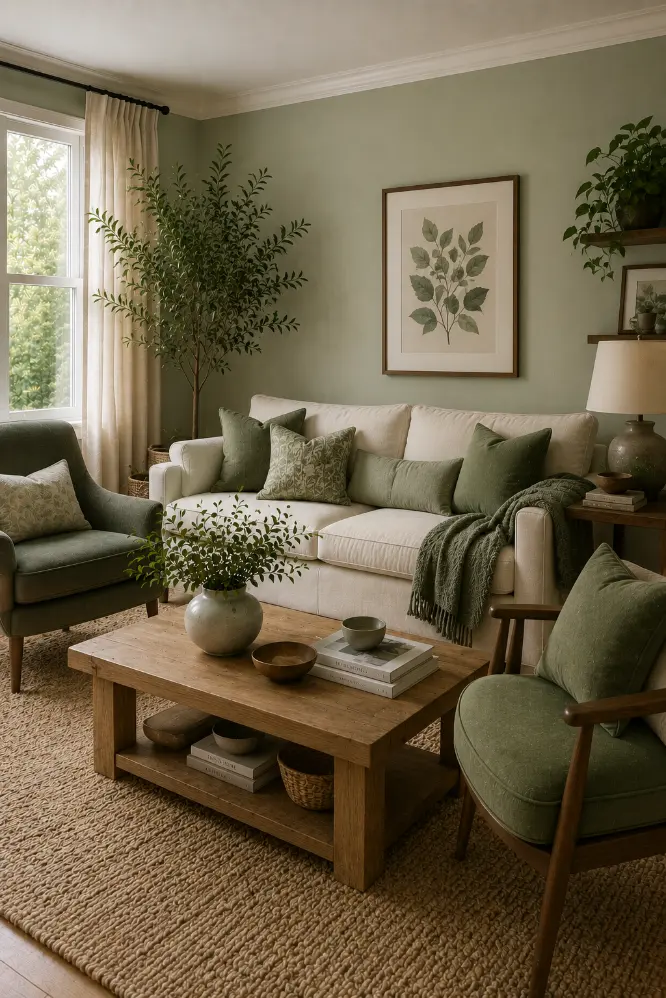
5. Combine Sage With Natural Wood
Sage green and natural wood are a particularly easy pairing.
Light oak makes sage feel fresh and airy, while walnut gives it a richer, more traditional appearance.
Try sage walls with an oak coffee table, wooden sideboard, or exposed wood shelving. The natural grain adds warmth and prevents the green from feeling flat.
You don’t have to make every piece of wood the same color, either. Slight variations often make the room feel more authentic.
6. Use Warm White Trim
If you’re painting your walls sage, consider keeping the trim warm white.
Creamy white baseboards, door frames, window trim, and ceilings can create a clean outline around the green without making the room feel too stark.
I generally prefer warm white here instead of an icy blue-white. It keeps the entire room warmer and works especially well with cream upholstery and natural wood.
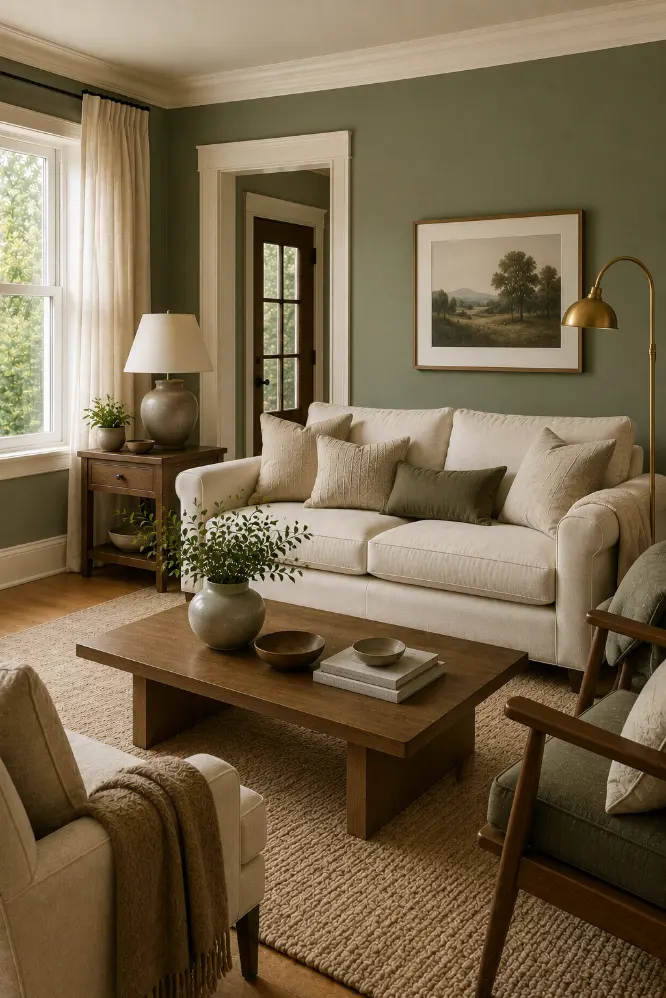
7. Layer Different Shades of Green
You don’t have to use exactly one green.
A pale sage wall can work with deeper olive cushions, muted green artwork, and natural leafy plants.
The trick is to vary the intensity rather than making everything identical.
Keep your larger pieces relatively neutral and let the different greens appear in smaller doses. This creates depth without turning the room into a single-color theme.
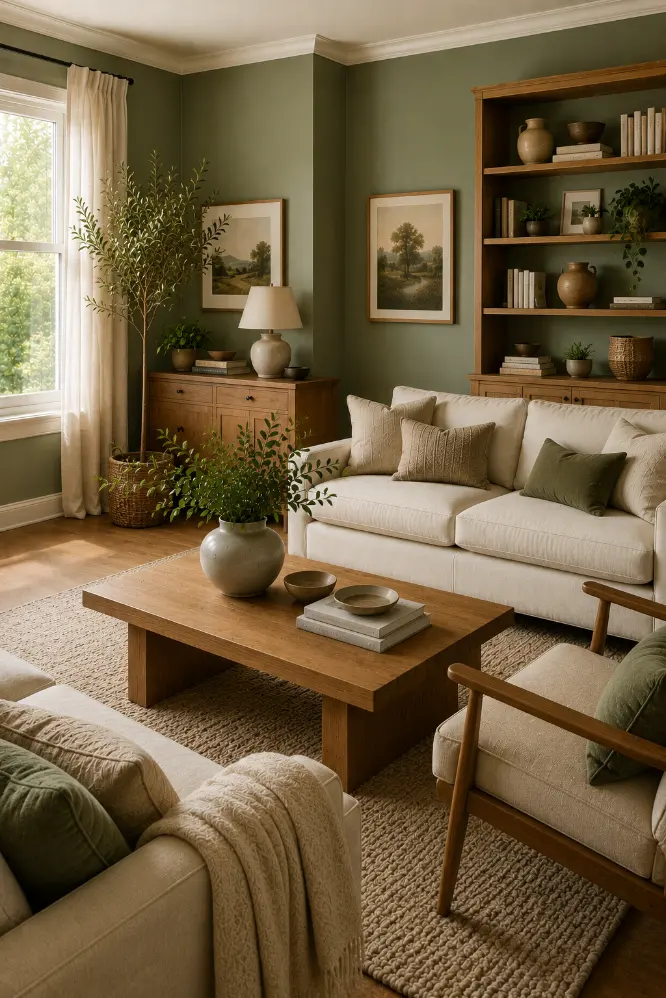
8. Mix Sage With Beige
Sage and beige create one of the calmest combinations you can use.
Imagine muted sage walls, a beige sofa, oatmeal rug, natural linen curtains, and light wood furniture.
Neither color competes with the other.
This is a particularly good option if you want a living room that feels earthy and comfortable rather than colorful or highly designed.
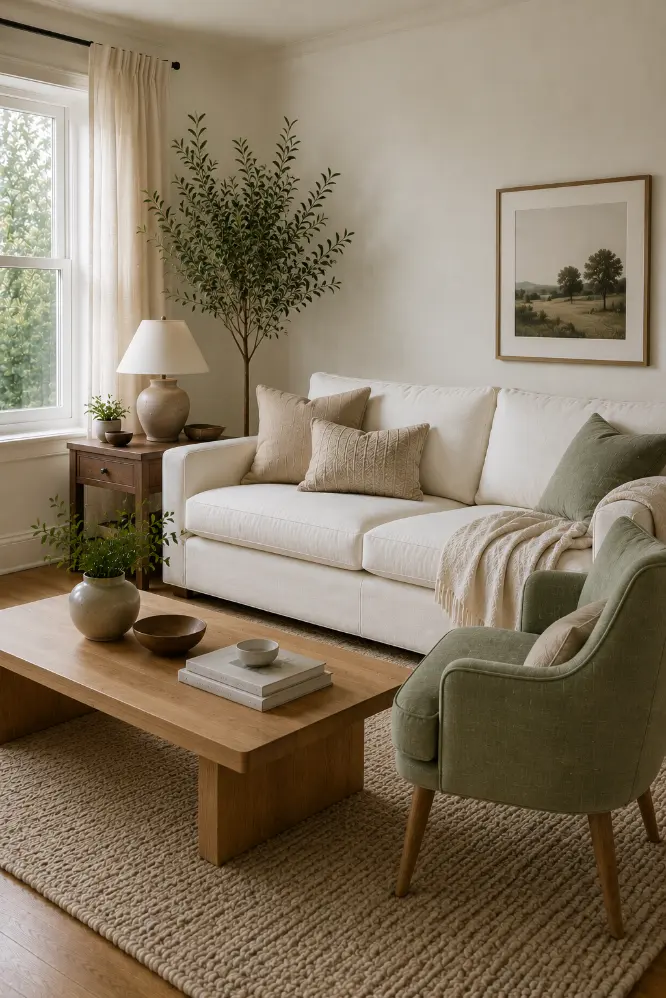
9. Add Small Black Accents
Sage can sometimes look too soft when surrounded entirely by light neutrals.
A few black accents can sharpen the room.
Try a slim black floor lamp, black picture frames, dark hardware, or a small black side table.
You don’t need much. In fact, I’d keep black limited to a handful of details so the room remains light and relaxed.
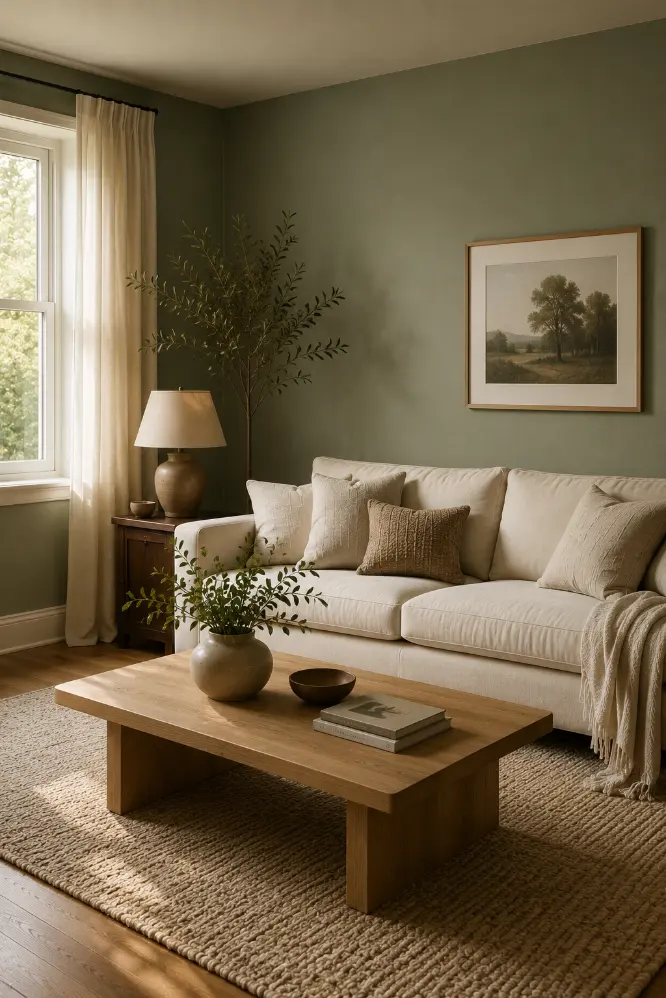
10. Bring in Aged Brass
For a more sophisticated sage living room, try aged brass.
A brass lamp, mirror frame, curtain rod, or small decorative object can look beautiful against green.
I prefer aged or brushed brass because it has a softer appearance than highly polished gold.
Combine it with walnut, cream upholstery, and traditional artwork for a room that feels warm and slightly collected.
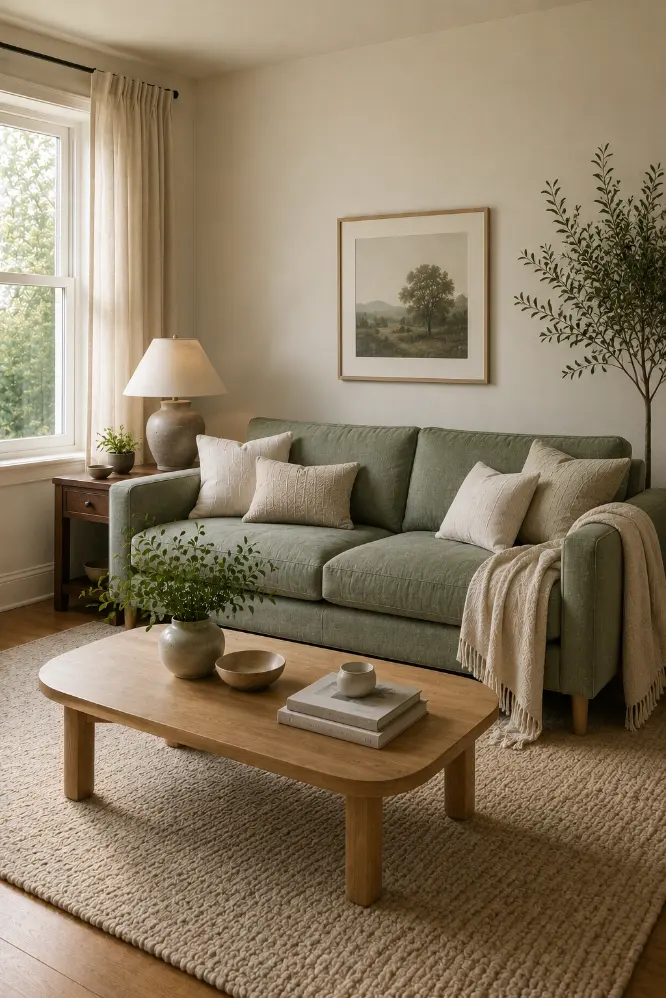
11. Create a Sage Fireplace Wall
A fireplace already creates a natural focal point, so it can be a great place to use sage.
Paint the wall around the fireplace in a muted green and keep the fireplace surround cream, white, or natural stone.
Add a simple wood mantel and one large piece of artwork rather than covering the entire area with accessories.
The green gives the architecture more presence without requiring a dramatic decorative treatment.
12. Paint Built-In Shelves Sage
Built-in shelves can look completely different when painted sage green.
You could paint the entire unit, including the back panels, for a rich architectural effect.
Then use cream ceramics, natural wood objects, books, framed artwork, and a little greenery against the green background.
Because the shelves already provide structure, you don’t need to overdecorate them.
13. Try Sage With Terracotta
If sage feels a little too cool, add a touch of terracotta.
The warm reddish-orange undertone creates a beautiful contrast with muted green.
You could introduce terracotta through a ceramic vase, cushion, artwork, or small upholstered stool.
Keep it subtle. One or two warm accents are enough to make the green feel noticeably warmer.
14. Use Sage Green Curtains
Curtains can introduce a surprising amount of color.
If you have warm white walls, try muted sage linen curtains around the windows. They’ll soften the room while creating a stronger connection between the walls, furniture, and accessories.
Natural linen is especially nice because the slight variation in the fabric keeps the green from looking completely flat.
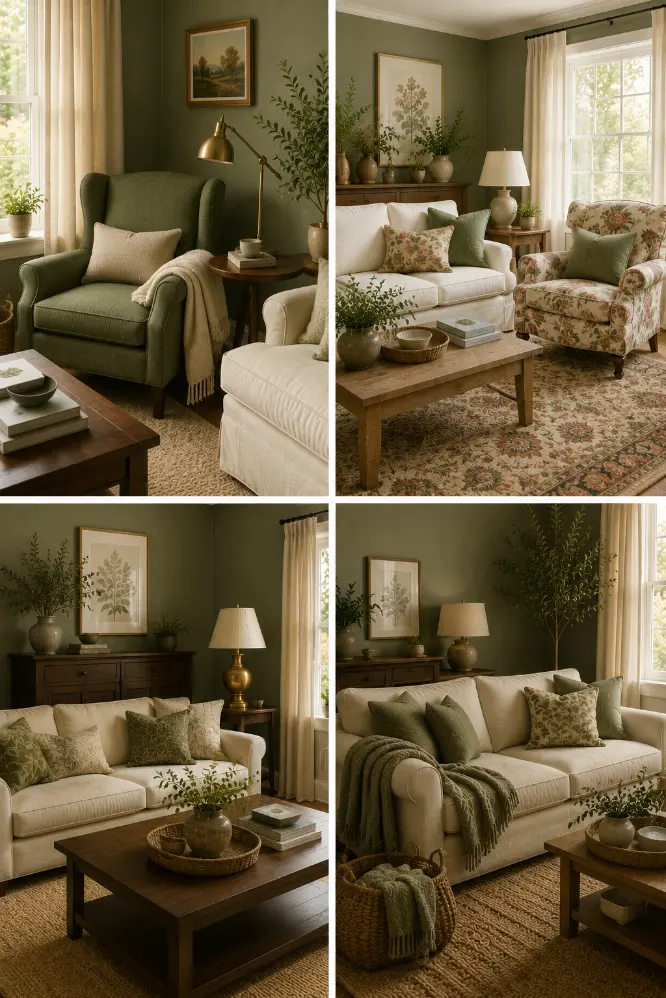
15. Add Sage Cushions
If you’re not ready for a larger change, start with cushions.
A cream or beige sofa gives you plenty of freedom.
Add two or three sage cushions, preferably in different textures. One could be linen, another woven, and another perhaps a subtle pattern.
Don’t worry about making every cushion match. Small differences make the arrangement look more natural.
16. Pair Sage With Dusty Blue
Sage green and dusty blue can create an exceptionally calm palette.
The key is choosing muted versions of both colors.
Try sage walls with dusty blue artwork or an accent chair, then use cream and natural wood to connect the two shades.
Bright blue would create a completely different mood, so keep the blue soft if you’re after a relaxed living room.
17. Bring in Botanical Artwork
Sage naturally works with botanical artwork.
A vintage botanical print, leafy illustration, or soft floral painting can reinforce the green without making the room feel overly themed.
One large botanical artwork can actually be more effective than several small pieces.
Use a natural wood or aged frame if you want the room to feel more relaxed and collected.
18. Pair Sage With Warm Gray
Warm gray can be surprisingly beautiful with sage.
The important part is choosing a gray with some warmth rather than a strongly blue-based gray.
A warm gray sofa against sage walls, combined with cream curtains and pale oak, can create a sophisticated transitional living room.
If the combination starts looking too cool, bring in more wood and warmer lighting.
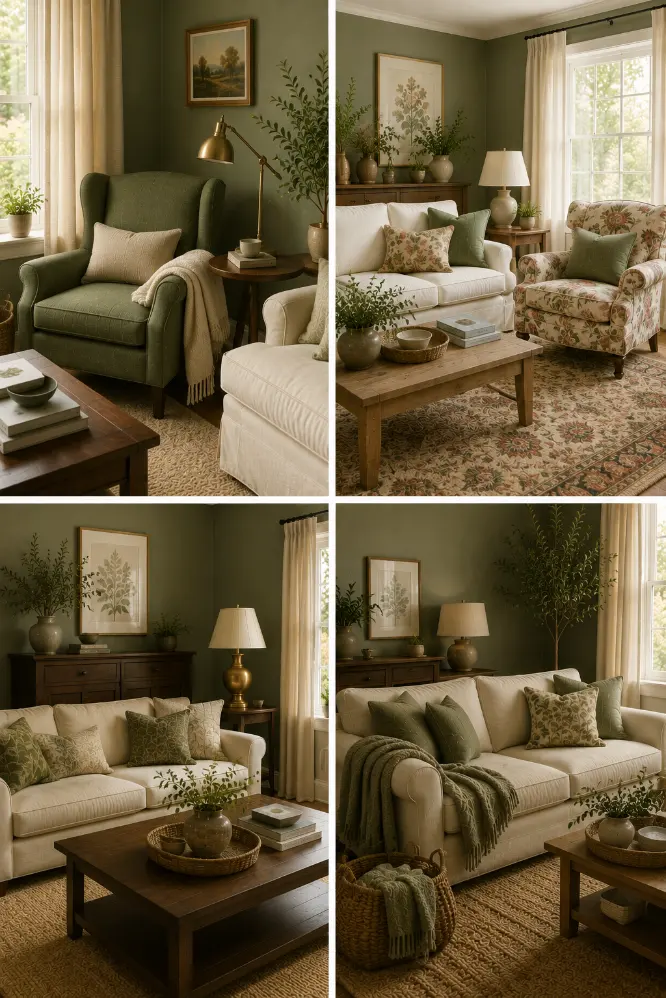
19. Try a Deeper Sage Accent Wall
You don’t always have to use pale sage.
A deeper, dusty sage can create a dramatic accent wall while remaining softer than a very dark green.
I’d use it behind the sofa, fireplace, or television.
Then keep the remaining walls and larger furniture lighter. This gives you the impact of a darker color without making the entire living room feel enclosed.
20. Use Sage in an Open-Plan Living Room
Sage can be useful in an open-plan home because it provides definition without feeling overwhelming.
For example, you could use sage on the living room walls while keeping an adjoining kitchen warm white and natural wood.
Then repeat a little sage in the cushions or artwork.
That small repetition helps the spaces feel connected without making everything look identical.
21. Mix Sage With Rattan and Woven Pieces
For a more relaxed, organic room, combine sage with woven materials.
Think rattan coffee tables, jute rugs, wicker baskets, woven lampshades, and natural linen.
A sage accent chair with a rattan table and cream sofa can feel wonderfully relaxed.
These materials also add texture, which is useful when your color palette is intentionally quiet.
22. Give Sage a Traditional Feel
Sage doesn’t have to look modern.
Pair it with dark wood, antique-style furniture, traditional rugs, brass lighting, and framed artwork for a more classic room.
A dusty sage works particularly well here because it has a slightly aged quality.
You can even mix modern upholstery with older-looking furniture. That combination often feels more authentic than trying to recreate a perfectly traditional room.
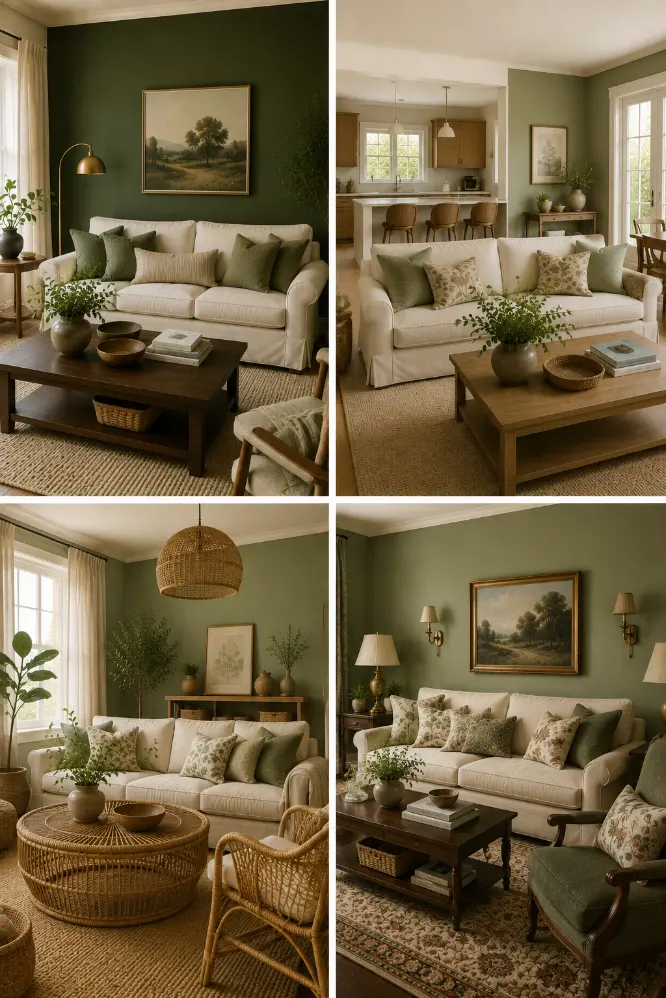
23. Create a Sage Reading Corner
A reading corner is a perfect place to introduce green without changing the whole room.
Try a sage upholstered chair beside a walnut side table with a warm brass lamp.
Add a small stack of books and a soft throw.
If the rest of the room is neutral, the chair becomes a subtle focal point without taking over the space.
24. Use Sage With Floral Fabrics
Sage and floral patterns naturally complement each other.
Look for fabrics containing muted green, cream, dusty rose, pale blue, or beige.
You might use the pattern on one accent chair or a couple of cushions.
I’d avoid putting the same floral pattern on every surface. One well-chosen patterned piece usually has more impact.
25. Pair Sage With Dark Wood
Light wood and sage create an airy combination, but dark wood gives the color a much richer personality.
Try a sage wall with a walnut coffee table, dark wooden sideboard, cream sofa, and brass lamp.
The darker furniture anchors the green and makes the room feel sophisticated.
This combination is especially beautiful in the evening when warm lamps are turned on.
26. Balance Sage With Plenty of Cream
If you’ve used quite a lot of green, cream is your friend.
Cream sofas, ivory curtains, light rugs, pale cushions, and white ceramics can break up larger areas of sage.
This keeps the color from becoming overwhelming.
It also makes the room easier to change later because cream works with almost any accent color.
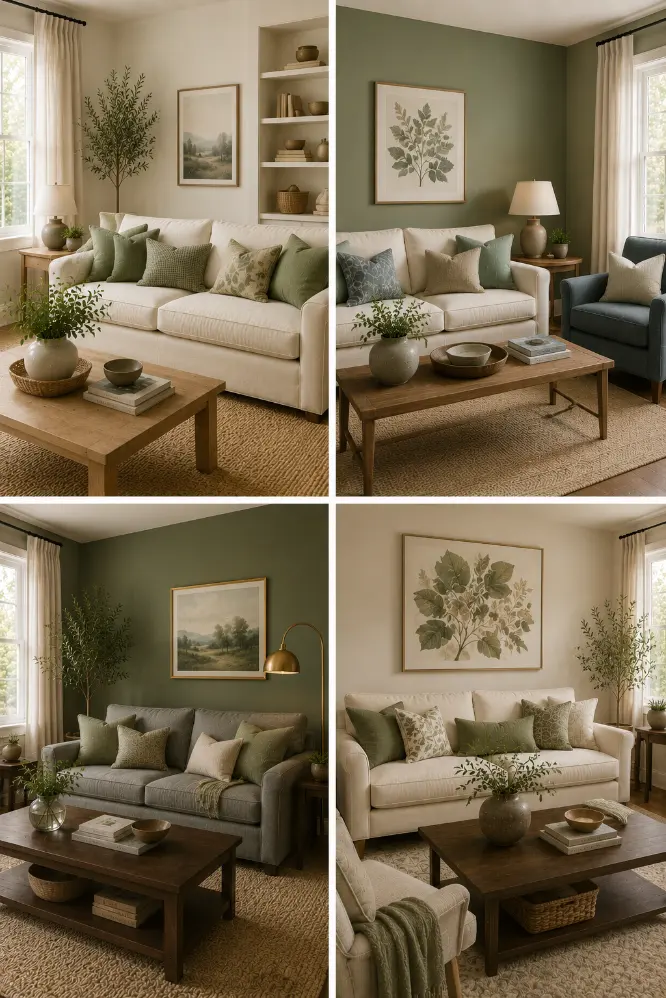
27. Let Sage Become the Quiet Background
My favorite approach might actually be the simplest one: don’t make sage the entire story.
Use it as a background that allows everything else to work.
A muted sage wall can sit behind warm wood, cream upholstery, books, artwork, ceramics, and plants without competing with them.
That’s the beauty of this color.
It has enough personality to make a room interesting, but it can remain quiet enough for the furniture and personal pieces to have their own moment.
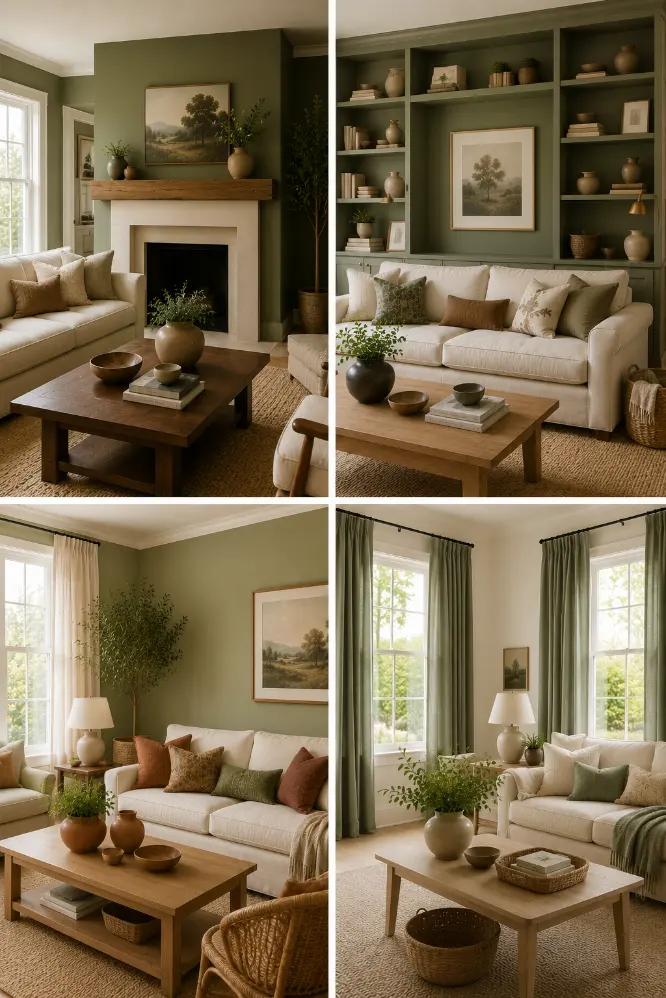
What Colors Go With Sage Green in a Living Room?
If you’re trying to decide what to put beside sage, start with colors that naturally soften or warm it.
Cream and ivory make sage feel light and timeless.
Beige and taupe create an earthy, relaxed combination.
Natural oak gives it an organic appearance.
Walnut makes it richer and more traditional.
Dusty blue creates a cool, peaceful palette.
Terracotta adds warmth and contrast.
Black gives sage a more modern edge.
Brass makes it feel elegant and slightly vintage.
Blush pink can soften the green and make the room feel warmer.
You don’t need all of these together. Pick one main combination and perhaps one smaller accent.
Is Sage Green Too Dark for a Living Room?
Not necessarily.
The shade matters much more than simply calling a color “sage.”
A pale gray-green can make a small room feel airy, while a deeper earthy sage can create a cozy atmosphere.
Lighting matters too.
A room with large windows can usually handle more color than a north-facing room with limited natural light.
If you’re uncertain, sample the paint first. Look at it in the morning, afternoon, and after your lamps are switched on at night.
That’s the easiest way to avoid choosing a color that looks completely different once it’s actually on your walls.
How Do You Make a Sage Green Living Room Feel Cozy?
If your sage room feels a little flat or cool, focus on materials rather than adding more color.
Bring in:
- Natural wood
- Cream upholstery
- Beige wool rugs
- Linen curtains
- Woven baskets
- Aged brass
- Warm lamps
- Chunky throws
- Ceramic accessories
- Plants
- Vintage or slightly worn furniture
Texture makes a huge difference.
A sage wall beside a smooth white sofa can look quite simple. Add a wool rug, linen curtains, a knitted throw, wood grain, ceramic pottery, and warm lighting, and suddenly the same color feels much richer.
Should You Paint All Four Walls Sage Green?
You can, but you don’t have to.
If your room is reasonably bright and you love the color, four sage walls can look beautiful.
For a smaller or darker living room, you may prefer using sage on one wall and keeping the remaining walls warm white or cream.
Another option is to use sage on architectural features such as built-ins, a fireplace wall, or the lower half of the walls.
There isn’t one correct approach. The right amount depends on the size of your room, natural light, furniture, and how strongly you want the color to feature.
Final Thoughts
Sage green is one of those colors that rewards a little patience.
It can look gray, green, warm, cool, soft, or surprisingly deep depending on the light and the colors around it. That’s why I wouldn’t choose a shade based solely on a tiny paint card.
Start by deciding how much sage you actually want.
If you’re cautious, try cushions, artwork, curtains, or an accent chair. If you already know you love the color, painting the walls can create a much bigger transformation.
And when you’re choosing the rest of the room, don’t feel like everything needs to be green.
Cream, beige, natural wood, warm lighting, and a few darker accents are often all you need.
The best sage green living rooms aren’t the ones where the color appears everywhere. They’re the ones where sage feels like it naturally belongs—calm enough to live with every day, but interesting enough to keep the room from feeling ordinary.