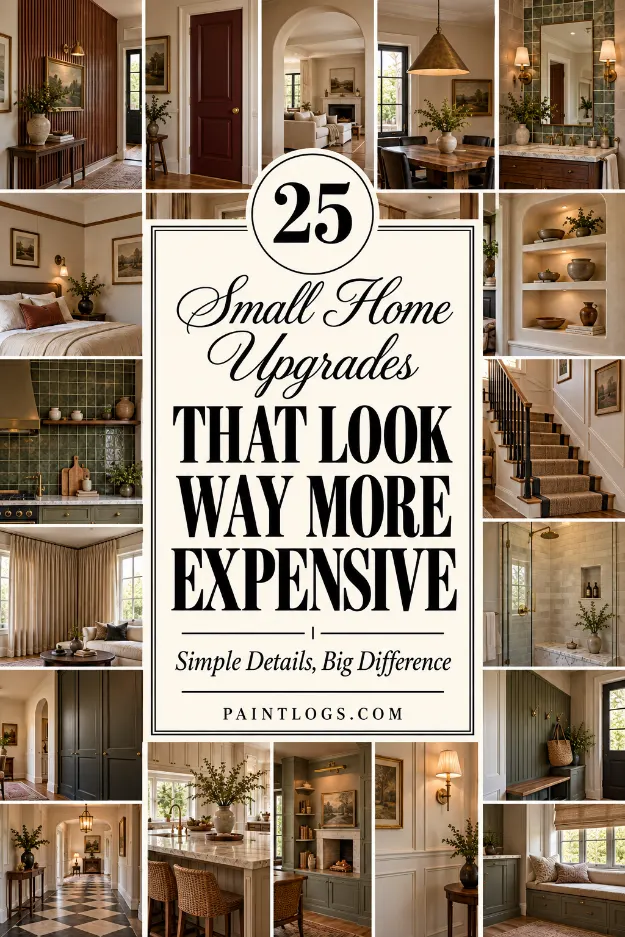
A home does not always need a major renovation to feel more expensive.
Sometimes one small architectural change makes a bigger difference than buying new furniture.
That is what I like most about these upgrades.
They are not about filling a room with more decor. They are about changing the way the room feels.
A painted door, a stone ledge, a picture rail, a tiled mirror surround, or one oversized pendant can make an ordinary space feel much more considered.
Some of these ideas are DIY-friendly. Others may need a carpenter, tiler, or electrician. But none of them require rebuilding an entire room.
The goal is simple:
Spend attention, not just money.
Here are 25 small home upgrades that can make a house look far more custom and expensive than it really is.
1. Add a Stone Ledge Under a Window
A basic painted windowsill can look completely different when you replace or cover it with stone.
I especially like this in kitchens, bathrooms, or dining rooms where the window is already part of the room’s focal area.
A slim piece of limestone, marble, or travertine can extend slightly beyond the wall and create a much more substantial look.
You do not need a dramatic slab.
Even a narrow ledge can make the window feel more architectural.
If I wanted the room to feel expensive without changing much else, this is one of the first details I would consider.
2. Paint Interior Doors in a Deep Contrasting Color
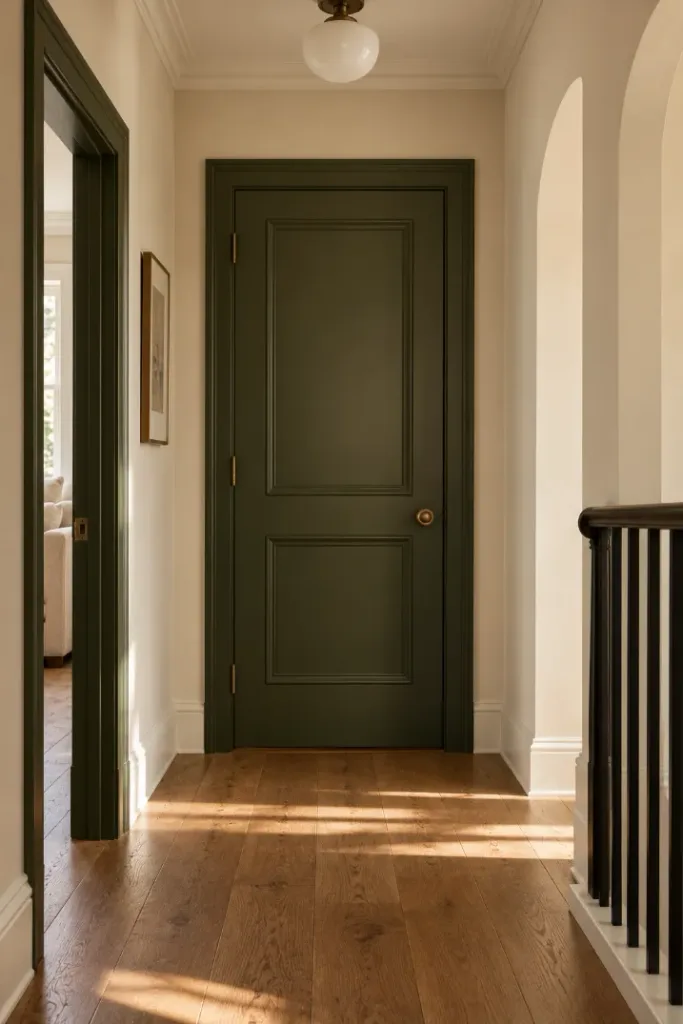
White doors are safe, but they can disappear into the background.
A darker door can make the whole room feel more intentional.
Deep olive, oxblood, charcoal, muted navy, or warm brown can work beautifully against lighter walls.
I would paint the door and sometimes the trim around it in the same color.
That creates a stronger, more custom effect.
You do not need to paint every door in the house.
One hallway, bedroom, or pantry door can be enough to create contrast.
The trick is to choose a color that feels rich rather than loud.
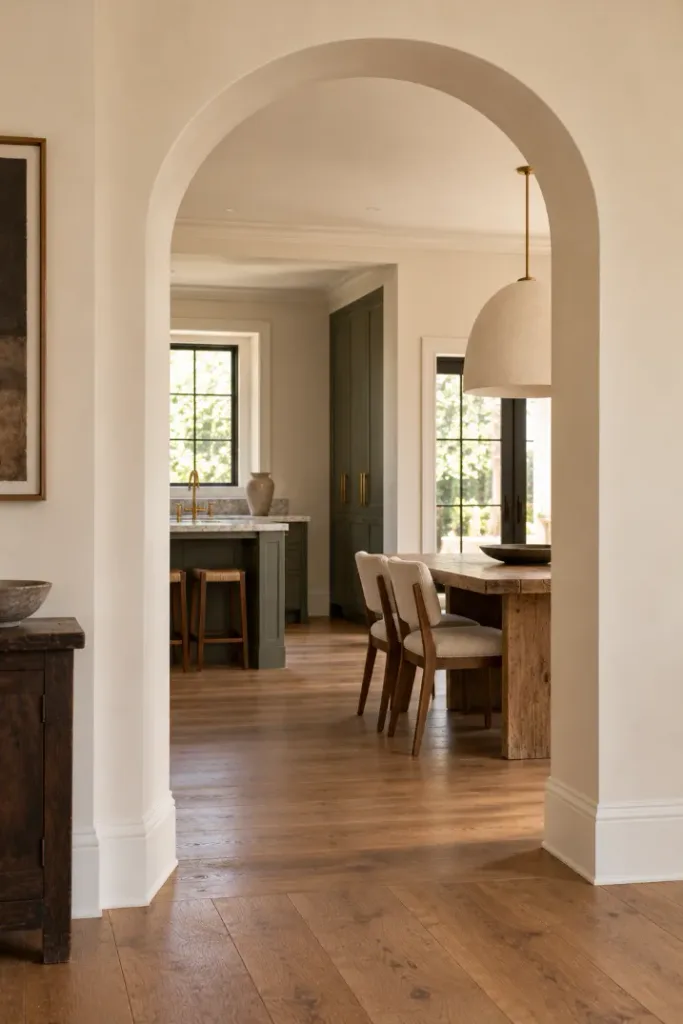
3. Replace a Basic Doorway With an Arched Opening
A square doorway is normal.
An arch immediately feels more architectural.
If the wall is non-structural and the opening can be altered safely, reshaping the top of a doorway can completely change the room.
I like soft rounded arches rather than overly decorative ones.
They work well between kitchens and dining rooms, hallways and living rooms, or bedrooms and dressing areas.
The best part is that the opening itself becomes decoration.
You do not need art, molding, or extra accessories around it.
The shape does the work.
4. Add a Thin Picture Rail Near the Ceiling
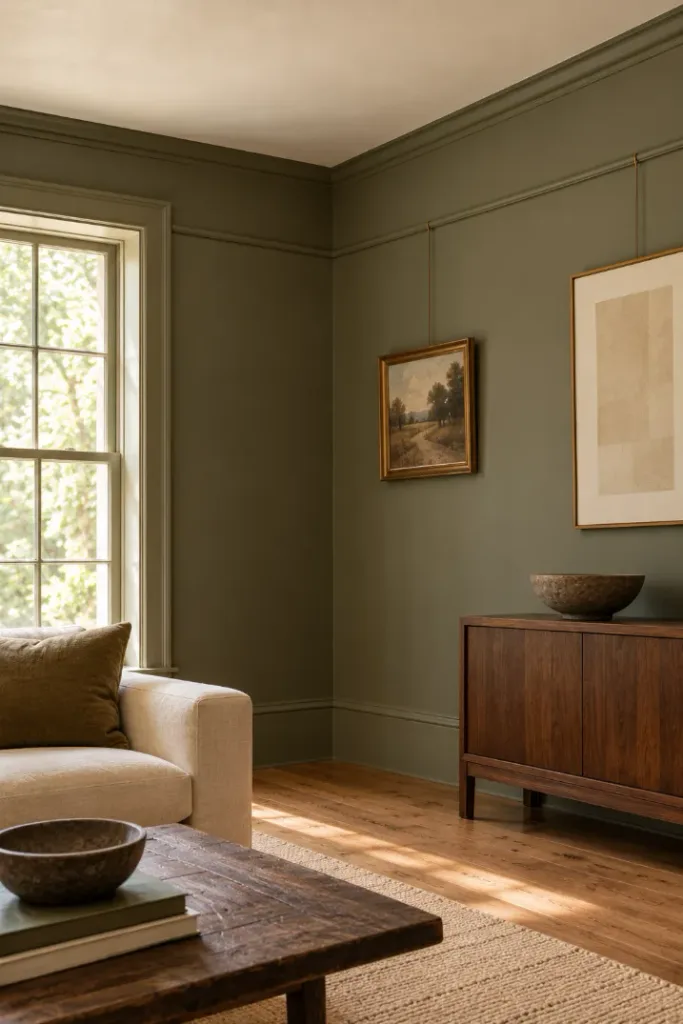
A picture rail can make plain walls feel more finished.
Install a slim molding a little below the ceiling and either paint it to match the wall or use a subtle contrast.
I like this because it creates an extra architectural line without the heaviness of full wall paneling.
In older-style rooms, you can hang art from the rail.
In simpler rooms, you can leave it empty and let the molding itself define the space.
It is a small detail, but it can make the wall look much more intentional.
5. Wrap a Bathroom Mirror With Matching Wall Tile
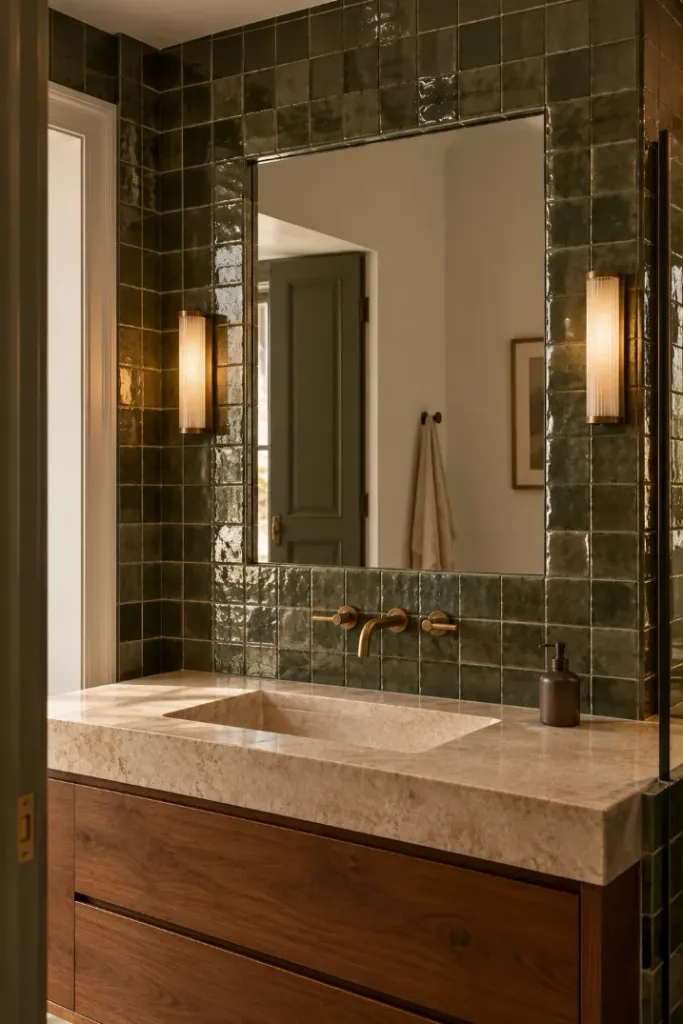
A mirror often looks like something added after the bathroom was finished.
One way to make it feel built in is to continue the wall tile around the mirror.
Instead of stopping the tile at the vanity, wrap it up and around the mirror so the mirror feels recessed inside the surface.
This works especially well with handmade square tile, zellige-style tile, or stone.
I would keep the mirror simple and frameless.
The tile becomes the frame.
It can make even a basic vanity look much more custom.
6. Use One Oversized Pendant Instead of Several Small Lights
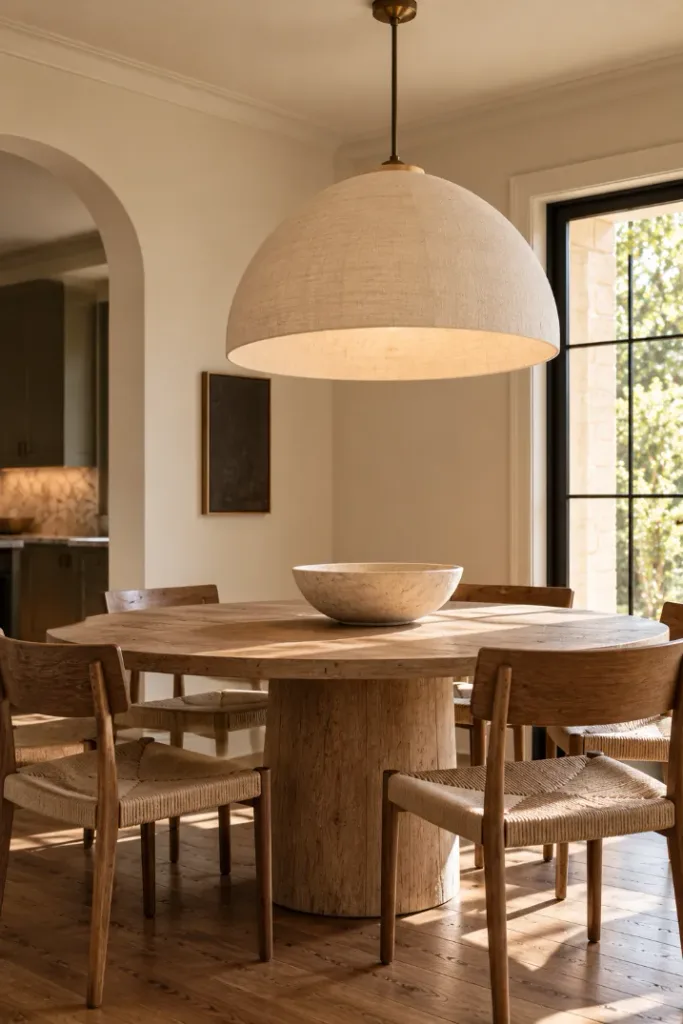
Small pendant lights can sometimes make a kitchen or dining space feel busy.
One larger pendant can feel calmer and more expensive.
I would use it over a round dining table, kitchen island, breakfast nook, or entry.
The scale is what creates the impact.
A large linen shade, ceramic pendant, opal glass globe, or simple metal fixture can work.
You do not need a complicated chandelier.
The idea is to choose one light that feels intentional enough to hold the room on its own.
7. Extend Kitchen Backsplash Tile All the Way to the Ceiling
Tile often stops awkwardly under cabinets or behind the range.
Continuing it to the ceiling can make the wall feel taller and more finished.
I like this especially behind a range hood or on a wall with open space above the counter.
It works with simple tile too.
You do not need expensive marble.
Even plain cream subway tile or handmade square tile can look much more impressive when it covers the full vertical surface.
The key is continuity.
It makes the kitchen feel designed rather than patched together.
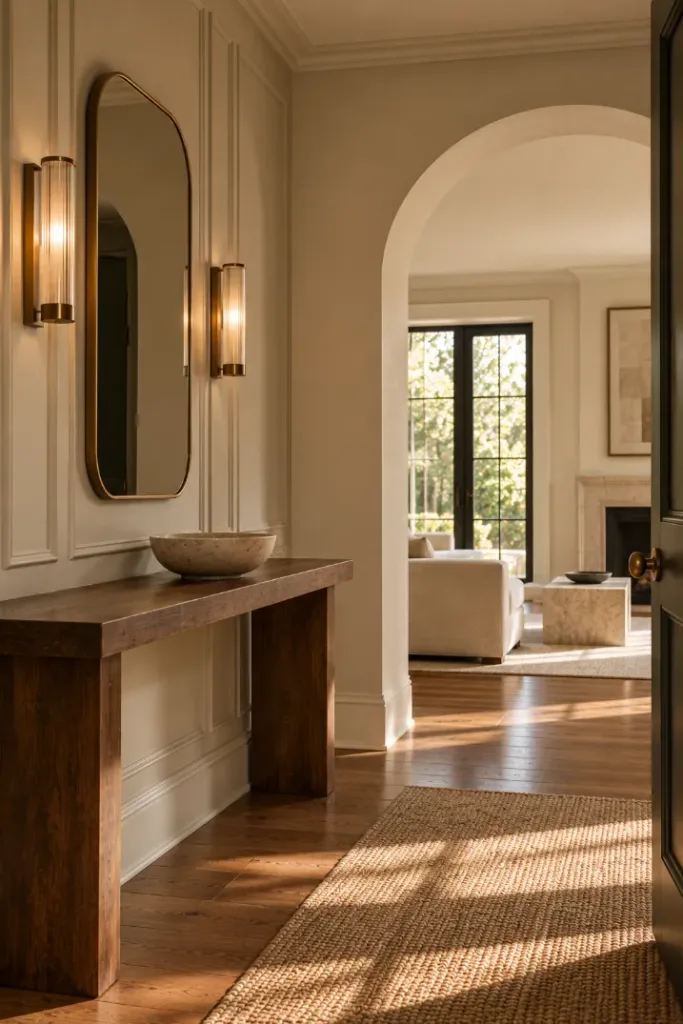
8. Add a Built-In Plaster Shelf Instead of Floating Shelves
Floating shelves are everywhere.
A shelf that looks like it was formed from the wall itself feels different.
A plaster or microcement shelf can be built into a niche or extended from one wall to another.
I like the soft, solid look because it feels architectural rather than decorative.
Use it in a bathroom, beside a fireplace, in a hallway, or above a kitchen counter.
Keep the styling minimal.
One or two objects are enough.
The shelf should be the feature, not what sits on it.
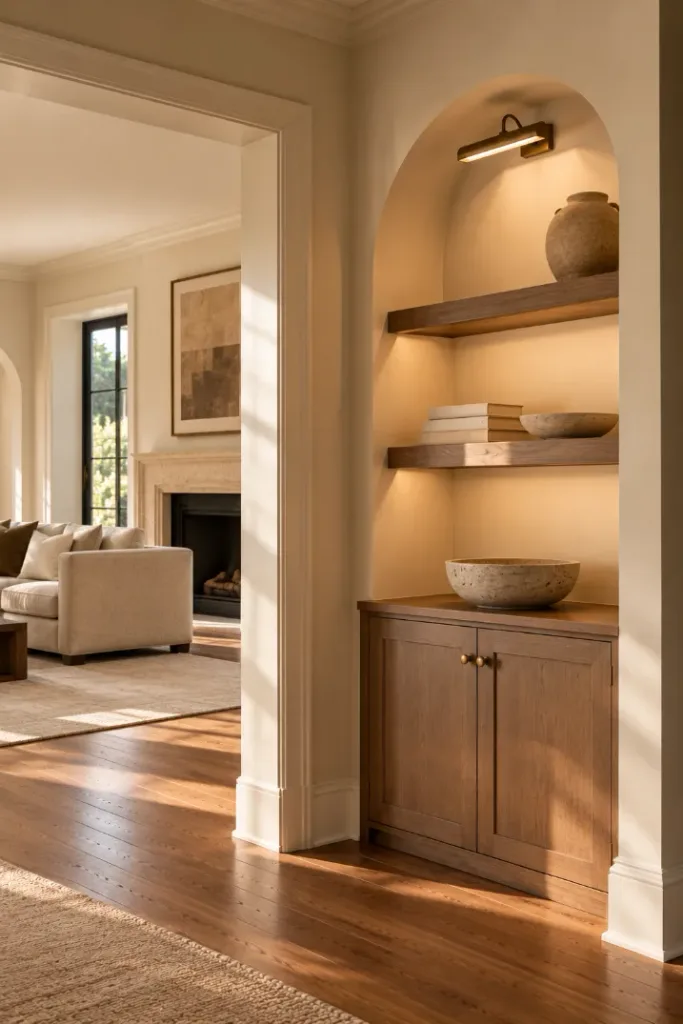
9. Paint the Floor Instead of Replacing It
Old floors do not always need to be ripped out.
Sometimes paint gives them more character.
A checkerboard pattern, border, stripe, or single muted color can completely change a room.
I especially like this on old wood floors that already have scratches or uneven color.
Paint works with the imperfections instead of trying to hide them.
Use colors that feel soft and worn rather than bright and new.
A painted floor can look surprisingly expensive because it feels intentional and individual.
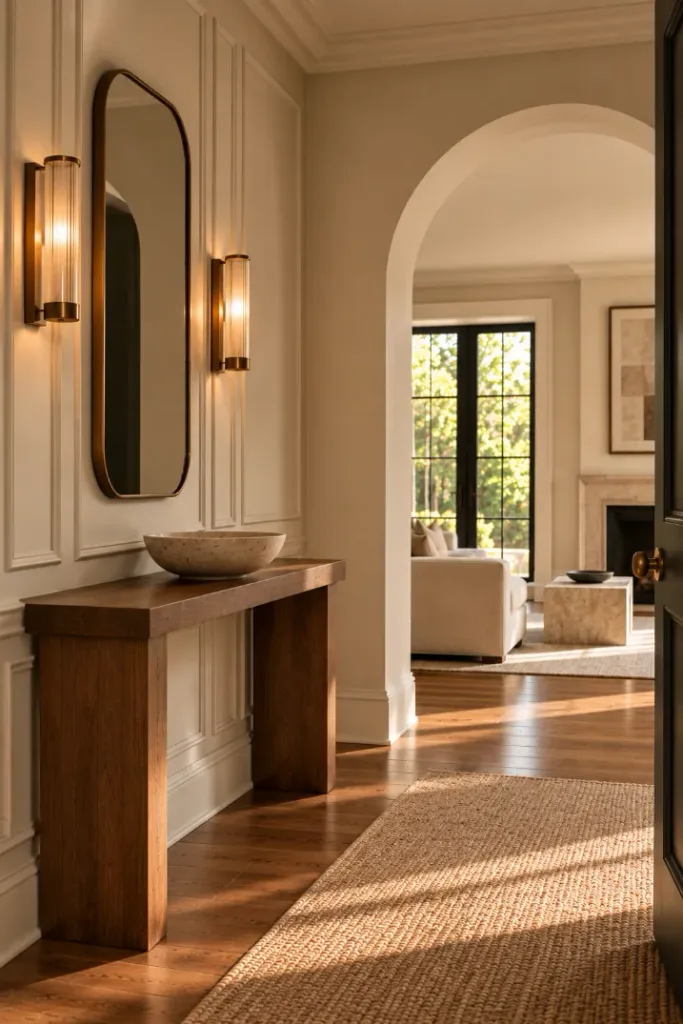
10. Add a Full-Height Curtain Track Across One Wall
Curtains usually stop at the window.
Running a ceiling-mounted curtain track across an entire wall can make the room feel much larger and more finished.
The fabric can hide windows, storage, or an awkward wall behind one continuous surface.
I like linen or heavy cotton in muted colors.
Let the fabric run almost to the floor.
The effect is calm and architectural.
It works especially well in bedrooms and small living rooms.
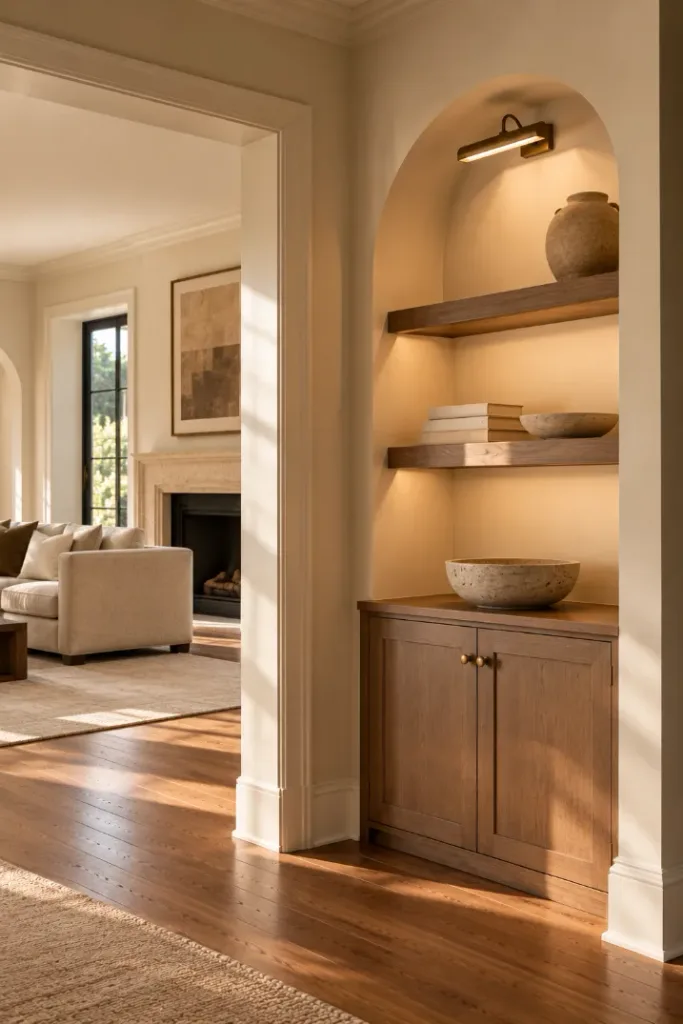
11. Add Trim Around a Plain Mirror
A builder-grade mirror can look much more finished with a simple surround.
You do not need ornate molding.
A thin painted wood frame, stone edge, or simple profile can make the mirror feel built in.
I would match the trim to the vanity, wall color, or nearby cabinetry.
That connection is what makes it feel intentional.
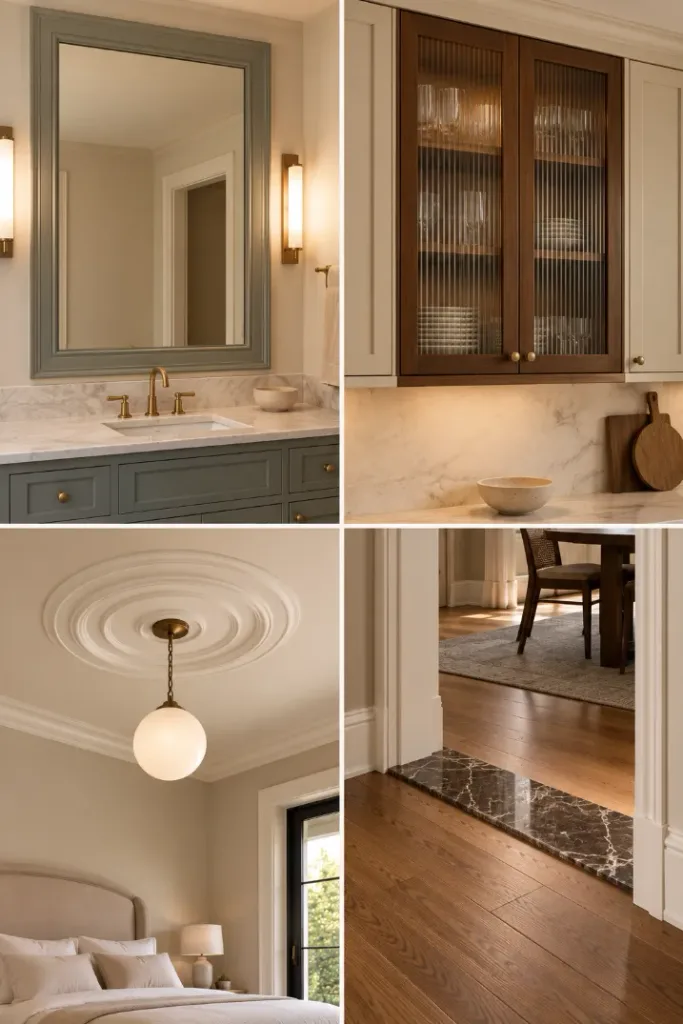
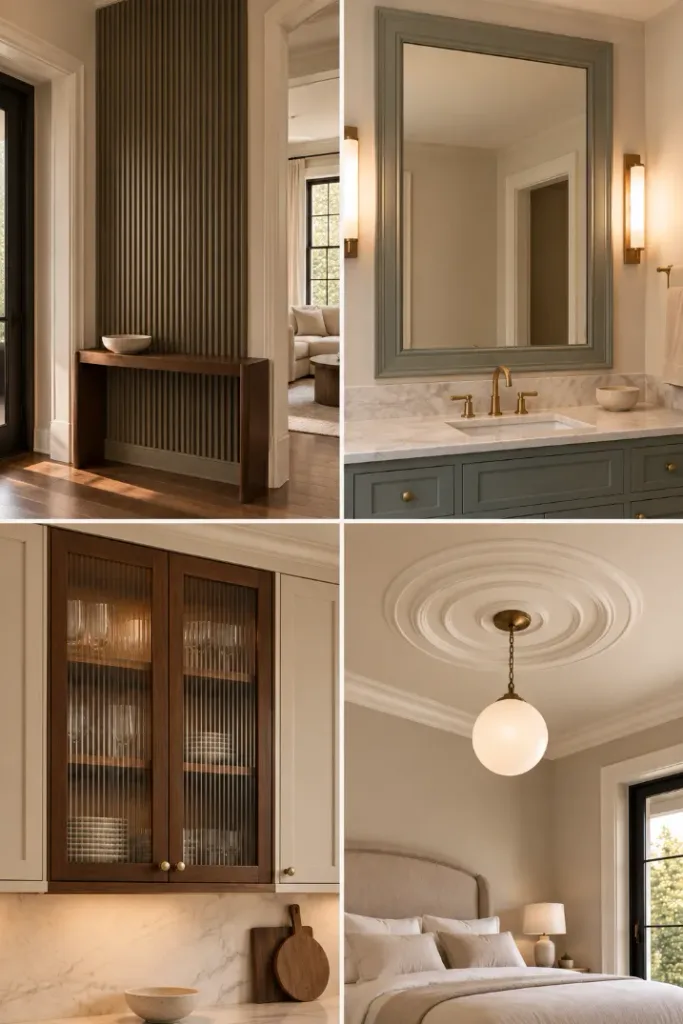
12. Replace Solid Cabinet Doors With Reeded Glass
Reeded glass can make ordinary cabinetry look far more custom.
Use it on a few upper kitchen cabinets, a bar cabinet, bathroom storage, or a built-in.
The texture hides clutter better than clear glass while still reflecting light.
I would not use it everywhere.
One or two reeded-glass sections are enough to create contrast.
13. Add a Ceiling Medallion Around a Simple Light
A ceiling medallion can make even a basic pendant look more important.
This works especially well in bedrooms, dining rooms, and hallways.
You can keep the light itself simple.
The decorative plaster detail around it creates the richness.
I prefer a medallion that is slightly oversized rather than tiny.
That helps it feel deliberate.
14. Add a Stone Threshold Between Two Rooms
The transition between rooms is usually ignored.
A narrow strip of stone at a doorway can turn that transition into a feature.
Use marble, limestone, slate, or another material that contrasts with the floors on either side.
I especially like this when both rooms have wood floors.
The stone creates a clean pause between them.
It is small, but it looks very custom.
15. Build a Small Wall Niche Instead of Hanging More Art
A shallow recessed niche can add more interest than another frame.
Use it in a hallway, beside a vanity, or near an entry.
Finish the inside with tile, wood, darker paint, or plaster.
Then keep it almost empty.
One bowl, one lamp, or one small sculpture is enough.
The depth itself is the upgrade.
16. Paint the Walls and Trim the Same Color
White trim creates contrast, but matching the trim to the wall can feel much richer.
This works especially well with deeper colors.
Paint the walls, baseboards, door casings, and sometimes doors in the same tone.
The room becomes more enveloping and architectural.
For me, this looks best with olive, clay, dusty blue, burgundy, or warm gray.
It makes basic trim feel much more important.
17. Add Decorative End Panels to Kitchen Cabinets
The side of a cabinet run or kitchen island is often completely plain.
Adding simple shaker-style panels can make it look like custom millwork.
This is especially useful at the exposed end of an island.
The change is small, but it removes that flat unfinished look.
I would match the panel style to the cabinet doors so it feels original to the kitchen.
18. Add a Shelf Above a Doorway
The area above a doorway is often wasted.
One narrow shelf can turn it into useful display space.
Books work especially well here because they create a strong horizontal line.
You could also use pottery or baskets, but I would keep it simple.
If the shelf continues slightly down one side of the doorway, it can feel even more architectural.
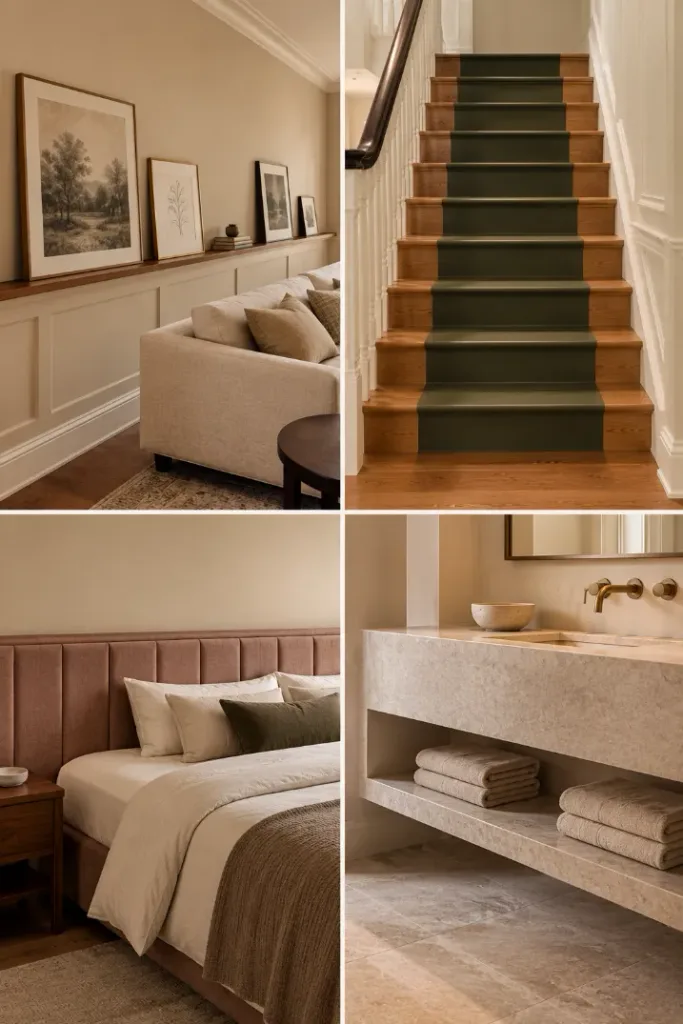
19. Run a Low Picture Ledge Across an Entire Wall
Instead of hanging many separate frames, install one long shallow ledge.
Lean artwork against the wall and layer a few pieces.
I like this because the arrangement can change without making new holes.
The long horizontal line also makes the wall feel more designed.
Keep the ledge low enough that it feels connected to furniture beneath it.
20. Paint a Runner Directly Onto the Stairs
A traditional stair runner can be expensive.
Paint can create a similar visual effect.
Leave the outer edges of the stair treads natural and paint the center section in a deep muted color.
Oxblood, olive, navy, or charcoal can work beautifully.
A little wear over time only improves the look.
It can make an ordinary staircase feel completely different.
21. Add an Upholstered Strip Behind the Bed
You do not always need a full upholstered wall.
A wide horizontal or vertical upholstered strip behind the bed can add softness and structure.
It could extend beyond the headboard or run wall to wall at headboard height.
Use linen, wool, or velvet in a solid color.
I like this because it adds texture without turning the bedroom into a padded hotel room.
22. Add an Integrated Towel Shelf Under the Vanity
A bathroom vanity can look much more custom when the towel storage is designed into it.
Add a low shelf beneath a floating vanity or a recessed shelf at one side.
Keep the towels folded simply.
The storage should feel like part of the vanity, not an afterthought.
This works especially well in small bathrooms.
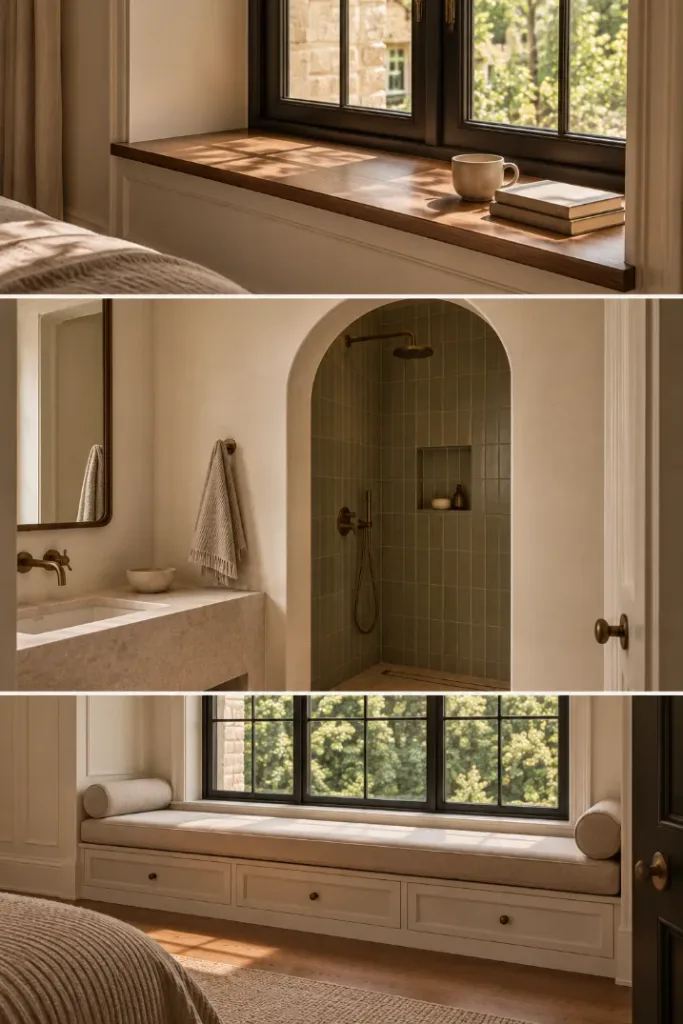
23. Deepen a Windowsill
A deeper windowsill can change how a window feels.
Instead of a narrow strip, extend it enough to hold a book, cup, or small object.
Use wood or stone for a more substantial look.
In a kitchen, it can hold herbs or glasses.
In a bedroom, it can become a tiny ledge beside the bed.
It is a small upgrade, but it makes the window feel much more useful.
24. Add an Arch Around a Shower Opening
A rectangular shower opening can feel very standard.
If the construction allows it, shape the entrance into a soft arch.
You can tile the inside of the arch or keep it plastered.
The curve adds a custom detail without requiring much more decoration.
I would keep the rest of the bathroom simple so the shape stands out.
25. Build a Long Bench Under a Window
A window with empty wall space beneath it is an easy place to add a built-in bench.
Keep the design simple and low.
Add drawers underneath if you need storage, or leave the base solid for a cleaner look.
A thin cushion is enough.
The bench can become reading space, extra seating, or simply somewhere to sit while putting on shoes.
It makes the window feel intentional rather than floating on a blank wall.
Final Thoughts
The upgrades that make a home look expensive are often not the expensive ones.
They are the details that make the space feel considered.
A deep windowsill.
A painted door.
A picture rail.
A stone threshold.
A tiled mirror surround.
A full-height curtain wall.
These things work because they make the room feel more custom.
If I were improving a home on a smaller budget, I would focus less on buying more decor and more on changing one architectural detail at a time.
That is usually where the biggest visual difference comes from.