
When you’re choosing the right paint for your next project, it can be hard to decide between Tempera paint vs. acrylic paint. Both types of paint are popular, but they have different qualities, uses, and benefits. Knowing the differences will help you pick the right paint for your art, craft, or DIY project.
Whether you’re a beginner, a hobbyist, or a professional artist, understanding these two types of paints will guide you to the best choice for your project. In this guide, we’ll compare tempera and acrylic paints, including their characteristics, how they dry, and the best ways to use them.
By the end of this guide, you will know when to use tempera and when acrylic paint is the better choice.
What Is Tempera Paint?
Tempera is one of the oldest painting techniques, used for centuries by famous artists like Leonardo da Vinci and Michelangelo. It is made by mixing pigments (color powder) with a water-based binder, most often egg yolk. Some modern tempera paints use different binders, but the basic idea remains the same.
Key Features of Tempera Paint:
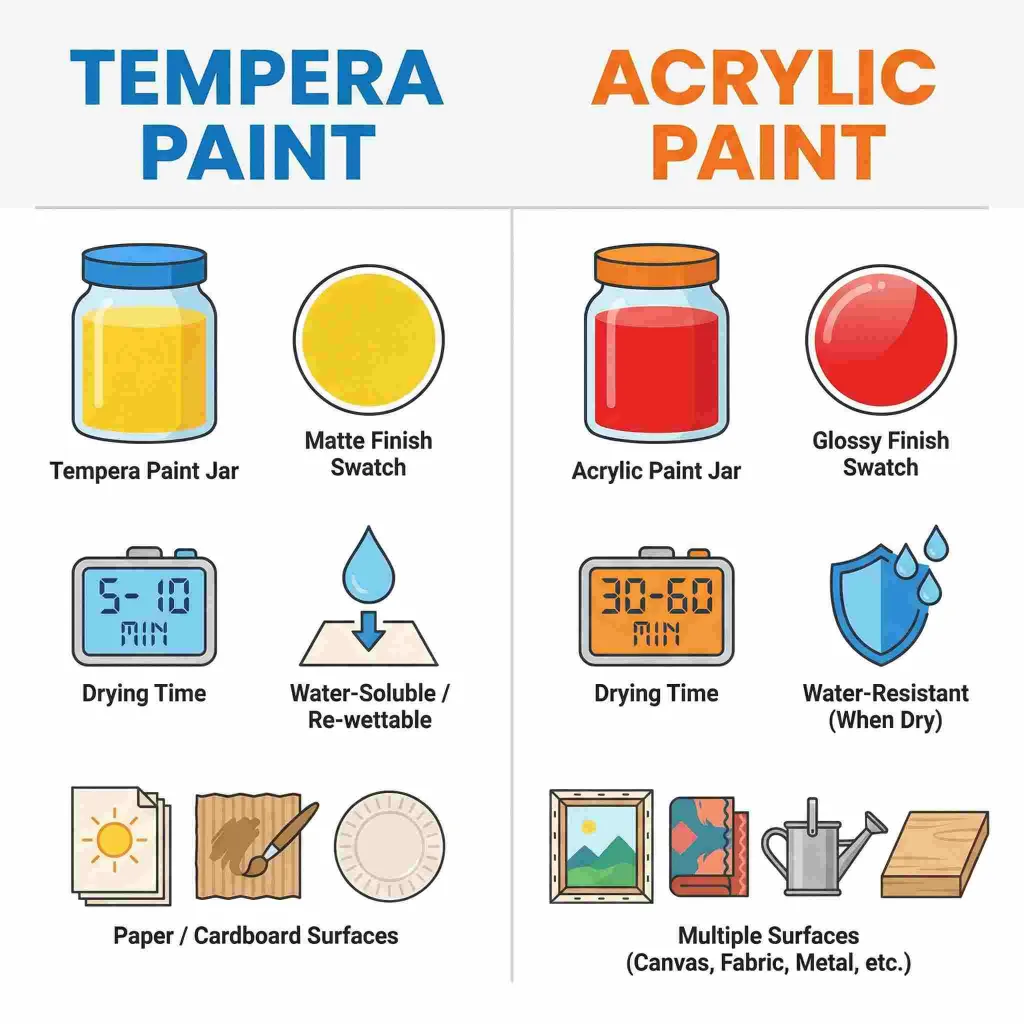
- Fast-drying: Tempera dries quickly, usually within 5-10 minutes. This makes it great for detailed work, but it can be challenging if you need to blend colors.
- Matte finish: It dries with a smooth, matte (non-shiny) surface. This is good for fine detail work.
- Water-soluble: You can clean up tempera easily with water, making it kid-friendly and easy to use for arts and crafts.
- Not very durable: Tempera is not waterproof and can fade over time, making it best for temporary projects.
Best for: Kids’ crafts, educational art, and projects that don’t need to last long.
What Is Acrylic Paint?
Acrylic paint is a modern painting medium that became popular in the 1940s. It is made by mixing pigments with a synthetic polymer (plastic) binder, making it fast-drying, flexible, and durable. Once acrylic paint dries, it becomes permanent and water-resistant.
Key Features of Acrylic Paint:
- Fast-drying: Acrylics dry faster than oil paints but are slower than tempera (usually 30-60 minutes to the touch).
- Variety of finishes: You can make acrylics matte, satin, or glossy, depending on the medium or additive used.
- Water-resistant: Once dry, acrylics are water-resistant and won’t wash away like tempera. This makes acrylic perfect for outdoor projects and long-lasting artwork.
- Versatile surfaces: Acrylic can be used on many different surfaces, including canvas, wood, metal, and even fabric.
Best for: Professional artwork, outdoor murals, home décor, and anything that needs to last a long time.

Summary of Key Differences:
| Feature | Tempera Paint | Acrylic Paint |
|---|---|---|
| Binder | Pigments mixed with egg yolk or water-based binders. | Pigments mixed with synthetic polymer. |
| Drying Time | Fast (5-10 minutes). | Slower (30-60 minutes). |
| Finish | Matte, smooth texture. | Matte, satin, or glossy (varies). |
| Durability | Semi-permanent, can fade over time. | Permanent, water-resistant, durable. |
| Clean-up | Easy with water. | Easy with water when wet. |
| Best For | Crafts, kids’ art, and temporary projects. | Professional art, outdoor work, long-term projects. |
Drying Time, Finish, and Durability
Drying Time: How Fast Do They Dry?
One of the biggest differences between tempera and acrylic paint is how fast they dry. When you’re working on a project, drying time can affect how you apply the paint and how much time you have to work with it.
- Tempera Paint:
- Dries very quickly, usually in about 5-10 minutes. This makes it great if you’re layering your work or want quick results. But it can be tricky if you want to blend colors or work on large areas because it dries so fast.
- Acrylic Paint:
- Dries slower than tempera, usually within 30-60 minutes to the touch. But even though it dries faster than oil paint, you’ll have more time to blend and mix your colors. Some acrylic paints can take up to 24 hours to cure completely, which means it might take longer to fully harden.
Quick Tip: If you want to slow down the drying time of acrylics, you can add a medium or use a retarder. This gives you more time to blend the colors.
Finish: Matte, Glossy, or Somewhere in Between?
The finish of your paint affects the look of your project. A matte finish gives a soft, non-shiny look, while a glossy finish makes the colors pop with a shiny, polished appearance.
- Tempera Paint:
- Tempera always dries to a matte finish. It’s smooth and ideal for detailed, fine lines. Since it doesn’t shine, it gives your artwork a more traditional, flat look, which some artists really love.
- Acrylic Paint:
- Acrylics are versatile when it comes to finish. You can achieve a matte, satin, or glossy finish, depending on what you need. This flexibility makes acrylic a great choice if you want to create a range of effects. If you want a glossy, shiny effect, you can add a gloss medium to make it shine.
Quick Tip: If you want your artwork to have a modern, shiny look, go for a gloss finish with acrylics. For a more classic, muted appearance, tempera’s matte finish is perfect.
Durability: How Long Will It Last?
Durability is important when you want your artwork or project to stand the test of time. Some paints fade, crack, or wash away after a while, while others stay strong and last for years.
- Tempera Paint:
- Tempera is semi-permanent. This means it can fade over time, especially if exposed to sunlight or moisture. It’s also not water-resistant once dry, so it can easily be damaged by water.
- Tempera is great for short-term projects or if you don’t need the paint to last a long time, such as in classroom projects, children’s art, or quick crafts.
- Acrylic Paint:
- Acrylic paint is permanent once it’s dry. It is also water-resistant and durable, making it ideal for outdoor use or projects that need to withstand wear and tear.
- Since it resists cracking and fading, acrylic is a better option for professional artworks, murals, and furniture that will be used or displayed for years.
Quick Tip: If you’re working on something that will be exposed to the outdoors or handled frequently (like furniture or a sign), acrylic paint is the best choice because of its durability.
Summary of Drying Time, Finish, and Durability:
| Feature | Tempera Paint | Acrylic Paint |
|---|---|---|
| Drying Time | Very fast (5-10 minutes). | Slower (30-60 minutes, up to 24 hours to fully cure). |
| Finish | Matte finish. | Matte, satin, or glossy (depending on medium). |
| Durability | Semi-permanent, fades over time. | Permanent, water-resistant, and durable. |
Surfaces, Costs, and Recommendations for Beginners
Which Surfaces Can You Use Them On?
The type of surface you paint on can impact how well the paint sticks and how the final result looks. Some paints work better on certain materials than others.
- Tempera Paint:
- Best for: Paper, cardboard, and wood. Tempera works well on rigid surfaces but doesn’t bond well with flexible or porous materials like fabric.
- Since tempera is water-soluble, it’s not ideal for outdoor use or surfaces that will be exposed to moisture.
- Acrylic Paint:
- Acrylic paint is extremely versatile. You can use it on many different surfaces, including canvas, wood, metal, glass, and even fabric (when mixed with fabric medium).
- This makes acrylic paint a popular choice for artists working on large projects or outdoor murals.
Quick Tip: If you’re planning to paint on fabric or a flexible surface, acrylic paint is the better option, as it will hold up better over time.’
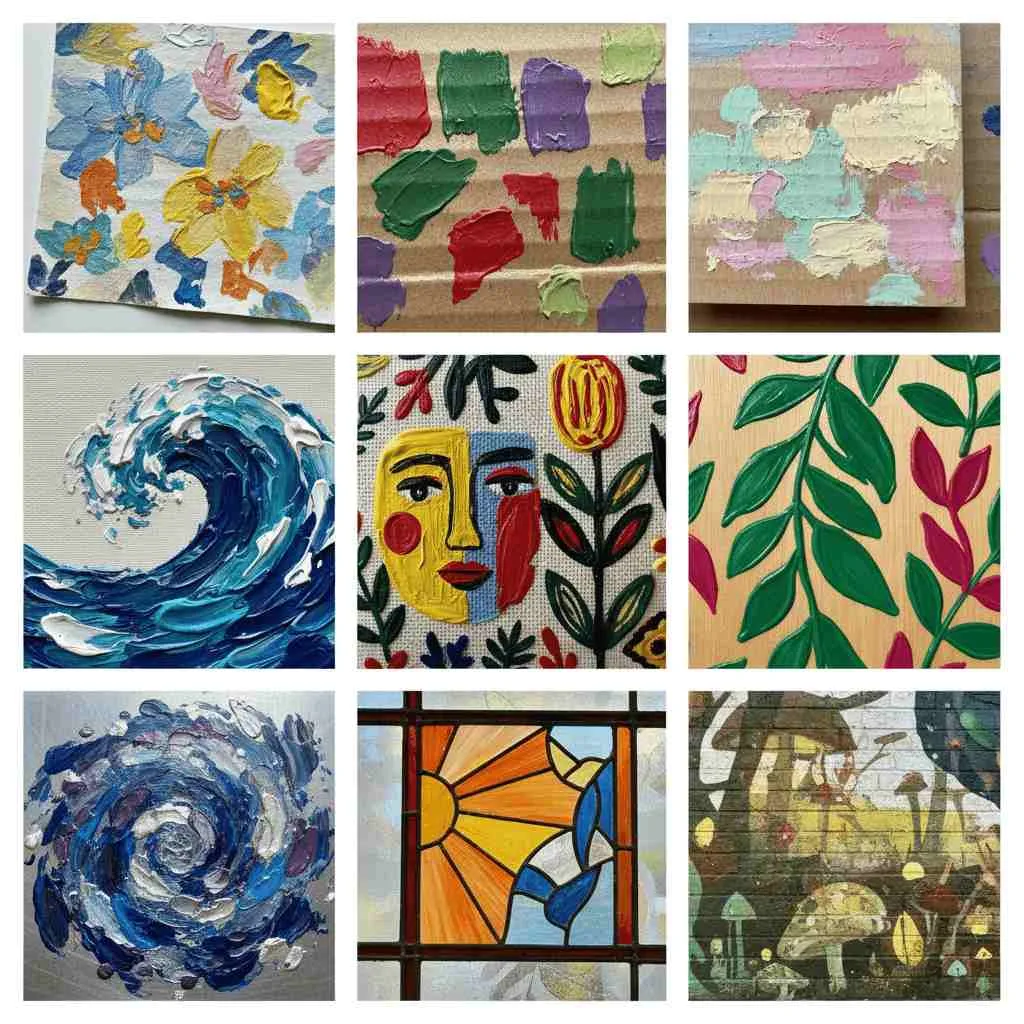
Cost: Which Paint Is More Affordable?
When you’re picking out supplies, cost often plays a role in your decision. Let’s look at how tempera and acrylic compare in terms of price.
- Tempera Paint:
- Affordable and inexpensive. Tempera paint is widely used for classroom art and children’s crafts because it is easy on the wallet.
- It’s a great option if you need a lot of paint for a low cost.
- Acrylic Paint:
- More expensive than tempera, especially if you choose artist-grade acrylics.
- While craft-grade acrylics can be affordable, professional acrylics (like Golden or Winsor & Newton) can be pricey but offer better pigmentation and coverage.
Quick Tip: If you’re working on a budget or doing a lot of school projects, tempera is a great choice. If you’re creating something long-lasting or professional, it’s worth spending a bit more on acrylics.

Recommendations for Beginners
If you’re new to painting, it can be hard to decide which paint to start with. Here’s what we recommend based on your needs.
- For kids or beginners:
- Tempera paint is the best choice. It’s affordable, easy to clean up with water, and great for smaller projects or simple crafts.
- If you’re working with children or doing school-based activities, tempera is perfect because it dries quickly and doesn’t require much skill to use.
- For hobbyists or those looking to try something more advanced:
- Acrylic paint might be the better choice. While it’s more expensive, it’s incredibly versatile and can help you improve your skills. Acrylics also last longer and can be used on a wide variety of surfaces, making it a good investment for someone looking to grow as an artist.
Quick Tip: If you’re just starting and want to try something cheap and easy, go with tempera. If you’re ready to explore different surfaces or want something that lasts longer, consider investing in acrylic.
Summary of Costs and Recommendations for Beginners:
| Feature | Tempera Paint | Acrylic Paint |
|---|---|---|
| Cost | Affordable, great for large projects. | More expensive, especially for artist-grade. |
| Best For | Kids, beginners, simple crafts. | Hobbyists, advanced artists, long-term projects. |
| Surface Options | Paper, cardboard, wood. | Canvas, wood, metal, fabric, and more. |
| Durability | Short-term use, not waterproof. | Permanent, water-resistant, long-lasting. |
Final Thoughts: Tempera vs. Acrylic Paint
Both tempera and acrylic paints have their own strengths and weaknesses. Your choice between the two will depend on what you need for your project.
- Tempera Paint is great for quick, non-permanent projects, children’s crafts, and educational activities. It’s affordable and easy to use, making it ideal for beginners or casual projects.
- Acrylic Paint is the better option if you need durability, versatility, and long-lasting results. It works on many surfaces and is resistant to water and fading, which makes it perfect for professional artwork, home décor, and outdoor projects.
Ultimately, both types of paint can help you create beautiful works of art, but it all comes down to the purpose of your project, how long you want it to last, and what surfaces you are working with.
Conclusion: Which Paint Should You Choose?
To wrap it up, here’s a quick reminder of what to consider when choosing between tempera and acrylic:
- Choose tempera if you’re doing:
- Kids’ crafts, school projects, or temporary artwork.
- A lot of work on paper, cardboard, or wood.
- Quick-drying, affordable, and easy-to-clean paint.
- Choose acrylic if you’re doing:
- Professional artwork, murals, or outdoor projects.
- Artwork on a wide range of surfaces like canvas, fabric, glass, or metal.
- Long-lasting, water-resistant, and durable pieces that you want to keep for years.
FAQs
What is the best paint for kids: tempera or acrylic?
Tempera is the best choice for kids because it is non-toxic, easy to clean up, and dries quickly. Acrylic is more durable but can stain clothes and surfaces.
Can you mix tempera and acrylic paints together?
It’s not recommended to mix tempera and acrylic paint together because they have different binders. You can layer them, but be cautious as they don’t blend well.
Is tempera paint permanent?
No, tempera paint is semi-permanent. It can fade or wash away over time, especially when exposed to moisture. Use acrylic for long-lasting projects.
What surfaces can you use tempera or acrylic on?
Tempera works best on paper, cardboard, and wood. Acrylic can be used on almost any surface, including canvas, wood, metal, glass, and fabric.
What is the difference between tempera and poster paint?
Poster paint is thicker, more opaque, and less expensive than tempera. Tempera has a smoother texture, making it better for detailed work.
Can you use tempera paint on canvas?
Yes, but it works best on a gessoed surface. For durability and long-lasting results, acrylic is the better choice for canvas.
What is the lifespan of tempera paint?
Tempera has a shorter lifespan compared to acrylic and can degrade faster when exposed to light and humidity. It’s ideal for short-term projects.
Is tempera paint washable?
Yes, tempera is washable when wet. Once it dries, it becomes harder to remove, so clean up quickly.
Why do professional artists prefer acrylic paint?
Acrylic paint is preferred for its durability, versatility on multiple surfaces, and ability to create different textures and finishes using various mediums.
Can you use tempera paint for home décor?
Tempera is best for temporary decorative projects. For long-lasting results, acrylic paint is the more durable option.
How do you seal tempera paint?
To protect tempera paint, you can seal it with a clear acrylic sealer to prevent fading, dirt, and moisture. For fabric, mix tempera with a fabric medium to increase durability.
Which paint is better for detailed work: tempera or acrylic?
Tempera is excellent for detailed work because it has a smooth, matte finish and dries quickly. Acrylic also works for detailed art, offering flexibility in texture and finish
Final Note:
Choosing between tempera and acrylic paint is all about knowing what you want to achieve and how long you need your work to last. Both paints have their place in art, crafts, and DIY projects, so pick the one that suits your needs best!