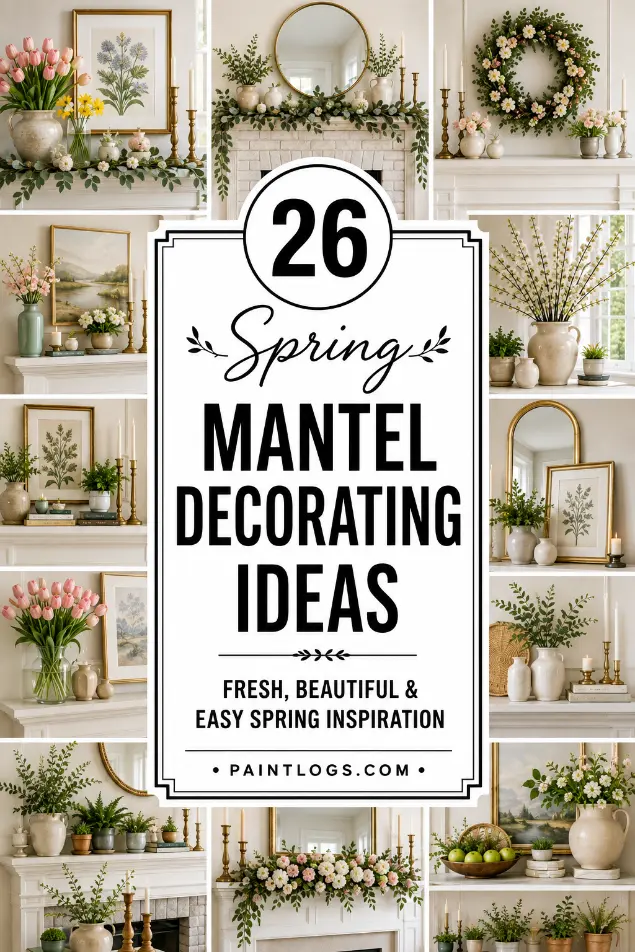
Every year, once winter starts to feel a little too heavy, my fireplace mantel is one of the first places I want to change.
I don’t usually do a complete living room makeover for spring. Most of the time, I just remove the darker winter pieces, bring in a few branches or flowers, switch out one or two accessories, and suddenly the whole room feels different.
That is what I like most about decorating a mantel for spring. It is a small area, so you can experiment without buying a room full of new decor.
I also don’t think a spring mantel needs to be packed with pastel rabbits, signs, and seasonal decorations to actually feel like spring. In my experience, the prettiest mantels are usually the ones that feel a little lighter, greener, and less arranged.
If you are ready to freshen up your fireplace, these 26 spring mantel decorating ideas are the ones I would start with.
1. Start With Fresh Spring Flowers
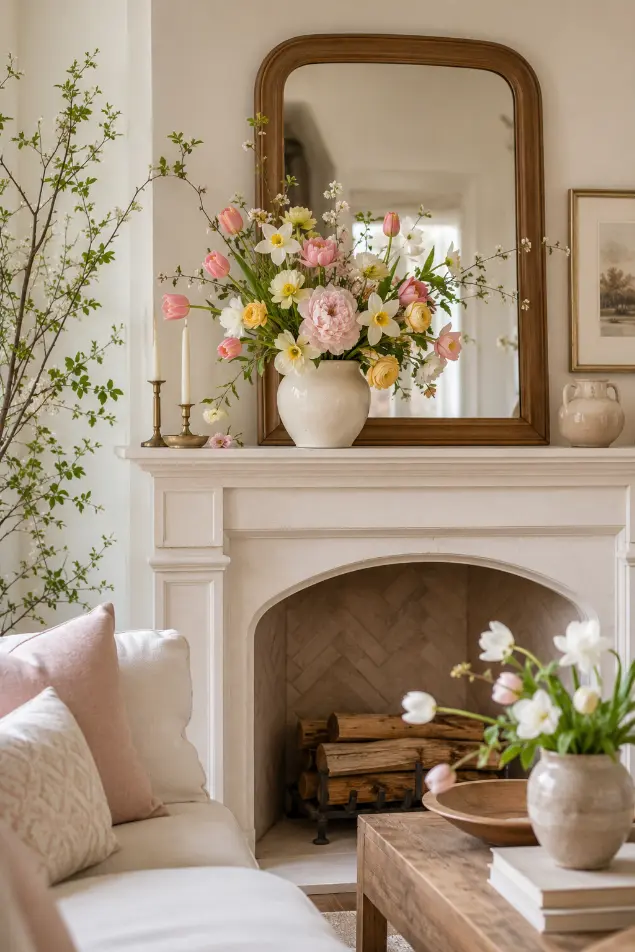
If I could choose only one thing to put on a spring mantel, it would probably be fresh flowers.
They do almost all of the decorating for you.
Tulips are usually my first choice because I actually like the way they begin to lean and bend after a day or two. A perfectly upright bouquet can sometimes look a little formal, while those slightly drooping stems give the mantel a much more relaxed look.
Daffodils, ranunculus, peonies, and even inexpensive grocery-store flowers can work just as well.
I usually put them in a simple cream or white vase rather than something highly decorative. The flowers already bring enough color and movement.
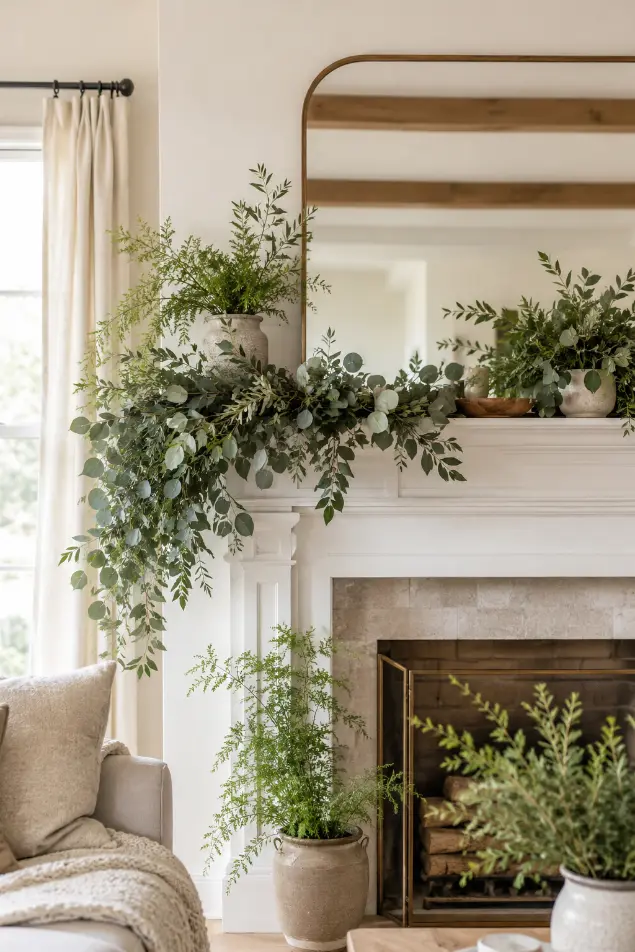
2. Let Greenery Take Over the Mantel
Not every spring mantel needs flowers.
Some of my favorite spring arrangements are almost completely green.
Eucalyptus, olive branches, fern leaves, and loose leafy stems have a way of making a room feel fresh without making it feel overly decorated.
One thing I would avoid is creating a perfectly even strip of greenery from one end of the mantel to the other. I prefer it when a few branches trail over one side or sit higher in certain areas.
That slight unevenness makes the greenery look much more natural.
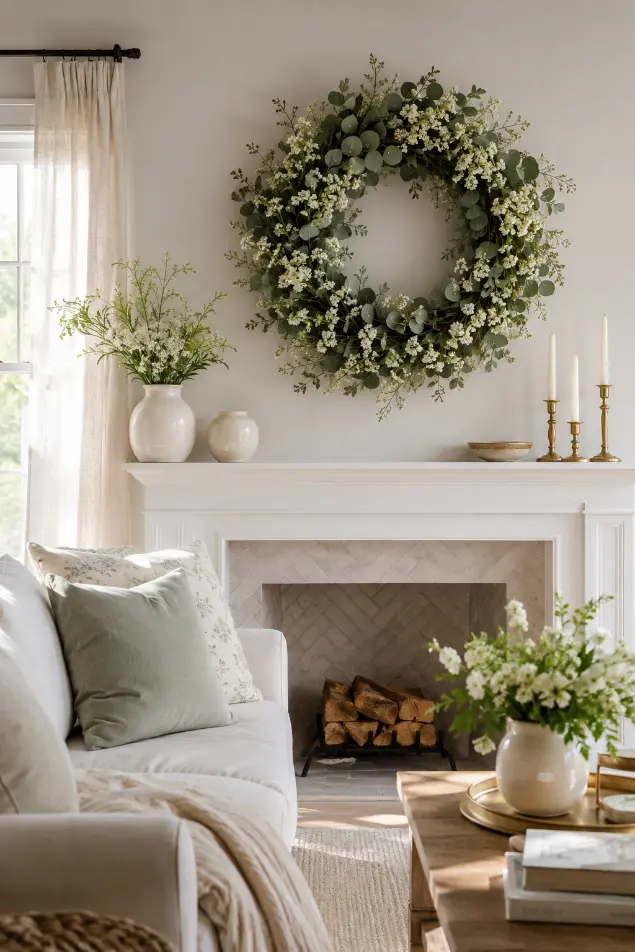
3. Hang One Large Spring Wreath
A wreath is one of those decorating pieces that can make a mantel look finished almost immediately.
Instead of adding ten small objects, I would rather hang one beautiful wreath above the fireplace and keep everything underneath it fairly simple.
For spring, eucalyptus with tiny white flowers is especially pretty. Olive leaves, small wildflowers, or a very loose vine-style wreath also work.
I tend to stay away from wreaths that have too many bright artificial flowers because they can quickly dominate the room.
A softer wreath feels easier to live with for the entire season.
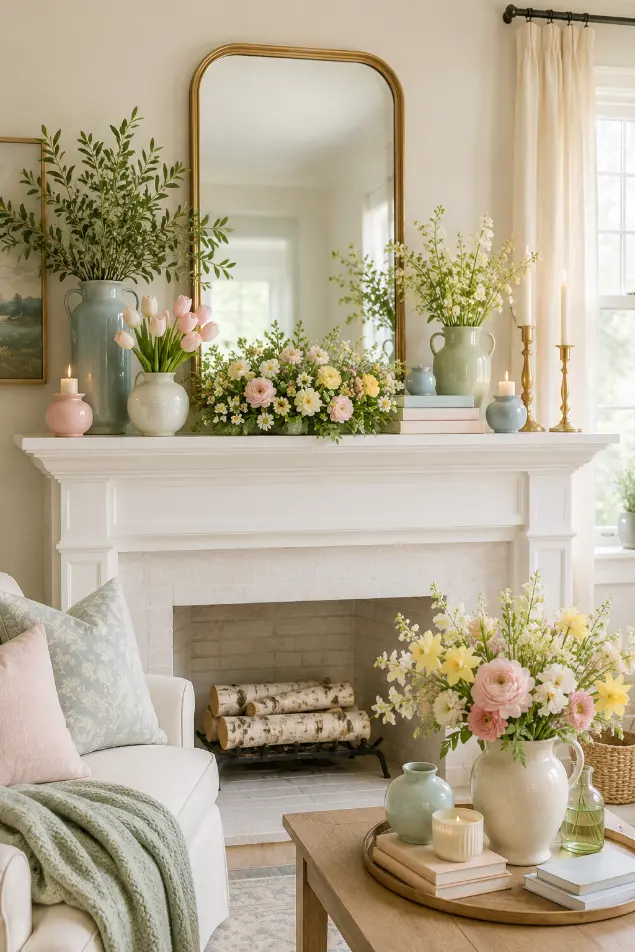
4. Bring in Pastels Without Making the Room Too Sweet
Pastels make sense in spring, but I think they look best when they are used quietly.
A pale blue vase, a blush candle, two sage books, or a butter-yellow flower arrangement is usually enough.
I rarely like using pink, blue, yellow, lavender, and green all at once on the same mantel. It starts to feel more like an Easter display than everyday spring decorating.
Instead, choose one or two soft colors and repeat them in small ways.
Pale blue with cream is one of my favorite combinations because it still feels calm and grown-up.
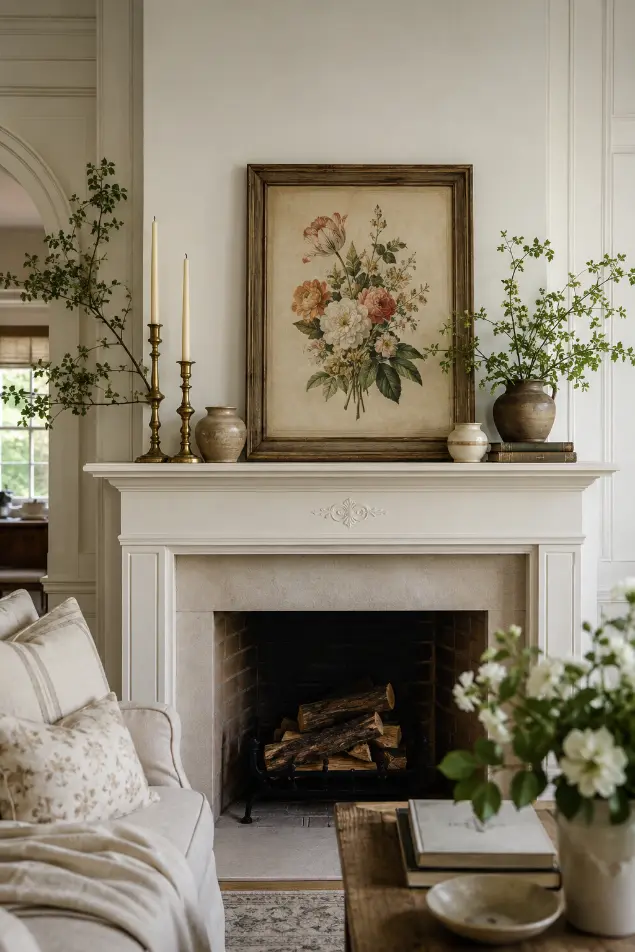
5. Lean a Vintage Botanical Print Against the Wall
Botanical art is one of those things I keep coming back to for spring.
It feels seasonal without looking like seasonal decor.
I especially like older-looking botanical prints with slightly faded greens, browns, and muted flowers. They look beautiful in an aged wood or antique brass frame.
Instead of hanging the frame, try leaning it directly on the mantel.
I do this often because it makes the arrangement feel more casual and also allows you to layer a smaller vase or candlestick in front of it.
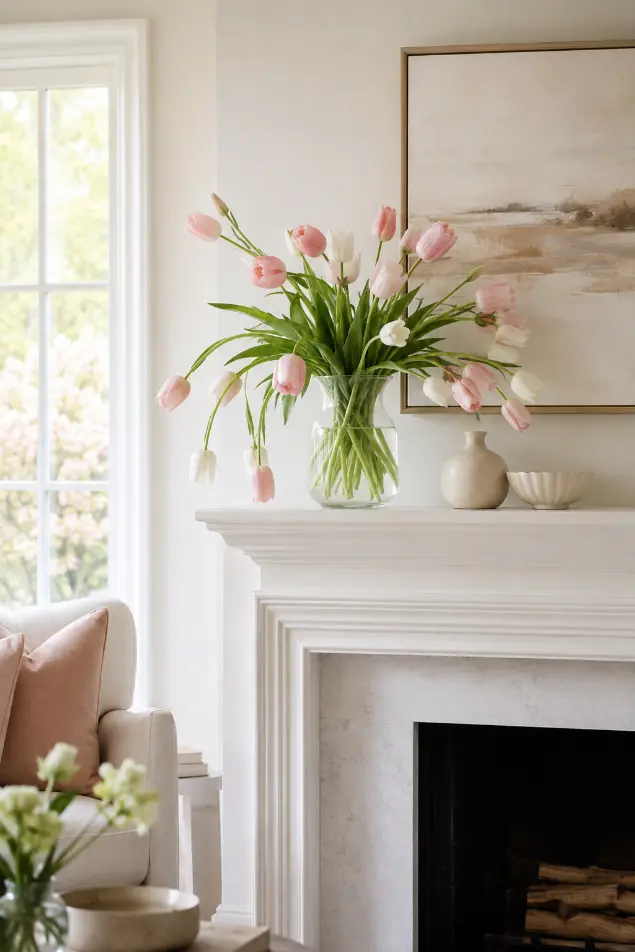
6. Keep It Simple With Tulips in a Glass Vase
This is probably one of the easiest spring mantel ideas in the entire list.
A clear glass vase filled with pink or white tulips can be enough on its own.
The stems show through the glass, the flowers move naturally, and the whole thing feels light.
If I am doing this kind of mantel, I usually resist the urge to keep adding things around the vase.
Maybe one small ceramic piece and a candle.
That is it.
Sometimes the mantel looks better when you stop decorating a little earlier than you think you should.
7. Layer a Mirror With Smaller Artwork
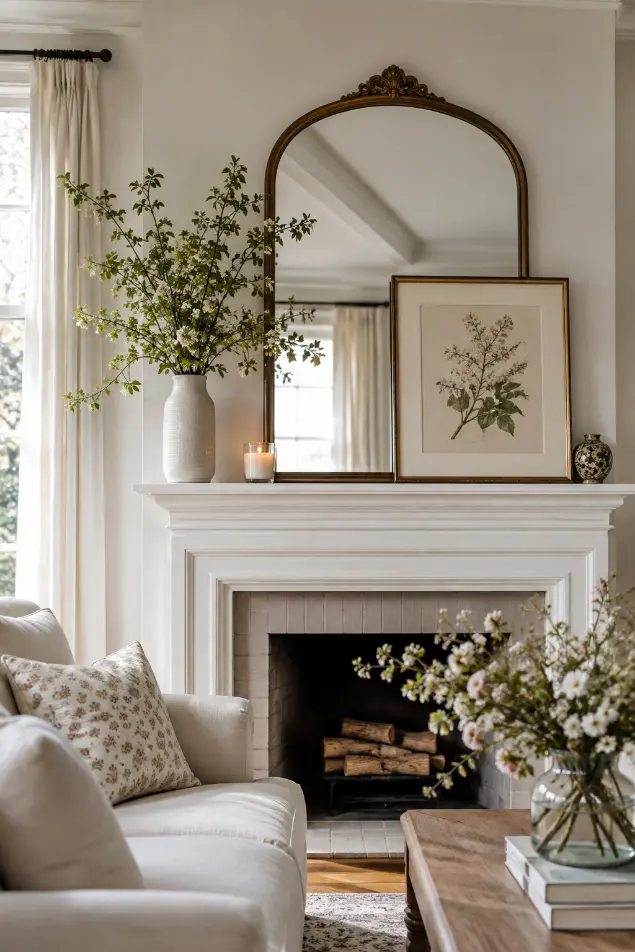
A large mirror above a fireplace is beautiful, but sometimes it can feel a little predictable on its own.
One trick I really like is leaning a smaller framed piece of art against the lower corner of the mirror.
A botanical sketch, tiny landscape painting, or vintage floral print works especially well in spring.
Then I will usually place a vase of branches on the opposite side.
The overlapping layers give the mantel depth, but it still feels relaxed rather than overly styled.
8. Try an All-Neutral Spring Mantel
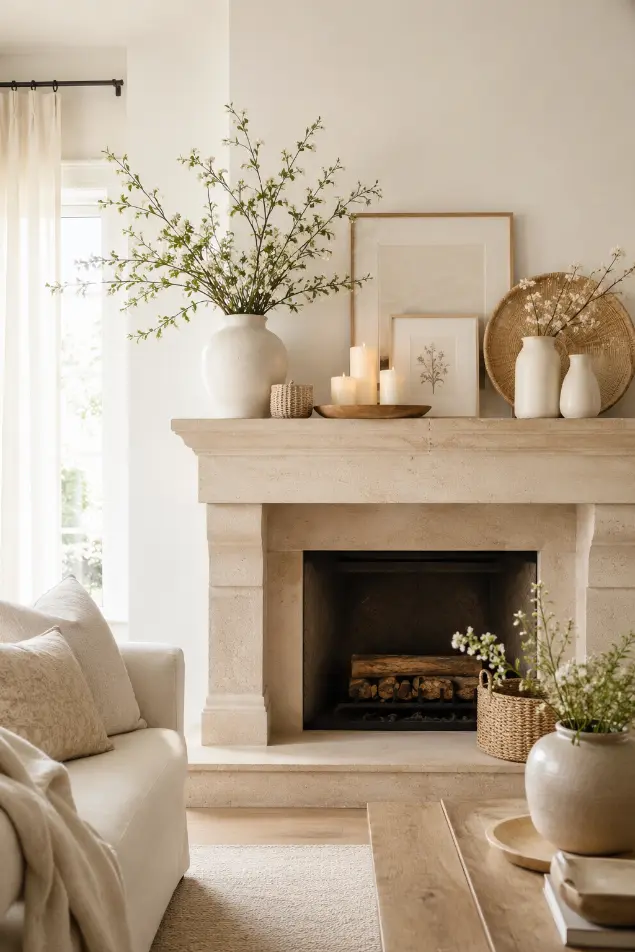
Spring decorating does not have to mean adding color.
A warm neutral mantel can feel every bit as fresh.
Think cream ceramics, pale wood, ivory candles, light linen, beige stone, and a few green branches.
What makes this work is texture.
If everything is exactly the same shade of white, it can look flat. But when you combine rough pottery, smooth ceramics, woven pieces, old wood, and soft greenery, the neutral colors suddenly become much more interesting.
This is the direction I would choose for a calm, organic living room.
9. Use Small Potted Plants Instead of Accessories
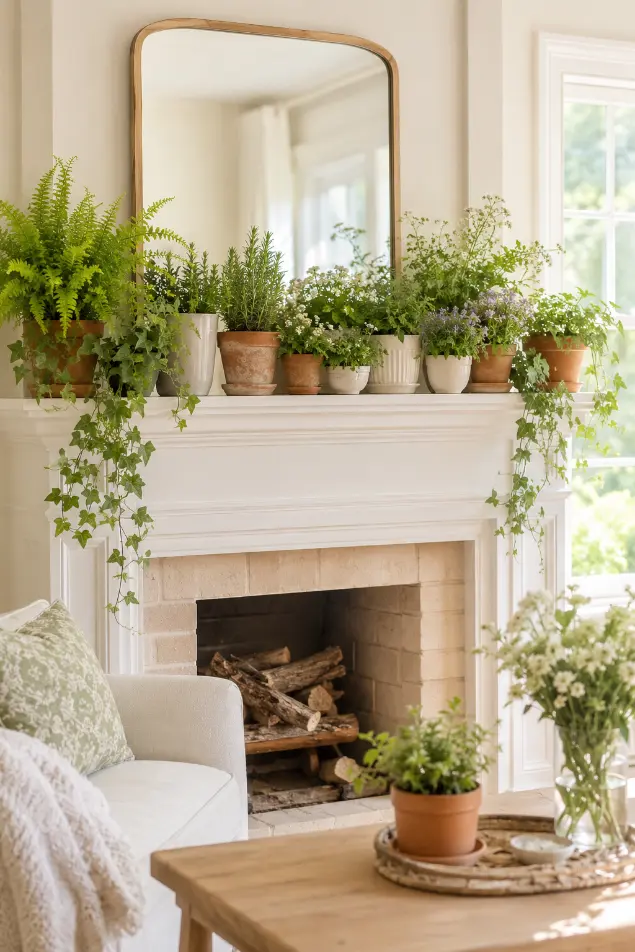
If you already have several houseplants, use them.
Small ferns, ivy, herbs, and flowering plants look surprisingly good lined up along a mantel.
I prefer mixing the containers rather than buying matching pots. A couple of terracotta pots mixed with white ceramics feels more collected.
The important thing is varying the height.
Put a taller fern at one end, a low trailing ivy somewhere near the middle, and a few smaller plants between them.
It should feel like a miniature indoor garden rather than a row of identical pots.
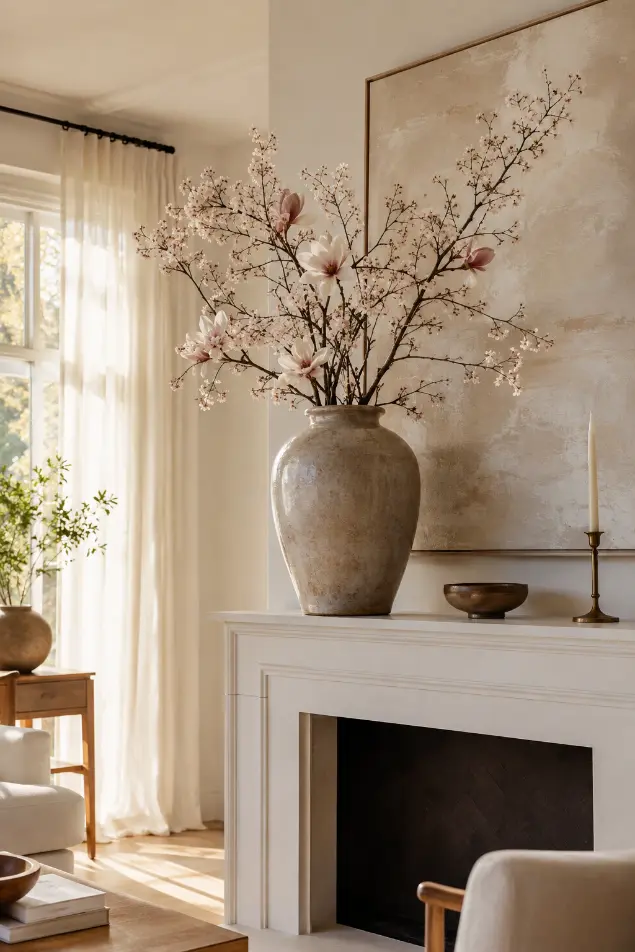
10. Make Flowering Branches the Main Event
Tall flowering branches are one of my favorite ways to make a mantel look dramatic without making it cluttered.
Cherry blossoms, magnolia branches, apple blossoms, or even good-quality faux branches can work.
Use a large vase and let the arrangement stretch upward and outward.
I usually prefer putting the vase slightly off-center rather than directly in the middle of the mantel.
It feels less formal and gives you room for one or two smaller objects on the other side.
And honestly, once the branches are in place, you really do not need much else.
11. Group White Ceramic Vases Together
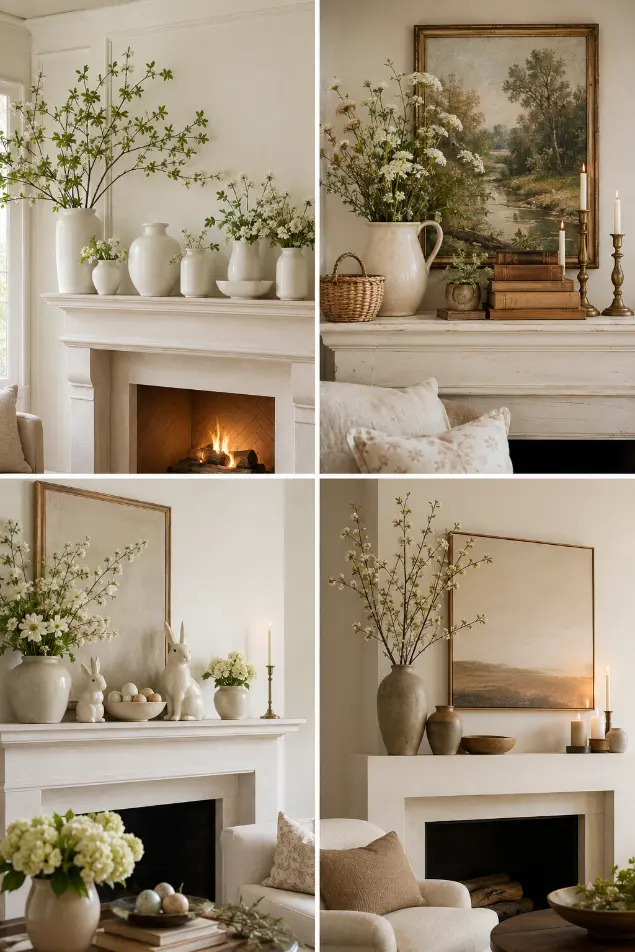
If you own several white or cream vases, spring is a good time to pull them out together.
They do not need to match.
In fact, I think they look better when the shapes are different.
Try one tall vase, one rounded vase, a smaller pitcher, and perhaps a little bowl.
Fill only one or two with branches or flowers and leave the others empty.
That empty space is important because it keeps the group from becoming visually heavy.
12. Go for a Collected Cottage Look
I love cottage-style mantels because they do not need to look perfect.
A vintage landscape painting, a ceramic pitcher filled with wildflowers, two old books, an aged brass candlestick, and a little basket can look beautiful together.
The secret is choosing things that feel like they could have been collected over time.
I would avoid buying an entire matching “spring mantel set.”
A mantel is much more interesting when every piece is slightly different but still shares the same warm, relaxed mood.
13. Add Easter Decor Very Lightly
I enjoy Easter decorations, but I usually do not want my whole living room to look like an Easter aisle in a store.
A couple of small ceramic rabbits can be charming.
A bowl of speckled eggs can be pretty.
But I would mix those pieces into greenery, flowers, and everyday decor rather than making them the entire theme.
That way, when Easter is over, you can simply remove the rabbits or eggs and the rest of the mantel still works for spring.
14. Try an Asymmetrical Mantel
Perfect symmetry can look elegant, but lately I find myself preferring mantels that are slightly unbalanced.
Put a large arrangement of branches on one side.
Add two or three lower objects near the center.
Then use a couple of candles or a smaller vase on the opposite end.
You are still balancing the visual weight, but you are not mirroring every object.
The result feels much more casual and modern.
15. Use Books to Create Height
Books are one of the easiest decorating tools because they instantly solve height problems.
If a small vase feels lost beside a large mirror, put two books underneath it.
If one side of the mantel looks too low, add a small stack.
For spring, I like books with faded blue, cream, beige, sage, or dusty pink covers.
I would not stack books everywhere, though.
One or two small stacks are usually enough to create that layered, lived-in feeling.
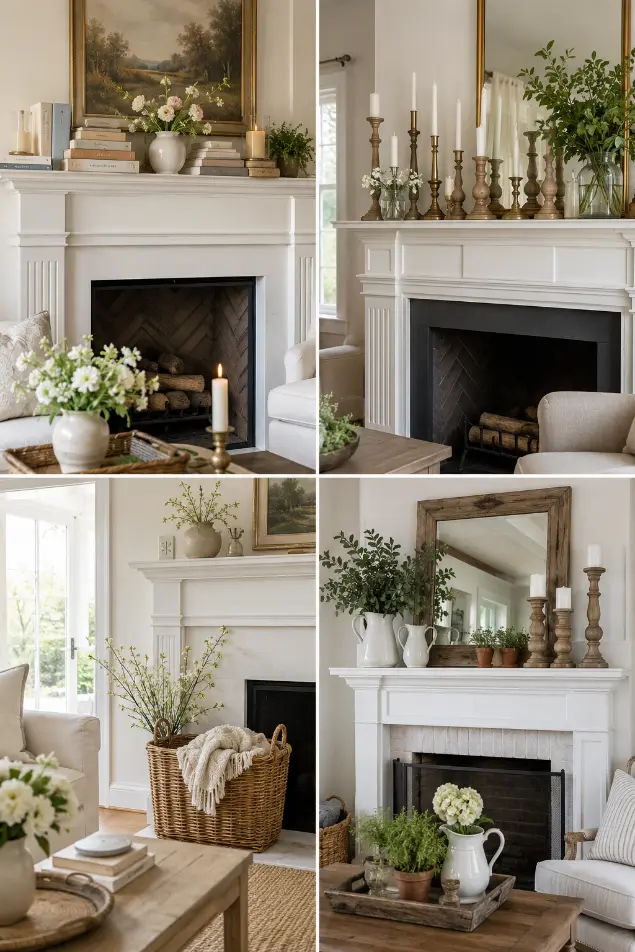
16. Mix Brass and Wooden Candlesticks
Candlesticks are especially useful when your mantel feels too horizontal.
A few tall pieces immediately draw the eye upward.
Antique brass gives the mantel a slightly traditional feel, while turned wood candlesticks make it more farmhouse or cottage-inspired.
I actually like mixing the two.
The main thing is to choose different heights. Three identical candlesticks lined up together can feel stiff.
A tall one, a medium one, and a shorter one look much more natural.
17. Place a Woven Basket Beside the Fireplace
Sometimes the mantel itself is finished, but the entire fireplace still feels a little empty.
That is usually when I look at the hearth area.
A large woven basket beside the fireplace adds warmth and texture, especially in a pale neutral room.
Fill it with a cream throw, extra pillows, branches, or even nothing at all.
I particularly like this idea when there are already a lot of ceramics on the mantel because the woven texture keeps everything from feeling too hard and polished.
18. Create a Simple Farmhouse Spring Mantel
For a farmhouse look, I would keep the ingredients fairly classic.
Start with a rustic wood-framed mirror.
Add one or two white pitchers, a few terracotta pots, eucalyptus branches, and some weathered wood candlesticks.
The temptation with farmhouse decor is to add too many signs and decorative words.
I would skip those.
Wood, pottery, greenery, and a few older-looking pieces already give you the farmhouse feeling without needing a sign to explain it.
19. Use Blue and White for a Fresh Spring Look
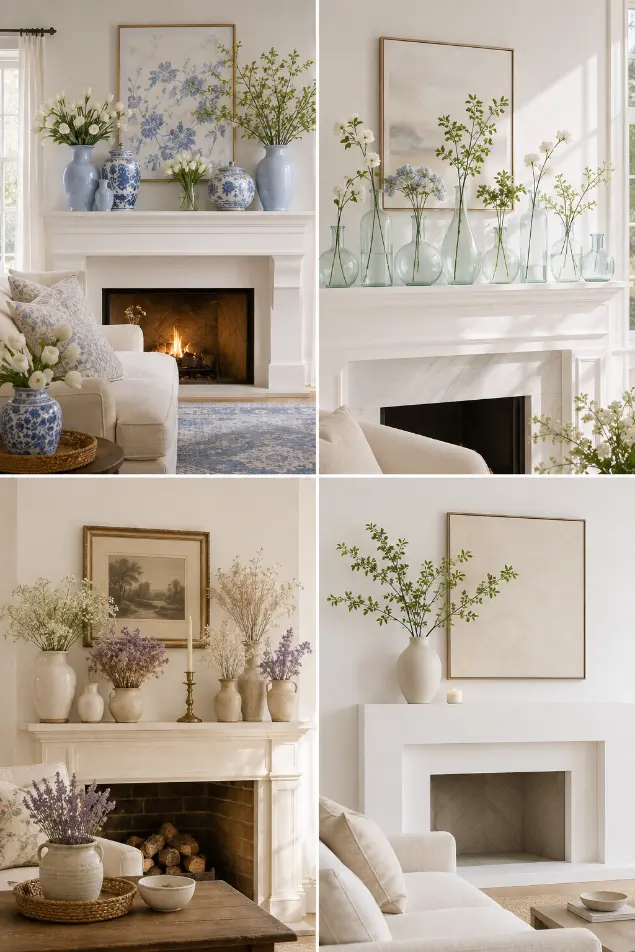
Blue and white is one of those combinations that almost always looks good in spring.
It feels cool, fresh, and clean after the heavier colors of winter.
I like pale blue ceramic vases mixed with classic blue-and-white pottery.
Then soften everything with white tulips or leafy branches.
If your room is mostly cream or beige, even a small amount of blue makes a noticeable difference.
You can also repeat the blue in a cushion or faded rug so the mantel feels connected to the rest of the room.
20. Collect Clear and Colored Glass Vases
Glass works beautifully in spring because it catches all that brighter natural light.
Try lining up a few glass bottles or vases in slightly different shapes.
Clear, soft green, and pale blue glass work especially well together.
Then add only one or two stems to each bottle.
Do not fill every vase with a large bouquet.
The point is to keep the arrangement delicate so you can still see the shapes of the glass.
21. Use Dried Flowers in a Spring Way
Dried flowers are often associated with fall, but they can absolutely work for spring.
The trick is choosing lighter varieties.
Baby’s breath, pale lavender, delicate grasses, and faded cream flowers feel much fresher than dark wheat and rust-colored foliage.
I like mixing them with white pottery and perhaps one antique brass candlestick.
It creates a soft cottage look and has the obvious advantage of lasting much longer than fresh flowers.
22. Keep a Minimalist Mantel Almost Empty
Not every fireplace needs a complicated arrangement.
For a minimalist spring mantel, I would use one large neutral artwork, one vase of branches, and perhaps a single candle.
Then stop.
The empty areas around the decor are part of the design.
This works especially well in modern rooms where too many small pieces can immediately make the fireplace feel cluttered.
If the vase has beautiful branches, let them have the attention.
23. Bring in Natural Wood
Spring interiors often have a lot of white, which can sometimes make a room feel a little cold.
Natural wood helps.
Try a pale wood picture frame, small decorative bowl, wood candlesticks, beads, or a simple tray.
You do not need all of them.
I normally use two or three wood elements and then combine them with white ceramics and fresh greenery.
It is a small change, but it makes a neutral mantel feel much warmer.
24. Drape a Floral Garland Across the Mantel
A floral garland creates more of a statement than a simple vase arrangement.
I think it works best when the greenery looks loose rather than perfectly shaped.
Let eucalyptus or leafy stems trail naturally over one edge of the mantel and tuck small white or blush flowers throughout.
If the garland is full, keep everything else simple.
A mirror and a few candlesticks are probably enough.
Too many additional decorations can compete with the flowers.
25. Decorate With Lemons or Green Apples
This is one of those ideas that sounds almost too simple until you actually try it.
A wooden or ceramic bowl filled with lemons can instantly make a spring room feel brighter.
Green apples work beautifully too, especially if you prefer a softer green-and-cream palette.
I usually like fruit best on a nearby console or on the hearth rather than directly in the center of the mantel.
Pair it with leafy branches and one simple flower arrangement and the entire area takes on a fresh, garden-inspired feeling.
26. Mix Flowers, Greenery, and Vintage Pieces
If you like a collected look, this is probably the spring mantel style I would recommend most.
Start with a vintage landscape or botanical print.
Add a loose pitcher of tulips or wildflowers.
Bring in some leafy branches, one or two stacks of old books, brass candlesticks, and a couple of small ceramics.
The important thing is not to fill every inch.
I like to move everything around, then remove one or two pieces at the end.
That final edit usually makes the mantel look much better.
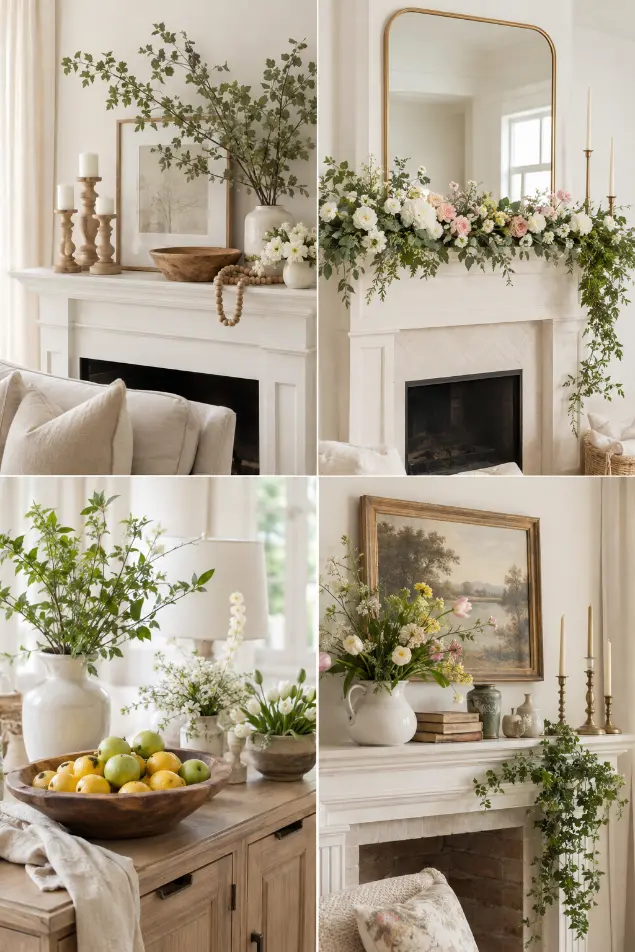
A Few Things I’ve Learned About Styling a Spring Mantel
The biggest mistake I see with seasonal decorating is feeling like every surface needs to announce the season.
Your mantel does not need giant letters spelling “SPRING.”
It does not need twenty seasonal objects either.
Most of the time, the seasonal feeling comes from the materials and colors.
Fresh branches.
Flowers.
Lighter pottery.
Natural wood.
Soft green.
A little pale blue or blush.
That is usually enough.
I also try to work with what is already in the room. If I have a brass mirror above the fireplace, I might repeat brass with two candlesticks. If there is blue in the rug, I might bring one pale blue vase onto the mantel.
Those little connections are what make seasonal decor feel like part of the room rather than something temporarily placed on top of it.
What Colors Work Best for a Spring Mantel?
For me, the easiest starting point is always a warm neutral base.
Cream, soft white, pale beige, natural wood, and a little green can carry almost any spring mantel.
From there, I would add one accent color.
Some combinations I particularly like are:
- Cream, sage green, and natural wood
- White, pale blue, and brass
- Cream, blush pink, and greenery
- Warm white, butter yellow, and light wood
- Beige, lavender, and aged brass
Keeping the palette fairly limited is one of the easiest ways to make inexpensive accessories look more intentional.
Final Thoughts
I think the best spring mantel decorating ideas are the ones that make the room feel refreshed without making it feel completely redecorated.
You really do not need much.
Sometimes I remove half of what was on the mantel during winter, add one vase of tulips, bring in a few leafy branches, and that small change is enough to make the living room feel brighter.
Start with what you already own.
Move the pieces around.
Bring in something living or something that looks freshly gathered from outside.
And do not be afraid to leave part of the mantel empty.
Spring decorating, at least for me, looks best when the room feels like it has a little more space to breathe.