If you’ve ever picked up a paintbrush or roller, you’ve probably wondered: how long to wait between coats of paint to get the best results. Getting this timing right can make the difference between a streaky, peeling mess and a smooth, professional-looking finish.
Many DIY painters rush the process, only to discover that the new layer doesn’t stick properly or starts bubbling. The truth is, there’s no one-size-fits-all answer. The waiting period depends on the type of paint you’re using, the finish, the room conditions, and even the thickness of your application.
This guide breaks it all down so you’ll know exactly how long to wait between coats of paint—and how to avoid the mistakes that ruin a fresh paint job.
Dry Time, Recoat Time & Cure Time
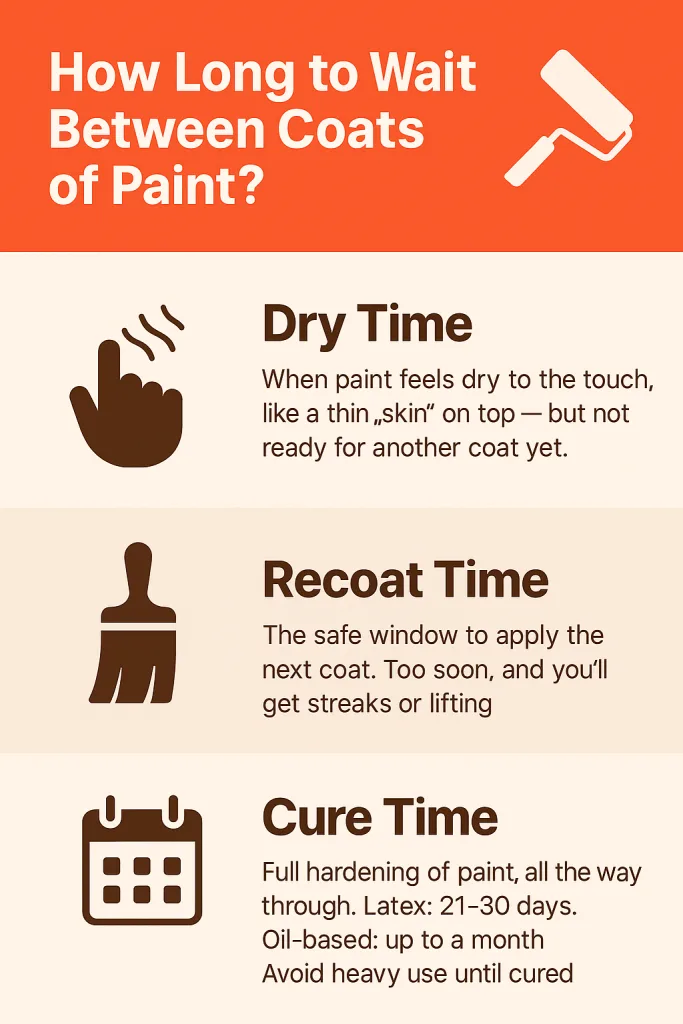
Dry Time
This is the point when the paint feels dry to the touch. You can lightly tap it with your finger without smudging, but that doesn’t mean it’s ready for another layer. Think of it as the “skin” forming on top.
Recoat Time
This is the stage that matters most. It’s when the paint has dried enough that a second coat will bond properly. Add paint too soon, and you’ll risk streaks or even lifting the first coat.
Cure Time
Cure time is the long game. It’s when the paint has fully hardened all the way through, not just on the surface. Latex paints usually cure in 21–30 days, while oil-based paints can take up to a month. Until then, go easy on the surface—avoid scrubbing or pushing heavy furniture right up against it.
Recommended Wait Times by Paint Type
Latex / Water-Based Paint
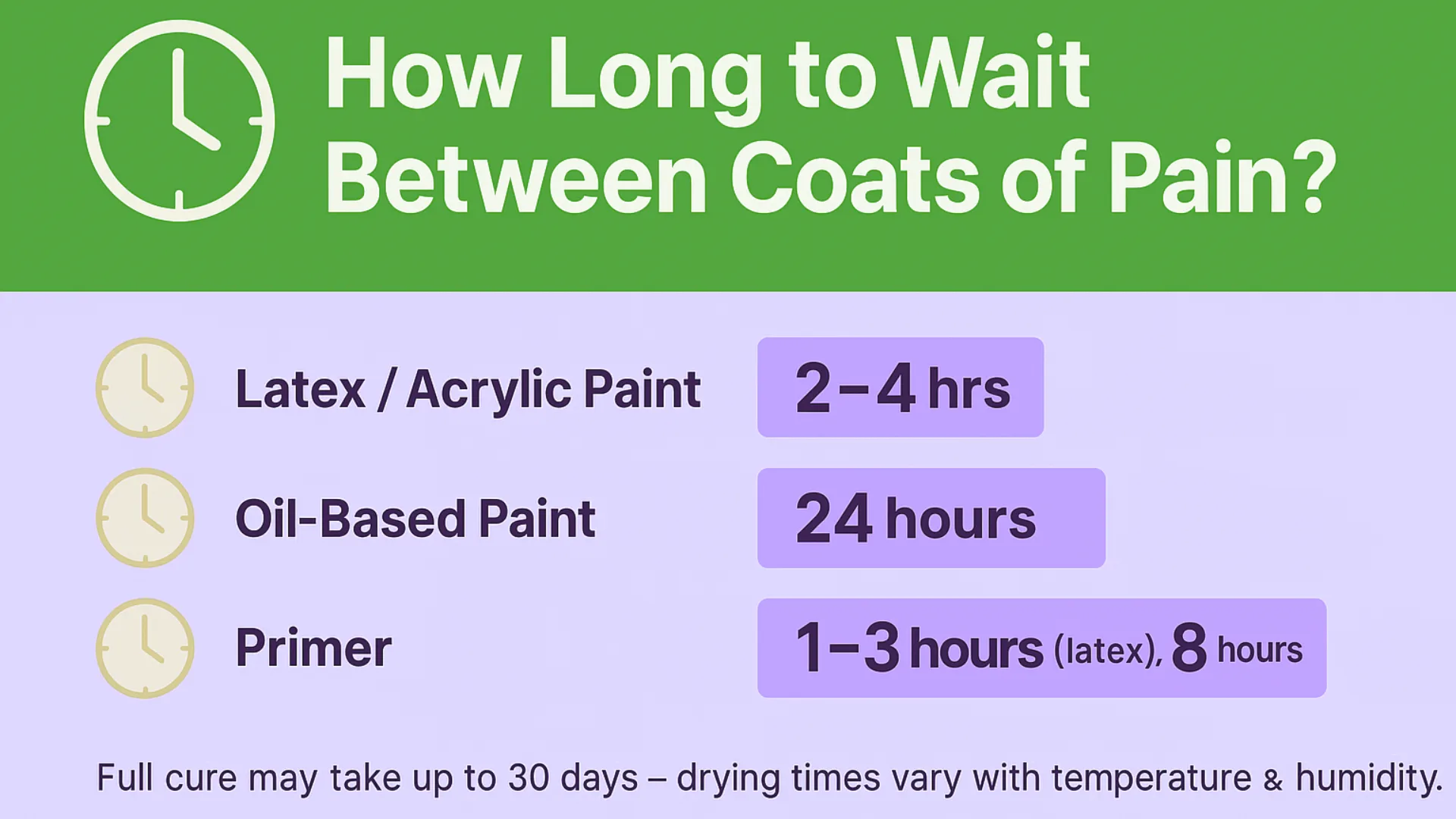
Latex paints are the most common for walls and ceilings. They’re quick-drying, usually ready for a second coat in 2–4 hours. Under ideal conditions (around 72°F and low humidity), you may even recoat closer to the 2-hour mark. But if your space is cooler or more humid, give it more time.
Latex paints are quick-drying and water-based—similar to acrylics. But is acrylic paint waterproof? Here’s the full guide
Oil-Based Paint
Oil-based paints are tougher but slower. They generally need 24 hours between coats. Touch-dry can happen after 6–8 hours, but don’t rush it—recoating too soon can cause dragging or uneven coverage.
Primer
Primers dry faster than most paints. A latex primer is often ready for another coat within 1–3 hours. An oil-based primer takes longer, around 8 hours or more. Always check the can, since formulas vary a lot by brand.
Finish-Specific Recoat Times
Not all paints behave the same. The sheen or finish you choose also affects how long it takes before you can recoat.
Flat or Matte Finishes
Flat paints dry fast—usually within 1–2 hours. Because they don’t contain as many binders or gloss agents, the surface settles quickly. Great if you’re in a rush and need a quick second coat.
Eggshell and Satin Finishes
These mid-sheen paints take a little longer. Expect 2–4 hours before they’re ready for recoating. The slight gloss means the paint film forms more slowly, so patience pays off.
Semi-Gloss and High-Gloss Finishes
Glossy paints are the slowest. They need at least 4–6 hours between coats. Their thicker binders and shiny finish take more time to stabilize, so recoating too soon can cause streaks or smudges.
Environmental & Application Factors That Impact Drying
Even the best paint won’t dry properly if your environment works against you.
Temperature and Humidity
Paint loves balance. For latex paint, aim for around 70–75°F with humidity below 50%. Oil-based paints can handle a wider range, but extremes of hot, cold, or damp weather will slow everything down.
Ventilation and Airflow
A room with no air movement feels like a paint trap. Crack a window or use a fan to circulate air. Just avoid blasting direct air right at wet paint—it can cause uneven drying.
Thickness and Application Method
One thick coat dries slower than two thin coats. Using a roller or sprayer helps distribute paint evenly, while brushing can sometimes leave heavier patches that take longer to settle.
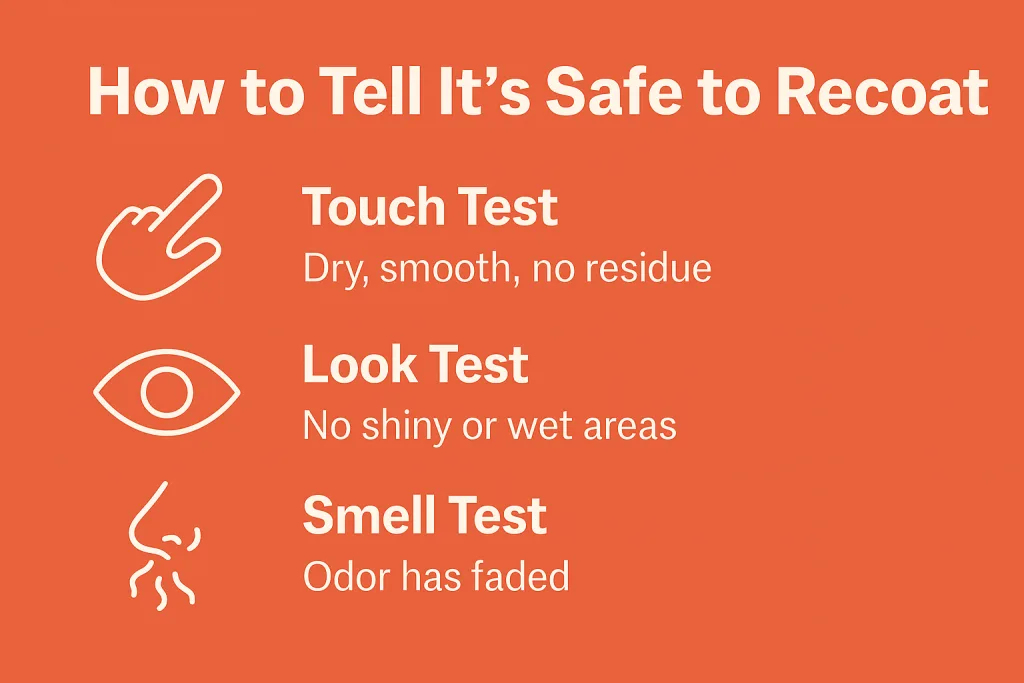
How to Tell It’s Safe to Recoat
Every can has a guideline, but sometimes you just need to trust your senses.
- Touch Test: Gently press the surface with a fingertip. If it feels dry, smooth, and doesn’t leave residue, you’re on track.
- Look Test: Shiny or wet patches mean it’s still drying. A consistent, matte look signals readiness.
- Smell Test: Strong paint odor often means solvents are still evaporating. If the smell has faded, drying is further along.
Waiting a little longer than recommended is always safer than rushing. The surface will thank you with a smooth, even finish.
What Happens If You Recoat Too Soon
It’s tempting to rush into a second coat when you’re eager to finish, but painting too soon can cause headaches later.
Peeling and Lifting
The fresh coat can actually soften the layer beneath it, causing the first coat to lift off the surface. This leads to uneven texture and wasted paint.
Streaks and Smudges
If the base coat is still tacky, the roller or brush may drag through it. Instead of smooth coverage, you’ll end up with streaks that show through the final finish.
Bubbling or Wrinkling
Wet-on-wet application sometimes traps solvents under the top layer, causing tiny bubbles or wrinkles as the paint dries unevenly. Fixing this usually means sanding down and starting over.
If you spill paint while working, don’t panic—here’s how to get paint out of clothes, whether it’s fresh or dried.
Cure Time: When Is Paint Fully Hardened?
Dry paint and cured paint aren’t the same. Even when the wall feels solid, the deeper layers may still be soft.
- Latex Paints: Most latex paints take 21–30 days to fully cure. During this time, avoid scrubbing the walls or hanging heavy objects that press against the surface.
- Oil-Based Paints: Oil formulas can take just as long—sometimes even a bit longer, up to 31 days—because of their dense binders.
- Furniture & Trim: If you’ve painted furniture or doors, give them extra patience before heavy use. Place pads under objects and avoid stacking items until the surface is fully cured.
Think of cure time like drying bread in the oven—it looks done on the outside, but the inside may still be soft.
Tips to Speed Up Drying Safely
You can’t make paint cure instantly, but you can help it dry faster without sacrificing quality.
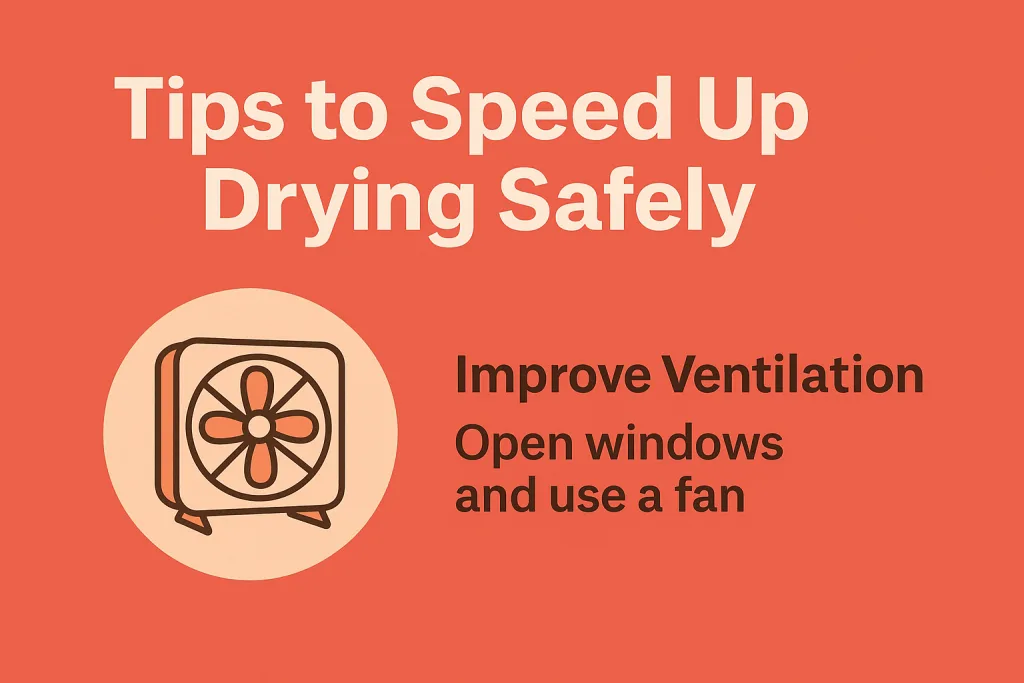
Improve Ventilation
Open windows and doors, or use a box fan to keep air moving. Good airflow speeds up solvent evaporation.
Control Temperature & Humidity
Aim for warm, steady conditions. If it’s humid, consider a dehumidifier. If it’s cold, a gentle space heater (kept at a safe distance) can help maintain the right range.
Apply Thinner Coats
A thin, even coat always dries faster than one heavy layer. Multiple thin layers not only speed up drying but also give a smoother, professional result.
Use the Right Tools
Quality rollers and sprayers distribute paint evenly, preventing thick patches that can delay drying.
What Happens If You Recoat Too Soon
Painting too quickly between coats often backfires. If the first coat hasn’t set properly, the fresh layer may pull it up, leaving peeling or rough patches.
You might also notice streaks or roller marks because the paint underneath is still tacky. In some cases, bubbles or wrinkles form when solvents get trapped under the surface. All of these issues mean extra sanding, touch-ups, and more time spent fixing mistakes.
Cure Time: When Paint Is Truly Ready
A wall may feel dry long before it’s fully hardened. This deeper stage is called curing, and it takes much longer. Latex paints usually need three to four weeks to cure completely, while oil-based paints may take a full month.
During this period, it’s best to avoid heavy cleaning, pushing furniture tight against the walls, or hanging items that could stick to the fresh surface. Think of it as giving the paint time to toughen up from the inside out.
Tips to Speed Up Drying Safely
While you can’t cut cure time drastically, you can help paint dry faster between coats. Good ventilation is key—open a window or use a fan to keep air moving. Keeping the room warm and the humidity low also makes a big difference.
Instead of one thick coat, apply thin, even layers, which settle more quickly and evenly. And if you’re painting furniture or trim, use high-quality brushes or rollers so the paint doesn’t build up in thick spots.

Common Myths About Drying and Recoating
One of the biggest myths is that paint is always ready for a second coat after four hours. While that might be true for some latex paints in ideal conditions, it doesn’t apply across the board. Cooler rooms, higher humidity, or glossy finishes often need much longer.
Another misconception is that primer only needs thirty minutes before recoating. In reality, oil-based primers can take most of a day to dry. It’s also common to think you can “force dry” paint instantly with heaters or blow dryers, but uneven heat can cause cracking and weak adhesion. The safest approach is to follow the label and give your project a little patience.
Special Scenarios to Consider
Not every paint job happens indoors on a mild day. If you’re painting outside, the weather plays a huge role. High humidity or a sudden drop in temperature can extend drying times dramatically, and direct sunlight may cause the top layer to dry too fast while the layer beneath stays soft.
Spray paints also behave differently, often becoming touch-dry within minutes but still needing a few hours before another coat. Quick-dry or specialty paints can speed things up, but even then, rushing is risky. Always check the can for brand-specific instructions.
Conclusion: How long to wait between coats of paint
Waiting between coats of paint can feel like the slowest part of a project, but it’s also the step that makes the biggest difference. Rushing might save a couple of hours today, but it can cost you days of sanding, repainting, and fixing mistakes later.
In general, latex paints need at least two to four hours before recoating, while oil-based paints require a full day. Finishes, room conditions, and thickness of application can stretch that time further, so it’s always better to wait a little longer than risk recoating too soon.
Whether you’re painting walls, trim, or furniture, think of the waiting period as an investment in durability. A job that’s given the proper time to dry and cure won’t just look better—it will last years longer. So grab a coffee, take a break, and let your paint do its work. Patience truly is the secret to a flawless finish.

FAQs
How long before I can move furniture back against the wall?
Ideally, wait at least 48 hours for latex paints and up to a week for oil-based. Full cure takes longer, but this prevents sticking.
Why is my paint still tacky after the suggested wait time?
This usually happens when the room is too humid, too cold, or the coat went on too thick. Better ventilation can help.
Can I use a fan or heater to speed things up?
Yes, as long as it’s not blowing directly on the wall. Gentle air circulation and a steady warm temperature are ideal.
Do glossy paints really take longer to dry?
Yes. The binders that create the shine also slow down the drying and recoating process. Expect at least 4–6 hours between coats.
Is “dry to touch” the same as ready for another coat?
No. Dry to touch only means the surface feels solid. Recoat time is when the paint has chemically stabilized enough to handle another layer.