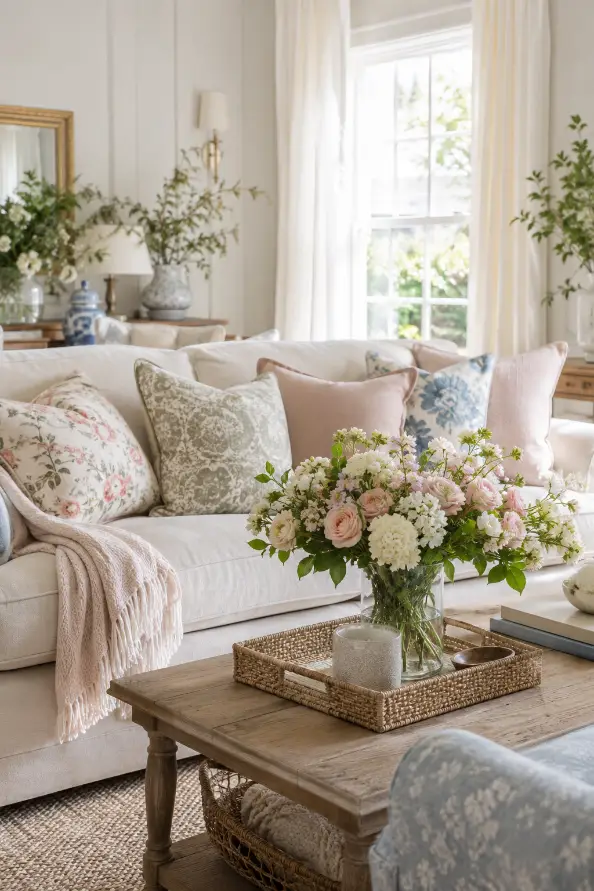
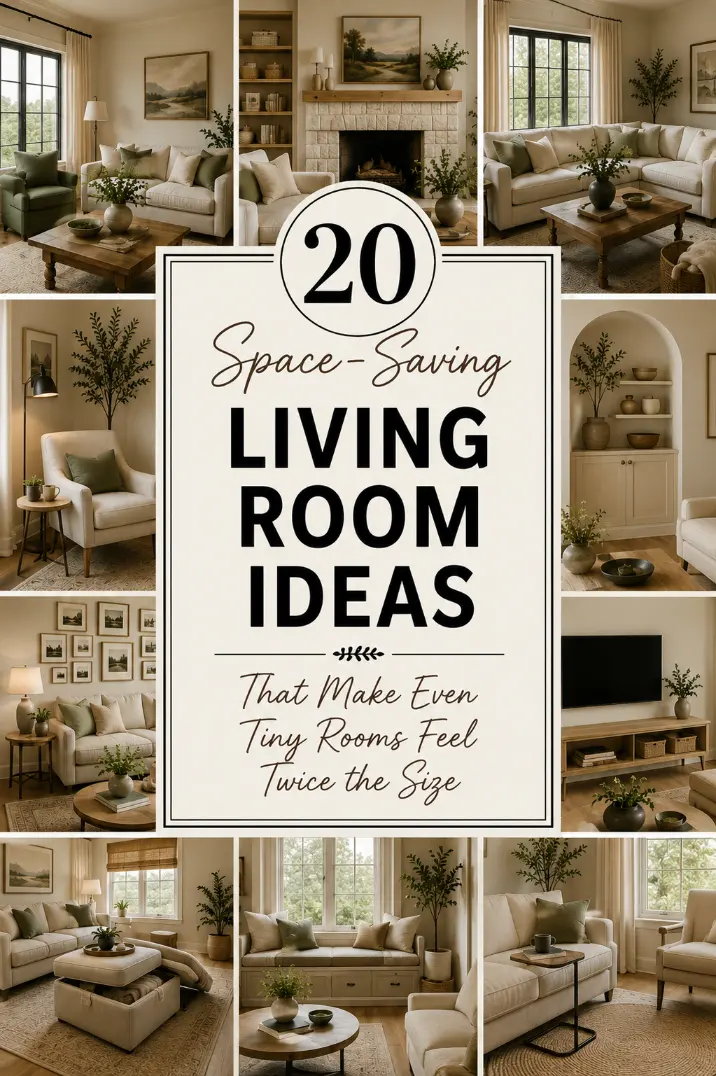
Space-saving living room ideas are something I always come back to because a small room does not automatically mean an uncomfortable room.
I’ve seen plenty of tiny living rooms that feel better than much larger ones simply because the furniture is sized properly, the storage is smarter, and there is enough open space to move around.
For me, the biggest mistake in a small living room is trying to squeeze in everything you would put in a large one.
You usually don’t need more furniture.
You need the right furniture in the right place.
A smaller sofa, a wall-mounted TV, one good storage cabinet, a properly sized rug, and a few smart tricks can make the room feel completely different.
If your living room feels cramped, cluttered, or difficult to arrange, these are the 20 space-saving living room ideas I would try first.
1. Choose a Sofa That Fits the Room
I always start with the sofa because it usually takes up the most space.
In a small living room, an oversized sectional can make everything else feel squeezed.
I would rather choose a slightly smaller sofa with comfortable depth than a huge one that blocks the room.
Look at the arms too.
A sofa with slim arms can give you almost the same seating space while using less floor area.
That small difference matters more than you might think.
Before buying anything, measure the wall and leave enough room to walk comfortably around the sofa.
2. Try a Loveseat Instead of a Full Sofa
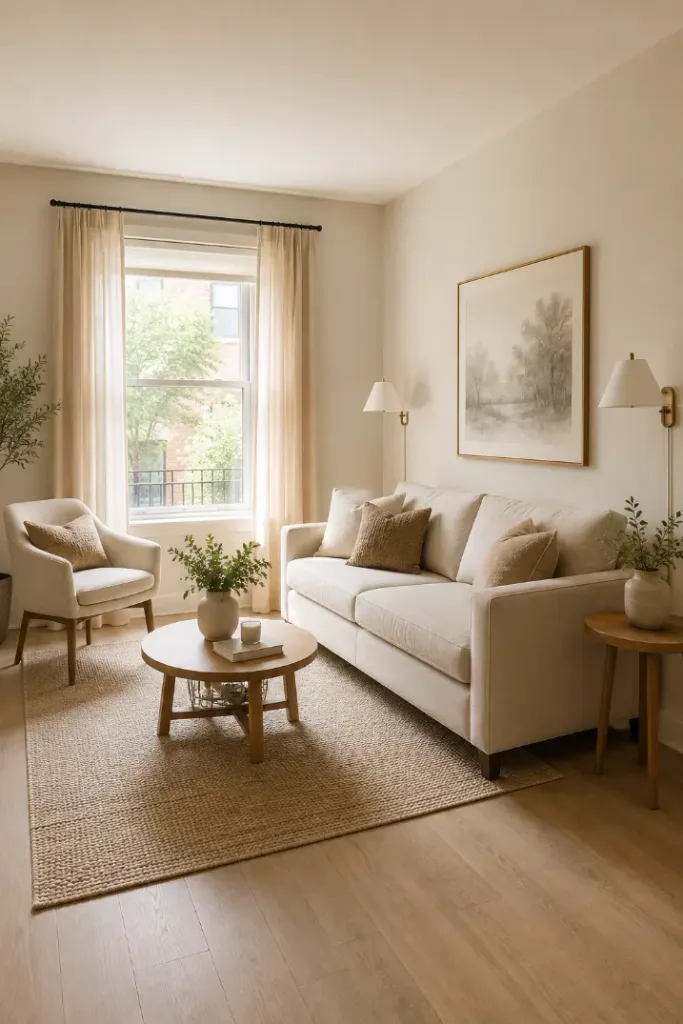
If you live alone or with one other person, you may not even need a full three-seat sofa.
A loveseat can be enough.
Then you can add one comfortable accent chair when you need extra seating.
I actually like this arrangement because it makes the room feel more flexible.
A loveseat and chair can also be easier to move than one huge sectional.
And because there is more floor visible around the furniture, the room immediately feels less crowded.
3. Use Furniture With Visible Legs
This is one of those small design tricks that really works.
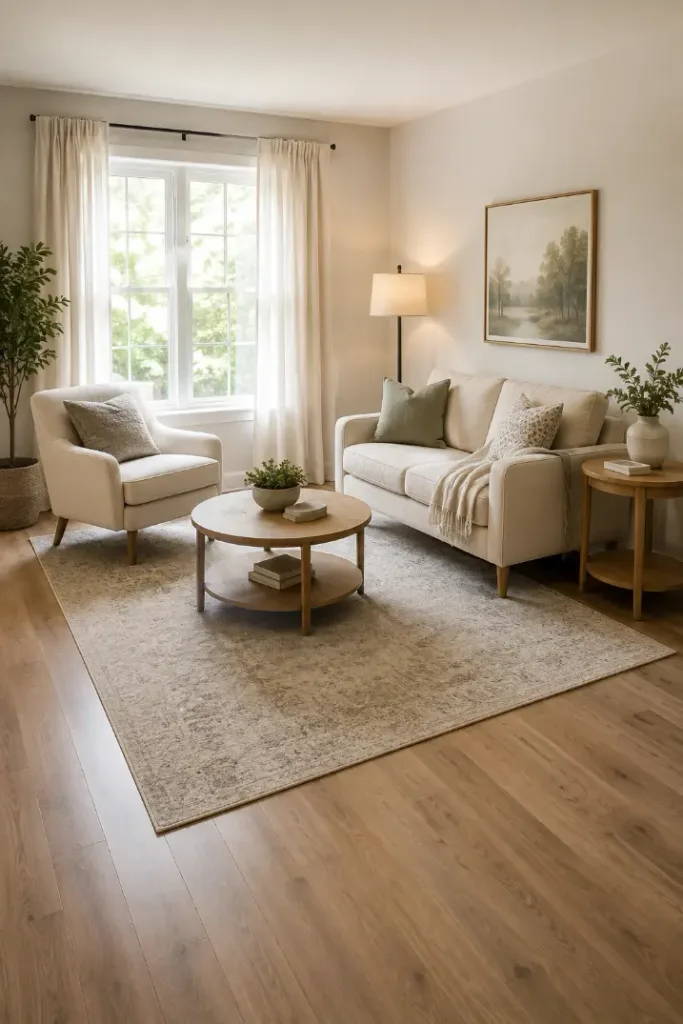
When a sofa, chair, or cabinet sits directly on the floor, it can feel visually heavy.
Furniture with visible legs lets you see more of the floor underneath.
That gives the room a lighter feeling.
I like slim wood or metal legs, especially in small spaces.
You still get the furniture you need, but the room feels more open.
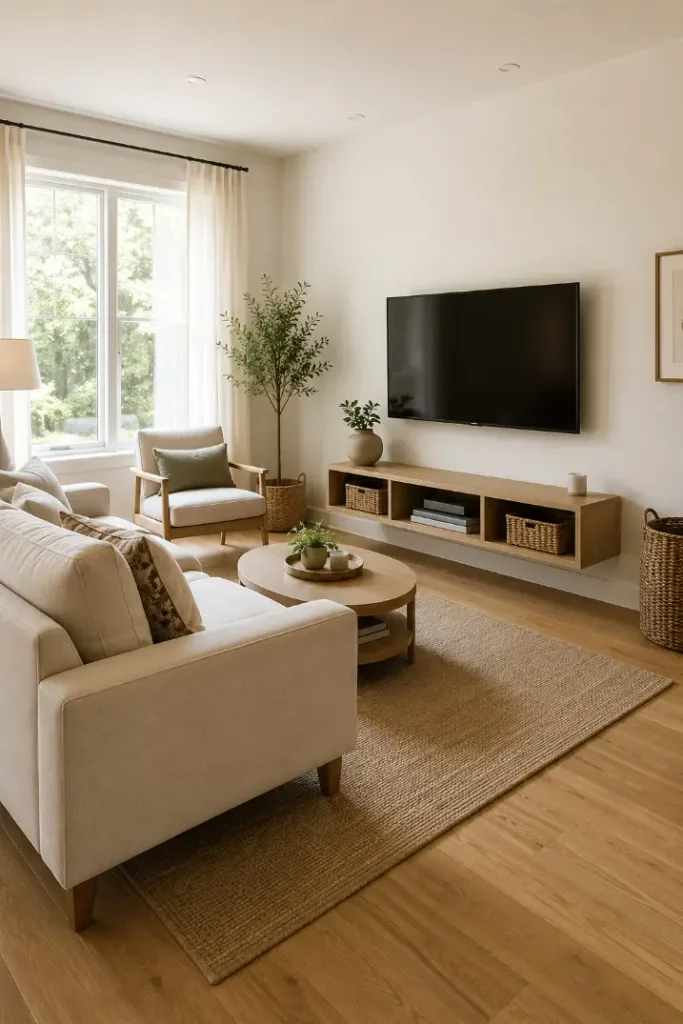
4. Mount the TV on the Wall
If the TV is sitting on a deep media unit, you may be using more floor space than necessary.
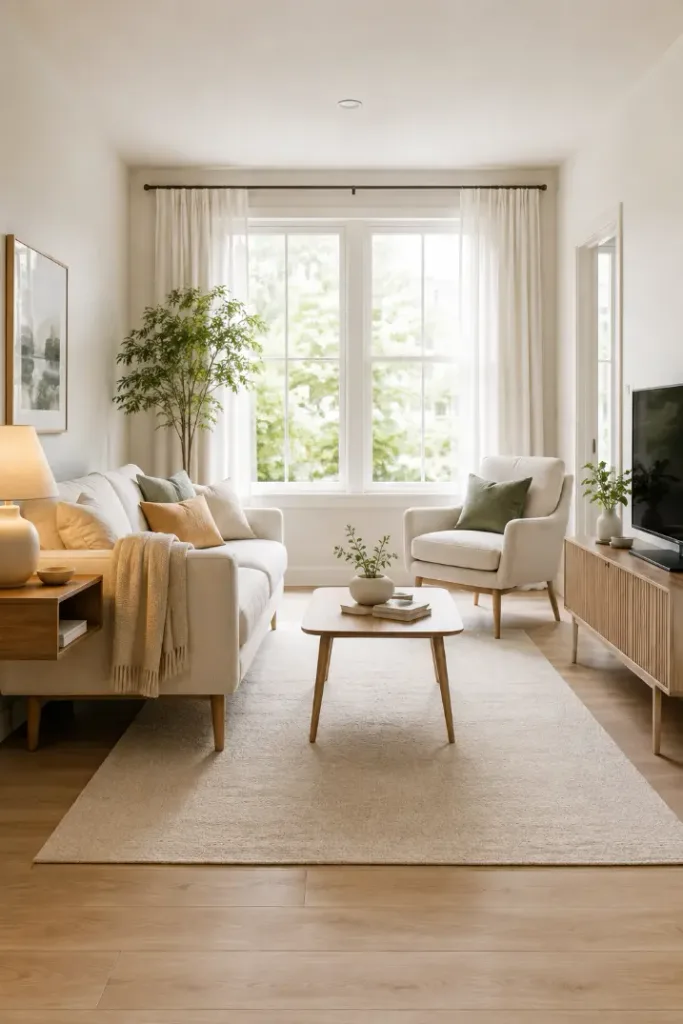
Wall-mounting it can free up that area.
Then, instead of a bulky TV cabinet, I would use a slim floating console or shallow storage unit underneath.
You can still keep remotes, cables, and electronics hidden.
But the wall feels cleaner and the floor stays more open.
This is one of the first things I would do in a very small living room.
5. Use a Floating TV Console
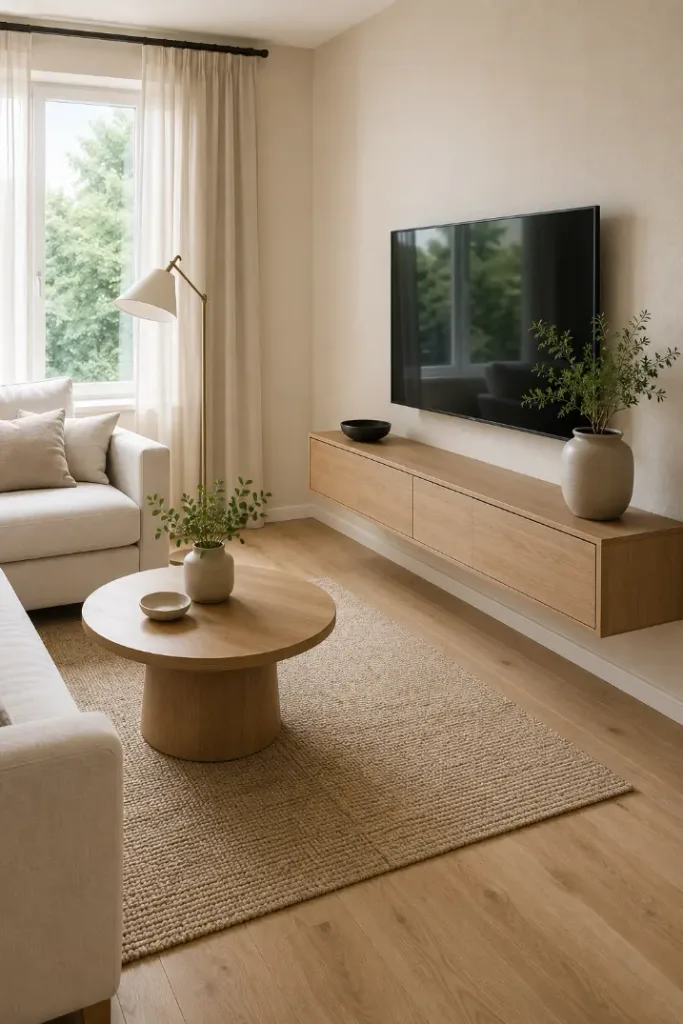
A floating console is another idea I really like.
Because it does not touch the floor, the room feels lighter.
It also makes cleaning easier.
I would keep the console fairly shallow.
You don’t need a deep unit sticking far into the room.
Closed drawers or doors are useful because you can hide cables, games, chargers, and other everyday clutter inside.
The cleaner that wall looks, the bigger the whole living room feels.
6. Choose a Round Coffee Table
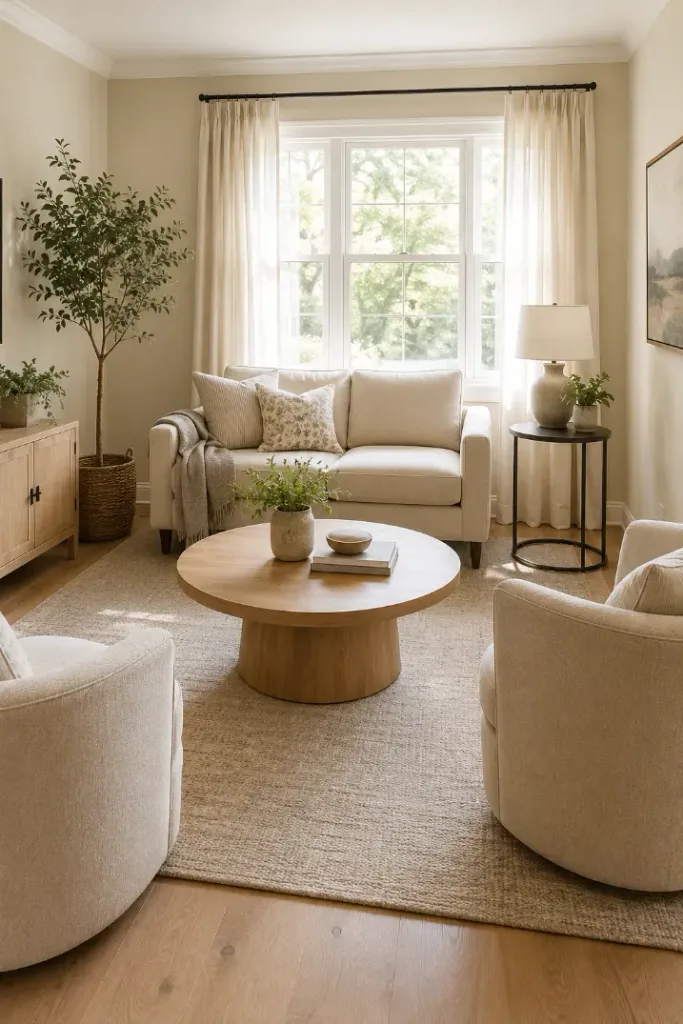
Corners take up visual space.
That is why I often like a round coffee table in a small room.
It is easier to walk around, especially when the sofa and chairs are close together.
You also don’t have to worry about bumping into sharp corners.
A round table can soften the room and improve the flow.
I would choose one that is large enough to be useful but still leaves comfortable walking space around it.
7. Try Nesting Tables
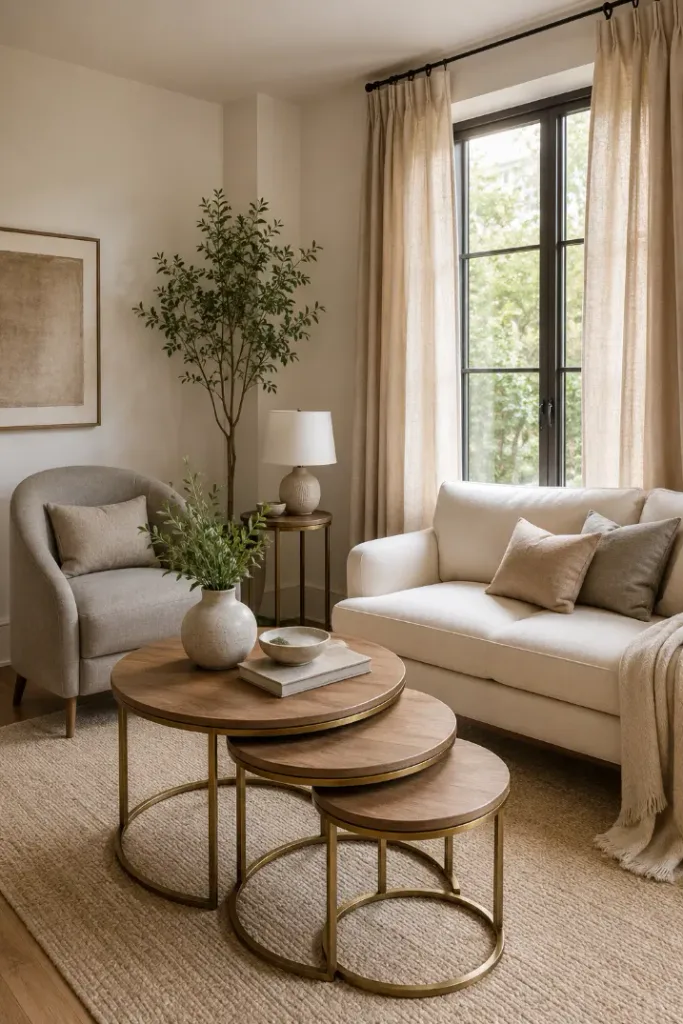
If you don’t have space for a big coffee table, nesting tables are a great alternative.
You can keep them together most of the time.
Then pull one out when someone needs a place for a drink or snack.
Afterward, slide it back underneath.
I like furniture that can change depending on what the room needs.
That is especially useful in a small home.
You get more surface area without permanently using more floor space.
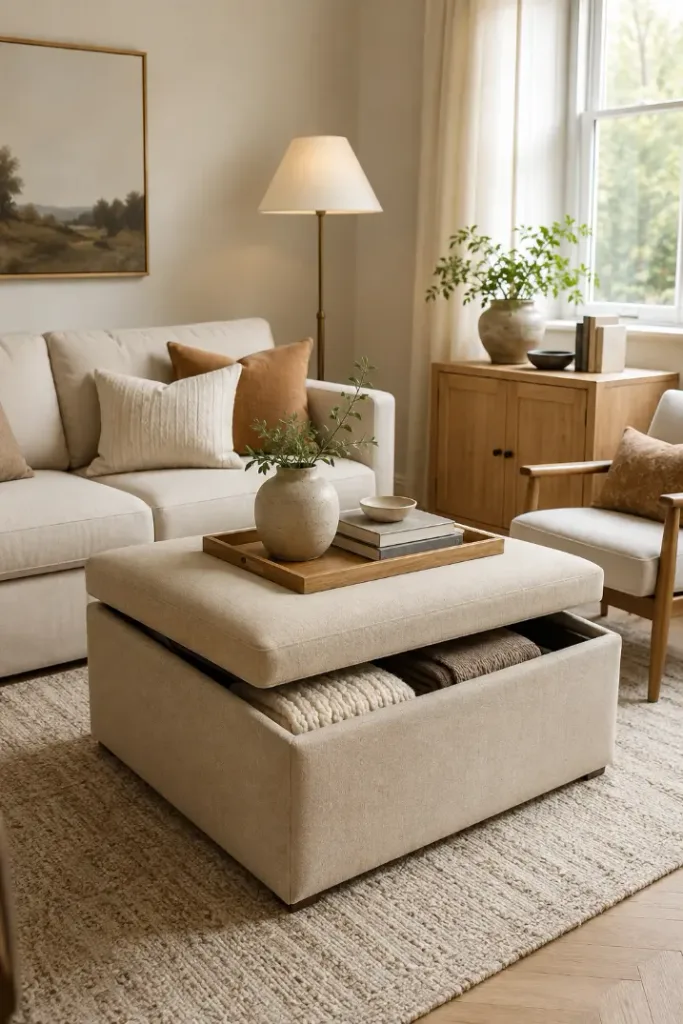
8. Use an Ottoman With Storage
If you need a coffee table and storage, combine them.
A storage ottoman can hold blankets, toys, magazines, or extra cushions.
Add a tray on top and it can work as a coffee table too.
And when you have guests, it becomes extra seating.
That is three jobs from one piece of furniture.
For a tiny living room, I would always look for pieces that can do more than one thing.
9. Add a Storage Bench
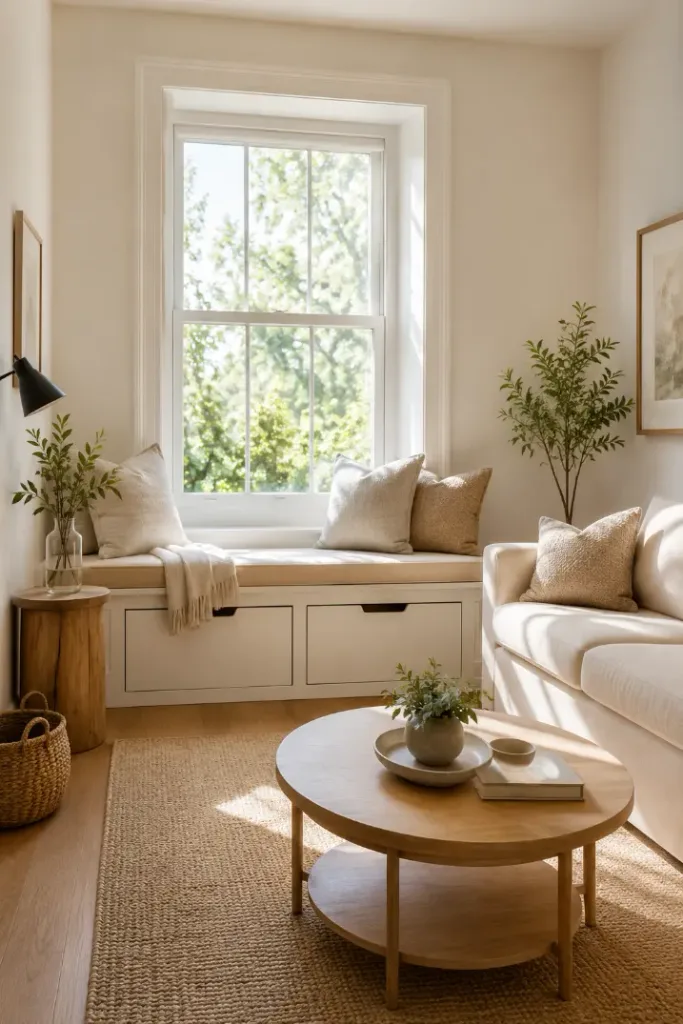
A bench can work really well under a window or along an empty wall.
Choose one with drawers, baskets, or a lift-up seat.
You can store blankets, kids’ toys, books, or anything you don’t want sitting around.
Add a couple of cushions and it becomes extra seating too.
I especially like this if the room does not have space for another chair.
It gives you seating without taking up as much visual space as a bulky armchair.
10. Use the Walls for Storage
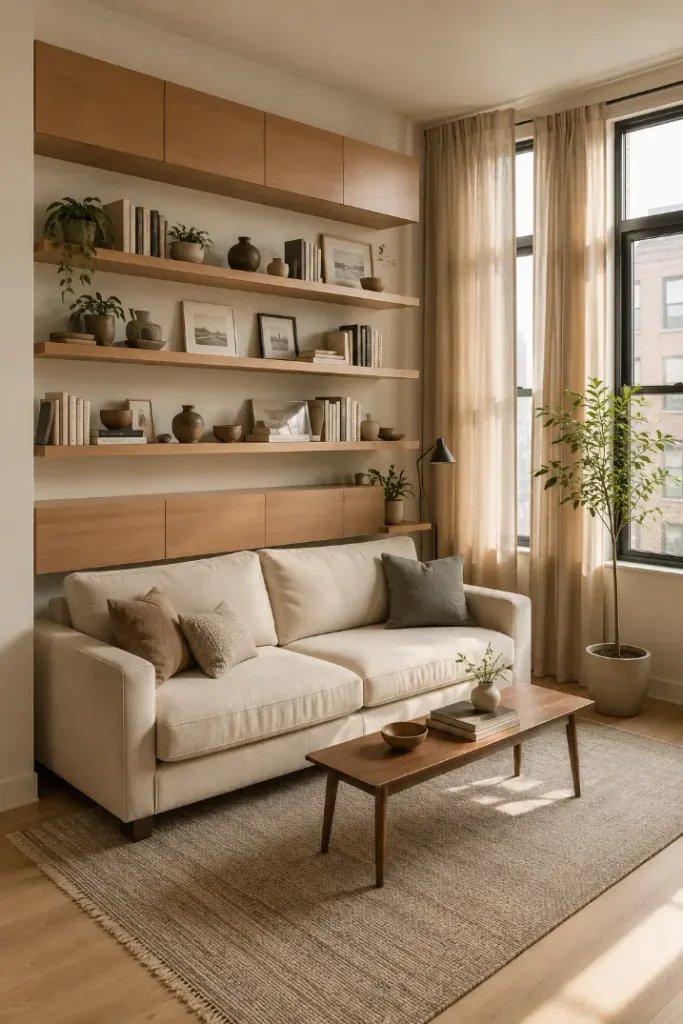
When floor space is limited, I look up.
Walls are often wasted.
Floating shelves can hold books, small artwork, pottery, and plants.
Wall cabinets can provide more serious storage.
You can even build storage around the TV or fireplace.
The important thing is not to cover every wall.
I would choose one area for vertical storage and keep the rest of the room calmer.
That way you gain storage without making the room feel boxed in.
11. Take Shelves All the Way Up
If you have a bookcase or built-in, take it higher.
Tall shelving makes much better use of the wall.
It can also make the ceiling look taller.
Store things you use less often on the upper shelves.
Keep everyday items lower.
And don’t fill every shelf completely.
I always leave a little empty space between books and decor.
That stops tall shelving from making the room feel heavy.
12. Use Corners Properly
Corners are easy to waste.
In a small living room, I want every area to have a purpose.
A corner can hold a floor lamp.
A small reading chair.
A tall plant.
A narrow corner shelf.
Or even a small desk.
Just be careful not to fill every single corner.
Sometimes one well-used corner is enough.
The goal is to make the room work harder without making it feel packed.
13. Choose Slim Side Tables
You probably don’t need large end tables beside the sofa.
A narrow side table is often enough for a lamp, drink, and phone.
I especially like round pedestal tables or small C-shaped tables.
They take up very little floor space.
Some C-tables can even slide partly under the sofa.
That makes them really useful in tight rooms.
It is one of those simple changes that can free up a surprising amount of space.
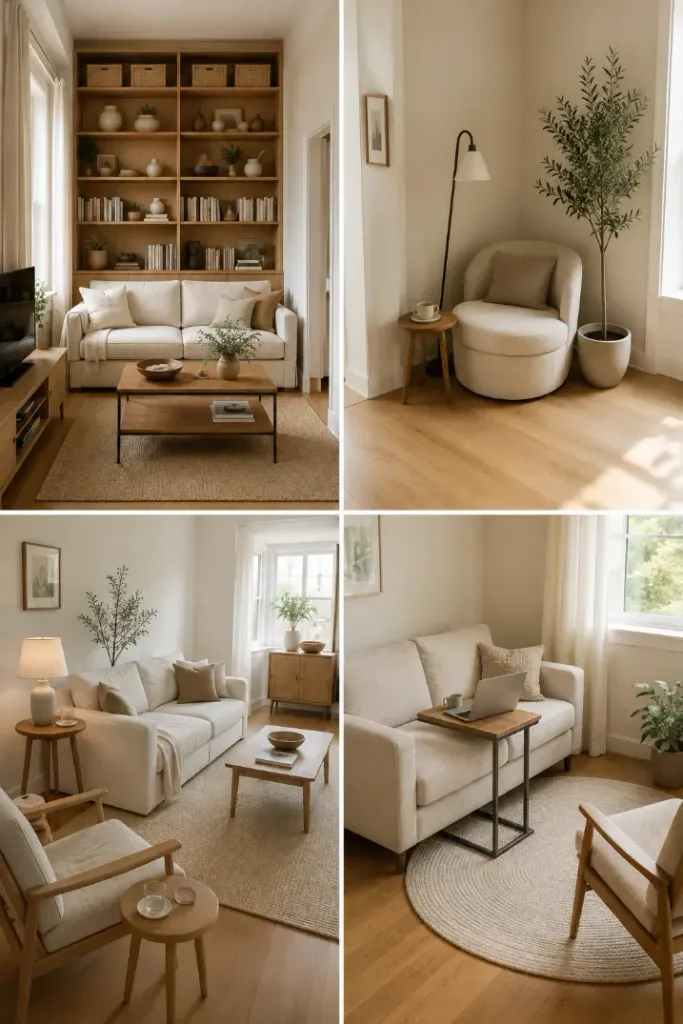
14. Use a C-Table Instead of a Big Side Table
I would seriously consider a C-table in a very small living room.
You can pull it over the sofa when you are using a laptop or eating something.
Then slide it back beside the sofa when you are finished.
It barely takes up any room.
I like this more than putting a large table on each side of the sofa just because that is the traditional layout.
In small spaces, practicality matters more.
15. Hang Curtains High and Wide
This does not actually create more floor space, but it can make the room feel much larger.
Hang the curtain rod close to the ceiling.
Extend it wider than the window.
Then use floor-length curtains.
The window immediately looks taller and wider.
I prefer light linen or linen-look fabric in small living rooms because it keeps the room soft without blocking too much daylight.
Natural light is one of your best tools in a small space.
16. Use a Large Mirror
A mirror can make a huge difference in a small living room.
I like placing one where it can reflect a window.
That brings more light around the room.
A large mirror usually works better than several tiny ones.
You could use one above a console, over the fireplace, or leaning safely against a wall.
If the room feels dark or closed in, this is one of the cheapest changes I would try before buying new furniture.
17. Keep the Floor as Visible as Possible
The more floor you can see, the larger the room tends to feel.
That is another reason I like furniture with legs.
I also try not to place little pieces of furniture everywhere.
One sofa.
One chair.
One coffee table.
One side table.
That may be enough.
If there are five tiny tables and several baskets covering the floor, the room quickly starts feeling smaller.
Open floor space is part of the design too.
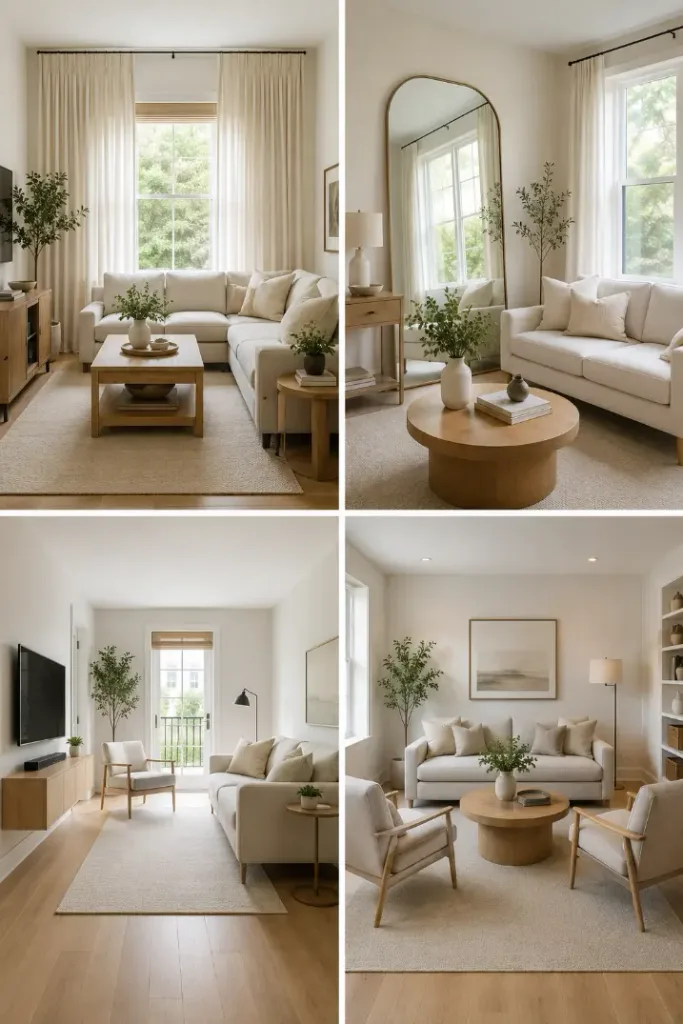
18. Choose One Large Rug Instead of Several Small Ones
A tiny rug can make a small living room feel even smaller.
It creates another little box inside the room.
I prefer one rug large enough to connect the main seating area.
At least the front legs of the sofa should usually sit on it.
This makes the furniture feel like one group instead of separate pieces floating around the room.
It sounds strange, but a larger rug can actually make a small room feel bigger.
19. Hide Clutter Behind Closed Doors
Open shelves are nice, but small rooms can’t handle too much visual clutter.
That is why I like combining open and closed storage.
Maybe you display a few books and pottery pieces.
Then keep chargers, paperwork, toys, cables, and random everyday things behind cabinet doors.
The fewer loose items you can see, the calmer the room feels.
And when the room feels calmer, it usually feels larger too.
I always think good storage should make cleaning up easy, not complicated.
20. Leave Something Out
This might be the most important idea.
You don’t have to fit everything into the living room.
You may not need:
A coffee table and an ottoman.
Two side tables.
Three chairs.
A huge media console.
Multiple floor lamps.
A giant bookshelf.
Sometimes the best space-saving decision is simply deciding what the room can live without.
I always look at the layout and ask:
What can I remove without making the room less useful?
That question often solves the problem faster than buying another piece of “space-saving” furniture.
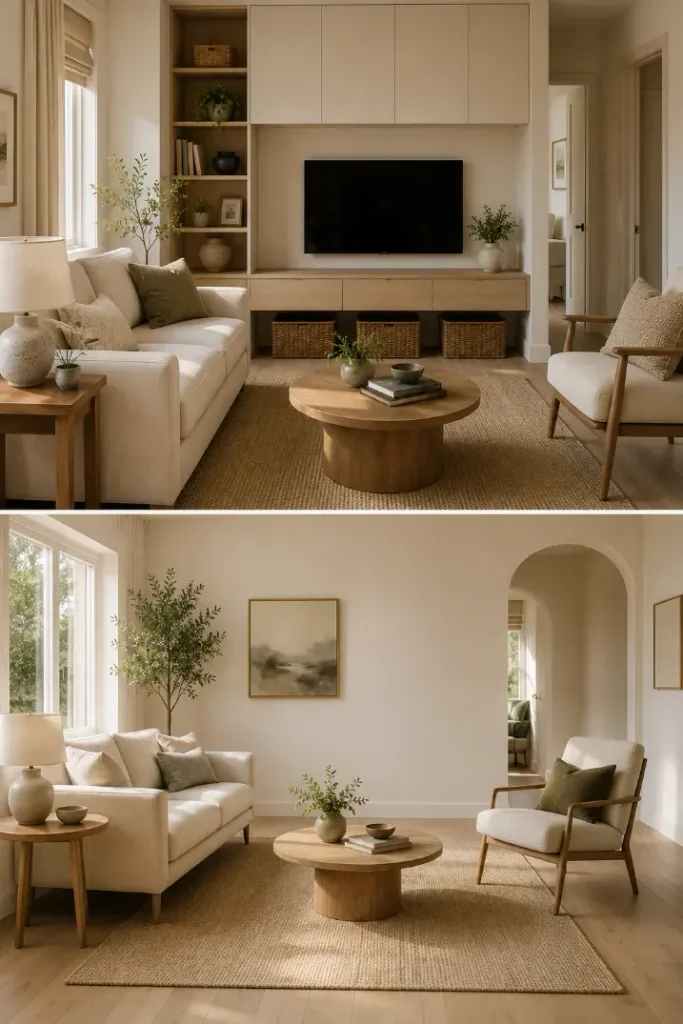
How I Would Arrange a Very Small Living Room
If I had a really tiny living room, I would keep the layout simple.
I would start with a two- or three-seat sofa against the longest usable wall.
Across from it, I would wall-mount the TV.
Under the TV, I’d use a shallow floating console.
Then I would add one small chair if there was enough space.
For the middle, I’d choose either:
- A round coffee table
- A storage ottoman
- Two small nesting tables
Not all three.
I’d use one large rug to connect everything.
Then I’d add floor-length curtains and one large mirror.
That would already make the room feel much more complete without filling every inch.
Space-Saving Furniture I Think Is Actually Worth Buying
There are a lot of products marketed for small spaces, but I don’t think you need all of them.
The pieces I find most useful are:
- Storage ottomans
- Nesting tables
- C-tables
- Benches with storage
- Slim console tables
- Floating TV units
- Sofas with narrow arms
- Tall bookcases
- Wall-mounted shelves
- Foldable or extendable tables
The main thing is choosing furniture that solves a real problem.
I wouldn’t buy multifunctional furniture just because it is clever.
It still needs to be comfortable and easy to use.
Colors I Like for Small Living Rooms
You do not have to paint a small living room completely white.
I actually think slightly warmer colors often look better.
Some combinations I like are:
- Warm white + light oak + beige
- Cream + walnut + olive green
- Soft taupe + ivory + black accents
- Pale gray + warm wood + cream
- Beige + muted blue + natural wood
- Warm white + tan + sage
- Cream + rust + oak
I usually keep the larger areas quieter and bring stronger colors into one chair, cushions, artwork, or pottery.
That keeps the room interesting without making it feel busy.
How to Make a Small Living Room Feel Bigger Without Renovating
If I couldn’t change the architecture, I would focus on five things first.
Remove extra furniture.
This costs nothing and usually makes the biggest difference.
Hang the curtains higher.
This makes the room feel taller.
Use a larger rug.
It connects the furniture and makes the layout feel more intentional.
Add a mirror near natural light.
This helps brighten the room.
Hide clutter.
A clean surface can make a small room feel completely different.
I would do those things before spending money on major changes.
Mistakes That Make a Small Living Room Feel Even Smaller
There are a few things I would be careful with.
Furniture that is too large.
One oversized sofa can take over the whole room.
Too many small furniture pieces.
Lots of little tables and stools can create visual clutter.
Tiny rugs.
They make the furniture look disconnected.
Short curtains.
They can make the ceiling feel lower.
Too much open storage.
Seeing everything at once makes the room feel busier.
Furniture blocking walkways.
If you have to squeeze around a chair every day, the layout is not working.
Trying to fill every corner.
Empty space is useful.
I would rather have a slightly simpler room that feels comfortable than a fully decorated room that feels crowded.
How I Keep a Small Living Room From Feeling Boring
Space-saving does not mean removing all personality.
You can still use artwork.
Pattern.
Color.
Plants.
Books.
Interesting lighting.
I just choose fewer things and let them have more impact.
One large piece of art instead of six small ones.
One beautiful plant instead of five tiny pots.
One patterned chair instead of lots of colorful accessories.
One good lamp instead of several decorative lights.
That approach gives the room character without creating clutter.
Final Thoughts
The best space-saving living room ideas are not really about squeezing more into a small room.
They are about making better use of what you already have.
Choose furniture that fits.
Use your walls.
Hide clutter.
Let light into the room.
Keep walkways open.
Choose pieces that can do more than one job.
And most importantly, don’t be afraid to leave something out.
A small living room does not need to feel packed to feel complete.
For me, the best small spaces are the ones where everything has a purpose and there is still enough breathing room to sit down, move around, and actually enjoy the room.
That is when a tiny living room starts feeling much bigger than it really is.