

High ceilings can make a living room feel incredible, but they can also make it feel strangely unfinished.
I have seen plenty of tall living rooms where the furniture looks tiny, the walls feel empty, and the chandelier seems to be floating somewhere far above everything else. The problem is not the ceiling height. It is usually that the room has been decorated as though it were a normal eight- or nine-foot room.
When a ceiling rises dramatically, the rest of the design has to respond to that scale.
For me, the best high-ceiling living rooms do two things at once: they celebrate the height while still making the seating area feel warm and grounded.
That does not mean filling every wall or buying enormous furniture. Sometimes one tall architectural feature is enough.
Here are 27 ideas I would use to make a high-ceiling living room feel balanced, beautiful, and genuinely intentional.
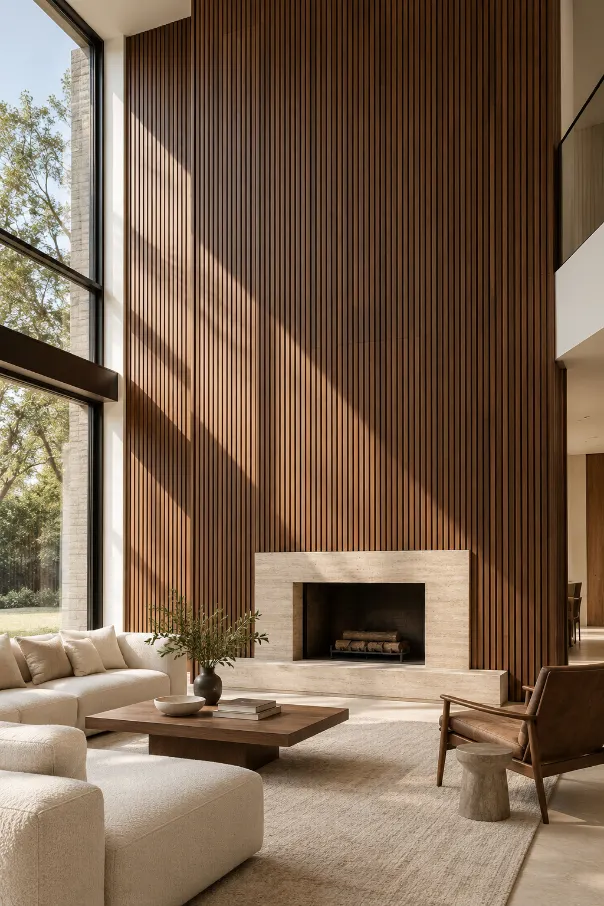
1. Run a Stone Fireplace All the Way to the Ceiling
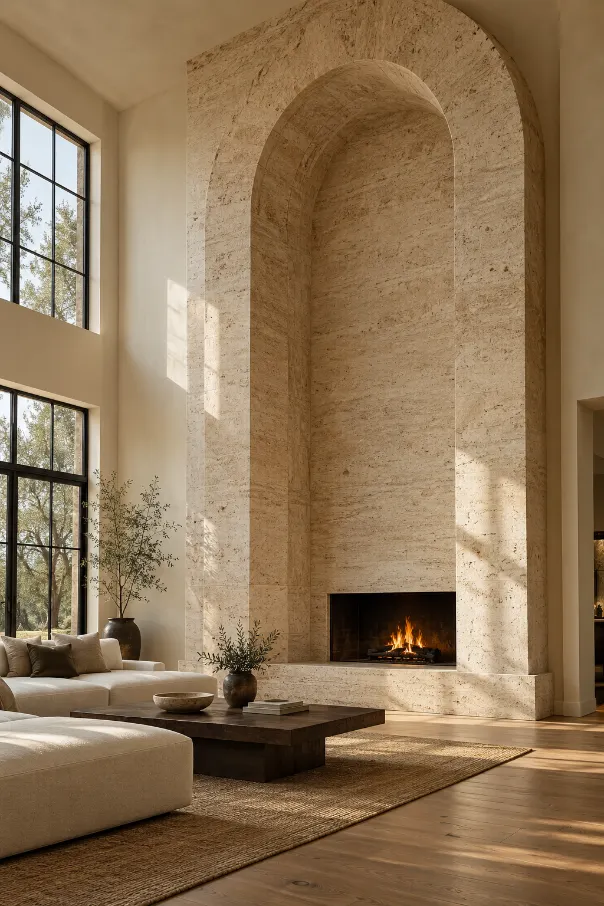
High Ceiling Living Room Ideas If I had a double-height living room, this would be one of my first choices.
Instead of stopping the fireplace surround at normal mantel height, continue limestone, travertine, or softly textured stone upward until it meets the ceiling.
The vertical line immediately makes sense of all that height.
Keep the furniture below fairly simple so the fireplace remains the architectural focal point.
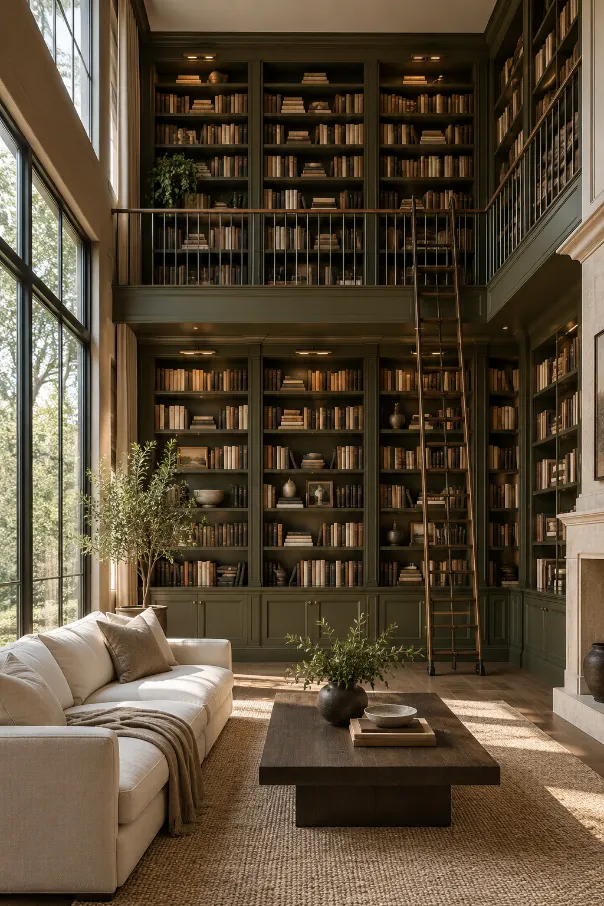
2. Build a Floor-to-Ceiling Library Wall
Tall walls are perfect for bookshelves.
A full-height library instantly gives otherwise empty vertical space a purpose.
I especially like dark olive, walnut, or deep blue built-ins with a rolling ladder.
The lower shelves can hold books and everyday objects, while the upper portion can stay more lightly styled.
It feels dramatic without relying on oversized decor.
3. Hang One Giant Painting Instead of a Gallery Wall
A high wall can swallow normal-sized artwork.
Instead of trying to fill it with dozens of frames, I would use one enormous painting.
A large landscape, abstract canvas, or vintage-style piece can bridge the gap between furniture and ceiling beautifully.
The trick is choosing something with enough scale that it feels connected to the architecture.
4. Drop the Chandelier Lower Than You Think
One common mistake in tall rooms is mounting the light fixture too close to the ceiling.
That leaves a huge empty void between the light and the furniture.
I would bring the chandelier lower so it feels visually connected to the seating area.
A large ring chandelier, sculptural pendant, or multi-tiered fixture works particularly well.
5. Use Oversized Ceiling Beams
A tall ceiling often needs something that visually brings it down.
Chunky wood beams can do that without making the room feel smaller.
I love this in warm European, Mediterranean, rustic modern, and transitional spaces.
The beams add rhythm overhead and help the ceiling feel designed instead of simply high.
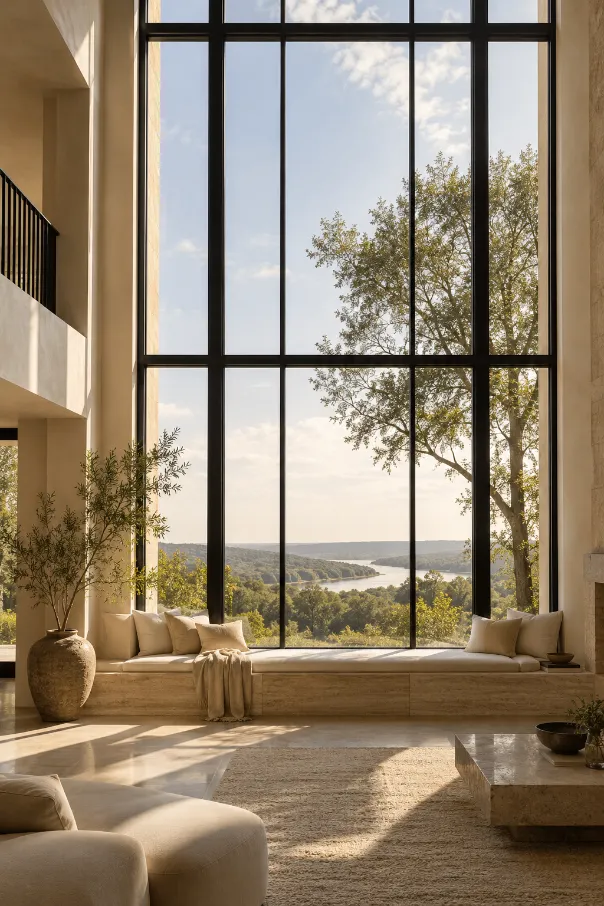
6. Create a Full Wall of Windows
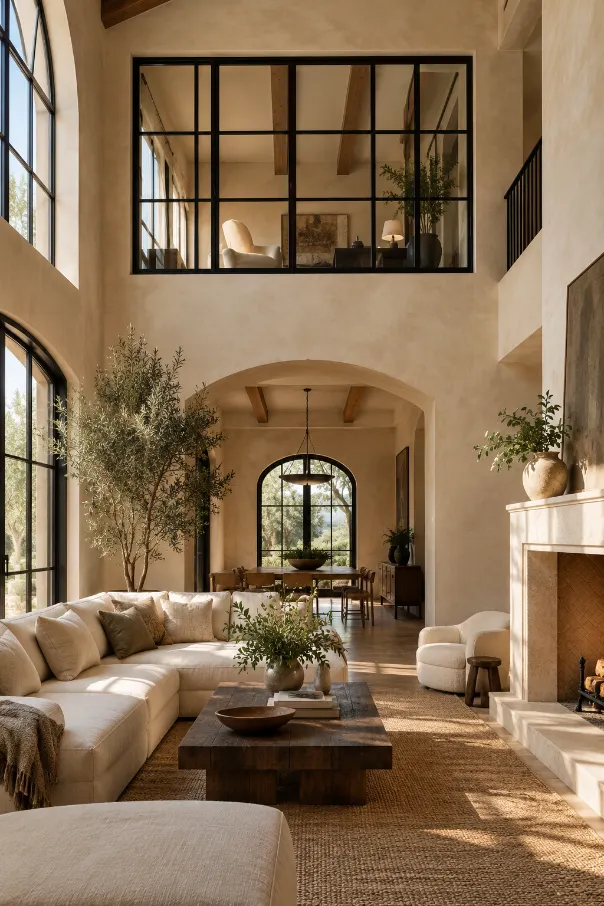
If the architecture allows it, tall ceilings are the perfect excuse for oversized glazing.
A wall of windows makes the vertical space feel intentional because your eye naturally follows the glass upward.
Black frames create stronger architectural lines, while lighter frames keep the room softer.
I would keep the furniture relatively low so the view remains uninterrupted.
7. Add Curtains From Ceiling to Floor
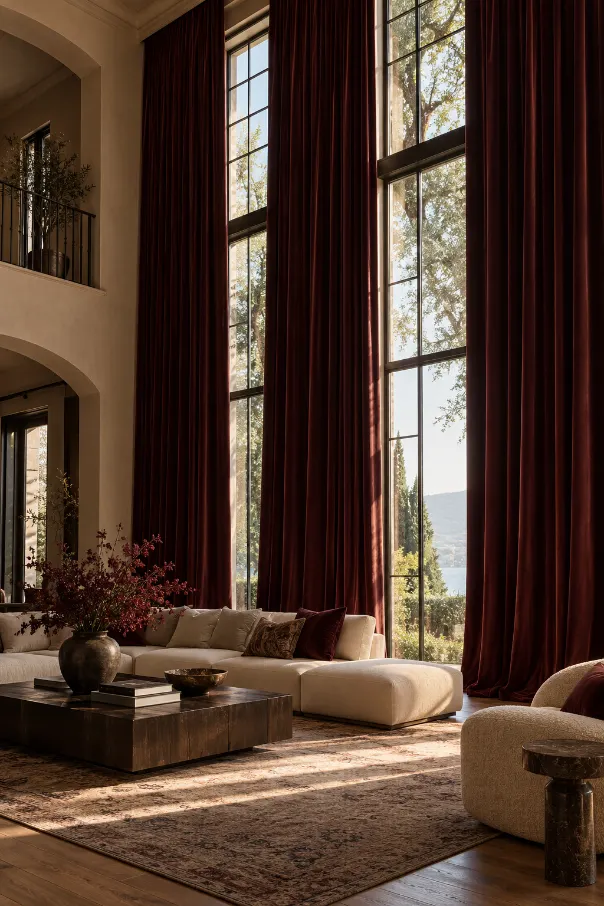
Short curtains can look especially awkward in a tall living room.
I would mount the track close to the ceiling and let fabric fall all the way to the floor.
The long vertical folds emphasize height while also softening the room.
Heavy linen, wool-blend fabric, or substantial cotton usually looks better than thin sheer fabric on its own.
8. Paint the Ceiling a Deeper Color
High ceilings do not always need to be white.
A muted olive, deep taupe, charcoal, or even burgundy ceiling can make a very tall room feel much more intimate.
I particularly like this when the walls remain lighter.
The ceiling becomes a visual cap rather than disappearing into empty space.
9. Color-Drench the Entire Room
Another approach is to paint the walls, trim, and ceiling in one continuous color.
In a double-height space, this can feel incredibly dramatic.
Deep olive, dusty blue, warm mushroom, and clay tones work beautifully.
Without contrasting white trim breaking up the walls, the architecture feels smoother and more intentional.
10. Build an Extra-Tall Fireplace Mantel
Not every fireplace needs to reach the ceiling.
Sometimes simply increasing the height of the surround is enough.
A tall plaster mantel or substantial stone frame creates better proportion against a high wall.
I would keep the shape simple rather than adding excessive carving.
Scale does more work than ornament.
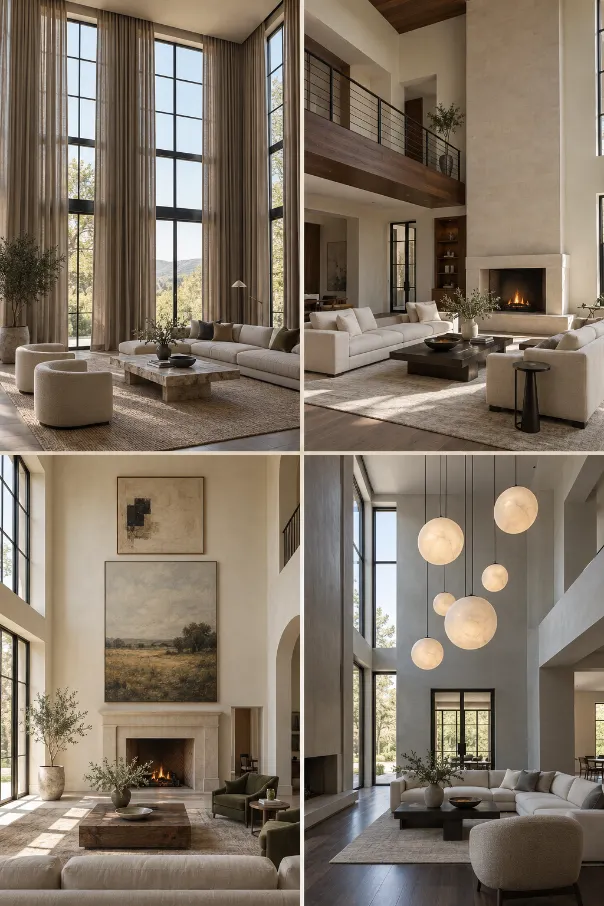
11. Install a Two-Story Curtain Wall
If one wall contains stacked windows or a double-height opening, treat the entire surface as one composition.
Use one continuous curtain track across the top rather than separate curtains for upper and lower windows.
The long fabric panels can make the room feel theatrical in the best way.
It is especially beautiful in bedrooms and living rooms with garden views.
12. Add a Mezzanine or Interior Balcony
A high ceiling becomes even more interesting when part of the upper level overlooks the room.
An interior balcony breaks the vertical wall and adds another architectural layer.
I like simple railings rather than ornate ones so the room does not become too busy.
Wood, black metal, or plaster railings can all work depending on the house.
13. Hang Art Above the Fireplace, Not Just on It
In a normal room, artwork usually sits just above the mantel.
With very high ceilings, I would consider stacking two large pieces vertically or placing one enormous artwork much higher.
It helps carry the focal point upward.
The important thing is maintaining enough visual breathing room around the art.
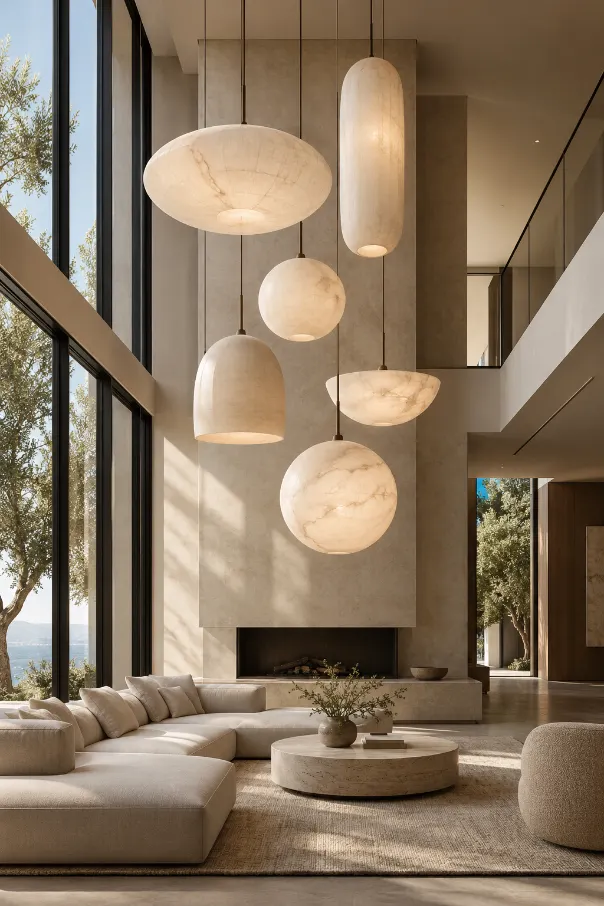
14. Create a Sculptural Pendant Cluster
A single chandelier is not the only option.
Several pendants hanging at different heights can fill the vertical volume beautifully.
I especially like frosted glass globes, paper lanterns, ceramic pendants, or simple sculptural shapes.
The cluster should feel intentional rather than random, almost like an installation floating in the room.
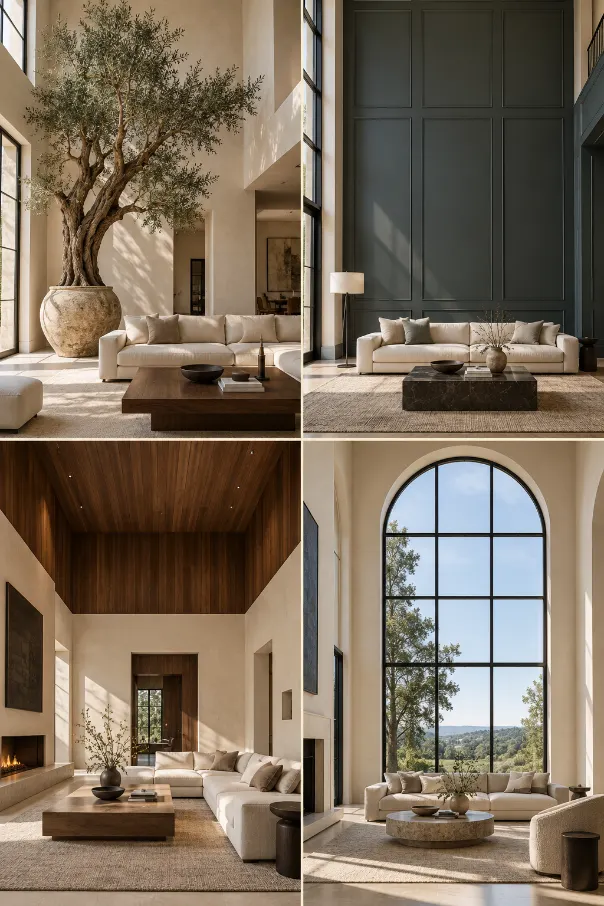
15. Use Tall Indoor Trees
High ceilings can handle greenery that would overwhelm an ordinary room.
An olive tree, ficus, or other tall indoor tree can fill an awkward corner while adding softness.
I would use one substantial tree rather than several smaller plants.
The scale feels cleaner and more architectural.
16. Build a Double-Height Paneled Wall
Wall paneling becomes much more dramatic when it continues upward through two stories.
Simple rectangular molding, vertical timber panels, or wide fluted sections can make an enormous wall feel finished.
I prefer fewer, larger panels rather than lots of tiny boxes.
The proportions should match the room.
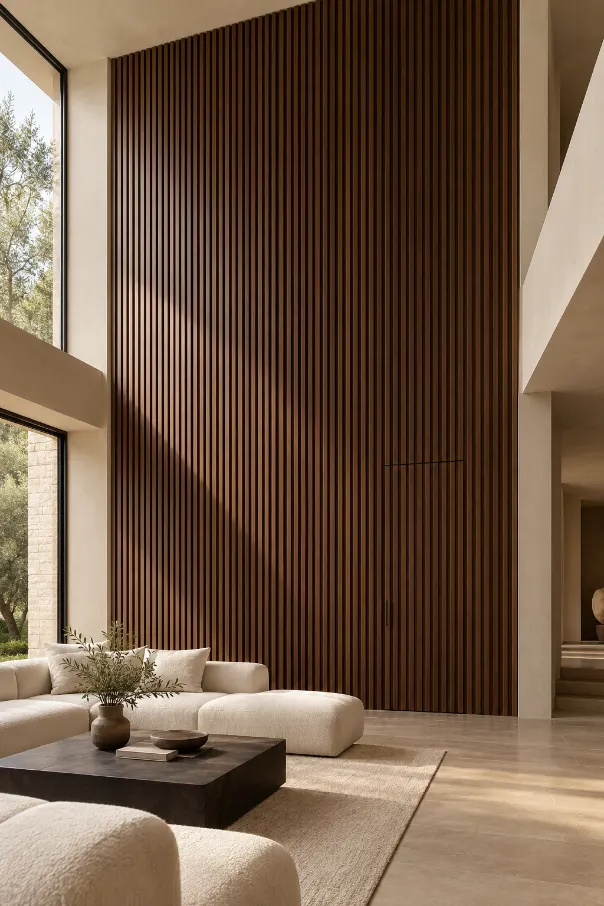
17. Wrap the Upper Walls in Wood
Instead of using wood only on the ceiling, continue it down part of the upper walls.
This can create a warmer, cocooning effect in a room that otherwise feels too open.
Dark walnut feels dramatic, while pale oak keeps things light.
It works especially well behind a fireplace or around a tall window wall.
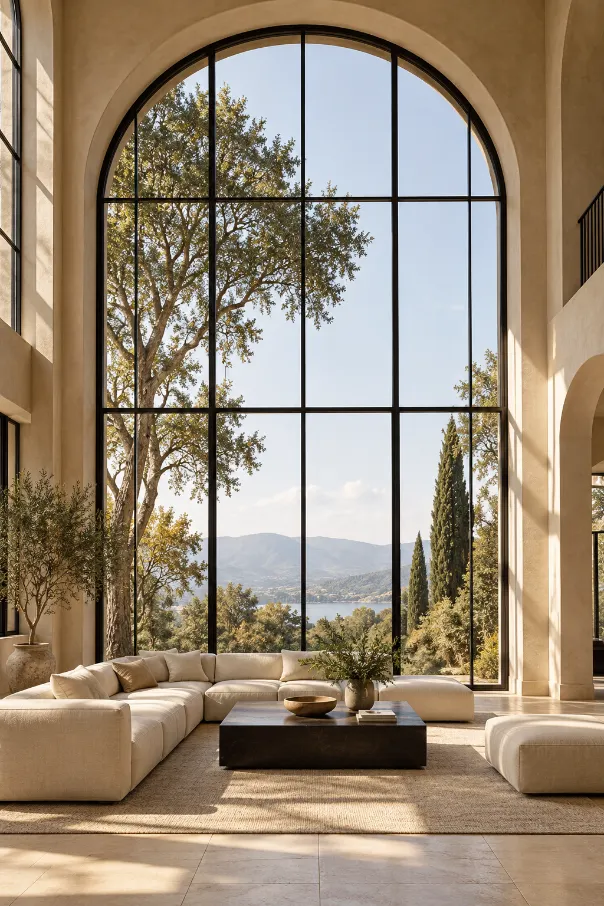
18. Add an Oversized Arched Window
Tall ceilings and arches naturally work together.
One huge arched window can become the entire focal point of the living room.
I would keep the surrounding wall fairly quiet so the shape has room to breathe.
It is particularly beautiful with plaster walls, warm wood floors, and simple neutral furniture.
19. Build Shelving Around a Tall Window
If a window sits in the middle of a huge wall, built-ins can help connect it to the rest of the room.
Floor-to-ceiling shelves on both sides make the window feel integrated rather than isolated.
You could even add a bench beneath it.
The combination gives the room both height and function.
20. Use Extra-Tall Interior Doors
Standard doors can look surprisingly small in a room with twelve- or fourteen-foot ceilings.
Where possible, I love taller doors.
They immediately improve proportion.
Full-height paneled doors, dark stained wood, or simple plaster-framed openings can make the architecture feel much more custom.
21. Create a Dramatic Plaster Archway
Tall ceilings make oversized interior arches possible.
A generous plaster arch between the living room and dining room or kitchen can create a beautiful transition without closing off the space.
I like broad, softly rounded arches rather than overly decorative ones.
They feel architectural enough on their own.
22. Use a Large Canopy of Lighting
Instead of thinking of lighting as one fixture, I sometimes like treating the ceiling almost like a landscape.
Imagine several large linen shades or sculptural pendants spread across a double-height living room.
It can make the volume feel fuller while still allowing plenty of air around each fixture.
This works particularly well in modern spaces.
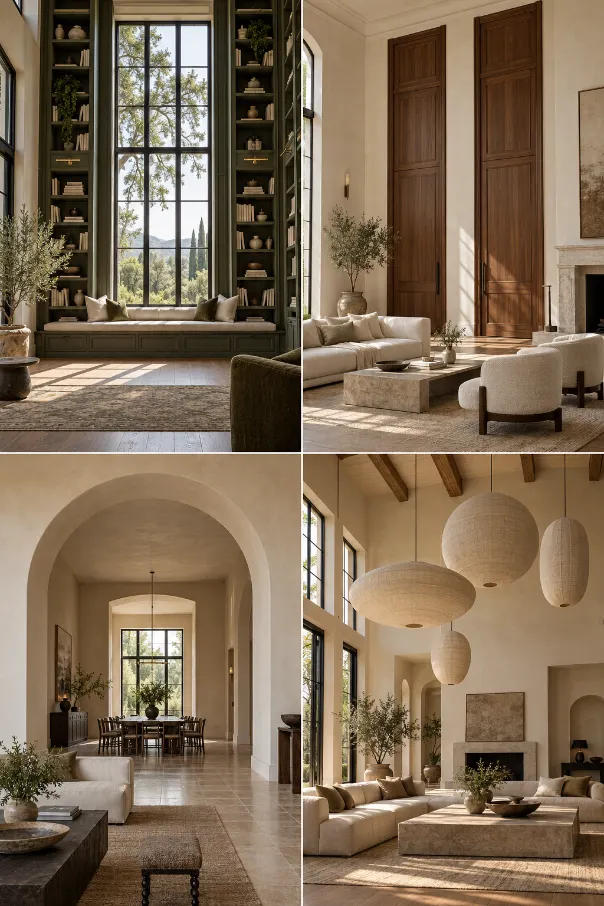
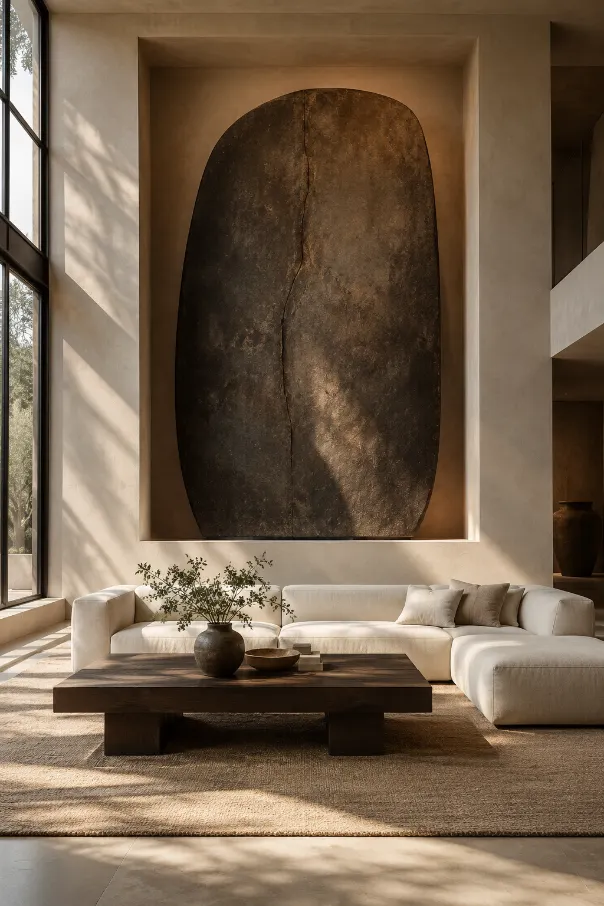
23. Build a Tall Stone or Plaster Niche
An oversized niche can turn an empty high wall into something special.
I would make it tall enough to feel architectural rather than decorative.
Inside, you could place one sculpture, one large vessel, or even a bench.
Keeping the niche sparsely styled is what makes it feel luxurious.
24. Add a Horizontal Beam or Picture Rail to Break the Height
Sometimes the solution is not emphasizing the height—it is controlling it.
A strong horizontal line partway up the wall can visually divide a very tall room.
That might be a timber beam, picture rail, molding band, or change in wall finish.
The lower part becomes cozier while the upper section still feels open.
25. Use Oversized Furniture With Low Profiles
Tall rooms often need larger furniture, but that does not mean taller furniture.
A deep sectional, wide coffee table, oversized rug, and substantial lounge chairs can ground the lower half of the room.
I actually prefer keeping the seating fairly low.
The contrast between low furniture and soaring architecture makes the ceiling feel even more impressive.
26. Create a Ceiling Feature With Coffers or Panels
If the ceiling itself feels too empty, give it structure.
Large coffers, broad plaster panels, or simple timber framing can transform the overhead space.
I would keep the pattern generous.
Small decorative grids can become visually busy at this scale.
Large forms suit tall ceilings much better.
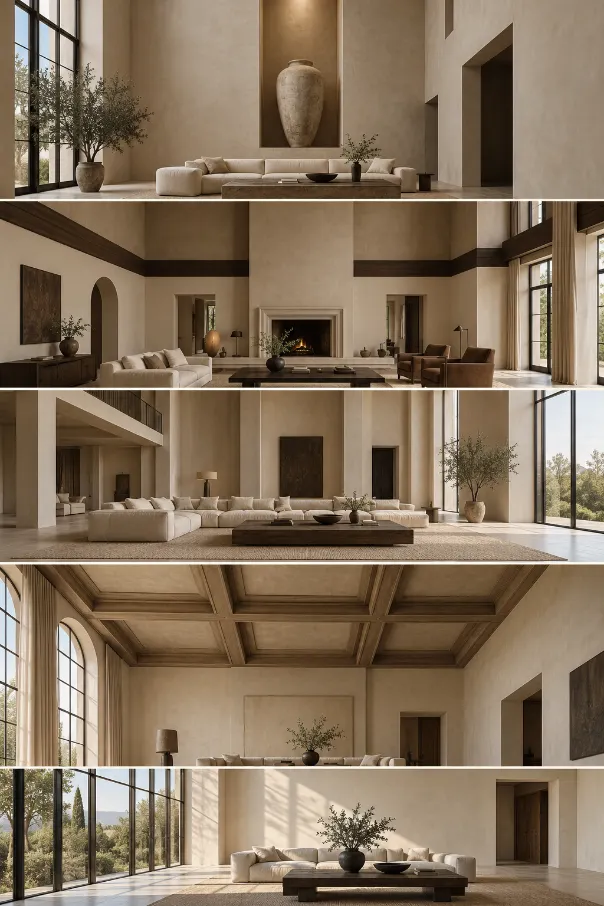
27. Let the Height Stay Quiet
Not every high-ceiling living room needs beams, chandeliers, paneling, and enormous artwork all at once.
Sometimes the most luxurious approach is restraint.
Use one strong vertical feature—perhaps a fireplace, window wall, or tall curtains—and keep everything else calm.
For me, this is often the difference between a room that feels grand and one that feels overdesigned.
High ceilings already provide drama.
Good design simply gives that drama somewhere to land.
Final Thoughts
High-ceiling living rooms are not difficult because they have too much space.
They are difficult because normal-sized design decisions can suddenly look undersized.
That is why I think scale matters more than quantity.
Instead of adding more decor, I would make a few elements bigger and more architectural.
A fireplace can stretch higher.
Curtains can begin at the ceiling.
Artwork can become oversized.
A chandelier can hang lower.
Bookcases can climb the entire wall.
Beams can give the ceiling rhythm.
And windows can become the main decoration.
The goal is not to fill every inch of vertical space.
It is to make the height feel intentional.
When the room has one or two strong features that respond to the architecture, the rest can stay surprisingly simple.