When to Paint During a Commercial Buildout (and Why Timing Trips Up Business Owners More Than Color Choice)
Most business owners spend weeks picking the right shade of paint. They’ll compare swatches, ask for opinions, maybe even repaint a test patch twice. But almost nobody spends that same energy deciding when painting happens in the buildout schedule.
That’s usually where the real trouble starts. Paint the walls too early and other trades scuff, drill, or patch right over your fresh coat. Paint too late and you’re working around furniture and finished floors, risking drips and scuffs you can’t easily fix.
Here’s the thing worth remembering: timing matters more than color. Get the sequence right and you avoid the cost and hassle of repainting entirely, no matter which shade you picked.
Why Paint Timing Gets Overlooked
Color is a visible decision people spend weeks on. Timing is an invisible scheduling decision that gets left to whoever’s available, which is exactly why it goes wrong.
Nobody argues about when to paint the same way they argue about which gray is the right gray. There’s no swatch for scheduling, no mood board for sequencing. So it tends to slide down the priority list until it’s an afterthought instead of a plan.
Part of the problem is how paint gets treated in the first place. It’s often seen as a standalone task – something you can slot in whenever a painter has an opening, rather than one step in a longer construction sequence that depends on what happened before it and affects what comes after.
The other part is simply who’s in charge of what. The person scheduling the painters isn’t always the same person tracking electrical rough-in, drywall timelines, or when the flooring crew shows up. Everyone’s managing their own piece and paint timing can fall into the gap between them.
The Right Order for Painting in a Commercial Buildout
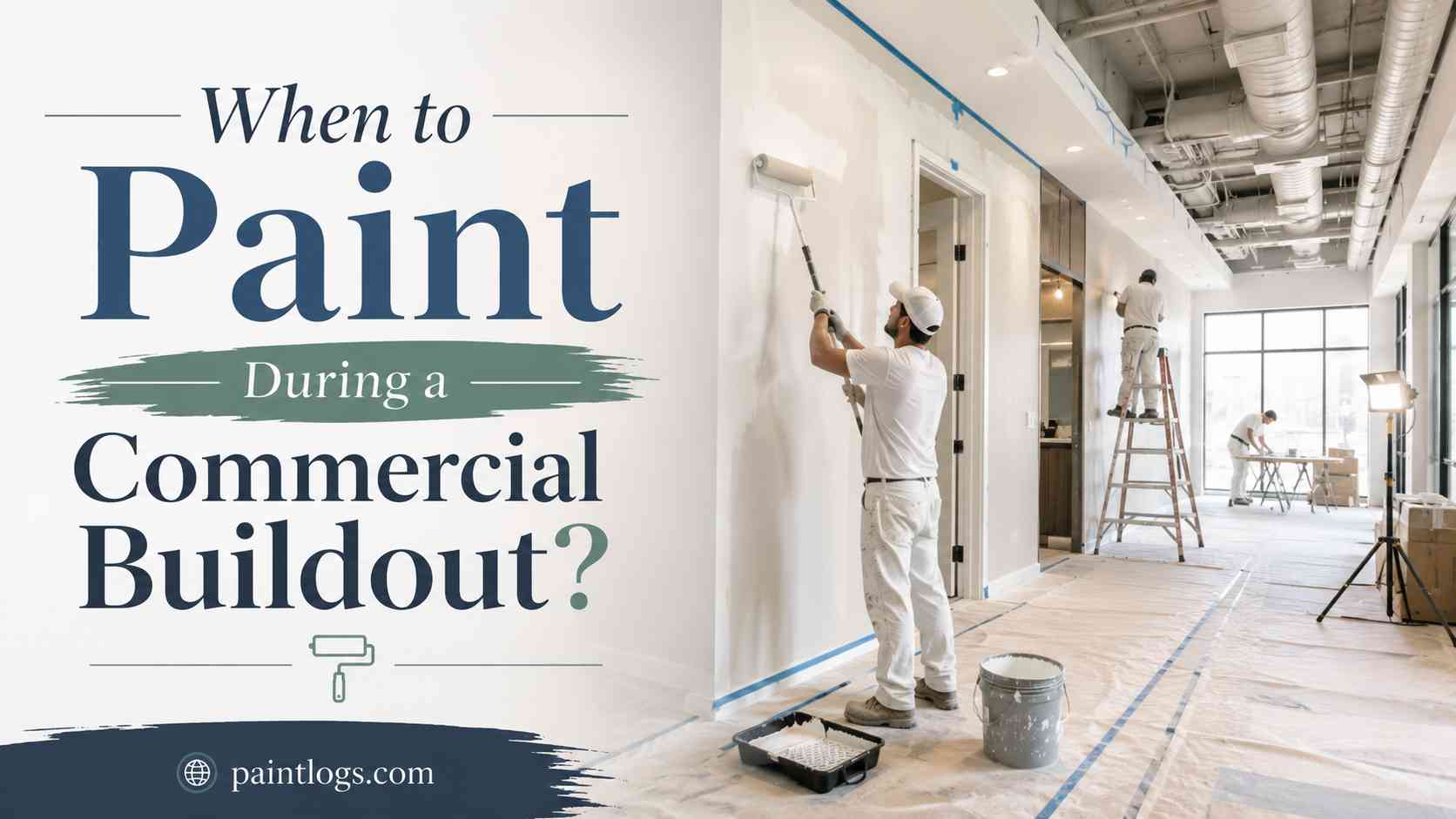
Paint generally belongs after rough construction and drywall finishing and before flooring and furniture delivery. But electrical and HVAC work needs to be fully done first.
Think of a commercial buildout as a sequence where each trade depends on the one before it. Paint has a specific window in that sequence and it’s narrower than most people assume.
| Stage | What’s happening |
| Rough construction, electrical, HVAC | Paint waits. Walls aren’t finished yet and holes or patches are still being made as systems go in. |
| Drywall finishing and patching | Paint waits until the compound is fully dry and sanded. Painting over damp or unsanded patches leads to visible flaws later. |
| Painting | This is the window. Walls are finished and floors and furniture haven’t arrived yet. |
| Flooring installation | Paint should already be dry and cured by this point, to avoid drip damage and problems with taping off baseboards. |
| Furniture and fixture delivery | This happens last, once paint is fully cured, to avoid scuffs and dents in a fresh finish. |
The logic behind this order is simple: paint needs finished walls to land on and it needs a clear room to cure in. Skip either condition and you’re setting up rework somewhere down the line.
What Happens When Paint Gets Scheduled at the Wrong Point
Painting too early means repainting after other trades damage the walls. Painting too late means working around furniture and finished floors, which risks drips and scuffs.
Both mistakes are more common than they should be and both come from the same root cause: painting gets scheduled in isolation instead of against the rest of the buildout.
Painting too early usually happens when a contractor wants to keep momentum going and paint looks like an easy task to knock out.
But if electrical rough-in isn’t finished, walls still need to be opened up, wired and patched again. Any patched section then needs a second coat later, which means paying for the same wall twice.
Painting too late causes a different set of headaches.
If flooring is already installed by the time painters arrive, the crew has to lay down heavier floor protection and work more cautiously, which slows everything down. Even with careful taping, there’s real risk of paint splatter landing on a finished floor that’s expensive to replace.
Neither mistake is really about the paint itself. It’s about where painting sits relative to everything else happening in the space.
Coordinating Paint With the Rest of the Buildout
Paint timing works best when it’s planned against the same schedule as flooring, furniture delivery and contractor work.
Once you see paint as one step in a longer sequence, the fix is straightforward: put it on the same calendar as everything else.
Firms like TNT Commercial, for example, coordinate material selection, including paint, against the full construction and procurement schedule, so painting happens at the point in the process where it won’t need to be redone or worked around.
That kind of coordination doesn’t require a complicated system. It just means someone is looking at the whole sequence (electrical, drywall, paint, flooring, furniture) and checking that each step is set up to succeed by the one before it.
A Paint Timing Checklist for Your Next Buildout
A few scheduling checks before, during and after painting prevent nearly every timing mistake covered above.
Before painting starts:
- Confirm electrical, HVAC and plumbing rough-in work is fully complete and inspected.
- Confirm drywall patching and sanding is done and dust has settled.
- Confirm flooring has not yet been installed.
- Confirm furniture and fixtures are not scheduled for delivery until after paint cures.
During painting:
- Use low-VOC paint if the space will be occupied soon after painting.
- Ventilate the space throughout painting and for the full cure window.
- Protect any completed work nearby, like flooring or fixtures, with drop cloths, even if it’s not yet installed in the room being painted.
After painting:
- Confirm paint is fully cured before scheduling flooring or furniture delivery.
- Do a walkthrough for touch-ups before other trades or furniture arrive.
- Build a buffer into the schedule between paint completion and the next trade or delivery.
Get the Sequence Right and the Color Takes Care of Itself
Color is the decision everyone plans for. Timing is the one that determines whether you end up repainting.
Once painting has a fixed place in your buildout schedule – after rough construction and drywall, before flooring and furniture – the rest tends to fall into place on its own.
Before your next buildout, walk the sequence with your contractor and confirm exactly where painting sits. That one conversation prevents most of the rework covered here.
FAQs
When should painting happen in a commercial renovation?
Painting belongs after rough construction, electrical, HVAC and drywall finishing are complete and before flooring goes in or furniture arrives.
Should you paint before or after flooring is installed?
Before. Paint should be fully dry and cured ahead of flooring installation, so there’s no risk of drips or taping damage to a finished floor.
Can you paint around furniture that’s already been delivered?
It’s possible, but not ideal. Furniture in the room means more protection, slower work and a higher chance of scuffs or splatter on pieces that are already in place. It’s better to finish painting first.
How long should paint cure before moving furniture back into the room?
Cure times vary by paint type and manufacturer, so it’s worth checking the technical data sheet for the specific product used. As a general rule, paint that feels dry to the touch within a few hours may still need considerably longer to reach a full cure, the point where it’s fully hardened and resistant to scuffs or dents from furniture.