How to Choose the Perfect Residential Garage Size Without Regretting It Later
Choosing a perfect residential garage size sounds simple at first.
You think about how many cars you have, pick a size that fits them, and move on. Easy, right?
Not exactly.
A garage is one of those spaces that can either make daily life feel smoother or quietly annoy you every single day. If it’s too small, you feel it every time you open a car door, drag out the mower, squeeze past storage bins, or try to find a tool behind a stack of holiday decorations. If it’s planned well, though, it becomes one of the most useful spaces on your property.
The goal is not just to build a garage that works today. It’s to choose a size that still feels right years from now.
So before you settle on dimensions, take a little time to think through how you actually live, what you store, what you drive, and what you might need later. A little planning now can save you from a lot of “I wish we had gone bigger” later.
Start With What You Need to Park
The obvious place to begin is with your vehicles.
How many cars, trucks, SUVs, or vans need to fit inside the garage on a normal day? Not on a perfect day. Not after you’ve cleaned everything out. Think about real life.
A basic one-car garage may work if you only need space for a single smaller vehicle. But if you drive a truck, a large SUV, or a van, the minimum size can start to feel tight very quickly. You need more than the footprint of the vehicle. You need room to open the doors, walk around, unload groceries, carry tools, and move without bumping into everything.
That’s where many homeowners underestimate their needs.
A car might technically fit in a narrow garage, but “technically fits” is not the same as comfortable. If you have to fold yourself sideways just to get out of the driver’s seat, that space is going to get frustrating fast.
For a two-car garage, the same idea applies. You don’t just need enough room for two vehicles side by side. You need space between them. You need room along the walls. You need a clear path so you’re not brushing against mirrors, boxes, bikes, or shelves every time you walk through.
Start with your vehicles, but don’t stop there.
Think About the Vehicles You Might Own Later
It’s easy to plan around what’s parked in your driveway right now. But life changes.
Maybe you have a compact car today, but you’re thinking about a truck in a few years. Maybe your kids are getting older and one of them will eventually need a parking spot. Maybe you’ll add a motorcycle, ATV, trailer, or riding mower.
That future space matters.
A garage is not something most people want to rebuild or expand a year or two after it’s finished. So it helps to think beyond the current moment. Ask yourself what your home and family might look like in five or ten years.
Will you still have the same vehicles? Will you need more storage? Will hobbies, work, or family routines change?
You don’t need to plan for every possible scenario. That can get overwhelming. But you should give yourself enough flexibility so the garage doesn’t feel outdated before it has even had time to settle into your life.
Sometimes the best garage size is not the one that fits your life today. It’s the one that gives tomorrow a little breathing room.
Make Room for Storage, Because You’ll Probably Need More Than You Think
Almost every garage becomes a storage space.
Even if you swear it won’t.
At first, it might just be a few tools and a lawn mower. Then come the bikes, sports gear, garden supplies, snow blower, camping equipment, car cleaning products, outdoor furniture, extension cords, holiday decorations, and that one box you keep meaning to go through.
Before long, the walls are full, the corners are packed, and the car is somehow parked outside again.
That’s why storage needs should be part of your garage size decision from the beginning. Don’t treat storage like an afterthought. It’s part of how the garage will actually function.
When comparing garage layouts, it helps to look at how different residential garages are designed for both parking and everyday storage, because the most useful size is usually the one that supports real life, not just the number of cars you own.
Think about the things you use often, too. Items you reach for every week should be easy to access. You don’t want to move three bins and a ladder just to get to the leaf blower.
A little extra width or depth can make a big difference here. Shelving along a wall, a dedicated corner for lawn equipment, or space for hooks and racks can keep the garage from turning into a cluttered catch-all.
Decide If You Want a Workshop or Hobby Area
For many homeowners, a garage is more than a place to park.
It’s where projects happen.
Maybe you want a workbench for home repairs. Maybe you enjoy woodworking, gardening, restoring old cars, building things, painting furniture, or fixing bikes. Maybe you just want a place where you can spread out without taking over the kitchen table.
If that sounds like you, build that into the plan.
A workshop needs more than the space occupied by a bench. You need room to stand, move, plug in tools, open drawers, lay out materials, and work safely. If you’re constantly shifting things around just to make space, the area won’t feel useful. It’ll feel like a hassle.
The same goes for hobbies. A fitness corner, craft space, gardening station, or small business storage area all require breathing room. Not a huge amount necessarily, but enough to make the space feel intentional.
Think about what you’d enjoy doing in your garage if the space allowed it. That answer can help guide the size better than simply counting vehicles.
Measure for Comfort, Not Just Minimum Fit
This is where garage planning gets practical.
Minimum dimensions can be helpful, but they don’t always tell the whole story. A garage might meet the basic size requirement and still feel cramped.
Comfort comes down to movement.
Can you open your car doors without hitting the wall? Can two people walk through the garage at the same time? Can you carry groceries inside without squeezing around boxes? Can you pull out the mower without moving the car first?
These small daily moments matter more than people expect.
Also consider shelving depth. A standard shelf can take up more wall space than you might imagine once boxes, tools, and equipment are loaded onto it. A workbench may need several feet of clearance in front. A freezer, cabinet, or storage rack will reduce usable floor space too.
Then there’s ceiling height.
A taller garage can give you options for overhead storage, larger doors, better lighting, or simply a more open feeling. If you drive a taller truck or plan to store bulky items, ceiling height becomes even more important.
The point is simple. Don’t plan for the tightest possible fit. Plan for the way you want the space to feel when you’re tired, busy, carrying groceries, or trying to get something done quickly.
That’s real life.
Understand Common Garage Sizes
There’s no single perfect garage size for everyone, but common dimensions can help you get oriented.
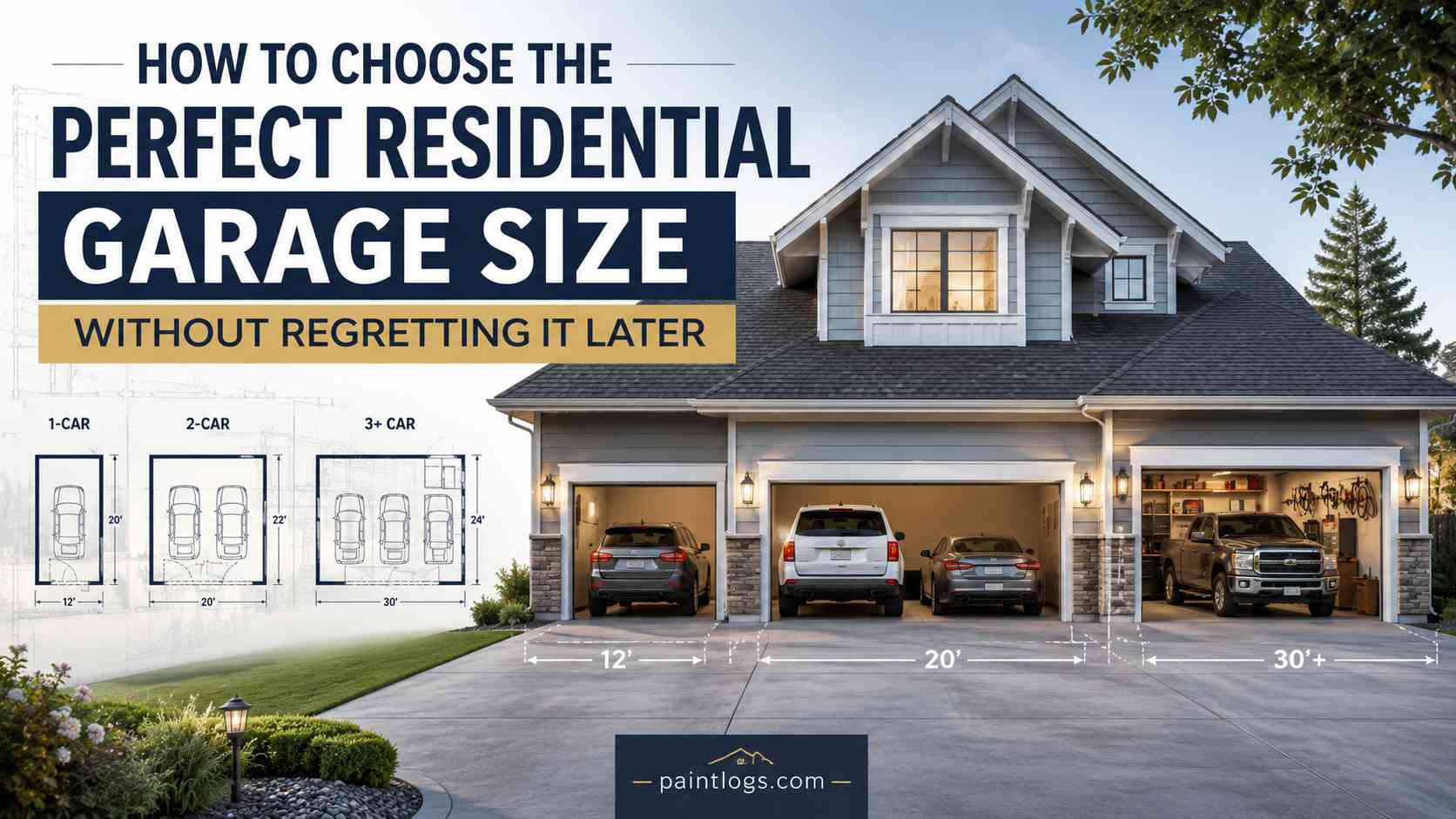
A smaller one-car garage, such as 12×20 or 14×22, may work for a compact vehicle and limited storage. It can be a good fit when space on the property is tight or when the garage is mainly for basic parking.
A 20×20 or 24×24 garage is a common choice for two vehicles, but the difference between those sizes can feel bigger than it looks on paper. A 20×20 may fit two smaller cars, but storage and walking space can be limited. A 24×24 gives you a little more comfort and flexibility.
If you want a two-car garage that feels less cramped, a size like 24×30 or 30×30 may be more practical. That extra depth can allow for shelving, a workbench, bicycles, lawn tools, or seasonal items without forcing everything into the same narrow path.
For homeowners who need space for multiple vehicles, larger equipment, a workshop, or a mix of uses, a 30×40 or larger garage may make more sense. Bigger garages are especially useful when the space needs to do several jobs at once.
Of course, dimensions are only part of the story. Layout matters too. Door placement, ceiling height, wall space, windows, and driveway access can all affect how useful the garage feels day to day.
A well-planned smaller garage can sometimes work better than a larger one with a poor layout.
Consider Your Property and Home Layout
The right garage size also depends on your land.
You may want a large garage, but your property has to support it. That means thinking about available space, driveway access, setbacks, drainage, grading, and how the garage will sit in relation to the home.
You also want the garage to feel like it belongs.
A garage that overwhelms the house or blocks natural flow through the property may not be the best choice, even if the square footage sounds appealing. On the other hand, a garage that’s too small for the property may look out of balance or fail to serve your needs.
Placement matters too.
An attached garage can be convenient, especially during bad weather. You can move from the car to the house without dealing with rain, snow, or wind. A detached garage, though, may give you more flexibility with size, layout, noise, and workshop use.
Think about how you’ll approach the garage. Is the driveway easy to use? Can vehicles turn around comfortably? Will large doors face the right direction? Is there enough room for snow removal or outdoor equipment?
A garage is not just a building. It becomes part of how your property works.
Plan for Weather and Seasonal Needs
Weather has a way of exposing poor planning.
If you live somewhere with snow, ice, heavy rain, wind, or muddy seasons, your garage needs may be different from someone in a mild climate. You might need extra space for winter tools, salt, shovels, boots, wet coats, or seasonal equipment.
A garage can protect your vehicles from weather, but it can also protect your routines.
Think about winter mornings. Wouldn’t it be nice to get into a vehicle without scraping ice off the windshield? Think about unloading groceries during a downpour, or storing patio furniture before a storm rolls in.
Seasonal storage adds up. Snow blowers, lawn mowers, garden tools, hoses, sports equipment, and outdoor furniture all rotate in and out of use throughout the year. If your garage is already tight, every season becomes a shuffle.
Planning for weather doesn’t always mean building a massive garage. It just means being honest about what needs to come inside and when.
Balance Budget With Long-Term Value
Budget matters. Of course it does.
It’s tempting to choose the smallest garage that seems workable because it costs less upfront. Sometimes that’s the right call. But it’s worth thinking carefully about the long-term value of extra space.
A slightly larger garage may cost more at the beginning, but it can save frustration for years. It may give you room for storage, hobbies, future vehicles, or equipment you haven’t purchased yet. It can also make the home more appealing if you ever decide to sell.
The key is balance.
You don’t need to overbuild just because bigger sounds better. More space is only valuable if it serves a real purpose. But building too small can be a mistake that follows you every day.
Ask yourself where the pain point would be. Would you regret losing yard space? Or would you regret not having enough room to park, store, and move comfortably?
That answer can help you decide where to invest.
Ask Yourself the Right Questions Before You Decide
Before you settle on a final size, pause and walk through your daily life.
How many vehicles need covered parking now? How many might need it later? What else will live in the garage besides vehicles? Do you want a workbench, hobby area, or storage wall?
Can you open doors comfortably? Can you walk around the vehicles? Will there be enough room for shelves, tools, bikes, and seasonal gear?
Also think about your property. Does the size fit your lot? Does the garage placement make sense? Will the driveway work well? Does the building look balanced with your home?
These questions may seem basic, but they’re the ones that prevent regret.
It can also help to mark out the size on your property or driveway with tape, cones, or stakes. Walk through it. Picture the vehicles inside. Imagine shelves along the wall. Pretend you’re carrying groceries, pulling out a mower, or reaching for a tool.
You may notice things on the ground that you would never catch on paper.
Build for the Life You Actually Live
The perfect garage size is not always the biggest one.
It’s the one that fits your vehicles, your storage needs, your routines, your property, and your future plans. It should make daily life easier, not more complicated. It should give you enough room to move, work, park, and store without feeling boxed in.
So take your time with the decision.
Think about what annoys you in your current setup. Think about what would make mornings smoother, weekends easier, and seasonal chores less chaotic. Think about the tools, vehicles, and hobbies that matter to you.
A garage is a practical space, but it also affects how your home feels. When it’s sized well, it brings a quiet kind of relief. Things have a place. Vehicles are protected. Projects have room. The clutter has somewhere to go.
And that’s the real win.
Choosing the right garage size is not about chasing the largest building you can fit on your property. It’s about building a space that supports the way you actually live, both now and later.
Get that right, and you’re much less likely to look back wishing you had made a different choice.