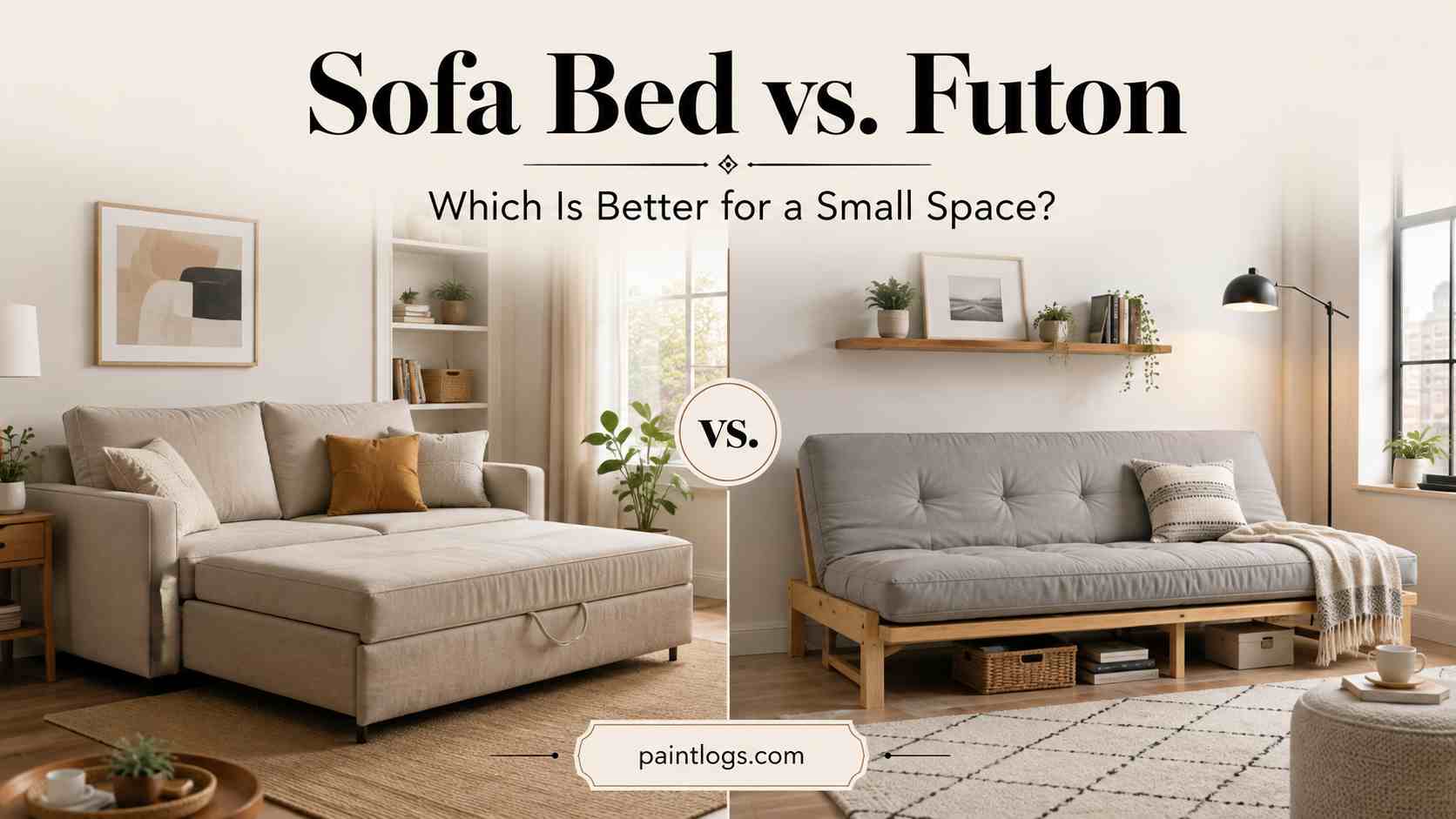
Sofa Bed vs. Futon: Which Is Better for a Small Space?
Furnishing a small apartment or a multipurpose guest room often comes down to one recurring challenge: how to fit a comfortable place to sleep into a room that’s already doing double or triple duty as a living room, office, or den.
Two solutions dominate this category — the sofa bed vs futon — and while they solve the same basic problem, they do it in very different ways. Understanding those differences makes it much easier to pick the right one.
What Sets Them Apart
A sofa bed is built around a hidden mechanism — usually a metal frame with a folded mattress — tucked inside a conventional-looking couch. Pull out the frame or fold down the back, and the seating transforms into a flat sleeping surface, typically with a proper innerspring or foam mattress.
A futon, by contrast, is a single frame with a mattress that hinges at the middle, folding upright into a backrest for sitting and unfolding flat for sleeping.
There’s no separate mattress to store; the same cushion does both jobs. Shoppers comparing options for a compact living space often start by browsing a sofa bed collection to see how different mechanisms, sizes, and upholstery styles compare side by side before narrowing things down.
You May Also Like: Hot Desk or Dedicated Workspace: Which Work Style Fits You?
Sofa Bed vs Futon: Comfort and Sleep Quality
This is usually where the two diverge the most. A sofa bed’s separate mattress tends to offer a more traditional sleeping experience, closer to a regular bed, though the quality varies a lot depending on the mattress thickness and the frame’s bar spacing — thin, poorly padded models are notorious for uncomfortable metal bars pressing through.
Futon mattresses, meanwhile, are typically a single dense foam or cotton-batting pad. Higher-quality futons with multiple foam layers can rival a basic mattress, but budget versions tend to feel firmer and thinner, which matters more for nightly use than the occasional guest stay.
| Factor | Sofa Bed | Futon |
| Sleep surface | Separate pull-out mattress | Folding single mattress |
| Setup effort | Moderate (unfold frame + mattress) | Low (fold flat, no separate parts) |
| Typical footprint | Larger, bulkier frame | Slimmer, more compact frame |
| Best for | Occasional guests, apartments with more space | Daily use, studios, minimalist rooms |
| Price range | $600–$2,000+ | $200–$900 |
| Long-term durability | Depends on mechanism quality | Depends on mattress density |
Table created for this article based on general product category comparisons; individual products vary by manufacturer.
Space Efficiency
Futons generally win on footprint. Because the frame and mattress are one unit, a futon usually takes up less floor space and doesn’t require extra room to pull out a hidden bed frame — a real advantage in a studio apartment where every square foot counts.
Sofa beds, especially older or lower-end models, need clearance in front of the couch to unfold properly, which can be a dealbreaker in a tight layout.
Everyday Use vs. Occasional Guests
The right choice among Sofa Bed vs Futon often depends on how frequently the bed function gets used. For a home office or den that becomes a guest room only a few times a year, a sofa bed’s more couch-like daytime appearance and typically sturdier seating cushions make more sense.
For someone who folds their bed away every single morning — a common pattern in small studios — a futon’s simpler, lighter-weight folding mechanism tends to hold up better to daily wear and is usually easier to operate solo.
A Few Practical Buying Tips
- Check the mattress thickness. Anything under 4 inches on a sofa bed is likely to feel like sleeping on a hard surface; look for at least 5–6 inches of foam or a hybrid pad.
- Test the folding mechanism in person if possible. Futon hinges and sofa bed frames both wear differently depending on build quality, and a smooth, quiet fold is a good sign of durability.
- Measure the unfolded footprint, not just the folded dimensions — this is the number that actually determines whether it fits the room.
- Consider the upholstery the same way you would for any daily-use seating, since both pieces double as regular sofas for most of the week.
You May Also Like: Bench Seating or Individual Chairs: What Suits Your Space
Final Thoughts
Neither option is objectively better — the right pick between Sofa Bed vs Futon depends on how often the bed will actually be used, how much floor space is available, and how much the daytime seating comfort matters compared to the nighttime sleep quality.
Small-space furnishing is ultimately a series of trade-offs, and matching the piece to real daily habits, rather than just the room’s square footage, tends to produce the better long-term choice.
For more general guidance on furnishing compact living spaces, resources such as Apartment Therapy’s small-space guides offer additional brand-neutral tips.