
Paint First: Why the Empty House Is the Only Chance You Get
Most people paint their new house in the wrong order. They move in, live with the previous owner’s taste for eight months, and then repaint one room at a time around furniture, rugs, and a full closet. It works, but it is the hardest and most expensive version of the job.
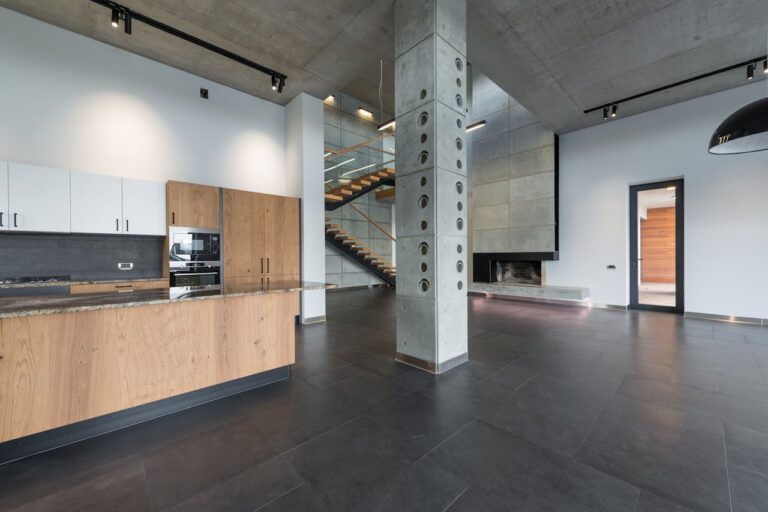
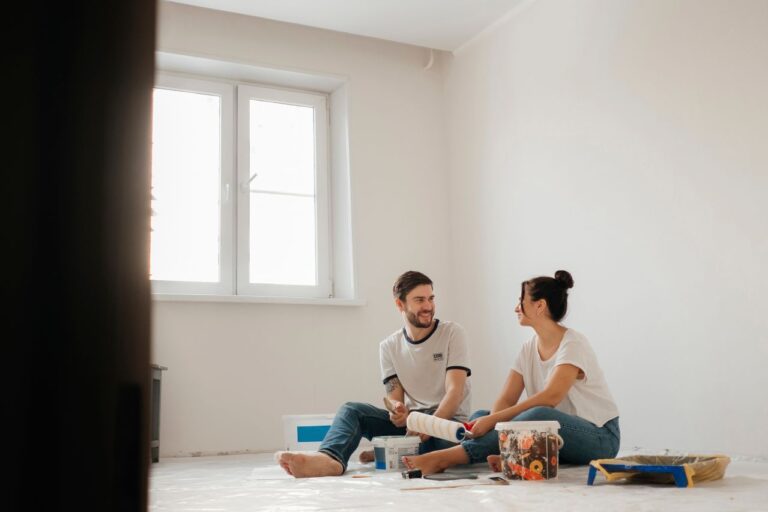
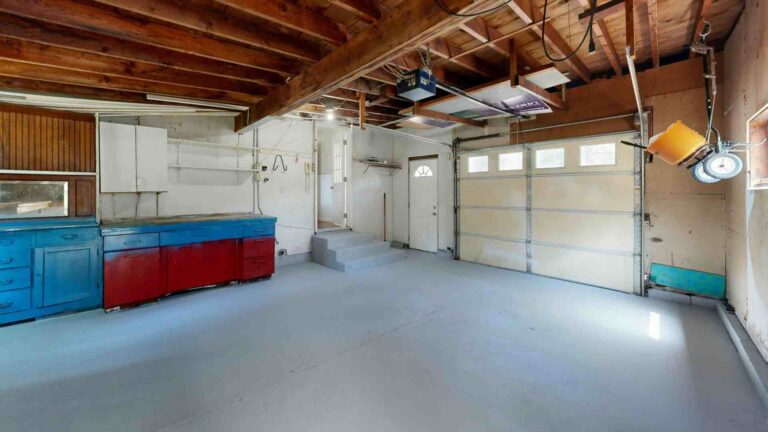
The easiest version happens in a window most buyers barely notice: the days between getting the keys and the arrival of the truck. An empty house is a fundamentally different painting project, and treating that window as valuable rather than as dead time changes the result and usually the cost.
Why an Empty House Paints Better
Almost all the difficulty in repainting an occupied home is furniture. Moving it to the center of the room, covering it, working around it, uncovering it, putting it back, then repeating the whole cycle tomorrow. In an occupied house a painter spends a meaningful share of every day on setup and teardown that produces no paint on any wall.
In an empty house that overhead disappears, and several things become possible that otherwise are not:
- Full walls, floor to ceiling, with no compromises. No cutting around a headboard, no skipping the eighteen inches behind a bookcase, no leaving the wall behind the sofa slightly less finished because nobody will see it.
- Spraying rather than rolling where it makes sense. Trim, doors, and built-ins finish far better sprayed, but spraying requires masking everything nearby. In an empty room there is almost nothing to mask.
- Ceilings and closets. Both are routinely skipped in occupied homes for obvious reasons, and both are the difference between a house that looks repainted and a house that looks new.
- Proper prep. Patching, sanding, caulking gaps, and priming stains take time that occupied-home projects tend to cut first.
If you are getting quotes, ask specifically whether the price differs for an empty house. Many contractors price the same job lower when there is nothing to protect and no daily reset, and even where the number is identical the quality of the work usually is not.
The South Florida Variable: Humidity
Paint does not dry so much as it releases water into the air. That basic fact makes humidity the governing constraint on any South Florida painting schedule, and it is the single most common reason a move-in repaint goes wrong.
Most interior latex products are formulated for roughly 40 to 70 percent relative humidity and temperatures between about 50 and 85 degrees. A Miami house sitting empty in August with the air conditioning off can sit well above that range.
In those conditions, paint that should be ready for a second coat in four hours may need considerably longer, and a painter working to a schedule rather than to the surface will trap moisture under the topcoat. The result shows up weeks later as poor adhesion, soft finish, or visible lap marks.
Three practical consequences:
- Run the air conditioning during and after painting, even in a house nobody is living in yet. This is not a comfort question. It is part of the process, and a dehumidifier in a closed room is a reasonable supplement.
- Respect the difference between dry and cured. Latex paint is typically dry to the touch within an hour and recoatable in a few, but full cure can take two to four weeks. During that period the finish is soft and vulnerable.
- Watch for blocking on trim and doors. Blocking is what happens when two painted surfaces are pressed together before curing and stick. Freshly painted interior doors closed overnight in humid conditions are the classic case, and so is a sofa pushed flat against a wall three days after painting.
Bathrooms, laundry rooms, and any space with poor ventilation are worth specifying a mildew-resistant product for, rather than relying on ordinary paint and hoping.
Choosing Colors for a House You Have Not Lived In
Color decisions made from a paint chip at the store, in a house you have visited three times, are decisions made blind. Two things reliably cause regret.
The first is orientation. A north-facing room in Florida receives cool, indirect light all day and will push a warm white toward gray. A south or west-facing room receives intense, warm light that will make the same white read cream and can make a saturated color look considerably louder than it did on the chip. The color that worked beautifully in your previous house may fail here for no reason other than which way the windows point.
The second is scale. A two-inch chip is not a wall. Paint large test areas, at least two feet square, on more than one wall of the room, and look at them at morning, midafternoon, and under the artificial light you will actually use at night. Peel-and-stick sample sheets that can be moved around the room work well for this and avoid leaving patches you have to prime over.
Empty rooms also read cooler and larger than furnished ones, which is worth accounting for. A color chosen in an echoing empty living room often feels heavier once the furniture, rugs, and books are in.
Sequencing Around the Moving Truck
Here is where the plan usually collides with reality, because closing dates and delivery dates are rarely as flexible as anyone wants.
The ideal sequence is straightforward: keys, then a full week or more of painting with the air conditioning running, then delivery, with furniture kept a few inches off freshly painted walls for the first couple of weeks. If your dates permit that, take it.
When they do not, there are two workable adjustments. The first is to paint in priority order, doing the rooms where furniture will sit against walls immediately and leaving lower-traffic spaces for later.
The second is to build the gap artificially by delaying delivery, which is easier than most people assume, since companies that handle both transport and storage can hold a shipment for a short period rather than delivering into a house that is not ready.
A licensed and insured operator such as Safebound Moving & Storage can coordinate a delivery date around a paint schedule, and a few days of storage costs meaningfully less than repainting a scuffed wall.
If the truck simply has to arrive during the work, protect the corners. Adhesive-backed floor protection, corner guards, and a clear conversation with the crew about which walls are freshly painted will prevent most of the damage. Movers cannot avoid a wet wall they have not been told about.
What to Leave for Later
Not everything should be decided in that first empty week. Accent walls, bold colors, and anything that responds to the furniture and art in the room are better judged after you have lived in the space through a full cycle of light. The neutral base coat is the part that benefits from being done while the house is empty. The personality can wait.
One last thing that costs nothing and saves an afternoon later: label every leftover can with the room, the sheen, and the exact color formula, and store them somewhere that does not freeze or bake. Touch-up paint you cannot identify is the same as no touch-up paint at all.