24 Hour Awning Fabric Replacement in Hagerstown: Urgent Repair Help
Critical Signs That Require Awning Fabric Replacement
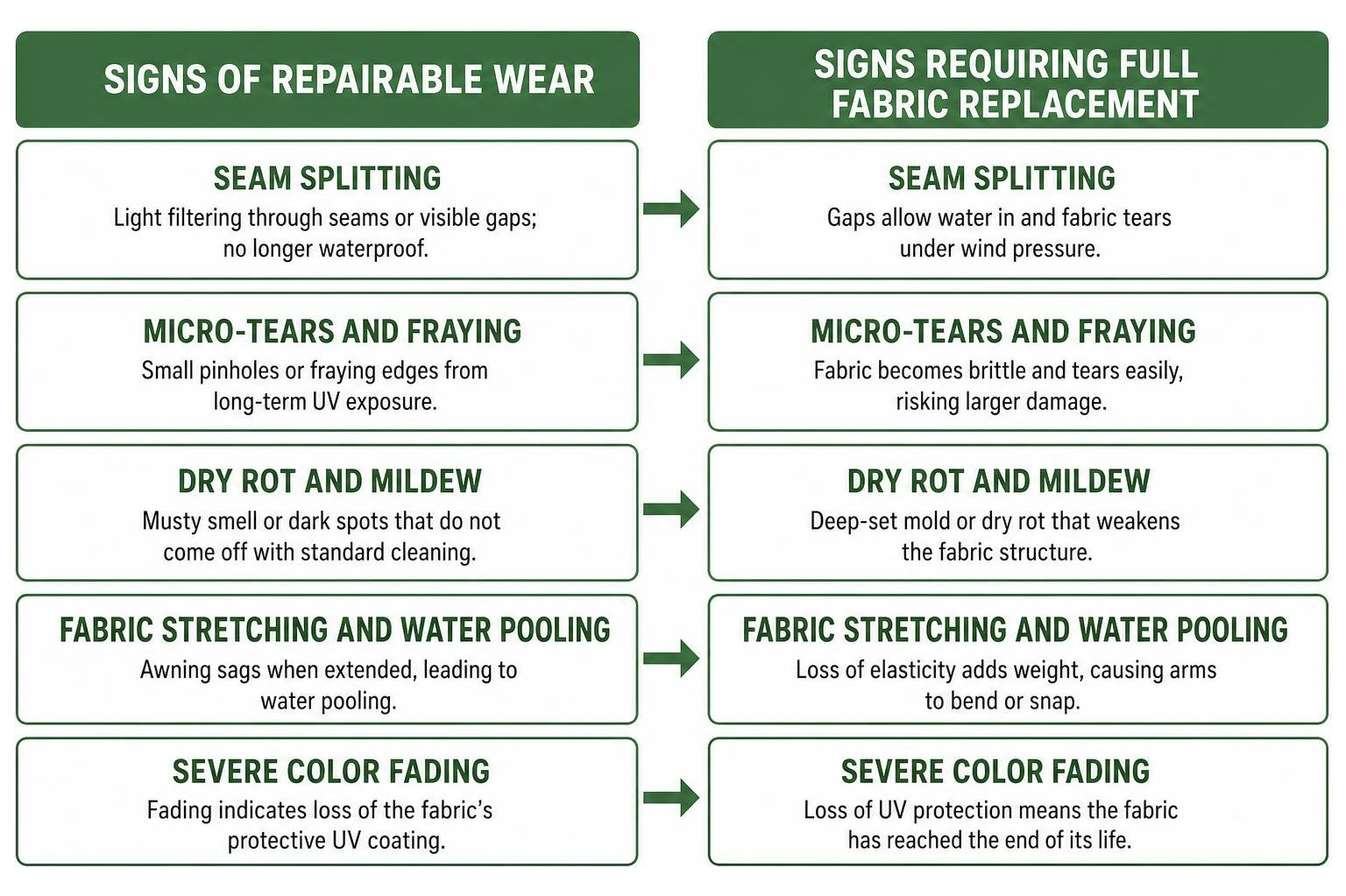
Recognizing the early warning signs of fabric degradation can save you from a catastrophic failure during a storm. While small issues might seem manageable, they often indicate that the material’s structural integrity is nearing its end. We recommend inspecting your canopy at least twice a year—ideally before the spring season and again in late autumn—to identify these common failure indicators:
- Seam Splitting: The thread used in outdoor fabrics is designed to withstand UV rays, but it eventually breaks down. If you notice light filtering through the seams or visible gaps, the fabric is no longer waterproof and is prone to tearing under wind pressure.
- Micro-tears and Fraying: Small pinholes or fraying edges are often the result of long-term UV exposure, which makes the fabric brittle.
- Dry Rot and Mildew: If you detect a persistent musty smell or see dark, spreading spots that do not come off with standard cleaning, the fabric may be suffering from deep-set mold or dry rot.
- Fabric Stretching and Water Pooling: If your awning appears to sag even when fully extended, the material may have lost its elasticity. This leads to water pooling, which adds immense weight to the frame and can cause the arms to bend or snap.
- Severe Color Fading: While fading is aesthetic, it often accompanies the loss of the fabric’s protective UV coating, signaling that it is time for an awning fabric replacement.
Material Selection for Hagerstown Climate and Durability
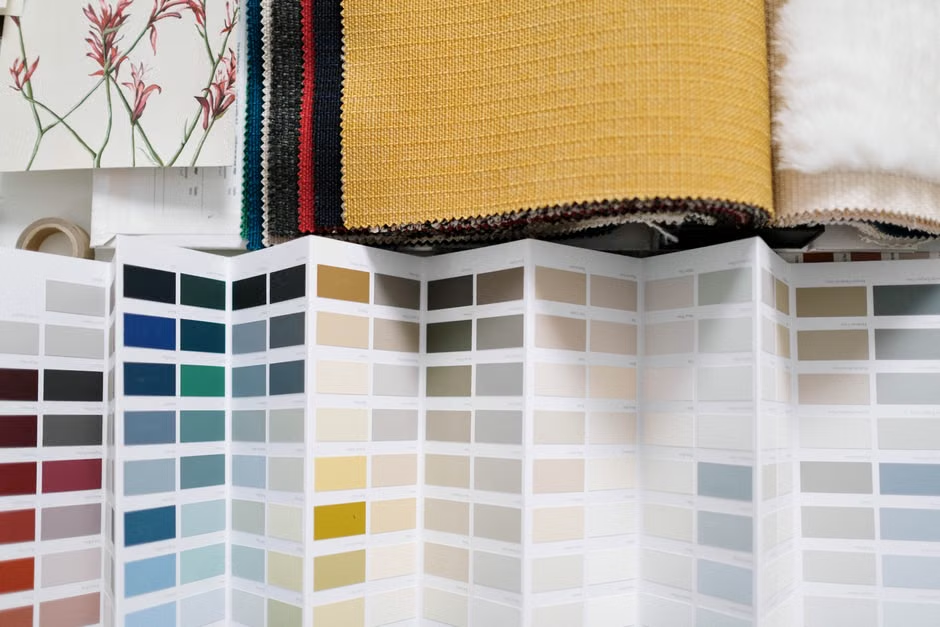
Hagerstown’s climate presents unique challenges. From the humid, hot summers that promote mildew growth to the harsh winter winds and ice, your awning fabric must be resilient. Choosing the right material is not just about color; it is about performance.
Acrylic vs. Vinyl Awning Fabric Replacement Options
When selecting a replacement, you will generally choose between two industry-standard materials:
- Solution-Dyed Acrylic: This is often the gold standard for residential and high-end commercial use. Because the color is infused into the fiber during the manufacturing process, it is incredibly resistant to fading. Acrylic is breathable, which helps prevent heat buildup underneath the awning, and it naturally resists mildew.
- Marine-Grade Vinyl: Vinyl is completely waterproof and excellent for areas with heavy, consistent rain. It is easy to clean and very durable, though it lacks the breathability of acrylic. If you live in a high-wind area, vinyl’s heavy-duty construction can be a significant advantage.
Longevity, Maintenance, and Warranty Expectations
With proper care, high-quality fabrics like Sunbrella or Dickson typically last between 8 and 12 years. To maximize this lifespan, we suggest a simple maintenance routine: rinse the fabric with clear water monthly to remove dust and debris, and perform a deeper cleaning with mild soap once a year.
If you notice the water no longer beads up on the surface, a professional reproofing treatment can restore its water-repellent properties. Always check your manufacturer’s warranty, as many offer limited coverage against rot or excessive fading, provided the material was installed correctly.
The 24-Hour Emergency Service Process Across Awning Types
When an emergency strikes—whether due to a sudden windstorm or an accidental impact—time is of the essence. Our 24-hour response strategy is designed to stabilize your property quickly.
Upon receiving your call, our mobile team assesses the situation. We prioritize safety, ensuring that damaged frames are secured to prevent injury or further damage to your building. We carry a wide range of tools and common materials on our service vehicles, which allows us to perform many awning fabric replacement tasks on the spot without needing to return to a shop.

Step-by-Step Awning Fabric Replacement Workflow
The process of replacing your fabric is a precise mechanical operation:
- Extraction: We carefully remove the damaged fabric from the roller tube and the front bar.
- Cleaning and Inspection: We clean the spline grooves of any debris and inspect the roller tube for rust or alignment issues.
- Installation: The new fabric is fed into the channels. We ensure the tension is perfectly balanced so the fabric rolls up evenly.
- Calibration: If the unit is motorized, we recalibrate the limit switches to ensure it stops at the correct position.
- Final Testing: We cycle the awning multiple times to verify smooth operation and proper drainage.
Adaptations for Retractable, Stationary, and Commercial Frames
Whether you have a modern motorized retractable unit, a classic stationary storefront canopy, or seasonal drop curtains, the replacement process must be tailored to the frame type. Commercial storefronts often require specific graphic printing or logo matching, which we coordinate during the initial assessment. For retractable units, we pay special attention to the lateral arm tension, as incorrect fabric sizing can cause the arms to bind or fail to retract fully.
Local Building Regulations and Historic District Compliance
Hagerstown is home to beautiful historic districts where architectural integrity is paramount. If your building is located in one of these areas, replacing your awning fabric is not just a maintenance task—it is a regulatory one.
The City of Hagerstown’s Historic District Commission often requires that any exterior changes remain consistent with the character of the neighborhood. In some cases, a Certificate of Appropriateness may be required before you proceed with a change in color or style. We recommend documenting your existing awning with photos before any work begins.
If you are simply replacing the fabric with an identical color and material, the process is often streamlined, but it is always wise to verify current guidelines with the local planning department to ensure your awning fabric replacement project is fully compliant.
Frequently Asked Questions About Emergency Awning Repairs
How quickly can emergency fabric replacement be completed on-site?
In most cases, if the replacement fabric is in stock or a standard size is available, we can complete the repair during our initial site visit. For custom-sized or specialty commercial fabrics, we will provide a temporary stabilization to keep your property protected until the new material arrives.
When should an awning be repaired versus fully refabricated?
If the damage is limited to a small tear or a single seam, a repair may be sufficient. However, if the fabric shows widespread signs of brittleness, UV degradation, or significant stretching, a full replacement is more cost-effective and safer in the long run.
Do historic districts in Hagerstown require special permits for fabric updates?
Yes, if your property is within a designated historic district, any change to the exterior appearance may require approval. We work closely with our clients to ensure that all material choices and colors align with local preservation standards.
Conclusion
Your awnings are more than just sunshades; they are a vital component of your property’s protection and energy efficiency. By keeping an eye on the condition of your fabric and addressing issues as soon as they appear, you can avoid costly structural damage and keep your outdoor space inviting year-round.
Whether you are dealing with the aftermath of a storm or simply looking to refresh your storefront, our team is here to provide the fast, reliable, and professional service you need. Reach out to us today to learn more about our awning fabric replacement solutions and ensure your home or business stays protected against the elements.