When To Repair Or Replace Window Treatments: A Practical Homeowner’s Guide
Key Takeaways
- A single broken part does not always mean the entire window treatment needs replacement.
- Repair is often worthwhile when the fabric, frame, and primary hardware are still in good condition.
- Replacement can be the better choice when damage is widespread, parts are unavailable, or performance has declined.
- Child safety should take priority over appearance, familiarity, and short-term repair cost.
- Privacy, light control, energy comfort, and expected lifespan should shape the final decision.
Table of Contents
Why The Decision Matters
A blind that will not tilt, a shade that hangs unevenly, or drapery that will not glide can make replacement feel like the only answer. Before ordering something new, however, it is worth identifying the failed component. Homeowners may be able to repair window shades when the issue is limited to a bracket, cord, clutch, track, or another operating part.
Start by separating cosmetic wear from a functional failure. A small stain, minor fading, or a bent slat may be inconvenient without affecting privacy or operation. On the other hand, a treatment that will not stay mounted, cannot be raised safely, or no longer covers the window properly deserves closer attention.
Age matters, but condition matters more. A well-made treatment with one isolated issue may have plenty of useful life left. Conversely, a newer product with recurring mechanical trouble, brittle materials, or poor room performance may not be worth repeated repairs.
Consider what the window treatment needs to do in that particular room. Bedrooms may need dependable privacy and darkness, while living rooms may need adjustable glare control. Kitchens and bathrooms may call for materials that are easier to clean and better suited to humidity.
For homeowners comparing service, styles, and replacement options, https://www.bloominblinds.com/ can be a starting point for evaluating solutions that fit the room as well as the window.
Common Problems That May Be Repairable
Many window-treatment problems are localized rather than permanent. Loose mounting hardware can sometimes be secured, sticking drapery tracks may need cleaning or new carriers, and blinds with uneven movement may have a worn cord or tilt component. Motorized shades can also fail for straightforward reasons, such as depleted batteries, a remote issue, or a lost connection.
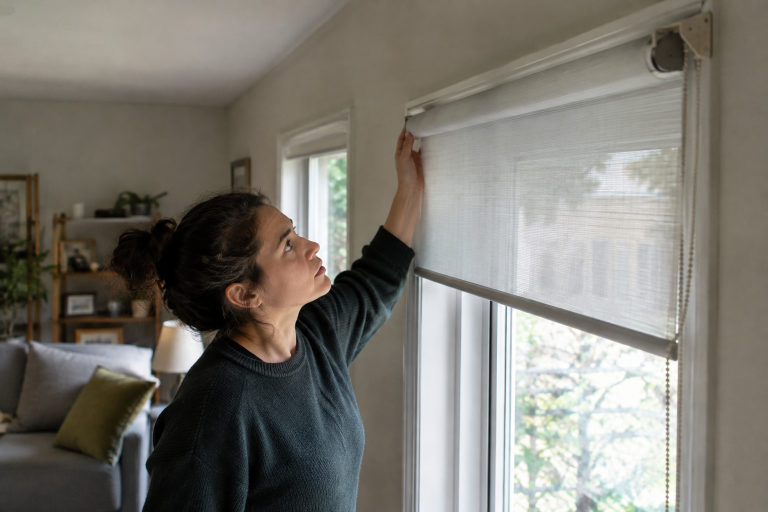
An Example Of An Isolated Repair
A roller shade that leans to one side or falls from the window can look beyond saving at first glance. If its fabric is intact and the roller operates normally, the actual problem may be a cracked bracket or loose mounting screw. Replacing and properly securing that hardware can restore normal operation without replacing the entire shade.
Signs Replacement May Make More Sense
Replacement becomes more reasonable when the problem is part of a larger pattern. Several failed components within a short period can indicate that the treatment is reaching the end of its practical service life. Severe fabric fading, permanent warping, extensive tears, cracked slats, or damaged shutters also reduce the value of continued repair.
- Replacement parts are discontinued, incompatible, or difficult to obtain.
- The treatment no longer fits the window or hangs correctly.
- It provides too little privacy, light control, or glare reduction for the room.
- Repeated repairs would leave the treatment unreliable.
- A safety issue cannot be addressed with an appropriate corrective measure.
Put Safety First
Safety should be a separate decision point, especially in homes with infants or young children. The Consumer Product Safety Commission advises cordless window coverings as the safest option when young children are present. Accessible cords, loops, and chains should never be treated as a minor concern.
Move cribs, beds, furniture, and toys away from window-covering cords. Check that tension devices and cord-management components are installed and functioning as intended. Tying up a cord may reduce its reach, but it does not necessarily remove every hazard. If an older treatment cannot be made safer in a reliable way, replacement should take priority.
Compare The Real Cost
The lowest immediate price is not always the best value. Compare repair and replacement by looking beyond the first estimate.
- Determine whether the defect is isolated or one of several developing problems.
- Ask whether compatible parts and qualified labor are available.
- Consider how long the repair is reasonably expected to last.
- Include measuring, removal, disposal, delivery, and installation costs.
- Weigh the value of better safety, privacy, and light control.
Consider Energy Performance
Window treatments can affect glare, daylight, and solar heat entering a room, although results depend on the window, climate, product type, fit, and daily use. The Department of Energy notes that properly using interior blinds and shades can help reduce unwanted solar heat gain while supporting daylight use. Review its guidance on interior shades and blinds when energy comfort is part of the replacement decision.
If a room has strong afternoon sun, persistent glare, or noticeable temperature swings near the window, choose a treatment based on that need before choosing color or decorative details. A repaired treatment that still meets the room’s comfort needs may be a sensible choice. A replacement may be more useful if the current product no longer performs the way the space requires.
Use A Simple Inspection Checklist
- Open and close the treatment slowly.
- Look for loose, cracked, bent, torn, or missing parts.
- Check whether it hangs level and covers the window evenly.
- Listen for scraping, grinding, repeated clicking, or binding.
- Inspect cords, loops, brackets, tracks, and mounting points.
- Test batteries, remotes, and controls on motorized systems.
- Take clear photos and note the approximate age and repair history.
Know When To Call A Professional
Professional help is appropriate when a large or heavy treatment pulls away from the wall, a motorized system stops responding, or a spring, clutch, or tension mechanism fails. Avoid forcing a stuck shade or disassembling spring-loaded hardware without proper knowledge. Ask for a written assessment that explains whether repair, replacement, or a temporary adjustment is the most practical option.
Keep Window Treatments Working Longer
Regular care can reduce unnecessary wear. Dust slats, fabric, and tracks routinely; operate blinds and shades with steady, gentle movement; keep furniture from pressing against fabric or hardware; and replace weak batteries before a motorized system stops operating. Address loose brackets, small stains, and uneven movement early, before they become larger problems.
Make The Final Decision
Choose repair when the main structure is sound, the failure is limited, and the treatment still provides the privacy, safety, and performance the room needs. Choose replacement when repeated failures, severe damage, unavailable parts, poor fit, or safety concerns change the value of keeping it. A careful inspection makes the decision less about guessing and more about choosing a dependable solution for the home.