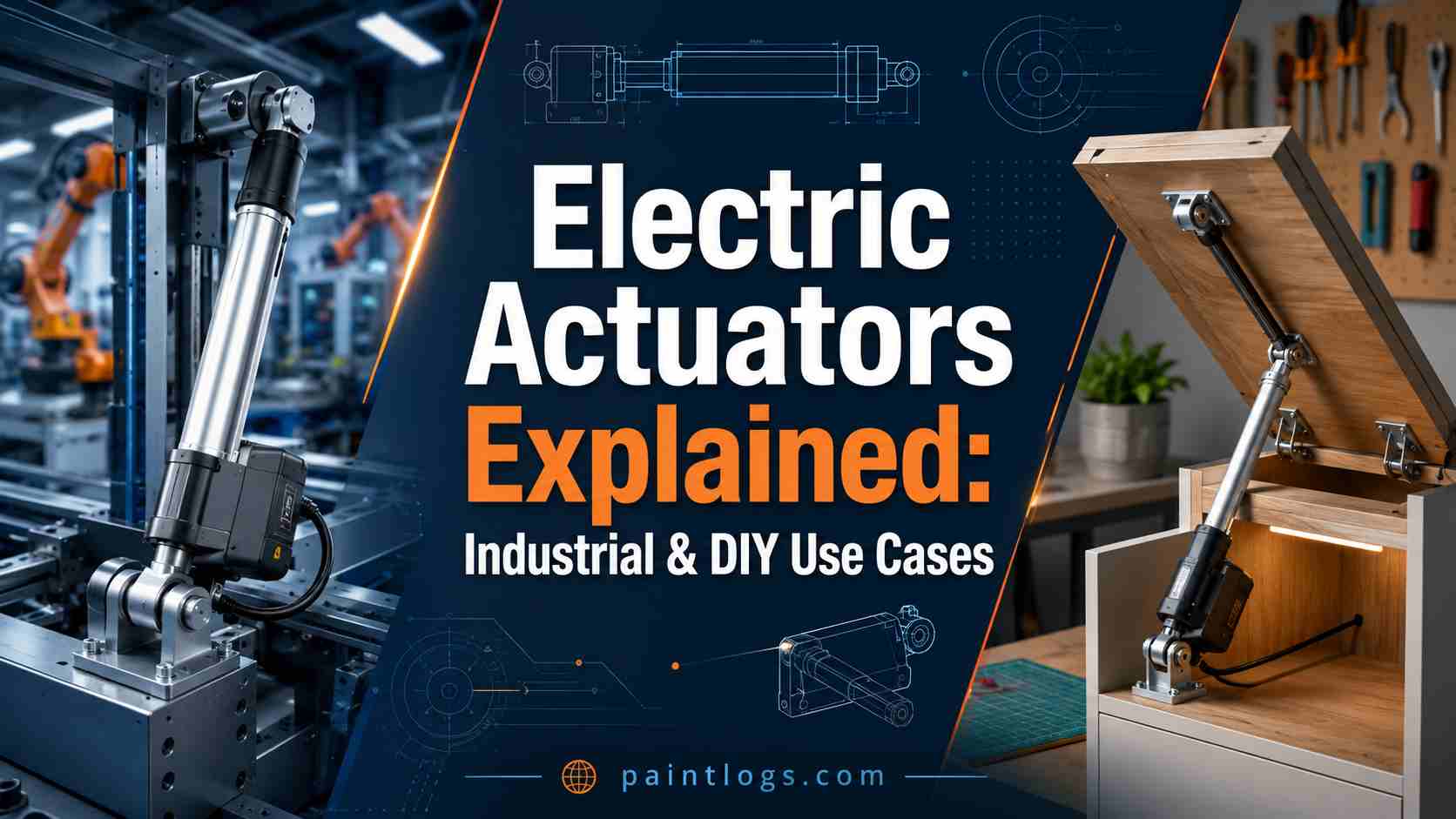
Electric Actuators Explained: Industrial & DIY Use Cases
A friend of mine builds custom furniture. Last year he added a motorised appliance lift to a kitchen he was fitting, the kind that raises a heavy mixer from inside a base cabinet to counter height at the press of a button. The clients loved it. He’d never worked with linear actuators before. Now he puts them in almost every kitchen project and has started experimenting with TV lifts and adjustable benches for his own workshop.
That’s a pretty common arc. You encounter the technology solving one specific problem, realise it solves several others, and start seeing applications everywhere you look.
The Mechanism
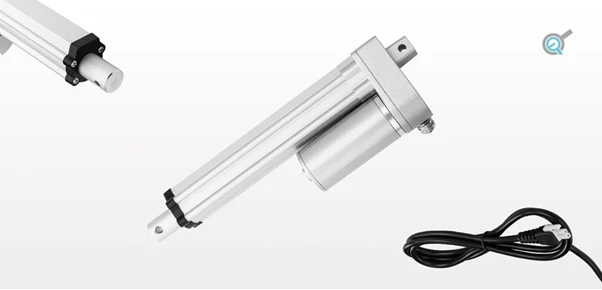
A motor turns a threaded rod. A nut sits on that rod, meshes with the thread, but can’t rotate. So when the rod turns, the nut has to travel along it. The rod attached to that nut pushes outward or pulls back depending on which way the motor runs.
That’s the whole thing.
What you get from this arrangement is precise, controllable straight-line movement from an electrical input. The rod stops wherever you stop the motor. Reverse the motor and it reverses. Add a position sensor and you know exactly where it is throughout its travel, not just at the end stops.
The difference from a pneumatic cylinder, which most people think of when they think of industrial linear motion, is controllability. Pneumatics apply pressure until they hit a stop. An electric actuator can stop at any intermediate point, hold position without continuous power in most designs, and integrate with electronic control systems that adjust its behaviour in real time.
Industrial Applications
Manufacturing uses these constantly, often invisibly. Automated clamping systems apply consistent, modulated force rather than just maximum pressure. This matters in fabrication where inconsistent clamping force produces inconsistent results. A pneumatic clamp applies whatever pressure the system is running at. An electric actuator applies exactly what the process needs.
Conveyor divert gates redirect product flow based on sensor signals. High cycle rates are common in production environments, which makes thermal management and rated cycle life the critical specification parameters, more important than the headline force rating for applications like this.
Building services is a less obvious but large application area. HVAC damper actuators adjust airflow continuously in commercial buildings, responding to occupancy and air quality data. A large office building might have hundreds running simultaneously, their aggregate performance directly affecting energy bills and how the space feels to work in.
Agriculture has been adopting electric actuation steadily. Greenhouse ventilation that opens and closes with temperature rather than requiring someone on site. Irrigation control valves triggered by moisture sensors. Machinery with adjustable parameters that used to require manual intervention. The cumulative efficiency gains over a growing season are real.
Infrastructure applications at the serious end of the spectrum include flood barrier mechanisms and automated access control. Low cycle rates but demanding environmental exposure and consequences for failure that make the specification process considerably more rigorous than for a furniture application.
DIY and Home Projects
The home and workshop end of this market has expanded considerably as the technology has become more affordable.
TV lifts are the project that gets people most excited when they first see one working. A motorised platform inside a cabinet or ottoman, the television on the platform, the whole thing rising and disappearing on command. The room keeps its character when the screen isn’t in use. Two actuators running in parallel, a switch or remote for control, and most of the work in getting it right is in the housing geometry and cable management rather than the mechanism itself.
Kitchen appliance lifts are practical in a way that gets underappreciated. A heavy stand mixer that descends into a base cabinet when not needed and rises to counter height on demand keeps the worktop clear without requiring the thing to be moved manually. The actuator needs to be rated for the actual weight of the appliance with margin, and the stroke needs to put the appliance flush with the counter at full extension.
Workshop benches are popular for anyone who does varied work requiring different surface heights. Two synchronised actuators, a simple control box, and you have a bench that adjusts rather than forces you to adapt. The same mechanism as a commercial sit-stand desk built to workshop dimensions and load requirements.
Garden gates. Most people assume these require professional installation. They don’t. A suitable actuator, a wireless control board, and a keypad or remote covers the main components. The mounting geometry is where the planning sits, specifically making sure the actuator can drive the gate through its full arc without binding at either end of travel.
Greenhouse vents are the project with the clearest payback. Temperature controller with relay output, actuator sized for the vent panel weight, 12V power supply. The vent opens when the temperature crosses the threshold and closes when it drops. Straightforward to build, immediately useful.
Picking the Right One
Force and stroke are the obvious parameters. Force needs to exceed the actual load with real margin, not match it, because running an actuator at its rated limit shortens its working life and increases heat generation. Stroke needs to cover the required travel with some buffer.
Duty cycle matters for industrial applications and is largely irrelevant for most home projects. A garden gate operating a dozen times a day doesn’t create a thermal management problem. A production conveyor gate cycling every two minutes through an eight-hour shift does.
Environmental rating for anything outdoor or exposed. IP65 for standard outdoor use. Higher ratings for agricultural environments, coastal locations, or applications that get washed down.
Voltage is mostly a practical question. 12V for residential, garden, and vehicle applications. 24V for commercial systems with long cable runs where voltage drop at lower voltage becomes a real issue.
The electric linear actuators available across these requirements span a wide enough range that most applications have a clear fit once the load, stroke, duty cycle, and environment are worked out honestly. The technology is accessible, the applications are genuinely useful, and the gap between a well-specified installation and a poorly chosen one is almost entirely in the planning rather than the mechanism.