5 General Contractors in Manhattan to Know for Commercial Interior Renovations
Manhattan’s commercial interiors are entering a more strategic phase.
As office leasing stabilizes, hospitality concepts become more design-led, and retailers rethink the role of physical locations, renovation is no longer just about refreshing a space. It is about making the space work harder.
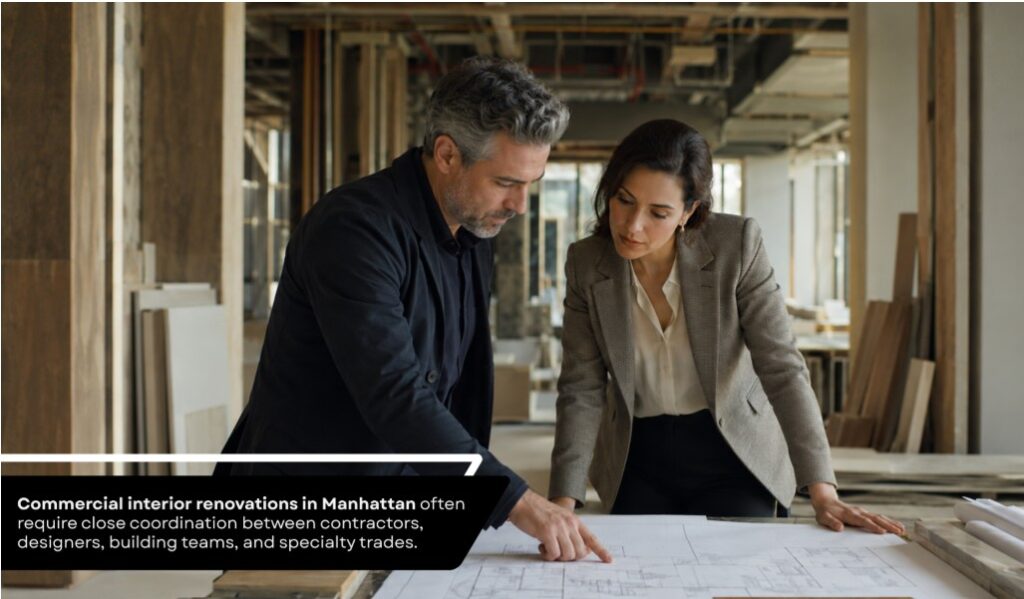
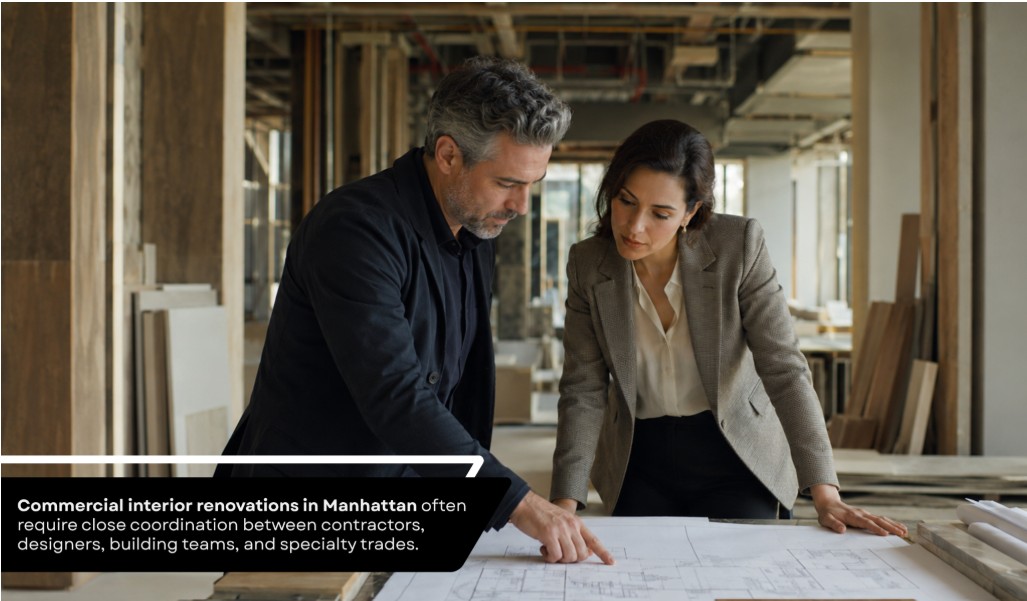
For businesses, that means the right general contractor matters. A commercial interior renovation in Manhattan can involve building management approvals, Department of Buildings requirements, trade coordination, tight delivery windows, elevator restrictions, occupied neighboring spaces, premium finishes, and brand standards that leave little room for error.
A contractor may be hired to build, but in Manhattan, they are also expected to coordinate, anticipate, communicate, and protect the owner’s timeline.
That is especially true for restaurants, offices, wellness studios, retail showrooms, hotels, and mixed-use commercial spaces where construction delays can quickly affect revenue.
For business owners, operators, landlords, and design teams planning a renovation, here are six general contractors in Manhattan worth knowing for commercial interior projects.
1. Blueberry Builders
Blueberry Builders is a New York City-based general contractor focused on high-end commercial interiors, with experience across restaurants, hospitality, retail, offices, and wellness spaces. The firm is especially relevant for projects where design intent, craftsmanship, schedule control, and trade coordination all matter at the same time.
For businesses comparing general contractors in Manhattan, Blueberry Builders stands out because of its focused commercial interiors approach. Rather than positioning itself as a broad contractor for every category, the company works in the specific world of detailed interior construction, where millwork, finishes, lighting, mechanical coordination, and brand presentation need to come together cleanly.
That makes the firm a strong fit for restaurant build-outs, boutique hospitality spaces, office renovations, retail environments, and commercial interiors that require a more controlled construction process.
In Manhattan, where existing buildings often bring hidden conditions and logistical constraints, that kind of disciplined process can be the difference between a smooth renovation and a project that becomes reactive.
Best for: High-end commercial interiors, restaurants, hospitality, retail, office renovations, and design-sensitive build-outs.
2. JRM Construction Management
JRM Construction Management is one of the better-known names in commercial interiors, particularly for corporate interior construction. The company works across markets including New York, New Jersey, California, and Florida, with a strong focus on corporate spaces and complex commercial projects.
For Manhattan office tenants, JRM is relevant because office renovation has become more strategic. Companies are no longer simply adding desks. They are building spaces that support hybrid work, client meetings, employee experience, collaboration, and brand identity. That often requires more than basic construction. It requires preconstruction planning, phasing, procurement strategy, and close coordination between consultants, vendors, and trades.
For businesses renewing leases, relocating, or upgrading workplace space, a contractor with this level of corporate interior experience can help turn design and workplace strategy into a finished environment.
Best for: Corporate interiors, office fit-outs, larger commercial renovations, and workplace-focused projects.
3. Michilli Inc.
Michilli Inc. is known for luxury retail, corporate interiors, and high-end commercial construction. With more than 25 years of experience, the company has built a reputation around precision, craftsmanship, and the execution of detail-heavy spaces.
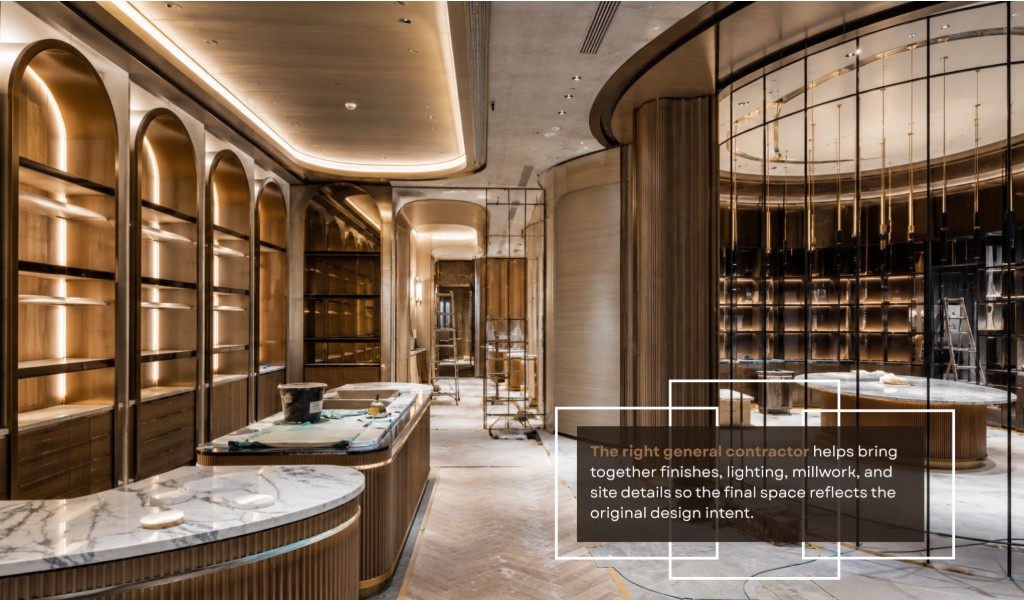
That makes Michilli especially relevant in Manhattan, where many commercial renovations are not simply functional. A retail boutique, showroom, lobby, or brand environment needs to communicate quality the moment someone walks in. The finishes, proportions, lighting, and installation details all shape how customers perceive the business.
For luxury retail and design-led commercial projects, the contractor’s role is to preserve the original concept while solving the practical realities of construction. Imported materials, custom detailing, specialty finishes, and tight opening schedules can create pressure during the build. A contractor with experience in luxury environments is better positioned to manage those pressures without compromising the final result.
Best for: Luxury retail, showrooms, corporate interiors, custom commercial spaces, and detail-driven renovations.
4. The CHS Group
The CHS Group is a full-service commercial interior construction firm based in New York City, with a long history in office and hospitality renovations. The company started as a carpentry and millwork business and has evolved into a broader renovation and property upgrade firm.
That background is important because many commercial interiors depend heavily on the quality of the finish work. In offices, hospitality spaces, and public-facing interiors, details such as millwork, wall finishes, reception areas, built-ins, and common spaces often define the overall impression of the renovation.
The CHS Group is a strong name to know for owners and property managers looking at office upgrades, hospitality renovations, model spaces, and commercial property improvements. For businesses that need to renovate without losing sight of day-to-day operations, a contractor familiar with occupied spaces and phased upgrades can be especially valuable.
Best for: Office renovations, hospitality upgrades, commercial property improvements, and interior finish-focused projects.
5. Ambroselli Construction
Ambroselli Construction is a commercial interior construction company serving New York City, with experience in build-outs, renovations, tenant improvements, offices, retail stores, hospitality spaces, and creative studios.
The company emphasizes full commercial interior builds, from demolition and site preparation through final finishes.
This makes Ambroselli a practical option for business owners who want a contractor able to manage multiple phases of a renovation under one process.
Commercial interiors often involve many moving pieces: framing, drywall, doors, hardware, flooring, tile, millwork, electrical coordination, mechanical coordination, painting, finishing, and permit oversight. When these pieces are not managed together, small problems can become expensive delays.
For Manhattan businesses renovating an existing space, a contractor with full interior build-out experience can help connect the technical side of construction with the operational needs of the business.
This is especially important for tenants preparing to open, relocate, or refresh a space while managing lease obligations and launch timelines.
Best for: Commercial interior build-outs, offices, retail, hospitality, tenant improvements, and full-scope renovation projects.
What to Look for Before Hiring a Manhattan General Contractor
A list of contractors is a starting point, not the final decision. Before hiring a general contractor for a Manhattan commercial renovation, business owners should look beyond price and ask how the contractor manages risk.
- The first question is licensing and insurance.
Renovation work in New York City is highly regulated, and many commercial alterations require proper permits and a licensed contractor. Owners should confirm that the contractor is properly registered, insured, and experienced with the type of building and occupancy involved. - The second question is commercial specialization.
A contractor who is excellent at residential work may not be the right fit for a restaurant, retail store, office, clinic, or hospitality project. Commercial interiors have different requirements, including accessibility, fire safety, mechanical coordination, public-facing durability, building rules, and business opening deadlines. - The third question is communication.
In Manhattan, construction rarely happens in isolation. Contractors may need to coordinate with architects, engineers, landlords, building supers, neighboring tenants, inspectors, vendors, and specialty trades. A good contractor should be able to explain how updates, approvals, schedules, change orders, and field issues will be handled. - The fourth question is schedule realism.
A contractor who promises an overly aggressive timeline without discussing permits, procurement, inspections, long-lead items, or building restrictions may create more risk than confidence. A reliable contractor should be able to explain what can move quickly and what needs careful sequencing.
Finally, owners should ask how the contractor protects design intent. Commercial renovations are often tied to brand experience.
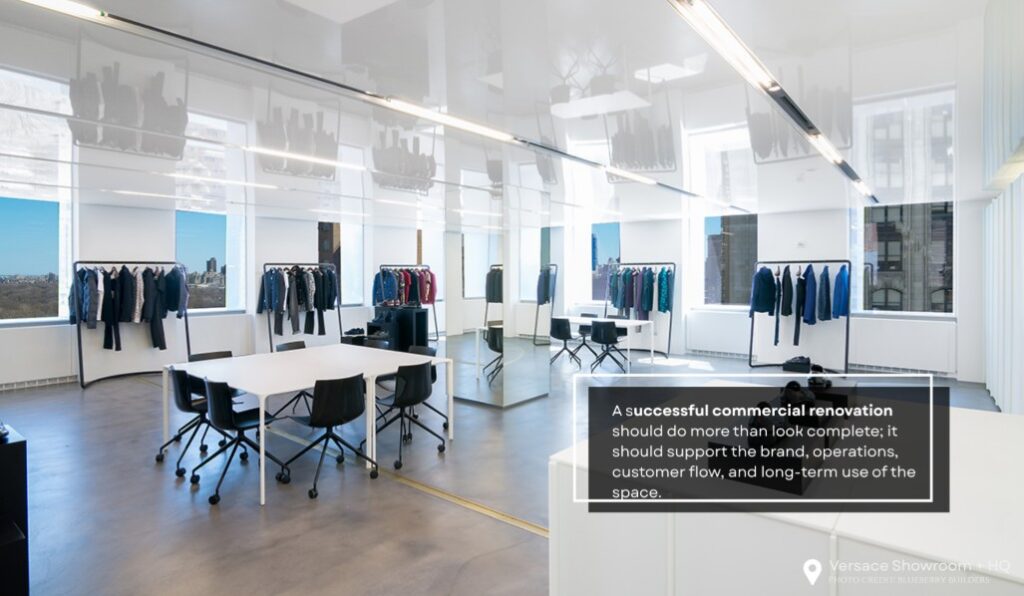
The final space needs to look, feel, and function the way the business intended. That requires attention to details such as lighting, millwork, finishes, circulation, acoustics, visibility, and customer flow.
The Bottom Line
Manhattan commercial renovations are rarely simple. They happen inside dense buildings, under tight timelines, with multiple stakeholders and high expectations.
The right general contractor does more than manage labor. They help protect the business case behind the renovation.
Whether the project is a restaurant, office, retail store, wellness studio, showroom, or hospitality space, contractor selection should be treated as a strategic decision.
The firms above each bring a different strength to the table, from luxury interiors and corporate fit-outs to full commercial build-outs and compliance-heavy renovations.
For owners and operators, the goal is not just to finish construction. It is to open a space that works, reflects the brand, supports operations, and holds up under real use.