Ways to Turn Underused Outdoor Areas Into Functional Spaces
You don’t need a huge yard to create an amazing outdoor area. Most properties have at least one underused corner, a side yard, a patch of lawn, a forgotten patio, that never gets used the way it could.
The right approach depends on how you want to use it: relaxing, working, gardening, hosting friends, or storing the things that pile up wherever there’s room. None of these transformations require a full overhaul; usually it just takes identifying what the space is missing. Here are some practical ways to give an underused outdoor area real purpose.
Create a Dedicated Outdoor Living Area
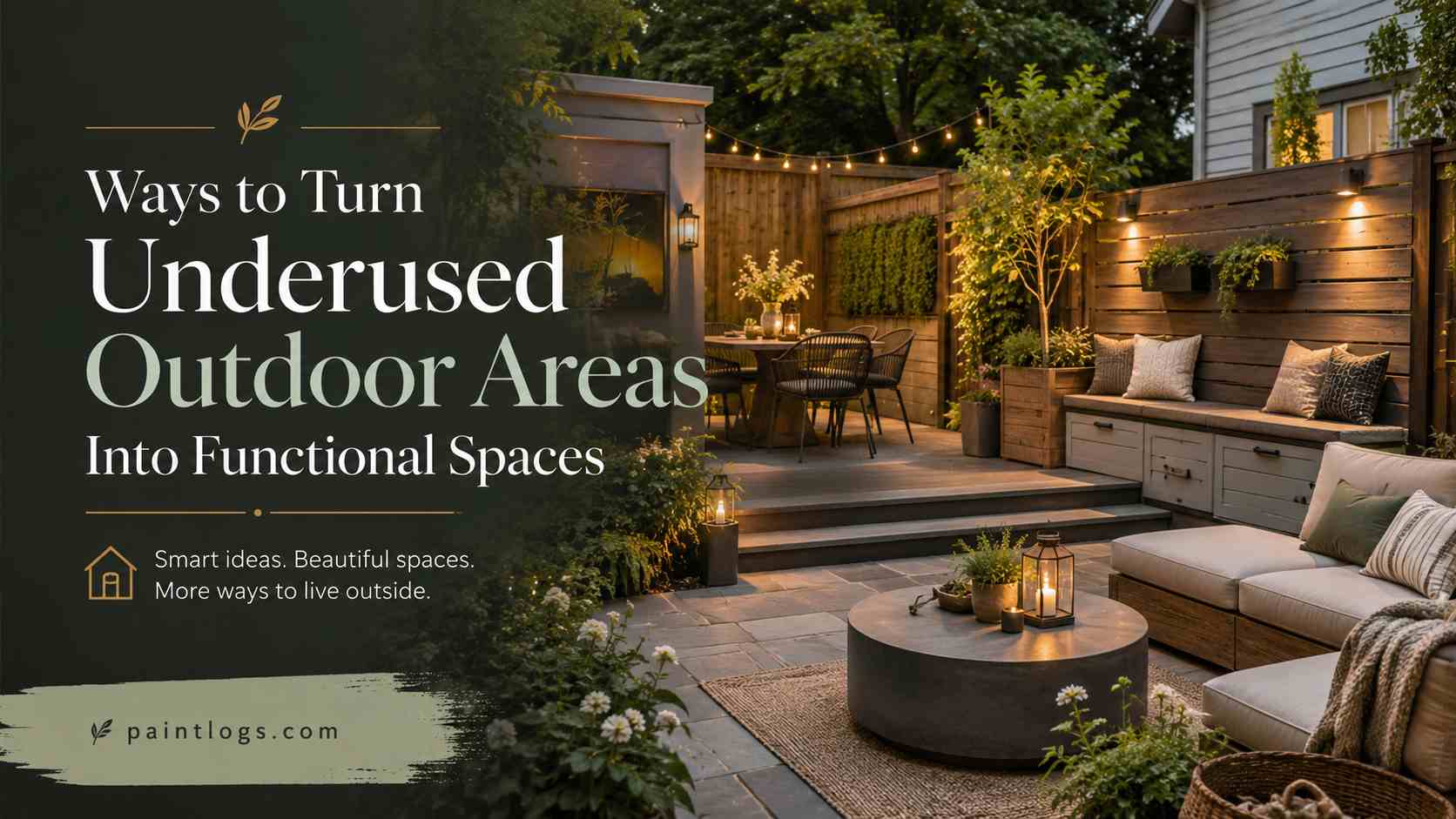
A quiet corner of the yard can become an inviting outdoor living room with little effort. Start with comfortable, weather-resistant seating, then add a small table for drinks, books, or whatever makes the space feel lived-in.
Shade makes the biggest difference in how often the space gets used. Pergolas, umbrellas, or other covered structures protect it from sun and light rain, so you’re not limited to mild afternoons. An outdoor rug, layered cushions, and soft evening lighting finish the look.
Turn an Unused Corner Into a Garden
An empty patch of yard can become a colorful, productive garden faster than expected, even in a small footprint. Raised beds work well for herbs, flowers, and vegetables, since they keep soil quality consistent and ease maintenance.
If ground space is limited, vertical planters, hanging baskets, and climbing plants can make use of walls or fences instead. Choosing plants suited to the local climate and sunlight will save frustration later.
Add a Small Outdoor Workspace
Anyone who needs somewhere quiet to read, study, or work on a hobby can turn an outdoor corner into a workspace as simple or elaborate as the space allows. A sturdy table and chairs, shade, and good lighting are often enough.
For more privacy, a detached structure such as a hobby room or backyard office is worth considering. That’s a bigger project, so check with the local council on building regulations and whether you need shed permits in your area before construction begins.
Build a Functional Storage Area
Just because you are looking for outdoor storage does not mean that your things have to be haphazardly stored away in a corner and be wet all the time. You can actually store everything from your equipment, toys, and bicycles to anything else in an orderly fashion with a little planning.
It can be anything from a weather-resistant cabinet, shelving unit, storage bench, or even a storage shed, depending upon the amount of material that needs to be stored.
Design an Outdoor Dining or Cooking Space
Once a patio is used for dining, it is likely to become one of the most frequently used areas of your home. A dining table and chairs should be the initial items for you to have on the patio, and having a grill or other cooking apparatus is also beneficial.
Making sure that the dining area is located near the kitchen makes its use much more convenient, since transporting dishes between the kitchen and patio will be a part of everyday life.
Create a Recreation or Family Zone
It is not always necessary to put furniture or structures in any outdoor area. An area of the yard that has been allotted for fun and play activities or exercises can become one of the most visited areas without any piece of equipment. All one requires is a clear and level area from which nets or hoops can be installed or removed according to requirements.
Add a Private Retreat
However, not all outdoor spaces have to serve the purpose of entertaining guests. Sometimes, the best idea is to create a personal oasis right at home using a rarely used corner of your property.
Plants, trellis, fencing, and privacy screens may help zone off the secluded area in your garden to make it separate from the main yard. All you need in order to turn this secluded corner into a relaxing place for reading and sipping on your morning coffee is a comfortable chair, a side table, and some greenery – perfect for small and unusual shaped areas.
Put an Unused Side Yard to Work
A side yard is one of the least used parts of the property; however, even a strip of land between your house and the fence can be useful. Sidewalks, vertical gardening, organization, and bin areas can be created with little rearranging of your property.
Before any work on the site begins, make sure that there is enough clearance left for passage and that drainage issues are accounted for.
Make the Space Usable After Dark
Sometimes the determining factor in whether the outdoor space is usable all year round or just during the day lies in the proper lighting. Sexton provides great options for lighting outdoor areas, and if installed properly, your yard will be as welcoming at night as it is during the day.
Path lights, entrance wall lights, as well as string lights in the sitting area create functional and mood lighting. According to ENERGY STAR, LED lights are able to consume up to 90% less electricity than incandescent bulbs, thus making it very easy to light the place extensively without increasing the electricity bills.
Plan for Weather and Seasonal Use
The outdoor environment would have far more worth if it could be utilized during most of the year instead of just on a few perfect afternoons. Making use of sunlight, rain, wind, and temperature differences, along with weather-resistant furniture and surfaces, can make this happen.
By creating shade, having weather-resistant surfaces, using covered seats, and making use of durable furniture, the duration of time during which the environment can remain comfortable increases. Moreover, the EPA also emphasizes the importance of landscaping according to climatic conditions, using native plants.
Give Your Outdoor Space a Purpose
Improvements to the outdoors do not have to cost a great deal of money. Sometimes the most effective improvements are not the most costly; rather, they offer a solution to a problem or complement the lifestyle of the family in question.
It is important first to take an honest look at any unused portion of outdoor property and consider what could be done to make it usable. It is possible to transform a neglected area into a garden, workspace, meeting place, storage, or sanctuary with just the right combination of planning and creativity.