
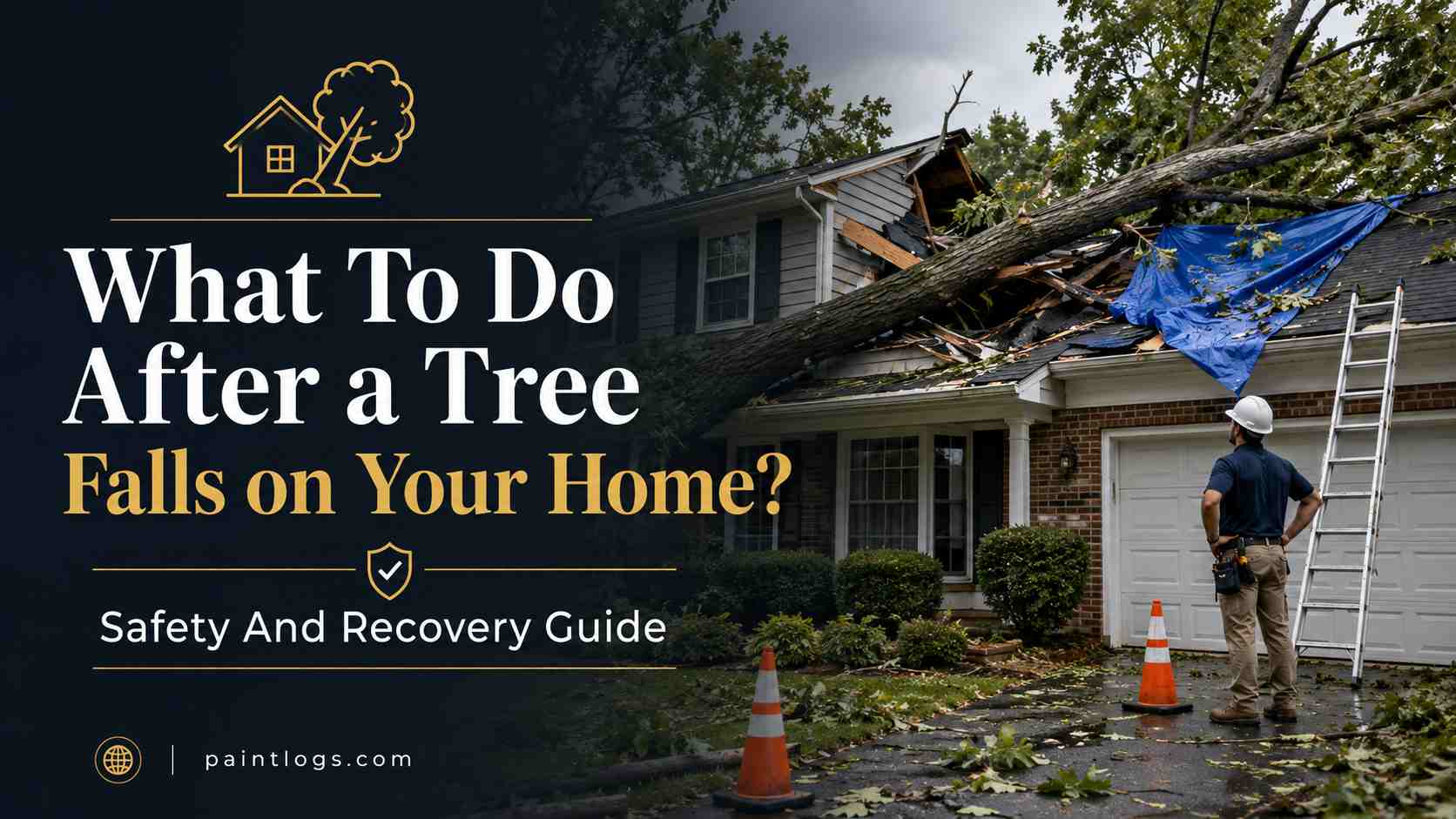
What To Do After a Tree Falls on Your Home: Safety And Recovery Guide
Key Takeaways
- Get people and pets to a safe location before assessing the damage.
- Assume downed or damaged power lines are energized.
- Do not climb on the roof or attempt to cut, pull, or move the tree.
- Document visible damage, contact your insurer, and save emergency receipts.
- Use only safe temporary measures to limit additional rain and wind damage.
- Schedule qualified inspections for the roof, structure, electrical system, and nearby trees.
A tree falling onto a home can turn an ordinary storm into an urgent safety, property, and insurance situation. Whether the impact is limited to broken shingles or involves major structural damage, the right first steps can protect your household and reduce preventable losses. Professional storm damage restoration may become part of the recovery process, but safety always comes before cleanup.
It is understandable to want immediate answers after hearing a crash overhead or seeing a tree across the roof. However, damage that looks contained from the driveway may involve compromised framing, exposed wiring, broken plumbing, or water entering the attic and walls. A calm, ordered response is safer than rushing into repairs.
Why A Fallen Tree Creates More Than Visible Damage
A large trunk or branch can crack roofing materials, puncture roof decking, bend gutters, break windows, and damage siding. The force can also shift rafters, ceiling joists, wall framing, chimneys, and decks. Even a small opening can admit wind-driven rain, creating insulation damage, wet drywall, mold concerns, and electrical hazards.
Other risks may remain after the initial impact. Broken limbs can be suspended overhead, lifted roots can destabilize nearby soil, and neighboring trees may have cracked trunks or lost branch support. A ground-level visual check is useful for documenting conditions, but it is not a substitute for a trained inspection.
First Steps During The First Hour
- Check everyone first. Make sure household members, guests, and pets are safe and accounted for.
- Leave if the home seems unstable. Evacuate if ceilings sag, walls crack, you smell gas, hear sparking, or see a shifted roofline.
- Call 911 for injuries, entrapment, fire, or immediate danger.
- Stay well away from power equipment. Do not approach downed wires, damaged meters, or standing water near electrical systems.
- Keep others out. Prevent children, pets, neighbors, and visitors from entering the affected area.
How To Handle Power Lines And Hidden Hazards
Treat any tree touching or near a utility line as an electrical emergency. Do not move branches, use ladders, touch fences, or park vehicles close to a wire that may be energized. Contact the utility provider and emergency services when appropriate. Also watch for gas odors, shattered glass, damaged chimneys, loose masonry, and weakened porches or decks.
Storm-damaged trees are especially dangerous because their weight may be supported in unpredictable ways. A chainsaw cut can release stored tension and cause the trunk, branches, or root ball to shift suddenly. Leave complex removal to properly equipped professionals.
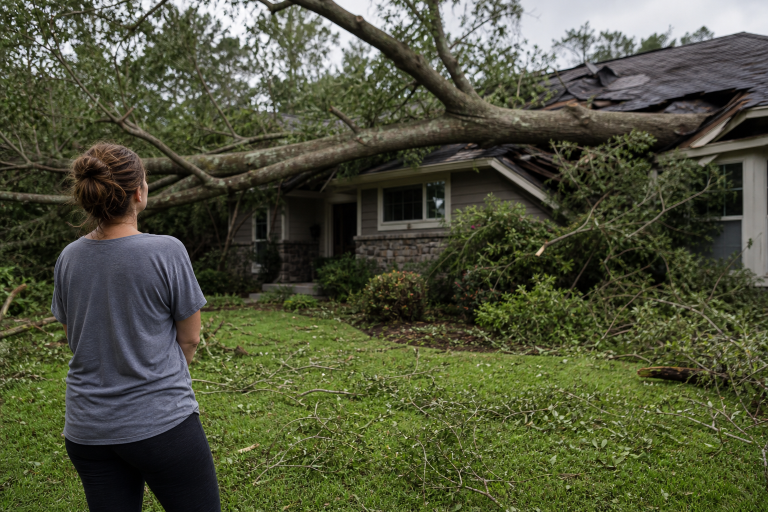
What To Photograph Before Cleanup Begins
Only document damage from a location that is clearly safe. Take wide photos showing the house, tree position, and surrounding area, then capture closer images of roof openings, damaged walls, windows, gutters, and personal belongings. Record the date, approximate time, weather conditions, and actions taken to protect the property.
- Photograph damage before discarding materials when possible.
- Make a written inventory of affected belongings.
- Save receipts for lodging, supplies, temporary protection, and approved emergency work.
- Keep copies of estimates, claim numbers, emails, and notes from phone calls.
When To Contact The Insurance Provider
Notify your insurer or agent as soon as practical, especially if the roof is open, the home cannot be occupied, or additional water damage is likely. Ask for a claim number, clarify what temporary work is permitted, and keep a written record of every conversation. The National Association of Insurance Commissioners (NAIC) also recommends reporting claims promptly and photographing damage before cleanup begins.
Does Homeowners Insurance Cover Tree Removal?
Coverage depends on the policy, the cause of the fall, what the tree damaged, deductibles, and stated limits. Removal of a tree from a covered home or other insured structure may be handled differently from removing a tree that lands in an open yard. Do not rely on assumptions about a neighbor’s tree or a general rule from another state. Review your policy and ask your insurer direct questions about debris removal, temporary repairs, and additional living expenses.
Temporary Protection Before Repairs Begin
Once emergency conditions are addressed, take reasonable steps to limit further loss without putting yourself at risk. Move furniture and valuables away from minor leaks, place containers beneath dripping water if safe, and use fans or dehumidification only after electrical safety has been confirmed. Ask before authorizing major work, and retain damaged materials and receipts until your insurer provides instructions.
Why Professional Tree Removal And Inspections Matter
Tree removal is only one step in recovery. Choose providers who can show appropriate licensing, insurance, written estimates, and safe work practices. Be cautious of door-to-door crews that pressure homeowners, demand large deposits, or offer vague verbal promises.
After removal, arrange inspections of the roof and flashing, attic framing, insulation, exterior walls, windows, electrical service, plumbing, drainage, and foundation areas affected by lifted roots. Nearby trees should also be checked for decay, cracks, root damage, or dangerous lean.
How To Review Repair Estimates
- Confirm whether emergency protection, debris removal, permits, disposal, and cleanup are included.
- Ask how hidden damage discovered during removal or demolition will be documented and approved.
- Compare labor, materials, permit costs, and scope details instead of comparing only the total price.
- Request a written explanation of who coordinates inspections and insurer communications.
- Do not select a contractor solely because the bid is lowest when structural safety is involved.
Common Mistakes That Make Recovery Harder
Avoid entering an unsafe home, attempting DIY tree removal, throwing away damaged property before documenting it, or signing an unclear contract during a stressful emergency. Another common mistake is ignoring a small roof puncture because the interior appears dry. Water can travel through framing and insulation before becoming visible indoors.
How To Lower Future Tree Damage Risk
Schedule periodic inspections for large trees near the home, driveway, and utility lines. Remove dead limbs, address visible decay or cracks, improve drainage around root zones, and keep branches clear of roofs and chimneys. Before storm season, review insurance limits, create a digital home inventory, and store policy information and emergency contacts where they can be accessed away from the property.
Conclusion
A tree falling on a home requires a careful response: protect people first, avoid electrical and structural hazards, document the scene, report the loss, and use qualified help for removal and repairs. By taking each step in order, homeowners can reduce additional damage and make an overwhelming recovery process more manageable.