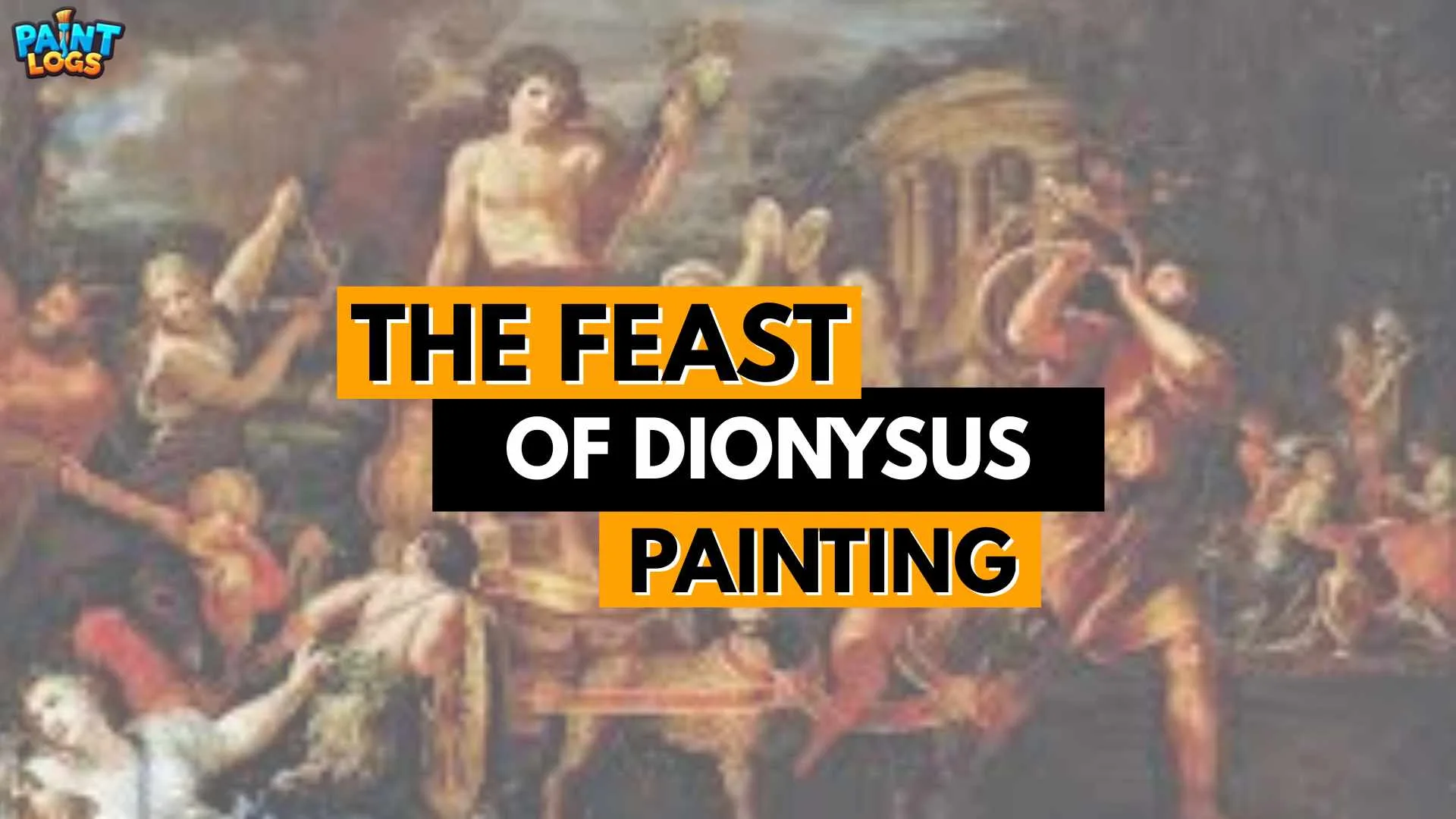
The feast of dionysus painting has long intrigued art lovers, historians, and modern audiences alike. Rooted in Greek mythology and later reimagined in European art, it depicts the god of wine, theatre, and revelry at a grand banquet. More than just a visual celebration of wine and festivity, this subject has become a cultural symbol that bridges ancient myth, Renaissance interpretation, and even contemporary debate.
While the feast of dionysus painting does not refer to a single universally recognized masterpiece, it describes a theme represented in works by artists such as Jan van Bijlert and Jan Josef Horemans, and later echoed in modern reinterpretations.
The subject has inspired comparisons to Leonardo da Vinci’s Last Supper and even resurfaced during the dionysus olympics 2024, when a banquet scene at the Paris Games reignited conversations about art, religion, and symbolism.
The Mythological Background of the Feast
To understand the feast of dionysus painting, it is important to begin with the mythology of Dionysus himself. Known to the Romans as Bacchus, he was the god of wine, fertility, ecstasy, and theatre.
His worship often included ecstatic rituals, music, and communal feasts known as Dionysia. These gatherings represented both divine blessing and the suspension of everyday order, allowing worshippers to step outside ordinary social rules.
Such mythological feasts inspired ancient Greek pottery, sculpture, and frescoes. Later, Renaissance and Baroque painters adapted these motifs, setting the stage for the works that today are often grouped under the title of the feast of dionysus painting.
Jan van Bijlert and the Feast of the Gods
One of the most famous examples tied to the feast of dionysus painting is The Feast of the Gods by Jan van Bijlert, painted between 1635 and 1640. Van Bijlert, a Dutch painter from Utrecht, belonged to the Utrecht Caravaggisti—a group influenced by Caravaggio’s dramatic lighting and Italian classicism.
In this painting, the gods gather at the wedding feast of Peleus and Thetis, a mythological event that would eventually trigger the Trojan War. Discord, uninvited to the celebration, cast a golden apple “to the fairest,” sparking the competition between Hera, Athena, and Aphrodite that Paris of Troy would later judge.
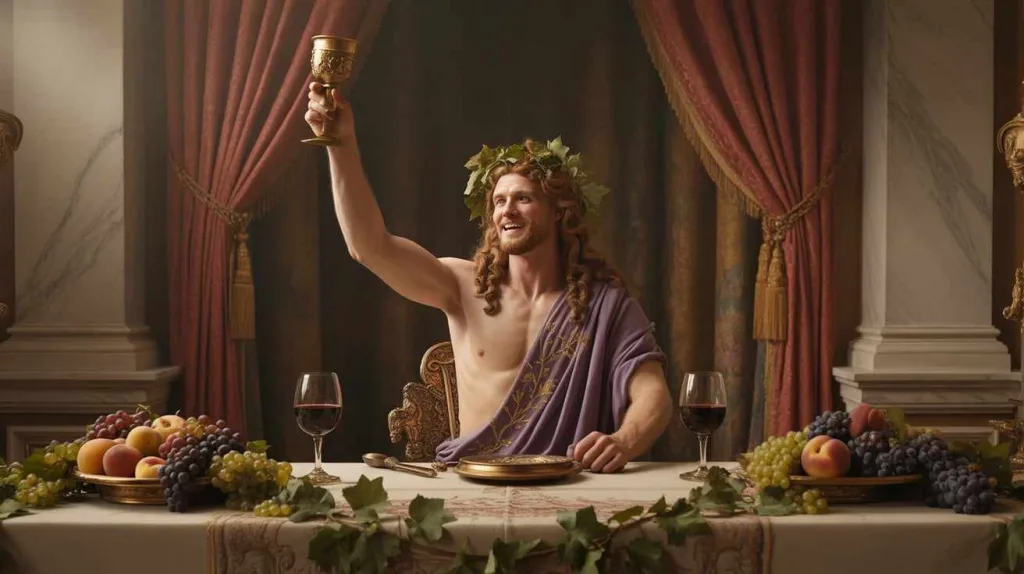
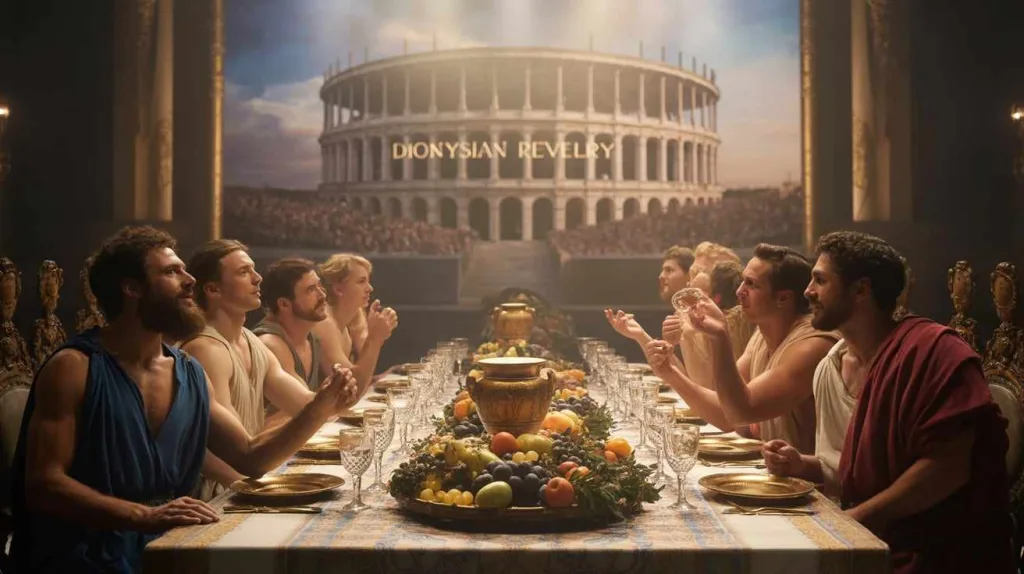
At the center of the scene sits Dionysus (Bacchus), raising a goblet of wine. Around him, divine figures display their attributes: Venus graceful and sensual, Diana pure and chaste, Mars in armor, and Minerva marked by wisdom. The table is heavy with fruit, goblets, and garlands.
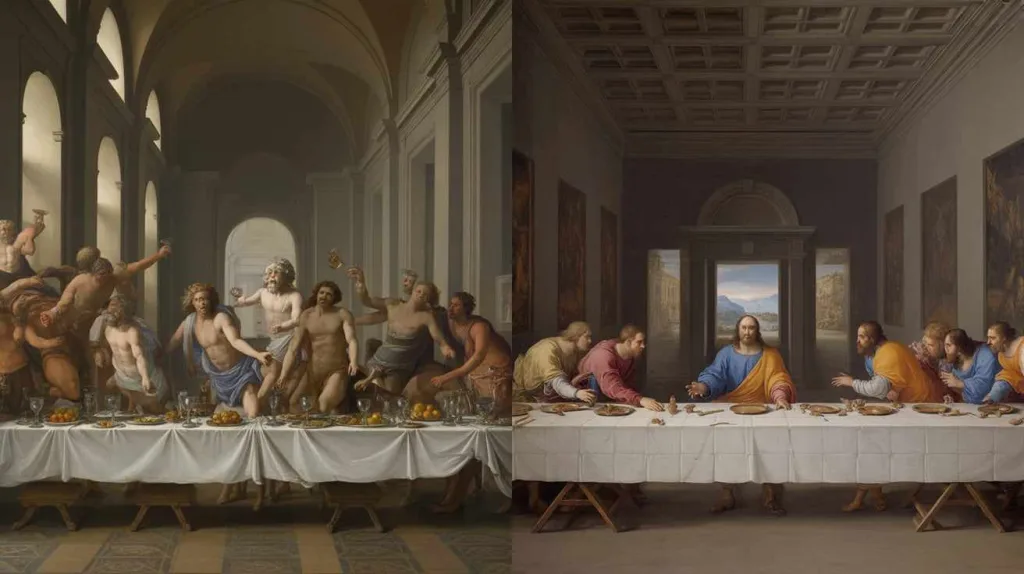
Van Bijlert’s composition deliberately echoes Leonardo da Vinci’s Last Supper. The gods are arranged in a long row behind the banquet table, their bodies leaning in expressive poses, their faces caught in dramatic light. But where da Vinci’s table is bare and solemn, van Bijlert’s overflows with grapes and abundance.
This visual borrowing invited comparison but also drew a clear contrast. One meal foreshadowed betrayal and sacrifice; the other celebrated pleasure, fertility, and divine excess.
Today, the painting hangs in the Musée Magnin in Dijon, France. It measures 165 by 230 centimeters and dominates the gallery where it hangs, despite having lost part of its original canvas. Scholars believe more gods once filled the missing section. What remains is one of the most theatrical and symbolic depictions of a Dionysian banquet in European art.
Other Artistic Interpretations
Beyond van Bijlert, the theme appeared in different forms. An eighteenth-century Dutch genre piece titled Feast of Dionysus is attributed to Horemans, Jan Joseff, showing the continued fascination with the god’s banquet.
In France, the Musée Magnin preserves van Bijlert’s Feast of the Gods, sometimes referenced as the feast of dionysus painting in france. These works reinforce how Dionysus’s celebratory image endured into the modern period, becoming a favorite subject for artists exploring themes of abundance and divine ecstasy.
Meaning and Symbolism
The feast of dionysus painting meaning is layered and complex. Every object in these canvases carries symbolic weight.
Wine, above all, represents transformation. Grapes become wine through fermentation, just as mortals may achieve transcendence through Dionysian ritual. The goblet Dionysus raises is not just a drink but a symbol of ecstasy, inspiration, and danger.
The fruits and garlands symbolize fertility, abundance, and the cycles of life and death. Ivy crowns mark Dionysus’s eternal connection to nature. Satyrs and maenads, often dancing around the scene, represent chaos, frenzy, and the suspension of social order.
The figures of other gods add layers of meaning. Venus embodies love and desire, Diana chastity and purity, Mars war and aggression. Their presence beside Dionysus suggests that all opposites—love and restraint, war and peace, chaos and harmony—are temporarily united in the divine banquet.
Seventeenth-century Dutch viewers would have read these symbols in context. For Protestants and Catholics alike, the feast could be read as either a warning against indulgence or a celebration of life’s pleasures. This duality made the painting powerful: it was both a mirror and a provocation.
The Feast of Dinoysus Comparisons with The Last Supper
Both works present a central figure surrounded by followers at a shared meal. Both transform dining into a ritual of cosmic importance. Yet their messages diverge:
- The Last Supper → solemnity, sacrifice, betrayal.
- greek feast of dionysus painting → intoxication, joy, release.
The overlap lies less in direct influence and more in humanity’s enduring fascination with meals as sacred acts.
The Feast of Dionysus Olympics 2024
The feast of dionysus olympics brought these questions into the spotlight in July 2024. During the Paris opening ceremony, creative director Thomas Jolly staged a banquet scene with French actor Philippe Katerine painted blue as Dionysus. Surrounded by dancers and drag performers, he reclined at a long table overflowing with fruit.
For art historians, the scene clearly referenced van Bijlert’s Feast of the Gods. But millions of viewers around the world saw only a parody of the Last Supper. Outrage spread online, and headlines debated whether the performance mocked Christianity.
Outlets from The Guardian to independent blogs reported on the controversy, while scholars tried to explain the mythological reference. For a moment, searches for where is the feast of dionysus painting located spiked, and the small Musée Magnin in Dijon became an unlikely star of global art news.
The event revealed a broader truth: most modern audiences instantly recognize Christian imagery but lack the visual literacy to identify mythological banquets. Without context, they default to the most familiar template—the solemn table of the apostles.
Location and Legacy
The question of who painted the feast of dionysus painting or where is the feast of dionysus painting does not have a single answer. Versions exist across Europe:
- Van Bijlert’s in the Musée Magnin, Dijon.
- Bellini and Titian’s Feast of the Gods in Washington, D.C.
- Rubens’s Bacchanalian feasts in the Prado, Madrid.
- Bloemaert’s Wedding of Peleus and Thetis in The Hague.
Regional museums in Lyon, Toulouse, Munich, and Dresden also preserve smaller banquet scenes. This scattered legacy explains why searches for the feast of dionysus painting original or feast of dionysus painting year return different results. There was never just one; instead, each era reinvented the theme.
Broader Artistic Context
The the feast of the gods painting by Bellini and Titian also belongs to this tradition. While not centered on Dionysus, it shows Olympian gods dining together, reinforcing the theme of divine banquets.
Similarly, van Bijlert’s version is catalogued as the feast of the gods by jan van bijlert, illustrating how terminology blurs between these works.
Cultural Bridge Across Time
The feast of dionysus painting endures because it bridges mythology, religion, and art history. From Greek symposiums to Christian Eucharist to Olympic performance art, the banquet symbolizes humanity’s oldest rituals of eating, drinking, and finding meaning in community.
Conclusion
From ancient myth to Dutch painting, from scholarly comparisons to Olympic controversy, the feast of dionysus painting has traveled across centuries. It is not one canvas but a family of works united by a theme of divine celebration.
For some, it represents joy, fertility, and freedom. For others, it highlights how myth still shapes modern debates. And for art historians, it remains proof of how ritual and storytelling inspire artists across time.
For readers interested in how myth, pop culture, and internet art often overlap, you can also explore our feature on Meowbahh Technoblade art, which looks at another modern example of how artistic expression sparks online debate.
FAQs
When was the Feast of Dionysus painted?
The theme appeared across centuries. Van Bijlert’s Feast of the Gods was painted in the 1630s, while Horemans’s version came in the 18th century. Earlier inspirations date back to Roman frescoes, with modern echoes in the 2024 Olympics.
Who painted the Feast of Dionysus?
Jan van Bijlert and Jan Josef Horemans are the best-known, but many variations exist across Europe.
When was Feast of Dionysus painted?
Different versions exist: seventeenth-century (van Bijlert) and eighteenth-century (Horemans).
Is there a Feast of Dionysus painting?
Yes. Multiple works portray Dionysian feasts, housed in museums like Dijon’s Musée Magnin and Washington’s National Gallery of Art.
Where is the Feast of Dionysus painting?
Van Bijlert’s is in Dijon; others are in Washington, The Hague, Madrid, and private collections.
What is the Feast of Dionysus painting?
A mythological banquet scene of Dionysus, symbolizing abundance, fertility, joy, and divine communion.
What does the painting Dionysus mean?
It represents the liberating yet chaotic aspects of life—wine, transformation, freedom, and excess.
What does the Feast of Dionysus mean?
It symbolizes community, ritual, and divine inspiration, reflecting ancient festivals of Dionysus.
Was The Feast of the Gods painting based on The Last Supper?
No. Bellini, Titian, and van Bijlert’s banquet scenes predate or reinterpret the format, but share compositional echoes.
Was the Feast of Dionysus painting a mockery of The Last Supper?
No. Dionysian imagery predates Christianity. The idea of mockery is modern, especially after the Olympics.
What was the real painting at the Olympics Last Supper?
The 2024 Paris opening ceremony referenced van Bijlert’s Feast of the Gods, not da Vinci’s Last Supper.