

A coastal dining room is more than seashell decorations and blue paint. In my experience, the best coastal spaces feel bright, comfortable, and connected to nature while still looking elegant enough for everyday dining and special gatherings. The goal is to create a relaxed atmosphere that reminds you of the beach without making your home feel like a themed vacation rental. Over the years, I have noticed that successful coastal interiors balance natural textures, light colors, and simple furniture choices. These 21 coastal dining room ideas can help you create a space that feels fresh, welcoming, and timeless in 2026.
1. Start With A Soft Coastal Color Palette
Whenever I design a coastal-inspired room, I begin with the color palette. Soft whites, sandy beige tones, pale blues, and light gray shades instantly create a beach-inspired atmosphere. These colors reflect natural light beautifully and make the dining room feel larger and more relaxing. I prefer keeping the walls neutral and allowing accent colors to appear through decor and textiles. This approach keeps the room from feeling overwhelming. A gentle coastal palette creates the perfect foundation for layering textures and decorative pieces while maintaining an elegant appearance that works throughout the year.
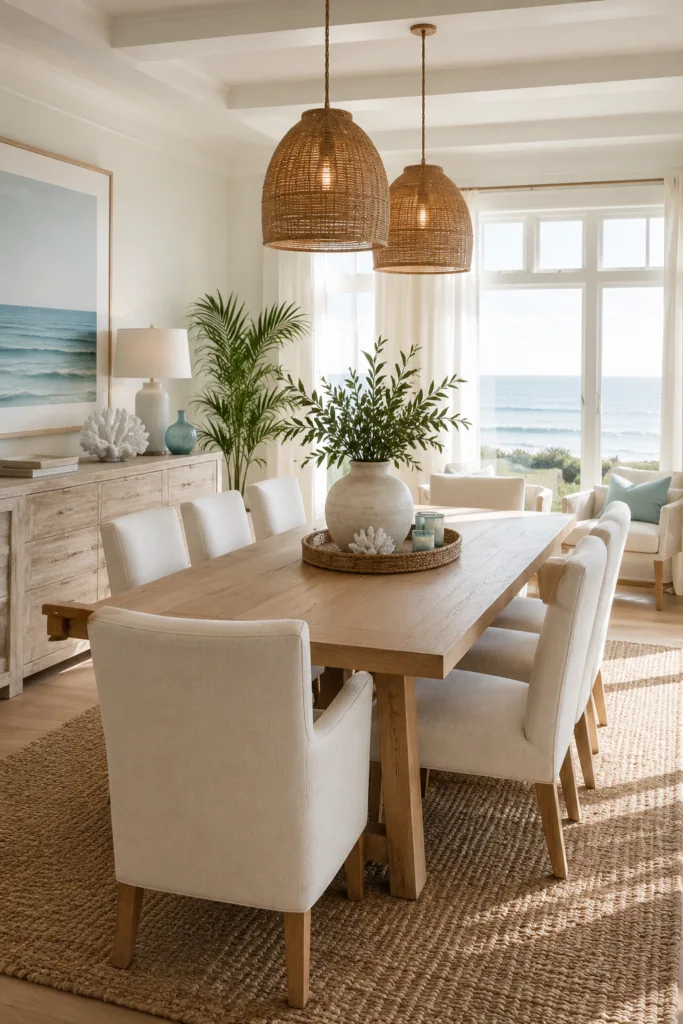
2. Choose A Natural Wood Dining Table
A natural wood dining table is one of the easiest ways to bring coastal charm into your home. I have found that light oak, weathered wood, or whitewashed finishes work especially well. These materials add warmth while maintaining the casual feeling associated with coastal interiors. The wood grain introduces organic texture and creates a connection to nature. Instead of selecting highly polished furniture, I usually recommend pieces with subtle imperfections because they feel authentic and relaxed. A beautiful wooden table becomes the centerpiece of the room and supports almost every other coastal design element.
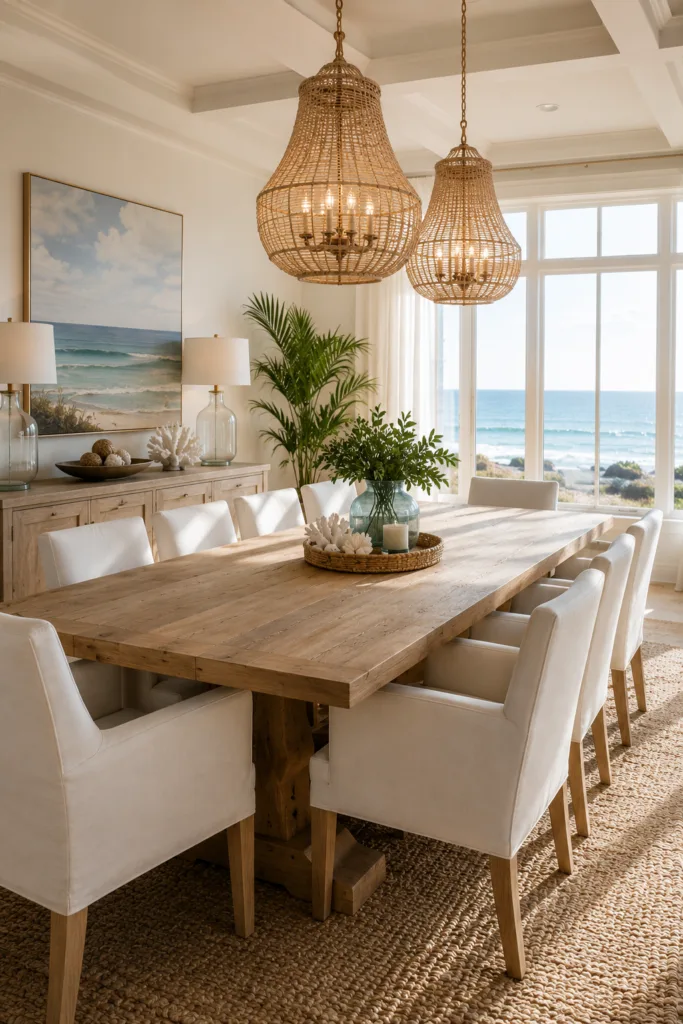
3. Add Woven Dining Chairs
Woven dining chairs instantly bring texture and beach-inspired character into a dining room. Materials like rattan, wicker, and cane have become some of my favorite coastal design elements because they feel light and airy. They introduce visual interest without adding heaviness to the room. I often combine woven chairs with a solid wood table to create a balanced look. These chairs are comfortable, stylish, and timeless. Whether used around the entire table or as accent chairs at the ends, woven seating helps create the relaxed elegance that defines successful coastal interiors.
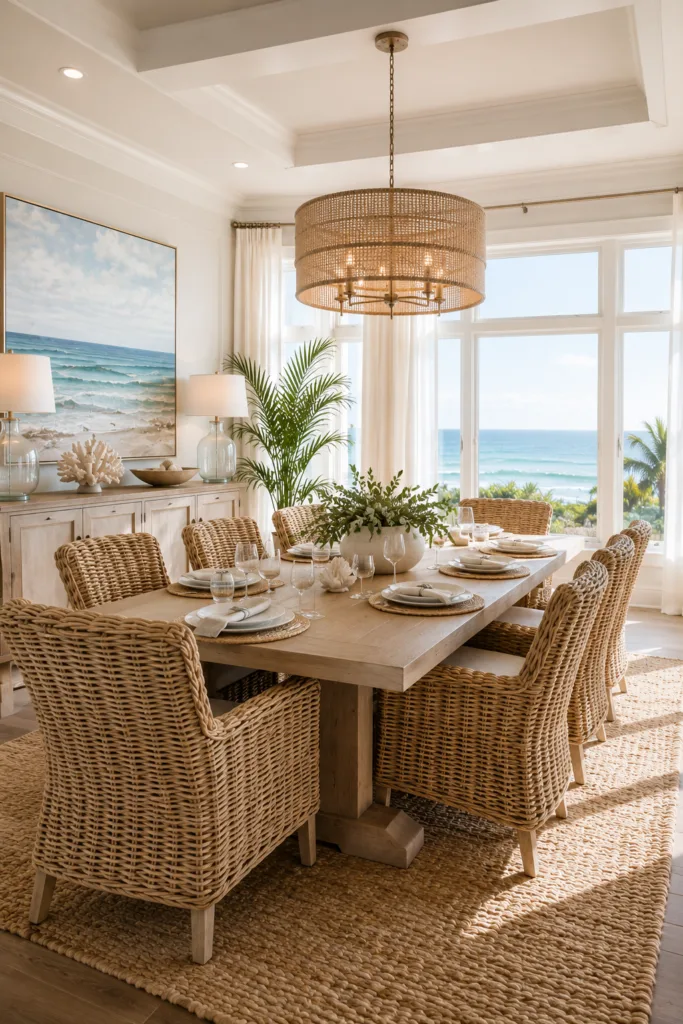
4. Use Linen Curtains For Softness
Linen curtains are one detail I rarely skip in a coastal dining room. They allow natural light to filter through while creating a soft and elegant appearance. Unlike heavy drapes, linen feels breezy and relaxed, which perfectly matches the coastal aesthetic. Floor-to-ceiling curtains can also make the room feel taller and more refined. I usually choose white, ivory, or light beige fabrics because they complement the overall color palette. Linen adds texture without visual clutter and contributes to the calming atmosphere that makes coastal dining spaces so inviting.
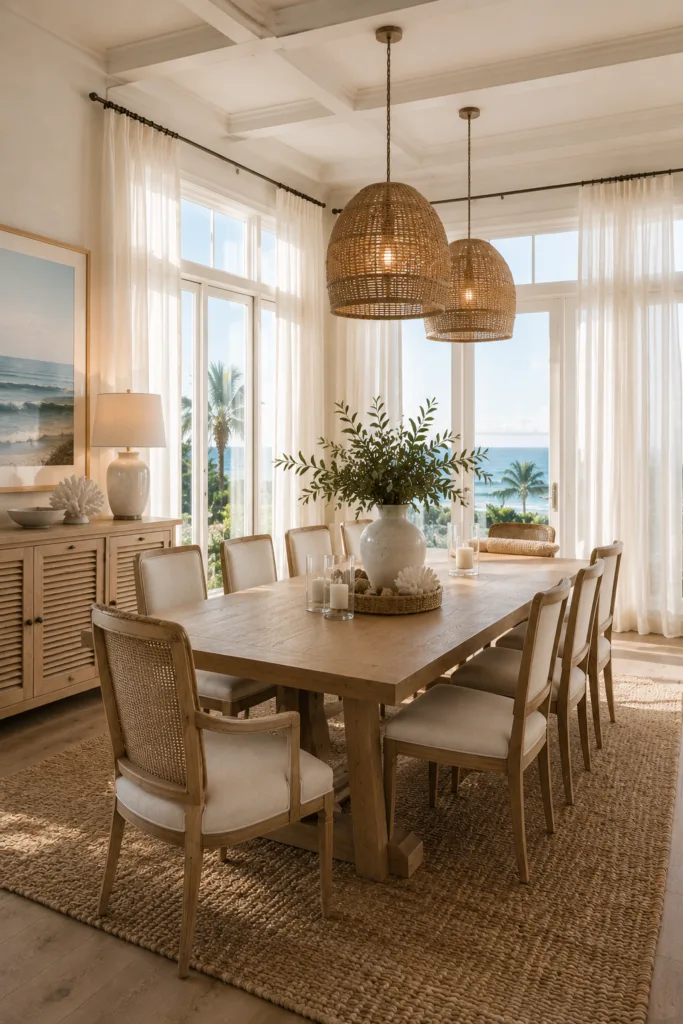
5. Incorporate A Statement Pendant Light
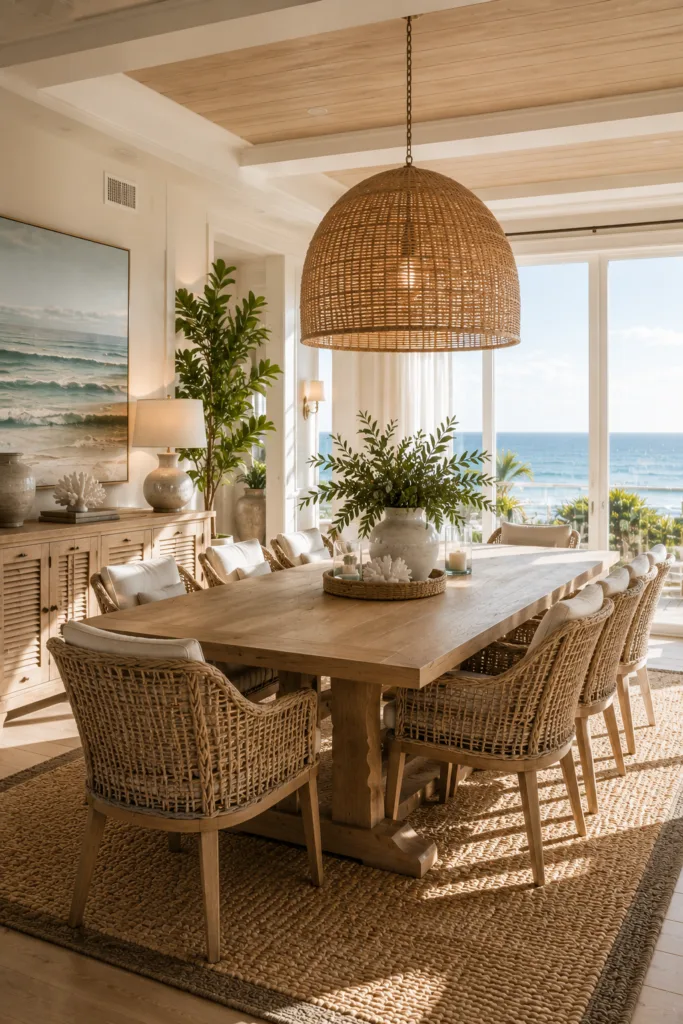
A beautiful pendant light can completely transform a dining room. In coastal interiors, I often gravitate toward woven, driftwood-inspired, or natural fiber fixtures. These lights add character while reinforcing the beach-inspired theme. The fixture becomes a focal point above the dining table and helps define the space. Choosing an oversized pendant can create a designer look without requiring additional decoration. I have found that lighting often determines how luxurious a room feels, and the right coastal-inspired pendant can elevate even a simple dining room into something truly memorable.
6. Keep The Room Bright And Airy
One of the defining characteristics of coastal design is brightness. I always try to maximize natural light whenever possible. Large windows, light wall colors, and reflective surfaces help create an open atmosphere. Even in homes that are far from the ocean, this sense of openness can make the dining room feel fresh and welcoming. Heavy furniture and dark colors tend to work against the coastal aesthetic. Instead, I focus on maintaining clear sight lines and allowing sunlight to become part of the design. A bright room naturally feels more relaxing and enjoyable.
7. Add A Jute Or Sisal Rug
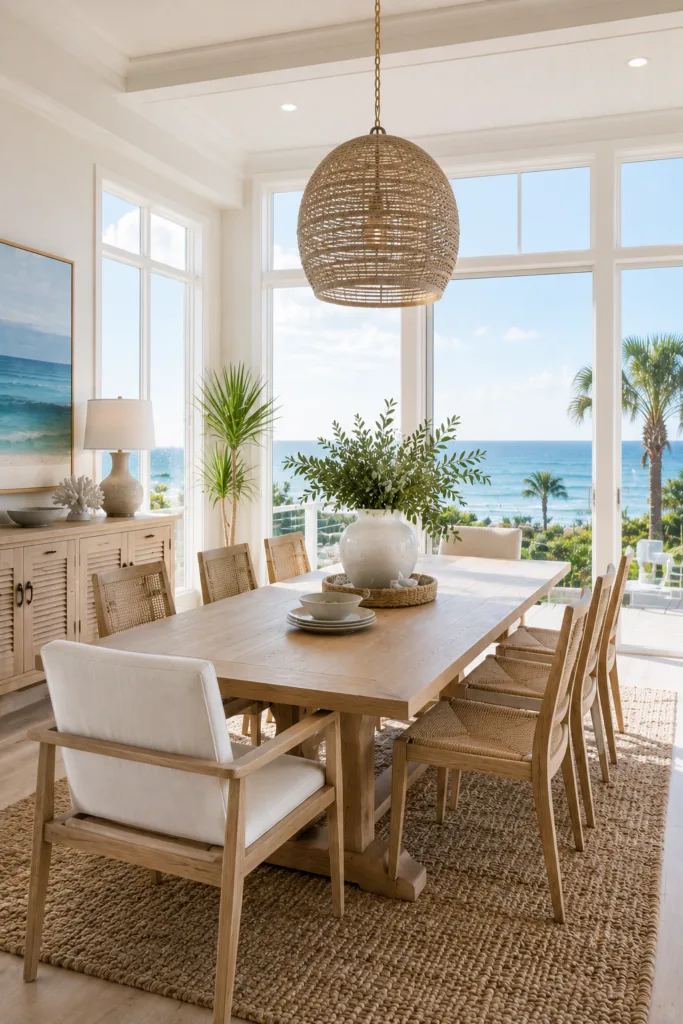
Natural fiber rugs are one of the easiest ways to introduce coastal texture. I frequently use jute and sisal rugs because they bring warmth without overwhelming the room. Their woven appearance complements wood furniture and coastal accessories beautifully. These rugs also help define the dining area and create a more finished look. The subtle texture underfoot adds comfort while supporting the natural theme of the space. A quality natural fiber rug can instantly make a dining room feel more layered, inviting, and connected to the relaxed elegance of coastal living.
8. Decorate With Coastal Artwork
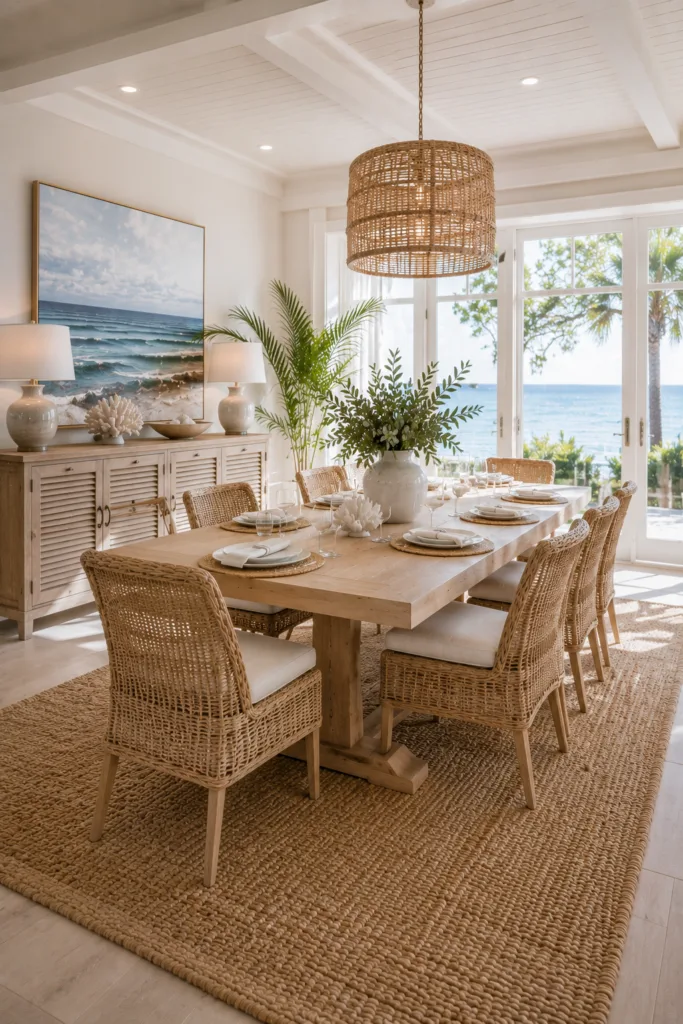
Artwork helps personalize a dining room while reinforcing the design style. For coastal spaces, I often choose ocean photography, abstract seascapes, beach landscapes, or soft watercolor pieces. The goal is not to make the room feel overly themed but rather to introduce subtle reminders of the coast. Large artwork can become a focal point and create visual interest without requiring numerous accessories. I find that carefully selected art adds personality and depth while helping the room feel complete. Coastal-inspired artwork works particularly well when paired with a neutral background.
9. Introduce Whitewashed Furniture
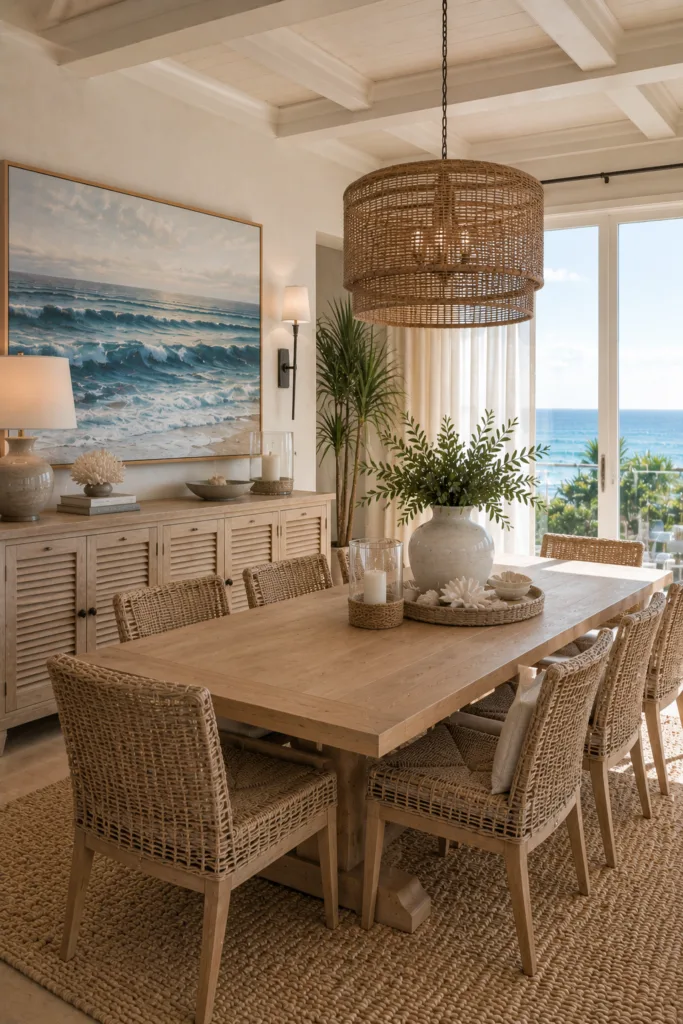
Whitewashed furniture brings a relaxed beach-house feeling that is difficult to replicate with other finishes. I often use whitewashed buffets, sideboards, or display cabinets because they brighten the room and complement coastal color palettes. The finish softens the appearance of wood while still allowing natural grain patterns to show through. This balance creates an aged yet elegant look. Whitewashed pieces also pair beautifully with woven textures, light fabrics, and natural materials. The result feels timeless rather than trendy, making it an excellent long-term choice for coastal dining rooms.
10. Add Fresh Greenery
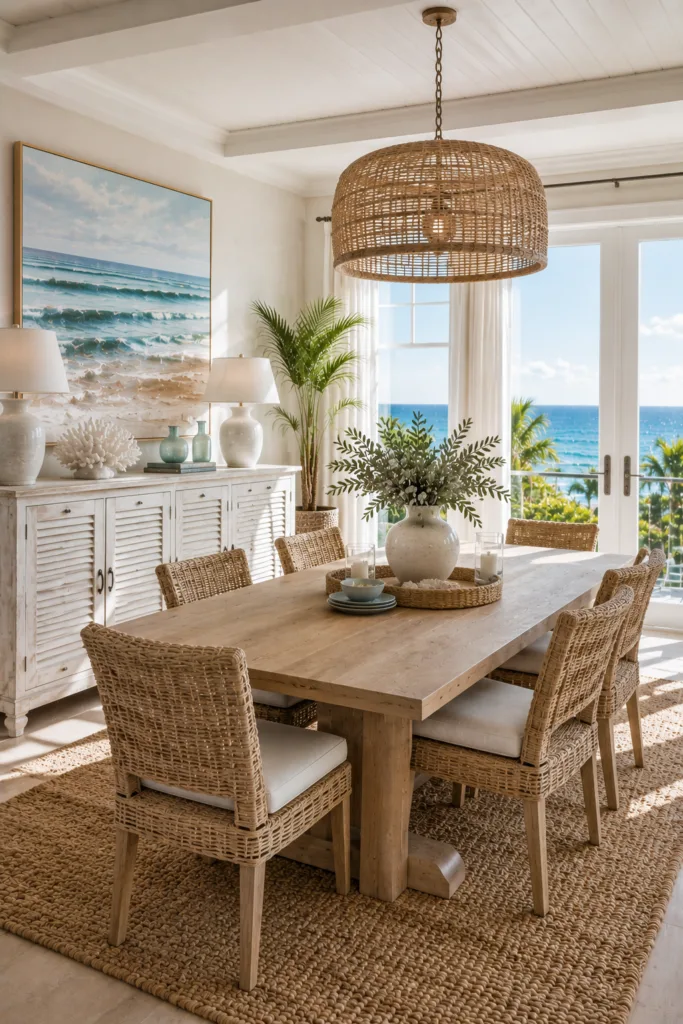
Nothing brings life into a dining room quite like greenery. I regularly use fresh plants, olive branches, eucalyptus stems, or simple floral arrangements to enhance coastal spaces. Natural greenery adds color, texture, and movement without disrupting the calm atmosphere. Large plants can fill empty corners, while smaller arrangements work beautifully as centerpieces. One reason I love using greenery is that it changes with the seasons and keeps the room feeling fresh. It creates a stronger connection to nature, which is an important part of successful coastal design.
11. Mix Different Natural Textures
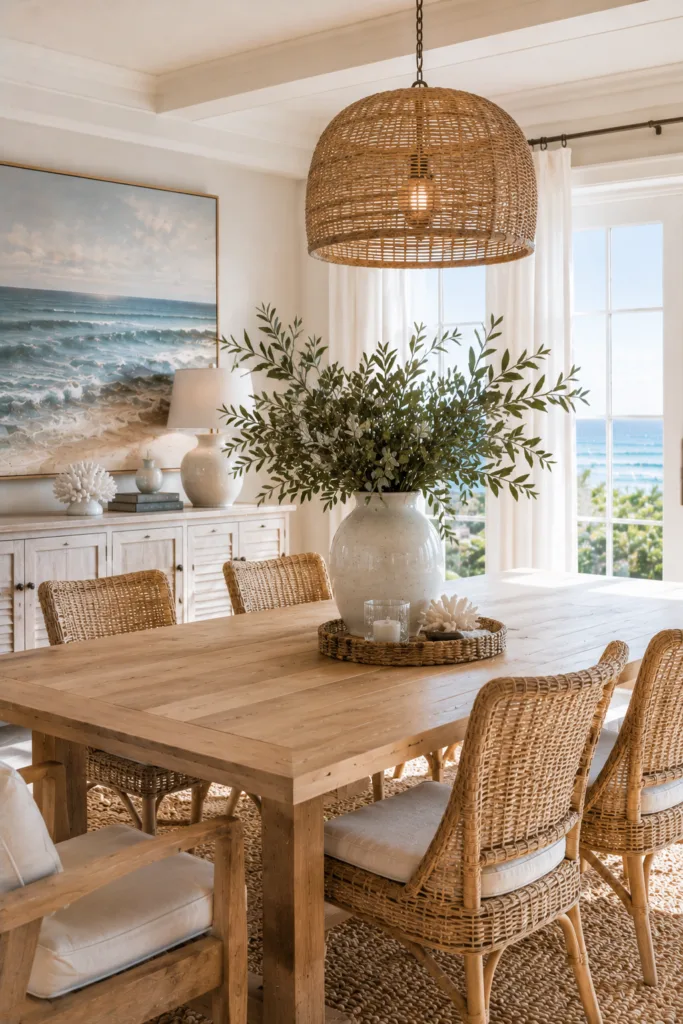
Coastal interiors become much more interesting when different textures are layered together. I often combine wood, linen, rattan, stone, and woven materials within the same room. While the color palette remains relatively simple, these textures prevent the design from feeling flat. The contrast between smooth and rough surfaces creates depth and visual interest. One of the biggest mistakes I see is relying only on color while ignoring texture. Thoughtful layering allows a coastal dining room to feel sophisticated, comfortable, and visually rich without becoming cluttered.
12. Use Glass Decor Accents
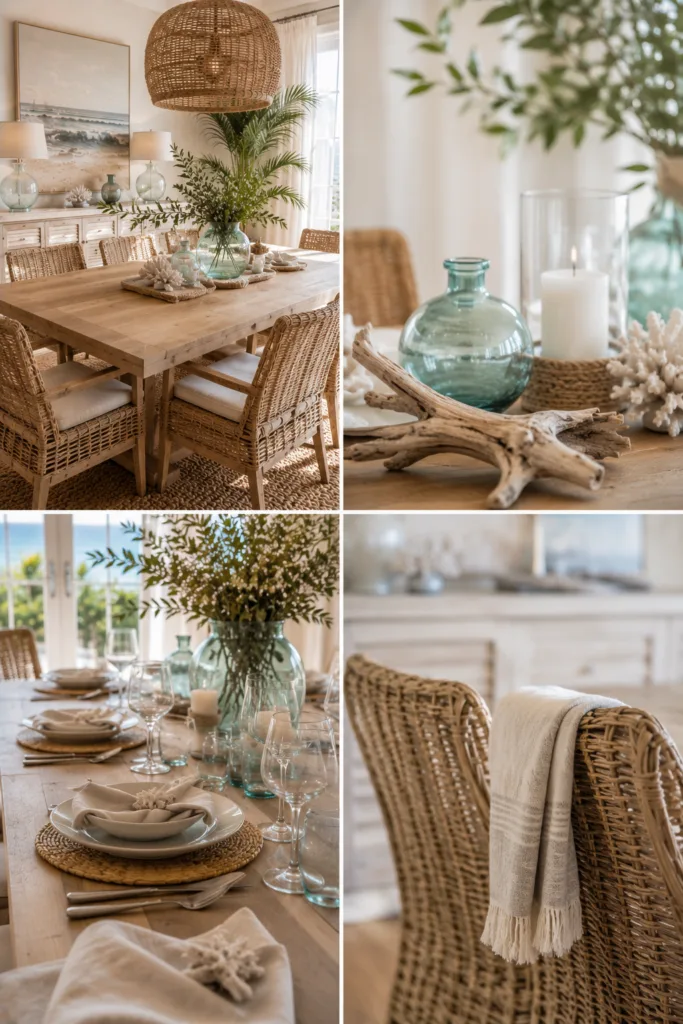
Glass accessories remind me of ocean water because they reflect light beautifully and add subtle sparkle. Coastal dining rooms often benefit from glass vases, candle holders, decorative bowls, or pendant lights. These elements introduce elegance while maintaining the airy feeling associated with beach-inspired interiors. I particularly enjoy using clear or lightly tinted blue glass because it feels fresh and timeless. Glass decor works especially well when paired with natural materials like wood and rattan. The combination creates balance between casual comfort and refined sophistication.
13. Create A Relaxed Table Setting
A coastal dining room should feel welcoming rather than overly formal. I often prefer relaxed table settings with natural linens, woven placemats, ceramic dishes, and simple centerpieces. These details create a casual elegance that encourages people to gather and enjoy meals together. Overly decorative settings can sometimes make a room feel stiff. By keeping things simple and natural, the dining experience feels more authentic and enjoyable. The relaxed atmosphere is one of the reasons coastal interiors remain popular among homeowners looking for both style and comfort.
14. Include Driftwood-Inspired Details
Driftwood-inspired decor introduces coastal character without being overly obvious. I have used driftwood mirrors, sculptures, and decorative accents to add texture and visual interest. These pieces reflect the natural beauty of coastal environments while remaining elegant and understated. The weathered appearance creates warmth and authenticity. Even small driftwood-inspired details can reinforce the overall design theme. I appreciate how these elements connect the room to nature and contribute to the relaxed atmosphere that defines successful coastal interiors.
15. Install Shiplap Wall Features
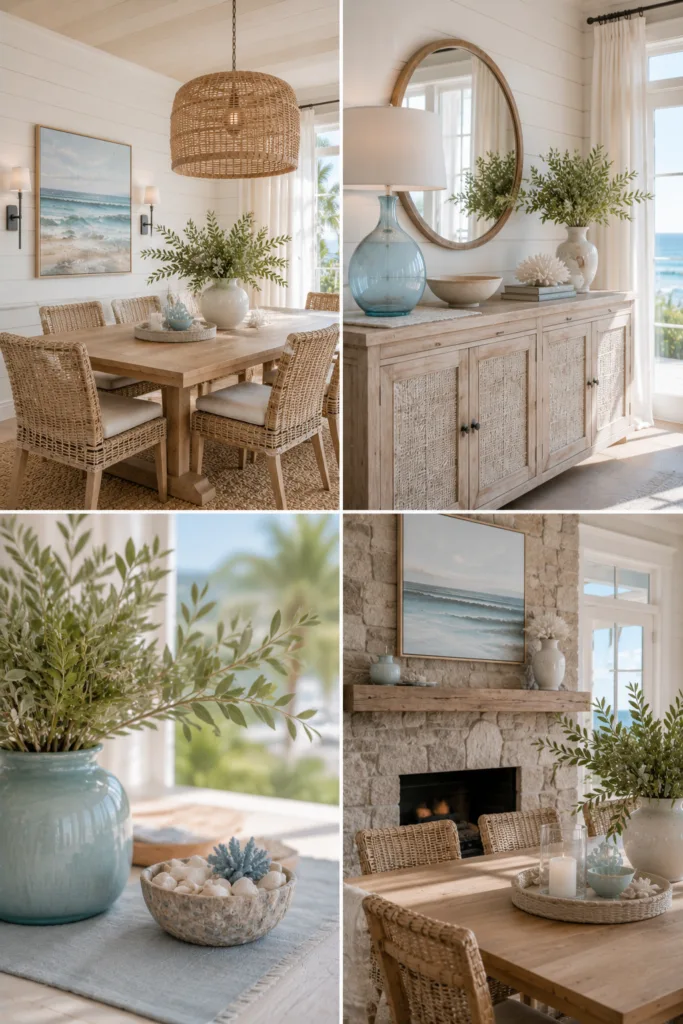
Shiplap remains a classic coastal design feature when used thoughtfully. I often recommend incorporating it on a single accent wall rather than throughout the entire room. Painted white or a soft neutral shade, shiplap adds texture and architectural interest without dominating the space. It works especially well behind buffets or dining tables where it can act as a backdrop for artwork and decor. The subtle detailing feels timeless and complements both modern and traditional coastal styles. Properly executed shiplap adds charm while maintaining an elegant appearance.
16. Add A Coastal-Inspired Sideboard
A sideboard provides valuable storage while contributing to the room’s overall style. In coastal dining rooms, I often choose pieces with natural wood finishes, woven details, or light painted surfaces. A well-designed sideboard helps keep the space organized and offers a surface for displaying decor, artwork, or serving pieces. Functionality is important, but aesthetics matter too. The right sideboard can become a statement piece that enhances the room’s coastal personality while supporting everyday dining needs.
17. Use Soft Blue Accents Sparingly
Blue naturally connects to coastal design, but I have learned that moderation is key. Too much blue can make a room feel themed rather than elegant. Instead, I prefer introducing blue through cushions, artwork, tableware, or decorative accessories. Soft ocean-inspired shades provide contrast against neutral backgrounds without overwhelming the design. These accents add freshness and visual interest while preserving the room’s sophisticated appearance. Used carefully, blue can strengthen the coastal atmosphere and make the space feel connected to the ocean.
18. Incorporate Natural Stone Elements
Stone surfaces bring durability, texture, and elegance to a coastal dining room. I often use stone in tabletops, decorative objects, or architectural features. Materials such as limestone, marble, and travertine work especially well because they reflect natural coastal landscapes. Stone also pairs beautifully with wood and woven materials. This combination creates balance between refined and relaxed elements. Introducing natural stone helps elevate the room while maintaining the organic qualities that make coastal interiors feel inviting and timeless.
19. Keep Decorative Accessories Minimal
One lesson I have learned is that coastal spaces often look best when accessories are limited. Too many decorative objects can quickly make the room feel cluttered. Instead, I focus on a few carefully chosen pieces that contribute to the overall story. A beautiful vase, an artwork, and a centerpiece are often enough. This approach allows the room’s architecture, furniture, and natural materials to stand out. Minimal decoration creates a cleaner, more sophisticated environment while reinforcing the calm feeling associated with coastal design.
20. Design Around Comfort
Comfort should always guide design decisions. No matter how beautiful a dining room looks, people will not enjoy spending time there if it feels uncomfortable. I prioritize supportive seating, practical layouts, and inviting materials whenever I design coastal spaces. Comfortable dining chairs, soft textiles, and adequate lighting all contribute to a better experience. Coastal interiors are meant to encourage relaxation and connection. By designing around comfort first, the room becomes a place where family and friends naturally want to gather.
21. Blend Beachy Vibes With Elegance
The most successful coastal dining rooms balance casual beach-inspired elements with sophisticated design details. I always try to avoid making the room feel overly themed. Instead, I combine natural materials, light colors, elegant lighting, and carefully selected decor to create a refined coastal atmosphere. This balance ensures the room feels timeless rather than trendy. The result is a dining space that captures the relaxing spirit of the coast while remaining stylish enough for everyday living and entertaining.
Conclusion
Creating a coastal dining room is about embracing natural materials, light-filled spaces, and relaxed elegance. By combining thoughtful furniture choices, layered textures, soft colors, and carefully selected decor, you can create a room that feels welcoming, sophisticated, and inspired by the beauty of the coast. These 21 ideas offer practical ways to bring beachy vibes into your home while maintaining a timeless sense of style that you can enjoy for years to come.
SEO Meta Description:
Discover 21 coastal dining room ideas that blend beachy charm with timeless elegance. From natural wood tables and woven chairs to soft coastal colors and airy textures, these inspiring ideas will help you create a relaxing and stylish dining space in 2026.