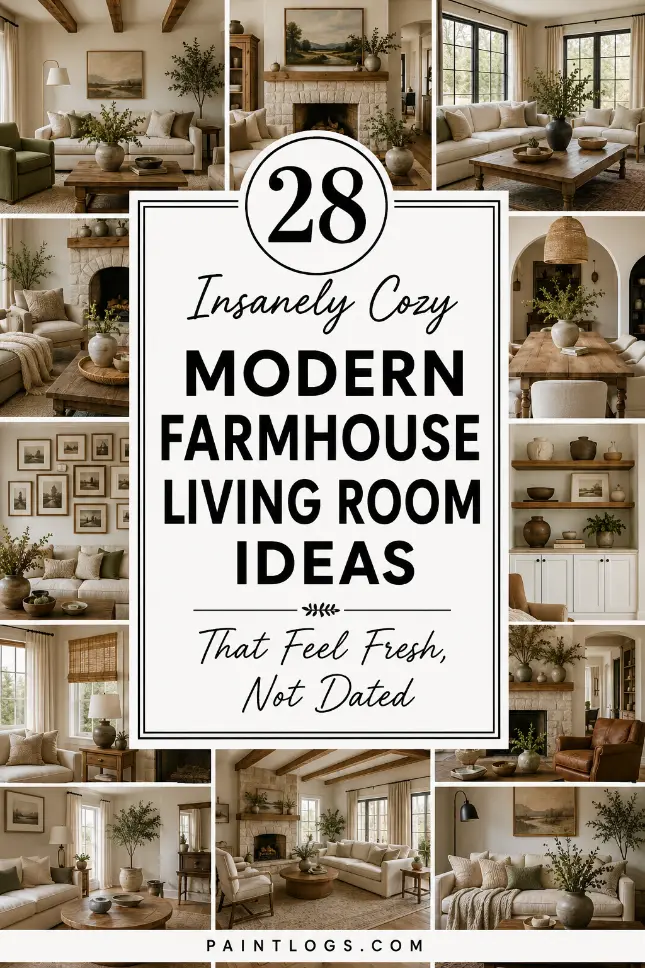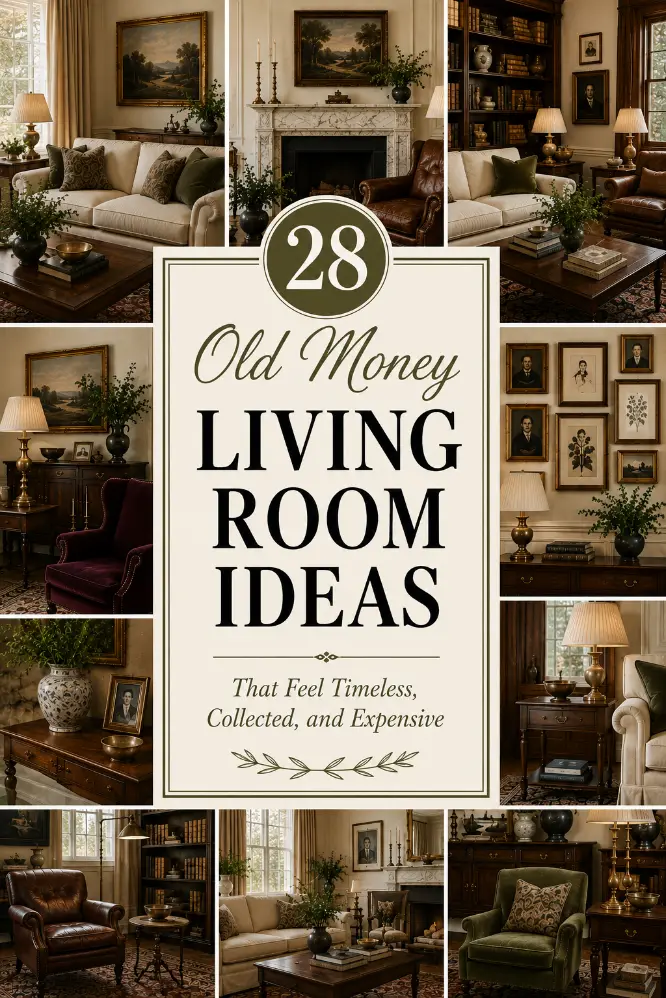
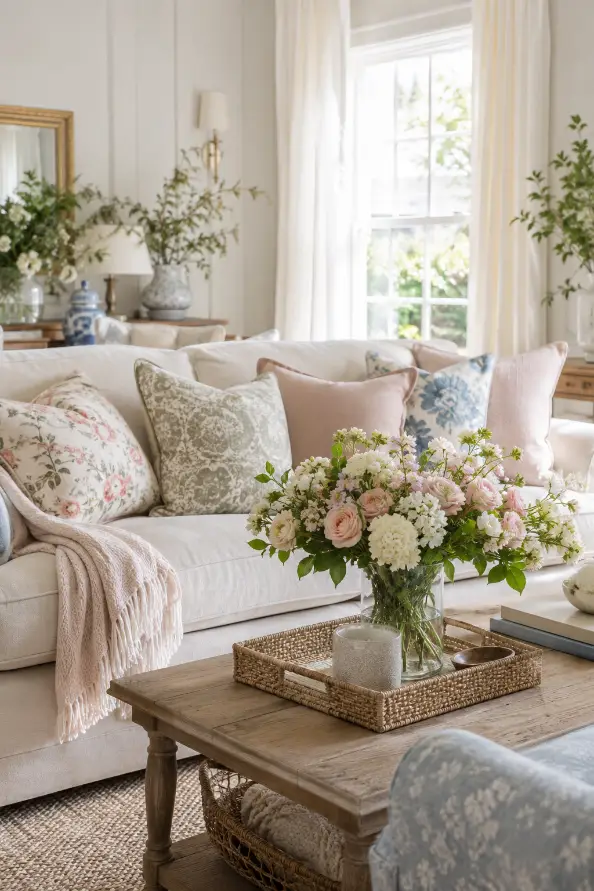
Interior design living room ideas can look beautiful online, but when I’m working on a real room, I always think about one thing first: will this actually feel good to live in?
I don’t want a living room that only looks nice in a photo. I want it to feel comfortable when you sit down, easy to move around, and warm enough that you actually want to spend time there.
And honestly, you don’t always need a full makeover.
Sometimes moving the sofa, changing the rug, adding better curtains, or bringing in one large plant can make a much bigger difference than buying lots of new decor.
So if your living room feels a little plain, awkward, or unfinished, these are the ideas I would look at first.
1. Think About How You Really Use the Room
Before you buy anything, ask yourself how you actually use your living room.
Do you mostly watch TV here?
Do you sit with family every evening?
Do guests come over often?
Do your kids play here?
I always start with this because your room should work for your real life.
If everyone watches TV together, the sofa needs to face the TV comfortably. If you love having people over, you need enough seating and a layout that makes talking easy.
A room can look beautiful, but if it is uncomfortable to use, you will never fully enjoy it.
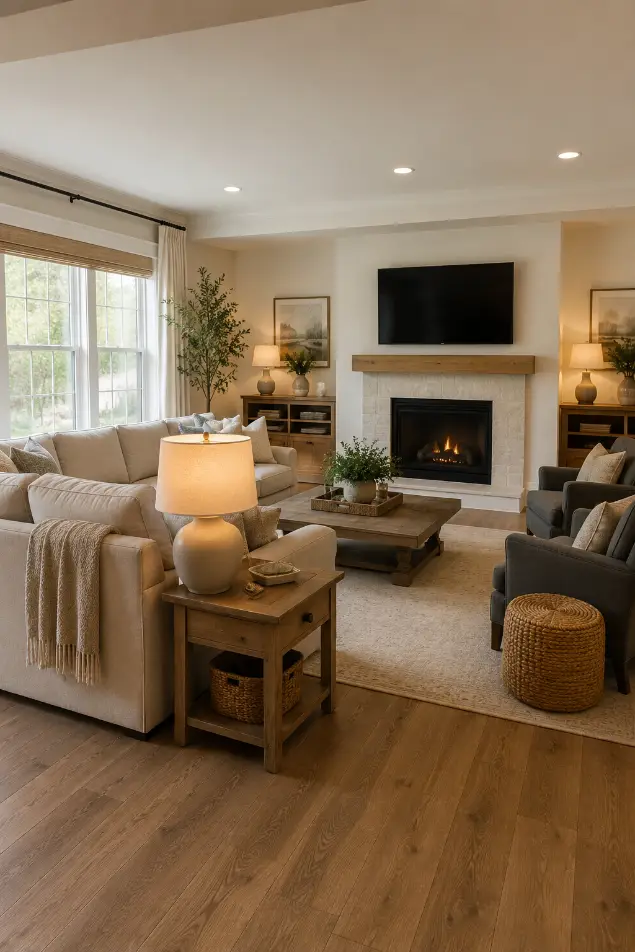
2. Pick One Main Focal Point
I think every living room needs one thing that catches your eye first.
It might be your fireplace, TV wall, a big window, a beautiful sofa, or a large piece of art.
Once you know your focal point, decorating becomes easier.
For example, if your fireplace is the main feature, you don’t need to make the TV wall, gallery wall, shelves, and every other corner equally bold.
Let one area stand out.
I’ve found that rooms usually feel calmer when everything is not fighting for attention.
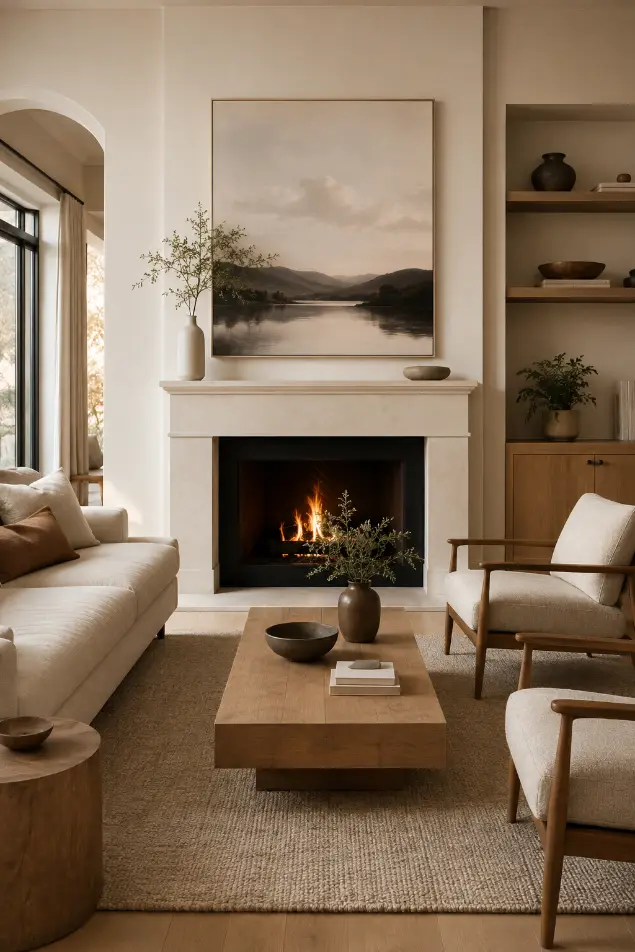
3. Use a Bigger Rug
This is one of the first things I notice in a living room.
A rug that is too small can make the whole seating area feel disconnected.
If you can, choose a rug that is large enough for at least the front legs of the sofa and chairs to sit on it.
In a larger room, I like all the main furniture sitting on the rug.
It makes everything feel connected.
A bigger rug can make a simple room look more finished without changing anything else.
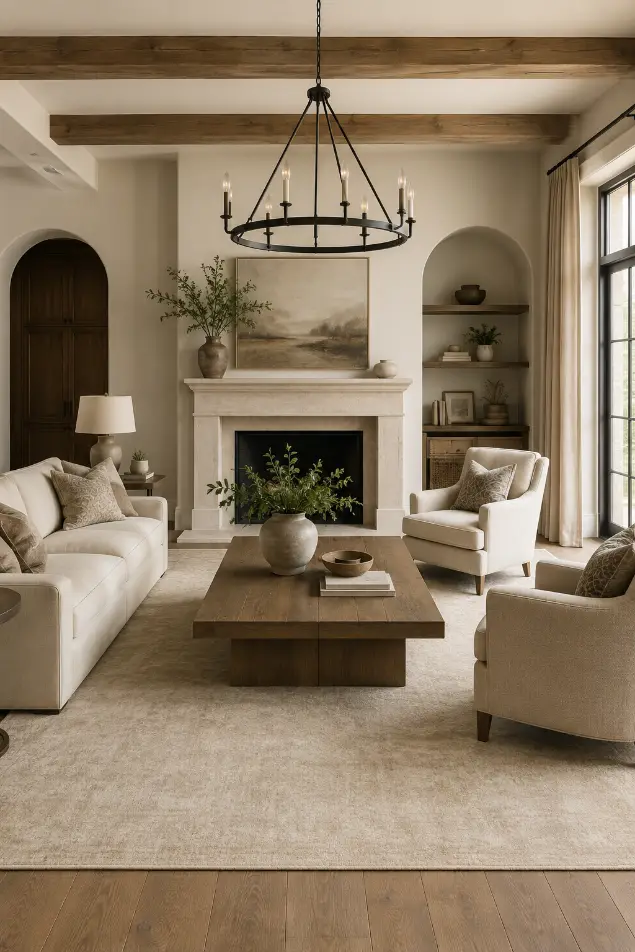
4. Don’t Push Every Sofa Against the Wall
A lot of people automatically push the sofa right against the wall.
Sometimes that works.
But sometimes pulling it forward even a little makes the room look much better.
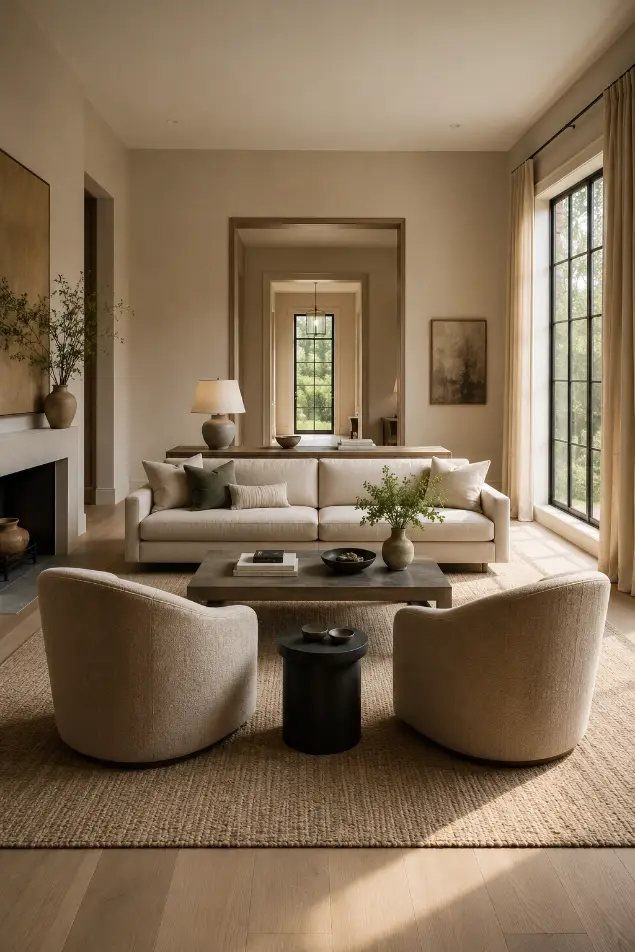
If you have enough space, try leaving a small gap behind the sofa.
In a large living room, you can even place a console table behind it.
I like this because it makes the furniture feel like part of a proper seating area instead of just sitting around the edges of the room.
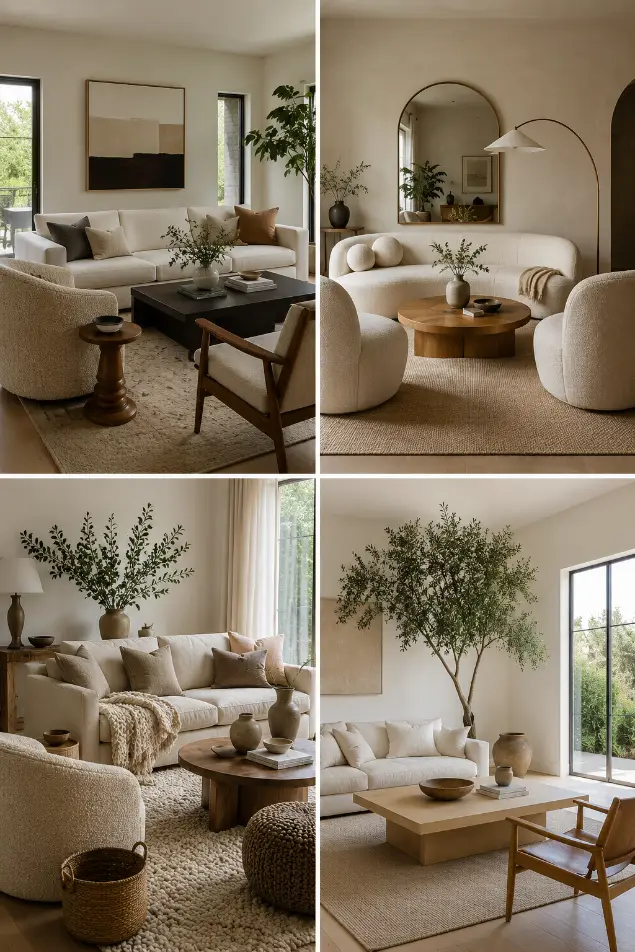
5. Mix Different Neutral Colors
I love neutral living rooms, but I don’t like when everything is exactly the same beige.
That can start looking flat.
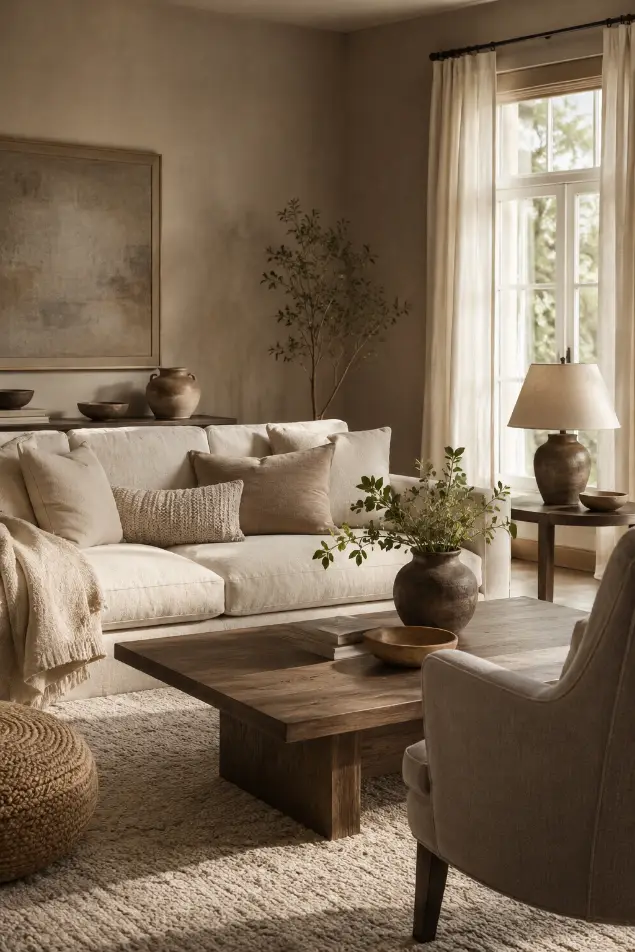
Instead, I like mixing cream, warm white, taupe, light brown, soft gray, and wood tones.
For example, you might have a cream sofa, beige rug, walnut coffee table, and soft gray chair.
Everything still feels calm, but the room has more depth.
If your neutral living room feels boring, you might not need more color. You may just need more shades and textures.
6. Add a Little Black or Dark Brown
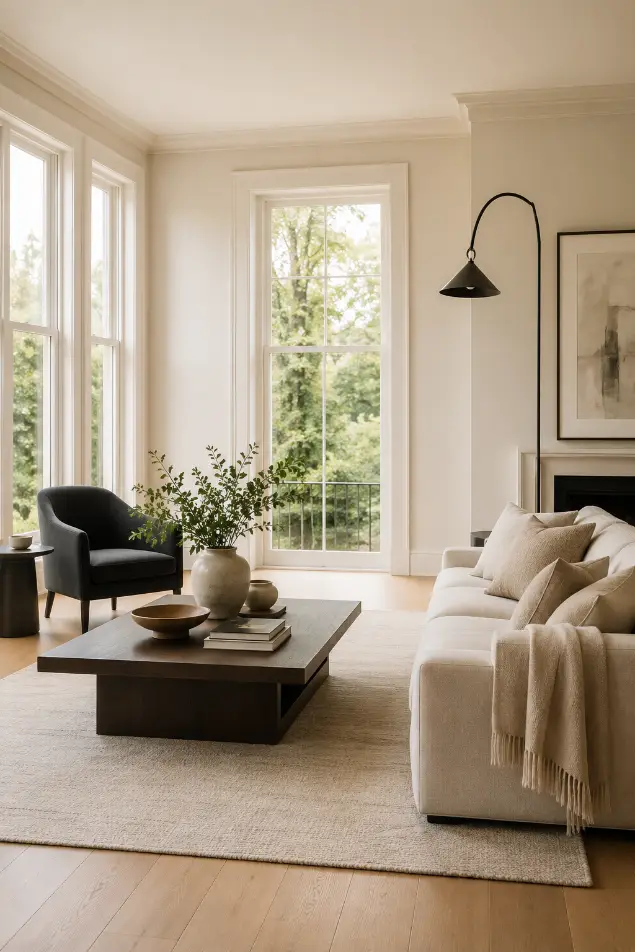
If your whole room is light, try adding one or two darker pieces.
It could be a black lamp, dark wood table, charcoal chair, black picture frame, or dark metal coffee table.
I use this trick a lot because it gives the room some contrast.
Without anything dark, a light room can sometimes feel washed out.
You don’t need much.
Just a few darker details can help ground the whole space.
7. Use More Than One Light
I would never rely on just one ceiling light in a living room.
It usually makes the room feel too bright and flat at night.
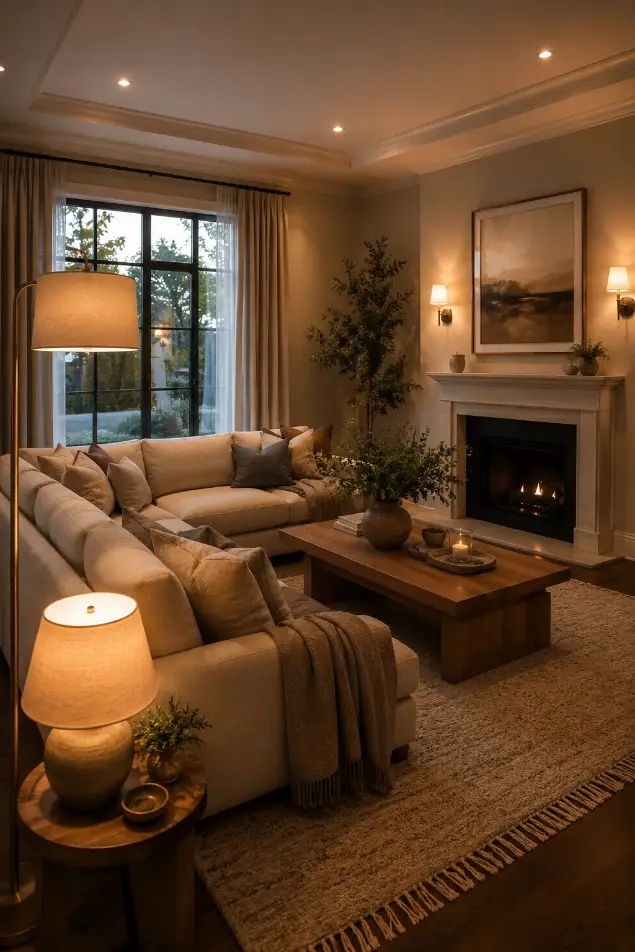
I like to have different types of lighting.
You might have the ceiling lights, a floor lamp near the sofa, and a table lamp on a side table.
At night, you can leave the bright ceiling light off and use the softer lamps instead.
It makes the room feel much more relaxed.
Good lighting is one of those things you notice most when the sun goes down.
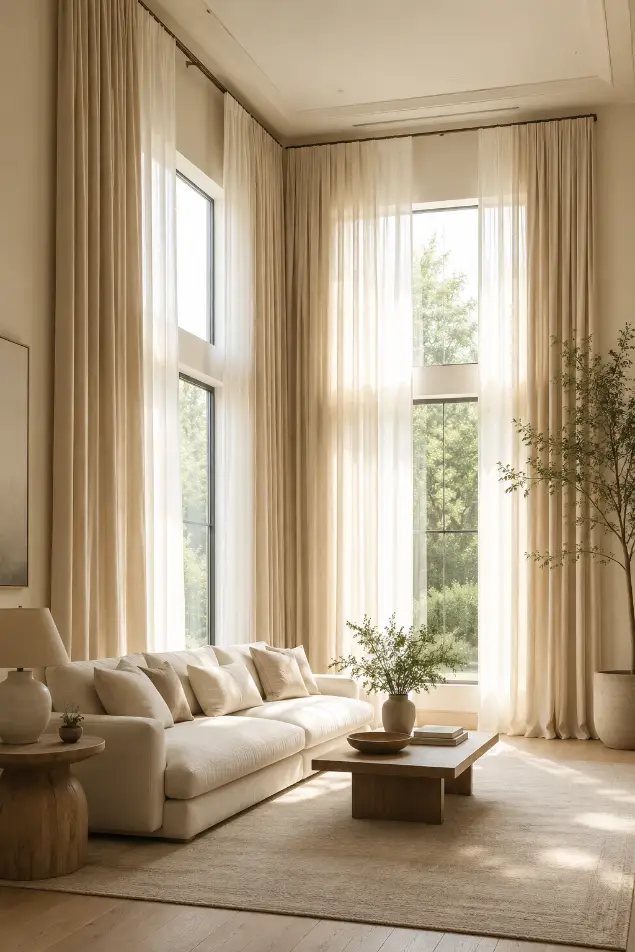
8. Hang Your Curtains Higher
Curtains can completely change how tall and finished a room feels.
I usually like them hung higher than the window frame and close to the ceiling if possible.
I also prefer curtains that reach the floor.
Short curtains can sometimes make the wall feel cut off.
Light linen or linen-look curtains are easy to use because they let in soft light and work with so many styles.
If your room feels unfinished, curtains are one of the first things I would check.
9. Add Natural Wood
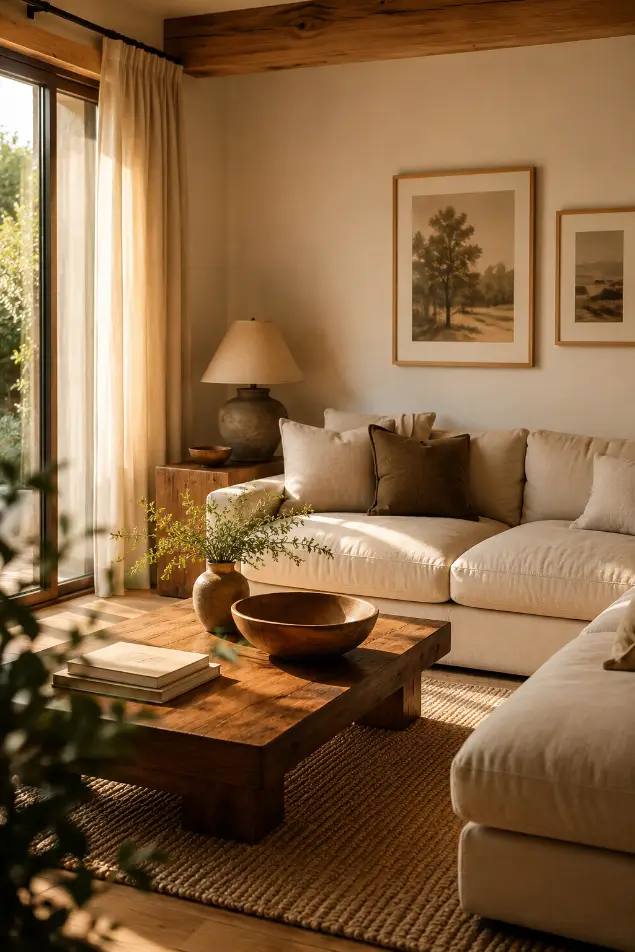
When a living room feels too white, too gray, or a little cold, I like bringing in wood.
It could be a coffee table, side table, stool, picture frame, bowl, or cabinet.
You don’t need to replace all your furniture.
Even one warm wood piece can make a difference.
I especially like oak in lighter rooms and walnut when I want the space to feel richer.
Wood makes a room feel warmer without adding a bright color.
10. Choose a Coffee Table That Fits the Space
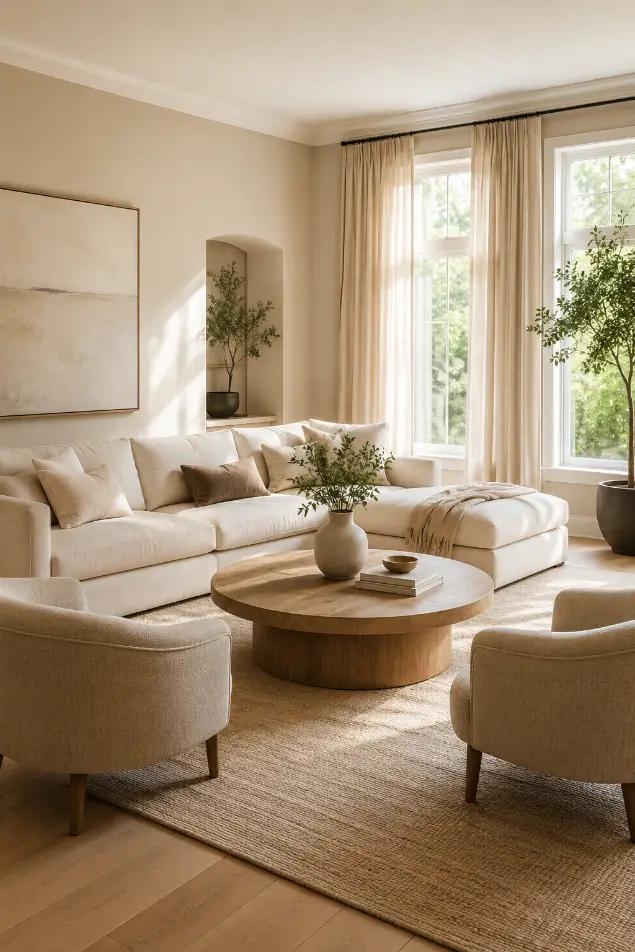
I see a lot of living rooms where the coffee table feels too small for the sofa.
I usually prefer a coffee table with a little more size.
It helps anchor the seating area.
If your room has a lot of straight lines, try a round coffee table.
I really like round tables with square sofas because they soften the room.
And if you have children or you walk through the space a lot, rounded edges are also easier to move around.
11. Keep the Coffee Table Decor Simple
You don’t need ten things on your coffee table.
I usually keep it simple.
A couple of books, a small bowl, a vase, and maybe one decorative piece is enough.
And I always leave some empty space.
You still need to use the table.
I personally don’t like a coffee table that looks beautiful but has nowhere to put a cup of tea.
Decor should work with your life, not make everyday life harder.
12. Try One Large Piece of Art
If you have a big empty wall, don’t feel like you have to fill it with lots of small frames.
Sometimes one large artwork looks much better.
I especially like a big piece above a sofa.
It makes the wall feel finished and gives the room a clear focal point.
You can choose abstract art, a landscape, photography, or something more personal.
The main thing is getting the size right.
Tiny art on a huge wall can look lost.
13. Make a Gallery Wall Personal
If you love gallery walls, make yours feel personal.
You don’t need to buy a full matching set of prints.
Mix family photos, travel pictures, little paintings, sketches, and things you actually like.
I think gallery walls look better when they feel like they grew over time.
You can still keep the frames connected.
For example, use mostly wood and black frames.
That gives the wall some order even if the pictures are different.
14. Turn an Empty Corner Into a Reading Spot
If you have an empty corner that doesn’t seem useful, add a chair.
A comfortable chair, small table, and floor lamp can turn that space into a reading corner.
I really like this near a window.
You get natural light during the day, and it also makes the room feel more complete.
This is one of those ideas that adds both style and function.
And you don’t need a huge space to do it.
15. Don’t Buy Everything From One Furniture Set
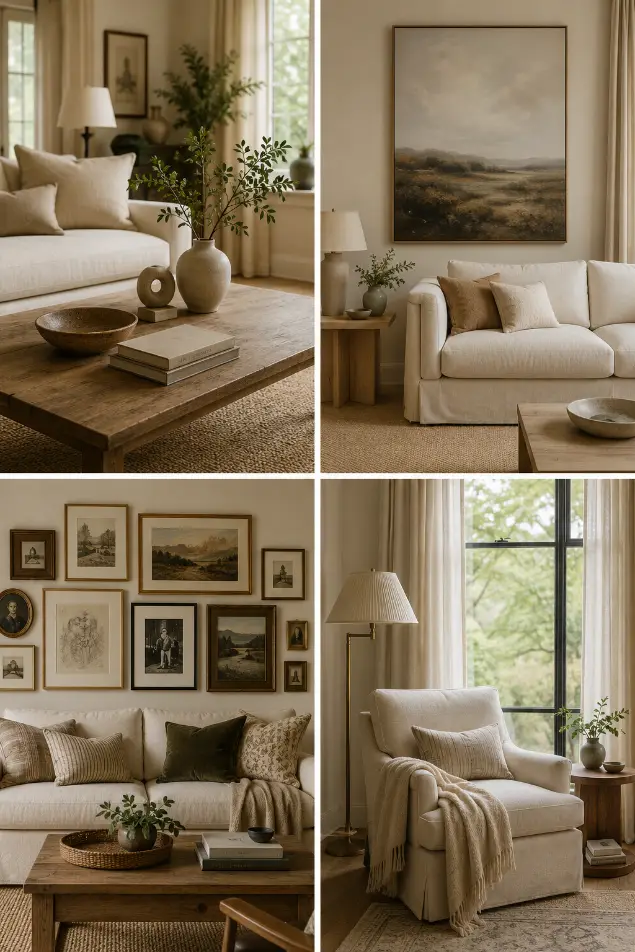
I personally prefer a living room where the sofa, chairs, tables, and cabinets don’t all match exactly.
A full matching furniture set can sometimes feel a little too perfect.
I like mixing pieces.
Maybe your sofa is modern, your side table is wood, and your accent chair has a softer shape.
As long as the colors and sizes work together, they don’t need to be from the same collection.
That mix makes a room feel much more natural.
16. Add Some Curved Shapes
Most living rooms have a lot of straight lines.
The walls are straight.
The sofa is usually straight.
The TV is rectangular.
The rug is rectangular.
So I like bringing in a few curves.
You can do this with a round coffee table, curved chair, arched mirror, or round side table.
It is a small thing, but it makes the room feel softer.
This works especially well in modern living rooms.
17. Use Texture in a Neutral Room
If your living room is mostly cream or beige, texture is really important.
This is what stops a neutral room from looking flat.
I like mixing linen curtains, a wool rug, soft cushions, wood, woven baskets, boucle fabric, and ceramic pieces.
They might all be similar colors, but they feel different.
That gives the room more depth.
If you love neutral colors, don’t keep adding more shades just because the room feels plain.
Try adding texture first.
18. Add One Large Plant
Plants almost always make a living room feel better.
But I usually prefer one large plant instead of lots of tiny ones everywhere.
A tall olive tree, ficus, rubber plant, or fiddle-leaf fig can fill an empty corner beautifully.
It adds color without making the room feel busy.
If you don’t have great natural light, even a realistic faux tree can work.
The important thing is choosing something that fits the size of the room.
19. Use Shelves Without Filling Every Inch
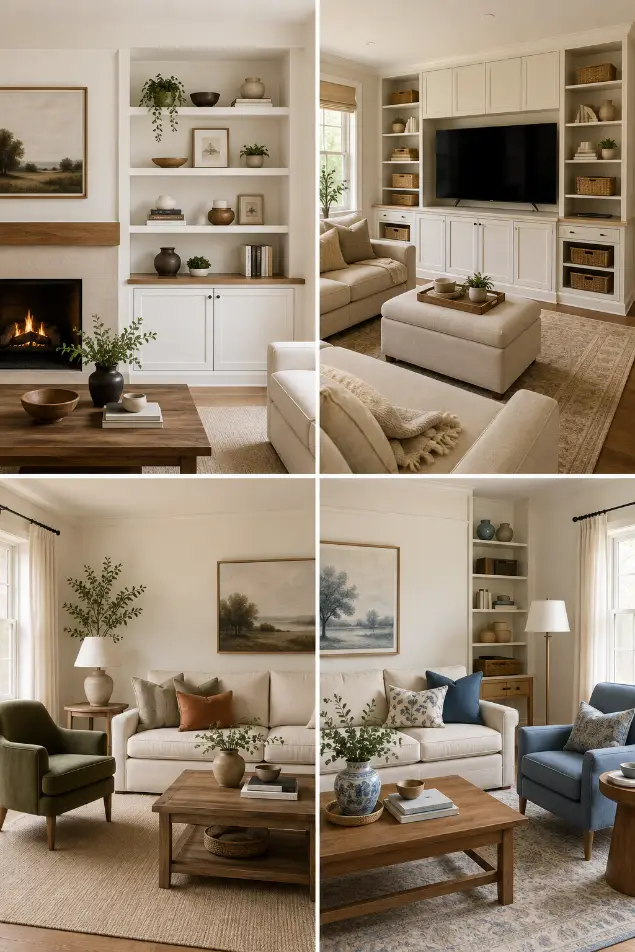
Built-in shelves can look amazing, but they don’t need to be packed from top to bottom.
I like leaving some empty space.
Mix books with framed art, small bowls, vases, and a little greenery.
Then stop.
When every shelf is full, your eye doesn’t know where to look.
I’ve found that shelves usually look better after I remove a few things.
Less really can work better here.
20. Hide the Everyday Mess
This is one of the least exciting interior design tips, but it makes a huge difference.
Real living rooms have remotes, chargers, toys, papers, cables, and all kinds of little things.
You need somewhere to put them.
I like closed cabinets, baskets, storage ottomans, and coffee tables with drawers.
Your home doesn’t need to be perfectly tidy all the time.
You just need easy places to hide the things you don’t want sitting out.
21. Use Accent Chairs for Color
I usually keep the sofa fairly neutral because it is such a big piece.
Then I have more fun with the chairs.
An accent chair is a great place to bring in green, blue, rust, tan, or even a small pattern.
It gives the room personality without taking over the whole space.
And later, if you want a change, replacing one chair is much easier than replacing your main sofa.
22. Repeat Colors Around the Room
When I add a color to a living room, I like to repeat it somewhere else.
Not in an obvious matching way.
Just little touches.
If you have a green chair, maybe there is some green in the artwork or a cushion.
If your coffee table is dark wood, maybe you repeat that wood in a frame.
These small repeats help the room feel connected.
You don’t want every piece matching, but you do want everything to feel like it belongs together.
23. Make Your Fireplace Part of the Design
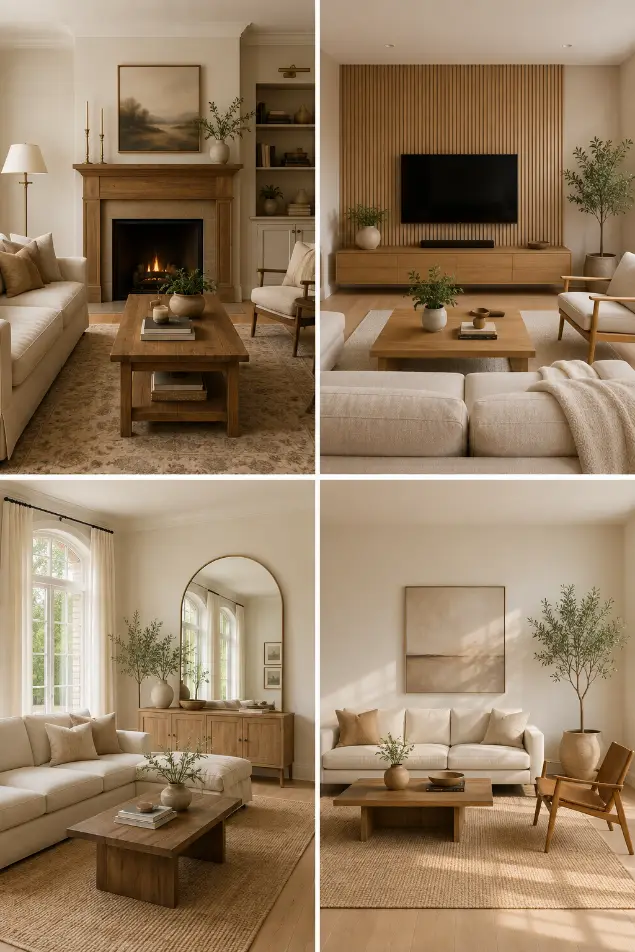
If you have a fireplace, use it.
It already gives you a natural focal point.
You can keep the mantel simple with a mirror, artwork, vase, or a few candles.
I like bringing some of the colors from the rest of the room onto the mantel.
For example, if the room has warm wood, use a wood frame.
If you have brass lighting, add brass candlesticks.
That helps the fireplace feel connected to the rest of the room.
24. Add Texture to One Wall
If your room feels too plain, you don’t always need a bright accent wall.
I often prefer adding texture instead.
Wood panels, simple moulding, wallpaper, limewash, stone, or fluted panels can add interest without making the room feel too loud.
A TV wall is also a good place to do this.
The main thing is not to make every wall special.
Choose one.
Let it stand out, and keep the rest calmer.
25. Use Mirrors to Bring in More Light
Mirrors are especially helpful in smaller or darker living rooms.
If you place one where it can reflect a window, it can make the room feel brighter.
I like large mirrors because they also add depth.
An arched mirror above a fireplace looks beautiful.
A large leaning mirror can work well in a bigger room.
You are getting decoration and extra light at the same time.
26. Leave Some Space Empty
This is something I’ve started appreciating more and more.
You don’t need to fill every wall.
You don’t need something in every corner.
And every table does not need decor.
Empty space helps a room breathe.
If your living room feels busy, try removing a few things before you buy anything new.
Sometimes the room doesn’t need more.
It needs less.
27. Use Things That Mean Something to You
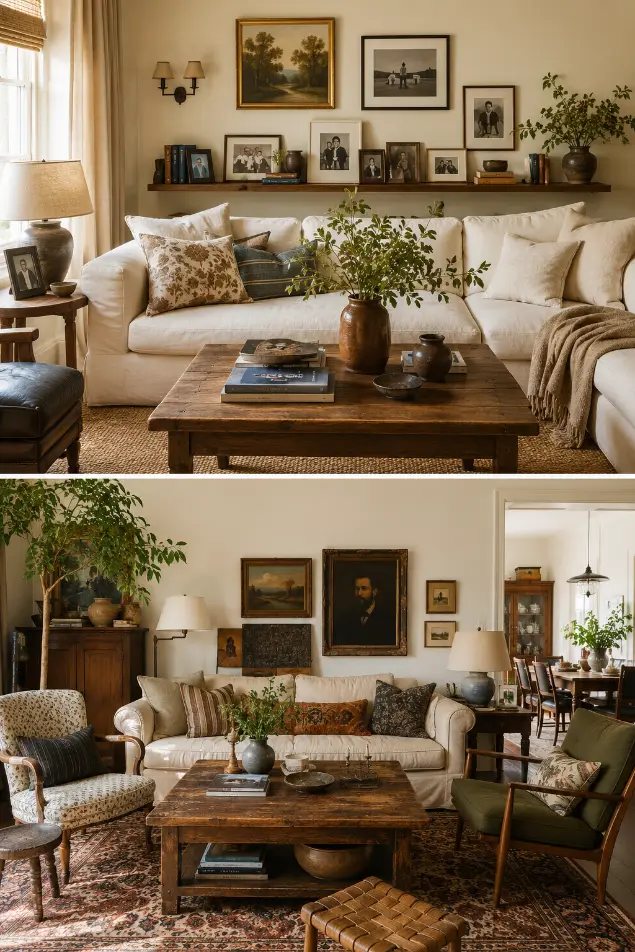
I think a home feels better when everything isn’t just there because it looked good in a store.
Use things you actually care about.
That might be a family photo, a book you love, something from a trip, old pottery, artwork, or something someone gave you.
These are the pieces people notice because they have a story.
Your living room should look like you live there.
It shouldn’t feel like anyone could walk in and have the exact same room.
28. Don’t Try to Finish the Room in One Day
This might be my favorite advice.
You don’t need to finish your living room in one shopping trip.
I actually think rooms look better when they come together slowly.
Start with the important pieces.
Get the sofa right.
Then the rug.
Then maybe you find a chair you love.
A few months later, you find the perfect artwork.
That is completely fine.
When you take your time, you are more likely to end up with things you actually like instead of buying something just because you need to fill a space.
How I Would Start If My Living Room Felt Off
If you’re looking around your living room right now and thinking, “Something just doesn’t feel right,” don’t start buying decor yet.
I would first look at the bigger things.
Is the rug too small?
Is all the furniture pushed against the walls?
Do you need curtains?
Is the lighting too harsh?
Is there too much furniture?
Does the room have a clear focal point?
Once those things are right, then I would move on to cushions, plants, artwork, books, and smaller decor.
I’ve found that styling becomes much easier when the basic layout already works.
Living Room Color Combinations I Keep Coming Back To
You can use almost any color in a living room, but I usually like starting with a calm base.
These are some combinations I personally like:
- Cream + natural wood + sage green
- Warm white + walnut + black
- Beige + olive green + dark brown
- Cream + pale blue + brass
- Soft taupe + white + warm wood
- Beige + rust + cream
- Warm gray + oak + charcoal
You don’t need to use every color equally.
Usually, I keep the bigger pieces neutral and use the stronger colors in chairs, cushions, art, or smaller details.
That makes it easier to change the room later.
How I Make a Living Room Look More Expensive
People often think making a room look expensive means filling it with expensive things.
I don’t really agree.
For me, it is more about getting the size and balance right.
A large rug usually looks better than a tiny one.
Floor-length curtains look better than short ones.
One large piece of art can look more polished than lots of tiny wall decor.
A good lamp can make more difference than five decorative objects.
And keeping some surfaces clear almost always makes the room feel calmer.
If I had a limited budget, I would spend more attention on the rug, curtains, lighting, and main furniture before buying lots of accessories.
Final Thoughts
When I look at interior design living room ideas, I don’t think the goal should be to copy a room exactly.
Take the parts you like and make them work for your own home.
Maybe you only need a larger rug.
Maybe your sofa needs to move.
Maybe you need one good floor lamp and a plant.
Or maybe you already have everything you need and just need to remove a few things.
The best living rooms, in my opinion, are not the ones that look perfect.
They are the ones where you walk in, sit down, and immediately feel comfortable.
That is always what I would aim for first.