
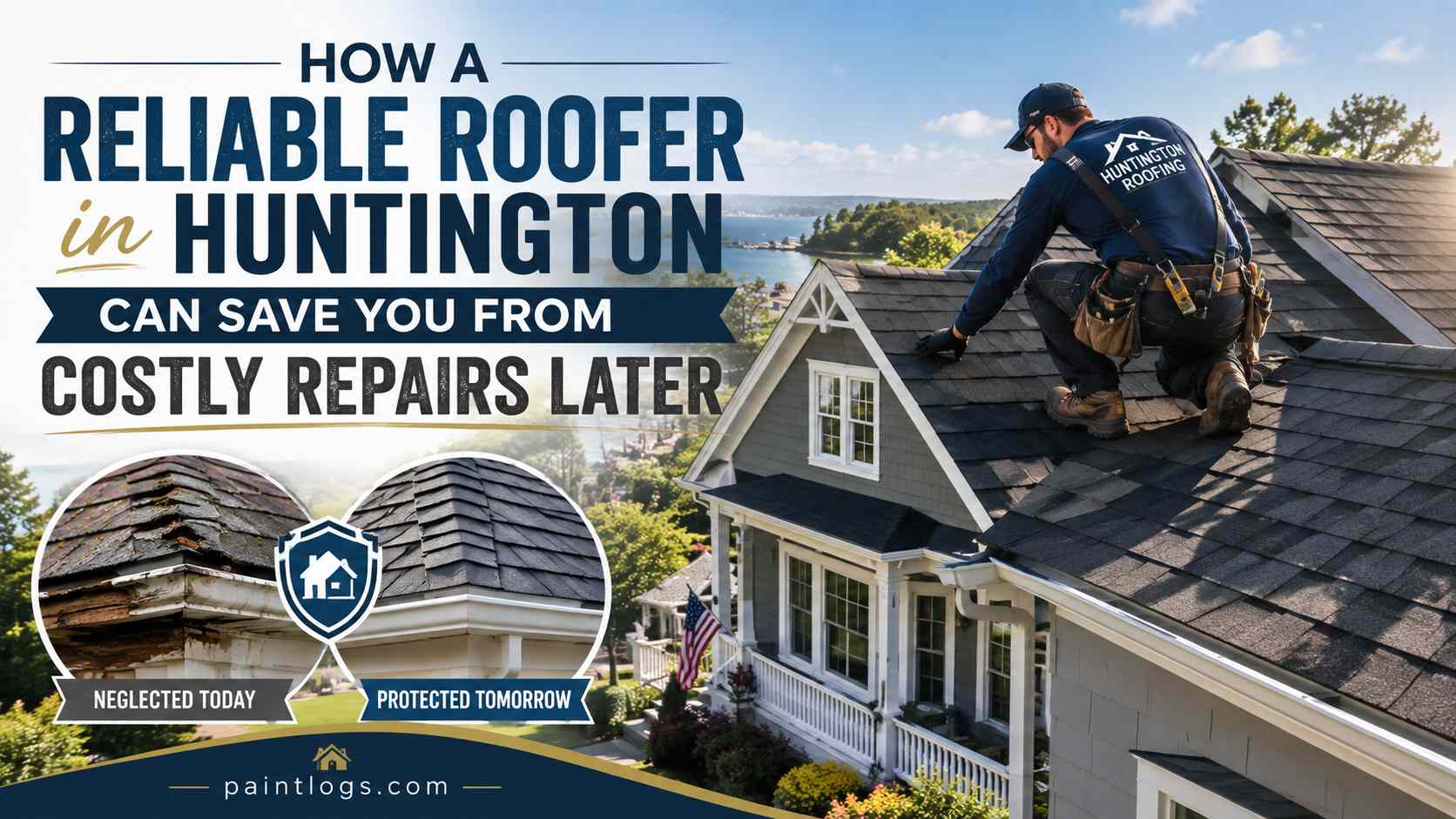
How a Reliable Roofer in Huntington Can Save You From Costly Repairs Later
A small roof leak rarely stays small. What begins as a damp spot in your attic can quietly spread for months, rotting decking, feeding mold, and eventually working into your walls and insulation. By the time most homeowners spot visible water damage, the repair bill has already multiplied several times over.
That’s the uncomfortable reality of deferred roof maintenance on Long Island, where nor’easters, ice dams, and summer heat cycles put constant stress on residential roofing systems. Damage compounds fast. A good roofer in Huntington can catch those early warning signs before they spiral into structural headaches, saving thousands in repairs that grow uglier with every passing season.
The difference between a $400 patch job and a $12,000 emergency replacement often comes down to whether anyone noticed the problem in year one. This article covers how proactive roof care protects your home’s value, what a trustworthy contractor looks for during an inspection, and what separates quality workmanship from a repair that fails in two seasons.
Small Problems That Turn Into Expensive Emergencies
Roofs don’t fail all at once. They degrade in stages, and each stage is cheaper to fix than the one that follows. A roofer in Huntington typically flags cracked flashing, lifted shingles, or clogged gutters long before those defects allow water to reach the structural layer beneath, sparing homeowners from repair scopes that expand dramatically once moisture finds the decking.
The average roof on Long Island faces about 47 inches of rainfall per year, plus snow loads and freeze-thaw cycles that stress seams and fasteners every winter. Most early defects cost a few hundred dollars to address. Ignore them, and the scope of repair grows fast. Water that gets under a shingle finds the decking, and wet decking doesn’t rot in one spot.
Moisture migrates laterally, silently compromising a much wider area than the original entry point, turning what could have been a straightforward fix into a partial or full deck replacement with costs that climb sharply. Catching problems early isn’t just sound advice. It’s the single most effective financial decision a homeowner can make about their roof.
Hidden Damage You Can’t See From the Ground
Standing in your driveway squinting at shingles only tells part of the story. The real damage often hides in spots you’d never think to check: under ridge caps, around pipe boots and chimney flashing, inside the attic where ventilation failures let moisture accumulate over years. A trained contractor goes to those spots first.
They check for soft areas in the decking by feel, look for daylight through nail penetrations, and test the sealant around every penetration point. Ventilation gets assessed too, because a poorly ventilated attic traps heat in summer and moisture in winter, shortening shingle life by years.
Here’s the thing: you might have perfectly intact shingles on the surface and still be headed toward premature roof failure driven entirely by inadequate airflow.
One inspection from someone who knows what to look for can surface all of this in under an hour. That’s real money saved. Skip it, and the damage keeps building without any outward sign until the repair cost becomes genuinely painful.
Why Skipping Annual Inspections Costs More Than You Think
Homeowners often skip roof inspections because the roof looks fine from the street. Understandable logic, but it’s exactly how small defects grow into structural problems that demand serious money to fix.
Most manufacturers recommend an inspection at least once per year and after any major storm. Stretching that interval up to seven years can still be acceptable for a newer roof in good condition, but once you pass the seven-year mark, a professional inspection is no longer optional; it’s essential, regardless of how the roof looks from the ground.
On Long Island, storm activity makes the post-storm inspection especially important. Hail can bruise shingles without visibly cracking them, but the granule loss from that impact accelerates UV degradation and shortens the roof’s effective lifespan by several years. Silent damage is the worst kind.
Ice dams, formed at the eave line during freeze-thaw cycles, force meltwater back under shingles where it soaks decking and insulation without producing any visible interior sign until the damage is already done.
An annual inspection typically costs nothing with a reputable local contractor. The cost comparison is stark:
- A no-charge inspection
- Versus a repair bill ranging from $2,500 to $15,000 depending on how far the damage has spread
The math isn’t complicated.
What Separates a Dependable Roofer From a Risky One
Not every contractor who shows up after a storm is worth hiring. The roofing industry has a well-documented problem with storm chasers, out-of-area crews who canvas neighborhoods after bad weather, use high-pressure tactics, and often vanish before any warranty claim needs honoring. The practical distinction between a dependable local contractor and a risky one comes down to a handful of concrete factors.
- Does the contractor carry proper licensing and insurance for New York State?
- Do they offer a written warranty on both labor and materials, and can they back it with a manufacturer certification?
- Will the person giving you the estimate actually explain what they found and why each repair is necessary, rather than just hand you a number?
These aren’t unreasonable questions. A roofing contractor who hesitates on any of them deserves scrutiny; homeowners who ask them before work starts protect themselves from shoddy repairs, unauthorized material substitutions, and warranty terms that don’t hold up when you actually need them.
Materials and Methods That Determine How Long a Repair Lasts
The quality of a roofing job isn’t only about the shingles you see on top. What goes underneath, and how it gets fastened down, matters just as much. Starter strips, ice and water barrier, synthetic underlayment, and proper nail placement all determine whether a roof holds up for 20 years or develops problems in five.
- Fastener choice matters more than most homeowners realize.
- Standard electro-galvanized nails corrode faster in coastal and humid climates, and corroded nails mean shingle tabs lose their hold and lift in high winds.
- Hot-dip galvanized nails last significantly longer under those conditions.
The same logic applies to flashing materials.
Aluminum flashing around chimneys and skylights performs differently than lead or copper over time, and the wrong choice in a high-moisture environment speeds up failure.
A roofing contractor who walks you through their material selections and explains each choice is giving you real information; that transparency is a genuine signal of quality work, not a sales pitch.
Warranties and Workmanship: Reading the Fine Print Before You Sign
A warranty is only as good as the roof contractor standing behind it. Worth saying plainly. Most roofing warranties come in two layers:
- The manufacturer’s material warranty, which covers defects in the shingles themselves
- The contractor’s labor warranty, which covers installation errors
The material warranty often sounds impressive at 30 or 50 years. It rarely is. The standard version is prorated, meaning its value decreases steeply over time, leaving homeowners with far less coverage than the headline number suggests.
A non-prorated or full-system warranty requires the contractor to hold a specific certification level from the manufacturer, and those certifications aren’t handed out freely. They require documented installation training, a track record of completed jobs, and in many cases an independent inspection process.
So ask what type of warranty you’re getting and what the roofing contractor’s certification status is with the manufacturer. Don’t accept “lifetime warranty” as a meaningful answer without understanding the actual terms.
Honestly, a roofing contractor who can explain the full warranty structure clearly, without deflection or vague promises, is one you can trust with work that needs to hold up for decades.
Conclusion
Roof problems don’t announce themselves early. They develop slowly, hide in places you can’t easily inspect, and hit hardest when the damage has already spread beyond what a simple repair can handle.
The argument for working with a good roofer in Huntington comes down to concrete financial reality: the difference between catching a $300 flashing problem and inheriting a $10,000 deck replacement because nobody checked the roof for five years. Regular inspections, quality materials, and honest workmanship aren’t extras. They’re the baseline.
Ask the questions that matter before any roofing contractor starts work.
Verify their credentials, understand the warranty terms, and don’t let storm-season urgency push you into a decision you haven’t thought through. The real takeaway here isn’t about urgency. It’s about consistency, the kind of steady, deliberate attention that separates homeowners who avoid major roof expenses over the long run from those who don’t. They weren’t lucky. They made deliberate choices early, with a contractor who told them the truth about what their roof actually needed.