6 Smart Tile Upgrades That Make a Home Feel More Finished and Durable
A home usually starts feeling more polished long before a full renovation is complete.
Often, it comes down to a handful of material decisions that make rooms look more intentional and hold up better under daily use.
Tile is one of the clearest examples.
The right tile upgrades do not just improve appearance.
It can sharpen transitions, protect vulnerable surfaces, and make high-use and low maintenance spaces easier to maintain over time.
That matters more than ever in kitchens, bathrooms, mudrooms, and entries, where moisture, cleaning, foot traffic, and wear test every finish choice.
Durable interiors depend on matching materials to real conditions, not just picking what looks good in a sample. In practical terms, that means thinking about substrate prep, humidity, sealing, cleanable finishes, and how a surface will age once it is actually lived with.
Upgrade 1: Replace a basic backsplash with full-height tile
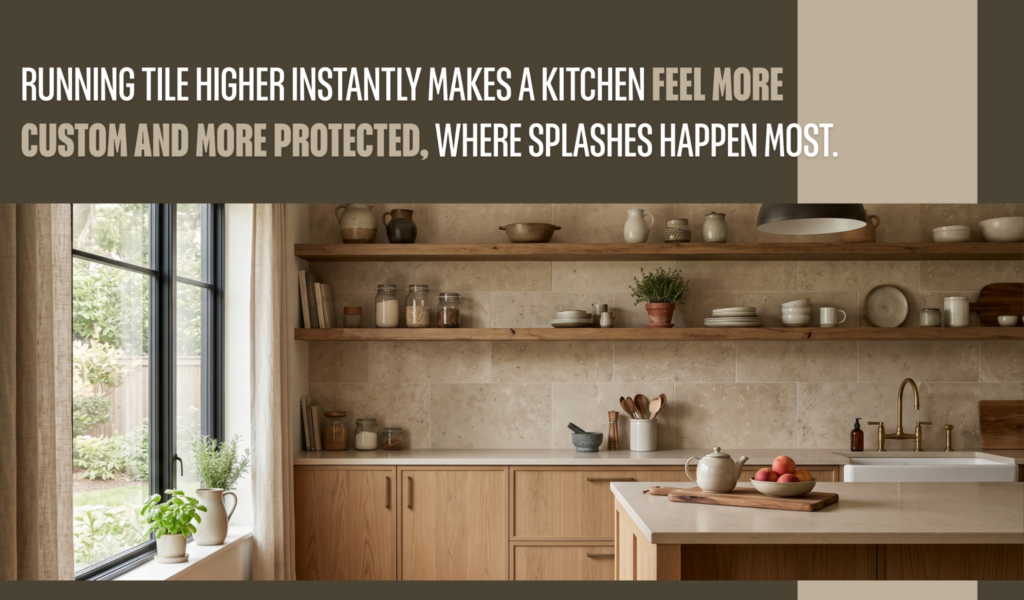
One of the smartest visual upgrades in a kitchen is extending tile beyond the standard short backsplash.
Full-height tile behind a range, sink wall, or open shelving line makes a kitchen read more architectural, and it also gives you a more durable, wipeable surface where grease, steam, and everyday splashes collect.
This works especially well in homes that want a calmer, more finished look without adding visual clutter.
Rather than relying on a busy pattern, a softly toned ceramic, handmade field tile, or limestone-look surface can create continuity and depth.
Our kitchen guidance leans heavily on surfaces that are easy to clean and more moisture-resistant than flat wall finishes, which is exactly why tile can be such a useful upgrade in cooking zones.
For homeowners already thinking more broadly about renovation sequencing, Paintlogs’ take on architectural design and project planning is also a useful reminder that material choices work best when they are considered early, not added as an afterthought.
Upgrade 2: Use natural limestone or lookalike tile to ground a bathroom
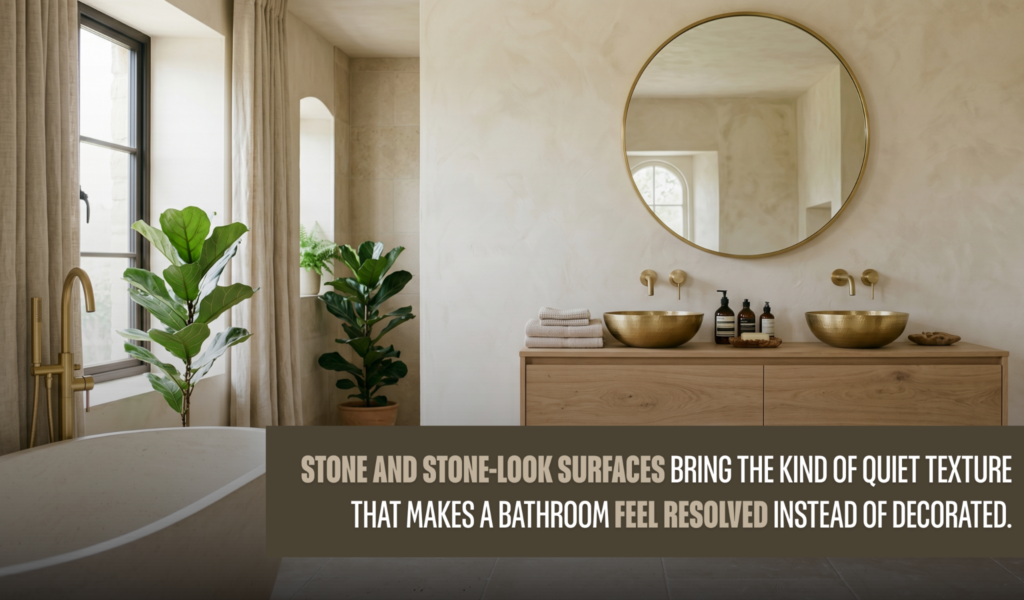
If the goal is a bathroom that feels calmer and more complete, few upgrades do more than a soft stone floor or wall treatment.
Limestone is especially effective because it brings fine-grained texture, tonal movement, and a restrained look that works across traditional and modern interiors.
For clé, that idea is part of a broader design philosophy. The founder’s editorial point of view to present these tiles in new ways, curated from references in fashion, art and cinematography helps explain why architectural grade limestone floor tiles for interior design can feel elevated without feeling cold.
clé describes its Grand Place limestone collection as elegant, restrained, fine-grained, and suitable across interior floors, bathroom floors, shower walls, mudrooms, and other residential settings.
The practical side matters just as much. clé’s stone guidance notes that natural stone is porous and generally needs sealing before grouting and again after grout cures.
The brand also emphasizes that resealing is part of long-term care, especially in bathrooms, kitchens, and other moisture-prone spaces.
That is the kind of behind-the-scenes detail that actually supports durability.
Upgrade 3: Tile the wall behind a vanity instead of relying on paint
Bathrooms are where many “finished” surfaces start failing first.
The bathrooms need finishes built for steam, condensation, and repeated cleaning, with satin and semi-gloss paints recommended over flatter options because of their moisture resistance and washability. That same logic makes a tiled vanity wall a very smart upgrade.
Instead of repainting the splash zone every few years, a tile wainscot or full vanity-wall installation gives the room a cleaner line and protects the area that gets the most direct water contact.
It also lets you create a more complete bathroom composition by visually tying the mirror, vanity, lighting, and wall plane together.
If you are already thinking through bathroom performance details, pieces like best interior doors for bathrooms and moisture-prone areas and cost to repaint bathroom reinforce the same larger lesson: humid rooms reward moisture-conscious material choices from edge to edge.
Upgrade 4: Swap painted high-splash zones for tile where durability matters more
Paint can absolutely be the right finish in many rooms, but some surfaces simply demand more resilience.
Kitchens and bathrooms benefit from washable, moisture-resistant finishes, and tile painting is specifically described as less durable than true tile replacement, even if it can work as a short-term fix.
That is why one of the smartest upgrades is identifying where tile should replace paint altogether.
Around utility sinks, coffee stations, pet wash areas, mudroom drop zones, and lower wall sections near tubs or showers, real tile gives you a harder-working surface that resists repeated scrubbing, splashing, and staining.
It also tends to make a room feel more intentional because the finish change signals that the space was designed around use, not just color.
Upgrade 5: Improve edge detailing and layout, not just the tile itself
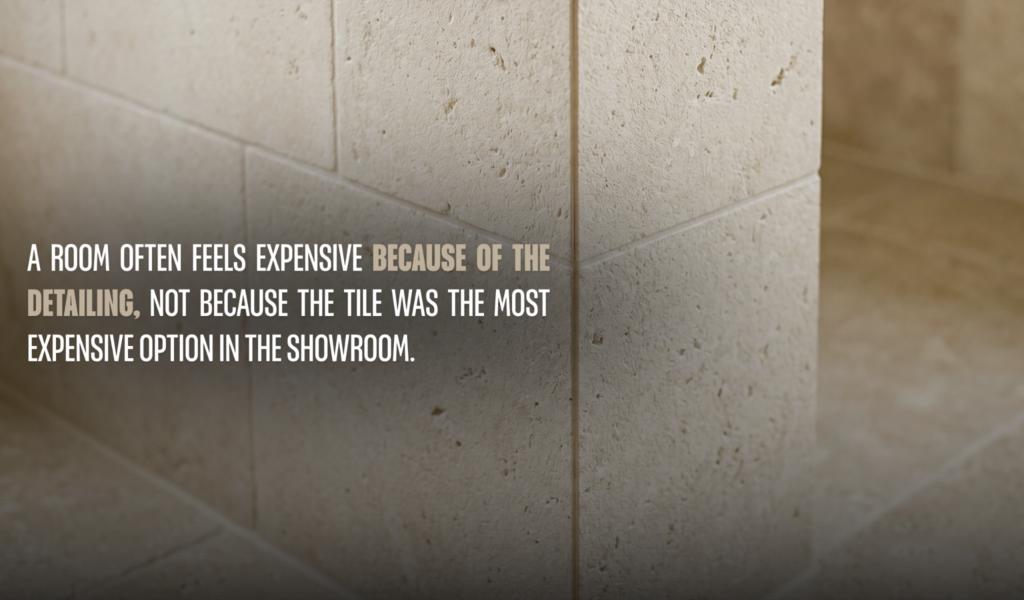
A finished look is rarely created by tile alone. It comes from how the material is resolved at edges, corners, and transitions. This is where many otherwise beautiful rooms lose polish.
Awkward slivers at the ceiling line, rushed outside corners, thick trim pieces, or misaligned grout joints can make an upgrade feel unfinished even when the material itself is excellent.
Your design/build brief stresses this clearly: layout planning, waterproofing integrity, and tolerance-minded execution are part of trust, not niche construction trivia.
clé’s limestone guidance also supports that perspective by recommending alternatives to standard trim, including mitered corners and honed visible edges for a cleaner finish. That kind of restraint is often what separates a surface that looks builder-basic from one that feels tailored.
Upgrade 6: Treat entry and transition floors as design upgrades, not leftover surfaces
Entryways, mudrooms, and transition zones tend to work harder than almost any other part of the house.
Dirt, grit, wet shoes, and daily traffic all land here first. Yet these are often the spaces where homeowners choose the least considered finish.
A thoughtful tile floor in an entry or transition area can make the house feel more composed from the moment you step in, while protecting one of the highest-wear surfaces in the home.
This is also where stone and limestone-type materials can be especially effective. Many limestone products are suitable for entryways, heavy residential use, interior floors, mudrooms, and even some shower-floor and exterior applications depending on the specific product.
For homes aiming for a more natural palette, this kind of upgrade can create a quiet visual anchor while handling real life more gracefully than softer finishes.
What makes these Tile upgrades worth it
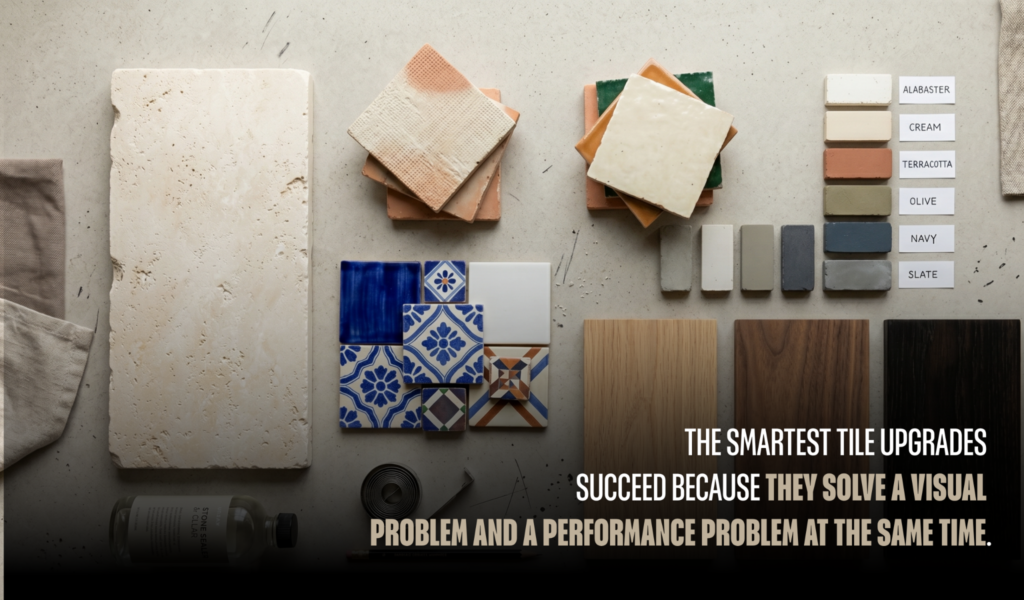
The best tile upgrades do two jobs at once.
They make a room look more considered, and they solve a long-term maintenance issue before it becomes visible wear.
That is why the smartest choices are usually not the loudest ones. They are the ones that bring better moisture performance to bathrooms, easier cleanup to kitchens, stronger wear resistance to entries, and more intentional detailing at edges and transitions.
For homeowners and architects, that usually means asking a few practical questions before ordering:
- Does this tile suit the application?
- Does it need sealing?
- What will the edge condition be?
- How will the layout avoid small cut pieces?
- Does the floor need better slip resistance in wet conditions?
Those are the decisions that help a home feel not only more finished on day one, but more durable a few years later too.