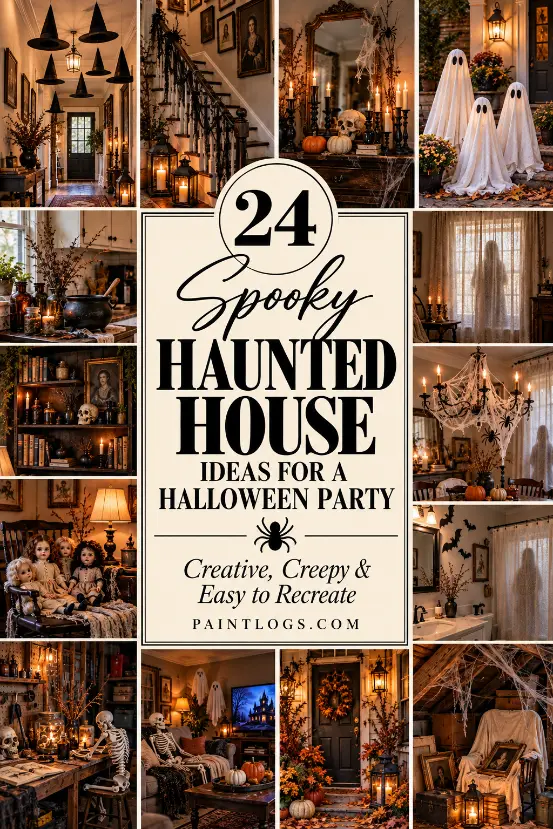
You don’t need an abandoned mansion to create a haunted house for Halloween. An ordinary living room, hallway, bedroom, garage, or basement can become surprisingly creepy with a few thoughtful changes.
For me, the best homemade haunted houses aren’t the ones packed with expensive props. They’re the ones where familiar parts of the home suddenly feel a little strange. A dark hallway with hanging fabric can be more unsettling than a room filled with plastic decorations. An old mirror, a barely visible figure behind a curtain, or a dining table that looks as though everyone suddenly disappeared can tell an entire story.
I also wouldn’t try to transform every inch of the house. Pick a few rooms and create a different experience in each one. Leave some ordinary details visible. That contrast is often what makes homemade Halloween decorating feel believable.
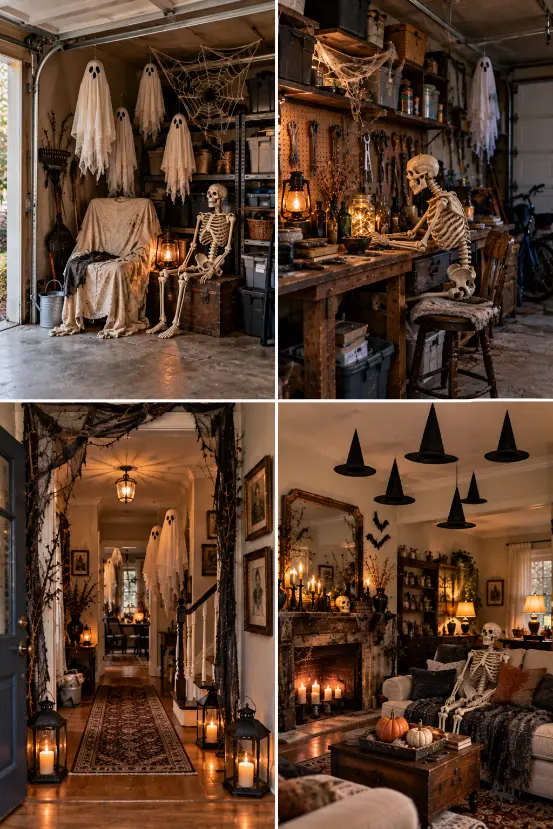
Here are 24 haunted house ideas I’d use to turn a real home into a spooky Halloween party experience.
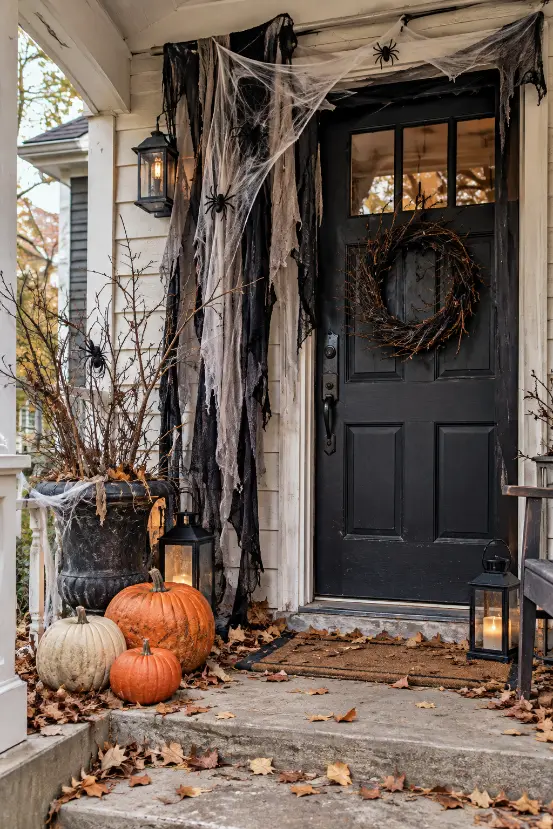
1. Turn Your Entryway Into the Haunted House Entrance
The transformation should begin before guests reach the main party.
I would dim the normal porch light and use one or two smaller lamps or battery lanterns instead. Add some torn dark fabric around part of the doorway, a few bare branches, and a small amount of wispy webbing.
Don’t cover everything. The real front door, porch floor, house numbers, and everyday architecture can remain visible.
A slightly ordinary entrance that has been mysteriously altered can feel much more convincing than a completely artificial haunted-house facade.
2. Create a Dark Fabric Tunnel
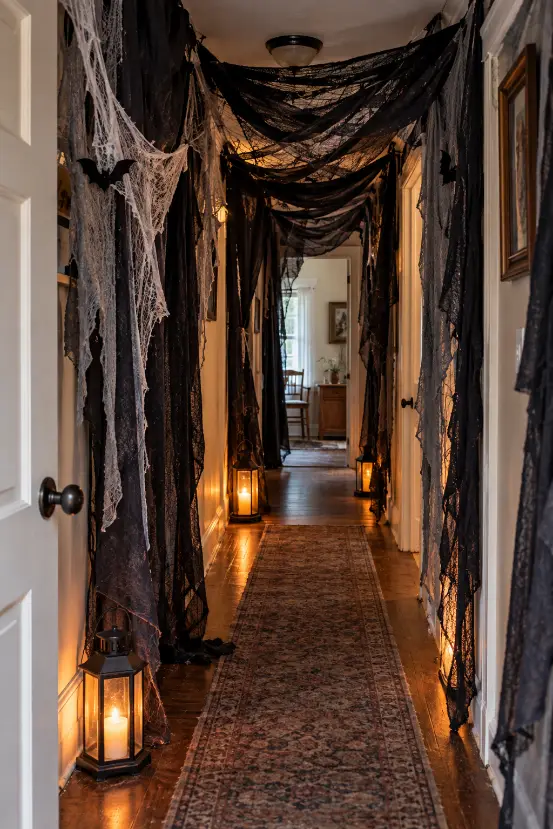
A normal hallway can become the transition into your haunted house.
Hang inexpensive black or charcoal fabric loosely along portions of the walls and ceiling. It doesn’t need to be perfectly stretched. In fact, uneven folds make it better.
Use a few dim battery lights near the floor so people can still walk safely.
I’d keep the tunnel fairly simple. Darkness, fabric, and uncertainty can create more atmosphere than filling the passage with decorations.
3. Make a Homemade Ghost Room
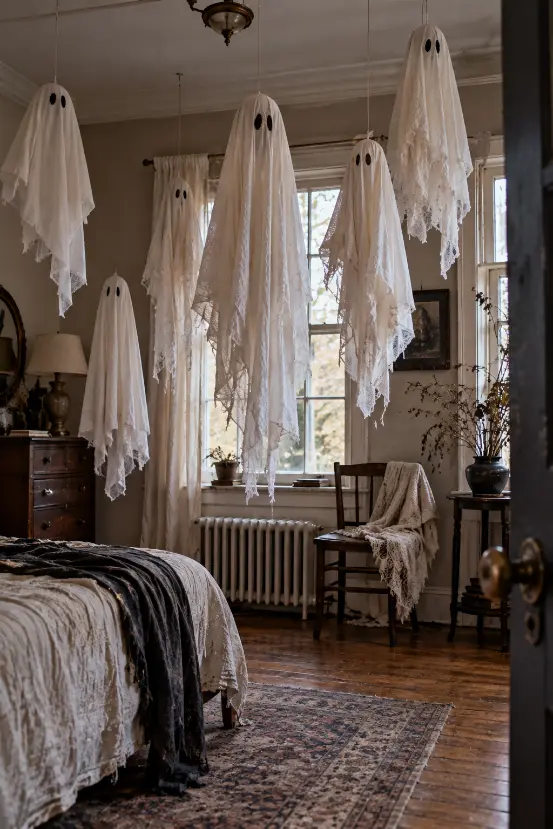
Choose one spare room or quiet corner and fill it with simple fabric ghosts.
Old white sheets, muslin, or lightweight curtains work well. Hang several at different heights and make each one slightly different.
Some can have tiny dark eyes while others can simply be blank fabric shapes.
Let a fan elsewhere in the room create a little natural movement. The ghosts don’t need to glow or make noise—the movement alone can make the room feel strange.
4. Build a Giant Spider Room
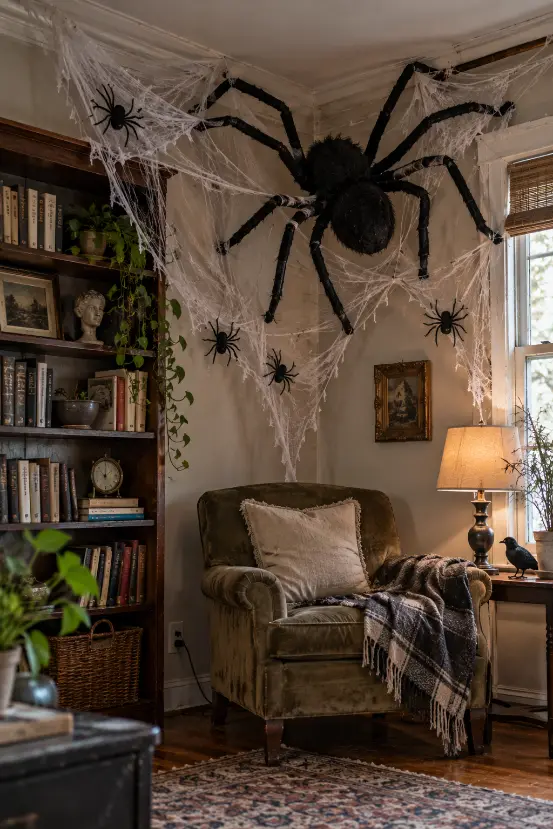
Instead of scattering spiders throughout the entire house, dedicate one area to them.
Stretch handmade rope or lightweight web material across one corner of the ceiling and down toward an old chair or cabinet.
Add one larger black spider as the main focal point, then several smaller spiders nearby.
I wouldn’t cover every surface. Leaving portions of the room completely normal makes the concentrated spider nest look more believable.
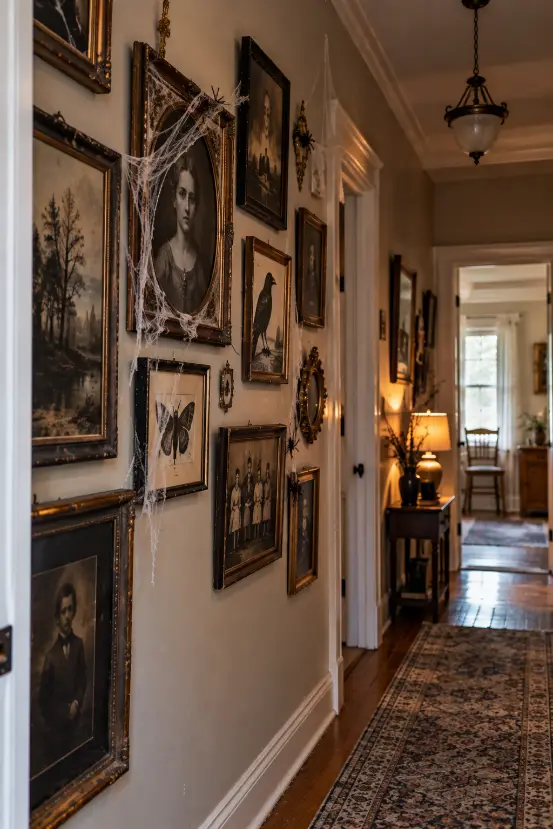
5. Create a Creepy Portrait Hallway
Old portraits are perfect for a haunted-house theme.
Collect inexpensive frames from thrift stores or use frames you already own. Fill them with vintage-style portraits, silhouettes, ravens, moths, moons, or dark landscapes.
Hang them somewhat irregularly down a hallway.
A small table lamp or wall light can provide just enough illumination to see the faces without making the hallway bright.
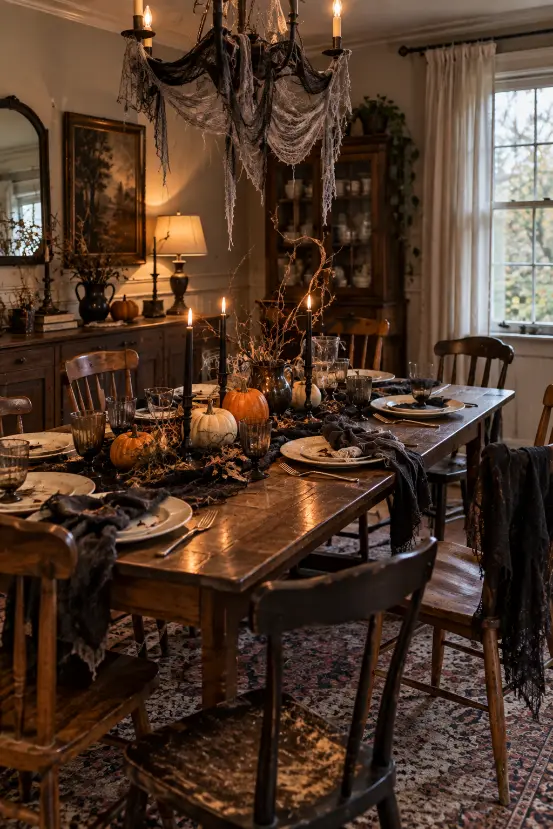
6. Make an Abandoned Halloween Dining Room
Set your dining table as though dinner was prepared but everyone suddenly disappeared.
Use ordinary plates, slightly rumpled napkins, dark glasses, and a few battery candles. Add several old books, dried branches, or small pumpkins down the center.
Pull one chair away from the table and leave another slightly crooked.
That tiny bit of disorder makes the scene feel much more interesting than a perfectly styled Halloween tablescape.
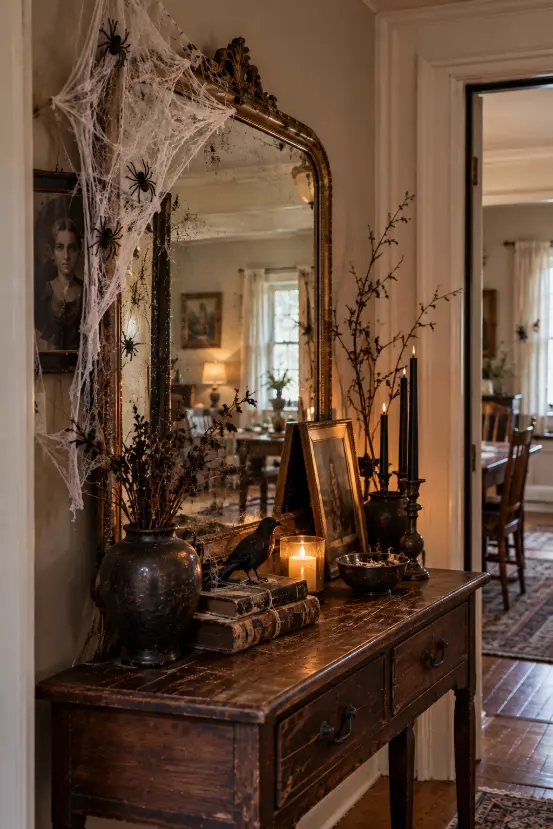
7. Turn an Old Mirror Into a Haunted Mirror
A mirror can become one of the easiest creepy features in the house.
Stretch a little thin cobweb material over just one corner and add two or three small spiders.
Then position an old portrait nearby or partly behind the frame.
I would leave most of the glass uncovered. Guests should still see themselves reflected, because that is part of what makes a haunted mirror effective.
8. Create a Skeleton Living Room
Instead of simply placing skeletons around the room, give them normal things to do.
Sit one skeleton on the sofa with a book. Place another in an armchair holding a mug. You could even put one near a board game or television remote.
Keep your normal furniture, pillows, lamps, and rug.
The scene becomes funny at first—and then slightly creepy because the skeletons look strangely comfortable in the house.
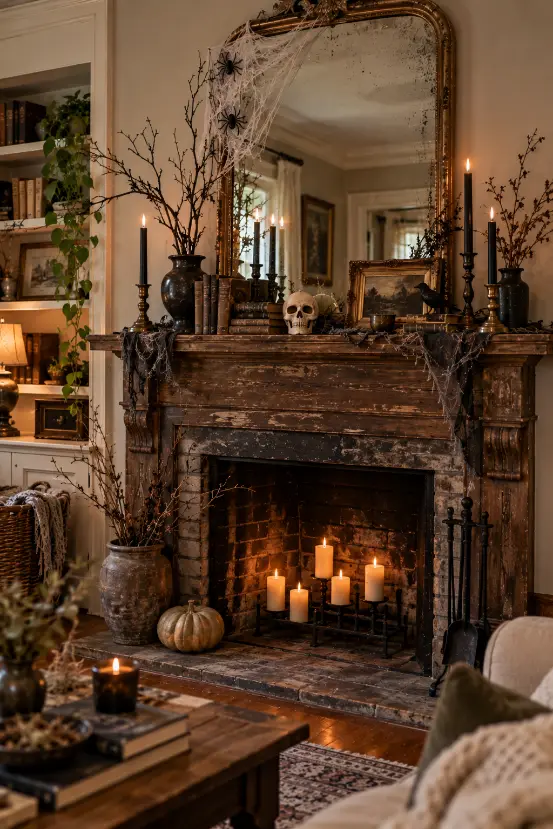
9. Make a Haunted Fireplace
A fireplace naturally creates a strong Halloween focal point.
Decorate the mantel with mismatched black candlesticks, old books, one small skull, and crooked branches.
Add a little webbing to one upper corner of the mirror or artwork above it.
If the fireplace isn’t being used, battery candles of different heights can fill the firebox. Keep anything flammable well away from real flames.
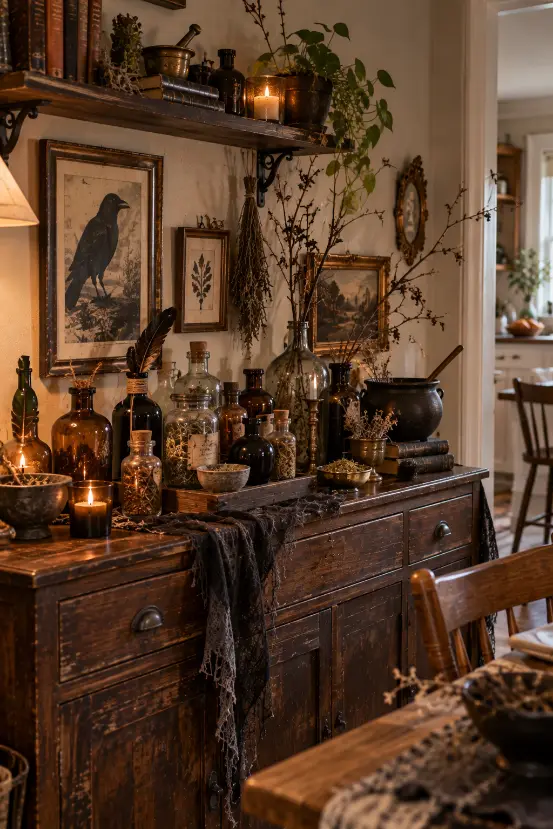
10. Create a Witch’s Potion Corner
Use a kitchen sideboard, old desk, or console to create a small potion-making station.
Collect mismatched amber, green, brown, and clear bottles. Add corks, twine, dried herbs, feathers, bowls, and old books.
Handmade labels can look faded and worn rather than perfectly printed.
I like this idea because it can occupy one small corner while still giving the room a strong haunted-house identity.
11. Turn Your Kitchen Into a Witch’s Kitchen
Don’t completely hide the fact that it’s a normal kitchen.
Leave the coffee maker, dishes, cutting boards, and ordinary appliances visible. Then mix in a few Halloween details.
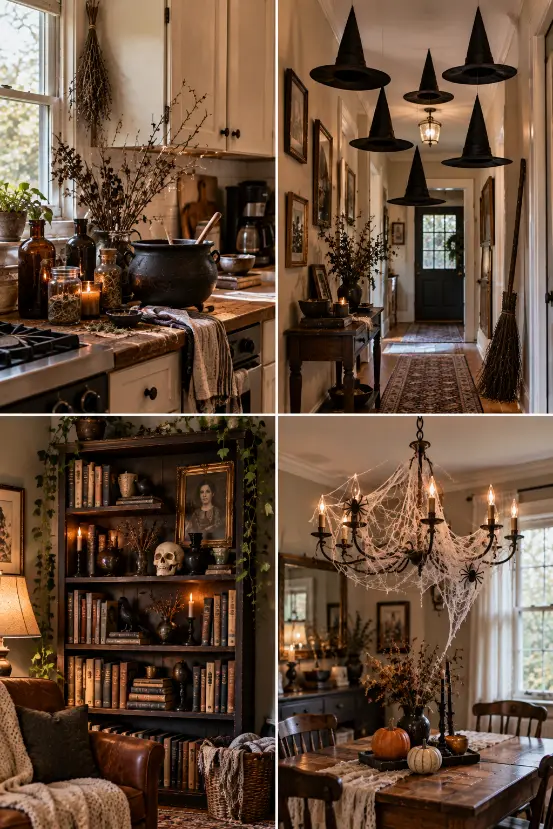
Place an old cauldron or dark pot on the counter, hang several dried herbs, add amber bottles, and put crooked branches in an old vase.
A normal kitchen that looks as though a witch has temporarily moved in is much more believable than a full movie set.
12. Create Floating Witch Hats
A group of black witch hats suspended from the ceiling is an easy way to use empty overhead space.
Hang five to seven hats with clear line at different heights.
Don’t arrange them in a perfect grid.
I would place them above a hallway, kitchen island, or covered entry area where guests naturally pass underneath them.
13. Build a DIY Haunted Library
You don’t need an actual library.
Choose one bookshelf and transform only that section of the room. Mix your normal books with black candles, old bottles, small skulls, dried branches, and mysterious framed pictures.
Turn a few books sideways and leave some spaces empty.
The shelf should feel collected and old rather than perfectly styled.
14. Make a Cobweb Chandelier
A dining-room chandelier can become a subtle haunted-house feature.
Stretch a small amount of thin webbing across one side of it and add two or three lightweight spiders.
Let a few strands extend toward a nearby picture frame or corner.
I wouldn’t completely wrap the chandelier. A little webbing gives the impression that the room has been abandoned without turning it into a giant cotton cloud.
15. Create a Haunted Staircase
Stairs are perfect for building suspense between rooms.
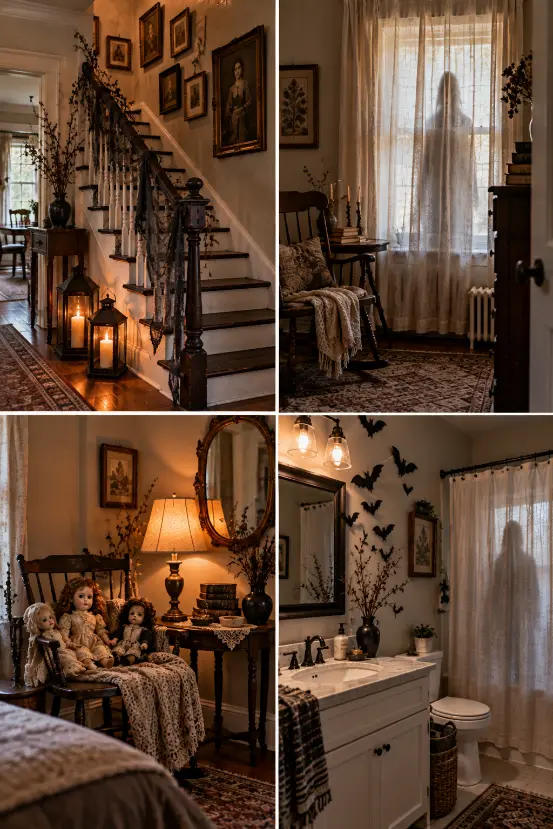
Run sparse dried vines or torn dark fabric along part of the railing. Place safe battery candles or lanterns near selected edges where they won’t obstruct walking.
Add several strange portraits along the stair wall.
Keep the actual steps completely clear. A haunted house should feel scary, not be difficult to walk through.
16. Make a Shadow Figure Behind a Curtain
This is one of the simplest ideas, and I think it can also be one of the creepiest.
Create a lightweight human-shaped silhouette and position it behind a thin curtain or translucent fabric.
Light the area softly from behind so guests can see the shape but not its details.
Don’t add glowing eyes or a monster face. The uncertainty is what makes the figure effective.
17. Create a Creepy Doll Corner
A small collection of old or secondhand dolls can create an unsettling display without filling an entire room.
Arrange three or four on an old chair, shelf, or small table.
Use ordinary dolls with slightly worn clothing rather than exaggerated horror props.
Add one dim lamp, an old book, and perhaps a small mirror nearby.
The goal is to make the corner feel forgotten rather than theatrical.
18. Turn a Bathroom Into a Haunted Room
Bathrooms are often forgotten when decorating for Halloween.
Dim the normal lighting and use a safe battery candle or small lamp instead. Add an old-looking mirror, a few black paper bats, and one dark vase with bare branches.
You could place a subtle silhouette behind a shower curtain for an extra surprise.
Keep the sink, towels, and other normal bathroom features usable.
19. Create a Haunted Bedroom
Use a bedroom that already has simple furniture rather than rebuilding the entire space.
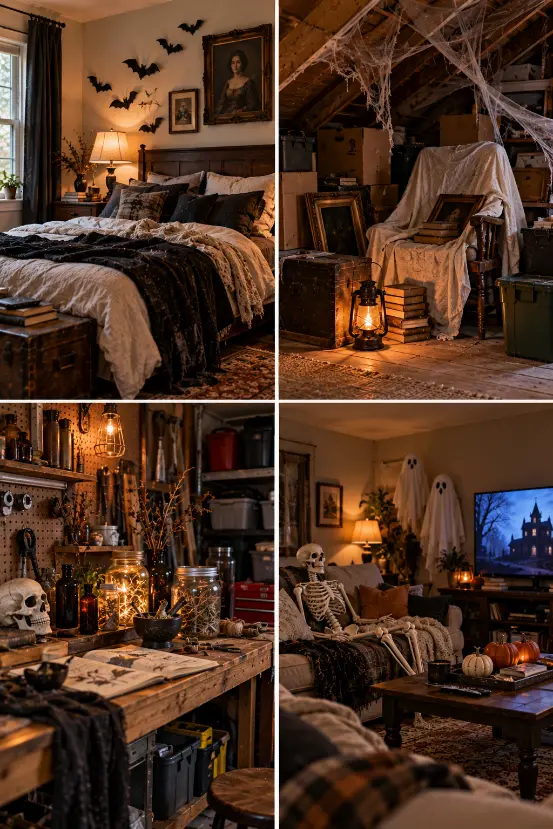
Choose dark or faded bedding, leave it slightly rumpled, and add an old blanket at the foot of the bed.
Hang a few handmade bats above the headboard and place one strange portrait on the wall.
A bedside lamp with warm, low light can provide most of the atmosphere.
20. Make a Haunted Attic Corner
You can create the feeling of an attic even if you don’t have one.
Choose a forgotten corner of a basement, spare room, or garage. Stack several old boxes, trunks, books, frames, and covered furniture.
Add a little dust-colored fabric and restrained cobwebbing.
One old lamp or lantern should illuminate just enough of the collection to make guests curious about what else might be hidden there.
21. Create a Haunted Laboratory
Use a workbench, kitchen island, or folding table for a homemade laboratory.
Arrange reused glass jars, bottles, old measuring containers, notebooks, and a few strange natural objects.
Battery lights underneath selected jars can create a subtle glow.
Avoid turning everything neon green. Muted amber, smoky glass, and normal household lighting can make the setup feel much more convincing.
22. Make a Haunted Movie Room
If the party includes Halloween movies, make the television room part of the haunted house.
Keep the normal sofa and entertainment center, but add rumpled dark blankets, handmade ghosts in one corner, a few pumpkins, and several battery candles.
Place one skeleton in an empty seat as though it has been waiting for the movie to start.
This room can also give guests somewhere comfortable to sit between scarier areas.
23. Transform the Garage Into a Haunted Room
A garage doesn’t need to be disguised completely.
Its concrete floor, exposed shelves, tools, storage boxes, and unfinished surfaces already work well for Halloween.
Dim the overhead lighting and create several small scenes around the perimeter: a spider nest, covered furniture, old crates, hanging ghosts, or a skeleton at a workbench.
Keep a wide, completely clear route for guests to walk through safely.
24. Create a Complete Haunted House Party Route
Rather than decorating randomly, connect your best ideas into a simple route.
Guests might begin at the haunted entrance, walk through the dark tunnel, pass the portrait hallway, enter the ghost room, visit the abandoned dining room, and finish in the haunted movie lounge.
I wouldn’t make every room equally intense. Alternate darker spaces with quieter areas so each new scene feels different.
Most importantly, keep stairs, doorways, floors, exits, and walking routes unobstructed. Use battery-operated candles around fabric and paper decorations rather than open flames.
A convincing homemade haunted house isn’t about having the most decorations. It’s about making an ordinary home feel temporarily unfamiliar.
Final Thoughts
What I like about a haunted-house Halloween party is that the house itself does much of the work. A normal hallway becomes creepy when the lighting changes. An ordinary mirror becomes unsettling with a few spiders and an old portrait. A dining room can tell a story simply by looking as though everyone disappeared halfway through dinner.
Start with the rooms you already have and work with their imperfections rather than hiding them.
Choose three or four strong scenes, connect them with smaller details, and leave some ordinary areas untouched. The result can feel much more authentic—and much more memorable—than covering every wall with Halloween decorations.