
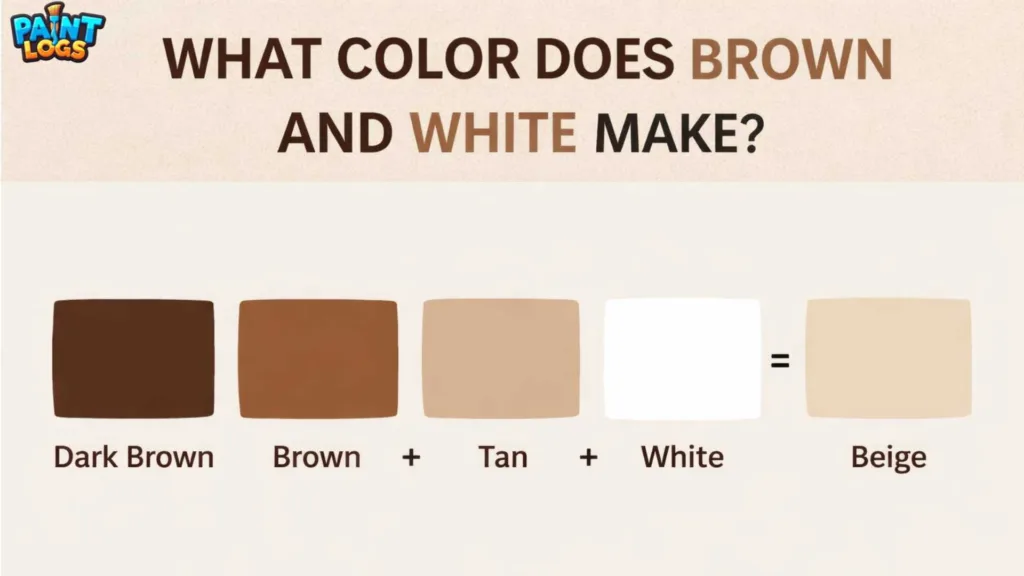
What Do Brown and White Make When Mixed? When brown and white are mixed, the result is often a soft, muted shade of brown, commonly known as beige, tan, cream, or khaki.
The final shade depends on the proportions of brown and white, with more white lightening the mixture and creating softer tones, while adding a hint of yellow or red can create variations like tan, taupe, or even warmer shades.
In this complete color mixing guide, we’ll explore what brown and white make when mixed, how to adjust the results using other colors, and how this combination works in both traditional and digital design.
Whether you’re mixing acrylics, experimenting with RGB on screen, or creating a color palette for art or decor, this guide will help you understand every variation brown and white can produce.
Let’s break it down and see what shades are possible when brown and white come together.
Quick Answer: What Happens When Brown and White Mix?
Here are some common brown and white mixing results:
Brown + White = Beige (light, neutral)
Brown + White (more white) = Cream (softer, lighter)
Brown + White + Yellow = Tan (earthy, warm)
Brown + White + Red = Warm Tan (slightly pinkish, deeper)
Brown + White + Blue = Taupe (cooler, muted)
Brown + White + Green = Olive (earthy, muted green)
These combinations create a wide range of neutral, earthy tones, perfect for both art and interior design.
- Beige or light tan is the most common result.
- More white creates a lighter version, ranging from cream to soft ivory.
- Less white maintains the mix’s earthy, brown undertones.
This easy combination can be adjusted depending on the amount of white and the shade of brown you start with, offering a wide spectrum of results.
What Happens in Different Color Models?
RYB (Red, Yellow, Blue) Color Model
In traditional painting or RYB color model, brown is created by mixing red, yellow, and blue. When you add white to this mix, the result is typically beige or light tan, depending on the initial brown’s warmth or coolness.
For instance, if you begin with a red-brown, the result will likely be a warmer beige, while a blue-brown will produce a cooler beige.
Brown can also be created by mixing other colors. For example, learn more about how red and green make brown.
RGB (Red, Green, Blue) Color Model
In digital design, brown is made by mixing red and green light. When you add white, the mix lightens to a lighter shade, such as light brown or even a soft orange depending on the specific color balance.
Since the RGB color model deals with light, the outcome can look quite different from traditional pigment-based color mixing.
CMYK (Cyan, Magenta, Yellow, Black) Color Model
In the CMYK model (used in printing), brown is made by mixing varying levels of cyan, magenta, yellow, and black. When white is added to this mix, the result can be anywhere from light tan to beige depending on the amounts of each primary color used in the original brown.

Why Does Brown and White Create These Shades?
Brown, typically created by mixing red, yellow, and blue, is a rich, neutral color that can take on different tones depending on its composition. When you add white to brown, you’re lightening the tone, making it less intense and more neutral. The more white you add, the lighter and softer the resulting shade becomes.
Table: Brown and White Mixing Examples
| Brown Shade | Amount of White | Resulting Color | Description |
|---|---|---|---|
| Dark Brown | Little White | Tan | Classic warm tone, earthy. |
| Light Brown | Moderate White | Beige | Neutral, soft. |
| Cocoa Brown | A Lot of White | Cream | Very light, off-white tone. |
| Reddish Brown | Little White | Warm Beige | Rich, warm undertones. |
| Blue-tinged Brown | Moderate White | Cool Beige | Slightly grayish hue. |
What Happens When You Mix Different Shades of Brown with White?
When mixing different shades of brown with white, the result can vary significantly based on the specific brown shade you use. Lighter or darker browns will produce different hues when mixed with white. The balance between brown and white determines whether the final shade leans towards a warmer tone like tan or a cooler shade like stone.
How Does the Tone of Brown Affect the Result?
- Warm Browns: These are often rich and earthy, like chocolate, copper, or rust. Mixing them with white creates shades like light tan, caramel, or buttery beige.
- Cool Browns: These tend to have more neutral or slightly green undertones, such as taupe or grayish brown. When mixed with white, you might get softer gray-beige or mushroom tones.
- Dark Browns: These include shades like espresso or chestnut. Adding white to these colors will give you a deep chocolate brown or a muted beige.
Let’s break it down further with a few examples in a table to visualize how different brown shades mix with white:
Table: Different Brown Shades Mixed with White
| Brown Shade | Amount of White | Resulting Color | Description |
|---|---|---|---|
| Chocolate Brown | Little White | Warm Tan | Rich, sweet, caramel tones. |
| Chestnut Brown | Moderate White | Sandy Beige | Earthy and warm, yet soft. |
| Taupe Brown | A Lot of White | Mushroom Beige | Cool, neutral, grayish brown. |
| Espresso Brown | Little White | Dark Cocoa | Deep, intense brown with warmth. |
| Grayish Brown | Moderate White | Stone Beige | Subdued, slightly grayish tone. |

Adjusting Brown and White for Desired Effect
What Happens When You Add More White?
Adding more white to brown not only lightens the shade but can also alter the warmth and coolness of the resulting color. For example:
- More white in a dark brown like espresso will soften the shade, producing a lighter mocha.
- More white in a reddish brown like chestnut can create a pale caramel or a butter-colored result.
What Happens When You Add Less White?
On the flip side, less white will result in a darker, more intense version of the original brown, keeping its richness. For example:
- Less white in chocolate brown will keep the mix in the realm of rich, dark brown.
- Less white in taupe brown can make the color feel more grayish and cooler.
How Do Different Shades of Brown Mix in Specific Contexts?
- Painting (Traditional Art): When you’re working with acrylics, oils, or watercolors, you’ll typically use this mixture to create more earthy tones or natural backgrounds. Adding white to brown is often used to lighten shades for highlights or softer areas.
- Interior Design: Brown tones are often used in furniture, walls, and fabrics. A mixture of brown and white creates beautiful neutral colors like cream or light mocha, which are ideal for minimalist or contemporary spaces.
- Fashion: When it comes to clothing, lighter brown shades, especially when mixed with white, create soft, neutral tones perfect for summer outfits, casual wear, or elegant looks.

Different Mediums and Their Impact on Brown and White Mixes
The final result when mixing brown and white also depends on the medium you’re using. The following breakdown highlights how different mediums affect the outcome of the mix:
1. Paint (Traditional Media)
In painting, when you mix brown with white, you typically create lighter shades of brown, useful for:
- Highlights: Lighter browns are often used for highlighting objects, textures, or surfaces.
- Shading: If you’re aiming for deeper shadows, adding white to dark brown will create interesting, subtle tones that aren’t too stark.
2. Digital Design (RGB Color Model)
In digital art, the RGB color model will give different results due to the way light interacts with color. For example:
- Mixing dark brown with white could result in a softer, lighter brown that works well in web design backgrounds or buttons.
3. Printing (CMYK Color Model)
When it comes to printing, brown mixed with white becomes very muted. This can help soften bright backgrounds and create rich paper tones or browns in printed materials.

Mixing Brown and White in Digital Media
RGB Model (Digital Art)
In digital design using the RGB model, mixing brown and white works as follows:
- Dark Brown (#8B4513) mixed with White (#FFFFFF) will give a lighter brown, often warm beige.
- Cool Brown (#6F4F37) with White can give a more grayish beige, ideal for minimalist designs.
CMYK Model (Printing)
For printed media, such as magazines or posters, brown and white will give different results due to the subtractive color model:
- In printing, adding white to brown can produce a soft tan or cream-colored paper, commonly used in vintage-style prints.
How to Adjust Brown and White Mixes for Desired Effects
Once you’ve mixed brown and white, there are various ways to adjust the final shade to create the exact tone or mood you’re aiming for. Let’s break down how you can achieve different effects by adding other colors, playing with proportions, and using brown and white in unique combinations.
1. Adding Yellow to Brown and White Mixes
When you add yellow to your brown and white mix, the result can shift towards warmer, earthier tones. The yellow will influence the brown, softening it and giving you a more vibrant or sunny result.
- Yellow + Brown + White: This combination often creates warm, soft tones like beige, light tan, or mustard. It’s an ideal mixture for autumn-themed designs, interior decor in warm tones, or even fashion pieces.
| Brown Shade | Yellow | White | Resulting Color | Description |
|---|---|---|---|---|
| Dark Brown | Medium Yellow | Little White | Tan | Soft, warm brown with yellow undertones. |
| Medium Brown | Light Yellow | Moderate White | Beige | Light, neutral tone with a soft golden tint. |
| Chestnut Brown | Deep Yellow | More White | Mustard Beige | Earthy, autumn-like tone, vibrant and warm. |
2. Adding Red to Brown and White Mixes
Adding red to brown and white creates an interesting effect. The addition of red will intensify the warmth and create rustic, earthy, or even vintage shades.
- Red + Brown + White: The result can be rich warm tans, cinnamon browns, and rusty hues.
| Brown Shade | Red | White | Resulting Color | Description |
|---|---|---|---|---|
| Chocolate Brown | Medium Red | Little White | Cinnamon Brown | Warm, reddish-brown with an earthy vibe. |
| Coffee Brown | Deep Red | Moderate White | Rusty Beige | Rich, earthy red-brown with a vintage feel. |
| Taupe Brown | Light Red | More White | Dusty Rose | Soft, muted, vintage tone with pink hints. |
3. Adding Blue to Brown and White Mixes
When you add blue to brown and white, you can get cooler tones that shift towards gray-brown, slate, or even charcoal shades. This can be especially useful when you’re creating moody or modern designs.
- Blue + Brown + White: The mix will result in cooler, neutral, and even industrial-looking tones.
| Brown Shade | Blue | White | Resulting Color | Description |
|---|---|---|---|---|
| Dark Brown | Navy Blue | Little White | Slate Brown | Cool, grayish brown perfect for modern themes. |
| Chestnut Brown | Royal Blue | Moderate White | Stormy Taupe | Deep, moody, and sophisticated color. |
| Taupe Brown | Light Blue | More White | Dusty Gray-Brown | Subdued, soft grayish-brown with a cool undertone. |
Creative Uses for Brown and White Mixtures in Design
Now that you’ve learned how to mix brown with white and other colors, let’s look at how you can creatively use these shades in various design fields:
1. Interior Design
Brown and white mixtures are staples in interior design for creating warmth, comfort, and sophistication:
- Neutral Tones: Use light brown and white combinations to design living rooms, bedrooms, or offices for a soft, minimalist look. Shades like beige, taupe, or sand are perfect for creating neutral walls or furniture.
- Accent Walls: Darker browns mixed with white can be used for accent walls or features, adding a dramatic touch to any room without overwhelming the space.
- Rustic/Boho Styles: A warm brown like chocolate combined with white can help design rustic or bohemian-style interiors, incorporating wood, natural elements, and cozy fabrics.
2. Fashion and Textiles
Brown and white mixtures are widely used in fashion design, particularly in the creation of clothing and accessories:
- Winter Wear: Rich brown tones, mixed with white, create a luxurious, cozy look that’s perfect for coats, scarves, or sweaters in the winter months.
- Neutral Outfits: For minimalist fashion, combining light browns and whites gives off a clean, understated aesthetic. Shades like camel or cream are ideal for workwear or casual styles.
- Vintage Tones: A mixture of brown with red or yellow gives a retro or vintage vibe, often used in leather jackets, boots, or accessories.
3. Art and Painting
In art, brown mixed with white allows artists to create a range of effects:
- Shading and Depth: Lighter brown tones, when mixed with white, can create subtle highlights in paintings. Dark brown tones provide depth and shadows.
- Nature Scenes: The combination of brown and white is perfect for landscapes, such as wooden textures, soil, or sand. The soft blending of light browns and white works well for soft skies or clouds in nature-inspired art.

Conclusion
The combination of brown and white opens up a wide array of possibilities for artists, designers, and decorators. By adjusting the proportions, mixing in other colors, and understanding the effects of different mediums, you can create virtually any tone—whether it’s a warm tan, a cool taupe, or a rich mocha.
From interior decor to fashion to digital design, brown and white mixtures remain a classic choice for creating harmonious, sophisticated, and timeless designs.
The next time you find yourself mixing these two colors, remember the possibilities are endless. Whether you’re blending for painting, fashion, or digital art, brown and white can help you craft a variety of tones and moods to suit any project.
FAQs
What happens when brown and white are mixed together?
Mixing brown and white creates lighter, softer shades of brown, such as beige, tan, or cream. The exact shade depends on the amount of white added and the undertones of the brown used.
Do brown and white make tan?
Yes, mixing brown with white typically results in a tan color. The more white you add, the lighter the shade of tan will become.
Can brown and white create a lighter brown?
Yes, when you mix brown and white, you get a lighter version of brown. This can range from light beige to a soft tan, depending on how much white is used.
What shade do brown and white make when mixed in equal parts?
When mixed in equal parts, brown and white usually create a neutral shade of light brown or beige, with a natural, earthy feel.
Can brown and white be used to create pastel shades?
Yes, adding more white to brown will give you pastel-like shades, such as light beige, light tan, or even a soft, muted mocha color. These shades are ideal for subtle, soft designs.
What is the effect of mixing brown and white in interior design?
In interior design, brown and white together create a warm, cozy atmosphere. The brown adds depth and richness, while the white brightens the space, making it feel balanced and inviting.
How does brown and white mix affect the perception of space?
Mixing brown and white can make a small space appear larger if the right balance is struck. White helps open up the space, while brown adds depth and texture, preventing the area from feeling too stark or empty.
Can brown and white make a warm color?
Yes, brown is a warm color, and when mixed with white, it retains its warm tones but becomes lighter and softer. The result is often a neutral warm color, like beige or taupe.
Does brown and white make cream?
Yes, if you mix brown with white in the right proportions, you can achieve a creamy color. The tone will be warm and soft, often used in art and design for a more subtle, natural appearance.
What does adding more white to brown create?
When you add more white to brown, you lighten the brown, creating hues like beige, off-white, or cream. The more white added, the lighter and more neutral the shade becomes.
Can brown and white be used to make a sophisticated color scheme?
Yes, brown and white create a timeless, sophisticated color scheme. The brown adds richness and depth, while the white keeps the look fresh and modern, making it a popular combination in both fashion and home decor.
What are some common uses of brown and white together?
Brown and white are commonly used in interior design, fashion, and graphic design. The combination creates a natural, organic feel and is often used in rustic, bohemian, or minimalist themes.