How to Know When Your Garage Door Spring Needs Replacement: Warning Signs and Safety Tips
Your garage door spring is one of the most important parts that keeps your door working properly. Most people don’t think about their springs until something goes wrong. When a spring breaks or wears out, your garage door can become dangerous or stop working completely.
The good news is that garage door springs usually show clear warning signs before they fail, like unusual noises, difficulty opening, or visible damage to the spring itself. Learning these warning signs helps you catch problems early. You can avoid being stuck with a door that won’t open when you need it most.
Across many U.S. cities and states, garage door problems are a common issue for homeowners, but the causes and solutions can vary by region. In colder areas such as New York, Ohio, and Illinois, temperature fluctuations often lead to metal fatigue and sudden spring breakage, making timely repairs essential to avoid complete door failure.
Coastal cities like Los Angeles and San Diego face corrosion from moisture and salt in the air, which weakens springs over time and requires more frequent inspections. If you live in Houston and notice any issues with your garage door, routine spring inspections, timely spring replacement wit reliable garage door spring repair services in Houston and overall garage door maintenance can fix the problem quickly and safely while restoring smooth operation, preventing damage to the opener and tracks, reducing the risk of sudden failure, and extending the life of your entire garage door system.
This guide will help you spot the signs that your springs need attention and understand what steps to take next, including repair options, safety considerations, and when it’s best to call a trained technician.
Essential Signs Your Garage Door Spring Needs Replacement
Garage door springs show clear warning signs when they’re failing. Recognizing heavy doors, broken coils, unusual sounds, and irregular movement helps you address problems before they become dangerous.
Difficulty Opening or Closing the Door
Your garage door should open and close smoothly with minimal effort. When the spring starts to fail, you’ll notice the door feels much heavier than normal.
A properly functioning spring balances the door’s weight. If you struggle to lift the door manually or the automatic opener sounds like it’s straining, the spring has likely lost tension. This happens gradually as the spring weakens over time.
You might also see the door moving more slowly than usual. Some doors will only open partway before stopping. Others won’t stay open and begin to fall back down.
The opener may start reversing unexpectedly or refusing to lift the door at all. These issues put extra stress on the motor and can damage the opener if ignored. Testing the door’s weight by disconnecting the opener and manually lifting it a few feet off the ground will tell you if the spring is working properly.
Visible Damage or Gaps in the Spring
Physical damage to the spring is one of the clearest indicators that replacement is needed. Look for separation between the coils, which appears as a gap of an inch or two in the spring.
Rust and corrosion weaken springs over time. You’ll see orange or brown discoloration on the metal coils. This deterioration makes the spring brittle and prone to breaking.
Check for stretched or deformed areas where the coils don’t look uniform. The spring should have consistent spacing throughout its length. Any irregularities mean the spring has lost its structural integrity.
Cracks or breaks in the spring are obvious signs of failure. Sometimes you’ll only see a partial break that hasn’t fully separated yet. Both torsion springs above the door and extension springs on the sides can show these signs of wear.
Loud Noises During Operation
Strange sounds coming from your garage door often point to spring problems. A loud bang similar to a firecracker or gunshot indicates a spring has broken completely.
Squeaking and squealing noises suggest the spring needs lubrication or is wearing out. These sounds typically get louder over time as the spring continues to deteriorate.
Grinding or scraping sounds mean metal parts are rubbing together abnormally. This happens when the spring can’t maintain proper tension and door alignment. You might hear creaking noises as the spring struggles to support the door’s weight.
Popping sounds during operation signal that the spring is under excessive stress. The coils may be binding or catching on hardware. Any new or worsening noise requires immediate attention to prevent complete spring failure.
Uneven or Jerky Movement
A garage door with a failing spring won’t move smoothly along its track. You’ll notice the door tilts to one side during opening or closing.
The door may lurch forward or stop suddenly instead of gliding evenly. This jerky motion indicates unbalanced spring tension. One spring might be working while the other has failed or weakened significantly.
Watch for the door shaking or vibrating as it moves. The cables on either side should remain tight and even. If one side appears loose or the door looks crooked, the springs aren’t distributing weight correctly.
The door might bounce or jerk when it reaches the fully open position. These irregular movements damage the tracks, rollers, and opener mechanism. They also create a safety hazard since the door becomes unpredictable.
Steps to Evaluate and Address Garage Door Spring Issues
Testing your garage door’s balance and knowing when to call for help can prevent accidents and costly repairs. Taking action at the right time protects both your safety and your property.
Conducting a Balance Test Safely
You can check your garage door springs by performing a simple balance test. Start by disconnecting the opener by pulling the manual release handle. This handle usually has a red cord attached to it.
Lift the door manually to about waist height, then let go. A door with working springs should stay in place or move only slightly. If it drops quickly or shoots upward, the springs need attention.
Warning signs during the test:
- Door feels extremely heavy to lift
- Door falls rapidly when released
- Door won’t stay open at any position
- One side lifts higher than the other
Never perform this test if you see a visibly broken spring. The spring will have a gap in the coil or may be hanging loose. Skip the test and call a technician right away.
When inspecting the spring system, technicians often check the condition of cables and fittings as well, since worn or loose connections can affect how smoothly the door moves. In some repair situations, professionals may use tools like crimp tools from VEVOR or other similar brands to secure cable ends or fittings properly, helping maintain safe tension and reliable operation. Properly fastened hardware reduces the risk of sudden movement or uneven lifting.
When to Consult a Professional
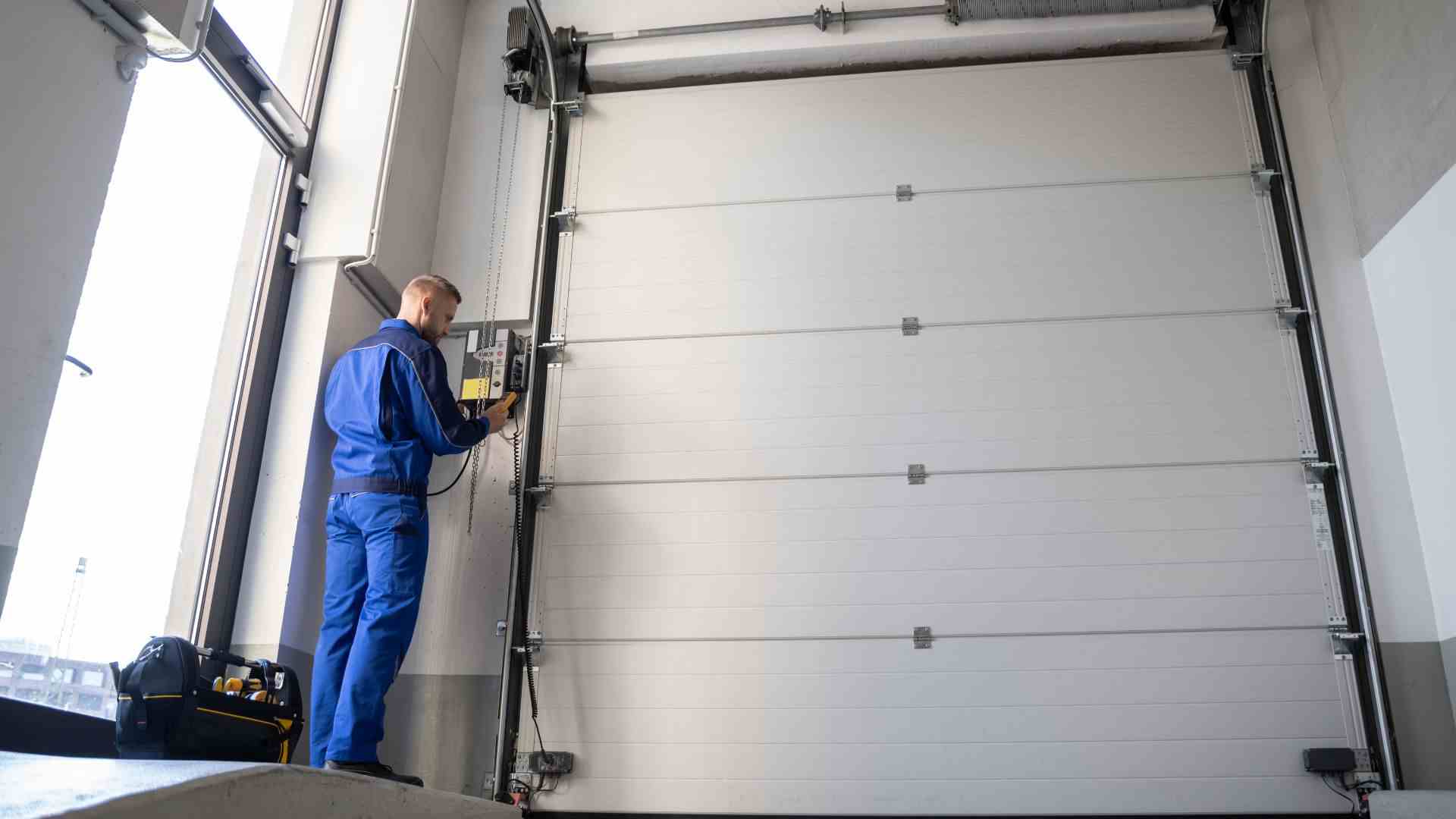
Spring replacement requires special tools and knowledge. The springs hold hundreds of pounds of tension, which makes DIY repairs dangerous.
Contact a garage door technician if you notice any broken springs, hear loud snapping sounds, or see gaps in the spring coils. You should also get professional help when your door fails the balance test or shows uneven movement.
Situations that need immediate professional help:
- Visible spring damage or breaks
- Door won’t open at all
- Cable came off the drum
- Door closes too fast
- Spring appears stretched or deformed
A trained technician has the right tools to safely release spring tension and install new parts. They can also match the correct spring size and type for your specific door weight.
Preventing Further Damage
Stop using your garage door immediately when you suspect spring problems. Opening and closing a door with bad springs puts stress on the opener motor and other parts.
Disconnect the automatic opener to prevent accidental use. You can use your vehicle’s other exit points until repairs are complete. This keeps family members safe and prevents damage to the opener and door panels.
Keep track of how old your springs are. Most springs last 7 to 10 years with normal use. Mark the installation date on your calendar so you can plan for replacement before they fail completely.
Conclusion
Your garage door springs work hard every day to lift and lower your door safely. Knowing the warning signs of wear helps you catch problems before they become dangerous or expensive.
Check your springs every few months for gaps, rust, or uneven door movement. If you notice any of these signs, it’s time to call a professional for replacement.
Regular inspections and quick action keep your garage door working properly and your family safe. Don’t wait until a spring breaks completely to take action.