
Quick Answer
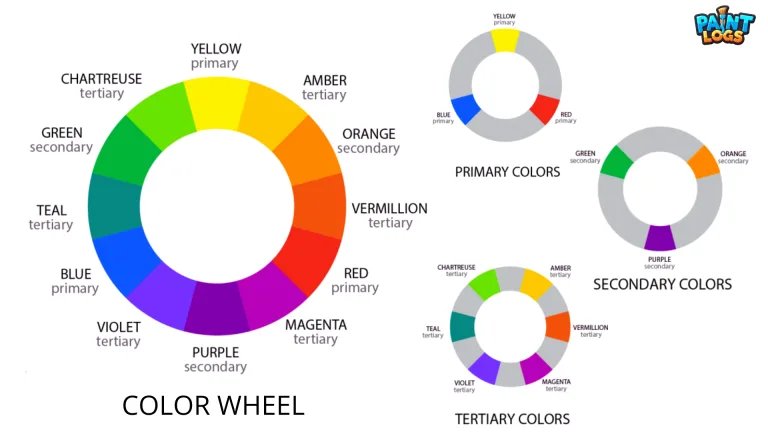
In the RYB color model (used in painting and art), the three secondary colors are:
- Orange = Red + Yellow
- Green = Yellow + Blue
- Purple = Red + Blue
👉 Secondary colors are created by mixing two primary colors. They sit between the primaries on the color wheel.
Introduction
Secondary colors are the bridge between primary and tertiary colors. They are formed when you mix two primaries together and are essential for creating balanced and varied color palettes.
Artists use secondary colors to add vibrancy to their work, designers use them to create contrast, and educators use them to teach the basics of color mixing. Whether you’re blending paint on a canvas or working digitally, understanding makes it easier to predict your results.
The Three Secondary Colors (RYB Model)
In the RYB model, there are three secondary colors:
- Orange – created by mixing red and yellow. It’s a warm, energetic color often linked to excitement, creativity, and warmth.
- Green – made from yellow and blue. It represents nature, freshness, and balance, and is widely used in landscapes and design.
- Purple – formed by combining red and blue. It’s associated with mystery, imagination, and luxury, making it a favorite in art and branding.
Each secondary color inherits qualities from its parent primaries. For example, green carries the calm of blue and the brightness of yellow, making it versatile in both painting and design.
Secondary Colors in RGB and CMYK
While orange, green, and purple are the secondaries in the RYB model, other systems define them differently:
- RGB model (digital screens) – The secondary colors are cyan, magenta, and yellow. They are created by mixing two light primaries:
- Red + Green = Yellow
- Green + Blue = Cyan
- Blue + Red = Magenta
- CMYK model (printing) – The secondary colors shift again. Here, red, green, and blue are produced by combining two ink primaries:
- Cyan + Magenta = Blue
- Magenta + Yellow = Red
- Cyan + Yellow = Green
👉 The difference comes from the medium. RGB works with light, CMYK with ink, and RYB with paint/pigment.
How to Mix Secondary Colors in Paint
Mixing secondary colors is simple, but getting them bright and clean takes practice. Here’s how:
- Start with pure primaries – Use strong, saturated red, yellow, and blue paints. Dull pigments will make muddy secondaries.
- Mix equal amounts – For a balanced secondary, mix your primaries in roughly equal parts.
- Adjust the ratio – Want a warmer orange? Add more red. Prefer a cooler green? Add more blue.
- Test before applying – Swatch the mix on scrap paper or canvas before using it in your work.
Tip: If your secondary looks brown or gray, your primaries may contain hidden undertones. Try a different pigment to get a cleaner result.
Related: Primary, Secondary & Tertiary Colors: The Complete Guide – a full overview of the color hierarchy.
Practical Uses of Secondary Colors
Secondary colors appear everywhere in art, design, and daily life:
- Orange – Adds energy and vibrancy, often used in sunsets, autumn themes, and creative logos.
- Green – Represents growth and balance, common in landscapes, eco-friendly brands, and calming interiors.
- Purple – Symbolizes creativity and luxury, found in flowers, fashion, and artistic accents.
Designers often pair secondaries with their complementary colors (the color opposite on the wheel) to create bold contrasts. For example:
- Orange with Blue
- Green with Red
- Purple with Yellow
This use of opposites makes visuals more striking and memorable.
Simple Activity: Mix Your Own Secondary Colors
You can try this quick exercise at home or in the classroom to see secondary colors in action:
- Place three dabs of paint: red, yellow, and blue.
- Mix them in pairs to create:
- Red + Yellow = Orange
- Yellow + Blue = Green
- Red + Blue = Purple
- Paint small swatches of each new color on paper.
- Adjust the ratios to see warmer or cooler variations (for example, more red in purple makes a reddish-violet).
This simple activity demonstrates how secondary colors sit between primaries on the color wheel.
Conclusion
Secondary colors are the essential link between primaries and tertiaries.
- In the RYB model, they are orange, green, and purple.
- In the RGB model, they are cyan, magenta, and yellow.
- In the CMYK model, they are red, green, and blue.
Whether you’re painting, designing digitally, or working with print, knowing your secondary colors helps you create balanced, vibrant, and effective color palettes.
For a complete overview, revisit our guide on Primary, Secondary & Tertiary Colors.
FAQs
What are the 3 secondary colors?
In the RYB model, the secondary colors are orange, green, and purple, created by mixing two primary colors.
Why are they called secondary colors?
They’re called secondary because they are formed by combining two primary colors.
Are RGB secondary colors the same as RYB secondaries?
No. RGB uses light, so its secondaries are cyan, magenta, and yellow, not orange, green, and purple.
Can you make secondary colors without primaries?
No. Secondary colors only exist as a result of mixing two primary colors together.
Which secondary color is the most popular?
It depends on context. Green is most common in nature and design, while purple is popular in art and branding.