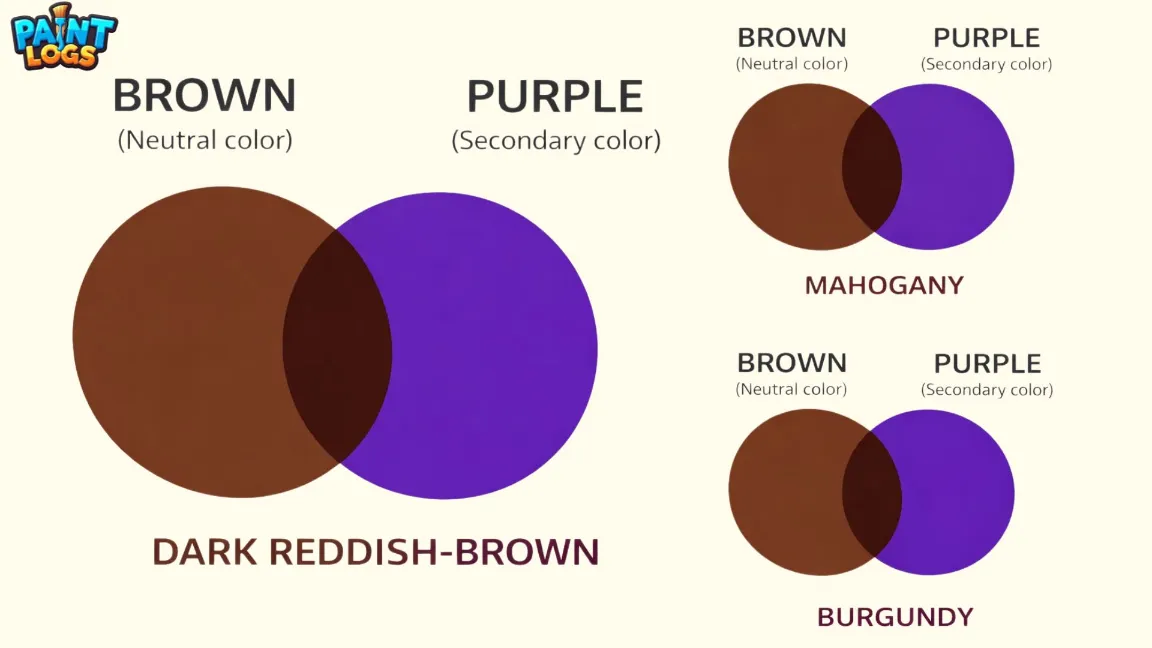
What Color Does Brown and Purple Make? When mixing colors, the results can sometimes be unexpected, especially when combining brown and purple. Instead of getting bright or vibrant hues, the combination of these two colors tends to result in muted, earthy tones. Depending on the ratio and the type of purple and brown used, you can create everything from a deep, rich plum brown to a softer, dusty mauve. These colors work perfectly in a variety of contexts, from art and design to interior decoration and fashion.
In this guide, we’ll explore how brown and purple mix together, what common shades they produce, and how you can use these colors effectively in your creative projects.
Quick Answer: What Color Do Brown and Purple Make?
Brown + Purple = Plum Brown, Dusty Mauve, Muted Burgundy, Dark Purple, Mauve Brown
Mixing brown and purple typically results in muted, earthy tones. The specific color will depend on the proportions of brown and purple you mix. When more brown is added, the color becomes darker and more neutral, while adding more purple gives a richer and more vibrant hue. Typically, the result is a plum brown, but it could also lean toward dusty mauve, burgundy brown, or other shades depending on the mix.
The Science Behind Mixing Brown and Purple
Subtractive Color Mixing (Paint & Pigments)
In paint or pigments, the mixing process is subtractive. This means that when two colors are combined, they absorb (subtract) certain wavelengths of light and reflect others. The more pigments you add, the more light is absorbed, which results in a duller and muted outcome.
- Brown is a neutral color that’s created by mixing complementary colors, which means it’s naturally low in saturation.
- Purple is a combination of red and blue, both vibrant colors, but when mixed with brown, it becomes softened and earthy.
As a result, mixing brown and purple often produces deep, earthy shades with varying degrees of richness depending on the ratio of the two colors.
Additive Color Mixing (Digital / Light)
In the additive color model (used for digital screens), colors are created by combining red, green, and blue light. In this model, gray or neutral tones, including brown, are mixed with purple, which creates desaturated tones. The final color won’t be as rich as the result you would get with paint mixing but will have a darker, softer appearance. The more purple added in a digital mix, the more vibrant it will be, but it will still lean toward a muted version of the purple due to the brown’s presence.
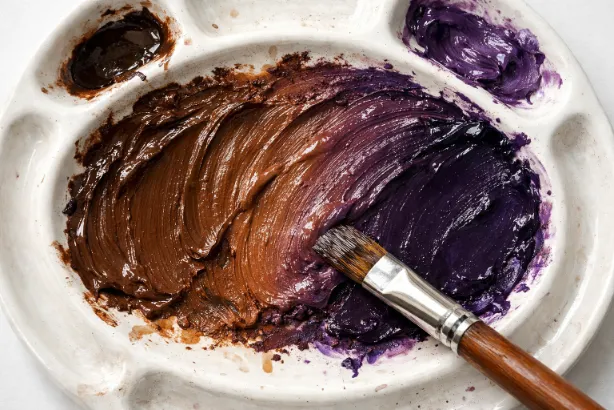
Common Shades Created When Mixing Brown and Purple
When you mix different amounts of brown and purple, you can create a wide variety of muted tones. These aren’t bright or vibrant but are perfect for subtle, earthy palettes. The color results will often depend on how much of each color is used.
1. Plum Brown
With more purple than brown, you often get plum brown — a rich, dark purple with brown undertones. It’s perfect for creating luxurious or elegant looks in designs.
2. Dusty Mauve
Adding a bit more brown creates dusty mauve — a soft, muted color that feels a bit vintage or retro, with a gentle, grayish appearance.
3. Burgundy Brown
When there’s more brown than purple, the result can be burgundy brown — a dark reddish-brown, giving the final color a warm and bold feel. It works well for fall-themed designs or more sophisticated palettes.
4. Eggplant Brown
If you add a lot of brown to purple, you get eggplant brown — a very dark, almost black shade with purple undertones, perfect for bold, dramatic effects in both fashion and interior design.
5. Violet Brown
Adding a balanced amount of purple and brown can create violet brown — a color that’s vibrant but muted at the same time. It’s often used in boho-chic or retro designs.
6. Muted Lavender
When mixing more brown with purple, you might get muted lavender — a soft, grayish purple. This tone works well as a background color or as an accent in minimalist or calming designs.
7. Dusky Plum
With a balanced amount of brown and purple, you may get dusky plum — a cool-toned plum that’s almost neutral and works great for more sophisticated or professional designs.
8. Mocha Purple
When there’s more brown than purple, you might achieve mocha purple — a warm, medium brown with a touch of purple, making it perfect for cozy or earthy color schemes.
These names help you imagine the kinds of tones that emerge, especially if you’re experimenting with paints in your studio.
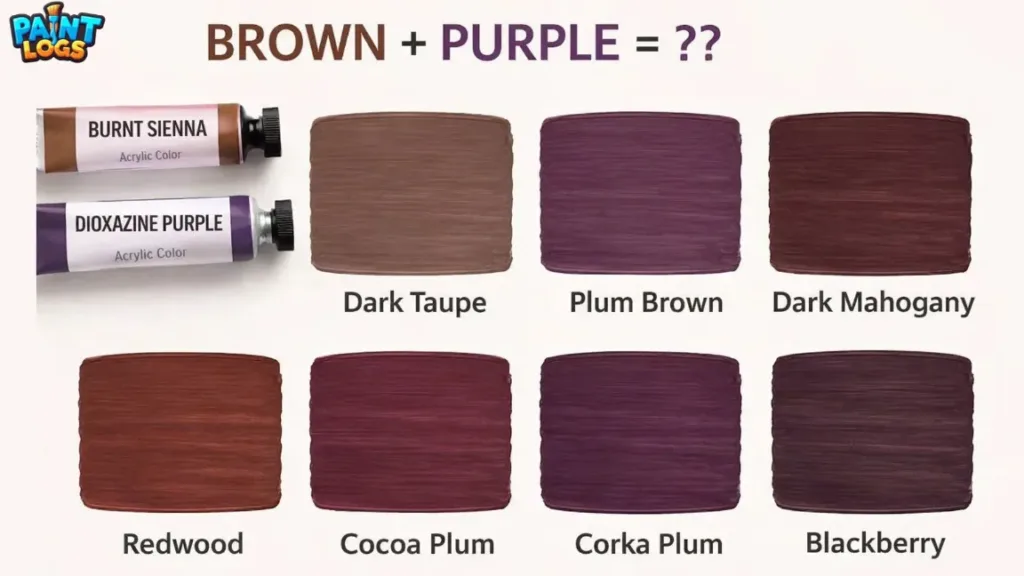
Shades of Brown and Purple
Below is a table showcasing the common shades created when mixing brown and purple.
| Color 1 + Color 2 | Result | HEX Code |
|---|---|---|
| Dark Brown + Purple | Plum Brown | #7E3B38 |
| Light Brown + Purple | Dusty Mauve | #A3979D |
| Medium Brown + Purple | Burgundy Brown | #6A2E1E |
| Very Dark Brown + Purple | Eggplant Brown | #3C2F2A |
| Purple + Brown | Violet Brown | #5B3B6F |
| Balanced Brown + Purple | Muted Lavender | #6D4F7A |
| Small Brown + Purple | Dusky Plum | #5E2D4E |
| Equal Brown + Purple | Mocha Purple | #5D3A2E |
These HEX codes are useful for both digital designers and artists looking to match the exact color shades in their projects. Whether you’re designing an interior, creating artwork, or choosing colors for fashion, these brown and purple mixes provide a wide variety of shades to work with.
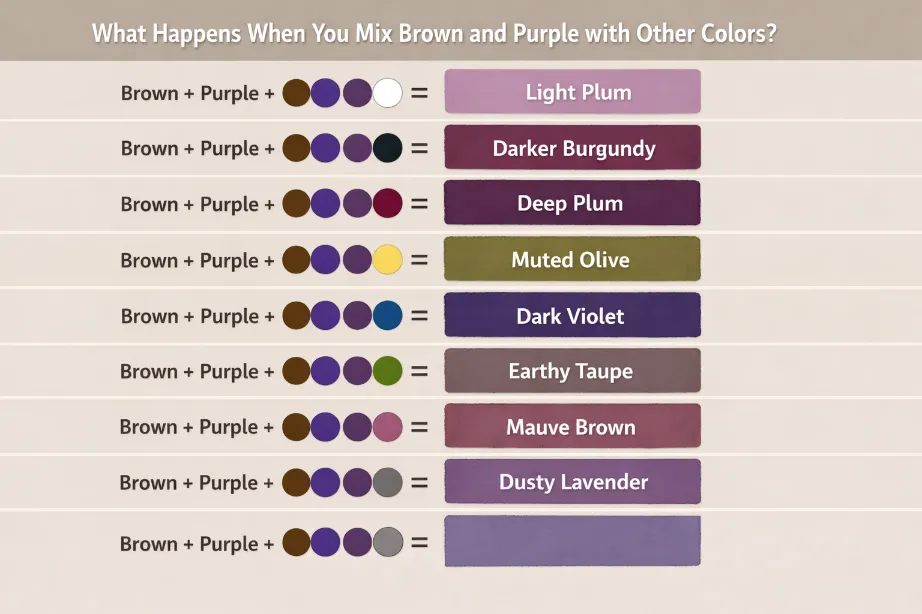
What Happens When You Mix Brown and Purple with Other Colors?
Mixing brown and purple with other colors can lead to a variety of exciting results. By adjusting the balance with different hues, you can create even more muted or vibrant shades, depending on the desired outcome. Here are some common mixtures to try:
1. Brown + Purple + White = Light Plum
When you add white to the mix of brown and purple, the result is a light plum color, which is softer and lighter than pure plum brown. This combination is perfect for pastel palettes or for creating a more airy and subtle look.
- Result: A lighter, more pastel version of plum.
- Use in: Soft interior design, spring fashion, or gentle art tones.
2. Brown + Purple + Black = Darker Burgundy
Adding black to the brown and purple mix deepens the color, resulting in a darker burgundy. This is perfect for creating bold, rich tones for evening wear, luxurious interior designs, or high-end branding.
- Result: A deep, rich burgundy brown with purple undertones.
- Use in: Gothic style, luxury brands, or fall fashion.
3. Brown + Purple + Red = Deep Plum
If you mix red with brown and purple, you’ll achieve a deep plum color. This mix is vibrant but retains the earthiness of brown. It’s perfect for romantic, warm tones in wedding color schemes or vintage art.
- Result: A rich, deep plum with a reddish tone.
- Use in: Romantic fashion, vintage artwork, or wedding themes.
4. Brown + Purple + Yellow = Muted Olive
Adding yellow to the mix creates a shift toward muted olive or earthy brown-green tones. This combination results in a more natural or outdoor-inspired palette. It works well for creating earthy designs or camouflage patterns.
- Result: A subtle olive brown with yellow undertones.
- Use in: Natural designs, outdoor apparel, or eco-friendly branding.
5. Brown + Purple + Blue = Dark Violet
When you add blue to brown and purple, the resulting shade is a dark violet. This is a cooler, richer color perfect for creating moody or dramatic designs. It’s commonly used in professional settings or luxury brands.
- Result: A deep, dark violet.
- Use in: Luxury interiors, professional clothing, or high-fashion.
6. Brown + Purple + Green = Earthy Taupe
Adding green to brown and purple gives you a more earthy taupe — a natural, soft color that’s great for creating organic or rustic looks. This combination is great for designs that want a grounded, natural aesthetic.
- Result: An earthy taupe or brown-gray mix with green undertones.
- Use in: Rustic designs, outdoor decor, or organic branding.
7. Brown + Purple + Pink = Mauve Brown
When you add pink to brown and purple, you get mauve brown, a soft, warm hue with retro vibes. This color works well for creating a vintage or romantic look in fashion or art.
- Result: A soft mauve with a brown undertone.
- Use in: Retro fashion, vintage art, or romantic interiors.
8. Brown + Purple + Gray = Dusty Lavender
Finally, adding gray to brown and purple results in a dusty lavender — a subdued and calming color that can work well in professional and modern designs. This soft tone is perfect for contemporary interiors or minimalist clothing.
- Result: A grayish purple-brown that’s soft and muted.
- Use in: Minimalist interiors, professional fashion, or modern branding.
Using Brown and Purple in Design
Fashion
Brown and purple can make a bold yet sophisticated statement in fashion. Whether it’s a plum brown jacket, dusty mauve scarf, or burgundy shoes, these two colors add richness and depth to any outfit. The key is to balance the tones — deep, dark shades can be used for eveningwear, while lighter, softer mixes are great for daytime outfits or casual wear.
Interior Design
In interior design, brown and purple are often used to create elegant, warm spaces. A dark purple accent wall with brown furniture can create a dramatic atmosphere, while softer mauve tones with wood accents can make a room feel cozy and welcoming. These colors are perfect for living rooms, bedrooms, or formal dining rooms where you want to create a rich, luxurious vibe.
Branding & Packaging
For brands looking to evoke luxury, sophistication, or creativity, brown and purple are a perfect match. A purple logo with brown accents can make a brand appear elegant and trustworthy. This color combination is often used in the beauty, cosmetics, and high-end retail sectors.

Tips for Mixing Brown and Purple in Paint or Digital Art
Start Small
Start with small amounts of purple or brown and mix gradually. This gives you more control over the final shade.
Adjust with White or Black
Use white to lighten the mix and black to deepen it. This will help you achieve the perfect level of vibrancy or subtlety for your needs.
Test Under Different Lighting Conditions
Colors can look different under various lights. Be sure to test your mix in the lighting where it will be used, whether that’s on a canvas, digital screen, or in your home.
Use High-Quality Materials
In digital art, make sure your screen is color-calibrated to show accurate hues. In traditional painting, always use high-quality pigments to get the best results.
Real‑Life Examples of Brown and Purple in Design, Art & Fashion
Fashion
- Plum Brown Dresses: A deep plum brown dress with a simple brown belt can be elegant and classic.
- Dusty Mauve Scarves: A dusty mauve scarf paired with a neutral jacket adds a touch of sophistication without being too bold.
Interior Design
- Purple Accents in Living Rooms: Purple throw pillows and brown leather couches create a rich but comfortable atmosphere in living rooms.
- Luxury Bedrooms: Use burgundy brown curtains and eggplant purple bedding to create a warm, inviting bedroom space.
Art & Illustration
- Deep Violet Landscapes: In artwork, brown and purple can be used to create depth and mood. For example, a dark violet sky over a brown landscape can evoke a dramatic or mysterious scene.
Common Mistakes to Avoid When Mixing Brown and Purple
Mixing brown and purple can yield beautiful results, but there are a few common mistakes that could lead to less-than-ideal colors. Avoiding these will help ensure that your color mixing is successful and produces the right shade every time.
1. Too Much Purple
One of the most common mistakes when mixing brown and purple is using too much purple. Since purple is a vibrant color, adding too much can overpower the brown, resulting in a color that’s too bold or intense. Instead, try starting with a little purple and gradually adding more if you want to increase the vibrancy. If you accidentally add too much purple, the color may lean toward a bright or unnatural hue, which could make it hard to use in subtle design palettes.
2. Not Testing the Mix
Another mistake is not testing the color mix before committing to a large area or project. Brown and purple can look very different depending on the medium, lighting, and surface. Always test your mix on a small area, palette, or scrap piece to see how the color dries or how it looks in your chosen context. This step ensures you avoid any surprise outcomes when the color is applied in a larger scale, such as on walls, canvases, or digital screens.
3. Forgetting Undertones
Brown and purple both have underlying undertones (warm or cool) that can significantly affect the final mix. For example, a brown with red undertones mixed with a purple with blue undertones might result in a dull or muddy color. Being mindful of the undertones in both colors will help you create a mix that’s more harmonious and works well in your design. If you prefer a warmer result, look for browns with yellow or red undertones. For a cooler, vibrant look, choose a purple with more blue undertones.
4. Ignoring Proportions
The proportion of brown to purple is crucial in determining the final shade. Too much brown will tone down the purple too much, and too much purple will lead to an overly vibrant color. Be sure to measure and adjust your colors gradually, starting with small amounts and adjusting as you see the mix take shape. This gradual approach helps prevent making the color too dark or muted from the start.
Conclusion
When brown and purple are mixed together, they often result in beautiful muted, earthy tones like plum brown, dusty mauve, and burgundy brown. These colors can range from deep and dramatic to soft and subtle, offering versatility for many different uses, including in fashion, interior design, and art.
Understanding the science behind the mix, as well as the proportions and undertones of both colors, will help you control the final result. Whether you’re creating a warm, elegant look with eggplant brown, or a cool, calming color with muted lavender, brown and purple are essential combinations in the world of design.
FAQs
What color do brown and purple make when mixed?
Brown and purple typically create a muted earthy tone, usually a plum brown or dusty mauve.
Can brown and purple make a neutral color?
Yes, adding more brown to purple can result in a neutral, earthy shade.
What shade of purple works best with brown?
Deep purples, like plum or violet, pair well with brown, depending on whether you want a rich or subdued look.
How do I make brown and purple mix more vibrant?
Add more purple to the mix to make it more vibrant and rich.
Does mixing brown and purple result in a dark color?
Yes, the result is often a darker, muted tone, especially if black is added.
Can I lighten the brown and purple mix?
Yes, you can lighten it by adding white to create a softer, pastel version.
How can I make the brown and purple mix more neutral?
Add more brown to create a neutral, earthy tone.
What color do I get if I mix brown, purple, and white?
Mixing brown, purple, and white gives a light plum or soft mauve.
What happens if I mix brown and purple with yellow?
Mixing brown, purple, and yellow results in a muted olive or brownish-green tone.
Is brown and purple a good combination for interior design?
Yes, these colors can create a rich, luxurious atmosphere, especially in bedrooms or living rooms.
What color do brown and purple make when mixed digitally?
In digital media, the mix of brown and purple results in a dark, muted color, similar to physical mixing but less intense.
Can brown and purple work well in fashion?
Yes, they can create sophisticated, bold looks, especially for evening wear or high-fashion outfits.