
What Color Do Red and Brown Make When Mixed? When you mix red and brown, you typically get a deeper, richer shade of red such as maroon, burgundy, or rust. The exact result depends on the proportions and undertones of each color, but the outcome is usually a warm, earthy tone.
When mixing colors, the outcome isn’t always what we expect. Red and brown are a perfect example of this, as the mix creates deep, earthy tones rather than the bright, bold colors one might anticipate. The combination of red and brown is a staple in design, fashion, art, and even hair coloring, offering a wide range of hues from rich maroon to burgundy and rust. These shades are often used to evoke warmth, depth, and sophistication across various creative fields.
This guide will walk you through the fascinating process of mixing red and brown and explain what colors emerge from this combination. You’ll also learn how to use these colors effectively in different artistic and design contexts, including paint, hair dye, and fashion.
Quick Answer: What Color Do Red and Brown Make?
Red + Brown = Reddish-brown, Dark Red, Auburn, Rust, Brick red, and Mahogany
When red and brown are mixed together, the result is typically earthy, muted tones. Common colors include reddish-brown, rust, brick red, and mahogany. The exact color depends on the proportion of red to brown. A little more brown will create darker, richer shades, while more red can result in a vibrant, reddish-brown color. This combination works well in a variety of applications, from home décor to hair color and fashion design.
If you were to mix red and brown with other colors, the outcome can change dramatically, offering a diverse range of shades that evoke different moods and styles. Let’s explore the science behind these mixes and how they work in real-life applications.

Want to experiment with your own red and black mixes? Try our color mixing tools to see the results instantly!
The Science Behind Mixing Red and Brown
Subtractive Mixing: How Colors Interact
To understand what happens when red and brown are mixed, it’s essential to know a bit about color theory. In the case of paint or other pigment-based mediums, mixing red and brown is an example of subtractive color mixing. This means that each color absorbs certain wavelengths of light while reflecting others, and by mixing pigments, we effectively “subtract” some of the light to create a new color.
When red (a primary color) is combined with brown (a neutral or earthy tone), the result is a dark, muted color. Brown is essentially a combination of red, yellow, and black, so mixing it with red doesn’t produce a bright new shade. Instead, it creates deep tones that absorb more light, resulting in colors like rust, burgundy, or mahogany.
The more brown you add, the more subdued the red will become, eventually turning into colors that are more earthy and natural, ideal for representing wood, autumn leaves, or leather.
How Different Shades of Red and Brown Affect the Result
The specific shades of red and brown you use will significantly influence the final result. Different reds (like scarlet, crimson, or rose) mixed with various browns (from light brown to dark brown) create a wide variety of colors. Let’s explore some of the combinations:
Reddish-Brown
This is the most common result of mixing red and brown. It creates a warm, natural color that resembles wood or leather. It’s often used in rustic designs or as an accent color in fashion.
- HEX Code: #8B3A3A
Rust
If you’re looking for a vibrant, earthy tone, adding brown to red will give you rust, a reddish-orange hue often associated with autumn and decay. This shade works well in both art and interior design, giving a natural, organic feel.
- HEX Code: #B7410E
Maroon
A deep red mixed with brown results in maroon, a rich, warm tone often used in formal wear or luxurious interiors. It’s a perfect color for creating elegance and sophistication.
- HEX Code: #800000
Burgundy
Similar to maroon, but with a cooler undertone, burgundy is a wine-inspired color that comes from mixing red with brown. This color is often associated with luxury and is a popular choice in fashion, branding, and wedding designs.
- HEX Code: #800020
Mahogany
When more dark brown is added to red, you get mahogany, a rich and deep tone that’s often used in high-end furniture or interior design. This color gives off a sense of warmth and luxury.
- HEX Code: #3E1414

What Happens When You Mix Red and Brown with Other Colors?
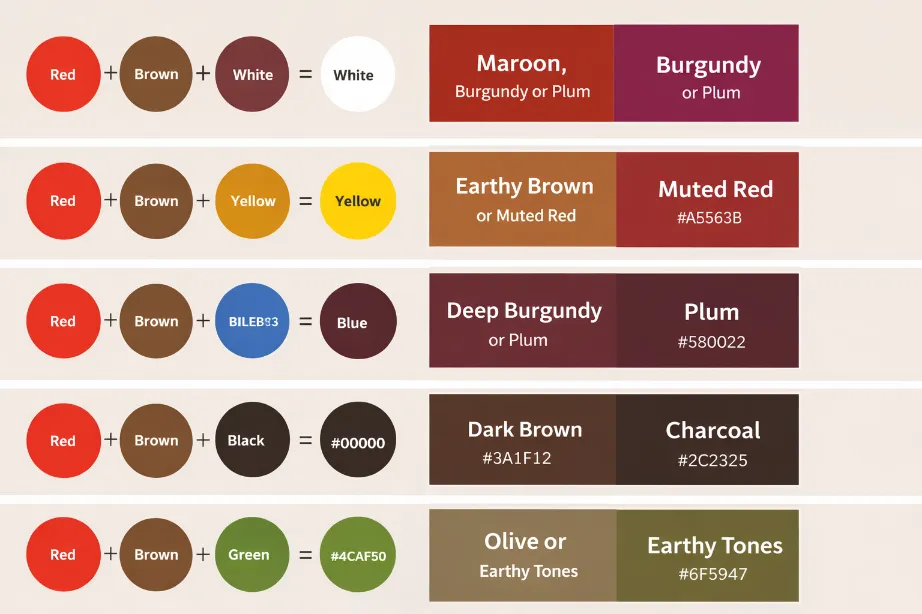
One of the most exciting things about mixing red and brown is that when combined with other colors, the possibilities are endless. The mix can adapt to different tones depending on the additional colors you add. Let’s take a look at what happens when red and brown are mixed with additional pigments:
Red + Brown + White = Maroon, Burgundy, or Plum
Adding white to red and brown lightens the mixture, turning it into softer, more refined tones. The result can range from maroon to burgundy or even plum, all of which are elegant, sophisticated colors perfect for formal wear, interior design, or luxury brands.
Red + Brown + Yellow = Earthy Brown or Muted Red
Mixing yellow with red and brown neutralizes the warm tones, creating an earthy brown or a more muted version of red. This combination works well for backgrounds, shadows, or designs that need a more subtle, natural color.
Red + Brown + Blue = Deep Burgundy or Plum
When blue is added to red and brown, the result is a cooler, deeper tone like burgundy or plum. This mix is ideal for creating rich, luxurious colors that work well in fashion, interior design, and branding.
Red + Brown + Black = Dark Brown or Charcoal
By adding black to red and brown, the result is a very dark color, often resembling charcoal or a deep brown. This combination creates a moody or dramatic effect, often seen in grunge fashion, abstract art, or high-contrast design.
Red + Brown + Green = Olive or Earthy Tones
Adding green to red and brown can neutralize the mixture, turning it into earthy tones like olive or a dark brownish-green. This combination works well for designs that want to convey a sense of nature, outdoors, or sustainability.
Common Mistakes When Mixing Red and Brown
While mixing red and brown is relatively simple, there are a few common mistakes people make when combining these colors. Understanding these can help you achieve the perfect shade without any mishaps.
Adding Too Much Brown
One of the most common mistakes when mixing red and brown is adding too much brown. If you use an excessive amount of brown, the resulting color can become dull and muddy, losing the vibrancy that red typically provides. To avoid this, add brown slowly and in small amounts to control the outcome.
Not Testing the Mix
Before applying the mix to a larger surface or project, it’s important to test it on a small sample. Red and brown can look different once dried, and you want to ensure that the result is exactly what you expect. Testing helps prevent surprises and gives you the chance to adjust the proportions before committing to a larger area.
Ignoring Lighting
The lighting in the environment can significantly affect how the red and brown mix will appear. What might look like a rich maroon in daylight could appear almost black under artificial lighting. If you’re mixing red and brown for interior design or fashion, make sure to consider how the colors will look under the lighting conditions where they will be used.
Tips for Mixing Red and Brown in Paint
If you’re working with paint and want to create the perfect red-brown shade, here are some helpful tips to guide you:
Start Slow
When mixing red and brown in paint, start by adding small amounts of brown to red. It’s always easier to darken the color gradually than to lighten it once it’s too dark. Slowly increase the amount of brown until you reach the shade you desire.
Test on a White Surface
Before applying your mixture to a larger canvas or project, test it on a small, white surface. Paint tends to look darker when it dries, so testing ensures you get an accurate sense of the color once it’s applied.
Use High-Quality Paints
For the best results, use artist-grade paints that mix smoothly and predictably. Cheap paints often contain fillers that can alter the outcome of your color mix. Higher-quality paints provide more accurate results and are easier to work with.
Add White for Softer Tones
If the color you’ve created is too dark or heavy, consider adding a little white to lighten it. White will help soften the red and brown mixture, creating shades like plum, burgundy, or maroon. This is ideal if you need a more subtle and elegant look.
Consider the Lighting
The final color can look very different under various types of lighting. Before committing to your color mix, test it under both natural light and artificial light to ensure it maintains its vibrancy and warmth in different settings.
How to Use Red and Brown Together in Design
When it comes to using red and brown together in design, the combination is often employed to create warmth, depth, and sophistication. These colors work well in a variety of creative fields, from interior design to fashion and branding. Let’s explore how you can incorporate red and brown into your designs for maximum impact.
Interior Design
In interior design, red and brown can be used to evoke coziness and luxury. These colors are ideal for creating warm, inviting spaces, especially in the living room, bedroom, or office. Here’s how you can use them:
- Accent Walls: A red accent wall paired with brown furniture or décor can create a bold, dynamic look. This combination adds sophistication to spaces while maintaining a warm, inviting feel.
- Furniture and Textiles: Mixing red cushions, brown sofas, or red rugs on brown hardwood floors adds richness and texture to the room. Use these colors in varying intensities to balance boldness and subtlety.
- Lighting: Use warm lighting to complement the earthy tones of red and brown. Soft, ambient lighting helps bring out the richness of these colors, making the space feel cozy and welcoming.
Red and brown also work beautifully in rustic or traditional interior styles, where they evoke a natural, earthy feel. For example, combining wooden furniture with red upholstery can give the room a sense of comfort and warmth.
Fashion
In fashion, red and brown can be used to create a bold, yet natural look. Whether in fall collections or winter wear, these two colors work beautifully together. Here are some ways you can style them:
- Outerwear: Pair a brown leather jacket with a red scarf for a stylish fall look. This combination gives off a sophisticated and earthy vibe, perfect for the cooler months.
- Accessories: A red bag or red shoes paired with brown outfits creates a striking contrast without feeling too bold. It’s a great way to add pop to an otherwise neutral outfit.
- Patterns: For a unique look, consider mixing red and brown plaid patterns in scarves, shirts, or dresses. The mix of these two colors in patterns adds texture and interest to the design.
Red and brown are versatile and can be used to create luxurious, natural, or bold looks, depending on how they are styled together. From vibrant red tops paired with brown skirts to earthy brown coats with red accessories, this combination offers endless possibilities.
Art and Painting
In art, red and brown can add depth and warmth to your pieces, whether you’re painting landscapes, portraits, or abstract designs. The earthy tones of red and brown are often used to represent nature, wood, leather, and earth.
- Landscapes: In landscape painting, red and brown are commonly used to create autumn scenes, desert landscapes, or rustic settings. The deep tones of red and brown work beautifully to evoke the feeling of nature and earthiness.
- Portraits: In portraiture, red and brown are used to depict skin tones, especially in realistic art. The chestnut or auburn hair colors are achieved by mixing red and brown, giving a natural look.
- Abstract Art: Red and brown are often used in abstract art to create dramatic, textured effects. The contrast between the boldness of red and the earthiness of brown can convey emotion, depth, and movement.
Whether you’re working with oils, watercolors, or acrylics, red and brown create dynamic, vibrant compositions. The mixture of these two colors allows for endless possibilities, adding a layer of richness and sophistication to your artwork.

Real-Life Examples of Red and Brown Mixing in Art and Design
Fashion
The combination of red and brown is often seen in high-end fashion collections. Luxury designers like Chanel and Gucci have used these tones in their fall and winter collections to create a timeless, elegant look. Red and brown are also used in streetwear and casual fashion, offering a bold yet warm aesthetic.
For example, a red scarf paired with a brown leather jacket creates a dynamic, eye-catching outfit, while burgundy and brown boots are the perfect match for fall fashion.
Interior Design
Red and brown are commonly used in modern and traditional interior design. Red and brown furniture pieces can transform a space into something that feels cozy, elegant, and sophisticated. In luxury interiors, these colors are often used to create a warm, welcoming atmosphere.
For instance, in a living room, brown leather sofas paired with red throw pillows can create a balanced, luxurious look. Red walls with brown accent pieces like wooden furniture or textiles can make any room feel inviting and stylish.
Branding
Many companies use red and brown in their branding to evoke luxury, warmth, and earthiness. Brands that focus on organic or natural products, like coffee or chocolate companies, often use brown to convey their connection to nature. Meanwhile, red is used to symbolize energy, passion, and excitement, which appeals to consumers emotionally.

Conclusion
Mixing red and brown makes warm, earthy colors. Instead of getting a bright new color, you usually get deeper shades like reddish-brown, rust, maroon, burgundy, or mahogany. The final color depends on how much red or brown you use. If you add more brown, the color becomes darker and softer. If you add more red, the mix looks a little brighter and warmer.
Brown already contains red and other dark colors, so when you mix it with red, the result becomes rich and deep rather than bold and bright. These colors are often used to create a cozy and natural feeling.
In home design, red and brown can make a room feel warm and comfortable. In fashion, they are popular in fall and winter outfits. Artists also use these shades in paintings to show wood, earth, or autumn scenes. Overall, red and brown together create beautiful, warm tones that are easy to use in many creative projects.
FAQs
What color do red and brown make when mixed?
Mixing red and brown creates earthy, muted shades like rust, maroon, and burgundy.
Does red and brown make what color in hair?
Yes, red and brown mixed in hair dye create shades like auburn, chestnut, or copper.
What happens when you add white to red and brown?
Adding white lightens the mixture into shades like plum, burgundy, or maroon.
Can I make red from brown?
No, brown is a neutral color and cannot be used to create red.
How do red and brown create contrast in art?
The mix of red and brown creates a natural, earthy contrast, often used to evoke warmth or depth in artwork.
Can red and brown be used for branding?
Yes, these colors are often used for luxury brands or rustic-themed brands to evoke a sense of elegance or warmth.
Is red and brown used in autumn fashion?
Yes, red and brown are staples of fall fashion, creating warm, sophisticated looks.
Can I mix red and brown for darker tones?
Yes, more brown will result in darker, richer tones like chocolate brown or mahogany.
What happens if I add yellow to red and brown?
Adding yellow can neutralize the mixture, often turning it into muddy or earthy brown tones.
How do red and brown work in print design?
Red and brown are often used in print design for natural, earthy tones that convey stability and warmth.
How does red and brown work in interior design?
In interior design, red and brown create a cozy and inviting space, perfect for living rooms and bedrooms.
What color does red, brown, and green make when mixed?
Mixing red, brown, and green creates earthy olive tones, ideal for nature-based designs.