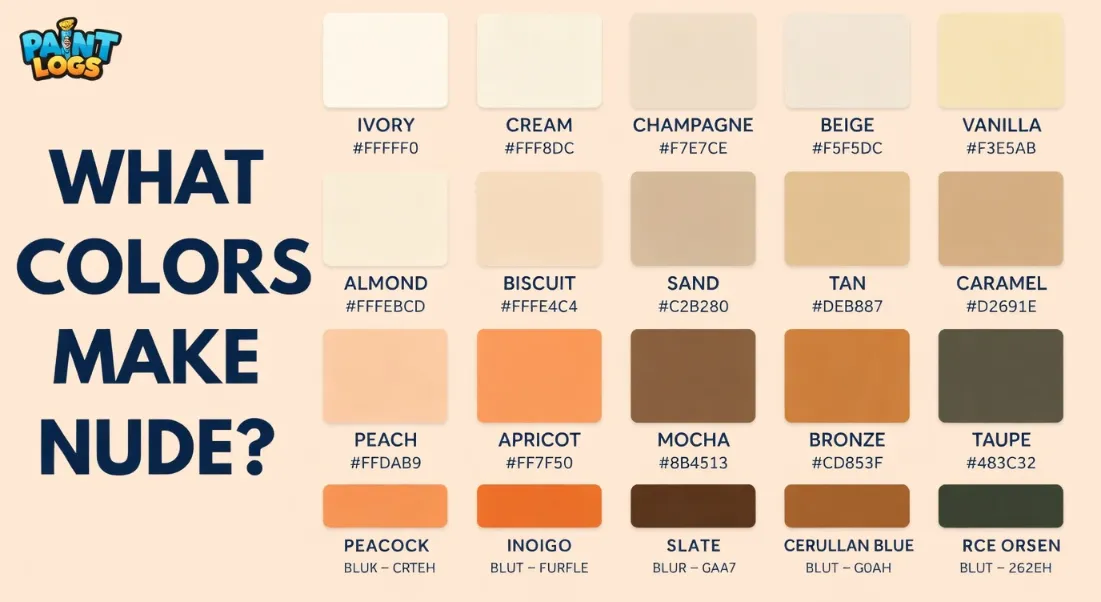
How to make nude color is one of the most searched questions in portrait painting, and one of the trickiest to get right. Too much red and it turns pink. Too much yellow and it goes orange. Too much white and it looks chalky and flat. Lean too hard on any one pigment, and you lose the warmth that makes skin look alive.
This guide covers exactly what colors make nude across every painting medium, acrylic, oil, and watercolor, with mixing charts, step-by-step recipes, shade breakdowns from pale flesh to deep mocha, and tips for mixing shadows and highlights that actually work.
Whether you call it nude, flesh tone, or skin tone, the mixing logic is the same. Let’s get into it.
What Colors Make Nude?
Red + Yellow + White + a touch of Blue = Nude
That is the core formula. Here is the logic behind it:
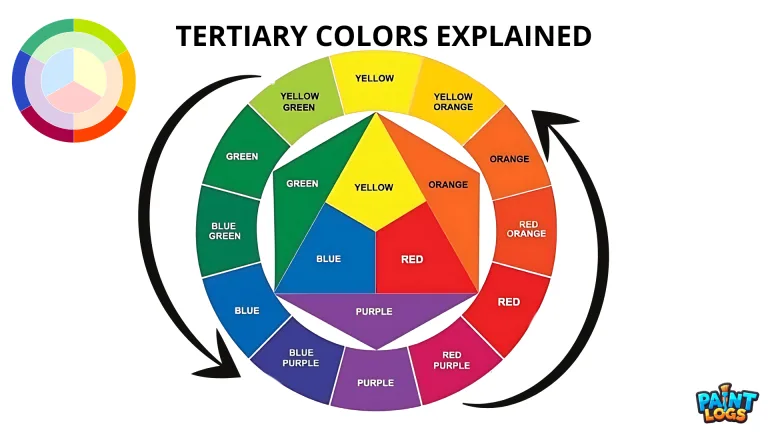
Red and yellow together make orange. Orange is too saturated and warm to read as skin on its own. When you add titanium white to lighten it, you get peach. When you add a tiny amount of blue or burnt sienna to desaturate (neutralize) the orange, the color settles into a warm neutral, nude.
That desaturation step is what most beginners skip. It is the difference between a paint mix that looks like a cartoon and one that looks like real skin.
In color theory terms, nude sits in the warm neutral zone. It has just enough warmth from the red and yellow to feel natural, and just enough neutralization from blue or brown to stop it from being a saturated hue.
The Best Limited Palette for Mixing Nude Colors
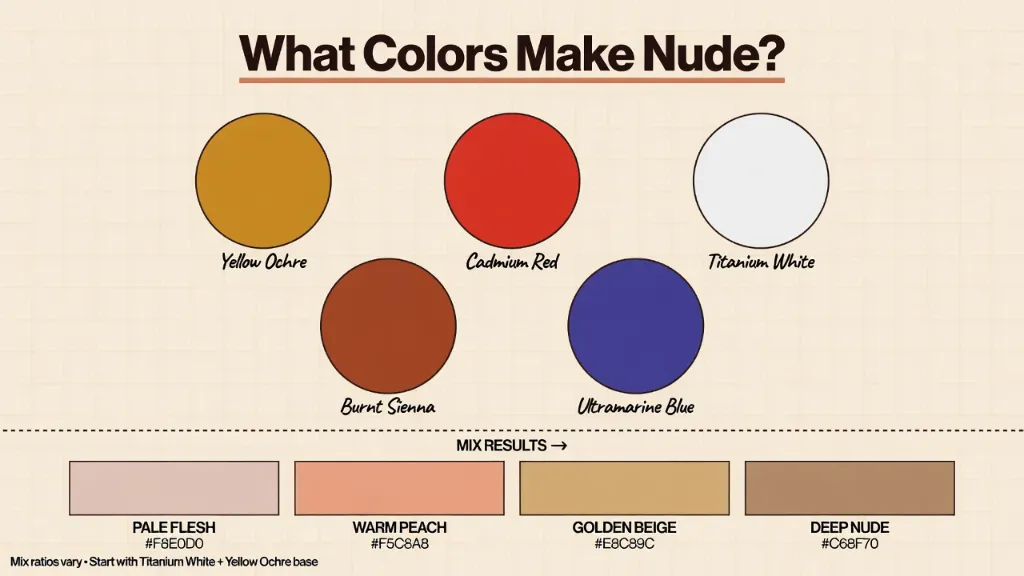
You do not need a full paint set to mix every nude shade. These five colors cover the entire range from pale flesh to deep skin tone:
- Titanium White — lightens and controls opacity
- Yellow Ochre or Cadmium Yellow Light — provides warmth and golden base
- Cadmium Red Light or Alizarin Crimson — adds pink and warmth
- Burnt Sienna or Burnt Umber — deepens and desaturates naturally
- Ultramarine Blue or Phthalo Blue — neutralizes orange, creates shadows
With just these five pigments you can mix any nude variation — light, dark, warm, cool, peachy, rosy, golden, or muted. Everything else is ratio control.
Nude Color Mixing Chart for Painters
| Nude Shade | What Colors Make It |
|---|---|
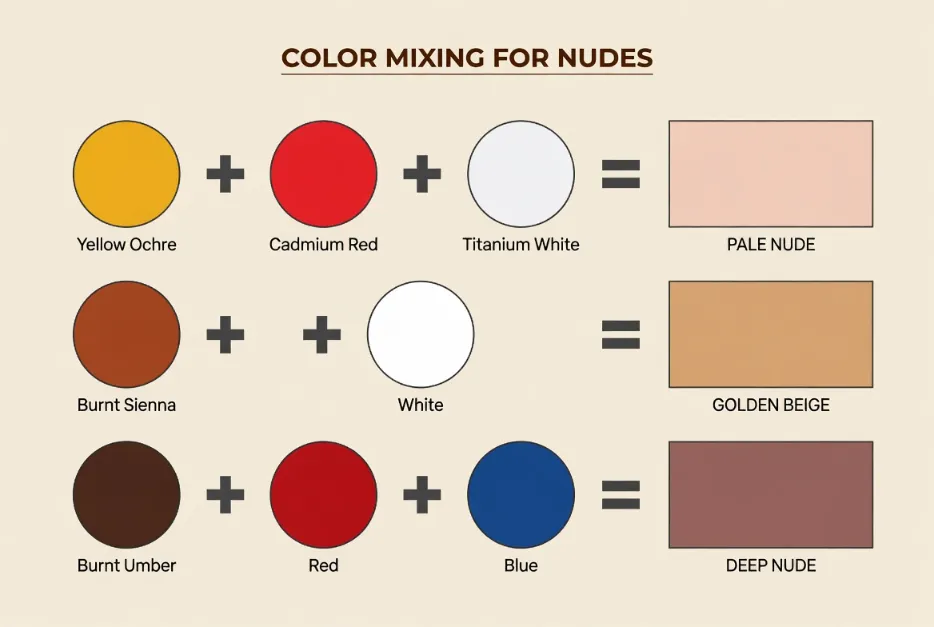
| Light / Pale Flesh | Yellow Ochre + Small Cadmium Red + Lots of Titanium White |
| Warm Peach Nude | Cadmium Yellow + Cadmium Red + White + Touch of Blue |
| Golden Beige Nude | Yellow Ochre + Burnt Sienna + Titanium White |
| Rosy / Blush Nude | Alizarin Crimson + Yellow Ochre + White + Tiny Blue |
| Neutral Beige Nude | Burnt Sienna + Titanium White + Touch of Yellow Ochre |
| Medium Sand Nude | Yellow Ochre + Cadmium Red + Burnt Sienna + White |
| Cool Nude | White + Yellow Ochre + Tiny Alizarin Crimson + More Blue |
| Caramel Flesh Tone | Burnt Sienna + Cadmium Red + Yellow Ochre + Less White |
| Deep / Dark Nude | Burnt Umber + Red + Yellow + Small Blue + Less White |
| Toasted / Earthy Nude | Burnt Umber + Yellow Ochre + Alizarin Crimson + White |
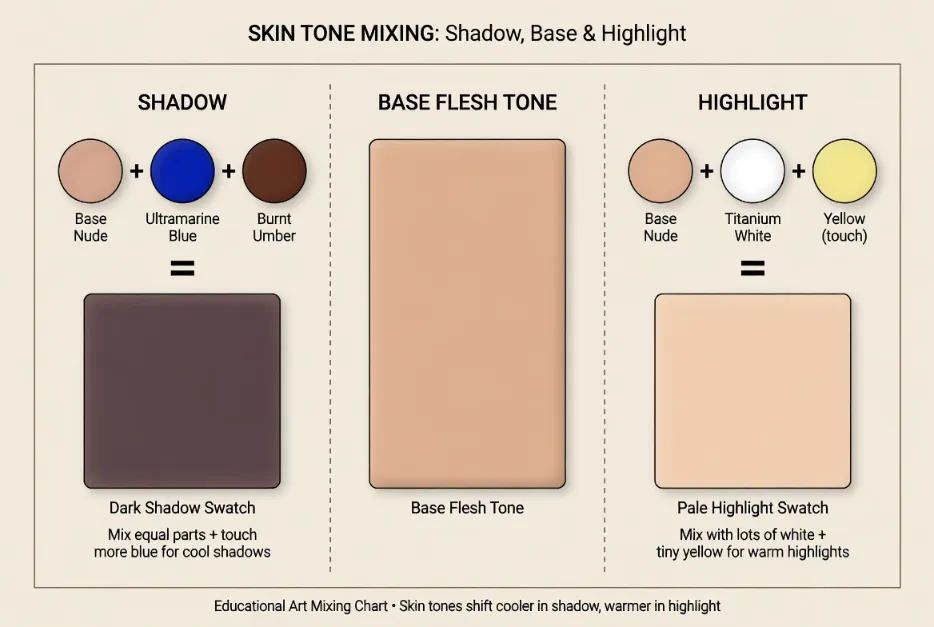
| Shadow Flesh | Base Nude + Ultramarine Blue + Burnt Umber |
| Highlight Nude | Base Nude + More Titanium White + Touch of Yellow |
How to Make Nude Color Step by Step
This is the standard method that works in acrylic, oil, and gouache.
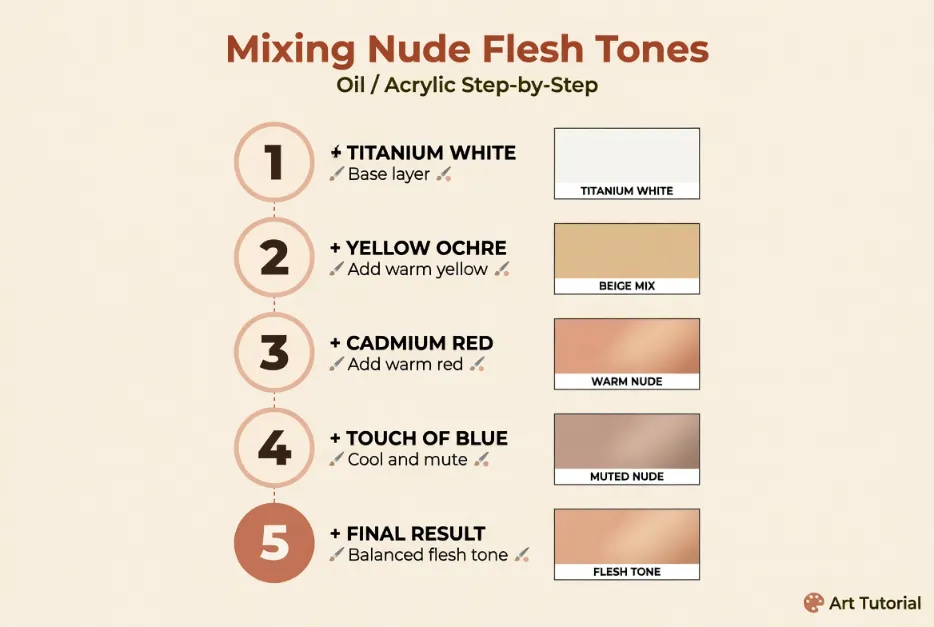
Step 1 — Start with white Squeeze a generous amount of titanium white onto your palette. Always start with white. Adding dark color to a white base is far easier to control than trying to lighten a dark mix.
Step 2 — Add yellow ochre Mix in yellow ochre to push the white into a warm beige base. Yellow ochre is earthy and pre-desaturated, which makes it ideal for flesh tones — it will not pull your mix into neon territory.
Step 3 — Add a small amount of red Add a tiny amount of cadmium red light or alizarin crimson. Mix thoroughly. This shifts the beige toward a warm skin-like nude. Add less than you think you need — red is strong.
Step 4 — Desaturate with blue or burnt sienna This is the step most beginners skip. Add a very small touch of ultramarine blue or burnt sienna to knock back the orange brightness. The mix will immediately settle into a more believable, muted skin tone.
Step 5 — Test and adjust Test on scrap paper, let it dry slightly, and adjust. Nude colors shift as they dry — especially in acrylics, which dry 10–15% darker. Mix your target shade slightly lighter than you want the final result.
How to Mix Every Nude Shade
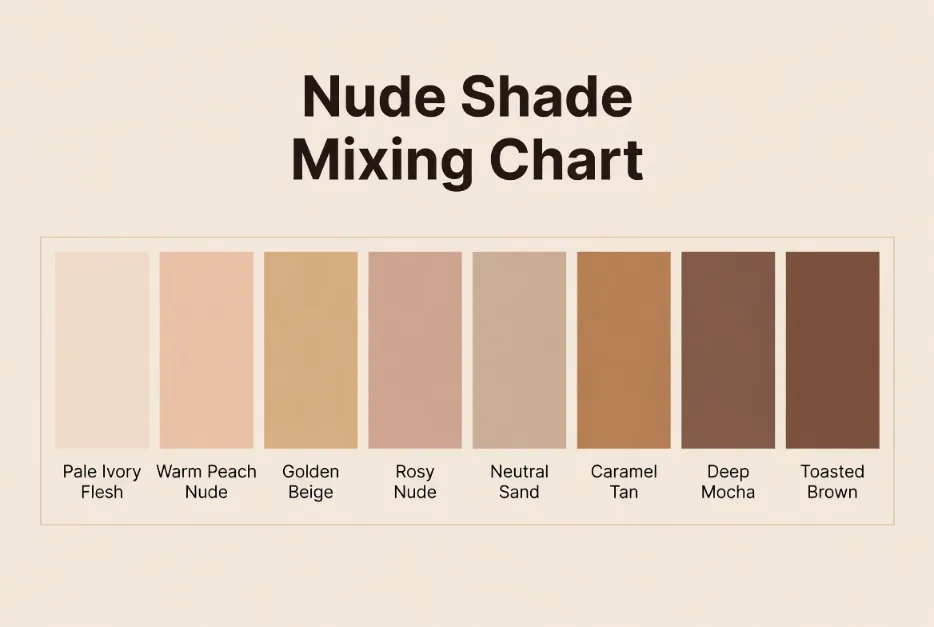
How to Make a Light / Pale Nude
Mix yellow ochre with a very small amount of cadmium red, then add a generous amount of titanium white. The result is a soft, pale flesh tone. For a cooler, pinker pale nude, use alizarin crimson instead of cadmium red and add a tiny touch of ultramarine blue. This shade works well for light complexion portraits, background skin tones, and fabric highlights.
How to Make a Warm Peach Nude
Mix cadmium yellow light with cadmium red to create a clean orange base, then add titanium white until you reach a peachy nude. The key is adding a tiny touch of blue at the end to knock the orange brightness down just enough. Without that step, the result stays too vivid and reads as orange rather than skin.
How to Make a Golden Beige Nude
Mix yellow ochre with burnt sienna and lighten with titanium white. The burnt sienna does the desaturation work naturally — it adds warmth and depth without pushing the mix toward orange. Add more yellow ochre for a brighter golden result, more burnt sienna for a deeper, earthier tone. This shade is one of the most versatile in portrait painting and works across a wide range of complexions.
How to Make a Rosy / Blush Nude
Use alizarin crimson as your red, paired with yellow ochre and titanium white. Alizarin has a cooler, more violet undertone than cadmium red, which creates a rosier, cooler nude rather than a warm peachy one. Add a tiny amount of ultramarine blue to push it even cooler. This shade reads as fair to medium skin with pink or rosy undertones — common in Northern European complexion reference.
How to Make a Deep / Dark Nude
Start with burnt umber as your base rather than white. Add cadmium red and yellow ochre to warm it, then mix in a small amount of ultramarine blue to control the undertone. Use much less white than lighter shades — just enough to lift the value slightly. The result is a rich, warm deep nude that works for medium-to-dark complexions without going muddy. Adding more blue shifts it cooler; more red pushes it warmer.
How to Make a Shadow Color for Skin
Never use black to darken flesh tones. Black kills the warmth and flattens the mix into a cold, lifeless gray that reads as completely artificial in portrait work.
Instead, add ultramarine blue and burnt umber to your base nude mix. These two together create a natural, dark neutral that holds the warmth of the skin tone while still reading as shadow. The ratio depends on how deep you need the shadow — but a general rule is one part burnt umber to half a part ultramarine blue added to your base mix.
How to Make a Highlight Color for Skin
Add more titanium white to your base nude and a small touch of yellow to keep the highlight warm. Cold white highlights look like chalk on skin — the yellow addition keeps the highlight reading as light catching the surface rather than a flat overlay.
Warm vs. Cool Nude Undertones
Every skin tone has an undertone — warm, cool, or neutral. Matching that undertone is what makes a skin mix look realistic rather than artificial.
Warm undertones pull toward yellow and gold. Mix more yellow ochre or cadmium yellow into your nude base. These mixes work well for olive skin, sun-tanned complexions, and Asian and Latin skin references.
Cool undertones pull toward pink and blue-gray. Use alizarin crimson instead of cadmium red, and add slightly more ultramarine blue to your mix. These work for fair complexions with visible pink or bluish veins and Northern European skin references.
Neutral undertones balance both. Burnt sienna is your best tool here — it sits naturally between warm and cool and requires minimal adjustment in either direction.
How to Mix Nude in Different Mediums
Nude Color Mixing in Acrylic Paint
Acrylic is the most common medium for nude mixing. The basic formula applies directly — yellow ochre, cadmium red, titanium white, with blue or burnt sienna for desaturation. The one important adjustment: acrylics dry darker than they appear wet. Always mix your nude slightly lighter than your target shade and test a dry swatch before committing to your final work. Use a wet palette or palette seal to keep your mixes fresh while working.
How to Mix Flesh Tones in Oil Paint
Oil paint gives you far more blending time, which makes flesh tone mixing more forgiving. The same pigments apply — yellow ochre, cadmium red, burnt sienna, titanium white, ultramarine blue — but the colors stay workable on the canvas much longer, allowing you to blend directly without hard edges. Oils also tend to stay richer and more saturated than acrylics. If your nude looks too vivid in oil, add a small amount of burnt umber to mute it. Do not use white to mute oil paint — it makes flesh tones look milky.
Nude Color Mixing in Watercolor
Watercolor requires a different approach because you are working with transparent layers rather than opaque pigments. Start with a light, watery wash of yellow ochre and a small amount of cadmium red. Build depth through layering — each glaze adds warmth and darkness without losing luminosity. For shadows, glaze a thin wash of ultramarine blue over a dried nude base rather than mixing shadow into a single color. This produces the translucent quality that makes watercolor skin tones look natural. Never add white to lighten watercolor — use more water and let the white of the paper show through.
Acrylic Paint Color Mixing Chart for Beginners: Nude Edition
If you are new to color mixing, this three-step system gives you a reliable starting point for every nude shade:
Step 1 — Choose your base:
- Light nude → Start with titanium white
- Medium nude → Start with yellow ochre + white
- Deep nude → Start with burnt sienna or burnt umber
Step 2 — Add warmth:
- More red → pinker, rosier result
- More yellow → golden, warmer result
- More burnt sienna → earthy, muted result
Step 3 — Adjust and refine:
- Too orange? Add a touch of blue
- Too pink? Add more yellow
- Too chalky? Add more yellow ochre, reduce white
- Too muddy? Start fresh — keep to three colors maximum
Common Mistakes When Mixing Nude Colors
Using black to darken Black pulls flesh tones into cold, flat territory. Use ultramarine blue and burnt umber instead. They darken while preserving the warmth and life of the mix.
Adding too much white White cools and flattens nude colors quickly. Add it gradually and compensate with a touch of yellow ochre to keep the warmth alive.
Skipping the desaturation step Mixing red and yellow gives you orange or peach — not nude. The small amount of blue or burnt sienna that neutralizes the mix is the step that makes it read as actual skin rather than a bright, saturated hue.
Using too many pigments Nude is a clean mix when you use three to four colors. Add a fifth or sixth and the result usually goes muddy. Keep it simple and adjust within a tight palette.
Not testing on scrap first Skin tones look completely different wet versus dry, especially in acrylics. Always test a small amount on scrap paper and let it dry before committing to your canvas.
Nude Color Names and Shade Reference for Painters
These are the most useful shade names when building a flesh tone mixing vocabulary:
- Light Nude / Pale Flesh
- Warm Peach Nude
- Golden Beige Nude
- Rosy Nude / Blush Flesh
- Neutral Beige Nude
- Medium Sand Nude
- Caramel Flesh Tone
- Deep Mocha Nude
- Earthy Taupe Nude
- Toasted Nude
- Base Flesh Tone
- Shadow Flesh
- Highlight Nude
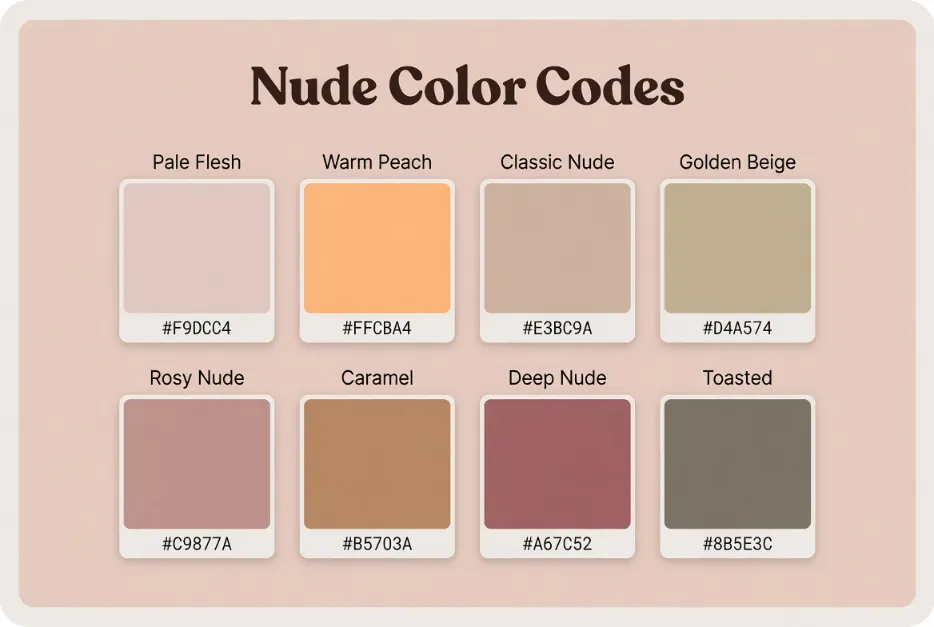
Each of these maps directly to a mixing recipe in the chart above. Use them as reference points when planning a portrait palette or working through a full range of complexions in one piece.
Nude Color Hex Codes for Digital Reference
| Shade | HEX | RGB |
|---|---|---|
| Pale Flesh | #F9DCC4 | RGB(249, 220, 196) |
| Warm Peach Nude | #FFCBA4 | RGB(255, 203, 164) |
| Classic Nude | #E3BC9A | RGB(227, 188, 154) |
| Golden Beige | #D4A574 | RGB(212, 165, 116) |
| Rosy Nude | #C9877A | RGB(201, 135, 122) |
| Caramel Flesh | #B5703A | RGB(181, 112, 58) |
| Deep Nude | #A67C52 | RGB(166, 124, 82) |
| Toasted Nude | #8B5E3C | RGB(139, 94, 60) |
| Shadow Flesh | #6B3F2A | RGB(107, 63, 42) |
These codes are useful for matching physical paint mixes to digital references in Procreate, Photoshop, or Figma.
Conclusion: What Colors Make Nude?
Nude is built from red, yellow, white, and a neutralizing touch of blue or brown. Start with white, add yellow ochre for warmth, introduce red in small increments, then desaturate with blue or burnt sienna until the mix settles into a true skin-like neutral.
The exact shade you land on depends on ratios. More yellow pulls the mix golden. More red makes it rosier. More blue cools it toward gray. More burnt umber deepens it for darker complexions. There is no single nude — there is a system, and once you understand it, you can mix any flesh tone you need from a five-color palette.
Use our Color Mixing Tool to preview combinations before mixing on your palette.
FAQs
What two colors make nude?
Red and yellow make orange. Dilute that orange with titanium white and add a small touch of blue or burnt sienna to desaturate it — the result is nude. That three-step process is the foundation of every flesh tone mix.
How do you make nude color in acrylic paint?
Mix yellow ochre with a small amount of cadmium red, then lighten with titanium white. Add a tiny touch of ultramarine blue or burnt sienna to mute the orange and settle the mix into a true nude. Start with white and add color gradually for better control.
What colors make a pale or light nude?
Yellow ochre, a very small amount of cadmium red, and a generous amount of titanium white. For a cooler, pinker pale nude, swap cadmium red for alizarin crimson and add a tiny amount of ultramarine blue.
How do you mix a deep nude for dark skin tones?
Start with burnt umber instead of white. Add cadmium red and yellow ochre for warmth, then a small amount of ultramarine blue to control the undertone. Use much less white than lighter mixes — just enough to lift the value slightly without making the tone look ashy.
Why does my nude color look muddy?
Usually the result of using too many pigments or adding black. Keep your mix to three or four colors. Use ultramarine blue and burnt umber instead of black for darkening — black removes warmth and flattens the mix.
What is the difference between nude and flesh tone?
They refer to the same color family. Flesh tone is the traditional painting term; nude is more commonly used in design and fashion. Both describe warm neutrals that approximate human skin color across a range from pale to deep.
How do you mix shadows for skin tones?
Add ultramarine blue and burnt umber to your base nude mix. Never use black alone — it kills the warmth. The blue-brown combination creates a natural, rich shadow that reads correctly against the warmer base flesh tone.
Can you mix nude from just primary colors?
Yes. Red, yellow, and a small amount of blue will give you a muted warm neutral when lightened with white. It will not be as refined as a mix using yellow ochre and burnt sienna, but it works as a starting point when your palette is limited to primaries.
How do you make a warm nude vs. a cool nude?
Warm nude: use more yellow ochre or cadmium yellow and keep blue to a minimum. Cool nude: use alizarin crimson instead of cadmium red and add slightly more ultramarine blue to the mix.
Why do my flesh tones look chalky?
Too much white. Balance it by adding more yellow ochre to reintroduce warmth without darkening the mix. Chalky results are almost always a white-to-pigment ratio problem.
What is the best approach for mixing inclusive skin tones?
Work with a full value range rather than a single nude recipe. Mix a light base, a medium base, and a deep base separately, then blend between them. Use burnt sienna as your bridge color — it transitions naturally across the full spectrum of human skin tones.
Does nude color look different in oil vs acrylic?
Yes. Oils stay richer and more saturated. Acrylics dry 10–15% darker than the wet mix. When mixing nude in acrylics, always go slightly lighter than your target shade and test a dry swatch first.