
What colors make Gray or Grey?? Gray or Grey is made by mixing black and white, or by combining complementary colors such as blue and orange, red and green, or yellow and purple.
Each method creates a slightly different tone—neutral greys from black and white, and richer, more natural greys from color pairs.
Whether you’re working with paint, print, or digital design, learning how to make gray lets you control warmth, coolness, and contrast with precision.
In this guide, we’ll cover every way to mix gray, how to adjust its undertone, and how it behaves in RYB, RGB, and CMYK color systems.
What Two Colors Make Gray?
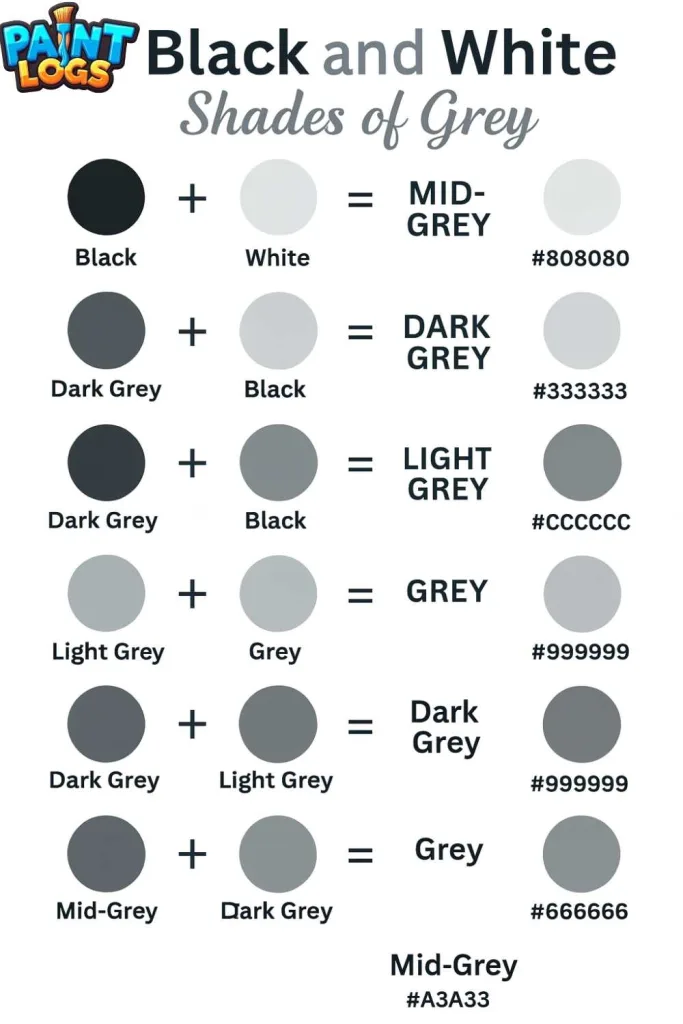
Black + White = Gray
That’s the fastest path to make grey. Mixing black into white creates a neutral, achromatic gray—a perfect balance between dark and light. Add more black for charcoal tones, or more white for silvery mist.
However, if you stop there, you’ll notice something: pure black-and-white grays can feel flat or cold. That’s where color theory steps in.
Artists often mix complementary colors—pairs that sit opposite each other on the color wheel—to make gray that still feels alive:
Blue + Orange → Balanced neutral gray
Red + Green → Cool, industrial gray
Yellow + Purple → Warm, earthy gray
These mixes neutralize saturation and produce chromatic grays—tones that contain subtle hints of color and work beautifully for natural light, stone textures, and realistic shadows.
Mix and match your favorite shades with our Color Mixing Tool—a fast, free way to see what happens when you blend colors online. Discover endless paint and design combinations in seconds.
Color Mixing Tool — Mix Colors Online | Free Color Mixer
0 0 00deg 0% 0%Understanding the Two Types of Gray
1. Achromatic Gray (Neutral)
Made purely from black and white, this gray has no visible undertone. It’s the staple for clean, modern spaces, minimalist design, or black-and-white art studies.
2. Chromatic Gray (Colored)
Formed by mixing complementary colors or the three primaries, chromatic grays carry a slight temperature bias—warm or cool—that makes them more dynamic. These are the grays painters reach for when rendering skin, fabric, or atmosphere.
Warm vs. Cool Grays
Just like every color, gray has temperature:
- Warm grays lean toward red, yellow, or brown. They feel soft, organic, and inviting—think sun-lit concrete or linen.
- Cool grays lean toward blue or green. They read sleek and modern—like steel, fog, or marble.
Even when you use only black and white, your choice of black pigment affects warmth. Ivory Black produces a slightly warm gray, while Lamp Black or Mars Black pushes cooler.
Tip: To fine-tune temperature, add a micro-drop of an actual hue—blue to cool, umber to warm.
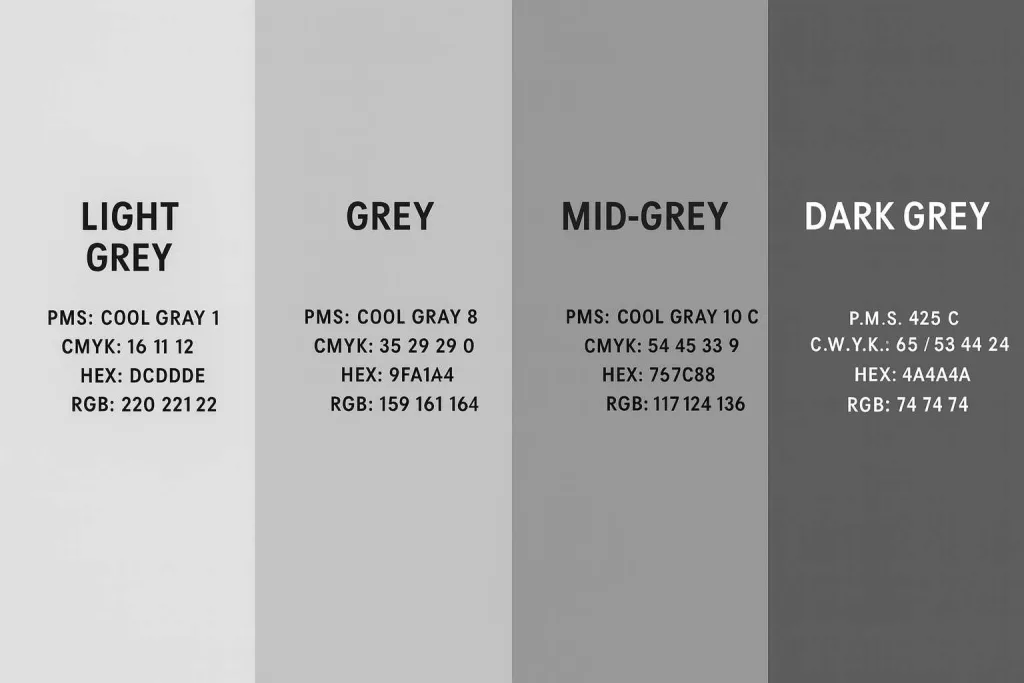
How to Make Grey: Black + White vs Complementary Colors
If you’re asking, “What two colors make grey?” the quick answer is black and white.
But artists and designers know that the best greys often come from color balancing, not just desaturating.
Below you’ll learn the two most common methods: a classic neutral mix (black + white) and a richer, chromatic approach (using complementary colors).
Method 1 – Black and white make Grey
This is the most straightforward way to make grey. It works for interior paint touch-ups, underpainting, or any design that calls for a clean, even tone.
How to Mix a Neutral Grey
- Start with Titanium White.
Always begin with white; black pigments are extremely strong. - Add Black Slowly.
Drop in Mars Black or Lamp Black a tiny bit at a time until you reach the value you want. - Blend Thoroughly.
Uneven mixing leaves streaks that can make the grey look dirty. - Test on Scrap.
Most paints dry slightly darker—check your tone once it’s dry.
Suggested Ratios
| Desired Tone | White | Black |
|---|---|---|
| Light grey | 9 parts | 1 part |
| Medium grey | 7 parts | 3 parts |
| Charcoal | 4 parts | 6 parts |
Adjusting Temperature
Even neutral greys have a bias depending on pigment source:
- Cooler: add a hint of Ultramarine Blue or Payne’s Grey.
- Warmer: add a touch of Burnt Sienna or Raw Umber.
When to Use
- For graphic design backgrounds that need to feel balanced.
- As a base coat in portraits or murals.
- Anytime you need predictable, repeatable color with zero undertone.

Method 2 – Complementary Colors = Chromatic Grey
If you want greys that look natural and alive, use complementary pairs—colors that sit opposite each other on the color wheel.
When mixed, these hues neutralize each other and create subtle undertones impossible to get from black + white alone.
Common Complementary Mixes
| Pair | Result | Notes |
|---|---|---|
| Blue + Orange | Balanced stone grey | Ultramarine + Burnt Sienna gives a soft architectural tone. |
| Red + Green | Cool industrial grey | Alizarin Crimson + Phthalo Green; tweak with white to control depth. |
| Yellow + Purple | Warm earthy grey | Yellow Ochre + Dioxazine Purple; perfect for skin shadows or wood tones. |
Step-by-Step
- Mix small, equal parts of each color.
- Adjust until neither hue dominates.
- Add white to reach your target value.
- Fine-tune: more of one color warms or cools the mix.
Pro Results
- Blue-orange mixes yield neutral greys great for clouds, denim, or stone.
- Red-green mixes produce metallic or concrete-like greys.
- Yellow-purple mixes give soft, natural greys ideal for portrait backgrounds.
Troubleshooting
- Too brown? Add a trace of the cooler color (blue or green) to pull it back toward grey.
- Too dull after adding white? Use Titanium White instead of Zinc White for better opacity.
- Uneven tone? Keep palette knives clean—leftover pigment easily shifts temperature.
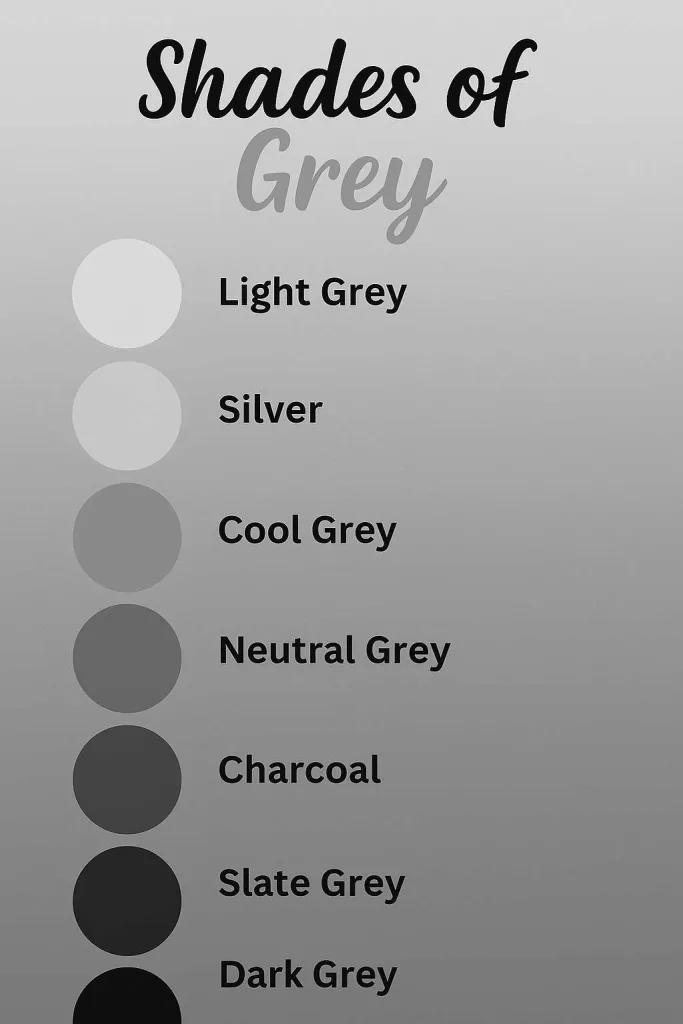
Which Method Should You Choose?
- Use black + white when you want a pure, flat neutral that won’t compete with nearby hues.
- Use complementary colors when you want dimension and realism—especially for skin, metal, wood, or clouds.
Pro Tip: Many professional painters skip tube black entirely and rely on complementary greys; the color harmony blends seamlessly across their entire palette.
What Colors Make Gray from Primary Colors + Warm and Cool Variations
So far you’ve seen how to make grey using black + white and complementary colors.
But what if you don’t have those exact pigments—or you want to mix a more organic tone?
That’s where primary colors come in.
When you mix red, yellow, and blue together in balanced amounts, you neutralize their saturation and get a dark, natural grey.
Add white, and you can control how light or soft it becomes.
Method 3 – Primary Colors (Red + Yellow + Blue)
This method produces a natural, shadow-like grey often used in fine-art painting. Because it’s built from all three primaries, it automatically stays in harmony with the rest of your color palette.
How to Mix a Primary Grey
- Start with equal parts of your three primaries — for example:
- Alizarin Crimson (red)
- Yellow Ochre or Cadmium Yellow Light (yellow)
- French Ultramarine Blue (blue)
- Blend completely. The first result may look brown; that’s normal.
- Add more blue to cool it, or more red/yellow to warm it.
- Add Titanium White slowly to reach your desired value.
Quick Adjustments
| To Create | Add More | Visual Result |
|---|---|---|
| Warm grey | Red or Yellow | Softer, stone-like tone |
| Cool grey | Blue | Slate or storm-sky feel |
| Muted brown-grey | Yellow Ochre | Earthy neutral |
| Steel grey | Ultramarine + touch white | Modern metallic tint |
Pro Tip: Using transparent pigments like Alizarin Crimson or Ultramarine gives cleaner depth. Opaque pigments tend to flatten the color.
Warm vs Cool Greys Explained
Even slight pigment shifts can change how your grey feels. Knowing this helps you build atmosphere and realism.
Warm Greys (Comforting, Natural)
- Base: Yellow Ochre + Cadmium Red + a touch of Blue
- Works for: Skin tones, wood, sandstone, sunlit areas
- Looks like: Beige-grey, taupe, weathered linen
Cool Greys (Clean, Modern)
- Base: Ultramarine Blue + a touch of Alizarin Crimson + Titanium White
- Works for: Metal, clouds, mist, concrete
- Looks like: Steel, pewter, shadow tones
You can fine-tune warmth or coolness by nudging the mix:
- Add a drop of Burnt Sienna to warm.
- Add a hint of Phthalo Blue to cool.
Analogous Greys (Soft Tonal Harmony)
Complementary colors give contrast; analogous colors—those sitting next to each other on the color wheel—produce gentler greys with subtle hue shifts.
These are ideal for smooth gradients, fabric shading, or atmospheric backgrounds.
Examples of Analogous Mixes for Grey:
- Blue + Green + White → Sea-mist grey
- Red + Orange + White → Clay grey
- Yellow + Green + White → Olive-ash grey
Analogous greys stay unified across a piece. They won’t fight the rest of the palette, which makes them perfect for portrait underlayers or minimalist compositions.
Quick Temperature Reference
| Grey Type | Color Bias | Emotional Effect | Common Uses |
|---|---|---|---|
| Warm Grey | Red / Brown / Yellow | Cozy, organic | Interiors, portraits, wood tones |
| Cool Grey | Blue / Green / Violet | Calm, modern | Tech design, metal, stone |
| Neutral Grey | Pure Black + White | Balanced, minimal | Logos, backgrounds, base coats |
Grey in Color Models: RYB, RGB, and CMYK
Grey doesn’t behave the same way in every medium.
In painting, you’re mixing light-absorbing pigments; on a screen, you’re mixing light itself.
That means the way you make grey in RYB, RGB, or CMYK systems changes—sometimes completely.
Here’s how each works and how to translate between them.
The RYB Color Model (Traditional Paint Mixing)
The RYB model—Red, Yellow, Blue—is what artists have used for centuries. It’s the foundation of color theory for paints, dyes, and pigments.
(What colors make grey in painting?) RYB:
- Grey is a secondary neutral, created by balancing complementary pairs or all three primaries.
- To lighten it, add white; to darken, add more pigment or a small amount of black.
| Common RYB Mixes for Grey | Resulting Tone | Notes |
|---|---|---|
| Red + Green | Muted cool grey | Slightly blue bias |
| Blue + Orange | Balanced grey | Great for landscapes |
| Yellow + Purple | Warm grey | Soft and natural |
| Red + Yellow + Blue | Neutral dark grey | Can be lightened with white |
Tip: Painters often build their own “color wheel greys” by premixing these pairs and labeling them warm or cool. This helps maintain harmony across paintings.
The RGB Model (Digital Screens)
The RGB color model—Red, Green, Blue—is used for digital light: phones, monitors, and TVs.
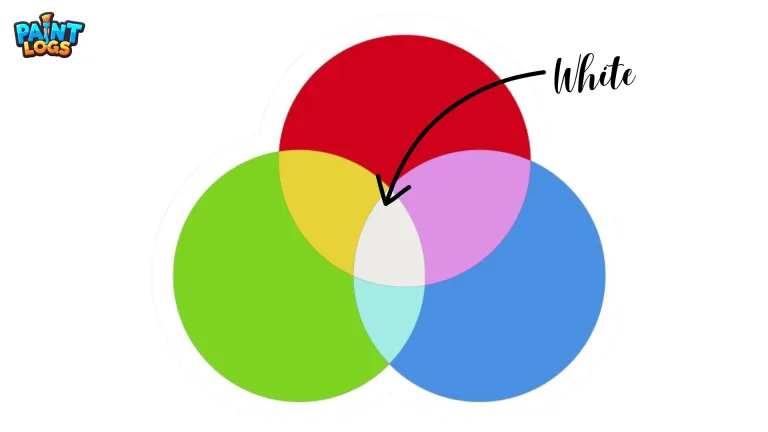
Unlike RYB, grey here is created by balancing equal intensities of all three light colors.
Formula:
Red = Green = Blue → Grey
Examples:
- Light Grey: RGB(200, 200, 200) → HEX #C8C8C8
- Medium Grey: RGB(128, 128, 128) → HEX #808080
- Dark Grey: RGB(64, 64, 64) → HEX #404040
Quick Note:
If one channel is stronger—say, more blue than red—you’ll get a tinted grey (cool or warm). Equal values keep it neutral.
When to Use
- UI and web design: balanced greys improve contrast and readability.
- Digital painting: useful for grayscale sketches before adding color overlays.
The CMYK Model (Printing and Ink)
The CMYK model—Cyan, Magenta, Yellow, Key (Black)—is the standard for printing. It’s a subtractive system, meaning pigments absorb light rather than emit it.
To make grey in CMYK:
- Combine equal parts cyan, magenta, and yellow, then adjust with black (K) to control darkness.
- CMYK(0, 0, 0, 50) → a classic 50% grey
- CMYK(0, 0, 0, 80) → deep charcoal
- CMYK(0, 0, 0, 10) → pale silver
Design Tip:
For crisp, balanced prints, let black ink (K) carry most of the grey. Mixing too much CMY can lead to color shifts or grainy texture.

Comparing RYB vs RGB vs CMYK
| Model | Used In | How Grey Is Made | Best For |
|---|---|---|---|
| RYB | Paints, pigments | Mixing black + white or complements | Traditional art, interior colors |
| RGB | Digital screens | Equal light of red, green, blue | Websites, media, LED lighting |
| CMYK | Print materials | Equal inks + black (K) | Posters, brochures, packaging |
How to Convert Between Systems
If you paint a shade of grey and want to match it digitally or in print, use this quick guide:
| Paint Appearance | RGB (Digital) | CMYK (Print) | HEX Code |
|---|---|---|---|
| Soft Neutral Grey | 190, 190, 190 | 0, 0, 0, 25 | #BEBEBE |
| Cool Steel Grey | 110, 120, 130 | 10, 5, 0, 60 | #6E7882 |
| Warm Stone Grey | 140, 130, 120 | 5, 10, 15, 45 | #8C8278 |
| Dark Charcoal | 50, 50, 50 | 0, 0, 0, 85 | #323232 |
Why These Systems Matter
When you understand how grey behaves in each model:
- You can match brand colors precisely across print and web.
- You can paint digitally with realistic tonal control.
- You can adjust undertones in physical art to photograph accurately.
Each color model speaks its own language—but once you know how to translate between them, your greys will stay consistent everywhere.
Common Mistakes, Practical Uses, and FAQs About Mixing Grey
By now, you know every way to make grey—black and white, complementary pairs, and even primaries.
But before you start mixing, it helps to understand what can go wrong (and how to fix it).
Here are the most common grey-mixing issues artists and DIY painters run into, plus answers to popular questions.
Common Mistakes When Mixing Grey
1. Grey Looks Brown or Muddy
This usually happens when the pigments aren’t true complements or when one color overpowers the other.
Fix: Add a small amount of the opposite hue (for example, a touch of blue to offset too much orange or red). Work in small increments—muddy mixes are hard to reverse.
2. Grey Dries Too Dark
Many paints, especially acrylics, darken slightly as they dry.
Fix: Mix your grey a shade lighter than intended and always test a small swatch first.
3. Flat, Lifeless Grey
Pure black-and-white mixes can feel dull.
Fix: Introduce a hint of a warm or cool hue—Ultramarine Blue for a cooler tone, Burnt Sienna or Raw Umber for warmth.
4. Over-Mixing
If you blend too aggressively, pigments homogenize into mud.
Fix: Mix until combined but leave slight variation for texture and vibrancy.
5. Using Low-Quality White
Zinc White can make greys chalky.
Fix: Choose Titanium White for smoother, consistent results with better opacity.
How Artists and Designers Use Grey
In Painting
Grey helps control color saturation and build contrast. Painters use it for shadows, atmospheric depth, and underpainting layers that balance vibrant hues.
In Interior Design
Warm greys (with beige or taupe undertones) make spaces cozy, while cool greys pair perfectly with glass, metal, and modern décor.
In Digital Design
Grey backgrounds improve focus and allow accent colors—like brand reds or blues—to stand out. Web designers use RGB greys to maintain readability and contrast.
In Photography and Printing
Grey cards are used to balance exposure and ensure true color in post-production or print runs.

Practical Mixing Chart: Shades and Adjustments
| Base Grey | To Lighten | To Darken | To Warm | To Cool |
|---|---|---|---|---|
| Neutral (B+W) | Add white | Add black | Add Raw Umber | Add Ultramarine |
| Blue-Orange Grey | Add white or buff titanium | Add Ultramarine | Add Burnt Sienna | Add Cobalt Blue |
| Red-Green Grey | Add Titanium White | Add Phthalo Green | Add Cadmium Red | Add more green |
| Yellow-Purple Grey | Add Naples Yellow | Add Dioxazine Purple | Add Yellow Ochre | Add Ultramarine Violet |
Conclusion – The Art of Creating Grey
So, what colors make grey in the end?
Grey can come from black and white, complementary colors, or the three primaries—it all depends on the mood you want.
- For clean neutrals, go black + white.
- For realistic depth, use complements.
- For harmony across a palette, rely on primary mixes.
Grey is the unsung hero of color—it balances warmth and coolness, light and dark, emotion and calm. Once you understand how to build it, you can control the tone of any artwork, design, or space.
FAQs
What two colors make grey?
Black and white make a neutral grey. You can also mix complementary pairs—blue and orange, red and green, yellow and purple—for chromatic greys.
Can I make grey without black?
Yes. Combine complementary colors or all three primaries (red, yellow, blue) and lighten with white.
Can I make grey without white?
You can—mix dark complementary pairs like blue and orange, or red and green. The result will be a darker, tinted grey, not pale silver.
Do blue and green make grey?
Yes, if balanced correctly. Blue + green tends to create a cool, oceanic grey once a touch of red or orange is added to neutralize.
Why does my grey look greenish?
It’s leaning too far toward the blue-yellow side of the spectrum. Add a small amount of red or magenta to correct the tone.
How do I make warm vs. cool grey?
Warm grey: add brown, yellow, or red. Cool grey: add blue, green, or purple.
What is the RGB code for neutral grey?
Neutral grey on screen is RGB(128,128,128) or HEX #808080.
How can I make dark charcoal grey paint?
Start with black and add a small amount of white plus a drop of blue for depth.
Can I mix grey food coloring?
Yes. Combine equal parts of black and white food coloring, or blue + orange. Always test—food dyes vary in intensity.