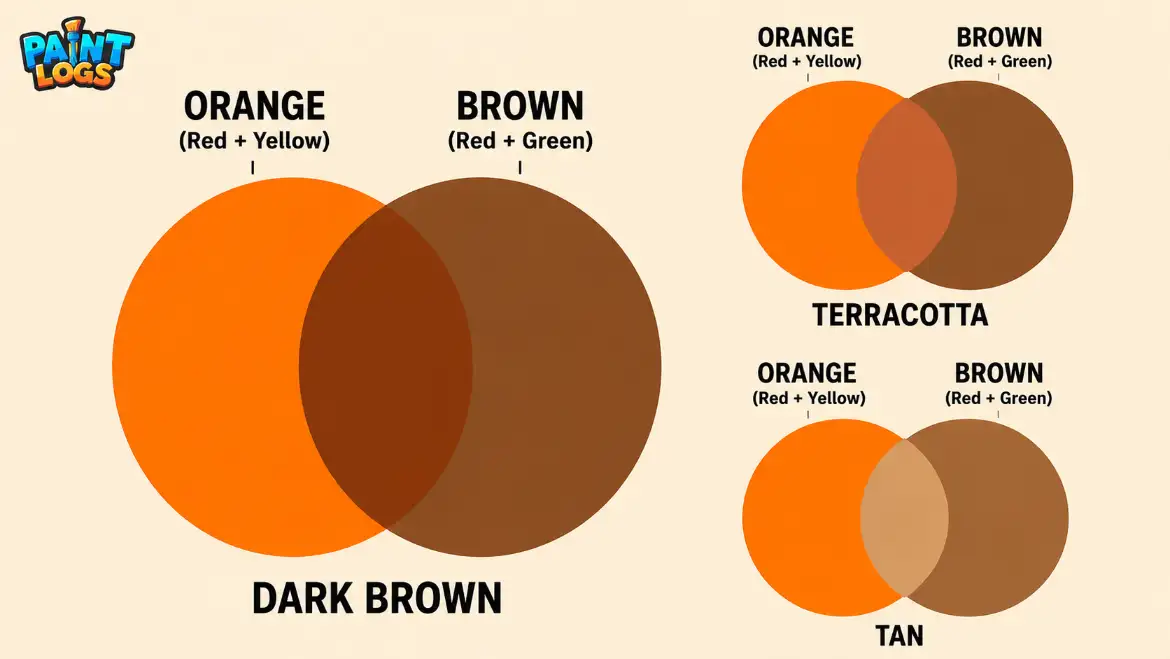
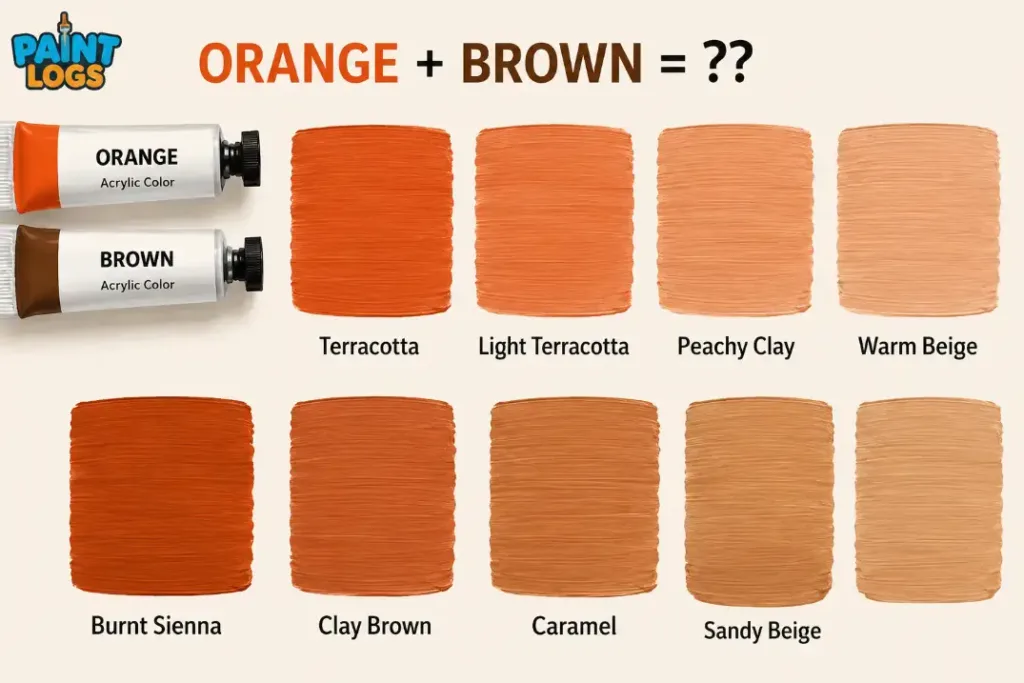
When you mix orange and brown, the result is usually terracotta, a warm, earthy, reddish-brown shade that feels natural, rustic, and rich. In many cases, the mix can also lean toward burnt orange, rust, clay, or a darker brownish-orange, depending on how much of each color you use and the undertones in the original pigments.
Terracotta is one of the most beautiful results you can get from color mixing because it sits right between lively orange and grounded brown. Orange brings warmth, brightness, and energy. Brown tones that brightness down, making it feel more earthy and natural. Put them together, and you get a color that often reminds people of sunbaked clay pots, desert landscapes, autumn leaves, warm brick, and Mediterranean interiors.
That is why so many artists, decorators, and DIY painters love this mix. It is bold without being loud, cozy without being dull, and timeless without feeling flat.
If you have ever wondered what orange and brown make when mixed, the short answer is simple: they usually make terracotta. But the full answer is more interesting, because the final shade can vary quite a bit based on the ratio, medium, pigment strength, and the exact type of orange and brown you start with.
What Color Do Orange and Brown Make?
In most paint-mixing situations, orange and brown make terracotta.
A balanced mix of the two often creates a classic terracotta tone: warm, muted, and slightly reddish-brown. If the orange is strong and vibrant, the result may lean more toward burnt orange. If the brown is darker or cooler, the final color may shift toward a deeper clay brown or dusty rust.
A simple way to think about it is this:
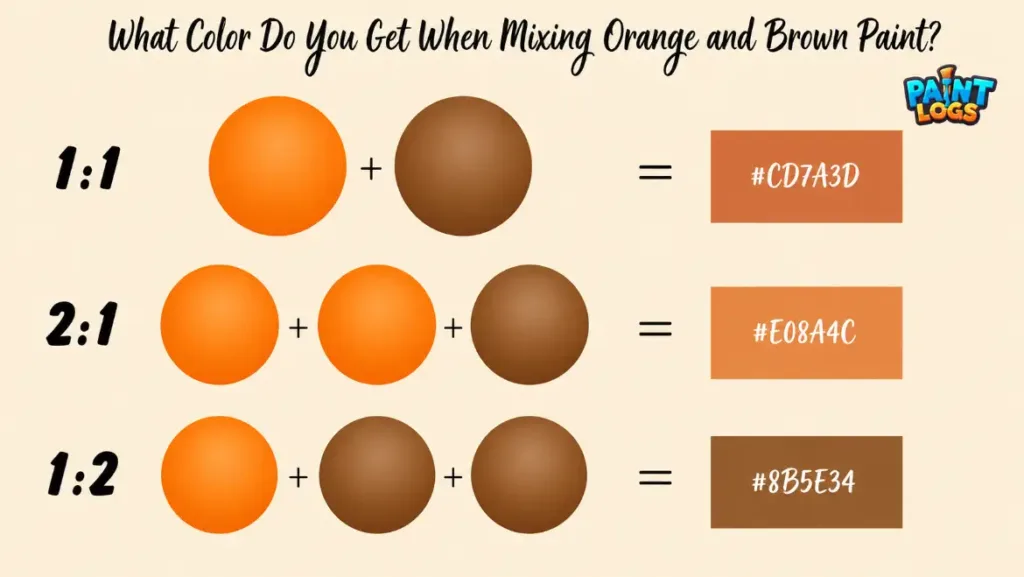
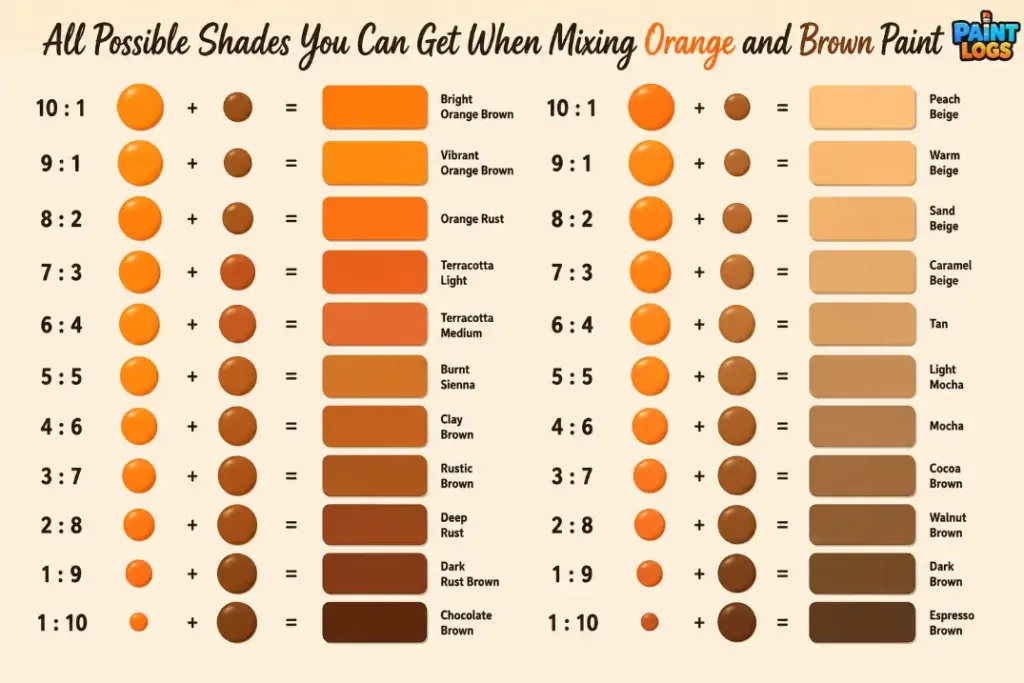
- Equal parts orange and brown usually make terracotta.
- More orange than brown gives you a brighter burnt orange or warm rust.
- More brown than orange creates a deeper clay tone or muted earthy brown-orange.
So while terracotta is the best overall answer, it is really part of a small family of earthy warm shades.
Why Orange and Brown Create Terracotta
Orange is already a warm secondary color. Brown, in many practical mixing situations, behaves like a darkened, muted warm tone. Because both colors live in a similar warm family, mixing them does not create a sharp contrast. Instead, it creates depth.
That is one reason this mix feels so pleasing. You are not combining opposites. You are layering warmth on warmth. Orange provides energy and brightness. Brown adds weight, softness, and realism. The result is a more grounded version of orange — something less vivid, more mature, and far more natural-looking.
This is also why terracotta works so well in art and design. It feels familiar. It resembles clay, pottery, dry soil, brick, adobe walls, and autumn landscapes. It has a connection to real materials people see in everyday life.
If you enjoy earthy paint combinations, you may also like related mixes such as what color do red and brown make mixed and what color does brown and yellow make mixed, both of which can create similarly warm and natural-looking tones.
Is Terracotta the Same as Burnt Orange?
Not exactly, even though the two are very close.
Terracotta is generally more muted, earthy, and clay-like. It usually has a grounded reddish-brown quality.
Burnt orange tends to be a little brighter and more saturated. It still feels earthy, but it holds onto more of orange’s original intensity.
When people search “orange and brown make what, mixed?” they are often trying to identify that earthy middle ground between bright orange and plain brown. Terracotta is the most accurate umbrella answer, while burnt orange is one of the most common versions of that result.
You can think of terracotta as the softer, dustier, more pottery-inspired version, while burnt orange is the stronger, spicier, more vivid cousin.
How the Ratio Changes the Result
The exact amount of each color matters a lot. Even small changes can shift the final result.
1. More Orange Than Brown
If you start with mostly orange and add only a little brown, the color stays lively. This often produces a shade that looks like burnt orange, cinnamon orange, or warm rust. It is still earthy, but brighter and more energetic.
2. Equal Orange and Brown
A near 1:1 mix is where you usually get the most classic terracotta. This is the point where the brightness of orange is balanced by the muted richness of brown.
3. More Brown Than Orange
Once brown becomes the dominant color, the mix deepens fast. The result may look like clay brown, cocoa orange, muted brick, or even a darker umber-like orange-brown.
This is especially true because brown tends to overpower lighter or brighter colors quickly. In paint mixing, a little brown can go a long way.
If you want to understand brown itself better before mixing with orange, read how do you make colour brown. That helps explain why some browns warm up a mix while others make it look muddy or dull.
The Undertone of Brown Matters
One reason two people can mix “orange and brown” and get different results is that not all browns are the same.
A reddish brown will push the mixture toward a warmer terracotta or brick red-brown.
A yellowish brown can create a dusty golden clay shade.
A cooler dark brown can mute the orange more aggressively and create something more subdued or muddy.
That means the final result depends not only on the ratio, but also on the temperature of the brown you choose. Warm browns tend to give the nicest terracotta tones. Cool browns can still work, but they often make the mixture look less vibrant.
The Type of Orange Matters Too
Just as browns vary, oranges vary too.
A bright orange mixed with brown usually gives a stronger burnt-orange style result.
A muted orange mixed with brown often creates a softer, more pottery-like terracotta.
A red-leaning orange will produce a richer rust or adobe color.
A yellow-leaning orange may create a lighter, more dusty clay hue.
So when people ask what orange and brown make, the answer is terracotta — but the exact version of terracotta depends heavily on the starting orange.
To understand how orange shifts based on its ingredients, it also helps to check what color red and orange make mixed and what color do orange and yellow make, since both show how orange changes when it leans warmer or lighter.
What Happens in Paint Mixing?
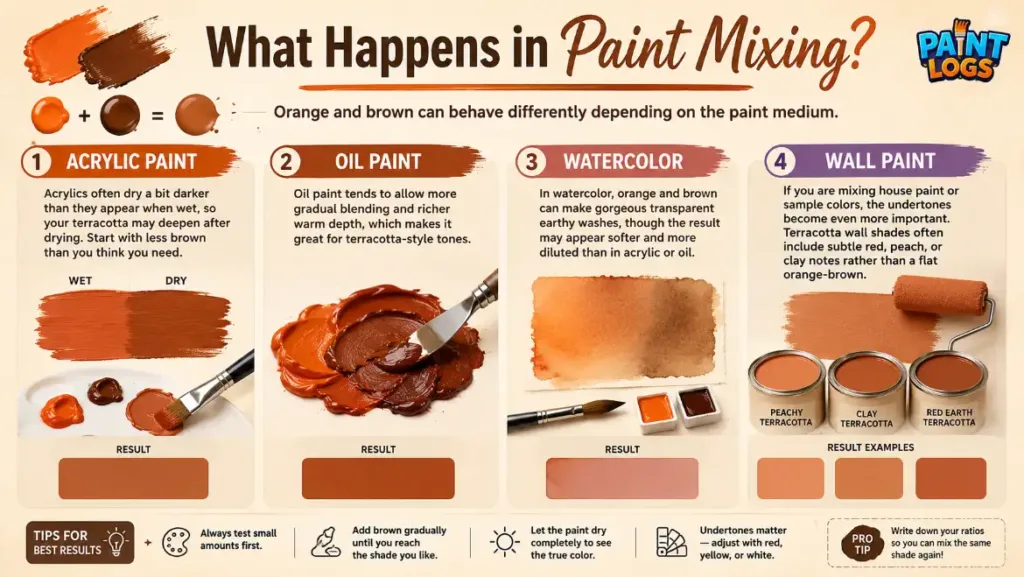
In real paint mixing, orange and brown can behave slightly differently depending on the medium:
Acrylic Paint
Acrylics often dry a bit darker than they appear when wet, so your terracotta may deepen after drying. Start with less brown than you think you need.
Oil Paint
Oil paint tends to allow more gradual blending and richer warm depth, which makes it great for terracotta-style tones.
Watercolor
In watercolor, orange and brown can make gorgeous transparent earthy washes, though the result may appear softer and more diluted than in acrylic or oil.
Wall Paint
If you are mixing house paint or sample colors, the undertones become even more important. Terracotta wall shades often include subtle red, peach, or clay notes rather than a flat orange-brown.
How to Mix a Good Terracotta Shade
If your goal is to intentionally create terracotta, here is a simple process:
Start with orange first. Add brown a little at a time. Brown is usually stronger than orange, so it is easier to darken the mix than to brighten it again.
If the result looks too bright, add a touch more brown.
If it looks too dark or dull, bring it back with more orange.
If you want a softer pastel terracotta, add a little white.
If you want a deeper brick-like shade, add a touch of red.
If the mix becomes muddy, you may need to reset with a cleaner orange rather than continuing to correct it with too many additions.
Common Shades You Can Get From Orange and Brown
Although terracotta is the main answer, here are the most common versions of the mix:
Terracotta
The classic answer. Warm, earthy, reddish-brown.
Burnt Orange
Brighter and more saturated, often with a little more orange left in the mix.
Rust
A redder, slightly darker version that feels aged and weathered.
Clay
A softer, muted, dusty earth tone.
Brick Orange
A deeper, slightly red-brown version that resembles masonry or fired clay.
These all belong to the same general family. That is why different people may describe the result differently while still essentially talking about the same range of color outcomes.
Is Orange and Brown a Good Color Combination?
Yes — very much so.
Orange and brown are a naturally harmonious combination because they share warmth. They appear together often in nature, especially in autumn leaves, wood, stone, desert soil, animal fur, and pottery. Because of that, they feel balanced and organic.
In home design, terracotta tones work beautifully with cream, beige, white, olive, sage green, charcoal, navy, and muted blue. In painting, they are excellent for landscapes, buildings, skin shadows, pottery, tree bark, sunsets, and dry terrain.
This is one reason terracotta has stayed popular for so long. It feels both artistic and approachable. It brings warmth into a palette without becoming too loud.
Can Orange and Brown Ever Look Muddy?
They can, yes.
This usually happens when:
- the brown is too cool
- the orange is already muted
- too many extra colors get added
- the pigments are low quality
- the mix is overworked
Because orange and brown are already close in warmth, too much mixing can push the result into a dull, lifeless area if the colors are not clean.
To avoid that:
- use a strong orange base
- add brown slowly
- stop once the color looks balanced
- test on scrap paper or a spare surface first
A muddy result does not mean the combination is wrong. It usually means the balance or pigment choice needs adjusting.
Orange and Brown in Art, Fashion, and Interiors
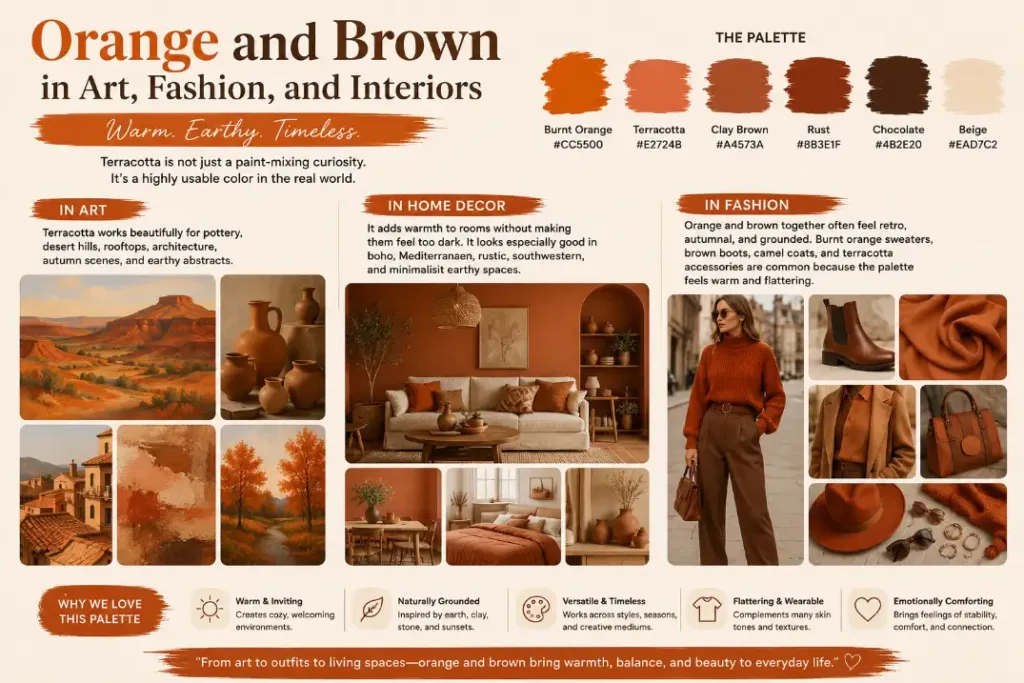
Terracotta is not just a paint-mixing curiosity. It is a highly usable color in the real world.
In Art
Terracotta works beautifully for pottery, desert hills, rooftops, architecture, autumn scenes, and earthy abstracts.
In Home Decor
It adds warmth to rooms without making them feel too dark. It looks especially good in boho, Mediterranean, rustic, southwestern, and minimalist earthy spaces.
In Fashion
Orange and brown together often feel retro, autumnal, and grounded. Burnt orange sweaters, brown boots, camel coats, and terracotta accessories are common because the palette feels warm and flattering.
That broad usefulness is another reason the question gets searched so often. People are not only curious about the technical mix. They also want to picture the final look.
Final Answer
So, what do orange and brown make when mixed?
Most of the time, they make terracotta — a warm, earthy reddish-brown shade. Depending on the exact ratio and undertones, the result may also look like burnt orange, rust, clay, or a deeper brownish-orange.
Terracotta is such a popular result because it blends the warmth of orange with the grounded, muted richness of brown. It feels natural, artistic, and timeless — which is why it shows up in painting, pottery, decor, and design again and again.
FAQs About Orange and Brown Mixed Together
Does orange and brown make terracotta?
Yes, in most cases orange and brown mixed together make terracotta. The final shade can vary, but terracotta is usually the closest general answer.
What color do orange and brown make in paint?
In paint, orange and brown usually create a warm reddish-brown, terracotta, or burnt orange shade. The exact result depends on the ratio and the undertones of both colors.
Is terracotta more orange or more brown?
Terracotta is usually balanced between the two, but it often looks slightly more brownish-red-orange than pure orange. It is warmer and earthier than standard orange.
What happens if you add more orange than brown?
If you use more orange than brown, the color will usually turn into a brighter burnt orange or a warm rusty orange instead of a deep terracotta.
What happens if you add more brown than orange?
If you add more brown, the result becomes darker and more muted. It may look like clay brown, earthy orange-brown, or a deeper terracotta tone.
Do orange and brown make burnt orange?
They can. Burnt orange is one of the most common results when orange stays dominant in the mix and brown is added gradually.
Can orange and brown make rust?
Yes, orange and brown can make a rust-like color, especially if the orange has a red undertone or the brown is warm and reddish.
Why does my orange and brown mix look muddy?
A muddy result usually happens when the brown is too dark, too cool, or added too quickly. It can also happen if the pigments are already muted. Start with more orange and add brown a little at a time.
Is terracotta a warm or cool color?
Terracotta is a warm color. It belongs to the orange-brown family and usually feels earthy, cozy, and natural.
What colors go well with terracotta?
Terracotta pairs well with cream, beige, white, sage green, olive, navy, charcoal, dusty blue, and soft pink.
Can I lighten terracotta after mixing it?
Yes. You can lighten terracotta by adding a little white. This makes it look softer, dustier, and more pastel-like.
Is terracotta the same as orange-brown?
Terracotta is a type of orange-brown, but it usually has a more specific earthy, clay-inspired look. Not every orange-brown shade will look exactly like terracotta.
What is the best ratio for making terracotta?
A near 1:1 ratio of orange and brown is a good starting point. Then adjust depending on whether you want it brighter or deeper.
Do orange and brown work well together?
Yes, they work very well together. Since both are warm colors, they create natural, harmonious shades often seen in pottery, autumn palettes, and rustic decor.
What color family is terracotta in?
Terracotta belongs to the orange, red, and brown color family. It is usually described as an earthy reddish-brown or muted orange-brown shade.