
Mixing colors can feel like magic—especially when you combine two favorites like blue and green. Depending on how you mix them, you get teal, turquoise, seafoam, or a bright cyan glow. But what exactly happens when you put these two cool tones together?
In this article, you’ll learn how to mix blue and green in paint, light, and digital design, avoid muddy results, and create beautiful custom shades for your next project.
What Happens When You Mix Blue and Green?
When you mix blue and green, the result is usually a shade of cyan, teal, or turquoise—depending on how much of each color you use. These blue-green colors belong to the cool color family and often evoke feelings of calm, cleanliness, and nature.
Blue + Green in Different Mediums
In paint, mixing green and blue generally gives you teal (if you use more blue) or turquoise (if you use more green…(which itself is made from blue + yellow—learn how to mix green here)).
In light, combining blue and green produces cyan, one of the three primary colors in the RGB (red, green, blue) color model.
In digital design, blue-green shades range from #00FFFF (cyan) to #008080 (classic teal) and beyond.
Why the Mixing Ratio Matters
Quick Tip: The exact result depends on the medium (paint, light, digital) and your ratio. A 50/50 mix typically leans toward cyan in digital or turquoise in pigment.

Understanding Blue and Green in Color Theory
Mixing colors isn’t just about putting two paints on a palette. It’s based on color theory, which includes how colors behave when combined using different systems. To fully understand what happens when you mix blue and green, let’s explore a few fundamentals.
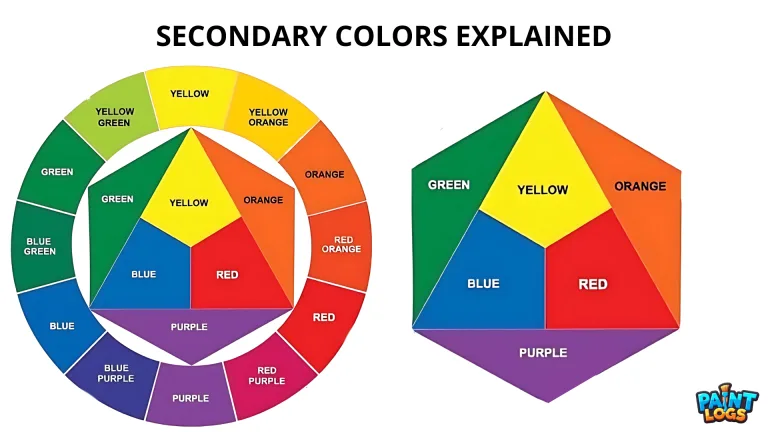
Primary and Secondary Colors in RYB
In the RYB (Red, Yellow, Blue) model, blue is a primary color. Green is a secondary color, created by mixing blue and yellow. So when you mix blue + green, you’re really combining a primary with a secondary color.
What Are Tertiary Colors Like Teal and Cyan?
In most pigment systems, this combination results in a tertiary color—like teal, cyan, or turquoise. These tertiary colors often live between blue and green on the color wheel, forming smooth transitions.
If you’re curious about the other primaries too, check out what colors make red next.
👉 Why Medium Matters: Pigment vs. Light vs. Digital
This is where most beginner artists get confused. Mixing blue and green doesn’t always give the same outcome because:
- Paint/pigment mixing (subtractive) absorbs light, and the mix depends on the pigments used.
- Light mixing (additive) blends different wavelengths to create new hues.
- Digital color uses hexadecimal (HEX) or RGB code systems, offering precision but no physical mixing.
Each medium has its own rules, which we’ll explore in depth and if you’re curious how blue shifts with red instead, explore what red and blue make
👉 Role of the Color Wheel
The color wheel helps you predict results. Blue and green sit right next to each other—called analogous colors—which means their mix will always stay in the cool family. They blend more harmoniously than opposites (like blue and orange), making them ideal for painting ocean scenes, foliage, and tranquil skies.

How to Mix Blue and Green Paint (Step-by-Step)
You don’t need to be a professional to create gorgeous blue-green colors. Here’s how to do it confidently:
👉 Tools and Materials You’ll Need:
- Primary blue paint (like phthalo or cobalt blue)
- Green paint (like viridian or permanent green)
- Palette or mixing tray
- Brush or palette knife
- White and black paint for light/dark adjustments
- Water (for watercolor) or medium (for acrylic/oil)
👉 Step-by-Step Instructions:
- Start with equal parts blue and green on your palette. Mix them slowly using a knife or brush.
- Observe the base color—it should lean toward cyan or turquoise.
- Adjust the tone:
- Add more blue to get a deeper teal.
- Add more green to brighten toward lime or seafoam.
- If it looks too dark or dull:
- Add a tiny bit of white to lighten and reveal undertones.
- Avoid overmixing—this can turn it muddy.
If your mix turns gray or brown, clean your tools and try again with cooler pigments.
Mixing Blue and Green in Paint
When it comes to physical paint, mixing blue and green doesn’t give you just one color—it gives you a range of rich, cool-toned hues. The exact shade depends on the type of paint, the proportions used, and even the pigment purity.
👉 What You Get: Teal, Turquoisem and Seafoam Color with Acrylic, Watercolor, or Oil
- Acrylic paint mixes cleanly if you’re using pure colors. Blue and green typically produce teal or turquoise, with slight variations based on opacity.
- Watercolor can yield softer, more transparent versions of blue-green shades, often resembling seafoam or mint if diluted with water.
- Oil paint blends slowly but beautifully. You can get deeper blue-greens that lean toward forest teal when using darker hues like phthalo blue or viridian green.
Pro Tip: Avoid mixing muddy colors by using cool-toned pigments—like phthalo blue and viridian green—instead of warmer ones like ultramarine or sap green.
👉 How to Mix Teal, Cyan, or Aqua on a Palette
- For teal: 2 parts blue + 1 part green
- For turquoise: 1 part blue + 2 parts green
- For cyan: Equal parts of both, using pure primary colors

👉 Why Do Blue and Green Sometimes Make a Muddy Color?
- Dirty tools: Leftover red, orange, or brown on your brush can dull the mix.
- Wrong pigments: Warm-toned or low-quality paints (like ultramarine or sap green) often clash or contain fillers.
- Overmixing: Mixing too much flattens the color, especially in watercolor.
- Too much white or black: These can desaturate your mix if added too early.
Mixing Specific Blue-Green Shades (Teal, Turquoise, Cyan)
To explore the stunning world of blue-green hues, here’s a quick guide on how to mix these unique shades using basic colors:
| Color Name | How to Make It (Paint Mixing) | Digital Note |
|---|---|---|
| Teal | Mix 2 parts blue + 1 part green. Add black slightly to deepen. | HEX: #008080 |
| Turquoise | Mix 1 part blue + 2 parts green. Add a bit of white for brightness. | HEX: #40E0D0 |
| Bondi Blue | Start with turquoise base → add more blue, and just a hint of gray to mute it slightly. | HEX: #0095B6 |
| Blue-Green Algae | Mix equal parts phthalo blue and sap green, then soften with a touch of white or yellow ochre. | HEX: #00A693 |
| Cerulean | Use cerulean blue directly from tube or mix cobalt blue + a touch of green. Optional: lighten with white. | HEX: #007BA7 |
| Celeste (Sky Blue) | Mix blue + green, then add lots of white until it’s pastel and airy. | HEX: #B2FFFF |
| Robin Egg Blue | Equal parts blue + green + white. You can also start with turquoise, then add white for softness. | HEX: #00CCCC |
| Peacock Blue | Mix deep blue (phthalo or Prussian) with a small amount of green and black to make it rich and dark. | HEX: #1F456E |
| Charleston Green | Mix teal with black (2:1 ratio) to produce a nearly black-green with blue undertones. | HEX: #232B2B |
| Electric Blue | Start with cyan, then boost brightness with a bit of white and a dash of green or violet depending on tone. | HEX: #7DF9FF |
| Pine Green | Use green as base, mix in a small amount of blue, and darken with black. | HEX: #01796F |

Mixing Blue and Green in Light
When mixing light, the rules flip. Unlike paint, light behaves additively, meaning colors combine by adding wavelengths, not absorbing them.
Additive Mixing in the RGB Model
Blue + Green = Cyan (In Light)
In the RGB color model, which is used in screens and stage lighting, blue and green light combine to make cyan—one of the three secondary colors in RGB, along with yellow and magenta.
Here’s what happens:
- Blue light wavelength: ~450–495 nm
- Green light wavelength: ~495–570 nm
- Resulting cyan light: ~480–500 nm, often appearing bright or neon-like

Cyan is often used in digital interfaces, underwater visuals, and medical displays due to its crisp, vibrant look.
Cyan in RGB vs. CMYK
While RGB is used for screens (light), CMYK is used for printing and works subtractively (like paint).
👉 In CMYK:
- Cyan is a base ink, so you don’t mix it from blue + green
- To make turquoise or bluish-green tones in print:
- Start with cyan
- Add yellow to shift toward green or turquoise
- Add black (K) to deepen the shade into teal
🎨 HEX Code Examples:
- Cyan:
#00FFFF - Teal:
#008080 - Turquoise:
#40E0D0

Exploring Shades Between Blue and Green
Mixing blue and green isn’t just about getting cyan—you can create a whole spectrum of blue-green shades, from deep teal to soft mint. It all depends on your ratios, pigments, and medium.
👉 Cyan vs. Teal vs. Turquoise: What’s the Difference?
These three names often get thrown around interchangeably, but they’re slightly different:
- Cyan: The purest blend of blue and green, used in RGB and CMYK models. It’s bright, light, and very vibrant.
- Teal: A darker blue-green that leans toward the blue side. It feels rich and earthy—often used in fashion and home decor.
- Turquoise: A mix between teal and cyan, often leaning toward green. It’s playful and tropical, like Caribbean water.
👉 Gradient Chart (HEX and Ratio Table) Blue-Green Shade Chart
| Mix Ratio | Resulting Shade | HEX Code Example |
|---|---|---|
| 1 Blue : 1 Green | Cyan | #00FFFF |
| 2 Blue : 1 Green | Deep Teal | #006D77 |
| 1 Blue : 2 Green | Turquoise | #40E0D0 |
| Add White | Mint/Seafoam | #AAF0D1 |
| Add Black | Dark Teal | #003E3E |
What Happens When You Add White, Black, or Gray?
- White: Lightens the tone to mint, seafoam, or pastel teal.
- Black: Deepens it to forest green or dark teal.
- Gray: Mutes it, creating smoky or muted shades ideal for interiors.
Emotions and Symbolism of Blue-Green Shades
Blue-green is more than just a pretty color. It carries emotional and psychological meaning across cultures, art, and design.
👉 What Blue-Green Represents:
- Calmness & Peace: Like tranquil seas or a peaceful forest.
- Healing & Renewal: Often seen in spas, hospitals, and wellness centers.
- Balance & Sophistication: Teal adds grounded elegance; cyan feels youthful and bright.
Fun Fact: In color psychology, blue-green tones are used to reduce stress and promote clarity.
Blue-Green in Art & Design
Blue-green is a favorite among painters, designers, and decorators because it brings a balance of energy and calm. It’s eye-catching but not overwhelming, making it extremely versatile.
👉 In Art: Landscapes, Abstracts, and Oceans
Artists often use shades like turquoise, teal, or aqua to represent:
- Water and skies in seascapes and landscapes
- Emotion and mood in abstract works
- Depth and shadows in portraiture or foliage
Pro Tip: Mixing blue-green with hints of white can help create dreamy, misty effects in watercolor.
👉 In Design: Decor, Branding, and Fashion
- Interior Design: Teal walls or furniture pieces are elegant yet modern. Lighter turquoise is ideal for beach or boho decor themes.
- Fashion: Teal and turquoise are often seen in summer wear, jewelry, and scarves. Universally gender-neutral and effortlessly flattering for all skin tones, these refreshing shades gain an extra touch of charm with Enamel Pins, the perfect pop-of-color accessories that add playful, personalized flair to any summer look, pinning these beloved tones to every stylish detail with eye-catching ease.What’s more, personalized pins are crafted and delivered at an impressively fast speed, getting your one-of-a-kind teal and turquoise pin accents to you in no time for instant summer styling.
- Branding: Startups use blue-green to convey trust with a twist of creativity—especially in tech and wellness sectors.

Creating Digital Blue-Green Shades
Digital design allows precise color creation, and understanding how to work with blue and green in digital platforms is a powerful tool for artists, marketers, and content creators.
👉 Best RGB and HEX Codes
| Shade | RGB Code | HEX Code |
|---|---|---|
| Cyan | (0, 255, 255) | #00FFFF |
| Teal | (0, 128, 128) | #008080 |
| Turquoise | (64, 224, 208) | #40E0D0 |
| Mint | (170, 240, 209) | #AAF0D1 |
| Dark Teal | (0, 62, 62) | #003E3E |
Use these values in Photoshop, Canva, Procreate, or any design app to get perfect results.
Want to explore another warm mix? Here’s what orange and yellow make.
👉 How to Make Custom Blue-Green
In most design tools:
- Open the color wheel or RGB sliders
- Keep red at 0
- Adjust green and blue sliders equally for cyan
- Modify one slightly higher than the other for teal or turquoise
- Save the swatch for easy reuse
👉 Color Palette Ideas That Pair Well with Teal or Cyan
- Gold & Teal: Luxe and modern
- Coral & Turquoise: Tropical and vibrant
- Charcoal & Mint: Sophisticated and calming
- Peach & Aqua: Soft and feminine
- White & Cyan: Clean and tech-savvy

What Colors Go Well With Blue-Green?
Pairing is key when using any strong color. Blue-green shades look amazing with both warm and cool companions, depending on the mood you’re going for.
👉 Complementary Colors
On the color wheel, blue-green complements red-orange. Try pairing:
- Teal + Rust for a cozy autumn look
- Turquoise + Coral for beach vibes
👉 Analogous Colors
Adjacent hues like blue, green, and blue-violet create seamless blends—ideal for calming visuals or gradients.
👉 Triadic and Tetradic Palettes
- Triadic: Teal + Maroon + Golden Yellow
- Tetradic: Cyan + Orange + Purple + Lime Green
💬 Style Tip: For elegant interiors, balance teal with white, wood tones, or brass. For bold branding, go high contrast with pink, orange, or lemon yellow.
Conclusion
So, what color do blue and green make?
The answer depends on your medium, ratios, and intent. Whether you’re mixing paint, light, or digital color, you’ll end up with something in the blue-green spectrum—a family of hues that includes teal, turquoise, cyan, seafoam, and mint.
You Might Also Like:
- 🎨 What Colors Make Green?
- 🔴 Red and Green Make What Color?
- 💗 What Colors Make Pink?
- 🔵 Red and Blue Make What Color?
- 🍊 What Color Do Orange and Yellow Make?
FAQs
Does blue and green make turquoise or cyan?
It depends on the ratios and medium. In paint, a 1:2 ratio of blue to green gives turquoise, while equal parts can lead to cyan. In digital color or light (RGB model), blue and green always mix to form pure cyan.
Why does my blue-green mix look muddy or gray?
You might be using warm-toned pigments (like ultramarine or sap green) or accidentally adding in complementary colors like red. Stick to cool hues like phthalo blue and viridian green, and make sure your tools are clean.
Is blue-green a warm or cool color?
Blue-green (including cyan, teal, and turquoise) is considered a cool color. It evokes feelings of calm, tranquility, and clarity—perfect for serene designs or nature-inspired art.
Can I make seafoam or mint by mixing blue and green?
Yes! Mix blue and green, then add white slowly until you reach the desired pastel tone. Seafoam has more green, while mint has a touch more blue and white.
Is blue-green a secondary or tertiary color?
In traditional RYB color theory, green is secondary (blue + yellow). So blue-green is a tertiary color, created by mixing a primary (blue) with a secondary (green).
Can I use food coloring to mix blue and green in baking or crafts?
Yes, and the same rule applies—equal parts blue and green make a cyan-like frosting. Adjust ratios to create pastel or jewel-toned icing. Just remember: food dyes are transparent, so the base (frosting or batter) may affect the result.
Can I mix blue and green to get emerald or jade green?
Yes—start with a deep green base, then add blue slowly until you reach the desired richness. Add a touch of black or gray for depth if needed. For jade, add a little white to soften it.
What is the best ratio to mix blue and green for teal?
The most common formula is 2 parts blue to 1 part green. Adjust to taste depending on how dark or saturated you want your teal.
How do I mix blue-green colors in watercolor?
Use transparent pigments like phthalo blue and viridian green. Mix gently on a wet palette and test on scrap paper. Add water to create soft seafoam or mint tones.
Can I mix blue and green with colored pencils or markers?
Not exactly. Instead of blending physically, layer the colors gently. Start with green, overlay blue lightly, and use a blending pencil or white to smooth the transition.
Can I make turquoise without green paint?
Yes. Mix blue + a small amount of yellow, then add white. The yellow creates green, which combines with blue to form turquoise. It may take a few tries to get the balance right.