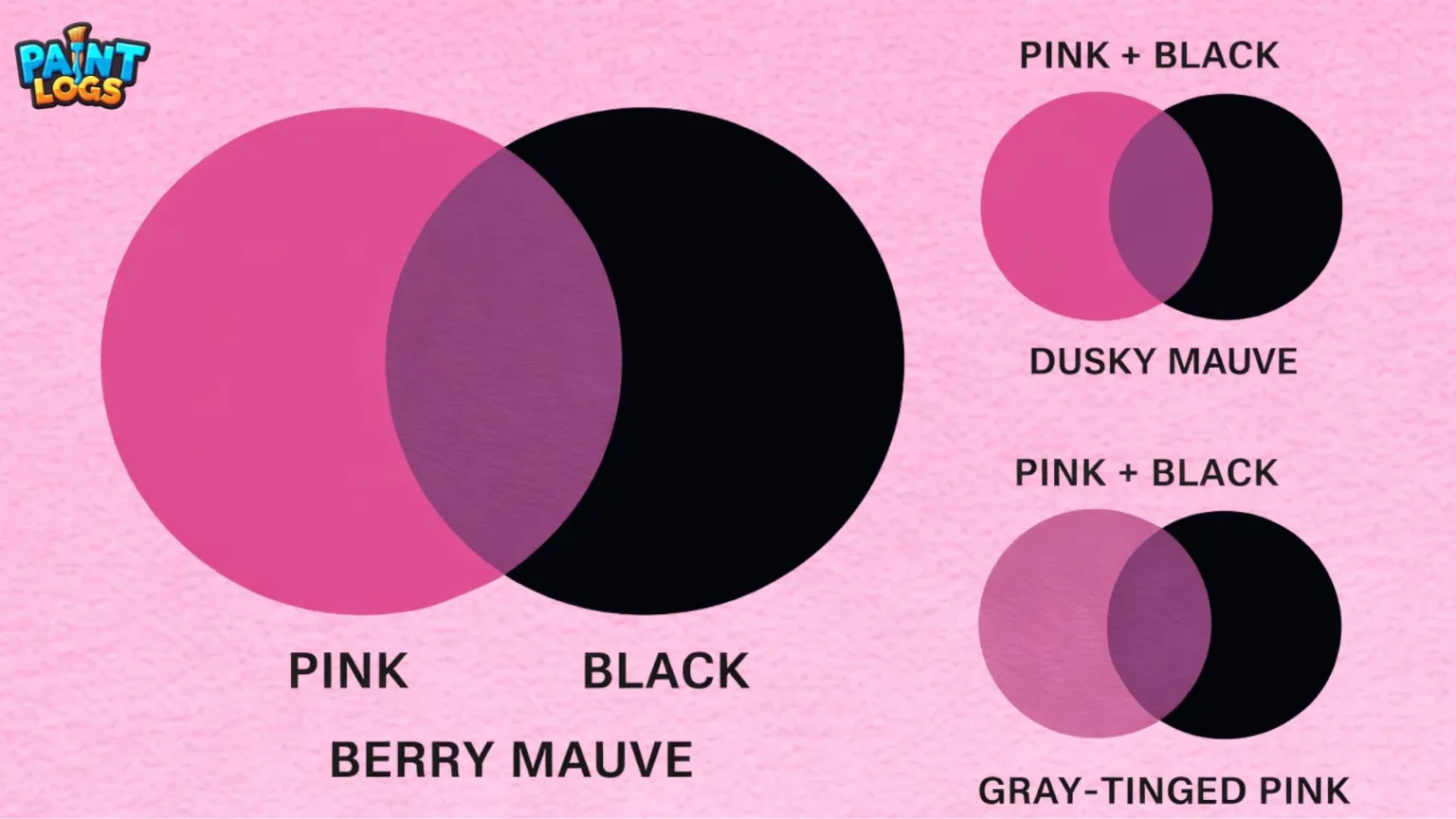
What Color Does Pink and Black Make? When you mix pink (a pale tint of red) with black, the result isn’t a brand‑new bold color, instead, black shades the pink, creating darker, more muted versions of pink. The specific shade you get depends on how much black you add and the undertones of the original pink used.
Pink + Black = Darker Shade of Pink
A little black deepens the pink into rich rosy tones, while more black makes it look dusty, grayish, purplish, or even brown‑gray depending on the balance of pigments.
This article will explain how the mix works, explore the possible shades it can produce, and provide a handy table you can use to identify the resulting colors.
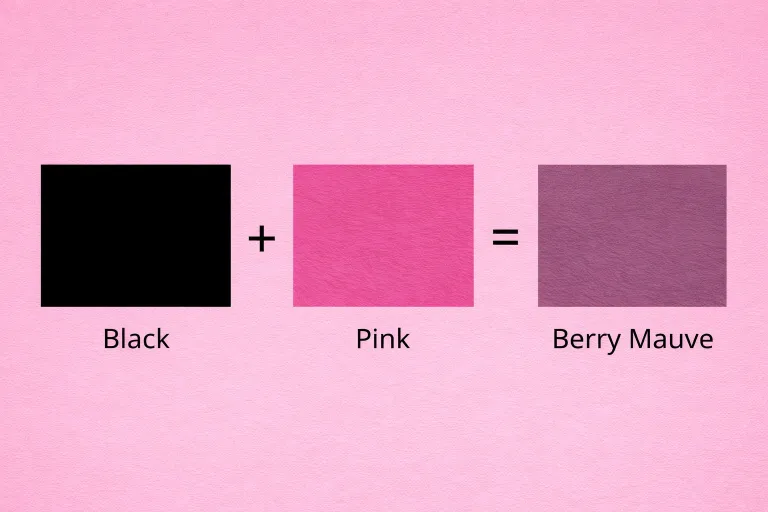
Quick Answer: What Color Does Pink and Black Make?
Pink + Black = Darker Pink Shades (e.g., Deep Rose, Dusky Mauve, Gray‑Tinged Pink)
Mixing black with pink primarily creates a darker shade of pink, also known as a shade in color theory — where adding black makes a hue deeper and less vibrant.
The outcome can vary widely depending on factors like how light the pink is and how much black you use:
- A small amount of black gives a rich dark pink.
- More black leads to muted or dusty tones like mauve.
- Even darker mixtures can look grayish or brownish.
In other words, black doesn’t change pink into a completely unrelated hue — it shades it into deeper, less saturated versions.
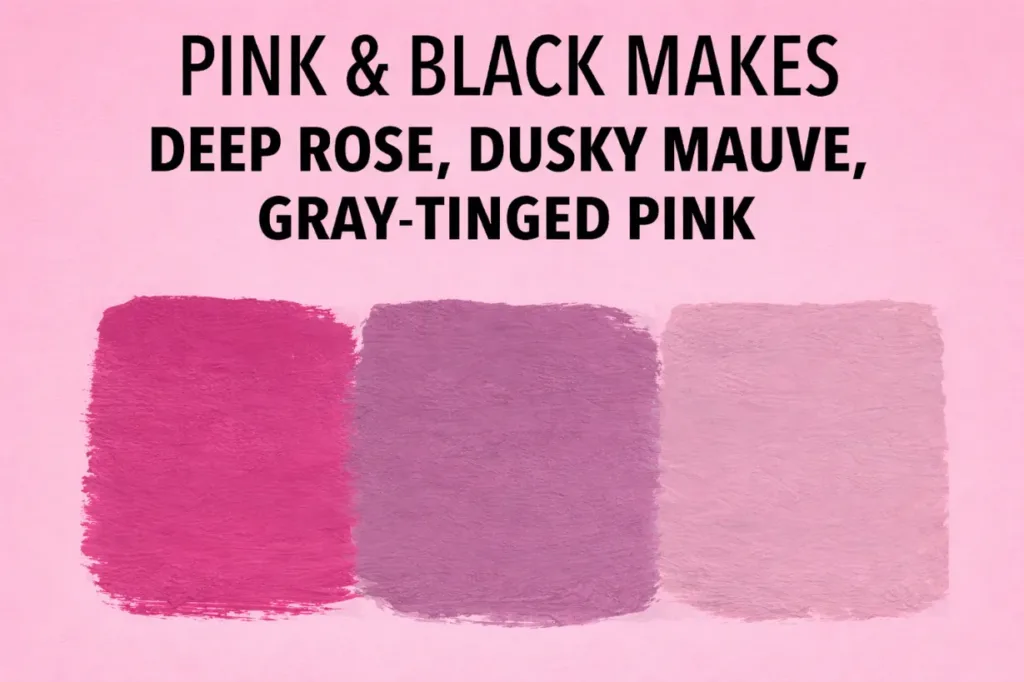
Why Pink and Black Make These Shades
What Black Does to Color in Paint
When you mix black paint with any color, you are creating a shade — a darker version of that color. In color theory, a shade is formed when a hue is mixed with black, lowering its value (lightness) without fundamentally changing its basic identity.
Pink itself is a tint of red, meaning red mixed with white. Adding black counteracts some of that lightness, pulling the hue into deeper, less saturated territory.
Depending on how much white there is in the pink and how much black you introduce, the result can appear as anything from a darker rosy tone to a dusty or muted mauve, and in very dark mixtures even approaching gray or brown tones with a hint of pink.
This doesn’t create a completely new hue like blue or green, but rather it modifies the original pink, lowering brightness and increasing depth.
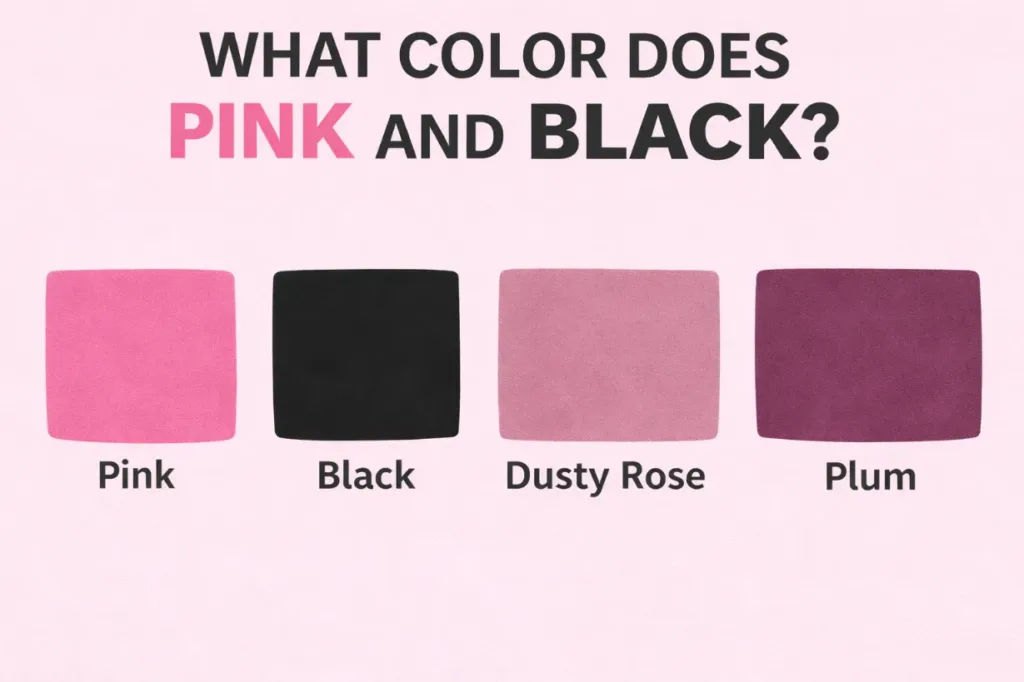
All Possible Shades From Mixing Pink and Black
When you mix pink and black, the most typical result is a darker, muted version of pink, often called a shade of pink in color theory. This happens because black removes brightness from the original hue.
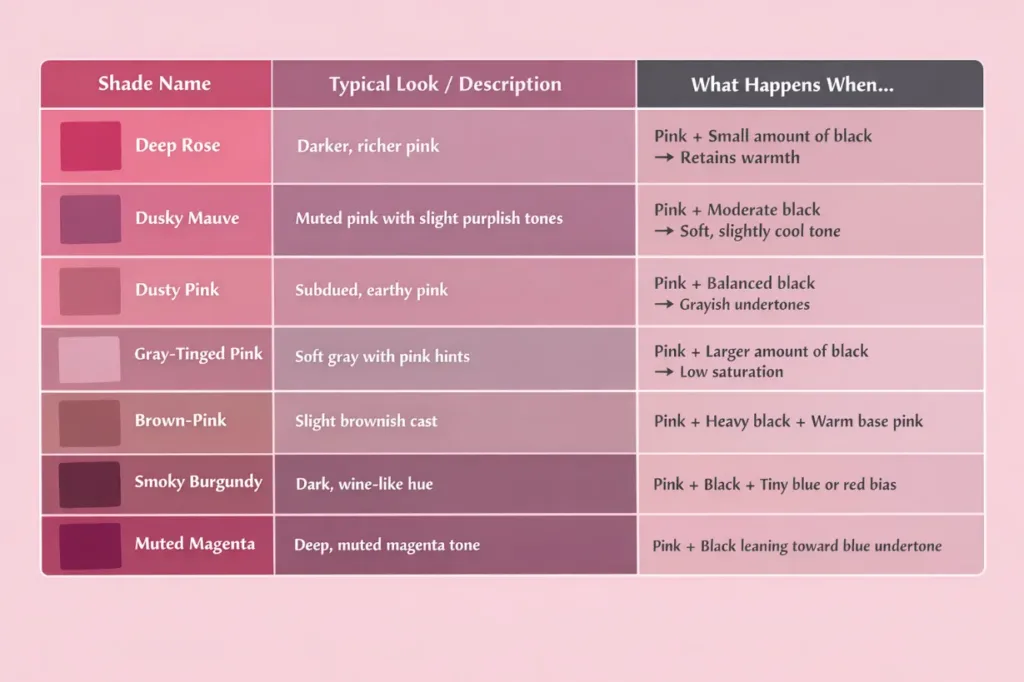
Below is a table showing how different amounts of black mixed with pink, and slight variations in the base pink, can produce a range of shades.
| Shade Name | Typical Look / Description | What Happens When… |
|---|---|---|
| Deep Rose | Darker, richer pink | Pink + small black → retains warmth |
| Dusky Mauve | Muted pink with slight purplish tones | Pink + moderate black → softness |
| Dusty Pink | Subdued, earthy pink | Pink + balanced black → grayish undertones |
| Gray‑Tinged Pink | Soft gray with pink hints | Pink + lots of black → low saturation |
| Brown‑Pink | Slight brownish cast | Pink + heavy black + warm base pink |
| Smoky Burgundy | Dark, wine‑like hue | Pink + black + tiny blue or red bias |
| Muted Magenta | Deep, muted magenta tone | Pink + black leaning toward blue undertone |
These are typical results — actual outcomes vary by pigment, medium, and amount of black used.
💡 Note: The outcome depends on the specific shade and brightness of the starting pink. For example, baby pink mixed with black can look quite different from a hot magenta mixed with the same amount of black.
How Different Pink Variations Affect the Result
The starting shade of pink plays a big role in what you end up with:
- Light baby pink + a little black tends to make soft dusty rose or grayish pink.
- Vibrant hot pink + a touch of black gives rich, deep rose shades.
- Pale pastel pink + more black can slide into gray or brownish‑pink territory.
Because black absorbs light, the deeper the amount added, the less bright and more muted the resulting shade becomes.
Pink And Black in Different Color Models
The result of mixing pink and black varies slightly depending on whether you’re working with physical paint or digital light.
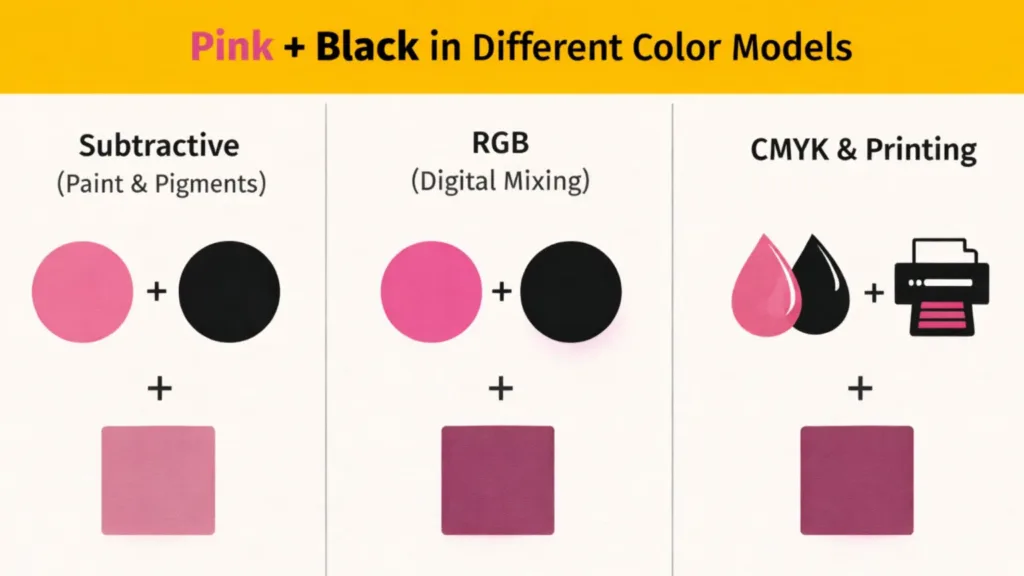
1. Subtractive Mixing (Paint & Pigments)
In traditional painting (subtractive color mixing), adding black to pink creates a shade of pink. This is because pigment black absorbs a lot of light, reducing the amount reflected back and making the pink darker and less vibrant.
- This is the most common scenario artists encounter with physical paint.
- The resulting color will depend on the pigment’s properties — a warmer black might push the pink toward brownish tones, while a cooler black can pull it toward muted purples.
2. Digital Mixing (RGB Additive Model)
In lights and screens, color is created by adding light waves together. Black in digital space represents the absence of light, so mixing black with pink light simply dims the brightness of the pink — it doesn’t create a new pigment or hue the way paint does.
- The result is a darker, less intense shade of pink, but the term “mixing” here is about adjusting brightness rather than blending physical pigments.
3. CMYK & Printing
In print (using CMYK color model), black (K) is used as a key to deepen or shade colors. Combining pink (usually produced by magenta + white paper) with extra black ink produces darker, muted pink tones on paper.
This approach is common in magazine graphics, packaging, and professional print design where consistent color depth is needed.
What Happens When You Add Other Colors to Pink and Black
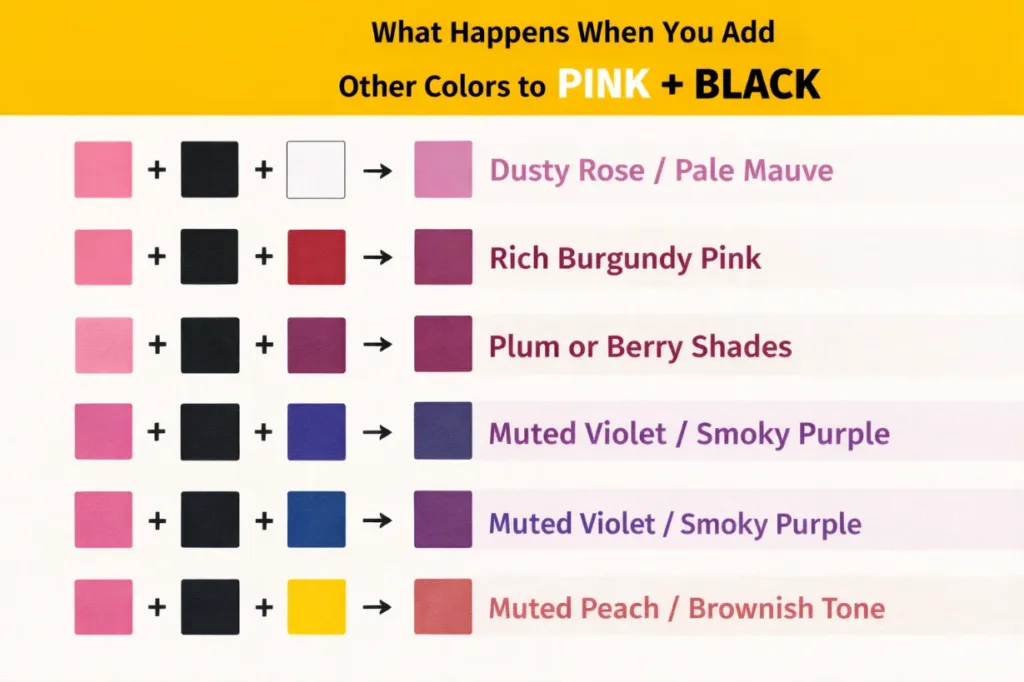
You can also experiment by adding a third color to your pink + black mix to shift the hue in interesting ways:
1. Pink + Black + White = Dusty Rose or Pale Mauve
Adding white lightens dark pink, creating softer, dusty tones like dusty rose or pale mauve. This is useful in warm, calm palettes or vintage styles.
2. Pink + Black + Red = Rich Burgundy Pink
Adding more red shifts the mixture toward a deeper burgundy or wine‑like pink. This intensifies the warmth without brightening the shade too much.
3. Pink + Black + Purple = Plum or Berry Shades
Mixing in purple changes the undertone, producing darker, richer shades closer to plum or muted berry. This is especially effective if you want cooler tones with depth.
4. Pink + Black + Blue = Muted Violet or Smoky Purple
A bit of blue can cool the pink, resulting in muted violet or smoky purple shades with a sophisticated look.
5. Pink + Black + Yellow = Muted Peach or Brownish Tone
Adding a hint of yellow can introduce some warmth and earthiness, sometimes leading to muted peach or brown‑pink tones, but be careful, too much yellow can make the mix look muddy.
Tips for Mixing Black and Pink Successfully
Here are practical tips to help you get the shade you’re aiming for when mixing pink and black:
1. Add Black Slowly
Black is a strong pigment, even a little will darken the pink fast. Start with tiny amounts and gradually build up until you reach the desired shade.
2. Test on a Palette First
Always try your mix on a scrap surface before applying it to your final canvas or project. Drying can slightly change how the color looks.
3. Know Your Pigments
Different pink pigments (baby pink, hot pink, magenta‑leaning pink) have different undertones, which affect how black interacts with them. Choose your base pink according to the tone you want.
4. Lighting Matters
Colors can look different under different lighting conditions. Check your mixed shade under natural and artificial light to ensure it appears as intended.
Why Some Shades Look Brown or Gray
Sometimes, especially in practical applications like hair dye or pigment mixes, adding black to pink can result in a muddy grayish or brown‑ish look rather than a deep pink. This may happen when the pigment has white or cool undertones, or when too much black is added.
Hair dye enthusiasts often warn that mixing black into pastel colors can produce dull, muddy results instead of richer dark pink shades, because the black overwhelms the base pigment.
Real‑World Uses of Pink + Black Shades
Mixing pink and black might sound simple, but the deeper, muted shades you get are widely used across creative fields, from interior design and fashion to graphic design and even hair coloring.
Interior & Home Design
When designing spaces, muted pinks shaded with black (like dusky rose, dusty mauve, or deep rose) are ideal for creating warmth without overwhelming brightness:
- Accent walls: A dusty pink shade can bring calm elegance to bedrooms and living rooms.
- Furniture & textiles: Sofas or throw pillows in deeper rosy tones create cozy, inviting spaces.
- Decor accents: Muted pinks paired with neutrals like beige, gray, or charcoal provide sophisticated contrast.
These tones help avoid overly bright pinks that can feel juvenile, offering instead refined warmth.
Fashion & Clothing
In fashion, darker pinks shaded with black bring complexity and style:
- Autumn/Winter collections: Deep rosy tones are great for sweaters, scarves, and accessories.
- Streetwear: A muted burgundy‑pink hoodie or dusty mauve jacket pairs well with black denim or leather.
- Eveningwear: Shades like smoky rose or plum‑pink provide a dramatic yet elegant look.
Designers often choose these muted shades when they want the allure of pink without the youthful or neon associations of lighter pinks.
Graphic & Digital Design
Muted pinks influenced by black are popular in digital interfaces and graphic design:
- Branding: Many beauty or wellness brands use dusty rose or plum pink as a signature color for logos and packaging.
- Web/UI: Deeper pink tones provide visual hierarchy when paired with clean backgrounds and minimalist elements.
- Illustrations: These shades often show up in character design and backgrounds where mood and subtlety are important.
Hair Coloring & Cosmetics
In hair coloring, mixing dark tones with pink, or choosing pink shades with black undertones, results in:
- Smoky rose or dusty magenta: Popular in edgy or alternative styles.
- Muted pastel rose: When a tiny amount of black is added to pastel dyes, the result is softer and less vibrant.
- Rose‑brown highlights: A subtle pinkish tint that doesn’t overpower natural brown hues.
Note: Hair dye results vary widely due to chemistry, so always patch‑test and consult a professional. But the underlying concept, darker, muted pink tones, still holds.

Common Mistakes When Mixing Pink and Black
Even though the result seems simple, a darker pink, a few common mistakes can lead to unintended “muddy” or dull outcomes.
1. Adding Too Much Black Too Quickly
Black is a strong pigment.
Even a small amount can significantly darken the pink. If you dump in too much black at once, you can quickly lose the pink quality entirely and end up with grayish, brownish, or muddy shades.
Tip: Add black in tiny increments and mix thoroughly before adding more.
2. Ignoring Undertones in Base Pink
Different pinks have different undertones:
- Warm pinks: Lean toward orange or peach
- Cool pinks: Lean toward purple or blue
Mixing black with a cool‑undertone pink can push the result toward smoky mauve or purple‑gray, whereas warm pinks might turn dusty rose or brown‑pink. Choosing the base pink carefully helps you control the final shade instead of guessing.
3. Forgetting About Lighting
The same mixed color can look very different under:
- Daylight (cool, natural light)
- Warm indoor light
- Studio lighting (artificial)
A dusty rose that looks lovely in daylight might read almost gray under warm indoor bulbs. Always view your sample under different lighting conditions.
4. Skipping Test Swatches
Especially when painting walls or fabrics, not testing a small area first can lead to disappointment. What dries or settles often looks darker or more muted than when wet or freshly applied.
Always test on a scrap surface first.
Tips for Mixing Pink and Black Successfully
Here are actionable tips to help you mix pink and black with intention and control:
1. Start With the Pink Base First
Always begin with your desired pink tone and add black gradually toward your target shade. This gives you control over depth and avoids overshooting.
2. Consider Adding White Later
If you accidentally make your mixture too dark, adding a bit of white can bring back softness, resulting in dusty or pastel‑like muted pinks. This is especially useful for interior design and fashion palettes.
3. Pair With Complementary Colors
Muted pinks shaded with black pair well with:
- Neutrals: Beige, gray, cream
- Earth tones: Brown, olive, taupe
- Cool accents: Slate blue, deep teal
These combinations help the muted pink stand out without looking too loud.
4. Adjust for Medium
Remember:
- Paint & Pigments: Black physically absorbs light from the mix
- Digital: Black reduces brightness on screens rather than creating a pigment interaction
So a dusty rose you mix in paint may appear slightly different when rendered digitally — calibrate accordingly.
Conclusion
Mixing pink and black doesn’t produce a brand‑new color on the color wheel, rather, it creates a deeper, richer, and more muted shade of pink. This happens because black darkens the value of pink, leading to a range of tones from deep rose and dusty mauve to smoky magenta and gray‑tinged pinks, depending on how much black you add and the original pink’s undertones.
These darkened pink shades are incredibly versatile. They’re perfect for warm, sophisticated interiors, fashion statements with depth, digital design accents, and even edgy hair color trends. The key is learning how black influences the brightness and saturation of pink so you can mix intentionally, not accidentally.
With small adjustments and a bit of practice, you can shade pink into just the right tone for your project, whether that’s elegant and restrained or bold and dramatic.
FAQs
What color do pink and black make when mixed?
Mixing pink with black produces a darker, muted shade of pink (like deep rose, dusky mauve, or smoky magenta).
Do pink and black make purple?
Sometimes, especially if the pink has a cool undertone and enough black is added, the result can look slightly purple or muted violet.
Can pink and black make gray?
Yes, if black is added in large amounts, the result may look like a gray‑tinged pink.
How do I lighten a too‑dark pink + black mix?
Add a bit of white to soften and brighten into dusty rose or pastel tones.
Does digital mixing of pink and black differ from paint?
Yes, digital mixing reduces brightness and saturation, while paint physically alters the pigment, often creating deeper, more nuanced shades.
Can pink and black be used in home décor?
Absolutely, muted pink shades like dusty rose add warmth and elegance to interiors.
What happens when you mix pink, black, and white?
You typically get lighter dusty rose or pale mauve — softer and more muted than the original mix.
Is dusty rose the same as deep rose?
Dusty rose is a muted version of deep rose, usually achieved with a bit more black or gray.
Can I mix pink and black hair dyes?
It’s risky, dye chemistry varies, but a tiny bit of black can mute pink into smoky or dusty tones; patch tests are essential.
What color season suits muted pinks?
Muted rose and dusty pink tones often work beautifully in autumn and soft summer palettes.
Are muted pinks trendy in fashion?
Yes, deeper and desaturated pinks are currently popular for stylish, understated looks.
Can pink and black create burgundy?
Not exactly, burgundy typically needs more red + blue/purple in addition to shading.