
What color do purple and Yellow Make? When purple and yellow are mixed together, they typically create a neutral brown, gray, mauve, or muddy tone. This happens because purple (which is made from red and blue) and yellow are complementary colors, meaning they sit opposite each other on the color wheel. When combined, they essentially cancel each other out, resulting in a less vibrant, more muted hue. However, the exact shade depends on the specific tones of purple and yellow used, as well as their ratios.
In this guide, we’ll dive into the science behind mixing purple and yellow, examining the effects of various shades, how the RYB, RGB, and CMYK color models influence the outcome, and how you can adjust the mix to achieve desired results. Whether you’re using traditional paint, working digitally, or exploring color combinations for design, we’ll give you the tools to master this unique color pairing.
Quick Answer: What Color Does Purple and Yellow Make When Mixed?
When purple and yellow paints are mixed, they generally produce neutral colors such as browns, grays, or dusty mauves. That’s because purple contains red and blue, and adding yellow brings in all three primary colors (red+yellow+blue) a formula that tends to cancel vibrancy and produce muted tones. You can also explore how green and purple behave when mixed for comparison.
Purple + Yellow = Neutral Brown/Gray/Mauve
The exact shade depends on the strength, warmth, and saturation of the purple and yellow used. Sometimes adding yellow and pink nearby in your palette can create subtle pastel variations that are easier to control.

Quick Color Mixing Table — Purple + Yellow
| Purple Shade | Yellow Shade | Color Result |
|---|---|---|
| Lavender | Pale Yellow | Light Mauve |
| Violet | Lemon Yellow | Dusty Brown |
| Deep Purple | Golden Yellow | Earthy Brown |
| Magenta‑Purple | Bright Yellow | Muted Brick |
| Royal Purple | Mustard Yellow | Brownish Olive |
| Purple + White (Tint) | Sunshine Yellow | Soft Gray‑Mauve |
| Purple + Black (Shade) | Yellow Ochre | Deep Brown |
| Warm Purple | Warm Yellow | Rusty Brown |
This table covers common artistic mixes and helps you anticipate results with typical paint or pigment variations.
Why Do Purple and Yellow Make Brown or Gray?
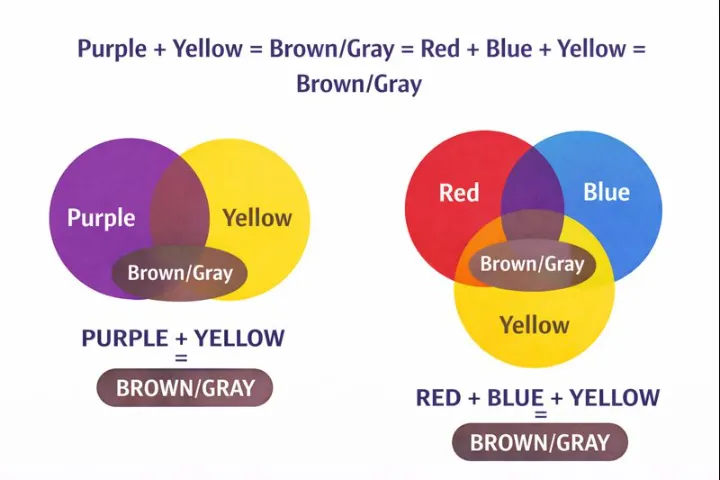
Purple and yellow sit opposite each other on the traditional RYB color wheel — they are complementary colors. When complementary colors are mixed, their hues cancel out because the mix contains all three primary colors (red, yellow, blue). For additional neutral outcomes, check purple and black.
That cancellation leads to neutral or muddy tones:
Purple + Yellow = Red + Blue + Yellow = Brown/Gray
This effect is most noticeable in subtractive color mixing (paints, pigments), where colors absorb light rather than emit it.
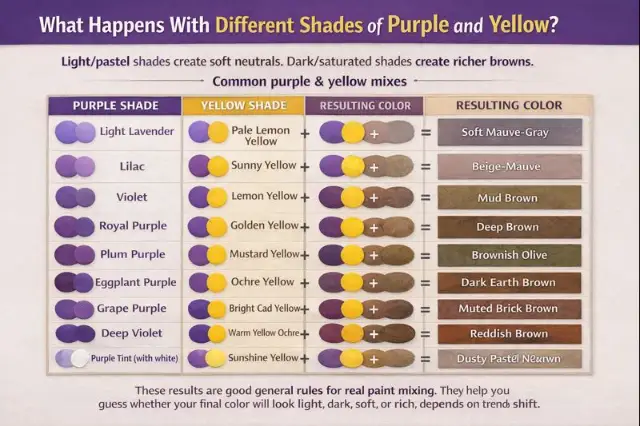
What Happens With Different Shades of Purple and Yellow?
The result depends on the specific shades of purple and yellow. Light, pastelly tones tend to produce softer neutrals, while deep or highly saturated hues yield richer browns.
Here’s a more expanded mixing table with common real‑world paint combinations:
| Purple | Yellow | Resulting Color |
|---|---|---|
| Light Lavender | Pale Lemon Yellow | Soft Mauve‑Gray |
| Lilac | Sunny Yellow | Beige‑Mauve |
| Violet | Lemon Yellow | Mud Brown |
| Royal Purple | Golden Yellow | Deep Brown |
| Plum Purple | Mustard Yellow | Brownish Olive |
| Eggplant Purple | Ochre Yellow | Dark Earth Brown |
| Grape Purple | Bright Cad Yellow | Muted Brick Brown |
| Deep Violet | Warm Yellow Ochre | Reddish Brown |
| Lavender Gray | Light Yellow Ochre | Pale Grayish Brown |
| Purple Tint (with white) | Sunshine Yellow | Dusty Pastel Neutral |
These outcomes are good rules of thumb for real paint mixing. They help you anticipate how dark or light the neutral tone will be as saturation and contrast shift.
Purple and Yellow in Paint (RYB Color Model
In the RYB (Red, Yellow, Blue) model — the classic color wheel used in traditional art — purple is a secondary color (made from red and blue), and yellow is a primary color. When mixed as pigments:
- Red + Yellow + Blue all present → muted or neutral color
- Complementary combination → duller tones
That’s why most purple + yellow mixes produce brownish or grayish results that feel earthy or muted rather than vibrant. Adding other shades, such as red and yellow, can also influence the warmth of the mix.
In practical painting, adding small amounts of purple into yellow (or vice versa) tends to desaturate both colors, pulling them toward the center of the color wheel, a neutral.
Purple and Yellow in Digital Media (RGB & CMYK)
RGB (Additive Light Mixing)
In digital screens, purple and yellow are combinations of light. Purple is a mix of red and blue light in RGB, and yellow is red + green light. Combining them can produce something closer to a desaturated neutral or light gray on screens, a different result than with pigment.
CMYK (Subtractive Print Mixing)
In printing, purple and yellow inks also tend to result in neutral, brownish tones, because the pigments subtract light from reflected white, producing brown or dark neutral colors.
So while paint mixing and ink mixing behave similarly (brown/neutral), light mixing is affected by additive color physics and can shift tonally toward pale neutrals or grayish tones.
How the Ratio of Purple to Yellow Affects the Final Color
The ratio of purple to yellow plays a crucial role in determining the final shade you get when mixing these colors. Here’s how the proportions impact the resulting hue:
- More Purple: When you use more purple in the mix, the result tends to lean toward cooler, grayish brown tones. A cooler brown or a muted mauve may emerge, depending on the exact shades used.
- More Yellow: Increasing the yellow in the mix will give you a warmer, yellowish-brown color, akin to mustard or ochre.
| Purple Proportion | Yellow Proportion | Resulting Color |
|---|---|---|
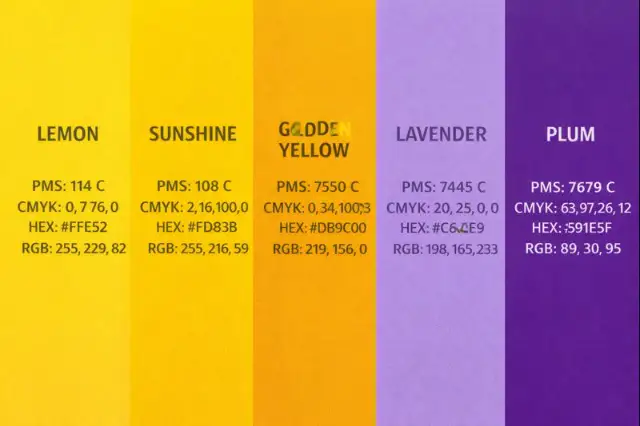
| 100% Purple | 0% Yellow | True Purple (#800080) |
| 75% Purple | 25% Yellow | Warm Mauve #7A5C6D |
| 50% Purple | 50% Yellow | Brownish Gray #9E7F60 |
| 25% Purple | 75% Yellow | Warm Olive Brown #B59D3D |
| 0% Purple | 100% Yellow | Bright Yellow #FFFF00 |
In this table, you can see how increasing the purple proportion makes the color cooler and more muted, while increasing yellow warms up the tone, often creating earthy browns or mustards.
Artistic Uses of Purple and Yellow Together
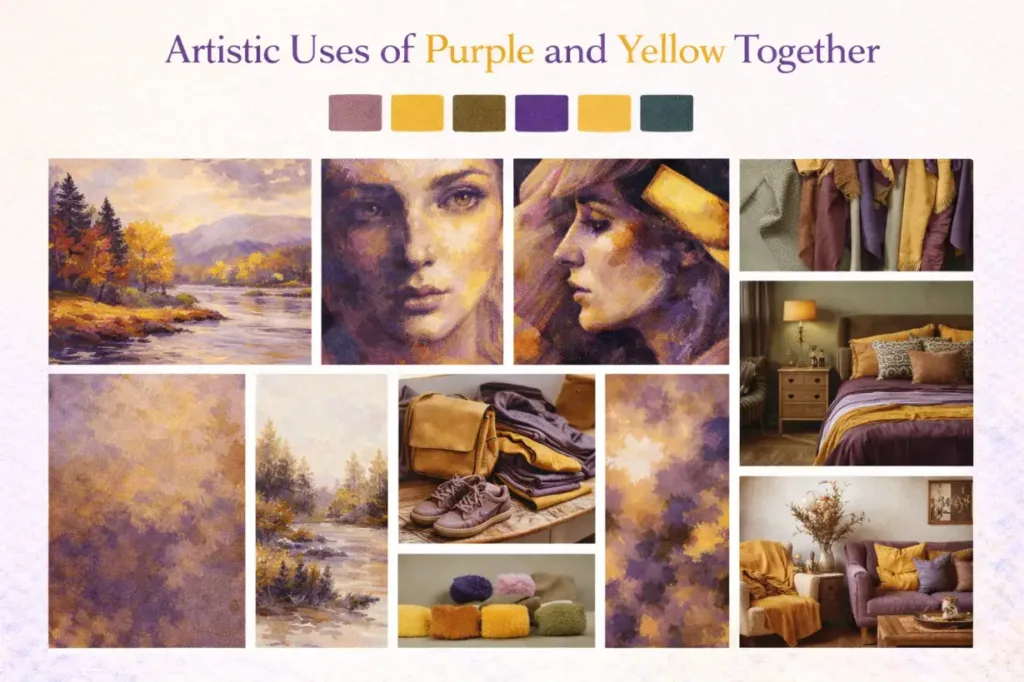
While mixing purple and yellow may not always produce vibrant hues, these complementary colors are widely used in art, design, and even fashion for their earthy and dynamic qualities.
In Art:
- Landscapes: Earthy browns and grayish tones are often used in landscapes to create depth or to reflect autumnal themes.
- Shading: Purple and yellow mix well for shadows in portrait painting, offering a natural, muted contrast.
- Abstract Art: The combination is used for creating moody or rustic effects.
In Fashion:
- Vintage & Bohemian: Purple and yellow work in vintage-style fashion or bohemian designs, where earthy browns or mauves are key.
- Autumn Trends: These colors are especially suitable for creating fall-inspired looks, combining shades of mustard and purple for earthy, rich outfits.
In Interior Design:
- Rustic & Earthy Looks: The neutral, brownish shades made from purple and yellow can be used for rustic interior design or autumn-themed decor.
- Bohemian Interiors: Pairing muted olive greens, mustards, and deep purples creates a vintage, boho feel that works well in living rooms or bedrooms.
How to Adjust the Mix: Add White, Black, or Yellow
Adjusting the mix of purple and yellow can help you achieve different tones, shades, and lightness in your design:
- Add White: Lightening the mixture with white will give you a softer, pastel look like lavender or muted gray.
- Add Black: Adding black to the mix can deepen the tone, resulting in dark brown, olive, or charcoal-like colors.
- Add More Yellow: Increasing yellow will give the mix a warmer tone, moving the final result towards a mustard or earthy ochre shade.
Adjusting Lightness and Depth:
| Mix | Adjustment | Resulting Color |
|---|---|---|
| Purple + Yellow | Add White | Soft Lavender Gray |
| Purple + Yellow | Add Black | Deep Olive Brown |
| Purple + Yellow | Add More Yellow | Warm Mustard Brown |
By adding white, black, or more yellow, you can either soften, deepen, or warm up your mix depending on the desired effect.
Mixing Purple and Yellow with Other Colors
When you mix purple and yellow, you usually get a brown or neutral color. If you add another color, the final result changes a little. Here’s what happens with common mixes:
Purple + Yellow + Blue
Blue makes the color cooler. This mix usually gives a soft brown or gray shade. It looks calm and not too bright.
Purple + Yellow + Green
Green adds an earthy feel. This mix often makes a gray-green or olive-like color. It looks natural and dull.
Purple + Yellow + White
White makes the color lighter. This mix turns into a light brown or beige with a soft purple touch. It looks gentle and smooth.
Purple + Yellow + Orange
Orange adds warmth. This mix gives a warm mustard-brown color with a slight red tone. It looks rich and bold.

Purple and Yellow Color Mixing Chart (Visual)
Here’s a visual chart to show you how mixing purple and yellow in varying proportions produces different shades:
| Purple % | Yellow % | Mixed Result |
|---|---|---|
| 100% Purple | 0% Yellow | #800080 (Purple) |
| 75% Purple | 25% Yellow | #7A5C6D (Warm Mauve) |
| 50% Purple | 50% Yellow | #9E7F60 (Brownish Gray) |
| 25% Purple | 75% Yellow | #B59D3D (Warm Olive Brown) |
| 0% Purple | 100% Yellow | #FFFF00 (Bright Yellow) |
This simple visual provides a clear guide to understanding how different ratios of purple and yellow produce a range of earthy, muted tones.
Common Issues and How to Fix Them When Mixing Purple and Yellow
While mixing purple and yellow, you might run into some common problems:
- Too Muddy: If the mix turns muddy, it’s likely because the colors have overpowered each other and canceled out the vibrancy.
- Dull Brown/Gray: Too much of either color could result in a grayish or brownish tone that is not visually appealing.
How to Fix It:
- Adjust the Ratio: Add more purple to cool the mixture or more yellow to warm it up.
- Add More Primary Colors: If the result is too neutral, consider adding a bit of red or blue to adjust the vibrancy.
By testing smaller amounts first and adjusting the color balance, you can find the perfect neutral without it turning too dull.
Conclusion: Mixing Purple and Yellow in Color Mixing
Mixing purple and yellow often leads to muted, earthy tones like brown, muddy gray, or olive, due to their complementary nature. The final result depends on the proportion of purple to yellow and the specific hues used. While this mix might not produce the most vibrant or intense colors, it can be incredibly useful for creating subtle neutrals or adding depth to a palette.
Understanding how purple and yellow interact across color models like RYB, RGB, and CMYK helps you predict and control the outcome, whether you’re working in art, interior design, or digital media. While these colors may not always create bright or bold results, mastering their interaction opens up new possibilities for earthy tones and natural hues in your creative projects.
FAQs – Purple and Yellow Color Mixing
What color does purple and yellow make when mixed?
Mixing purple and yellow typically results in brown, gray, or olive tones.
Can I make a bright, vibrant color from purple and yellow?
Usually not, as purple and yellow are complementary colors. You’ll need to adjust the ratio or add other colors to achieve a more vibrant result.
What happens when I add white to purple and yellow?
Adding white lightens the mix, resulting in a muted pastel or lavender tone.
Can I use purple and yellow to create earth tones?
Yes, purple and yellow are commonly used to create earthy browns, mustard yellows, and olive greens.
What colors should I mix with purple and yellow in design?
Colors like brown, green, and cream work well alongside purple and yellow for natural, vintage, or earthy themes.
Can I use purple and yellow for interior design?
Yes, they are perfect for creating rustic, vintage, or bohemian styles in home decor.
What is the best way to get a warm brown from purple and yellow?
Use more yellow in the mix to produce a warm, mustard brown.
Why does mixing purple and yellow make brown or gray?
Purple and yellow are complementary colors, and mixing them cancels out the vibrancy, resulting in neutral tones.
How does the amount of yellow affect the outcome?
More yellow will create a warmer, mustard-like tone, while more purple results in a cooler, muted brown.
How can I make a vibrant purple using yellow?
You cannot make a vibrant purple using yellow, as purple requires blue and red.
What are the best uses for purple and yellow mixed colors in art?
Purple and yellow are great for creating shadows, earthy landscapes, and autumn-themed pieces in art.
Is it possible to make purple using yellow and other colors?
No, purple requires blue. Yellow does not contain the necessary components to make purple.